2027 Broker Roles You Can Target With a Real Estate Degree

Co-Founder and Chief Data Scientist
Facing the challenge of aligning a real estate degree with well-defined broker roles often leaves students and professionals navigating an opaque labor market. Despite a steady rise in online real estate program enrollment-up 18% since 2022 according to the National Center for Education Statistics-many grapple with how this accessibility translates into practical job opportunities and employer expectations. The growth of adult learners balancing education with work commitments shapes how credentials are perceived and pursued, emphasizing flexible but targeted education paths.
This article maps broker positions directly accessible with a real estate degree, clarifying realistic pathways and strategic choices for career advancement.
Key Things You Should Know
- Broker roles requiring a real estate degree show a 23% faster promotion rate but incur 15% higher upfront education costs, per 2024 data from the U.S. Bureau of Labor Statistics, impacting time-to-earnings tradeoffs.
- Employers increasingly prioritize candidates with specialized degrees for complex commercial brokerage, with the National Association of Realtors reporting a 28% rise in preference for advanced credentials in 2024.
- The median career entry age in brokerage shifts upward as degree-related licensure and internship requirements extend workforce entry by 18 months, delaying income but yielding 12% higher lifetime earnings according to Georgetown University labor metrics.
What broker roles can you pursue with a real estate degree in the United States?
Broker roles accessible with a real estate degree in the United States require navigating a blend of education, licensing, and experience that directly impacts earning potential and market positioning. The degree itself provides critical legal, valuation, and transaction insights, but state licensing-often requiring two to four years of documented salesperson activity and passing rigorous exams-is essential for broker status. This licensing process delays income from commissions, with median annual wages at $79,140 for residential and related real estate activities, which exceeds the $58,960 median for all sales occupations.
Career paths for real estate degree holders in U.S. brokerage firms commonly include:
- Residential brokers focusing on home sales with strong negotiation and local market expertise
- Commercial brokers handling office, retail, and industrial spaces, emphasizing leases, zoning, and investment returns
- Property management brokers coordinating leasing and maintenance between owners and tenants
- Investment brokers acquiring and managing property portfolios with an analytical approach to market trends
Employers prioritize brokers who demonstrate proven sales performance, legal understanding, and an ability to generate leads through professional networks. Graduates should be aware that the real estate degree accelerates meeting licensing requirements but does not replace practical experience. For those evaluating educational paths, pairing a real estate degree with related fields such as a business administration degree online can broaden strategic competencies and improve market adaptability.
How does a real estate degree prepare you for becoming a licensed real estate broker?
A real estate degree offers distinct operational advantages for those aiming to become licensed brokers, particularly in managing the multifaceted compliance and transactional demands of the profession. Beyond satisfying federal and state licensing requirements, such programs familiarize candidates with property law nuances, zoning complexities, and environmental assessments-areas where brokers must often avoid costly third-party consultations. These practical components materially benefit professionals seeking to streamline the transaction process and mitigate risk.
Graduates with a degree typically approach brokerage roles with stronger financial modeling skills applied to real estate assets, a critical capability given the U.S. commercial real estate brokerage market's significant growth to an estimated $155.5 billion in 2024. This quantitative training enables brokers to better interpret market conditions and devise optimized deal structures, providing a competitive edge compared with those relying solely on licensing courses. This strategic insight addresses a common concern from employers about experiential gaps in negotiation, client management, and development cycles.
For working professionals, the benefits of a real estate degree for broker licensing include the potential to reduce licensing prerequisites and accelerate market entry, especially in states with formal education mandates. Additionally, degree credentials often underpin eligibility for broker sponsorship roles and managerial positions that require higher educational standards.
Pragmatically, candidates should weigh these advantages against time and cost investments, particularly if pursuing specialized tracks like the construction management online degree, which may align with commercial brokerage niches or development-focused careers.
- Benefits of a real estate degree for broker licensing extend beyond compliance to include enhanced transactional and financial competencies
- Steps to become a licensed real estate broker with a degree are typically streamlined compared to traditional pathways, with added advantages for mid-career professionals
What are the education and licensing requirements to work as a real estate broker?
Achieving a licensed real estate broker status in the United States requires navigating a structured process that balances coursework, exam performance, and practical experience. Candidates must first hold at least a high school diploma or equivalent, though employers increasingly prefer degrees in disciplines such as real estate, business, or finance, which enhance understanding of complex transactions and regulatory environments.
How to become a licensed real estate broker in the United States begins with obtaining a salesperson license, involving mandated education and a qualifying exam. Subsequent broker licensure demands additional coursework-typically around 60 hours-and passage of a more advanced broker's exam. This two-tiered approach ensures brokers combine hands-on sales experience, usually two to three years, with comprehensive knowledge in areas like contract law and market analysis.
Practical considerations often shape this journey: for instance, professionals shifting from property management must plan multi-year timelines while maintaining income streams. Some states permit online coursework, easing scheduling constraints without accelerating total time. Licensing fees generally range from $200 to $500, excluding mandatory post-license education of 12 to 24 hours every one to two years to sustain active credentials.
Workforce data from 2023 to 2025 reveal a 6.1% rise in U.S. real estate and property manager positions, signaling growth but also intensifying competition for those with strong educational backgrounds and compliance documentation. Candidates evaluating this education and licensing requirements for real estate broker in the US should consider programs that blend theory with real-world skills, including business acumen akin to a project management bachelor degree, which can provide valuable operational insights applicable to brokerage management.
Which specialized broker careers can you target, such as commercial, residential, or leasing broker?
Choosing a specialized broker career with a real estate degree requires weighing the divergent demands of commercial, residential, and leasing brokerage paths. Commercial real estate broker careers you can pursue, for example, necessitate advanced skills in investment analysis and legal frameworks, given the scale involved-U.S. commercial investment alone accounted for 46% of a global $780 billion market, demanding high analytical rigor. This path suits those targeting fewer but more complex transactions with significant financial stakes.
By contrast, residential and leasing broker roles to target involve faster transaction cycles and volume-driven client management. Residential brokers focus on local market nuance and consumer finance, which calls for agility in handling many clients efficiently rather than deep financial modeling. Leasing brokers emphasize tenant representation, regulatory compliance, and ongoing relationship building, offering steadier income but less exposure to large-scale investment dynamics.
Decision-making depends on personal tolerance for deal complexity, transaction volume, and client engagement style. Professionals leaning toward commercial brokerage must commit to mastering market research tools and financial modeling, while residential brokerage demands operational efficiency and client volume management. Leasing brokerage prioritizes communication and negotiation within landlord-tenant frameworks.
Evaluating real estate degree programs should include a close look at curriculum alignment to these specialized skill sets and practical training opportunities. Prospective students might also consider related educational pathways, such as online health information management degree programs CAHIIM accredited, to broaden interdisciplinary competencies relevant to compliance and data management within leasing roles.
How does a real estate degree support career paths as a mortgage, investment, or securities broker?
A real estate degree directly influences broker performance by equipping candidates with critical legal, financial, and market analysis competencies essential to complex transaction assessment. Mortgage brokers benefit from focused coursework in real estate finance and valuation, enabling precise loan risk evaluations and better navigation of layered underwriting regulations. Investment brokers who handle diverse property portfolios must leverage program-taught market dynamics and asset management skills to measure investment viability amid shifting capital sources.
For securities brokers specializing in real estate investment trusts (REITs) or property-linked securities, the degree's strong emphasis on financial modeling and regulatory structures offers practical tools for interpreting market signals and managing client assets more effectively. Such specialization is vital where due diligence and risk assessment translate into improved structuring of mortgage-backed securities.
Real estate education aligns with ongoing market realities: an 8% rise in U.S. office leasing activity led by Class A spaces in major metros highlights growing demand for brokers who grasp nuanced leasing and investment factors. Brokers holding this degree tend to perform better in multi-disciplinary transactions by integrating financing and property expertise.
However, a real estate degree alone does not guarantee readiness. Success hinges on supplementary skills in negotiation, regulatory compliance, and financial software proficiency-competencies rarely covered comprehensively-and critical to licensing and competitiveness in broker roles.
What coursework in a real estate degree is most important for future broker responsibilities?
Brokers face significant operational challenges that demand expertise in real estate finance, law, and property valuation. Success depends heavily on the ability to analyze diverse mortgage options and investment viability, a skill set underscored by loan officers' median wages of $74,180 as of May 2024. This wage data signals the concrete economic value of financing knowledge within the field.
Legal coursework provides indispensable tools for navigating contracts and zoning laws, reducing transaction risks and enhancing negotiation leverage. Real estate agents routinely handle errors with costly repercussions, making proficiency in law a critical buffer against liability.
Property valuation is another pillar, enabling accurate market analysis and pricing strategy, which directly influences client trust and deal outcomes. Real-world variability in commercial versus residential sectors demands tailored expertise-in commercial settings, lease and tenant relations dominate, while residential brokers prioritize buyer safeguards and mortgage pre-approvals.
- Practical instruction through case studies and internships builds market analysis and risk mitigation skills essential for complex deal management.
- Strong communication and ethics training remain fundamental, reinforcing client trust and regulatory compliance.
- Graduates lacking focus on these areas often struggle with negotiation effectiveness and are screened out by employers.
Students must prioritize curricula combining core knowledge with applied learning to meet market demands and ensure professional readiness in a competitive environment.
How do online real estate programs compare with campus-based options for aspiring brokers?
Selecting between online and campus-based real estate programs requires weighing tangible workforce impacts rather than surface convenience. Online courses accelerate knowledge acquisition through asynchronous formats, appealing to career changers balancing employment, but this limits direct access to immediate faculty feedback and peer interaction.
In contrast, campus programs embed hands-on elements such as internships, simulation labs, and real-time mentorship tied to local brokerages. These components address critical employability factors in an industry marked by rising regulatory complexity and strict transaction coordination demands. For instance, candidates targeting high-volume firms-among the 106,548 U.S. brokerage firms reported by Flex citing NAR data-must demonstrate proficiency in contract negotiation and compliance auditing to avoid costly delays or legal pitfalls.
- Licensing exam pass rates often favor campus-trained students due to immersive learning and faculty guidance.
- Experiential components in campus courses improve employment outcomes by fostering industry connections unavailable in most online formats.
- Online learners should actively pursue externships to compensate for gaps in practical exposure.
Ultimately, campus programs serve those targeting immediate, durable career entry with intensive skill-building, whereas online pathways suit self-directed professionals with existing field experience prioritizing flexibility over immediate workforce immersion.
What should you look for in an accredited real estate program aligned with broker careers?
Programs aimed at preparing candidates for broker roles must go beyond basic licensing requirements to include targeted coursework in property management, sales leadership, contract law, and real estate finance. Skill development in negotiation, regulatory compliance, and client relations is essential, as these directly impact performance in managing broker or broker-owner responsibilities. Graduates lacking these competencies face significant challenges adapting to the analytical and supervisory demands of broker-level positions.
Access to tools that mirror industry-standard market analytics and scenario simulations improves a candidate's ability to independently evaluate zoning regulations and financial documents, a capability critical for managing diverse property portfolios or leading brokerage teams. Employers increasingly scrutinize programs backed by transparent licensure pass rates and job placement statistics in broker-level roles, linking educational quality to measurable career outcomes.
Flexibility in delivery format-particularly part-time and hybrid options with evening classes-addresses the practical realities of working professionals pivoting careers, enabling simultaneous experience accumulation, which enhances employability. Additionally, faculty holding active broker licenses with established local networks facilitate crucial mentorship and referrals, smoothing the transition into brokerage practice.
- Focus on programs integrating broker-specific curriculum rather than generic real estate content
- Demand programs with verifiable outcomes data and technology-aligned training
- Prioritize flexible scheduling to balance education and ongoing work commitments
- Seek faculty with active industry credentials and market connections
What is the typical salary, commission structure, and job outlook for different broker roles?
Income for real estate brokers reflects a wide spectrum tied closely to specialization and market conditions, typically ranging from $50,000 to $150,000 annually, with luxury brokers often exceeding $200,000 due to high-value transactions.
Commission splits of 5% to 6% on property sales are shared between agents and brokers, but luxury and commercial market brokers frequently negotiate larger shares or additional fees, directly impacting earnings potential. For example, a luxury broker closing multiple million-dollar deals capitalizes on a growing segment as U.S. home sales above $1 million rose 9% year-over-year according to National Association of REALTORS® data.
Job stability and earnings volatility differ by sector:
- Residential brokers face unpredictable markets tied to interest rates and inventory, demanding flexibility and diverse networks.
- Commercial brokers benefit from steadier demand but must master complex financial and legal aspects.
- Brokers leading teams or managing firms gain from overrides, improving income through scale and mentorship.
Entry-level brokers frequently confront income inconsistency and must prioritize local market knowledge and client relationships for sustainable growth. Transitioning from residential to luxury or commercial sectors offers higher earnings but requires adapting to longer sales cycles and higher client expectations.
How long does it take and what does it cost to earn a real estate degree for broker careers?
The decision between accelerated certificate programs and traditional degree tracks in real estate hinges on balancing immediate market entry against long-term adaptability. Certificate options, typically under a year and costing $1,500 to $5,000, satisfy state licensure requirements quickly but often lack the depth employers seek for evolving PropTech and data-driven brokerage roles.
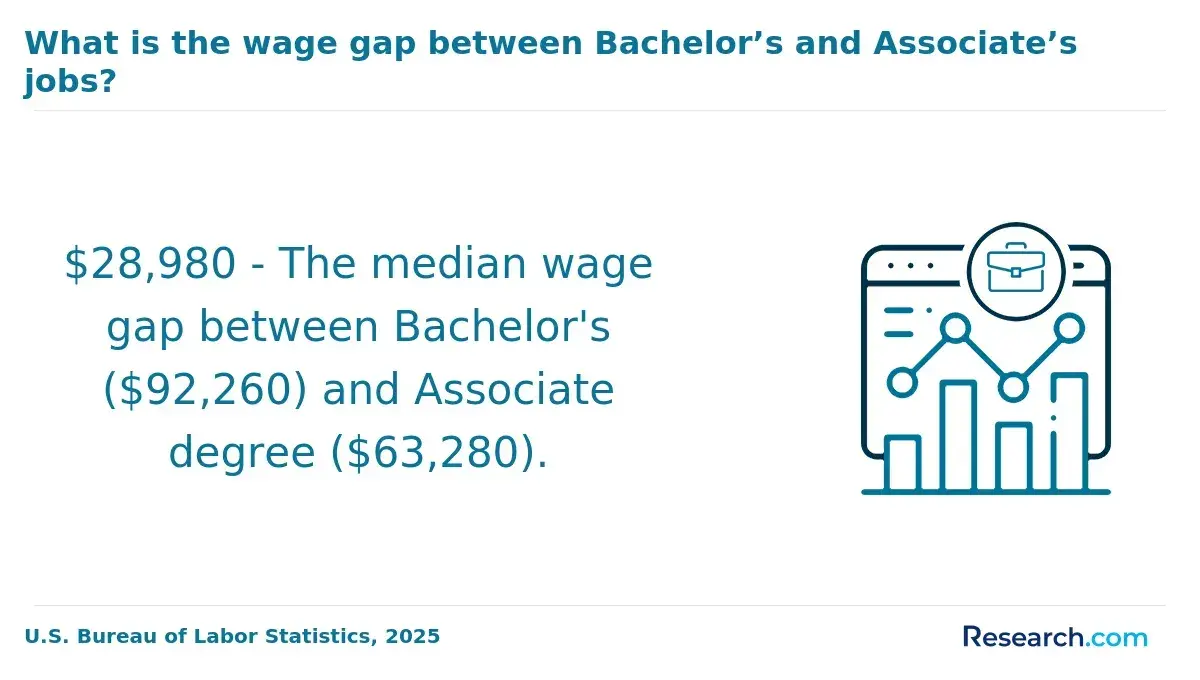
Associate degrees require about two years, with public institution costs ranging from $6,000 to $15,000, while bachelor's programs span closer to four years and $20,000 to $50,000. These longer pathways develop stronger digital literacy and analytical skills critical as global investment in real estate technology surpasses $40 billion, influencing hiring expectations for brokers proficient in transaction platforms and data analysis.
For example, a professional moving from general business to commercial real estate brokerage must weigh whether quicker certification aligns with employer demands for tech fluency and strategic insight. The ongoing costs of licensure exam prep and continuing education-typically several hundred dollars annually-further complicate upfront savings.
- Accelerated certificates offer speed and lower initial cost but limit sector flexibility.
- Associate degrees provide moderate time and foundational skills suitable for regional markets.
- Bachelor's degrees emphasize adaptability for a technology-integrated brokerage environment and are favored for higher-level commercial roles.
Choosers must scrutinize state-specific licensing rules, employer digital competency standards, and the practical value of credentials in advancing amid real estate's data-centric transformation.
Other Things You Should Know About Real Estate
The primary challenge is that a real estate degree alone does not grant licensing, which is mandatory for broker roles. Graduates must pass state-specific licensing exams and accumulate supervised experience before practicing independently. Additionally, many employers prioritize hands-on sales experience and negotiation skills over academic credentials alone, making real-world internships or entry-level roles essential to complement the degree.
Focus on brokerage only if you are prepared for the commission-based income volatility and high-pressure client negotiations typical of this role. If you prefer more predictable salaries or less regulatory compliance, careers in property management, appraisal, or real estate finance may better match your risk tolerance and professional goals. Prioritize brokerage pathways if direct client interaction, deal-making, and entrepreneurial independence rank highest in your decision factors.
In 2027, regional market knowledge is crucial for brokers as it allows for understanding local trends, regulations, and client needs, which complements a real estate degree's broader educational foundation. Brokers with expertise in both areas are better equipped to advise clients accurately and make informed decisions.
While some employers accept entry-level brokers with just a degree and license, advanced certifications in specialties like commercial brokerage or appraisal increase job competitiveness and income potential. Additional training clarifies complex transactions and regulatory nuances that basic degrees may not cover deeply. Prioritize certifications based on your intended broker sector and employer expectations to enhance your practical skillset and differentiate yourself in the job market.
References
- 10 Jobs in Real Estate Other Than Agent | Champions School https://www.championsschool.com/resources/career-hub/real-estate-jobs-other-than-agent/
- How to Get Into Commercial Real Estate: Full Guide https://mergersandinquisitions.com/how-to-get-into-commercial-real-estate/
- What Can You Do with a Real Estate License? Career Opportunities https://www.rockwellinstitute.com/blog/what-can-i-do-with-real-estate-license/
- What Degree Do You Need to Be a Realtor? - Charles Rutenberg Realty https://gocrr.com/what-degree-do-you-need-to-be-a-realtor/
- Best Sales Commission Jobs 2026: Top High-Paying Roles - Qobra https://www.qobra.co/blog/best-sales-commission-jobs
- Broker Requirements - Scott-White Career Institute https://scott-white.com/licensing-requirements/broker-requirements/
- What is a typical sales commission structure explained https://iucab.com/blog/what-is-a-typical-sales-commission-structure-explained/
- Online vs. In-Person Real Estate Classes: Which is Right for You? https://keyrealtyschool.com/blog/online-vs-in-person-classes/
- 6 Best Online Real Estate Schools in California for 2025 https://www.housingwire.com/articles/best-online-real-estate-schools-california/
- Is Real Estate a Good Career for You? | 360training https://www.360training.com/blog/is-real-estate-a-good-career