2027 Best Online Public Health Degrees for Community-Based Organization Careers

Co-Founder and Chief Data Scientist
Facing mounting community health disparities, professionals aiming to serve in community-based organizations must quickly adapt while managing existing job and family commitments. The Department of Education reports a 19% surge in enrollment for online health-related degrees since 2022, signaling growing demand for flexible learning environments that accommodate adult learners balancing multiple responsibilities. This trend reveals the necessity for programs that combine rigorous public health training with practical accessibility and timely completion options, as delayed credentialing can stall career advancement and impact community health initiatives. This article evaluates the best online public health degrees for effectively bridging educational access and workforce readiness in community-based settings.
Key Things You Should Know
- Online public health degree programs often delay workforce entry by one to two years due to practicum requirements, increasing cumulative educational costs by 15-20% beyond tuition, per National Center for Education Statistics.
- Employers prioritize candidates with accredited online degrees incorporating community-based fieldwork, with 68% in nonprofit surveys citing practical experience over credentials alone, intensifying competition for practicum placements.
- Graduates from programs aligned with current Healthy People 2030 objectives show 22% higher job retention in community-based roles, illustrating the strategic advantage-but such curriculum alignment is variably available across institutions.
What is an online public health degree and how does it prepare you for community-based organization roles?
Employers in community-based organizations (CBOs) expect public health professionals to merge technical expertise with applied understanding of social determinants and cultural competency. For instance, managing a maternal health initiative in a low-income urban setting demands data interpretation skills coupled with tailored community engagement strategies.
This real-world complexity underscores why online public health degree programs for community-based organizations focus on case studies, internships, and practicum experiences that go beyond theory. Graduates develop competencies in grant writing, program evaluation, and stakeholder communication, essential when translating academic knowledge into community trust and sustainable interventions.
The career spectrum for degree holders varies widely: median salaries reported by PublicHealthOnline.org range from about $51,030 for community health workers to $117,960 for medical and health services managers.
This disparity reflects how ascending to leadership roles requires not just foundational public health skills but also managerial aptitude and adaptive leadership. Candidates must evaluate programs critically on their provision of specialized coursework and applied projects that prepare them for both frontline roles and more administrative, policy-driven positions.
One practical consideration is the choice of specialization, such as pursuing an environmental health focus. Those interested should consider resources like the environmental health and safety degree online offerings to align their education with market demands and personal career goals.
Which accredited online public health degrees best support careers in community-based organizations?
Accredited online public health degrees for community-based careers demand rigorous, applied skills in program planning, grant writing, epidemiology, and community health assessment. Employers in community organizations emphasize practical experience managing multifaceted initiatives amid constrained resources. For instance, online MPH programs incorporating capstone projects or partnerships with local nonprofits provide essential leadership and evaluation competencies that align with job demands.
Programs accredited by the Council on Education for Public Health (CEPH) offer curriculum recognized by employers and licensure bodies, but students should verify how well these programs address community-specific challenges like health equity, cultural competence, and policy advocacy.
Missing these elements can slow career progression or necessitate further certification. Balancing synchronous versus asynchronous course formats is crucial for working professionals, where asynchronous delivery offers flexibility but requires strong self-motivation.
The best online public health programs supporting community organization jobs also feature networking and mentorship opportunities, connecting students to alumni embedded in nonprofit and public health settings. Considering tuition relative to expected salary growth in nonprofit community health roles helps minimize underemployment risks.
Employment in public health and healthcare occupations is projected to grow faster than average through 2033, with extensive annual openings driven by growth and replacement needs, according to the U.S. Bureau of Labor Statistics via the University of Oklahoma Online MPH in Community and Population Health.
Prospective students evaluating an online health admin degree should weigh these factors pragmatically to align educational investment with realistic career outcomes.
How do online public health degrees compare to campus programs for community-focused careers?
Employers hiring social and community service managers expect measurable leadership demonstrated through meaningful community engagement, creating a significant gap between online public health degrees vs campus programs for community careers. Campus-based education frequently embeds hands-on practicums and direct collaboration, fostering interpersonal skills critical for management roles.
In comparison, online programs primarily use virtual simulations or remote internships, which can limit practical exposure unless students independently secure local projects.
Choosing between online and in-person public health education for community-based roles requires careful evaluation of one's career stage and network. Mid-career professionals with established connections might leverage online formats for flexibility while augmenting fieldwork personally.
Conversely, those entering the field or switching careers often gain greater advantage from campus environments where supervised, in-person experiences build essential relationships and competencies.
Online degrees can deliver equivalent curriculum rigor and accreditation but demand proactive strategies to attain comparable employability outcomes. Graduates must seek programs incorporating significant applied projects or partnerships with local agencies.
They also need to cultivate professional networks intentionally, compensating for fewer spontaneous interactions typically found in campus settings.
The median salary for social and community service managers is $67,150, with a 13% job growth projected through 2028, reflecting sustained demand for competent leaders. Prospective students interested in accessibility may explore MPH online programs with easy admission requirements as part of their decision-making.
What concentrations and courses should you look for to work in community-based public health organizations?
Effective community-based public health degree concentrations focus on skills that directly impact local health outcomes, such as epidemiology, health education, and program planning. These areas equip graduates to design and manage interventions tailored to diverse populations while addressing structural barriers through cultural competency and social determinants of health coursework.
Courses for careers in community-based public health organizations should emphasize practical competencies like grant writing, data analysis for community health assessments, and behavioral health sciences, reflecting employer demands for applied skills over theory alone.
Most community health roles require proficiency in both qualitative and quantitative methods, including biostatistics and geographic information systems (GIS), to target interventions accurately.
Understanding health policy and ethics is also critical for navigating regulatory environments that influence program implementation. Students must prioritize programs offering practicums or internships with community organizations to gain indispensable real-world experience essential for employability.
For working professionals, programs with flexible schedules and clear credit transfer policies present viable options; for instance, some online bachelor's in public health programs charge $350 per credit hour and allow a 90-credit transfer policy, minimizing time and cost barriers.
Budget-conscious students should verify that courses satisfy state licensure or certification requirements, as mandates vary and can affect job eligibility. Evaluating faculty expertise and course sequencing in relation to community engagement further optimizes relevance and long-term career trajectories.
Those evaluating pathways that combine affordability and flexibility might explore the easiest RN to BSN program online as a comparative example of balancing cost, transfer policies, and scheduling when making educational decisions in health-related fields.
What are typical admission requirements for online public health bachelor's and master's programs?
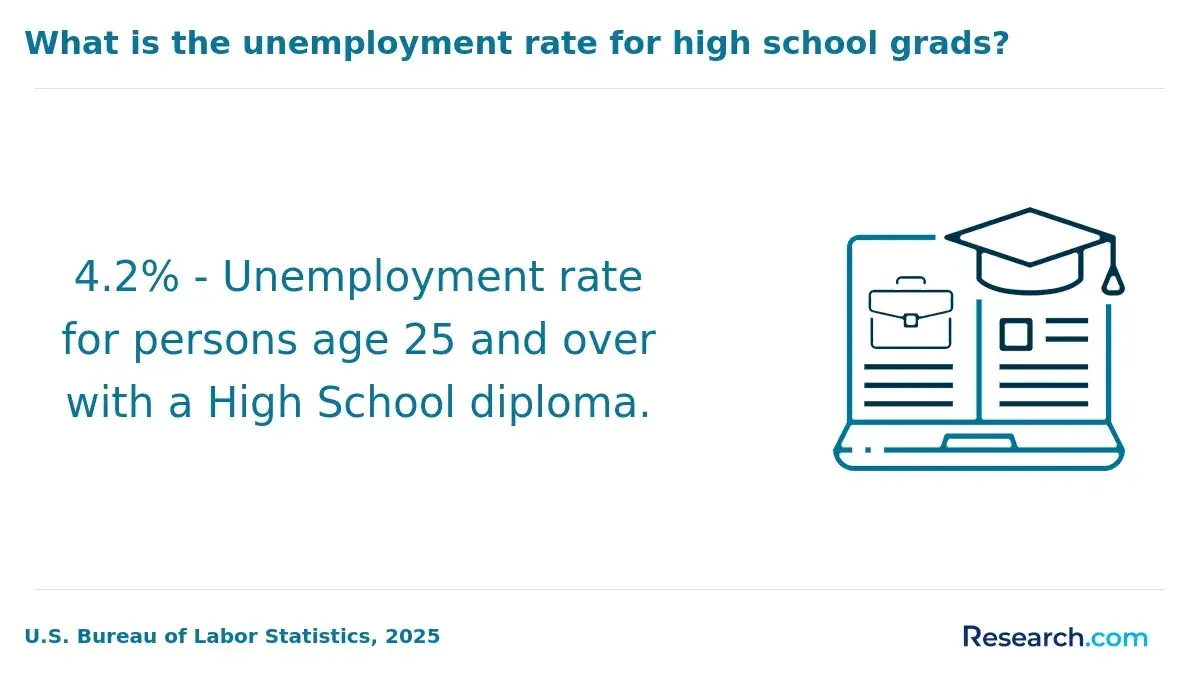
Admission standards for online public health bachelor's programs typically require at least a high school diploma and a GPA around 2.5 to 3.0, but successful applicants must often supplement academic credentials with practical evidence such as work or volunteer experience in health-related settings. This enhances applications by demonstrating real community involvement, which admission committees weigh heavily given the applied nature of many program components, including required fieldwork that may involve background checks.
At the master's level, admissions emphasize a completed bachelor's degree with a stronger GPA benchmark of about 3.0, alongside professional experience that increasingly replaces standardized tests like the GRE in competitive programs. A carefully crafted resume and letters of recommendation focusing on relevant public health or social services work are key, as is a statement of purpose linking career trajectory with community-impact goals.
This selection process reflects broader workforce demands. For instance, a working professional aiming to shift into a leadership public health role must evidence prior success managing health initiatives, especially with underserved groups, to meet employer expectations favoring applied skills over theory alone.
- For bachelor's admissions: Minimum GPA 2.5-3.0, transcripts, personal statement, relevant work/volunteer experience, possible background checks
- For master's admissions: Bachelor's degree with GPA ≥3.0, professional experience often preferred over GRE, letters of recommendation, focused statement of purpose
- Practical community engagement and leadership are increasingly decisive admission factors
Applicants without extensive background in public health face tradeoffs, balancing academic preparation against urgent career pivots by targeting flexible programs with practicum options.
How long do online public health degrees take and what do they usually cost?
The duration and cost of an online master's degree in community and population health impose tangible tradeoffs for professionals. Programs requiring 18 to 24 months full time naturally demand significant time investment, which may conflict with work and family responsibilities. Part-time or asynchronous options reduce immediate burdens but extend total completion time to 3 years or longer, delaying income growth and possibly affecting employer advancement timing.
Tuition varies considerably, typically ranging from $20,000 to $60,000 depending on factors like public versus private institutions, residency, and credit requirements. Public universities often offer lower per-credit tuition but add fees that can increase overall costs.
Private schools may have higher sticker prices balanced by financial aid availability, which requires careful evaluation beyond surface tuition figures.
- Longer, flexible programs support working professionals but delay earnings gains and can influence hiring or promotion decisions.
- Upfront tuition costs differ, but institutional type and aid options impact net prices considerably.
- Median salaries after program completion suggest financing options like loans or employer assistance are often viable when paired with careful career planning.
Salary outcomes provide useful context: for example, the University of Oklahoma's online MPH program in community and population health reports a median salary near $83,000 for relevant roles, indicating a potential return on investment for those who align timing of degree completion with career moves. This underscores the importance of synchronizing education timelines with strategic employment plans.
What community-based organization jobs can you get with an online public health degree?
Securing leadership roles in community-based public health typically requires a master's degree, with the Master of Public Health (MPH) serving as the critical credential for advanced clinical, research, and policy positions. Entry-level jobs like community health worker offer practical exposure but rarely lead to managerial or policy-influencing opportunities without graduate credentials.
For instance, program managers in large nonprofits must master data analysis, budgeting, and team leadership-skills embedded in MPH curricula.
Without an MPH, candidates often remain confined to supportive roles focused on outreach or coordination, which come with limited authority and lower salaries. Policy analyst positions demand expertise in health legislation and systemic barriers that undergraduate programs seldom cover.
Employers look for professionals who can interpret quantitative and qualitative data, communicate across diverse stakeholders, and implement evidence-based interventions effectively.
- Community health jobs without an MPH typically cap out at coordinator or educator roles
- Graduate training develops critical managerial and analytic competencies
- Policy and research leadership positions overwhelmingly require MPH-level qualifications
The choice to pursue an online MPH with a specialization in community health or epidemiology shapes not only employability but capacity for career growth. Balancing program length, cost, and focus is essential since the absence of an advanced degree constrains upward mobility and influence.
Those pivoting into community health from other fields without this credential may face significant challenges leading projects or shaping policy agendas.
What salary ranges and benefits can public health graduates expect in community-based organizations?
Salary outcomes for public health graduates entering community-based organizations (CBOs) typically range from $45,000 to $75,000 annually, with precise figures depending heavily on geographic location, organization scale, and funding complexity. Entry-level roles in smaller or rural CBOs lean closer to $45,000, whereas positions in metropolitan areas or larger nonprofits can surpass $70,000.
For example, a community health worker-an accessible role for many graduates-earns a median wage near $48,000, but candidates with advanced skills or degrees often move into policy or program manager roles that offer higher pay.
Working in underfunded rural CBOs often means accepting lower salaries and limited advancement but may deliver stronger localized impact. On the other hand, urban agencies or those with diverse funding sources frequently provide better salary prospects and benefits such as health insurance and retirement plans, though bonuses and loan repayment incentives remain rare.
Candidates must weigh these tradeoffs carefully against substantial tuition expenses, such as the University of Oklahoma's online MPH at $575 per credit hour, totaling around $24,150.
- Salaries vary widely by location and funding context.
- Benefits may be limited compared to government or hospital jobs.
- Specialized skills significantly enhance job security and pay potential.
Graduates who develop competencies in grant writing, data analysis, and program evaluation considerably improve their standing and salary leverage within community settings. These skill sets foster more stable employment and upward mobility in an often budget-constrained sector.
What is the job outlook for community-based public health roles and where is demand growing most?
Demand for community-based public health roles is strongest in underserved, rural, and Southern U.S. regions where chronic diseases strain local systems. Frontline positions-such as health outreach and disease prevention-dominate job growth but offer modest median compensation near $38,090 annually, per the U.S. Bureau of Labor Statistics and MPHOnline.org data.
This wage level constrains retention and contributes to a workforce largely dependent on lower credentials, which limits upward mobility.
Employers now increasingly prioritize candidates with graduate-level public health education, particularly for supervisory and program management roles. For example, a rural Hispanic-serving nonprofit may hire bilingual outreach staff for frontline activities, yet favor those with an MPH to manage programs and access grants.
This creates segmented hiring pipelines where workers without advanced degrees accept lower pay and slower career progression.
Considerations for prospective students revolve around a clear tradeoff:
- Immediate entry into frontline roles requiring cultural competence and bilingual skills but limited wage growth
- Investment in an online MPH degree that expands eligibility for managerial roles with higher salaries and broader responsibilities
Geographic hotspots such as Texas, Florida, and Appalachia demonstrate acute shortages that online MPH programs attempt to address. Candidates must weigh short-term income needs against strategic advancement potential in a labor market shaped by demographic and health disparities.
How can you evaluate and choose a reputable, accredited online public health program for community-based work?
Prioritizing accredited online public health programs verified by the Council on Education for Public Health (CEPH) is essential to avoid credentials that lack employer recognition. Candidates should focus on programs integrating community-based learning-such as internships or applied projects-that directly improve job readiness in frontline roles.
Faculty actively engaged in research and public health agencies provide an important link to current industry practices, which benefits students pursuing either data-driven or outreach-focused careers.
Program curricula must align with specific occupational goals given the wide salary range within the field-for instance, $55,380 median for health educators versus $81,400 for epidemiologists. Those targeting epidemiology positions require deep training in biostatistics and infectious disease control rather than generalized health promotion.
Conversely, careers in health education depend more heavily on behavioral science and communication expertise. Transparent graduate employment metrics and documented employer partnerships in community health offer critical insight into a program's practical value.
Additionally, working professionals should weigh the availability of flexible course formats that maintain academic rigor without sacrificing networking opportunities. Tuition costs and financial aid must be evaluated against potential wage gains, mindful of risks tied to credential inflation and skill mismatch.
Other Things You Should Know About Public Health
Employers in community-based organizations increasingly accept online public health degrees, but respect varies by program reputation and accreditation. Degrees from regionally accredited institutions with strong practicum or fieldwork components tend to be viewed more favorably, as hands-on experience is critical. When choosing an online program, prioritizing those with established employer partnerships or those that require real-world community engagement improves employment prospects.
In 2027, top universities offering online public health degrees tailored for community-based organization careers include Johns Hopkins University, University of North Carolina, and the University of California – Berkeley. These programs blend rigorous coursework with practical application, preparing graduates for impactful roles in the field.
Yes, but the quality and availability of practical experience varies widely among online programs. Programs that integrate practicum placements or capstone projects with local community-based organizations provide essential applied skills and networking opportunities. When evaluating programs, prioritize those requiring verified fieldwork in settings relevant to your career goals, as this experience is often a prerequisite for many community health roles.
Choosing between a bachelor's and master's degree depends on your career objectives and current experience. For entry-level roles or career pivots, a bachelor's degree with community engagement can suffice, but advancement into leadership or specialized positions typically requires a master's degree. If you have some public health background or field experience, pursuing an online master's with a community emphasis is a more strategic investment for higher responsibility and salary growth.
References
- Health and Human Services: Campus & Online Degrees and Careers https://www.publichealthonline.org/human-services/online-degree-programs/
- Public Health Needs People With Diverse Skills and Backgrounds—Here Are 9 Careers to Consider https://careercenter.emmanuel.edu/blog/2025/10/23/public-health-needs-people-with-diverse-skills-and-backgrounds-here-are-9-careers-to-consider/
- Public Health - SUM Admission https://admission.sum.edu.pl/public-health/
- How is the Job Outlook for the Public Health Field? - Healthcare Management Degree Guide https://www.healthcare-management-degree.net/faq/how-is-the-job-outlook-for-the-public-health-field/
- Top 25 Online MPH Community Health Degree Programs - MPH Online https://www.mphonline.org/best-online-mph-community-health/
- Online Public Health Degrees: Find Your Program https://www.degreesforgood.org/online-degrees/public-health-programs/
- Public Health - INTERNATIONAL EUROPEAN UNIVERSITY, POLAND | EUROPE | STUDY IN POLAND | STUDY IN EUROPE | MBBS | GENERAL MEDICINE | BUSINESS | ENGINEERING | IT | EUROPE https://ieu.com.pl/european-medical-school-main/public-health/
- Careers https://www.publichealthdegrees.org/careers/
- Public Health Degrees & Careers | How To Work In Public Health https://www.learnhowtobecome.org/medical-health-careers/public-health/
- Master of Public Health https://online.une.edu/public-health/master/