2027 Research Assistant Roles You Can Target With a Neuroscience Degree

Co-Founder and Chief Data Scientist
Graduates with a neuroscience degree often confront a bottleneck when entering research roles that require specialized experience, yet lack clear pathways bridging academic knowledge and workforce readiness. This gap intensifies as demand for interdisciplinary skills outpaces traditional training, with the U. S. Bureau of Labor Statistics projecting a 13% increase in biological technician positions over the next decade. Meanwhile, the rise in online programs-now representing over 40% of graduate enrollments according to the National Student Clearinghouse-offers flexible avenues but also complicates employer assessments of candidate rigor. This article evaluates actionable research assistant roles specifically suited for those with neuroscience backgrounds, enabling informed decisions to navigate this complex employment landscape effectively.
Key Things You Should Know
- Neuroscience research assistant roles increasingly demand proficiency in computational modeling, with 62% of employers prioritizing advanced coding skills in Python or MATLAB, shifting hiring toward candidates with integrated data science training.
- Public-sector funding cuts since 2024 constrain entry-level positions by 18%, intensifying competition and limiting roles to candidates offering specialized techniques like optogenetics or neuroimaging, elevating workforce credential expectations.
- Median project durations stretching beyond 24 months correlate with delayed employment turnover, increasing cost barriers for early-career candidates and incentivizing those with prior clinical experience to secure stable appointments faster.
What types of research assistant roles can you pursue with a neuroscience degree?
Research assistant jobs for neuroscience graduates rarely provide straightforward entry routes without targeted skills and credentialing, especially when crossing between academic, clinical, and industrial sectors. Academic roles often require independence in protocol management and manuscript support alongside core competencies in data collection and statistical software like MATLAB or SPSS.
Conversely, clinical research assistants must understand regulatory compliance and patient coordination, making additional certifications such as Good Clinical Practice (GCP) essential for those transitioning from academia.
Pharmaceutical and biotech companies hiring neuroscience research assistant candidates emphasize skills in neuropharmacology assays and imaging techniques, with industry expectations focusing on practical laboratory proficiency rather than just academic credentials.
The practical reality is that a neuroscience degree alone seldom suffices for autonomous research work; employers frequently prioritize demonstrated experience in specific methodologies and compliance standards.
Workforce projections from the U.S. Bureau of Labor Statistics estimate an 11% growth in medical scientist roles from 2023 to 2033, reflecting expanding opportunities driven by neurodegenerative disease studies and brain-computer interface innovations.
To navigate competitive neuroscience research assistant career opportunities effectively, candidates should tailor applications to highlight relevant technical expertise and regulatory knowledge. Exploring cheapest online data science masters programs may also support skill diversification important in data-intensive roles within neuroscience research.
How does a neuroscience degree prepare you for lab-based research assistant jobs?
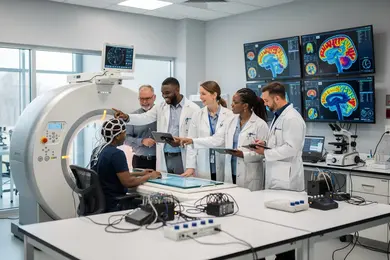
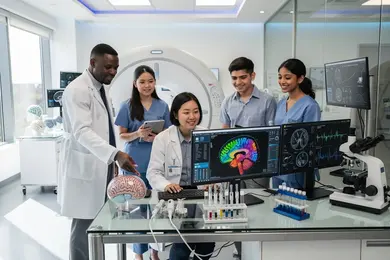
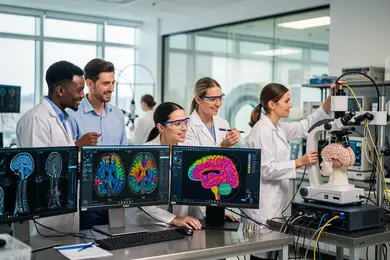
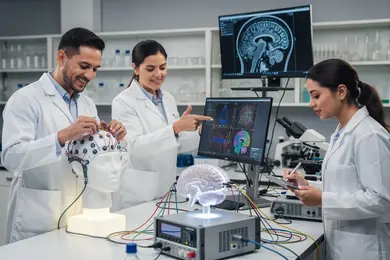
A neuroscience degree provides practical, specialized skills essential for lab research assistant positions, emphasizing experimental design, electrophysiology, molecular assays, and neuroimaging protocols. These skills directly address employer demands, particularly in clinical trial settings where neurology and psychiatry trials constitute roughly 20% of new initiatives.
Applying neuroscience education to laboratory research roles means graduates are equipped not only with theoretical understanding but also with the ability to execute complex, regulated procedures that are critical for rigorous data integrity and patient safety.
Such roles also require proficiency with statistical software and coding to manage the extensive data generated in interventional brain research, reducing the need for extended on-the-job training. This technical fluency is increasingly significant given the high activity across more than 120,000 ongoing clinical trials in the U.S.
Practical experience distinguishes candidates-those without prior lab exposure face a notable gap between academic preparation and workplace expectations, making internships or research assistantships crucial transitional stages.
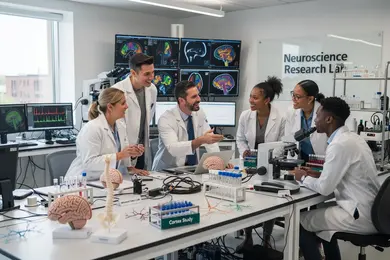
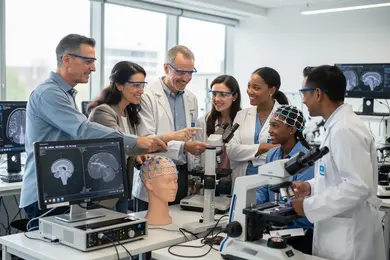
- University laboratory settings involve applying neuroscience degree skills for lab research assistant positions through hypothesis testing, equipment management, and precise data logging supporting academic outputs.
- Industry trials demand monitoring of protocol adherence, biospecimen collection, and coordination within multidisciplinary teams, operating under strict FDA oversight.
Graduates must also adapt to logistical challenges such as bridging animal model protocols with human trials and balancing wet lab work with computational analysis.
For those seeking educational alternatives, a nutritional science degree online offers a contrast in technical scope but does not typically encompass the same neurobiological and data-handling competencies critical in neuroscience-focused labs.
What entry-level research assistant positions are open to recent neuroscience graduates?
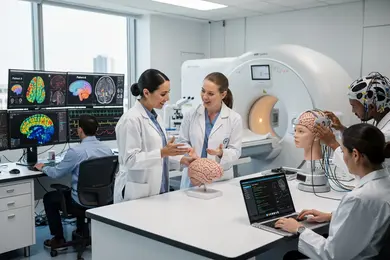
Entry-level research assistant jobs for neuroscience graduates frequently present a choice between specialized technician roles and broader research support positions, each with distinct practical implications. Neuroimaging technicians, often classified alongside MRI technologists, command a median salary of $78,980 yet typically require certification which can delay immediate employment.
The Bureau of Labor Statistics projects a 6% growth in such roles over the next decade, indicating promising demand specifically for candidates with neuroimaging expertise.
Clinical research assistant positions in neuroscience often demand direct patient engagement, administration of cognitive assessments, and biological sample management, favoring candidates who combine neuroscience theory with clinical experience. Cognitive neuroscience labs, for example, value assistants adept in experimental software and EEG or fMRI protocols, which minimizes employer training investment.
Entry-level neuroscience data analyst roles call for proficiency in programming languages such as Python or R and handling large neurological datasets, skills that align with longer-term prospects in computational neuroscience or bioinformatics.
However, tradeoffs exist: neuroimaging technician jobs may offer higher starting compensation but require certification, whereas research assistant roles provide broader, varied training but generally start below technician salary medians.
Strategically aligning your existing coursework and internship experience with employer expectations reduces onboarding challenges and accelerates demonstrable value in neuroscience research settings. Regional job availability and employer-specific certification timelines notably affect these decisions.
Prospective students should also consider interdisciplinary education options, such as a computer science degree online, which can enhance competitiveness in data-intensive neuroscience roles.
What education, skills, and experience do employers expect from neuroscience research assistants?
Employers consistently require neuroscience research assistants to have at minimum a bachelor's degree in neuroscience or a closely related discipline such as psychology or biology, emphasizing education requirements for neuroscience research assistant jobs that include coursework in neuroanatomy, physiology, and cognitive science.
Technical proficiency with data analysis software like MATLAB, Python, or SPSS is increasingly necessary as roles advance, alongside hands-on experience with neuroimaging modalities including fMRI, EEG, or PET. Practical lab exposure obtained through internships or undergraduate research projects is often decisive in demonstrating familiarity with experimental design and ethical research standards.
Strong quantitative ability is a critical skill employers seek in neuroscience research assistants, enabling them to handle complex datasets efficiently.
For example, a research assistant assigned to a federally funded cognitive neuroscience project might be responsible for preprocessing large neuroimaging datasets while maintaining strict adherence to NIH data integrity and reproducibility requirements. This scenario illustrates why mastery of statistical programming and attention to detail cannot be overstated.
Successful candidates also need well-developed soft skills such as teamwork, effective communication, and problem-solving to operate in multidisciplinary research groups where flexibility and clarity directly impact project outcomes. Certifications related to human subjects protection or IRB training further strengthen candidacy by meeting compliance and regulatory demands.
Funding trends reinforce these workforce needs: a 2024 NIH analysis shows a 30% growth in grants targeting cognitive neuroscience over ten years, driving demand for assistants adept at managing increasing research complexity.
Those aspiring to enter this field should consider how accelerated psychology programs can offer streamlined pathways to the foundational skills necessary for neuroscience research roles.
How do salaries and benefits compare for neuroscience research assistant roles?
The salary landscape for research assistants in neuroscience reveals a stark divide influenced largely by technical skill sets and sector placement. Those in academic or government roles generally earn between $40,000 and $60,000 annually, with modest benefits like healthcare and retirement plans. By contrast, candidates with computational expertise aligned to data science-such as programming and machine learning-can access significantly higher compensation.
According to BLS 2024 data, data scientists earn a median of $112,590 annually, reflecting premium demand for advanced analytics within neuroscience fields.
Industry roles in biotech and tech companies prioritizing neuroscience informatics offer stronger job security and superior benefits, including stock options and flexible arrangements. This coincides with projected data science employment growth of 36% from 2023 to 2033, far exceeding average rates. Conversely, clinical or pharmaceutical research assistants focused on benchwork face slower wage growth and fewer benefits.
For example, an academic neuroscience researcher earning $50,000 with limited remote options might double their salary by transitioning into a tech-driven data science role, though this requires ongoing technical upskilling. This presents a practical tradeoff:
- More stable but lower-paying academic roles
- Higher-paying, high-demand industry roles needing continuous skill development
Evaluating these dynamics is critical for prospective students and professionals planning a strategic pivot within neuroscience, balancing immediate compensation against long-term career sustainability.
What is the job outlook for neuroscience research assistants in academia and industry?
The job outlook for neuroscience research assistants in academia is constrained by limited grant funding and slow turnover, demanding advanced experimental skills and data analysis proficiency. Candidates seeking academic roles must typically pursue graduate degrees or specialized certifications to advance beyond entry-level, a reality often overlooked in general discussions about employability.
Conversely, industry sectors tied to neurotechnology and brain-computer interfaces (BCIs) exhibit rapid growth, fueled by a global market valued near $15 billion and annual expansion rates exceeding 13%. This creates immediate demand for research assistants adept at combining neurophysiological data with hardware testing and iterative development-a skill set largely undervalued in traditional academic positions.
Geographically, opportunities concentrate in metropolitan biotech hubs, making location a critical factor for employment. Candidates in less dense regions may face fewer industry openings despite academic institutions nearby, emphasizing the importance of strategic relocation or remote work capabilities.
- Academic roles prioritize quality and specialization over rapid growth.
- Industry offers accelerated entry but requires broader technical fluency.
- Geographic clusters significantly influence job availability.
- Strategic credentialing improves competitiveness in neurotechnology firms.
Practical considerations for those pivoting to industry include gaining cross-disciplinary skills in programming, engineering, or data science to meet employer expectations. Additional certifications tailored to regulatory and technical standards further differentiate applicants in a technically demanding environment.
How can you use a neuroscience research assistant role as a pathway to graduate or medical school?
Securing a neuroscience research assistant position with the intent to transition into graduate or medical school demands more than routine lab duties; it requires targeted engagement with industry-relevant CNS projects. With over 2,000 active CNS drug programs worldwide, employers seek candidates who contribute directly to study design, data handling, and preclinical models that mirror clinical realities.
For example, working in a pharma lab on neurodegenerative disease therapeutics offers a dual advantage: gaining technical expertise and understanding translational hurdles that influence regulatory and clinical trial processes. This exposure aligns closely with admission committees' preference for applicants demonstrating applied knowledge relevant to neuroscience-driven medicine or doctoral research.
Key elements to emphasize include:
- Managing or curating datasets for regulatory submissions.
- Hands-on experience with disease-relevant assays and neuropharmacology.
- Active roles in clinical trial workflow or preclinical modeling.
The tradeoff lies in balancing lab work with academic demands and exam preparation-often requiring disciplined time management or negotiation for flexible hours. Though academic progress may slow, integrating real-world CNS research can provide a significantly stronger market position post-graduation compared to purely academic pathways.
Do you need specific certifications or training to work as a neuroscience research assistant?
Employment as a neuroscience research assistant hinges less on formal certifications and more on targeted, practical competencies aligned with employer needs. Most academic research labs prioritize candidates with hands-on experience in neurobiology coursework, data collection techniques, and neuroimaging or behavioral testing software rather than specific credentials.
However, the landscape shifts markedly in clinical or applied neuropsychology environments, where certifications such as CITI training or Institutional Review Board (IRB) compliance are mandatory to meet ethical and regulatory standards.
For example, a neuroscience research assistant seeking roles in hospital-affiliated neuropsychology labs may face stringent barriers without human subjects research training or Basic Life Support certification, regardless of academic qualifications.
In contrast, pharmaceutical or biotech research roles commonly require additional certifications like Good Clinical Practice (GCP) and vendor-specific neuroimaging endorsements, reflecting sector-specific expectations.
Key considerations for prospective neuroscience research assistants include:
- Prioritizing hands-on laboratory and software proficiency over generic certification accumulation.
- Evaluating job descriptions for mandatory compliance credentials early to avoid disqualification.
- Balancing time and financial investment in certifications like CITI, IRB, or GCP against likely role requirements and sector standards.
With behavioral health counselor employment projected to rise 19% between 2023 and 2033 according to Bureau of Labor Statistics data from 2024, the demand for research professionals equipped with compliance credentials is expanding. This trend suggests that candidates strategically investing in certifications gain a critical edge and broaden their career trajectories beyond basic lab roles.
How can you find and compete for research assistant openings as a neuroscience major?
Securing research assistant roles in neuroscience demands more than broad academic credentials; it hinges on mastering distinct technical abilities and navigating sector-specific expectations. Government and public health agencies employ about 20-25% of neuroscience PhD graduates, driving demand for candidates who can translate scientific findings into policy-relevant insights beyond conventional laboratory work.
Targeted job searches on official federal platforms like NIH and NSF, along with university career portals, optimize access to relevant openings. Networking with faculty and professional groups such as the Society for Neuroscience can uncover less visible opportunities essential for competitive positioning.
Applicants must demonstrate proficiency in analytical tools-MATLAB and Python-and methodologies such as electrophysiology and neuroimaging to align with hiring patterns shaped by real-time research priorities. Crafting applications that emphasize these capabilities alongside documented research contributions improves alignment with employer needs.
- Use specialized keywords combining neuroscience subfields with roles like "lab technician."
- Highlight interdisciplinary skills for roles in public health and policy.
- Engage actively in professional networks to reveal unpublished openings.
- Bridge academic and practical skill sets through focused training.
Ongoing skill development through certificate programs or workshops bridges gaps between academic preparation and applied research requirements. Employers increasingly prioritize adaptability, interdisciplinary collaboration, and project management experience, which often differentiate candidates in a crowded field.
How do online and campus-based neuroscience programs impact research assistant opportunities?
Campus-based neuroscience programs offer a distinct advantage in securing research assistant roles due to direct access to laboratories, supervised hands-on training, and immediate networking with faculty. This experience is especially critical for positions demanding wet lab skills in biomedical research or industry R&D.
Conversely, online programs provide flexibility but generally lack equivalent in-person lab opportunities, which can delay skill acquisition. For example, a student aiming for university-affiliated research centers will find campus resources and mentorship more aligned with employer expectations than online coursework alone.
Employers increasingly value demonstrable competencies rather than credentials alone. Online neuroscience students must actively pursue remote internships, virtual labs, or certifications in analytical tools to offset limited physical lab exposure.
Campus students can leverage institutional projects and interdisciplinary collaborations early to differentiate themselves in competitive applicant pools.
Strategic efforts for online learners include:
- Targeted statistical software certifications
- Participation in virtual lab platformsSecuring internships through research consortia
- Campus students, meanwhile, benefit from early engagement with on-site projects and faculty connections to maximize employability.
Financially, neuroscience graduates see lifetime earnings around $5.66 million according to data from the College ROI project, indicating solid market relevance. However, realizing this potential hinges on effective practical skill-building beyond degree completion, regardless of delivery mode.
Other Things You Should Know About Neuroscience
Most research assistant positions in neuroscience are entry-level and project-specific, making a bachelor's degree sufficient to start. However, advancing to supervisory or independent research roles consistently requires a graduate degree, such as a master's or PhD. Without this, opportunities for meaningful career growth and increased responsibility remain limited, so prioritizing graduate studies is essential for long-term advancement.
Recent neuroscience graduates aiming for research assistant roles in 2027 should possess skills in data analysis, laboratory techniques, and proficiency in software such as MATLAB or SPSS. Strong communication abilities and a solid understanding of research methodologies are also essential.
Neuroscience research assistant roles frequently involve extensive data collection, documentation, and routine lab maintenance, resulting in long, repetitive hours. Balancing this workload while pursuing higher education or shifting into related fields like clinical research can lead to burnout. Candidates should realistically assess their capacity to manage time-intensive job responsibilities alongside further education or career transitions and plan accordingly.
Academic labs often provide broader research exposure and publications but can demand longer hours with lower compensation compared to industry labs, which focus on applied projects with clearer timelines and higher pay. Graduates aiming for fast career progression and practical skills should prioritize industry positions, while those targeting academia or graduate studies may benefit more from academic lab experience. Aligning choice of workplace with long-term career goals is critical for effective decision-making.
References
- Potential Careers https://neuroscience.uoguelph.ca/potential-careers/
- Jobs https://www.bna.org.uk/jobs/
- What Can You Do with a Neuroscience Degree? | Tiffin University https://www.tiffin.edu/news/what-can-you-do-with-a-neuroscience-degree/
- Conducting research as an undergraduate https://www.katenuss.com/advice/undergrad_research/
- Research Assistant job profile https://talentmark.co.uk/candidate/job-profiles/research-assistant-profile/
- Neuroscience PhD Career Paths Beyond Academia https://www.industrycareerguide.com/blog/neuroscience-phd-career-paths
- Pathways to Neuroscience https://neuroxcareers.org/pathways-to-neuroscience/
- Research Assistant Certification Exam Comprehensive Study Guide https://ccrps.org/clinical-research-blog/research-assistant-certification-exam-comprehensive-study-guide
- 15 Best Certifications for Research Assistants in Nigeria (2026 Guide) | Profolio https://www.profolio.ng/research-assistant/best-certifications
- Neuroscience Degree Salary https://www.collegehelpguide.com/degrees/neuroscience/salary/