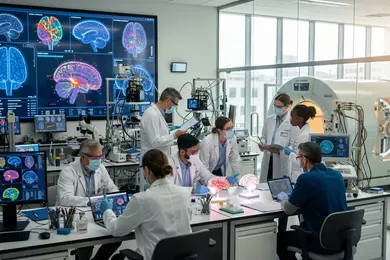
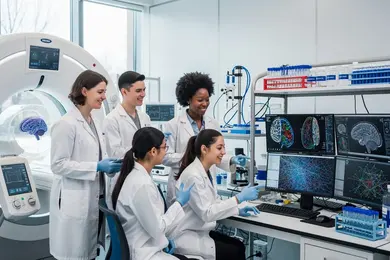
2027 First Neuroscience Roles for Analytical Students Entering Research Careers

Co-Founder and Chief Data Scientist
For analytical students aiming to break into neuroscience research roles, the primary challenge lies in securing relevant, hands-on positions that bridge theoretical knowledge with practical lab skills. Over 60% of U. S. postgraduate neuroscience programs now incorporate flexible online or hybrid coursework, according to the National Center for Education Statistics, reflecting a shift in how students can gain credentials amid professional and personal constraints. However, many programs fall short in providing robust research placements essential for early-career scientists, creating a gap between academic completion and workforce readiness. This article evaluates the most viable neuroscience research roles that analytical students entering this field can realistically pursue, focusing on pathways that maximize employability and skill acquisition while navigating these structural barriers.
Key Things You Should Know
- Graduates with strong analytical skills entering neuroscience roles encounter a 15% salary premium on average, but face a 24-month median job search, reflecting industry demand-supply imbalances reported by the National Science Foundation in 2024.
- Employers prioritize candidates with computational modeling and data science mastery, causing traditional lab technician roles to contract by 13% annually according to Biomedical Workforce Reports, pressuring skill acquisition choices.
- Extended degree paths, exceeding four years for combined data analytics and neuroscience training, raise opportunity costs by 18%, prompting many to weigh accelerated certificate programs versus comprehensive interdisciplinary degrees.
What are the best entry-level neuroscience roles for analytical students starting research careers?
Analytical students aiming for the best entry-level neuroscience research roles must weigh practical experience against technical mastery earlier than most disciplines. Positions such as data analysts in neuroinformatics, research assistants in quantitative behavioral studies, and lab technicians handling neuroimaging data demand a baseline proficiency in statistics, programming languages like Python or MATLAB, and rigorous experimental design.
These roles form a critical foundation, but progressing necessitates deeper skills in computational workflows and statistical computing.
Among top neuroscience careers for analytical students in research, data scientist roles represent a strategic target given the U.S. Bureau of Labor Statistics' projection of 36% growth from 2023 to 2033. This expansion occurs because industries increasingly depend on advanced analytics to interpret neurobiological datasets across drug development and brain-computer interface projects.
Students should actively seek internships or credentials, such as an online master in data science, to meet these evolving employer expectations.
Roles as research assistants typically involve managing protocols and validating quantitative data but often restrict career momentum without concurrent computational upskilling. Lab technicians focusing on neuroimaging gain hardware and preprocessing expertise, yet face limits without advancing coding skills.
Effective educational pathways integrate programming and statistical training early, enabling candidates to independently manage increasingly complex neuroscience research datasets.
What degrees and academic backgrounds prepare students for first jobs in neuroscience research?
Entry-level neuroscience research roles most directly align with bachelor's degrees in neuroscience, biology, psychology with quantitative focus, computer science, or biomedical engineering. However, candidates without strong data analysis and programming skills face significant barriers, as employers now expect fluency in R, Python, or MATLAB for managing complex neural datasets.
This dynamic shapes the practical value of typical academic backgrounds for entry-level neuroscience research positions, privileging interdisciplinary training that integrates biology with computational expertise.
The average U.S. salary for data analyst roles in neuroscience is $82,640 annually, with a range between $62,500 and $97,000, reflecting market preference for candidates who can navigate both data pipelines and biological context. Students planning to pivot into these roles should weigh whether a bachelor's is sufficient or if a graduate degree offers necessary leverage for independent research and better compensation.
Those with primarily psychology or life sciences degrees often need additional certifications in coding or machine learning to remain competitive.
Practical steps for candidates include:
- Assigning priority to programs that combine biology with data science and programming coursework.
- Pursuing internships or research assistantships with hands-on neural data training.
- Developing proficiency in statistical tools like SPSS, R, or Python tailored to neuroscience datasets.
- Targeting employer-specific technical skill requirements to align qualifications accordingly.
- Considering credentials signaling quantitative ability when coming from non-engineering majors.
Integrating education in data science from accredited online animal science programs may also provide comparative insights into managing complex biological data across disciplines while broadening career options.
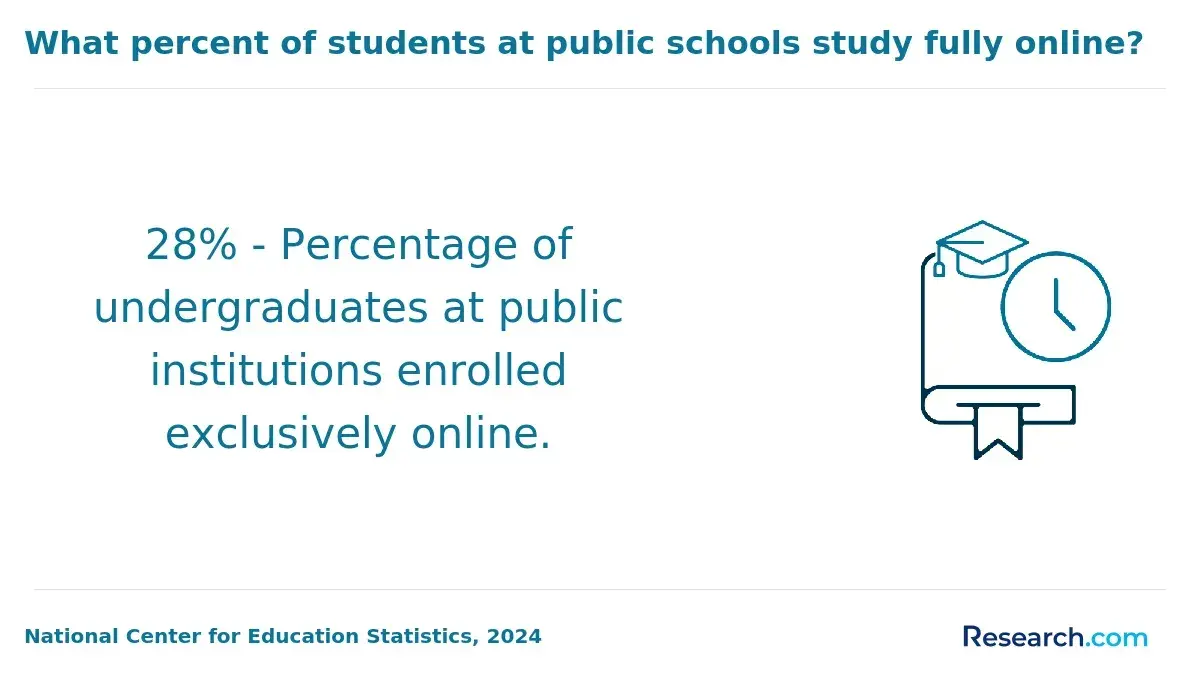
How do online neuroscience programs compare with campus-based options for research-focused students?
Online neuroscience programs for research-focused students face inherent limitations that impact their suitability for those targeting laboratory-intensive academic roles. Ten years post-graduation, roughly 24% of neuroscience PhD holders occupy postdoctoral or research scientist positions requiring in-person lab expertise, which online formats cannot fully provide.
Campus-based neuroscience degrees versus online options decisively favor campus programs for direct engagement with advanced lab equipment, real-time mentoring, and collaboration critical to mastering experimental protocols and data analysis.
Online offerings typically rely on virtual simulations and remote data sets, sufficient for theoretical grounding but insufficient for developing the tactile skills and benchwork experience valued by academic research employers. This gap can reduce competitiveness for students aiming at university or government lab appointments.
Nevertheless, online programs can serve professionals who have prior laboratory experience or seek to broaden their theoretical foundation while working. For industry roles emphasizing computational neuroscience or data analytics, select online pathways with strong quantitative focus might be practical, yet success depends heavily on a candidate's existing expertise and program rigor.
Career alignment is critical:
- Campus programs demand greater time commitment but offer invaluable hands-on laboratory training and networking within research communities.
- Online options offer flexibility and supplemental theoretical enhancement but are not primary routes for those pursuing intensive research careers.
Prospective students weighing these options may also explore related flexible programs such as an affordable library science degree online for complementary skills in information management relevant to neuroscience research environments.
Which U.S. neuroscience programs and schools offer the strongest research training for beginners?
The strongest research training for beginners in U.S. neuroscience programs arises from integrating rigorous laboratory exposure with interdisciplinary collaboration that addresses real-world biotech and pharmaceutical demands. Top U.S. neuroscience research programs for beginners, such as those at Johns Hopkins University, the University of California at San Diego, and MIT, provide structured early lab rotations and faculty mentorship that help novices concretely evaluate their niche interests before specialization.
Employers specifically seek candidates with hands-on skills in electrophysiology, neuroimaging, and data-driven techniques, favoring those trained in programs linked to substantial research funding and industry partnerships.
For example, UC San Diego's collaboration with pharmaceutical firms offers direct access to drug discovery pipelines, creating advantage for students targeting biotech careers. These conditions are essential for practical skill acquisition rather than theoretical knowledge alone.
The U.S. Bureau of Labor Statistics projects an 11% increase in employment for medical scientists including neuroscience roles from 2023 to 2033, underscoring the demand for candidates who combine advanced technical expertise with cross-disciplinary skill sets like computational biology. Given the scarcity of meaningful lab placements for beginners, selecting programs that integrate neuroscience with data analytics and offer robust mentorship reduces early career friction.
Prospective students should assess programs beyond academic reputation by prioritizing mentorship availability, scale of research funding, and real-world internship opportunities.
Those seeking accelerated psychology programs or neuroscience training with practical outcomes can explore options tailored for bridging academic knowledge and industry-ready competencies through resources like accelerated psychology programs.
What core courses and lab experiences build skills for early-career neuroscience roles?
Effective preparation for early-career neuroscience roles demands a curriculum that integrates quantitative analysis, programming, and hands-on neurobiological methods rather than a sole focus on theoretical biology. Employers expect graduates to navigate complex, real-world data through applied skills in statistics, linear algebra, and calculus, underpinning computational neuroscience challenges.
Key programming languages-Python, R, MATLAB-must be coupled with project-based lab experiences to link theory directly to experimental practice.
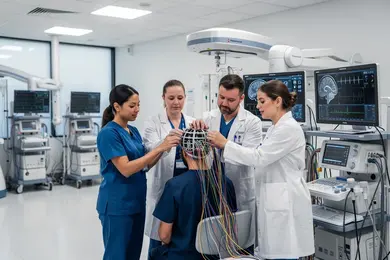
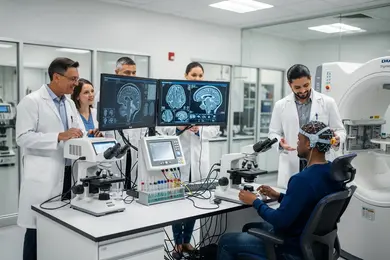
For instance, proficiency in electrophysiology labs, such as managing electrode setups, directly translates to competencies in troubleshooting signal noise, a frequent requirement in both academic and industry research settings. Likewise, familiarity with neuroimaging data workflows (fMRI, EEG) positions candidates for roles in large-scale brain mapping initiatives.
Graduate readiness increasingly hinges on fluency with machine learning and neuroinformatics platforms, aligning with occupational data showing median data scientist wages at $112,590 annually, reflecting strong market demand for these interdisciplinary skills.
- Core quantitative coursework must be integrated, not isolated, for data interpretation skills to mature.
- Project-based labs bridge theoretical knowledge with employer-valued technical competencies.
- Machine learning exposure is no longer optional for competitive neuroscience job markets.
Tradeoffs emerge when programs emphasize biology without computational rigor, often narrowing job prospects in neurotechnology and data-driven fields. Conversely, graduates from programs prioritizing practical coding labs and applied learning demonstrate greater adaptability across pharmaceutical, clinical, and AI-driven employers.
What admission requirements and application materials do neuroscience bachelor's and master's programs expect?
Applicants to bachelor's and master's programs in neuroscience must demonstrate a rigorous quantitative foundation, commonly requiring a cumulative GPA of 3.3 or higher to meet competitive program standards. Coursework in biology, chemistry, physics, and often psychology or statistics forms the academic baseline. While GRE scores have become less universally required, selective master's tracks may still weigh them, particularly where research intensity is high.
Admissions committees value application materials that clearly signify analytical aptitude and relevant experience:
- Resumes/CVs highlighting laboratory work, research projects, or internships
- Statements of purpose specifying research interests aligned with program strengths and career objectives
- Letters of recommendation from supervisors familiar with the applicant's scientific and technical capabilities
Quantitative skills evidenced by proficiency in data analysis software or programming provide a meaningful advantage, especially as interdisciplinary approaches involving tech and UX design gain importance. Many programs incorporate interviews designed to assess realistic problem-solving and experimental design abilities, a critical filter that can outweigh grade-based credentials.
International applicants must submit TOEFL or IELTS scores unless prior degrees were completed in English, and all materials require timely submission to avoid disqualification.
Given the projected 19% employment growth for behavioral and mental health counselors reported by ASU Online from BLS data, neuroscience programs increasingly expect applicants to demonstrate integrative skills that translate across emerging workforce demands.
How long do neuroscience degrees take, and what tuition, fees, and funding should students expect?
Neuroscience education demands careful consideration of time, cost, and career outcomes, especially given the differing expectations across research and clinical roles. A bachelor's degree, typically completed in four years, often suffices for entry-level research technician positions or lab assistant roles. However, advanced clinical or translational research jobs generally require master's-level or higher training due to complexity in protocols and data interpretation.
The financial burden varies significantly: public in-state tuition averages about $10,000 annually, while private schools charge between $35,000 and $50,000. Additional fees can add $1,000 to $3,000 yearly. Funding opportunities exist but mainly favor graduate students through federal grants and research assistantships; undergraduates typically face out-of-pocket costs unless awarded scholarships or work-study.
Students pursuing a master's degree intending to continue to a PhD must plan for up to six years of study, impacting both debt accumulation and delayed workforce entry. This extended timeline may affect employer preferences, particularly in clinical research environments where rapid onboarding is valued.
Employment prospects for clinical laboratory technologists supporting neuroscience research are projected to grow 5% over the next decade, reflecting ongoing demand for professionals capable of managing specialized lab tasks. Choosing between a bachelor's or graduate degree involves weighing upfront investment against role complexity and market demand.
What are typical starting salaries and early-career earnings for entry-level neuroscience research roles?
Starting salaries for entry-level neuroscience research roles in the U.S. typically range from $50,000 to $70,000 annually, with PhD graduates in academia or government labs earning near $60,000. Private sector positions, including biotech firms, often offer higher starting pay closer to $65,000 due to competitive market pressures.
Postdoctoral roles, while offering stipends around $55,000-$62,000, come with less job security and reduced benefits, marking a tradeoff between gaining specialized experience and immediate financial reward.
Within five years, earnings can rise moderately to between $70,000 and $90,000, especially for those moving from postdoc roles to researcher or junior faculty positions. However, industry jobs, particularly in pharmaceutical and data-driven biotech sectors, frequently accelerate salary growth faster than academic routes.
More than 20% of neuroscience PhDs pivot into interdisciplinary roles-such as science policy, consulting, or intellectual property-commanding starting salaries $10,000-$20,000 higher than traditional lab-based positions, according to the Neuroscience Meets Economics, Policy, and Business 2024 analysis. These options highlight the financial and career-flexibility benefits of coupling neuroscience expertise with analytic or business skills.
Prospective students should weigh the foundational skill acquisition and relative earnings limitations of laboratory roles against the broader compensation and growth potential found in cross-sector analytical careers. Hiring standards, job stability, and skill diversification remain key considerations for strategic decision-making toward sustainable career outcomes.
What certifications, technical skills, or software proficiencies strengthen applications for first neuroscience jobs?
Entry-level neuroscience roles increasingly demand proficiency in programming languages like Python, R, and MATLAB, with an emphasis on Python's specialized libraries (NumPy, Pandas, SciPy) for managing complex neuroimaging data and machine learning tasks. Candidates lacking these skills often face longer onboarding and limited project responsibilities, especially in data-intensive environments where employers prioritize coding fluency over theoretical knowledge alone.
Certifications in data science or bioinformatics can enhance employability by demonstrating applied technical competence beyond academic credentials, particularly when combined with experience on neuroimaging platforms such as FSL, AFNI, or BrainVoyager.
For example, neuroscience data scientists in specialized roles command higher salaries, reportedly averaging $120,000 annually per Emory University Career Center data, reflecting a market premium tied to validated skill sets.
Hands-on mastery of electrophysiology and behavioral research software (Clampfit, E-Prime, Presentation) remains critical for laboratory research assistants, while familiarity with version control systems like Git signals readiness for collaborative, reproducible workflows.
Practical skills to automate data pipelines or routine analyses distinguish candidates within competitive applicant pools, reducing dependence on senior staff for repetitive tasks.
The growing adoption of cloud computing resources (AWS, Google Cloud) in large-scale neuroinformatics underscores an emerging skill gap. Candidates proficient in these platforms access roles benefitting from scalable computing power, whereas those without such experience may encounter reduced immediate job prospects or require additional training investment from employers.
How can students evaluate accreditation, research output, and career outcomes when choosing a neuroscience program?
Program accreditation remains a critical filter for evaluating neuroscience education, as recognized regional bodies and relevant professional affiliations enforce standards linked to funding and workforce credibility. Reputation alone obscures differences in curriculum depth, faculty expertise, and research capacity, impacting long-term career prospects.
Assessing research productivity through metrics like faculty h-indexes, publication volume, and active grants provides insight into a program's engagement with current scientific challenges. Programs fostering multidisciplinary collaboration better prepare students for the diverse problem-solving demanded in industry and academia.
Graduate outcomes demand scrutiny beyond placement rates. Consider employment specificity, timeframes for securing research positions, and job relevance. For instance, Tufts Graduate School of Biomedical Sciences reports 92% of neuroscience PhD grads obtain research-related roles within a year, emphasizing early lab experience's role in employability. Absence of transparent alumni data introduces risk for candidates targeting competitive niches.
Prospective students should also evaluate practical access to internships and labs, which strongly influence hiring chances in pharma, biotech startups, and research institutes. Tradeoffs exist between large programs offering broad output and smaller ones with focused expertise tied to industry needs. For career pivots, programs with active networking and robust career services enhance outcomes considerably.
Other Things You Should Know About Neuroscience
Analytical students must weigh the tradeoff between breadth and depth. Early specialization can accelerate entry into niche roles but limits exposure to diverse methodologies employers value for problem-solving. A broad foundational training offers adaptability across subfields and enhances long-term employability, especially in interdisciplinary teams, yet may delay mastery of advanced techniques. Prioritize broad training during initial roles, then specialize based on specific research interests or employer needs to balance marketability with expertise.
In 2027, research internships provide practical experience and skill development that significantly boost employability for entry-level neuroscience roles. They offer networking opportunities and expose students to real-world applications of theoretical knowledge, making candidates more attractive to employers than solely relying on academic coursework.
Entry-level neuroscience roles demand managing heavy laboratory hours, data collection, and rigorous documentation, often with tight deadlines. Analytical students must adapt to balancing repetitive technical tasks with complex problem-solving under supervisor direction. Time-intensive protocol adherence can limit opportunities for independent inquiry initially, affecting job satisfaction and skill development pace. Recognizing these constraints, candidates should prepare for structured environments that reward persistence and attention to detail before transitioning to more autonomous research responsibilities.
Programs linked to academic research centers emphasize theoretical knowledge and experimental rigor, fostering skills suited to graduate study or long-term research careers. Those with industry partnerships often integrate applied neuroscience and translational projects, enhancing readiness for private-sector roles in biotech or pharmaceutical companies. For students targeting immediate employment in commercial or product-driven research, prioritizing industry-affiliated programs accelerates exposure to employer expectations and applied technologies. Conversely, academic-focused programs offer stronger preparation for research careers requiring advanced degrees.
References
- How to Apply | Department of Neurobiology and Behavior https://www.aldacenter.org/commcms/neurobiology/graduate-program/ms-program/msapply
- Neurosciencemeetseconomics https://neurosciencemeetseconomics.com
- Best Neuroscience Research Programs for International Students https://riseglobaleducation.com/blogs/best-neuroscience-research-programs-for-international-students
- 1+ Neuroscientist Resume Examples [with Free Templates] https://www.tealhq.com/resume-examples/neuroscientist
- Job Market - Federation of European Neuroscience Societies https://www.fens.org/careers/job-market
- What Can You Do with a Neuroscience Degree? | Tiffin University https://www.tiffin.edu/news/what-can-you-do-with-a-neuroscience-degree/
- Explore Parexel Careers in Neuroscience https://jobs.parexel.com/en/neuroscience
- Undergraduate Research Experiences Grow Career-Ready Transferable Skills - The Council on Undergraduate Research https://www.cur.org/journal-article/undergraduate-research-experiences-grow-career-ready-transferable-skills/
- Pursue Entry-Level Tech Jobs | DeVry University https://www.devry.edu/blog/entry-level-tech-jobs.html
- Online vs. On-Campus: Which Mode of Learning Is Best for You? https://www.onlinemastersdegrees.org/student-resources/which-mode-of-learning-is-best/