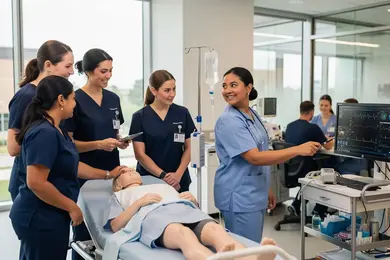
2027 MSN Programs With the Best Academic Flexibility

Co-Founder and Chief Data Scientist
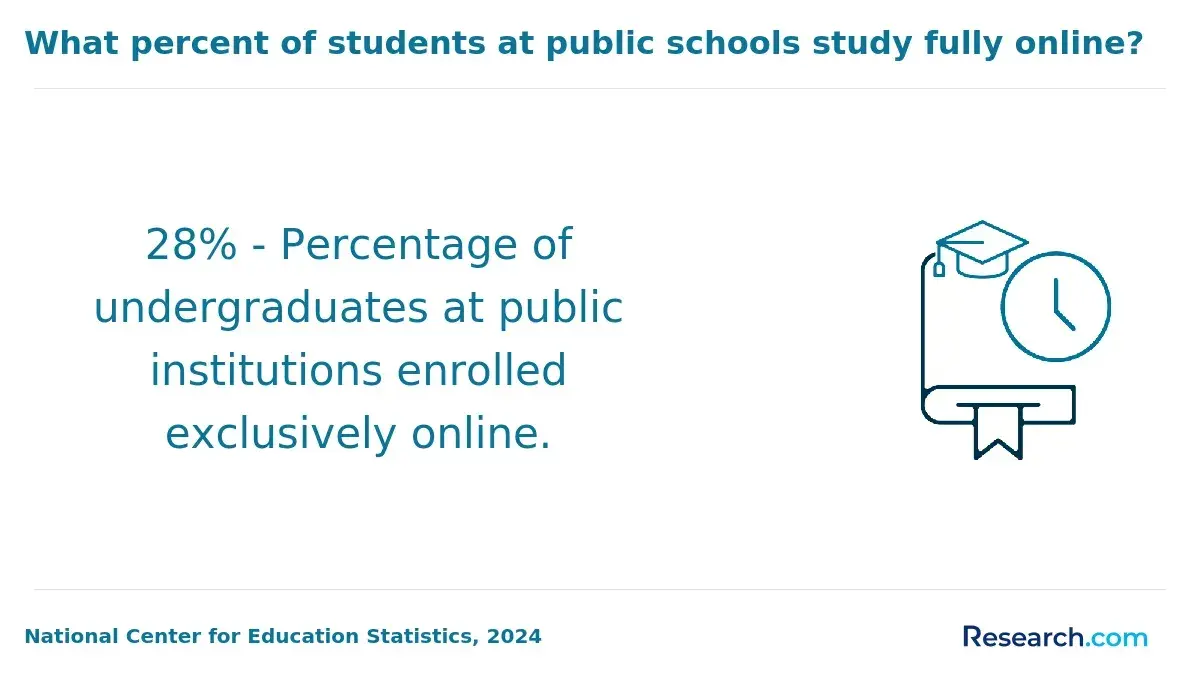
Balancing shift work, family obligations, and continuing education is a persistent barrier for many nurses pursuing an MSN degree. Nearly 60% of graduate nursing students in the U. S. now prioritize programs offering asynchronous or hybrid options, a trend reported by the National Center for Education Statistics that signals rising demand for scheduling flexibility to accommodate complex lifestyles. This shift impacts retention and progression rates, making rigid program structures an increasingly unrealistic choice for returning adults.
Understanding which MSN programs deliver genuine academic flexibility without compromising clinical standards is essential for professionals aiming to expand credentials efficiently while managing real-world constraints. This article identifies MSN programs with the most adaptable academic models, helping prospective students navigate program formats, pacing, and enrollment options that align with demanding work and personal schedules.
Key Things You Should Know
- Hybrid MSN programs with asynchronous clinical rotations reduce time-to-completion by 15%, but limit hands-on specialization options, delaying eligibility for niche certifications vital in advanced practice roles.
- Employers increasingly favor MSN graduates with proven competency via integrated simulation labs, yet remote-only curricula struggle to demonstrate equivalent clinical readiness, affecting hiring prospects in competitive urban healthcare markets.
- Tuition data from the National Center for Education Statistics reveals 22% higher average debt for part-time MSN enrollees, prolonging workforce reentry and constraining mobility for professionals balancing ongoing employment and study.
What makes an MSN program academically flexible for working nurses and adult learners?
Academic flexibility in msn programs designed for working nurses is largely determined by modular curricula, asynchronous learning, and recognition of prior clinical experience. For example, a nurse on 12-hour shifts in a critical care unit benefits from self-paced online courses that enable progress outside rigid class schedules. These flexible academic options for adult learners in msn programs reduce redundant coursework and speed degree completion, accommodating inconsistent professional and personal demands.
Cost variability deeply influences which programs remain accessible and practical. Tuition for self-paced online msn programs in 2026 varies from $10,368 to $31,410, reflecting differences between competency-based models and traditional credit-hour approaches. Lower-cost programs often focus on compressed content and digital resources, balancing budget and time constraints. Conversely, higher-priced options may offer enhanced faculty interaction and clinical placement support but tend to require stricter scheduling, which can conflict with full-time nursing jobs.
Employers expect msn graduates to display advanced clinical skills paired with independent problem-solving abilities. Programs blending real-time case studies with evidence-based assignments foster this competence but demand strong self-discipline and technical agility from students managing flexible schedules. This expectation presents a tradeoff: flexibility requires significant personal accountability to meet deadlines without structured classroom reinforcement.
Prospective candidates can explore a range of msn direct entry programs online for non-nurses that combine these features and tradeoffs, balancing flexibility, cost, and workforce readiness within their education pathway. MSN direct entry programs online illustrate this evolving landscape for strategic career development.
How do online, hybrid, and campus MSN formats compare for flexibility and clinical training?
Tradeoffs between flexibility and clinical training rigor define the choice between online, hybrid, and campus MSN pathways. For working professionals, an online MSN program flexibility and clinical requirements often mean asynchronous coursework combined with independently arranged clinical placements. This independence can introduce delays or difficulty securing appropriate training, particularly in areas with limited healthcare networks. Conversely, hybrid versus campus MSN clinical training comparison reveals that hybrid formats provide structured face-to-face intensives and faculty-supervised clinical skills, which translate into prioritized clinical rotations and employer confidence in hands-on experience.
Campus-based MSN programs demand full-time, on-site attendance with institution-arranged clinical rotations meeting strict accreditation and employer standards. Such programs suit nurses targeting leadership roles in high-acuity settings where direct mentorship and clinical rigor are non-negotiable but reduce scheduling flexibility for working students.
Prospective students should weigh how these tradeoffs affect program duration, workforce readiness, and clinical access. Employers often favor candidates with verifiable clinical training over those with fully remote arrangements, impacting career trajectories. For those considering doctoral progression, exploring online nursing doctorate programs can inform long-term strategies beyond the MSN.

Which MSN specializations and tracks offer the most schedule and course-planning flexibility?
Competency-based MSN specializations, particularly RN-to-MSN flex-path programs, offer notable operational advantages by allowing learners to advance on demonstrated mastery instead of rigid schedules. This approach enables working nurses juggling unpredictable shifts to accelerate degree completion and reduce debt; some programs report finishing at about $17,100 versus $25,650 at a standard pace, highlighting the cost-time tradeoff critical for nurses balancing work and study. These flexible models align well with the most adaptable MSN tracks for course planning, especially when asynchronous coursework is paired with regional or employer-facilitated clinical placements.
Tracks geared toward nurse educators or nurse informatics provide greater scheduling latitude since their clinical hours are more predictable and can often be arranged locally. In contrast, acute care or nurse practitioner tracks usually demand stricter on-site clinical commitments and structured in-person sessions, restricting flexibility and complicating work-life integration.
Employers in healthcare increasingly prioritize candidates who can demonstrate continuous competency progression, lending strategic value to such program designs. However, the complexity of aligning clinical prerequisites, state licensing mandates, and work schedules necessitates detailed planning. Students should prioritize programs offering fully asynchronous didactic courses, explicit competency milestones enabling early course testing, and rolling or continuous admissions. For those considering a pivot at the undergraduate level, exploring options including the easiest RN to BSN online pathways can provide foundational flexibility that supports progression into MSN specializations with flexible scheduling options.
What accreditation and state board approvals should flexible MSN programs have?
Accreditation criteria for flexible MSN programs in the United States extend beyond federal recognition to include approval by the nursing board in the state where graduates intend to practice. Holding accreditation from the Commission on Collegiate Nursing Education (CCNE) or the Accreditation Commission for Education in Nursing (ACEN) ensures national acceptance, but state board approval is indispensable for eligibility to sit for the NCLEX-RN and advanced certification exams. Without this dual validation, candidates risk investing substantial tuition-often up to $50,012 annually-only to encounter licensure delays or additional coursework requirements.
State board approvals required for accredited MSN nursing programs often dictate whether clinical practicum hours completed online or out-of-state count toward licensure. This variance creates significant challenges for professionals relocating or pursuing accelerated MSN tracks, which are sought for their condensed timelines yet carry the risk of unexpected credentialing obstacles if clinical placements do not meet state mandates.
Employers increasingly prioritize graduates from programs with clear accreditation and state board endorsement, viewing this as a proxy for compliance with evolving regulatory standards and readiness for practical clinical demands. Prospective students should rigorously verify their program's status against both accreditation bodies and their targeted state board's list, while confirming clinical site availability aligns with their schedules to avoid extended program length or licensure ineligibility that hampers employability.
Those evaluating long-term career returns, including questions like how much does a DNP make, must weigh these program eligibility factors carefully, as workforce outcomes fluctuate significantly across state and institutional boundaries.
How do part-time, accelerated, and self-paced MSN options impact time to graduation?
The timelines of part-time, accelerated, and self-paced msn programs critically shape workforce integration and income trajectories for nurses pursuing advanced roles. Part-time formats extend completion to three years or more, enabling professionals to balance employment but delaying access to higher salaries and new responsibilities. For instance, a nurse working full-time while enrolled part-time might graduate in 36 months versus the traditional 24, which affects both financial planning and negotiations with employers.
In contrast, accelerated tracks compress curricula into 12-18 months by increasing course loads, facilitating faster movement into high-demand positions like nurse practitioners or anesthetists. This pathway often necessitates suspending employment due to intense scheduling and upfront financial preparation, but leads to earlier salary gains-nurse practitioners commanded a median annual wage of $132,050 according to the U.S. Bureau of Labor Statistics via American College of Education. Employers tend to value the workforce readiness that accelerated completion signals, especially amid staffing shortages.
Self-paced options offer maximum flexibility, allowing students to adapt to personal obligations with graduation times ranging widely from under two years to more than four. However, this variability can delay licensure and postpone income improvement, which may hinder professional momentum.
The choice of program must weigh income needs, study capacity, and employer expectations, recognizing that quicker completion can align with workforce demands, while extended timelines may limit immediate professional advancement.
What curriculum structures, electives, and transfer-credit policies enhance MSN flexibility?
Flexible msn programs that integrate modular curricula with customizable electives and transfer-credit options offer practical advantages, particularly for working nurses seeking minimal disruption to employment. Core asynchronous online courses enable learners to manage pacing independently, while electives aligned with leadership, informatics, or education tracks empower targeted skill-building relevant to distinct career pivots. For instance, a nurse moving into healthcare administration benefits most from electives in financial management and policy analysis rather than clinical skill development.
Transfer-credit policies allowing up to 25-30% of credits from prior graduate work or certifications shorten time-to-degree and reduce costs, a vital consideration for professionals with existing post-baccalaureate credentials or specialty certifications. Programs with clear articulation agreements ease credit transfer logistics, mitigating the common frustration of redundant coursework.
Non-clinical msn tracks increasingly offer 100% online didactic study coupled with minimal practicum hours, supporting full-time workers balancing multiple commitments. However, this convenience trades off hands-on clinical experience, a gap that may limit options for roles requiring direct patient care competencies.
Cross-disciplinary electives from business or public health departments enhance adaptability, enabling students to align proficiencies with shifting healthcare demands and leadership roles without retaking foundational courses. This approach facilitates strategic workforce shifts without sacrificing progression speed or breadth of expertise.
How are clinical placements, preceptors, and practicum hours managed in flexible MSN programs?
Programs that offer flexible msn clinical placements address the complex challenge of balancing professional obligations with rigorous practicum requirements by leveraging both national and regional healthcare partnerships. This network-driven model frequently allows students to propose qualified preceptors within their existing employment settings, accelerating placement approval and aligning clinical experiences with current job functions. For example, a nurse specializing in psychiatric nursing at a regional hospital might secure on-site preceptorship, significantly reducing commute time and increasing the relevance of practicum hours to their daily responsibilities.
Managing clinical practicum hours typically relies on digital platforms that enable remote logging and supervisor approval, minimizing the need for physical on-campus presence. However, securing preceptor availability remains a critical bottleneck. Capacity often fluctuates by specialty and location, meaning students must proactively confirm placements early to avoid extending their program duration.
Federal and state workforce priorities sometimes push flexible msn programs to focus on underserved regions, which may ease preceptor access but can require geographic mobility or telehealth adaptations. Students should carefully evaluate how a program's placement policies align with their work schedules, geography, and career goals to reduce risks of delays. Financially, most programs report an average total cost near $10,000, supported by substantial nursing scholarships exceeding $1.2 million annually, reflecting demand and competitive admission dynamics.
What are typical tuition, fees, and financial aid options for flexible MSN programs?
Flexible msn programs typically require an investment ranging from $25,000 to $60,000 for full degree completion, with per-credit costs fluctuating between $500 and $1,200, influenced by residency and institutional variables. Supplemental fees-such as technology, clinical placement, and course materials-add an estimated $1,000 to $3,500 annually, which disproportionately affects working professionals juggling financial constraints and irregular work schedules.
Key financial aid mechanisms include federal loans, grants, employer tuition reimbursement, and institutional scholarships aimed at nurses balancing employment. However, scholarship availability is competitive and limited, underscoring the need for strategic early planning. Admission policies that eliminate standardized test requirements, as implemented by some online providers, reduce entry friction and associated delays-valuable for RNs seeking a quicker pathway amid professional obligations. Rolling admissions and frequent start dates increase accessibility but demand accelerated financial preparation.
From an employer standpoint, candidates who graduate debt-burdened may face hiring challenges within budget-sensitive healthcare systems. Consequently, practitioners targeting specialized roles with salary premiums might justify higher tuition costs, whereas aspirants to administrative or educational positions should prioritize affordable programs with solid aid packages to minimize debt load relative to expected compensation.
What MSN careers, roles, and practice settings align best with flexible programs?
Advanced practice registered nurse (APRN) roles-such as nurse practitioner, nurse anesthetist, clinical nurse specialist, and nurse-midwife-are the most compatible with flexible msn programs due to their allowance for part-time, online, and hybrid learning models that accommodate ongoing employment. These roles entail specialized clinical decision-making and direct patient care that can integrate training with existing work responsibilities. Employers increasingly favor candidates who maintain clinical hours alongside their graduate education, indicating practical proficiency and dedication.
Outpatient, primary care, and community health settings typically align better with flexible msn credentials because they prioritize independent practice and telehealth skills, which fit well with virtual coursework and adjustable practicum arrangements. In contrast, inpatient hospital roles generally demand rigid shift schedules and onsite clinical rotations, restricting flexibility and potentially complicating the balance between work and study.
A pertinent example is a nurse practitioner working in a rural clinic who can pursue a flexible msn on a part-time basis while continuing patient care and income flow, applying new knowledge immediately. Conversely, nurses in acute care specialties often require traditional, full-time, on-campus programs due to fixed clinical demands.
The U.S. Bureau of Labor Statistics via American College of Education shows the median salary for master's-prepared APRNs at $132,050, illustrating the financial advantage over BSN-prepared RNs. This wage premium emphasizes the practical return on flexible msn programs that minimize income disruption while enhancing professional trajectory.
How should students compare and choose a reputable, flexible MSN program?
Evaluating msn programs demands prioritizing practical tradeoffs between flexibility and hands-on experience to align with professional targets and employer expectations. A nurse working 12-hour shifts in critical care, for example, requires asynchronous coursework and robust clinical placement support to remain employed while advancing skills. Yet, programs offering purely asynchronous formats risk limiting real-time interaction needed for leadership and communication competence.
Key factors to guide selection include:
- Accreditation and employer reputation: Programs accredited by bodies like the Commission on Collegiate Nursing Education ensure broader recognition and smoother credential transfer.
- Scheduling and format: Hybrid or asynchronous models accommodate working nurses better than rigid synchronous-only courses, which increase dropout risk.
- Clinical placement assistance: Access to local clinical sites is vital to reduce travel burdens, especially for distance learners.
- Faculty expertise and networking: Faculty engaged in relevant health systems provide crucial mentorship and job pipeline access.
- Outcomes and job placement: Verify recent graduate employment data and employer feedback to assess real-world value.
A clear understanding of these elements prevents costly misalignments between program structure and career aims, equipping professionals to navigate the evolving demands of the healthcare labor market effectively.
Other Things You Should Know About MSN
Flexible msn programs often require the same clinical hours and competencies as traditional counterparts, but the mode of clinical placement sourcing can vary widely. Programs relying heavily on student-arranged clinical sites may delay progress or limit quality experiences. Employers evaluating graduates focus more on clinical competence and state licensure than program format, so verify the program's clinical support and outcomes when choosing flexibility.
Yes, many MSN programs accept up to 6–9 transfer credits, but only from regionally accredited graduate coursework with a grade of B or higher. Most schools also require a minimum GPA, often 3.0, and limit transfers to the first semester after admission.
Employers increasingly accept online and hybrid msn degrees if the institution is accredited and program rigor is evident through clinical competence. However, some traditional or highly specialized employers may prefer degrees from programs with strong on-campus components. Prospective students should target programs with established reputations and alumni networks in their desired job markets to enhance employability.
References
- Should You Get an Online MSN Degree? | Tiffin University https://go.tiffin.edu/blog/should-you-get-an-online-msn-degree/
- 2.04 – Transfer and Exam-based Credit | Ozarks Technical Community College https://ozarkstech.edu/policy/2-04-transfer-of-credit/
- Paying for your master's degree in nursing | edX https://www.edx.org/resources/paying-for-your-masters-degree-in-nursing
- Direct-Entry Master’s in Nursing (MSN) Programs https://nursinglicensemap.com/nursing-degrees/masters-in-nursing/direct-entry-programs/
- MSN Degrees Without Clinicals | 8 Options To Consider https://betternurse.org/msn-degrees-without-clinicals/
- Nurse Practitioner Programs (MSN) https://www.commonwealthu.edu/academics/programs/nurse-practitioner-programs-msn
- How to Pay for Nursing School | University of Bridgeport https://www.bridgeport.edu/news/how-to-pay-for-nursing-school/
- RN to MSN Accreditation: How it Works & Why it Matters https://www.rntomsn.org/student-center/rn-to-msn-accreditation/
- Best Online MSN - BestNursingPrograms https://bestnursingprograms.org/msn-programs/
- How Do Online BSN Degree Programs Work? https://www.allnursingschools.com/msn/online-or-on-campus/