2027 Online Library and Information Science Degrees for Students Who Want Library-and-Archives Hybrid Paths

Co-Founder and Chief Data Scientist
A mid-career professional aiming to merge archival science with traditional library roles faces a thorny challenge: finding an educational path that develops competencies across both without excessive time away from work. The shift toward online learning options for library-and-archives hybrid careers addresses this, as enrollment in graduate-level online programs grew by 12% in 2024 according to the National Center for Education Statistics, reflecting broader workforce demands for flexible, hybrid skill sets.
Yet, not all programs balance archival theory, digital curation, and library science effectively or accommodate adult learners' schedules. This article reviews key online library and information science degrees designed explicitly for hybrid trajectories, highlighting program structures and real-world applicability to aid informed enrollment decisions.
Key Things You Should Know
- Hybrid LIS degrees requiring archival specialization add 15-20% more credits, extending time-to-completion by up to 8 months, increasing financial and opportunity costs, as reported by the Council on Library and Information Resources 2024 data.
- Employers in government and cultural heritage sectors prioritize candidates with combined LIS and archival skills, with 62% indicating such hybrid expertise significantly improves job placement and salary prospects per a 2024 American Library Association workforce survey.
- Market saturation in traditional LIS roles has grown 9% YoY since 2022; hybrid-trained graduates face less competition but must weigh entry-level remuneration tradeoffs, as Bureau of Labor Statistics 2024 reports median librarian wage plateaus despite advanced credentials.
What is a library-and-archives hybrid career path, and how do online LIS degrees prepare you for it?
A hybrid career path combining library and archives expertise demands proficiency in both traditional librarianship and archival science, including digital curation and preservation. This dual skillset is increasingly essential in environments such as university libraries, government archives, museums, and corporate records management, where professionals must navigate physical and digital collections. Online library and information science degree benefits include focused tracks in archives, digital curation, and preservation-elements present in over 40% of online MLIS programs per a 2024 review. These programs emphasize metadata standards, digital asset management, and legal compliance, aligning with employer expectations.
For instance, a government archivist often must apply cataloging principles to tangible records while managing digital files through preservation software like Archivematica or Preservica. The practical challenges they face highlight a key tradeoff: graduates with heavy digital specialization may find fewer roles in traditional library settings, while those focused on library-only tracks risk gaps in archival readiness.
Prospective candidates evaluating library and archives career pathways online should weigh the availability of specialized tracks, faculty expertise, and practicum options that simulate the integrated workplace demands of this hybrid field. Employers prioritize versatility, so understanding these program nuances is critical to making an informed educational investment. For detailed program comparisons and insights on the best library science programs, consider reviewing best library science programs.
What types of online library and information science degrees support combined library and archives roles?
Hybrid library and archives degree programs for students aim to prepare professionals capable of navigating overlapping but distinct domains of physical and digital resource management. Such programs-often dual-focus or interdisciplinary master's degrees in LIS-address employer demand for candidates who can manage unified information systems, especially in environments like corporate research departments where digital archives and accessible library services intersect. Students in these programs encounter practical challenges, such as mastering diverse technological platforms and balancing archival principles with library cataloging requirements.
Typical online library and information science degrees with archives specialization include coursework on metadata standards, digital preservation, and records lifecycle management, frequently paired with practicum components that simulate real-world workflows in public libraries, academic archives, or private sector repositories. This hands-on approach is crucial because employer expectations vary; some prioritize digital archival competencies while others focus on traditional library science, affecting hiring outcomes.
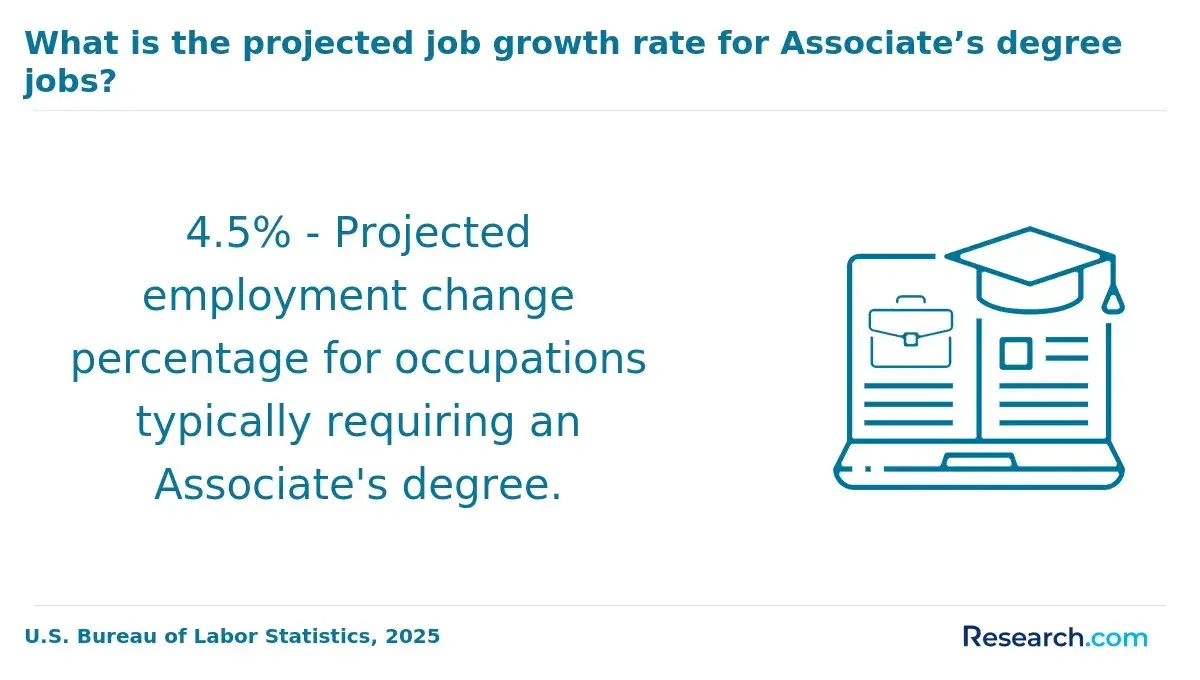
The U.S. Bureau of Labor Statistics projects steady job growth for librarians, archivists, and information specialists through 2033, driven by expanding roles in data curation and digital archives management. Prospective students should carefully evaluate how different programs align with their target job market. For a nuanced understanding of possible career directions after such degrees, one resource details what can you do with an environmental studies degree, illustrating the importance of strategic educational choices.
How do online LIS programs compare with campus-based options for library-archives careers?
Online library and information science programs versus campus-based degrees present a critical tradeoff: both deliver ALA-accredited master's coursework, yet differ sharply in experiential learning essential for hybrid careers in library and archives through online LIS education. Campus programs often provide direct access to archival collections, hands-on labs, and internships that embed students in real-world archival practices-advantages online students generally must replicate through proactive internship seeking or virtual practicum arrangements.
This distinction has practical workforce implications. Employers filling archival or digital curation roles prioritize candidates with demonstrated hands-on experience. Without local internship access, online students may face challenges matching the on-campus model's immersive exposure, despite equivalent academic rigor. Conversely, for roles intersecting IT or systems management, hiring flexibility increases; some employers accept related IS&T degrees that emphasize technology integration over strict ALA accreditation.
Prospective students targeting hybrid careers in library and archives through online LIS education should weigh these factors alongside cost and schedule flexibility. Those pursuing dual LIS and IT competencies, especially, may benefit from programs blending coursework or seeking joint credentials to enhance market competitiveness. For candidates exploring adjacent fields, investigating resources like the computer science online degree lineup can clarify options aligned with technological skill demands.
Effective navigation of these pathways demands leveraging professional networks, alumni connections, and third-party partnerships to compensate for reduced on-site engagement. Ultimately, decision-making hinges on balancing immediate archival resource availability against flexible learning modes to maintain relevancy and employability within evolving library and information science domains.
What accreditation should online LIS programs have to be recognized for library and archives work?
ALA accreditation remains the definitive benchmark for online library and archives programs aimed at qualifying graduates for both library and archival careers. Employers, especially in public archives, academic institutions, and government sectors, rely on this accreditation to validate that candidates possess essential competencies in collection management, digital preservation, and metadata standards. Degrees lacking ALA recognition frequently limit access to roles that emphasize hybrid library and information science skill sets.
Graduates of ALA-accredited programs gain a practical advantage, as many archival employers explicitly require such credentials, particularly for Certified Archivist exam eligibility and ongoing professional development in archival bodies. This insistence reflects workforce realities where accreditation ensures curricular alignment with evolving professional demands. A 2025 review of online programs in New York illustrates a significant tuition spread-from approximately $15,000 at public SUNY campuses to over $60,000 at private institutions-informing cost-benefit decisions for prospective students in archives or hybrid concentrations.
Choosing non-ALA-accredited programs can reduce initial expenses but entails tangible risks: weaker credential recognition, narrower job prospects, and potential barriers to career advancement in government or institutional archivist roles. For those weighing these tradeoffs alongside tuition considerations, it is useful to consult related degree cost analyses such as affordable alternatives found for a forensic science bachelor degree online, which illustrate how significant price variation demands strategic evaluation across program types.
Employers prioritizing recognized credentials for online library and information science hybrid degrees confirm that accreditation status materially affects employability within the library-archives hybrid workforce.
What are the typical admission requirements and prerequisites for online LIS degrees?
Admission into online library and information science degrees combined with archives specialization often requires more than a bachelor's degree and a minimum GPA of 3.0. Increasingly, programs incorporate GRE scores or equivalent assessments, though some waive these for professional experience. Key submission materials include transcripts, letters of recommendation, and a statement of purpose that ties career ambitions clearly to hybrid library-archives roles. Candidates with background knowledge in information management, history, or social sciences tend to be favored, as these disciplines align with the practical demands of archival work integrated with LIS.
Prerequisites emphasize digital information systems, research methods, and metadata standards-skills essential to function effectively in both library science and archival environments. For example, applicants targeting non-profit archives should demonstrate grant writing or community outreach skills, while those aiming for government archives benefit from coursework in records management or regulatory frameworks. These tailored prerequisites impact one's readiness to engage immediately in diverse workplaces including museums, government agencies, or private firms.
The resulting hybrid LIS-archives graduates fill roles across libraries, archives, museums, schools, private companies, non-profits, and government institutions. Insufficient prerequisites or limited practical exposure can restrict career mobility in specialized pathways. Thus, meeting these academic and experiential demands directly influences employability in job markets that require dual expertise in archival practices and broader information science competencies.
What core courses and specializations focus on both library science and archival studies?
Hybrid degrees in library & information science require mastering both traditional cataloging and archival management, which introduces operational complexity but delivers a distinct professional advantage. Students must integrate metadata standards and records preservation with appraisal methods that prioritize provenance and original order. This dual focus addresses institutional demands to manage physical and digital collections cohesively.
Specializing in digital curation extends competencies beyond paper-based archives to handling born-digital content and repositories, emphasizing data management and familiarization with digital asset systems. These technical skills are non-negotiable for hybrid roles where repository maintenance intersects with public library access policies.
Consider a professional aiming for a university library position overseeing special collections: proficiency in descriptive cataloging for discoverability must be balanced with an ability to preserve archival context-failure to do both risks impairing research integrity and accessibility.
Employers increasingly value this blended skill set, awarding wage premiums estimated at $20,000-$40,000 above median salaries for librarians focused solely on one area. This reflects a labor market that prioritizes cross-disciplinary fluency and technical adaptability. However, students should acknowledge the heavier curricular load and the need for legal-ethical acumen related to information privacy and restricted access.
- Core curriculum integrates cataloging, metadata, digital preservation, and archival theory.
- Technical training includes content management platforms and digital asset management systems.
- Emphasis on legal challenges balancing public access with archival restrictions.
- Workforce demand rewards skills spanning library services and archival appraisal.
How long do online LIS programs take, and what tuition and fees can students expect?
Completing an accredited hybrid mlis or library & information science master's program generally demands a balance between accelerated study and maintaining essential professional networking-key for specialized roles blending library and archival expertise. Full-time students typically finish in 18 to 24 months, while part-time enrollment, favored by working professionals, can extend the timeline to three or four years. This pacing affects not only student workload but also career momentum and employer perception.
Costs vary significantly depending on residency and institution type. Public universities usually charge $500-$900 per credit hour for in-state students and $800-$1,200 for out-of-state, while private institutions tend to have flat rates around $800-$1,100 per credit. Assuming a required 36-credit curriculum, total tuition ranges from $18,000 to $43,200, exclusive of additional fees such as technology, materials, practicum supervision, and travel linked to internships or periodic on-campus requirements.
Employers in public library systems and archival sectors prioritize applicants from ALA-accredited programs, as certification licenses typically hinge on this accreditation. Hybrid programs aligned with ALA standards therefore expand eligibility for licensure and improve competitiveness for hybrid positions that demand archival competencies alongside traditional LIS skills.
Prospective students should weigh the tradeoff between compressed timelines and the practical value of extended program participation, which supports relationship-building and fieldwork integration beyond coursework alone.
What entry-level and advanced job roles are available in library-and-archives hybrid careers?
Entry-level positions in library-and-archives hybrid careers typically require hands-on skills in digitization, metadata creation, and records organization. Roles such as digital archivist assistant or metadata specialist focus on tasks essential for maintaining access to materials in both physical and digital formats. Salaries for these positions range from $45,000 to $60,000 annually, reflecting the operational nature of the work and necessary foundational competencies.
Higher-level roles integrate curatorial expertise with technological proficiency, demanding management of complex digital asset systems and compliance with evolving information policies. Positions like digital archivist or library data scientist often oversee digital exhibits or institutional repositories, with salaries exceeding $80,000 in specialized settings such as government or cultural heritage institutions. These roles require balancing IT knowledge, information governance, and domain-specific understanding, exemplified by hybrid archivists in health sciences who must maintain HIPAA compliance while advancing digital preservation protocols.
Educational investments weigh heavily in this field. For example, Drexel University's online MLIS charges $1,000 per credit plus a $125 annual fee, a premium cost that prospective students must measure against realistic employer expectations and salary outcomes, especially in federal or major institutional archives that prioritize combined technical and LIS expertise. Candidates considering such programs should assess whether advanced training aligns with career targets, recognizing the practical demand for interdisciplinary skills over purely academic credentials.
What salary ranges and job outlook can graduates expect in library-archives positions?
Starting salaries for library-and-archives hybrid graduates in 2026 typically fall between $45,000 and $65,000 annually, though location, employer type, and specialization heavily influence compensation. For instance, federal and museum archives roles, especially in high-cost areas like New York, often offer salaries exceeding $75,000 for candidates with advanced technical or management skills. By comparison, public libraries generally provide lower pay tied to more routine responsibilities.
Projected employment growth of about 9% through 2034 aligns with national occupational averages, but demand prominently favors hybrid professionals adept in both traditional library science and technical competencies such as digital asset management and metadata standards. Employers increasingly expect skill sets that bridge physical and digital archive stewardship, elevating the value of specialized expertise.
Applicants must also weigh shifting admissions criteria: nearly all ALA-accredited MLIS programs in New York have eliminated GRE requirements starting in the 2025-2026 cycle, broadening applicant pools and heightening competition. This necessitates strategic emphasis on relevant experience, portfolios, and certifications to stand out.
Ultimately, graduates face a tradeoff between the stability and predictability of public library roles and the higher earning potential but more complex demands in government, private sector, or museum archives positions. Understanding these dynamics is essential for informed career pivoting within the evolving library & information science landscape.
Do library and archives careers require licensure or certification, and how do online degrees help?
Licensure and certification requirements in library and archives careers diverge sharply by role and sector, influencing both employability and professional pathways. Public and school librarians often face strict state licensing mandates that include possessing a teaching or library media specialist license, frequently coupled with an MLIS or related graduate degree. Archivists and records managers, while typically exempt from mandatory licenses, gain tangible advantages through certifications such as Certified Archivist (CA) or Certified Records Manager (CRM), which notably improve hiring prospects within federal and corporate sectors.
Hybrid roles straddling library and archives functions demand not only certification but also advanced data management and analytical capabilities. This complexity is reflected in accredited online MLIS programs increasingly dedicating roughly 19% of instruction to statistical methods, aligning graduate skills with employer expectations for digital curation and metadata analysis.
Professionals pursuing federal archival analyst positions benefit from online coursework emphasizing statistics and certification readiness, allowing career progression without geographic relocation or study interruption. Yet, state-specific licensure for librarian roles often necessitates integrating online learning with local internships or practica, presenting a practical tradeoff between flexibility and hands-on supervised experience.
Key considerations include:
- Balancing licensure requirements and certification value relative to career goals
- Leveraging data analytics training embedded within curricula to meet market demand
- Understanding geographic and role-specific licensure hurdles impacting online degree portability
Other Things You Should Know About Library & Information Science
In 2027, synchronous programs offer real-time interaction, simulating in-person learning and fostering networking. Asynchronous programs provide flexibility, accommodating diverse schedules and pacing. Both formats support diverse learning preferences and career goals within library-archives hybrid paths, ensuring accessibility and comprehensive education.
Practicums and internships are essential because employers expect demonstrated experience managing both library and archival materials. Fully online programs without embedded fieldwork risk leaving graduates underprepared for technical tasks and professional environments. Students should prioritize online programs that either require or facilitate local placements to ensure their skills align with job market expectations and to increase employability.
The main challenges include balancing demanding coursework, especially specialized archival projects, with job responsibilities. The workload can become intense due to the dual focus on libraries and archives, requiring strong time management and prioritization. Students should assess program pacing and support services carefully, selecting programs that offer reasonable credit loads per term and robust advising to sustain progress without burnout.
Employers often value hybrid degrees for candidates targeting roles that involve both library and archival responsibilities, but they also scrutinize the depth of specialization. Generalist hybrid degrees may limit access to niche or highly technical archival positions that require focused expertise or certifications. When deciding on a hybrid program, prioritize ones with clearly defined concentrations and practical training to match specific job requirements and increase competitive advantage in the job market.
References
- Admissions https://www.ualberta.ca/en/school-of-library-and-information-studies/admissions/index.html
- Most Affordable MLIS Programs Online, Updated for 2025 https://www.librarysciencedegrees.org/programs/online/most-affordable-mlis
- Salary Expectations and Career Growth in Library Science https://www.librariancertification.com/salary-expectations-and-career-growth-in-library-science/
- What Careers Are Available in Library Science? - Library Science Degrees Online https://librarysciencedegreesonline.org/library-science-careers/
- Flexible Online MLIS Programs for Working Professionals (2026) https://www.mastersinlibraryscience.org/articles/online-mlis-programs/
- Online MLIS Flexibility, Community, and Choice https://www.libraryjournal.com/story/online-mlis-flexibility-community-and-choice
- Archivists: Salary, career path, job outlook, education and more - RaiseMe https://www.raise.me/careers/education-training-and-library/curators-museum-technicians-and-conservators/archivists/