2027 Online Clinical Psychology Degrees That Prepare Students for Clinical and Research Hybrid Paths

Co-Founder and Chief Data Scientist
Choosing an online clinical psychology degree is complicated because the wrong program can limit licensure, research training, or both. The need is real: the U. S. Bureau of Labor Statistics projects psychologist employment to grow 7% from 2024 to 2034, faster than average. This guide is for students who want to combine therapy, assessment, research, teaching, program evaluation, or behavioral health innovation. You will learn how online and hybrid programs work, which degree levels fit different goals, what accreditation matters, and how to compare cost, practicum, research opportunities, and career outcomes before enrolling.
Key Things You Should Know
- For independent clinical psychology licensure in most U.S. states, students usually need a doctoral degree, supervised clinical hours, an internship, and passing scores on required licensing exams; online coursework alone is not enough.
- The strongest hybrid clinical-research path is usually an APA-accredited PhD or PsyD with substantial practicum, dissertation or applied research, and faculty-supervised clinical training, while master's programs more often lead to counseling, research assistant, or doctoral-preparation roles.
- BLS data lists the median annual wage for psychologists at $94,310 as of May 2024, but earnings vary widely by license type, setting, geography, research skills, and whether the graduate works in healthcare, academia, government, or industry.
What is an online clinical psychology degree that prepares students for hybrid clinical and research careers?
An online clinical psychology degree with a hybrid career focus is a program designed to build both practitioner skills and research competence. "Clinical" refers to assessment, diagnosis, treatment planning, psychotherapy, psychological testing, ethics, and work with individuals or groups. "Research" refers to study design, statistics, psychometrics, evidence-based intervention evaluation, data interpretation, scholarly writing, and sometimes grant or program evaluation work.
The word "online" can be misleading in this field. Many programs deliver didactic courses online but still require in-person residencies, local practicum placements, supervised clinical hours, campus intensives, internship training, or dissertation defenses. For licensure-oriented doctoral programs, this hybrid structure is often necessary because clinical psychology is a supervised, competency-based profession.
The right degree depends on the career target. A student who wants to become a licensed psychologist generally needs a doctoral pathway, while a student who wants to support research teams, enter behavioral health administration, or prepare for doctoral admissions may start with a master's degree. Students mainly interested in faster undergraduate preparation can compare accelerated psychology programs online, but they should understand that a bachelor's degree alone does not qualify someone to practice independently as a clinical psychologist.
The table below compares common degree levels and how well they support a combined clinical and research direction. It is especially useful if you are deciding whether to start with an undergraduate, master's, or doctoral option.
| Degree level | Typical purpose | Clinical preparation | Research preparation | Best fit |
| Bachelor's in psychology | Foundation for graduate study or entry-level human services roles | Introductory only; no independent practice | Basic research methods and statistics | Students beginning the psychology pathway |
| Master's in clinical psychology or counseling-related field | Graduate preparation for counseling licensure, research work, or doctoral admissions | May include practicum, but psychologist licensure is uncommon at this level | Moderate; often includes methods, assessment, and thesis or capstone options | Students testing fit before a doctorate or pursuing master's-level counseling paths |
| PhD in clinical psychology | Scientist-practitioner training | Extensive supervised clinical training | Strongest research orientation, usually including dissertation and faculty mentorship | Students who want clinical practice plus academic, hospital, grant-funded, or policy research |
| PsyD in clinical psychology | Practitioner-scholar training | Extensive supervised clinical training | Applied research, dissertation, program evaluation, and evidence-based practice | Students prioritizing practice but wanting enough research skill for leadership or applied evaluation |
The main takeaway is that "hybrid" should describe more than course delivery. A strong program should integrate research with clinical decision-making, so students learn not only how to provide services but also how to evaluate whether those services work.
How do online clinical psychology programs compare to campus-based options for training and outcomes?
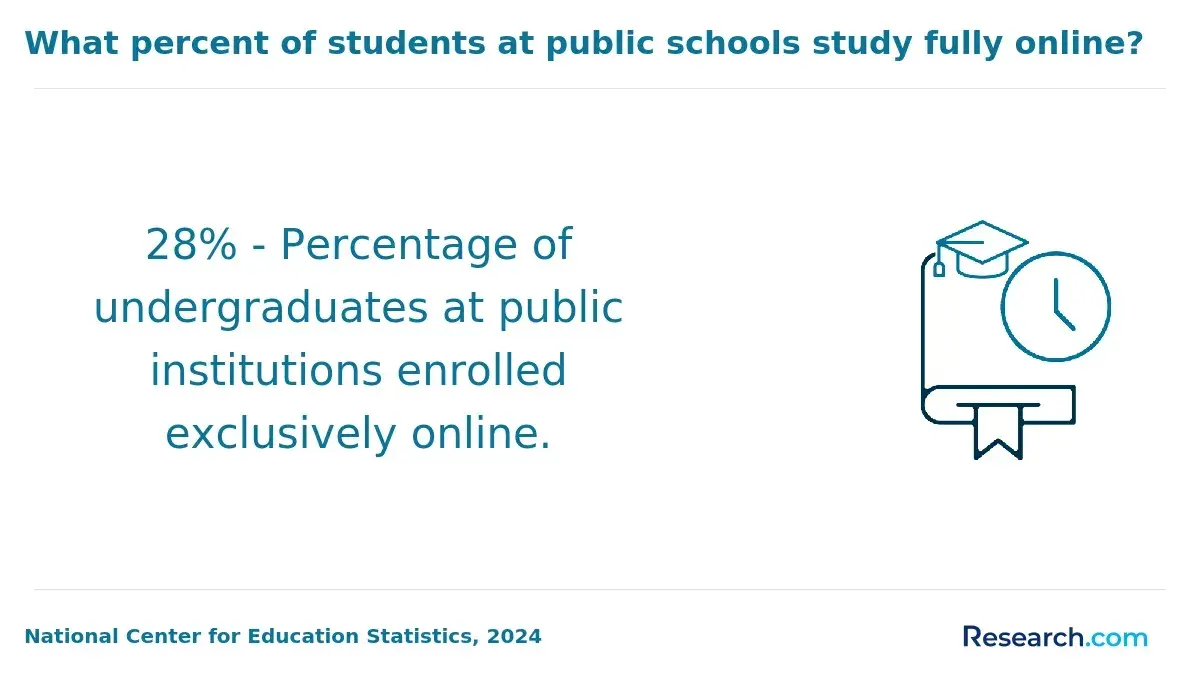
Online clinical psychology programs can be legitimate and rigorous when they use the same faculty standards, supervised practicum expectations, assessment methods, and learning outcomes as campus programs. The major difference is not whether the content is online; it is how the program handles clinical supervision, research mentorship, cohort interaction, and licensure documentation.
Campus-based programs often provide easier access to faculty labs, university clinics, testing materials, and peer learning. Online and hybrid programs can be more flexible for working adults, caregivers, military students, or students who cannot relocate, but they require more due diligence because clinical placement quality can vary by region.
The comparison below summarizes the trade-offs prospective students should weigh before assuming one format is automatically better. Use it to match the delivery model to your learning style, schedule, and licensure needs.
| Factor | Online or hybrid programs | Campus-based programs | Decision point |
| Flexibility | Often better for working students and students outside major metro areas | Less flexible but more predictable weekly structure | Choose online if schedule control is essential and required residencies are manageable |
| Clinical placement | May require students to secure approved local sites with school support | May have established university clinic or regional placement networks | Ask how many students receive placements on time in your state |
| Research mentorship | Can work well through virtual labs, remote data projects, and faculty meetings | Often stronger for lab immersion and assistantships | Choose based on faculty match, not format alone |
| Licensure documentation | Requires careful state-by-state verification | Still requires verification, especially if attending out of state | Never assume online delivery meets your licensing board's rules |
| Professional networking | Depends on residencies, practicum sites, and cohort design | Usually more spontaneous and local | Look for structured mentoring, conference support, and alumni outcomes |
A useful rule is to compare outcomes rather than labels. Ask whether students complete internships, publish or present research, pass licensing exams, finish dissertations, and obtain roles aligned with their stated goals. If an online program cannot clearly explain those outcomes, the flexibility may not be worth the risk.
What accreditation and licensing requirements must online clinical psychology programs meet in the U.S.?
Accreditation and licensure are the highest-stakes issues for this degree path. In the U.S., psychology licensing is controlled by state boards, and requirements can differ by jurisdiction. Most states require a doctoral degree in psychology, supervised experience, an internship, postdoctoral or additional supervised hours in some cases, and passing the Examination for Professional Practice in Psychology, often called the EPPP. Some states also require jurisprudence or oral exams.
Institutional accreditation matters because it affects federal financial aid eligibility, transferability, and general academic legitimacy. Programmatic accreditation matters because many licensing boards, internships, employers, and postdoctoral sites give preference to or require doctoral programs accredited by the American Psychological Association. Students comparing APA accredited PsyD programs online should pay close attention to whether the program itself is accredited, whether the delivery format includes required in-person training, and whether graduates meet licensing rules in the state where they plan to practice.
Before applying, students should verify several separate layers of approval. These checks reduce the risk of completing a program that does not support the intended career.
- Confirm the institution is accredited by an agency recognized by the U.S. Department of Education or the Council for Higher Education Accreditation.
- For doctoral clinical psychology programs, confirm APA accreditation status directly with APA's official program listings rather than relying only on marketing language.
- Review your state psychology board's education, practicum, internship, postdoctoral, and exam requirements before enrolling.
- Ask the program for written information on whether its curriculum is designed to meet licensure requirements in your state.
- Check whether internships, residencies, and practicum hours must be completed through specific approved sites or supervisors.
A common mistake is assuming "accredited university" and "licensure-ready clinical psychology program" mean the same thing. They do not. A university can be institutionally accredited while a particular psychology program may not meet doctoral psychology licensure expectations in your state.
Which online clinical psychology degrees best support combined clinical practice and research career pathways?
The best online or hybrid clinical psychology degree for a combined practice-and-research pathway is the one that matches the student's desired license, research intensity, and tolerance for time and cost. For most students aiming to become licensed clinical psychologists while maintaining research options, a PhD in clinical psychology is the most research-intensive route. A PsyD can also support hybrid careers when it includes strong applied research, assessment, outcome evaluation, and dissertation mentorship.
A master's degree may be the better choice for students who are not ready to commit to a doctorate, want counseling-adjacent licensure, or need research experience before applying to doctoral programs. However, master's-level graduates should be careful with job titles: in most states, "psychologist" is a protected title requiring doctoral training.
The table below shows which degree option usually fits each career objective. It can help you avoid overpaying for a credential that is too broad or undertraining for a goal that requires licensure.
| Goal | Best-fit degree path | Why it fits | Potential limitation |
| Licensed clinical psychologist plus research career | APA-accredited PhD in clinical psychology | Deep integration of clinical training, statistics, dissertation research, and faculty mentorship | Highly competitive admissions and long completion time |
| Licensed psychologist focused on practice with applied research | APA-accredited PsyD in clinical psychology | Strong clinical training with practitioner-scholar research and outcome evaluation | May have less lab-based funding or research depth than a PhD |
| Therapist or counselor with some research literacy | Master's in counseling, clinical mental health counseling, or related field | Can lead to master's-level counseling licensure when properly accredited and state-aligned | Usually does not lead to psychologist licensure |
| Behavioral research coordinator or doctoral applicant | Master's in psychology with thesis or research track | Builds research methods, statistics, and academic writing experience | May not provide a direct clinical license |
| Human services or research assistant entry point | Bachelor's in psychology | Provides foundational psychology and research literacy | Limited independent clinical responsibility |
Students who want therapy practice sooner but do not need the psychologist title may also compare counseling degrees. For cost-sensitive learners, researching the cheapest online LPC programs can be useful, as long as they verify CACREP alignment, practicum requirements, and state counseling board rules.
What curriculum, research training, and clinical practicum should a hybrid-focused online clinical psychology program include?
A hybrid-focused program should train students to think like both clinicians and investigators. That means the curriculum should not isolate research into one statistics course; it should connect evidence, assessment, diagnosis, intervention, and outcome measurement across the program.
At the doctoral level, students should expect coursework and supervised experiences in several core areas. These elements matter because state boards, internship sites, and employers often evaluate whether graduates have broad, documented competence.
- Clinical foundations, including psychopathology, diagnosis, interviewing, treatment planning, ethics, multicultural practice, crisis response, and evidence-based psychotherapy.
- Psychological assessment, including cognitive, personality, behavioral, and diagnostic assessment, with supervised practice using appropriate instruments.
- Research methods, including quantitative design, qualitative or mixed methods when available, advanced statistics, psychometrics, data analysis software, and research ethics.
- Practicum and internship preparation, including supervised client contact, case conceptualization, documentation, feedback, and evaluation by qualified supervisors.
- Scholarly production, such as a dissertation, doctoral project, thesis, conference presentation, manuscript, program evaluation, or applied outcome study.
Research training is especially important for students who want hybrid careers in academic medical centers, Veterans Affairs settings, integrated care, digital mental health, public health, or behavioral product evaluation. Employers in these settings may value clinicians who can interpret data, evaluate interventions, and translate research into practice.
Technology is also changing training expectations. Telepsychology, electronic health records, measurement-based care platforms, digital therapeutics, and AI-assisted documentation tools are becoming more common in behavioral health settings. A strong program should address ethics, privacy, bias, clinical limitations, and responsible use of technology rather than treating online therapy tools as simple convenience features.
What admission requirements and prior academic background are typically needed for online clinical psychology degrees?
Admission requirements vary widely by degree level. Bachelor's programs usually require a high school diploma or equivalent, transcripts, and sometimes placement testing. Master's programs typically expect a bachelor's degree, prerequisite psychology coursework, a personal statement, letters of recommendation, and a minimum GPA. Doctoral programs are more selective and often look for research experience, clinical or human services exposure, faculty fit, writing ability, and clear career goals.
Many doctoral psychology programs have reduced or eliminated GRE requirements, but test-optional does not mean easy admission. Applicants still need evidence that they can handle graduate statistics, research writing, ethical reasoning, and emotionally demanding clinical training.
Students preparing for hybrid clinical-research programs should strengthen the parts of the application that show both scientific and interpersonal readiness. The following steps are practical ways to become more competitive before applying.
- Complete undergraduate courses in abnormal psychology, statistics, research methods, developmental psychology, biological psychology, and social psychology.
- Gain research experience through a lab, honors thesis, faculty project, poster presentation, data coding role, or research assistant position.
- Build relevant helping experience through crisis lines, behavioral health technician roles, community mental health volunteering, case management support, or supervised human services work.
- Identify faculty whose research interests match your goals and explain that match specifically in your statement of purpose.
- Prepare a writing sample that demonstrates evidence-based reasoning rather than only personal motivation for the field.
A common red flag is applying only because the program is online, fast, or convenient. Clinical psychology training is long and supervised for a reason. Admissions committees want applicants who understand the ethical responsibility of working with vulnerable clients and the intellectual discipline required for research.
How long do online clinical psychology programs take, and what tuition, fees, and financial aid should students expect?
Program length depends on degree level, enrollment status, transfer credits, dissertation progress, practicum placement availability, and internship timing. Online delivery may reduce commuting or relocation costs, but it does not automatically shorten licensure training. Doctoral students should be especially careful: dissertation delays, internship applications, and supervised-hour requirements can extend the timeline.
The table below summarizes typical completion ranges. Use it as a planning tool, not a promise, because actual timelines vary by school policy and individual progress.
| Program type | Typical full-time timeline | Common time drivers | Licensure relevance |
| Bachelor's in psychology | About 4 years | Transfer credits, general education, capstone, part-time study | Foundation for graduate study; not enough for independent clinical practice |
| Master's in psychology or counseling-related field | About 2 to 3 years | Practicum, internship, thesis, state-specific coursework | May support counseling licensure if designed for that purpose; usually not psychologist licensure |
| PhD in clinical psychology | Often 5 to 7 years | Research milestones, dissertation, practicum, internship match | Common route to psychologist licensure when program and state requirements align |
| PsyD in clinical psychology | Often 4 to 6 years | Clinical training sequence, dissertation or doctoral project, internship | Common route to psychologist licensure when program and state requirements align |
Cost varies substantially by institution, residency requirements, technology fees, travel for intensives, books, assessment materials, internship relocation, and whether doctoral funding is available. College Board's 2024 pricing data lists average published tuition and fees for public four-year in-state students at $11,610 and private nonprofit four-year students at $43,350 for 2024-25; graduate psychology tuition can differ, but this shows why students should compare total cost rather than sticker price alone.
When estimating the psychology degree online cost, include all required expenses, not just per-credit tuition. The most common cost categories include the following.
- Tuition charged per credit, term, or academic year.
- University fees, online learning fees, technology fees, graduation fees, and student services fees.
- Travel and lodging for residencies, campus intensives, interviews, dissertation defenses, or internship relocation.
- Books, testing materials, statistical software, telehealth platforms, background checks, liability insurance, and fingerprinting.
- Licensure-related costs such as exam fees, application fees, supervision documentation, and continuing education after graduation.
Financial aid may include federal loans, institutional scholarships, employer tuition assistance, military education benefits, assistantships, fellowships, grants, and payment plans. PhD programs may offer stronger funding than PsyD programs, but funding is not automatic and may require teaching or research work. Before enrolling, ask for a written total cost estimate and compare expected borrowing against realistic salary ranges in your intended state and setting.
What clinical, academic, and industry careers can graduates of hybrid clinical psychology programs pursue?
Graduates with strong clinical and research training can work in more than traditional private practice. Their options depend heavily on degree level and licensure. Doctoral-level licensed psychologists have the broadest clinical authority, while master's-level graduates may work in counseling, research, administration, or supervised roles depending on state law and credentialing.
The table below connects common career paths with the type of work graduates may do. It can help students decide whether they need a doctorate or whether a master's-level route is more practical.
| Career setting | Typical responsibilities | Why research expertise helps | Common credential level |
| Hospitals and academic medical centers | Assessment, psychotherapy, consultation, integrated care, treatment planning | Supports evidence-based protocols, outcome tracking, and interdisciplinary studies | Doctoral degree and licensure often required |
| Private or group practice | Therapy, psychological testing, supervision, specialty services | Helps clinicians choose validated interventions and measure client progress | Doctoral licensure for psychologists; other licenses for counselors or therapists |
| Universities and research centers | Teaching, grant work, lab leadership, publications, student supervision | Core requirement for scholarship and external funding | PhD often preferred; PsyD possible for practice-focused teaching |
| Government and public health agencies | Program evaluation, policy support, trauma services, population health initiatives | Useful for evaluating interventions and improving service delivery | Master's or doctoral degree depending on role |
| Behavioral health technology and industry | Clinical research, product evaluation, user outcomes, digital mental health strategy | Supports ethical assessment of tools, data quality, and intervention effectiveness | Master's or doctoral degree depending on seniority and clinical scope |
Hybrid training is especially valuable for students who want to move between practice and systems-level work. For example, a licensed psychologist with research skills may provide therapy part time, evaluate outcomes for a clinic, consult on digital mental health products, and teach graduate students. That flexibility can be valuable, but it requires careful credential planning from the beginning.
What are typical salary ranges and long-term earning potential for clinical psychologists with research expertise?
Salary depends on license, setting, geography, specialization, years of experience, and whether the role includes clinical service, research funding, leadership, testing, teaching, or consulting. The U.S. Bureau of Labor Statistics reported a median annual wage of $94,310 for psychologists in May 2024. That figure is useful as a national benchmark, but it should not be treated as a guaranteed outcome for any specific graduate or program.
Research expertise can improve long-term flexibility because it opens doors to academic medical centers, program evaluation, grants, data-informed clinical leadership, and industry roles. However, some research-heavy roles may pay less than specialized private practice, while some consulting or industry roles may pay more but require different skills, such as product evaluation, regulatory awareness, or data communication.
The table below summarizes broad earning considerations by role type. It is meant to help readers understand what drives compensation, not to predict individual income.
| Role type | Earning drivers | Research value | Important limitation |
| Licensed clinical psychologist | Licensure, specialty area, insurance mix, testing services, location | Improves treatment selection and outcome measurement | Income varies by caseload, reimbursement, and practice model |
| Academic or medical-center psychologist | Faculty rank, grants, clinical revenue, publications, institutional budget | Central to hiring, promotion, and grant competitiveness | Academic salaries may not match high-volume private practice |
| Government or nonprofit psychologist | Pay scale, union rules, leadership responsibilities, federal or state employer | Supports program evaluation and policy work | Salary bands may be less flexible than private settings |
| Behavioral health industry researcher or consultant | Technical skill, clinical credibility, product area, leadership scope | Useful for digital health validation and outcomes strategy | Clinical license may not be required for all roles, but ethical boundaries matter |
Students evaluating return on investment should compare total borrowing, years out of the workforce, funded assistantship options, internship relocation costs, and the salary range in their target state. A lower-cost program with weak practicum support may be a poor investment, while a more expensive program with strong licensure outcomes and research mentorship may be worthwhile for certain goals.
How can prospective students evaluate and choose a reputable online clinical psychology program for hybrid training?
The smartest way to choose a program is to start with the end goal and work backward. If your goal is psychologist licensure, begin with state board requirements and APA accreditation. If your goal is research coordination, program evaluation, or doctoral preparation, prioritize faculty mentorship, thesis options, methods training, and placement outcomes.
Before speaking with admissions, prepare a short checklist of nonnegotiables. These questions help separate programs with strong training infrastructure from programs that rely mainly on convenience-based marketing.
- Verify whether the program is designed to meet licensure requirements in the state where you plan to practice.
- Ask whether clinical placements are guaranteed, arranged by the school, or primarily the student's responsibility.
- Request data on internship placement, graduation, licensure exam preparation, dissertation completion, and alumni roles.
- Review faculty research interests and confirm whether online students can join labs, publish, present, or complete applied research projects.
- Calculate total cost, including travel, fees, internship relocation, lost income, and likely borrowing.
- Ask current students or alumni about advising quality, practicum support, dissertation supervision, and responsiveness when problems occur.
- Compare the program's pacing with your work, family, and mental bandwidth because clinical training can be emotionally demanding.
Several red flags deserve extra caution. Avoid programs that make vague licensure claims, cannot explain state authorization, hide practicum expectations until after enrollment, advertise unrealistic completion timelines, or provide little access to faculty research. Also be careful with programs that use "clinical psychology" broadly but are not intended to lead to psychologist licensure.
The best choice is not always the fastest, cheapest, or most prestigious program. It is the program that credibly connects your target license, research identity, clinical training needs, financial limits, and life circumstances.
Other Things You Should Know About Clinical Psychology
In most U.S. states, independent practice as a licensed psychologist requires a doctoral degree. A master's degree may support counseling licensure, supervised clinical roles, research work, or doctoral preparation, depending on the program and state rules.
Usually, yes. A PhD in clinical psychology is generally built around the scientist-practitioner model, while a PsyD usually emphasizes practitioner-scholar training. However, some PsyD programs offer strong applied research, assessment, and program evaluation opportunities.
Usually, yes. Licensure-oriented programs commonly require supervised practicum, internship, residencies, assessments, or other in-person experiences. Online coursework does not replace supervised clinical competency training.
In 2027, online clinical psychology degrees emphasize competencies like advanced research methods, clinical assessment, and therapeutic intervention skills. These programs focus on integrating clinical practice with research, preparing students for diverse career paths that blend patient care with empirical study.
References
- The Realities of an Online Clinical Psychology Master’s | Meridian University https://meridianuniversity.edu/content/the-realities-of-an-online-clinical-psychology-masters
- Understanding the Differences Between Graduate Degrees in Clinical Psychology – IECA https://www.iecaonline.com/journal-article/understanding-the-differences-between-graduate-degrees-in-clinical-psychology/
- Applied Clinical Psychology Tuition and Financial Aid https://www.pacificu.edu/applied-clinical-psychology-ma/tuition-financial-aid
- What Do Psychologists Earn? Highest Paying Psychology Jobs | Walbrook https://www.walbrook.ac.uk/subjects/psychology/psychologist-salaries-highest-paying-jobs/
- Online Master’s in Clinical Psychology https://onlinecounselingprograms.com/online-counseling-degrees/online-masters-in-psychology/clinical-psychology/
- How To Become A Clinical Psychologist (2025 Guide) https://www.psychology.org/careers/clinical-psychologist/
- Matching Psychology Training to Job Market Realities – Association for Psychological Science – APS https://www.psychologicalscience.org/publications/observer/psychology-training-job-market-realities.html
- General Requirements https://abpp.org/application-information/general-requirements/
- Online and Hybrid PhD & PsyD Programs in Psychology https://www.psychologist-license.com/phd/
- Career Considerations for Clinical Psychology Psy.D. Students - Society for the Advancement of Psychotherapy https://societyforpsychotherapy.org/career-considerations-for-clinical-psychology-psy-d-students/