2027 Best Online Master's in Clinical Psychology With Strong Student Support

Co-Founder and Chief Data Scientist
Choosing an online master's in clinical psychology is really a licensure, cost, and support decision. The stakes are high: BLS May 2024 data places the median wage for clinical and counseling psychologists at $96,100, but many psychologist roles require doctoral training. This guide helps prospective graduate students, career changers, and working adults understand which online programs are worth considering, what "strong student support" should look like, and how to avoid enrolling in a program that does not match their state, career goal, or budget.
Key Things You Should Know
- The best online clinical psychology master's programs are usually not the cheapest or fastest by default; they are the ones that align with your state's licensure rules, provide supervised clinical placement support, and publish clear outcomes.
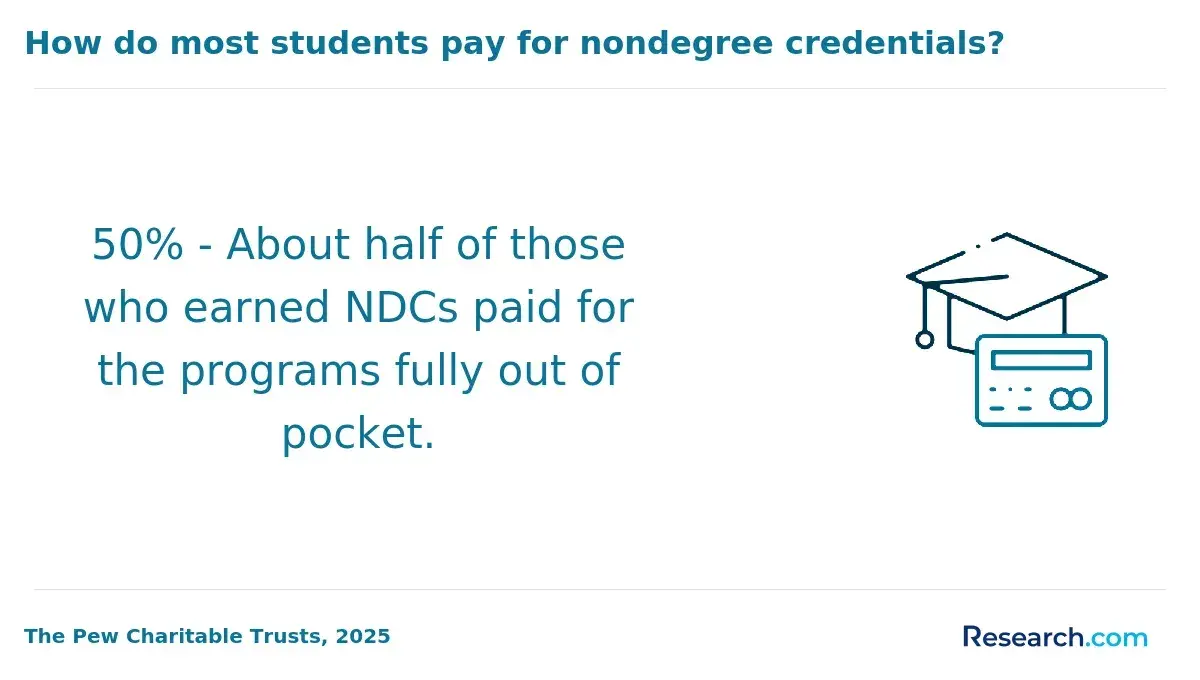
- NCES data published in 2024 shows average graduate tuition and required fees were $12,596 at public institutions and $29,931 at private nonprofit institutions in 2022-23, so total program cost should be checked before applying.
- BLS May 2024 data reports a $96,100 median annual wage for clinical and counseling psychologists, but independent practice as a psychologist commonly requires a doctorate, while master's graduates often pursue counseling, assessment, case management, or supervised clinical roles depending on state law.
What is an online master's in clinical psychology and who is it best suited for?
An online master's in clinical psychology is a graduate degree focused on human behavior, psychopathology, assessment, research methods, counseling skills, ethics, and supervised clinical practice. The online format usually means academic coursework is delivered remotely, while practicum or internship experiences are completed in approved settings near the student's location.
This degree is best suited for students who want advanced psychology training but are not yet ready to commit to a doctorate, working adults who need flexible coursework, and students planning for counseling-adjacent, assessment-support, research, or doctoral-preparation pathways. It can also be useful for students who want to strengthen their academic profile before applying to a PsyD or PhD program.
It is not the right choice for everyone. Students who want to practice independently as licensed psychologists should confirm whether a master's degree is enough in their state; in many states, it is not. Students whose main goal is licensed professional counseling may be better served by a counseling degree designed specifically around counseling licensure.
The table below summarizes common fit scenarios. Use it to decide whether this degree supports your goal or whether another psychology or counseling pathway may be more practical.
| Student goal | How an online master's in clinical psychology may fit | Important caution |
| Prepare for doctoral study | Can provide graduate psychology coursework, research exposure, and clinical foundations. | Doctoral admissions may still require research experience, strong references, and prerequisite coursework. |
| Work in mental health services | May support supervised roles in community agencies, behavioral health programs, or case management. | Job titles and scope of practice vary by state and employer. |
| Become a licensed counselor | May help if the curriculum matches state counseling board requirements. | A clinical psychology degree is not automatically equivalent to a counseling degree. |
| Practice independently as a psychologist | Can be a stepping stone toward doctoral training. | Most states require a doctorate for psychologist licensure. |
| Study while working full time | Asynchronous or evening coursework can reduce scheduling barriers. | Clinical hours still require in-person availability and reliable local placement options. |
How do online clinical psychology programs compare to campus-based programs in quality and flexibility?
Online and campus-based clinical psychology master's programs can be comparable in academic quality when they share the same faculty standards, institutional accreditation, learning outcomes, and clinical expectations. The main difference is delivery: online programs reduce commuting and relocation barriers, while campus programs may offer easier access to in-person labs, local clinics, and faculty networks.
The table below compares the practical trade-offs. It is especially useful if you are deciding between a nearby campus program and a reputable online option with stronger flexibility.
| Comparison factor | Online master's in clinical psychology | Campus-based master's in clinical psychology |
| Course access | Often asynchronous, hybrid, or evening-based, which can help working students. | Usually scheduled around set class times and campus availability. |
| Clinical training | Typically completed in person at approved local sites. | Often supported through campus-connected clinics or regional partners. |
| Faculty interaction | Depends heavily on virtual office hours, advising systems, and cohort design. | May be easier to build informal faculty relationships on campus. |
| Peer support | Strong programs use cohorts, online discussion groups, and supervised skills sessions. | Peer contact can be more spontaneous through labs, clinics, and campus events. |
| Flexibility | Best for students balancing work, caregiving, military service, or distance from campus. | Best for students who want a structured schedule and direct campus access. |
| Hidden costs | May include technology fees, residency travel, background checks, and placement travel. | May include commuting, parking, relocation, and reduced work flexibility. |
The strongest online programs do not simply upload lectures and leave students to manage alone. They create structured interaction through live supervision, skills practice, faculty feedback, library access, writing help, advising, and practicum coordination.
A common mistake is assuming that "online" means "fully remote." In clinical psychology, the coursework may be online, but supervised clinical experiences are usually face-to-face because students must demonstrate ethical, interpersonal, documentation, and assessment skills with real clients or clinical populations.
What accreditation should an online master's in clinical psychology have for licensure?
Accreditation is one of the most important checks before applying because it affects financial aid eligibility, credit transfer, doctoral admissions, employer recognition, and licensure review. At minimum, the institution should hold recognized institutional accreditation from an accreditor accepted by the U.S. Department of Education or the Council for Higher Education Accreditation.
Programmatic accreditation is more complicated. The American Psychological Association's Commission on Accreditation is best known for accrediting doctoral psychology programs, internships, and postdoctoral residencies, not standalone online master's programs in clinical psychology for independent psychologist licensure. That means students must look beyond a simple "psychology" label and verify whether the curriculum satisfies the licensing board connected to their intended role.
If your goal is licensed professional counseling, compare the curriculum with state counseling board rules and consider whether CACREP accredited online counseling programs may provide a more direct route. CACREP accreditation is commonly associated with counseling licensure preparation, while clinical psychology master's degrees may follow different standards.
Before enrolling, complete these checks in this order. This sequence reduces the risk of paying for credits that do not move you toward your license.
- Identify the exact license title you want, such as licensed professional counselor, psychological associate, licensed mental health counselor, marriage and family therapist, or doctoral-level psychologist.
- Go to the state licensing board website for the state where you plan to practice and read the education, practicum, exam, and supervision requirements.
- Ask the program for a written licensure disclosure for your state, not just a general statement that the program "may meet" requirements.
- Confirm the number of required graduate credits, required course areas, practicum hours, internship hours, and supervisor qualifications.
- Ask whether previous graduates in your state have become licensed and what additional coursework, if any, they needed.
Red flags include vague accreditation language, refusal to provide state-by-state licensure disclosures, unclear practicum hour requirements, and admissions claims that imply licensure is automatic. Licensure is never automatic; state boards make the final determination.
What are the typical admission requirements for online clinical psychology master's programs?
Admission requirements vary by school, but online clinical psychology master's programs commonly look for evidence that applicants can handle graduate-level behavioral science coursework and ethically work toward clinical training. Competitive programs also evaluate communication skills, maturity, and fit with the program's training model.
Students who are still finishing undergraduate study can use an accelerated psychology bachelor's degree to move more quickly toward graduate eligibility, but they should still preserve time for statistics, research methods, abnormal psychology, and strong faculty recommendations.
Most applicants should be ready to provide the following materials. The details matter because clinical programs tend to assess both academic readiness and professional judgment.
- Completed bachelor's degree from an accredited institution, often with psychology or social science coursework.
- Official transcripts showing undergraduate GPA and prerequisite completion.
- Statement of purpose explaining clinical interests, career goals, and reasons for choosing the program.
- Letters of recommendation, ideally from faculty, supervisors, or professionals who can evaluate academic ability and interpersonal readiness.
- Resume or CV showing research, volunteer, human services, crisis line, peer support, or healthcare experience.
- Prerequisite courses such as statistics, research methods, developmental psychology, abnormal psychology, or introductory psychology.
- Interview, writing sample, or live virtual meeting for programs that use holistic admissions.
- Background check or immunization documentation before clinical placement, depending on site requirements.
GRE requirements have become less common across many graduate programs, but policies vary. If a program is test-optional, a strong transcript, relevant experience, and a focused statement of purpose become more important.
A common mistake is applying only to programs with the easiest admissions process. Selectivity alone does not prove quality, but a program that admits students without checking clinical readiness, state fit, or prerequisite preparation may not provide the structure needed for licensure-oriented training.
How long do online clinical psychology master's programs take and what do they cost?
Most online master's in clinical psychology programs take about two to three years of full-time study, with part-time options often extending the timeline. Programs that include more practicum or internship hours may take longer because clinical placements depend on site availability, supervision schedules, background checks, and client-contact requirements.
Cost varies widely by institution, residency status, credit requirements, fees, and whether the program requires campus residencies. NCES data published in 2024 shows average graduate tuition and required fees in 2022-23 were $12,596 at public institutions and $29,931 at private nonprofit institutions. This does not tell you the exact price of a specific program, but it gives a useful benchmark for judging whether a school's quoted tuition is above or below the broader graduate market.
If affordability is your main constraint, compare psychology pathways carefully and review options such as the cheapest psychology degree online before committing to a higher-cost graduate program. A low tuition rate is helpful only if the degree also supports your intended licensure or career path.
The table below explains the cost drivers that matter most. Use it to compare programs beyond the advertised tuition number.
| Cost factor | Why it matters | Question to ask |
| Total required credits | A lower per-credit rate can still be expensive if the program requires more credits. | What is the total tuition for the full degree, not just the per-credit price? |
| Residency or campus visits | Short in-person intensives can add travel, lodging, and time-off costs. | Are any campus sessions required, and how often? |
| Clinical placement expenses | Students may pay for background checks, liability insurance, transportation, and health documentation. | Which placement-related costs are paid by the student? |
| Technology and online fees | Online programs may charge platform, proctoring, or distance learning fees. | Are online fees included in the tuition estimate? |
| Transfer credit policy | Accepted transfer credits can reduce cost and time, but clinical courses may not transfer. | How many graduate credits can transfer, and which courses are excluded? |
| Financial aid eligibility | Federal aid generally requires enrollment at an eligible accredited institution. | Is the program eligible for federal financial aid and employer tuition benefits? |
To estimate return on investment, compare total program cost with the credential actually needed for your target job. If your desired role requires a doctorate, a master's degree may still be valuable, but it should be evaluated as part of a longer educational pathway rather than as a final credential.
What core courses and clinical training are included in an online clinical psychology curriculum?
An online clinical psychology curriculum usually combines theory, research, assessment, ethics, and applied clinical skills. The strongest programs make the connection between coursework and supervised practice clear, so students understand not only what they are learning but how it applies to client care, documentation, referral, and ethical decision-making.
The table below shows common curriculum areas and why they matter. Course names differ by school, but these categories appear frequently in clinical psychology training.
| Curriculum area | What students study | Why it matters |
| Psychopathology | Symptoms, diagnostic categories, differential diagnosis, and case formulation. | Supports accurate understanding of mental health conditions and referral needs. |
| Assessment | Testing principles, interviewing, measurement, report writing, and ethical use of instruments. | Helps students understand how psychological data informs treatment and decisions. |
| Evidence-based intervention | Major therapeutic approaches and treatment planning concepts. | Builds a foundation for supervised clinical work and future specialization. |
| Ethics and law | Confidentiality, informed consent, mandated reporting, boundaries, and professional conduct. | Prepares students for real-world risk management and licensure expectations. |
| Research methods and statistics | Study design, data interpretation, program evaluation, and evidence appraisal. | Helps students evaluate treatment claims and prepare for doctoral study. |
| Diversity and multicultural practice | Cultural humility, bias, identity, access, and social determinants of mental health. | Improves readiness to work with varied clients and communities. |
| Practicum or internship | Supervised applied experience in approved clinical or community settings. | Connects academic learning to client-facing professional practice. |
Clinical training is where program quality becomes especially visible. A strong program explains how students are matched with sites, who approves supervisors, how hours are documented, and what happens if a placement falls through.
Students should ask direct questions before enrolling. These questions help reveal whether the online format is supported by a real clinical training infrastructure.
- Does the program find practicum sites, approve student-found sites, or expect students to secure placements independently?
- How many direct client-contact hours and supervision hours are required?
- Can the program approve sites in my state or region?
- What types of settings have recent students used for practicum?
- How are telehealth experiences handled, documented, and supervised?
- What happens if a site cancels, closes, or cannot provide enough hours?
Current clinical training is also being shaped by technology. Students may encounter telehealth platforms, electronic health records, online assessment tools, and AI-assisted documentation systems. Programs should teach students to use these tools ethically, protect privacy, and understand that technology supports clinical judgment rather than replacing it.
What types of student support services do top online clinical psychology programs provide?
For online students, strong support is not a bonus feature; it is part of program quality. Clinical psychology training requires academic coaching, emotional resilience, timely feedback, placement coordination, and licensure planning. Without these supports, even capable students can struggle to complete fieldwork or understand their next step after graduation.
The table below describes student support services that matter most in online clinical psychology programs. Use it as a checklist when comparing schools.
| Support service | What strong support looks like | Why it matters |
| Dedicated academic advising | Students have a named advisor who understands course sequencing and licensure goals. | Prevents missed prerequisites and delayed graduation. |
| Licensure guidance | The program provides state-specific disclosures and helps students interpret board requirements. | Reduces the risk of completing a degree that does not match the desired license. |
| Practicum placement support | Staff help identify, approve, and monitor clinical sites. | Clinical hours are often the biggest barrier for online students. |
| Faculty access | Faculty hold regular virtual office hours and provide timely feedback. | Clinical skill development requires close supervision and correction. |
| Writing and research help | Students can access online writing centers, librarians, and research databases. | Graduate psychology work depends on evidence-based writing and analysis. |
| Technology support | Help desk services are available during evening or weekend study hours. | Online learners need fast support when exams, live sessions, or assignments depend on technology. |
| Career services | Career staff understand mental health roles, resumes, interviews, and supervised employment pathways. | Generic career advice is often not enough for licensure-sensitive fields. |
| Well-being and crisis support | Students can access counseling referrals, disability services, and emergency support protocols. | Clinical training can be emotionally demanding and should not isolate online learners. |
When speaking with admissions teams, ask for specifics rather than promises. "We support students" is not enough. You want to know response times, staff roles, placement procedures, and escalation options.
Strong questions include the following. These are practical screening questions that separate student-centered programs from programs that leave online learners to solve problems alone.
- Who is responsible for helping online students secure clinical placements?
- How quickly do advisors, faculty, and placement coordinators typically respond?
- Is licensure advising handled by trained staff or by general admissions representatives?
- Are online students included in research opportunities, honor societies, workshops, and career events?
- Does the program provide sample degree plans for full-time and part-time students?
- How does the program support students who fail a course, lose a practicum site, or need a leave of absence?
A major red flag is a program that offers flexible online coursework but little help with field placement. In clinical psychology, flexibility should not mean isolation.
What are the licensure steps after earning an online master's in clinical psychology?
Licensure steps after an online master's in clinical psychology depend on the state and the license being pursued. Some graduates move toward counseling or mental health counselor licensure if their coursework matches state requirements. Others pursue supervised psychological associate roles where allowed. Students aiming to become licensed psychologists usually need doctoral training.
The typical licensure pathway includes several stages. Always confirm the sequence with your state board because titles, exams, hour requirements, and supervision rules vary.
- Choose the intended license before enrolling, not after graduation.
- Complete a qualifying graduate degree with the required courses and clinical hours.
- Submit transcripts and documentation to the state licensing board.
- Complete supervised post-degree experience if the license requires it.
- Pass the required exam, which may include a national exam, state law exam, or both.
- Apply for associate, provisional, or full licensure depending on the state pathway.
- Maintain the license through continuing education, ethics training, and renewal requirements.
Do not assume that a school's location determines your licensing eligibility. Online students are often located in different states, and the board in the student's practice state usually controls licensure decisions. A program approved for one state may not automatically satisfy another state's requirements.
Common mistakes include selecting a program before choosing a license, ignoring required course titles, assuming practicum hours will transfer cleanly across states, and relying on verbal assurances from admissions staff. The safer approach is to save written licensure disclosures, email the board when needed, and compare every requirement before enrolling.
What clinical psychology careers, settings, and roles can this degree lead to?
An online master's in clinical psychology can lead to several mental health, human services, research, and doctoral-preparation pathways, but outcomes depend on state law, supervision, prior experience, and the degree's curriculum. The degree is often most useful when paired with a clear license plan or a specific employer setting.
The table below summarizes common roles and settings associated with clinical psychology master's training. It does not guarantee eligibility; it helps you identify which paths may be worth researching further.
| Role or setting | Typical responsibilities | Licensure or credential note |
| Behavioral health case manager | Coordinate care, connect clients to services, document progress, and support treatment plans. | May not require independent clinical licensure, but requirements vary by employer. |
| Mental health clinician under supervision | Provide intake, counseling, psychoeducation, or treatment support within approved scope. | Usually requires an associate or provisional license when client therapy is involved. |
| Psychological assistant or associate | Support assessment, testing, documentation, and clinical services under psychologist supervision. | Allowed in some states under specific rules. |
| Research coordinator | Manage study protocols, participant communication, data collection, and compliance tasks. | Research experience and statistics skills can be especially valuable. |
| Community mental health program staff | Support crisis services, outreach, group programs, prevention, or care navigation. | Licensure needs depend on job duties and funding requirements. |
| Doctoral applicant or future psychologist | Use graduate coursework, research, and clinical exposure to prepare for doctoral admission. | A doctorate is commonly required for psychologist licensure. |
Graduates may work in community mental health centers, hospitals, residential treatment programs, correctional settings, nonprofit agencies, school-linked behavioral health programs, university research centers, employee assistance programs, and private practices under supervision where permitted.
Skills that improve employability include clinical interviewing, documentation, crisis awareness, cultural responsiveness, measurement literacy, treatment planning, ethical reasoning, and comfort with telehealth tools. Employers increasingly expect mental health professionals to work with digital records, virtual care platforms, and collaborative care teams.
This degree is usually worth considering if it clearly connects to your next credential or role. It is less compelling if you are unsure whether you want counseling licensure, doctoral psychology training, research, or general human services work, because each pathway has different requirements.
What salary ranges and job outlook can graduates in clinical psychology expect?
Salary and job outlook depend heavily on license level, job title, setting, state, and whether the role requires a doctorate. A master's in clinical psychology can support entry into the mental health workforce, but it should not be interpreted as a direct guarantee of psychologist-level pay.
BLS May 2024 data reports a median annual wage of $96,100 for clinical and counseling psychologists. This figure is useful for understanding the labor market value of doctoral-level or psychologist roles, but many positions included in this occupational category require education beyond a master's degree.
The table below provides a practical salary context for related U.S. roles. Use it to compare likely pathways rather than assuming one degree leads to one fixed salary.
| Occupation | Recent U.S. wage context | How to interpret it |
| Clinical and counseling psychologists | BLS May 2024 median annual wage: $96,100. | Often requires doctoral education and psychologist licensure. |
| Substance abuse, behavioral disorder, and mental health counselors | BLS May 2024 median annual wage: $59,190. | May be a closer comparison for master's-level counseling pathways. |
| Marriage and family therapists | BLS May 2024 median annual wage: $63,780. | Relevant for students comparing clinical psychology with therapy-focused licensure routes. |
| Social and community service managers | BLS May 2024 median annual wage: $78,240. | Relevant for graduates who move into program leadership rather than therapy. |
Job outlook is generally favorable across mental health fields because demand is supported by behavioral health needs, telehealth access, integrated care, and workforce shortages in many communities. BLS projections published in 2024 showed faster-than-average growth for several mental health occupations, especially counseling-related roles. For readers, the key takeaway is that demand exists, but the best opportunities usually go to graduates whose degree, supervised experience, and license align cleanly with employer requirements.
To evaluate salary potential realistically, compare programs by total cost, local demand, licensure match, practicum quality, and whether graduates enter roles that require only a master's degree or continue into doctoral training. Avoid any school that presents salary data without explaining job title, location, license level, or sample size.
Other Things You Should Know About Clinical Psychology
Some programs require a thesis, while others offer a capstone, applied project, or comprehensive exam. A thesis may be useful if you plan to apply to doctoral programs, while a capstone may be more practical for students focused on applied clinical or community roles.
Many online students do work while enrolled, especially in part-time programs. The difficult point is usually practicum, because clinical sites may require daytime availability, fixed supervision times, or multi-hour blocks during the week.
In 2027, many online master's programs in clinical psychology allow the transfer of graduate credits if they are from an accredited institution and align with the program's curriculum. It's important to check each program's specific transfer credit policies, as they can vary significantly.
References
- Clinical Psychology Diploma – Online Training Academy https://onlinetrainingacademy.ca/course/clinical-psychology-diploma/
- Online Master’s in Clinical Psychology https://onlinecounselingprograms.com/online-counseling-degrees/online-masters-in-psychology/clinical-psychology/
- Online Master’s Degrees in Clinical Psychology: Find Your School https://www.onlinemastersdegrees.org/best-programs/psychology/clinical-psychology/
- Clinical Psychology Salary Outlook https://mastersinpsychologyguide.com/articles/salary-outlook-clinical-psychology/
- What can I do with an MSc in Psychology? Career options in psychology | Walbrook https://www.walbrook.ac.uk/subjects/psychology/msc-psychology-jobs-career-path/
- The Realities of an Online Clinical Psychology Master’s | Meridian University https://meridianuniversity.edu/content/the-realities-of-an-online-clinical-psychology-masters
- Clinical Psychologist Salary Guide - Trusted Health https://www.trustedhealth.com/allied-career-guide/clinical-psychologist/salary-guide
- What can you do with an online master's in clinical psychology? | edX https://www.edx.org/resources/what-can-you-do-with-a-masters-in-clinical-psychology
- Online Psychology Degrees | Accredited Programs - Start Your Career https://www.psychologist-license.com/online-degrees/
- Basics of Clinical Psychology | Free Online Course | Alison https://alison.com/course/basics-of-clinical-psychology