2027 Best Online Bachelor's in Clinical Psychology for Adults Over 30

Co-Founder and Chief Data Scientist
Choosing an online bachelor's in clinical psychology after 30 is usually about more than earning a degree; it is about changing careers without pausing work, family, or income. SAMHSA's latest national survey reported that 61.5 million U. S. adults experienced any mental illness in the past year, showing why behavioral health knowledge remains valuable across workplaces. This guide explains who the degree fits, what it can and cannot lead to, how online programs compare, and how to evaluate cost, accreditation, licensure pathways, and career outcomes before enrolling.
Key Things You Should Know
- An online bachelor's in clinical psychology is usually a 120-credit undergraduate degree; it can prepare adults for behavioral health support, case management, research assistant, HR, and social service roles, but it does not qualify graduates to become licensed clinical psychologists.
- Cost varies widely: College Board's 2024 pricing data lists average published tuition and fees at $11,610 for in-state public four-year students and $43,350 at private nonprofit four-year institutions, so transfer credits and residency rules can materially change the return on investment.
- BLS 2024 wage data shows strong differences by role: social and human service assistants had a median pay of $45,120, while psychologists had a median pay of $94,310, reflecting why many clinical careers require graduate education and state licensure.
What is an online bachelor's in clinical psychology and who is it best suited for?
An online bachelor's in clinical psychology is an undergraduate psychology degree with a stronger focus on mental health, abnormal behavior, assessment concepts, counseling foundations, human development, research methods, and evidence-based approaches to helping people. At the bachelor's level, "clinical" usually means the curriculum introduces clinical topics; it does not mean the program authorizes independent diagnosis, psychotherapy, or clinical practice.
For adults over 30, the best programs are often those built around flexibility, transfer credit, clear advising, and realistic career pathways. This degree may be a strong fit if you want to move into behavioral health, prepare for graduate study, strengthen your current work in education or human services, or pivot into people-centered roles that require psychological literacy.
The degree tends to fit different adult learners in different ways. The table below summarizes common student profiles and what each should look for before applying.
| Adult learner profile | Why the degree may fit | What to verify before enrolling |
| Career changer from business, healthcare, education, or public service | Builds a foundation in human behavior, mental health, ethics, and research | Whether the program includes applied electives, internship options, or career advising for nontraditional students |
| Working adult already in social services or behavioral health support | Can help meet bachelor's degree requirements for promotion or graduate school | Whether employer tuition benefits, transfer credits, or prior learning assessment can reduce cost |
| Future counselor, therapist, psychologist, or clinical researcher | Provides prerequisite knowledge for graduate study | Which master's or doctoral programs accept the curriculum and what GPA or prerequisite courses they expect |
| Parent, caregiver, or full-time employee | Online delivery can make weekly coursework easier to schedule | Whether classes are asynchronous, whether exams require proctoring, and how often live attendance is required |
This degree is not the best choice if you need the fastest route to a licensed counseling job, want a purely technical healthcare credential, or expect immediate independent clinical authority after graduation. In those cases, a counseling, social work, nursing, human services, or graduate-level pathway may be more direct.
How does an online clinical psychology bachelor's compare to a campus program for adult learners?
For adults over 30, the main difference between an online and campus bachelor's program is not academic legitimacy; it is how the program fits your schedule, support needs, and local experience opportunities. A reputable online degree from an accredited institution can cover the same psychology foundations as a campus program, but the student experience is different.
The table below compares the practical trade-offs that matter most for adult learners balancing school with work, caregiving, military service, or a career transition.
| Factor | Online clinical psychology bachelor's | Campus clinical psychology bachelor's |
| Schedule flexibility | Often stronger, especially in asynchronous courses | Depends on class times, commute, and campus availability |
| Peer and faculty interaction | Usually through discussion boards, video meetings, email, and virtual office hours | More informal interaction before and after class, plus campus events |
| Internships or field exposure | May require students to locate approved local sites | May have established relationships with nearby agencies |
| Cost structure | May reduce commuting and relocation costs, but technology and online fees can apply | May include campus fees, parking, housing, or commuting expenses |
| Best fit | Self-directed adults who need flexibility and can manage deadlines independently | Students who want in-person structure, campus resources, and face-to-face networking |
Online learning can be especially useful if you already have college credits or a steady job you cannot leave. However, online does not automatically mean easier. Psychology courses require reading, writing, statistics, research analysis, and ethical reasoning. Adults who succeed online usually set a weekly study schedule, communicate early with instructors, and use tutoring before they fall behind.
A common mistake is choosing an online program only because it is convenient. For a clinical psychology-focused degree, convenience should be balanced against faculty support, internship access, graduate school preparation, and whether the curriculum aligns with your long-term goal.
What admission requirements and prior education do adults over 30 need for these programs?
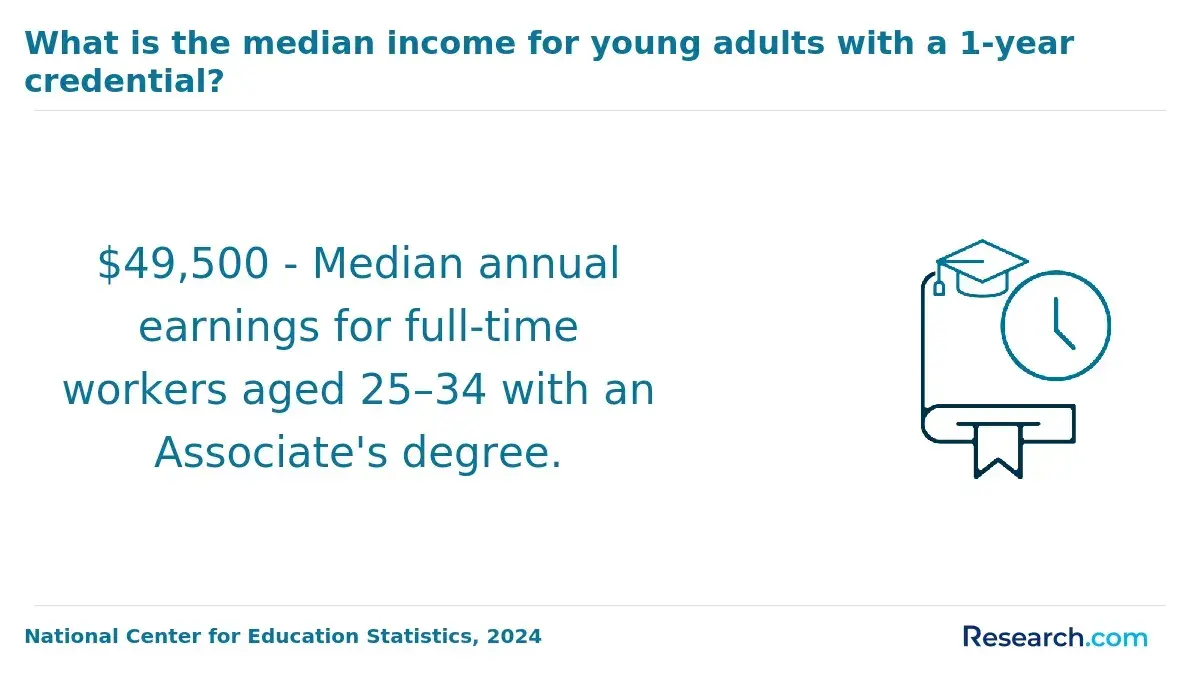
Admission requirements for online bachelor's programs in clinical psychology are usually designed for students entering from several backgrounds: first-time college students, transfer students, returning adults, associate degree graduates, and students with military or workforce training. Adults over 30 should pay close attention to transfer and readmission policies because those often affect time to graduation more than the basic admissions checklist.
Most schools ask for a standard set of materials. Before applying, gather these items and confirm whether the school has separate requirements for transfer students or adult degree-completion applicants.
- Official high school transcript, GED record, or proof of equivalent completion if you have not previously earned enough college credits
- Official transcripts from every college previously attended, even if you withdrew or earned low grades
- Minimum GPA requirement, which may differ for first-year, transfer, and major-entry applicants
- Application form and fee, with possible fee waivers for eligible students
- Personal statement or short essay if the program uses holistic review
- Placement requirements for math, writing, or statistics if prior coursework is missing or outdated
- English proficiency documentation for applicants whose prior education was not completed in English
Many online psychology bachelor's programs are test-optional or do not require SAT or ACT scores for adult transfer students. More important than testing is whether your prior coursework applies to general education, electives, or major requirements. A generous transfer policy can shorten the degree substantially, but only if the transferred credits apply to the degree plan rather than sitting as unused electives.
Adults returning after several years should also ask about academic renewal, prior learning assessment, military credit, CLEP or DSST exams, and portfolio credit. These options can reduce repeated coursework, but policies vary widely by institution and program.
Which accreditation and institutional approvals should online clinical psychology degrees have?
Accreditation is one of the most important quality checks for an online bachelor's degree. For U.S. students, the institution should be accredited by an agency recognized by the U.S. Department of Education or the Council for Higher Education Accreditation. Institutional accreditation affects transfer credit, graduate school eligibility, employer recognition, and access to federal financial aid.
At the bachelor's level, clinical psychology programs are typically not accredited by the American Psychological Association because APA accreditation applies to doctoral programs, internships, and postdoctoral residencies in professional psychology, not undergraduate majors. That distinction matters: a school can offer a legitimate psychology bachelor's degree without APA programmatic accreditation.
Use this table to separate essential approvals from credentials that may sound impressive but do not replace recognized accreditation.
| Quality marker | Why it matters | What to watch for |
| Institutional accreditation | Supports financial aid eligibility, credit transfer, and graduate school recognition | Avoid schools that cannot identify a recognized accrediting agency |
| State authorization for online education | Allows the school to enroll online students in your state | Confirm authorization if you live outside the school's home state |
| Clear psychology curriculum and faculty credentials | Shows whether courses are taught by qualified psychology or behavioral science faculty | Be cautious if faculty information is hidden or vague |
| Transparent licensure disclosures | Helps students understand whether the degree meets any state-specific requirements | A bachelor's alone usually does not meet clinical licensure requirements |
| Transfer and graduate school articulation | Can improve the path into master's or doctoral study | Do not assume credits will transfer without written confirmation |
Red flags include pressure-based admissions calls, vague accreditation claims, no published tuition, unclear faculty credentials, or promises that a bachelor's degree will let you work as a licensed therapist. If a school's claims sound unusually fast, cheap, or guaranteed, verify them through official accreditation and state authorization databases before applying.
What clinical psychology coursework and concentrations can you expect in an online bachelor's?
An online bachelor's in clinical psychology usually combines general education, core psychology courses, research training, electives, and sometimes a capstone or internship. The strongest programs help students understand human behavior scientifically while also introducing ethical and cultural issues that shape mental health services.
Course names vary by school, but adults comparing programs should expect to see several common content areas. The table below explains what these courses typically contribute to your preparation.
| Course or content area | What it teaches | Why it matters |
| Abnormal psychology | Common mental health conditions, symptoms, classification, and treatment concepts | Provides the foundation for understanding clinical language and referral needs |
| Developmental psychology | Cognitive, social, and emotional development across the lifespan | Useful for work with children, adults, families, aging populations, and community programs |
| Research methods | Study design, ethics, measurement, and interpretation of psychological research | Helps students evaluate evidence instead of relying on opinion or popular psychology |
| Statistics for psychology | Quantitative reasoning, probability, data interpretation, and basic analysis | Important for graduate school, research roles, and evidence-based practice settings |
| Counseling theories or helping skills | Major counseling approaches, communication, boundaries, and referral concepts | Introduces helping frameworks without authorizing independent therapy |
| Cultural psychology or diversity in mental health | How culture, identity, inequality, and context affect behavior and care access | Supports ethical work in diverse communities and service settings |
| Capstone, practicum, or internship | Applied project, supervised field exposure, or research-based final experience | Can strengthen graduate applications and entry-level resumes |
Some programs offer concentrations or elective clusters. These are useful when they match a clear goal, but they should not be mistaken for licensure. Common options include substance use, child and adolescent development, forensic psychology, crisis intervention, community mental health, health psychology, and human services.
Adults planning graduate school should prioritize statistics, research methods, writing-intensive courses, and faculty mentorship. Adults seeking near-term employment should look for applied projects, internship coordination, case management exposure, and coursework connected to community agencies or behavioral health systems.
How long do online clinical psychology bachelor's programs take and what do they cost?
Most online bachelor's degrees in clinical psychology require about 120 credits. A first-time college student studying full time may finish in about four years, while adults with an associate degree or substantial transfer credit may finish faster. Part-time students often take longer, but part-time enrollment can reduce burnout and make it easier to keep working.
Cost depends on institution type, residency status, transfer credits, fees, books, technology requirements, and whether you receive grants, employer tuition assistance, scholarships, or military benefits. College Board's 2024 tuition data shows why comparison shopping matters: average published tuition and fees were $11,610 for in-state students at public four-year institutions and $43,350 at private nonprofit four-year institutions. Those figures are not online-specific, but they show the size of the pricing gap students may encounter.
The table below summarizes the main timeline and cost variables that adults over 30 should calculate before choosing a program.
| Decision factor | How it affects time or cost | What adults should ask |
| Transfer credits | Can reduce the number of courses needed, but only if credits apply to the degree | Will you provide a degree audit before I commit? |
| Enrollment pace | Full-time study may shorten completion; part-time study may be more sustainable | How many courses do working adults usually take per term? |
| Tuition model | Per-credit, flat-rate, and competency-based pricing can produce different total costs | What is the total estimated cost after transfer credits? |
| Fees | Online, technology, proctoring, graduation, and course material fees can add up | Which fees are mandatory each term? |
| Field experience | Internships may require scheduling flexibility or local travel | Do you help online students find approved sites? |
To control costs, compare the total degree price rather than the advertised per-credit tuition. Adults with prior credits should also compare schools that publish strong transfer policies or adult degree-completion pathways. If affordability is the top priority, a guide to the cheapest online psychology degree options can help you benchmark tuition before you contact schools.
Do not choose the lowest price automatically. A slightly more expensive program may be a better value if it accepts more transfer credit, offers stronger advising, includes career support, or aligns better with graduate school prerequisites.
Can a bachelor's in clinical psychology lead directly to licensure or do you need a master's?
A bachelor's in clinical psychology does not lead directly to licensure as a clinical psychologist, professional counselor, marriage and family therapist, or clinical social worker. In the United States, independent clinical practice generally requires graduate education, supervised clinical hours, passing a licensing exam, and approval from a state licensing board.
The bachelor's degree can still be a strategic first step. It helps students build the academic foundation needed for graduate programs in counseling, psychology, social work, school psychology, applied behavior analysis, or related fields. The right next degree depends on the type of work you want to do.
The table below shows common clinical or counseling-related goals and the education typically required after the bachelor's degree.
| Career goal | Typical education after bachelor's | Licensure note |
| Licensed professional counselor or mental health counselor | Master's in counseling or clinical mental health counseling | Requires state-specific supervised hours and exam requirements |
| Clinical social worker | Master of Social Work | Requires supervised clinical experience and state licensure |
| Clinical psychologist | Doctoral degree in psychology, commonly PhD or PsyD | Requires doctoral training, supervised experience, exam completion, and state licensure |
| School psychologist | Specialist-level or doctoral training, depending on state and role | Requirements vary by state education and psychology boards |
| Behavior analyst | Graduate-level behavior analysis coursework and supervised fieldwork for many credentials | State rules and certification expectations vary |
If your goal is to become a licensed counselor, compare undergraduate programs based on how well they prepare you for an online mental health counseling masters program. Look for strong grades in psychology, statistics, and research methods; relevant volunteer or work experience; and faculty who can write detailed recommendations.
The biggest licensure mistake is assuming that "clinical psychology" in a bachelor's degree title means the program meets clinical practice requirements. Always check the licensing board for the state where you plan to practice and ask graduate programs which undergraduate prerequisites they prefer.
What careers, roles, and settings are available with a bachelor's in clinical psychology?
With a bachelor's in clinical psychology, most available roles are supportive, administrative, research-related, or human services-oriented rather than independently clinical. The degree can help you qualify for jobs that involve client support, behavioral health coordination, community programs, data collection, human behavior, training, or advocacy.
The table below outlines realistic bachelor's-level career directions and the kinds of responsibilities adults may encounter.
| Role or setting | Typical responsibilities | Fit for clinical psychology graduates |
| Behavioral health technician or psychiatric aide | Support care teams, observe clients, document behavior, and assist with daily routines | Good for gaining exposure to mental health environments before graduate school |
| Case management assistant or human services specialist | Connect clients with services, maintain records, support intake, and coordinate referrals | Strong fit for students interested in community mental health or social services |
| Research assistant | Collect data, manage study materials, support literature reviews, and help with reporting | Useful for students considering graduate research or doctoral programs |
| Substance use or recovery support role | Support treatment teams, peer programs, outreach, or prevention services | May require additional state-specific credentials or training |
| Human resources or employee wellness support | Assist with training, workplace behavior programs, employee engagement, or wellness initiatives | Works well for adults combining psychology with business or management experience |
| Nonprofit program coordinator | Organize services, track outcomes, communicate with clients, and support grants or reporting | Good for mission-driven adults with communication and organization skills |
Adults over 30 often bring transferable strengths that younger graduates may still be developing, such as workplace communication, conflict resolution, project management, caregiving experience, leadership, or healthcare familiarity. Those strengths can make a psychology degree more marketable when paired with internships, volunteer work, data skills, bilingual ability, or crisis-response training.
If your long-term goal is doctoral-level clinical psychology, use bachelor's-level roles to build research and service experience while comparing graduate routes such as an online PsyD program. Doctoral admission is competitive, so undergraduate GPA, research exposure, faculty references, and clear professional goals matter.
What are the typical salary ranges and job outlook for clinical psychology-related careers?
Salary outcomes for clinical psychology-related careers vary because bachelor's-level roles, master's-level counseling roles, and doctoral psychologist roles sit in different labor markets. A bachelor's degree can open doors, but the highest clinical authority and pay bands usually require graduate education, licensure, and supervised experience.
BLS May 2024 wage data provides a useful national benchmark, though actual pay varies by state, employer, experience, union coverage, shift requirements, and credentials. The table below compares several roles connected to psychology, behavioral health, and human services.
| Occupation | Typical entry requirement | 2024 median annual pay | How to interpret it |
| Social and human service assistants | Often associate or bachelor's degree, depending on employer | $45,120 | Relevant for bachelor's-level support and case coordination roles |
| Psychiatric technicians and aides | Varies from high school to postsecondary training; bachelor's may help for advancement | $42,590 | Often involves direct support in mental health or residential settings |
| Substance abuse, behavioral disorder, and mental health counselors | Typically bachelor's to master's, depending on role and state licensure | $59,190 | Many independent counseling roles require a master's and license |
| Psychologists | Usually doctoral degree for clinical practice | $94,310 | Reflects advanced training and licensure requirements, not bachelor's-only outcomes |
Job outlook also differs by credential level. BLS projections released for the 2024 to 2034 period show much faster growth for substance abuse, behavioral disorder, and mental health counselors than the average for all occupations. For readers, the takeaway is not that every psychology graduate will enter a high-growth role; it is that behavioral health demand is strongest where education, supervision, and licensure match employer requirements.
Technology is changing the field as well. Telehealth platforms, electronic health records, digital screening tools, and AI-assisted documentation are becoming more common in behavioral health settings. Bachelor's-level workers who understand privacy, ethical documentation, data quality, and human-centered communication may be better positioned than those who rely only on general psychology knowledge.
How should adults over 30 evaluate and choose a reputable online clinical psychology program?
Adults over 30 should evaluate online clinical psychology programs with a practical question in mind: "Will this program move me toward my goal at a cost, pace, and level of risk I can justify?" A reputable program should make its accreditation, curriculum, transfer policy, tuition, faculty credentials, and student support easy to verify.
Use the following steps before applying or signing an enrollment agreement. They are designed to help you compare programs on substance rather than marketing language.
- Confirm institutional accreditation through a recognized accreditor and verify that the school is authorized to enroll students in your state.
- Request a written transfer credit evaluation before committing, especially if you have prior college, military, professional, or exam-based credits.
- Calculate total program cost after transfer credits, fees, books, technology requirements, and likely financial aid rather than comparing tuition alone.
- Ask whether courses are asynchronous, synchronous, accelerated, or competency-based so you can judge the weekly workload realistically.
- Review the major curriculum for abnormal psychology, statistics, research methods, ethics, diversity, and applied or capstone experiences.
- Ask how online students access tutoring, writing support, library services, disability accommodations, career advising, and faculty office hours.
- Check whether the program prepares you for your next step, such as employment, a counseling master's, social work graduate study, or doctoral psychology training.
- Look for transparent outcomes, but avoid schools that imply guaranteed jobs, salaries, admission to graduate school, or licensure.
It is also worth comparing psychology programs with counseling and human services programs. If you know you want a counseling-oriented pathway, lists of affordable online counseling programs can help you decide whether a psychology bachelor's or a counseling-related degree is the better starting point.
Common red flags include unclear accreditation, no itemized cost estimate, limited transfer transparency, no access to faculty, weak student support, and admissions representatives who rush you. A good program should give you enough information to say no as confidently as yes.
Other Things You Should Know About Clinical Psychology
It can be a good major if you want a foundation in mental health, behavior, research, and helping professions. It is strongest when paired with a clear plan, such as entering human services, preparing for graduate school, or adding psychology knowledge to an existing career.
Most institutions do not indicate whether a bachelor's degree in clinical psychology was earned online or on-campus on the diploma itself. The diploma typically states the degree awarded and the name of the institution, not the method of study.
Most programs require statistics and research methods rather than advanced calculus. Adults who have been away from school for a long time should use tutoring, refresher modules, and professor office hours early in the term.
Yes, many adults do, especially in asynchronous or part-time programs. The key is choosing a course load you can sustain; two courses per term may be more realistic than full-time study for students balancing work and family responsibilities.
References
- Third-level courses and mature students https://www.citizensinformation.ie/en/education/third-level-education/applying-to-college/third-level-courses-for-mature-students/
- Online Bachelor’s in Psychology https://onlinecounselingprograms.com/online-counseling-degrees/bachelors-in-psychology/
- How To Become A Clinical Psychologist (2025 Guide) https://www.psychology.org/careers/clinical-psychologist/
- Masters in Psychology and Counseling Accreditation Council | Council for Higher Education Accreditation https://www.chea.org/masters-psychology-and-counseling-accreditation-council
- Most Popular Online Psychology Degrees 2025 https://www.onlineu.com/degrees/psychology
- What Adult Students Want: Is Your College Catering to These Learners? - Collegis Education https://collegiseducation.com/insights/what-adult-students-want-the-clearest-shortest-most-efficient-path/
- Best Online Psychology Degrees for Adult Learners – 2026 https://www.collegetransitions.com/blog/best-online-psychology-degrees-for-adult-learners/
- 2025 Best Online Bachelor's Degree Programs in Psychology https://www.counselingpsychology.org/psychology/degrees/bachelors/
- Psychology Accreditation: What you need to know https://www.onlinepsychologydegrees.com/articles/accreditation/
- Master’s in Social Work vs. Master’s in Psychology https://socialworklicensemap.com/social-work-resources/comparing-social-service-degrees/social-work-vs-psychology/