2027 Best Online Bachelor's in Clinical Psychology With Career Services

Co-Founder and Chief Data Scientist
Choosing an online bachelor's in clinical psychology is really a decision about your next career step: entry-level behavioral health work now, graduate study later, or both. The need is timely: the U.S. Bureau of Labor Statistics projects psychologist employment to grow 7% from 2024 to 2034, faster than the average for all occupations.
This guide is for students who want a flexible psychology degree with strong career services. You will learn how programs differ, what they cost, how accreditation works, and which support features can make an online degree more useful.
Key Things You Should Know
- An online bachelor's in clinical psychology can prepare you for entry-level behavioral health, case management, research assistant, and human services roles, but independent clinical psychologist licensure generally requires a doctoral degree and state approval.
- Cost varies widely: College Board's 2024 Trends in College Pricing reported average published tuition and fees of $11,610 for in-state public four-year colleges and $43,350 for private nonprofit four-year colleges in 2024-25, so transfer credits and online tuition rules matter.
- For career services, prioritize programs that offer psychology-specific advising, internship coordination, graduate school planning, resume reviews, interview practice, and employer or community agency partnerships.
What is an online bachelor's in clinical psychology and how does it differ from counseling degrees?
An online bachelor's in clinical psychology is an undergraduate degree focused on human behavior, mental health, psychological assessment, abnormal psychology, research methods, and evidence-based approaches to understanding emotional and behavioral disorders. Most programs lead to a BA or BS in psychology with a clinical psychology concentration, because "clinical psychology" is more commonly a graduate-level professional specialty than a standalone undergraduate license pathway.
The main difference is scope. Clinical psychology emphasizes assessment, diagnosis, research literacy, psychopathology, and preparation for graduate study in psychology. Counseling degrees usually focus more directly on helping skills, client communication, prevention, addiction, family systems, and applied counseling practice. At the bachelor's level, neither path typically qualifies you to practice independently as a licensed counselor or psychologist, but they can point you toward different graduate routes.
The table below compares common undergraduate options so you can match the degree name to your intended outcome rather than choosing based on the word "clinical" alone.
| Program type | Best fit | Typical emphasis | Graduate direction |
| BA or BS in Psychology with clinical concentration | Students considering clinical psychology, counseling psychology, research, or behavioral health work | Abnormal psychology, assessment concepts, research methods, development, statistics | Master's or doctoral programs in psychology, counseling, social work, or related fields |
| BA or BS in Counseling or Human Services | Students who want applied helping roles soon after graduation | Case management, communication, crisis support, community services | Master's in counseling, social work, marriage and family therapy, or human services |
| Addiction counseling bachelor's degree | Students interested in substance use treatment settings | Addiction science, recovery models, ethics, group work | Counseling, addiction counseling, or social work graduate programs |
If your goal is substance use treatment, compare clinical psychology programs with online colleges for addiction counseling, because some addiction-focused degrees may align better with state credentialing requirements for entry-level addiction roles.
Are online bachelor's programs in clinical psychology accredited and recognized for further study?
Yes, many online bachelor's programs in psychology are recognized by graduate schools and employers when the institution is properly accredited. The key is institutional accreditation from an agency recognized by the U.S. Department of Education or the Council for Higher Education Accreditation. At the bachelor's level, psychology programs are not typically APA-accredited; APA accreditation generally applies to doctoral programs, internships, and postdoctoral residencies in professional psychology.
This distinction matters because students sometimes look for "APA-accredited bachelor's in clinical psychology" and assume a program is weak if it does not have that label. For undergraduate study, the stronger questions are whether the school is institutionally accredited, whether credits transfer, whether faculty are qualified, and whether the curriculum prepares students for graduate prerequisites.
Use this quick recognition checklist before you apply or submit a deposit.
- Confirm the institution appears in the U.S. Department of Education's accreditation database or a recognized accreditor's directory.
- Ask whether the transcript lists the same degree and major for online and campus students.
- Check whether the program includes research methods, statistics, abnormal psychology, developmental psychology, and biological bases of behavior.
- Ask graduate admissions offices whether the degree meets prerequisite expectations for programs you may pursue later.
- Review transfer policies if you may move from community college or another university.
Recognition also depends on your next step. Employers hiring for entry-level behavioral health support roles may focus on the bachelor's degree, experience, communication skills, and background checks. Graduate programs may focus more on GPA, prerequisite courses, research experience, recommendation letters, and fit with faculty or training goals.
How does an online bachelor's in clinical psychology prepare you for graduate licensure pathways?
An online bachelor's in clinical psychology is usually the first academic step, not the final licensure credential. To become a licensed clinical psychologist, students typically complete a doctoral program in clinical, counseling, or school psychology; supervised clinical training; an internship; postdoctoral hours in many states; and licensing exams. Requirements vary by state licensing board, so students should verify rules early.
The degree can still be valuable because it helps you build the academic foundation graduate programs expect. Strong programs introduce research design, statistics, psychopathology, ethics, multicultural psychology, and lifespan development. These courses help you decide whether you want the longer psychologist route or a shorter master's-level route such as counseling, social work, school psychology, marriage and family therapy, or applied behavior analysis.
The table below shows how undergraduate clinical psychology can connect to common graduate paths. Use it to compare time commitment and professional goals before choosing a program.
| Long-term goal | Likely graduate degree | Typical license direction | What the bachelor's should help you build |
| Clinical psychologist | PhD or PsyD in clinical psychology | State psychologist license | Research skills, strong GPA, statistics, clinical exposure, faculty recommendations |
| Licensed professional counselor | Master's in counseling | LPC, LMHC, or equivalent depending on state | Helping skills, ethics, human development, abnormal psychology, field experience |
| Clinical social worker | Master of Social Work | LCSW or equivalent depending on state | Human services experience, social systems knowledge, case management exposure |
| Child or adolescent mental health specialist | Master's or doctoral program focused on child development, counseling, psychology, or social work | Depends on degree and state | Developmental psychology, family systems, trauma-informed practice, youth services experience |
If you are specifically interested in youth mental health, reviewing child psychologist master's programs can help you see which undergraduate courses and experiences may strengthen your future graduate application.
What admissions requirements and prior preparation are needed for online clinical psychology majors?
Admissions requirements are usually accessible, especially for first-year online bachelor's programs. Most schools ask for a high school diploma or GED, transcripts, an application form, and sometimes a personal statement. Test scores are often optional, but selective universities or honors tracks may still consider them. Transfer applicants generally submit college transcripts and may need a minimum GPA.
Prior preparation matters less than readiness for writing, statistics, and self-directed study. Psychology majors read heavily, write research-based papers, interpret data, and discuss sensitive topics such as trauma, mental illness, substance use, and family stress. Students who have not taken statistics should not avoid the major, but they should choose a program with tutoring, math support, and clear course sequencing.
Before applying, gather the information admissions and academic advisors use to place you correctly and estimate completion time.
- Request official transcripts from high school, community college, military education, or previous universities.
- Ask whether the school accepts transfer credits, CLEP, AP, IB, military training, or prior learning assessment.
- Review technology requirements, including webcam, internet speed, learning platform access, and any proctored exam rules.
- Check whether the program has synchronous class meetings or is fully asynchronous.
- Ask whether field experience courses require local site approval, background checks, or immunization records.
Students returning after time away from school should pay close attention to academic support. A lower-cost program is not always the better choice if it lacks advising, writing help, or early alerts that keep online learners from falling behind.
What courses, clinical experiences, and skills are taught in online clinical psychology programs?
Online clinical psychology bachelor's programs combine broad psychology foundations with clinically oriented electives. The goal is not to train you to provide psychotherapy independently; it is to help you understand behavior, mental health conditions, ethical practice, research evidence, and the human services systems where clients receive support.
Most programs include a mix of general education, psychology core courses, concentration courses, electives, and a capstone. Clinical or field experiences may be optional, required, or embedded in service-learning assignments. Because students are remote, schools often allow approved local placements in hospitals, nonprofits, crisis centers, schools, shelters, rehabilitation programs, or community mental health agencies.
The following course and skill areas are especially important if you plan to work after graduation or apply to graduate school.
- Abnormal psychology: helps you understand major categories of mental disorders and the limits of undergraduate-level assessment.
- Research methods and statistics: prepare you to read evidence, evaluate claims, and succeed in graduate-level psychology coursework.
- Developmental psychology: explains how behavior and mental health needs change across childhood, adolescence, adulthood, and aging.
- Biopsychology or neuroscience: introduces brain-behavior relationships, medication context, and biological influences on mental health.
- Counseling and interviewing basics: builds active listening, ethical boundaries, documentation habits, and referral awareness.
- Multicultural psychology: prepares you to work with clients and communities whose identities, stressors, and access barriers differ from your own.
- Ethics and professional issues: clarifies confidentiality, mandated reporting, informed consent, scope of practice, and professional conduct.
Technology is also changing psychology education. Students increasingly use telehealth platforms in simulations, digital case studies, online research tools, and data dashboards. AI may assist with literature searches or administrative tasks, but ethical programs teach students not to outsource clinical judgment, confidential information, or original academic work to automated tools.
How long do online bachelor's programs in clinical psychology take and what do they cost?
A traditional online bachelor's degree usually requires about 120 credits and takes four years of full-time study. Transfer students may finish faster if prior credits apply to general education, electives, or lower-division psychology requirements. Part-time students often take longer, but the format can make employment and caregiving more manageable.
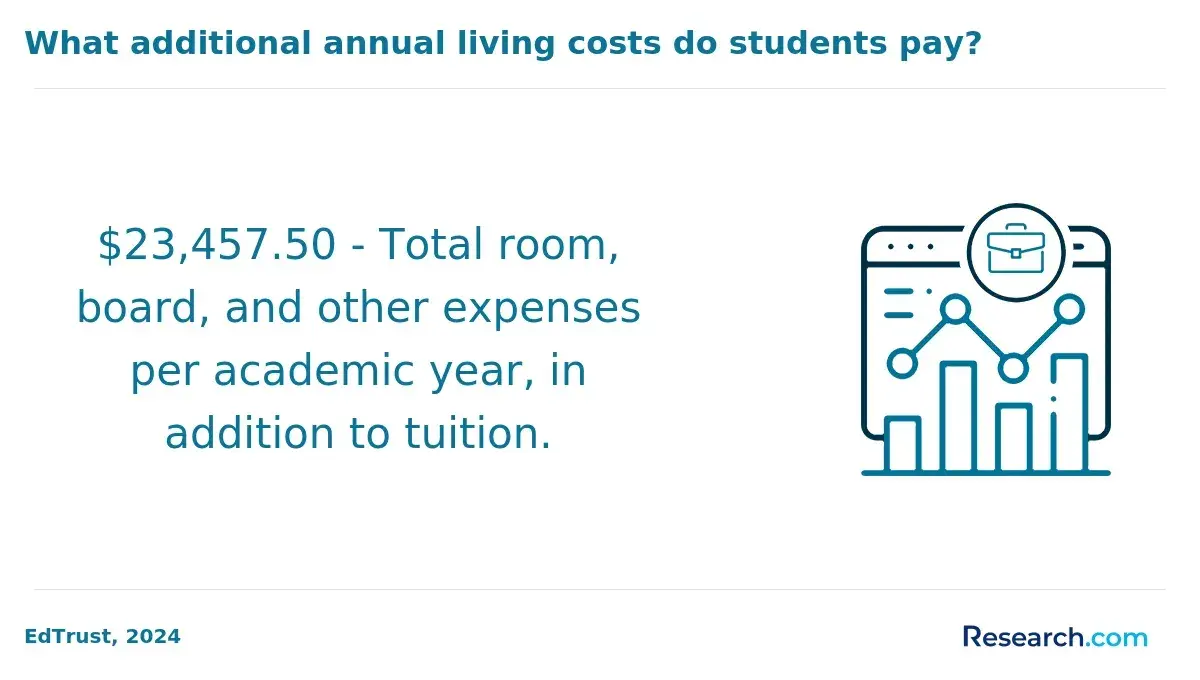
Cost depends on tuition model, residency rules, transfer credits, fees, books, technology, and whether the institution is public, private nonprofit, or private for-profit. College Board's 2024 Trends in College Pricing reported average published tuition and fees of $11,610 for in-state public four-year colleges and $43,350 for private nonprofit four-year colleges in 2024-25. Those figures are not online-specific prices, but they show why students should compare total program cost rather than only per-credit tuition.
The table below summarizes common timeline and cost scenarios for online psychology students. Use it to estimate which format fits your budget and schedule.
| Student scenario | Typical timeline | Cost considerations | Best fit |
| First-time full-time student | About four years | Highest total credit load; may qualify for broad financial aid packages | Students who want a structured path and can carry a full course load |
| Community college transfer student | About two years after associate degree if credits transfer well | Can reduce total cost substantially when transfer agreements are strong | Students seeking a lower-cost route to a bachelor's degree |
| Accelerated online student | May finish faster through shorter terms or heavier course loads | Can save time but may increase weekly workload and reduce flexibility | Highly organized students with prior credits or fewer outside obligations |
| Part-time working student | Often five or more years | Lower term-by-term cost but longer time to completion | Students balancing work, family, or military responsibilities |
If speed is a major priority, compare standard programs with a fastest psychology degree option, but ask whether accelerated terms still provide enough time for statistics, research projects, and internship planning.
To reduce cost, start with a transfer evaluation before enrolling, not after. Also ask whether online students pay campus fees, whether tuition differs for out-of-state learners, whether psychology courses use low-cost materials, and whether summer courses are priced differently.
What career services and internship support do top online clinical psychology programs provide?
Career services are one of the biggest differences between a basic online degree and a program that actively helps students move forward. For clinical psychology majors, general resume help is useful, but it is not enough. Strong programs connect coursework to behavioral health employers, graduate school preparation, field experience, and professional identity.
Top online programs often provide career support in layers, beginning early rather than waiting until senior year. This matters because many psychology-related entry-level jobs prefer applicants with volunteer work, crisis-line experience, research exposure, or supervised human services experience before graduation.
Look for career services that are specific enough to support psychology and mental health pathways.
- Psychology-informed career advising that explains differences among psychologist, counselor, social worker, case manager, behavior technician, and research roles.
- Internship or practicum coordination with approved local sites and clear liability, background check, and supervision procedures.
- Graduate school planning, including prerequisite reviews, statement feedback, recommendation letter strategy, and interview preparation.
- Resume and cover letter support tailored to human services, behavioral health, nonprofit, and research assistant roles.
- Mock interviews that include scenario questions about boundaries, confidentiality, crisis response, and teamwork.
- Employer panels or networking events with hospitals, community agencies, schools, rehabilitation centers, and social service organizations.
- Alumni mentoring for students comparing master's, PsyD, PhD, and direct-to-work options.
Ask detailed questions about internships before you enroll. Some online programs require students to find their own sites, while others provide placement lists, affiliation agreements, or dedicated field coordinators. A program that is cheaper but leaves you without relevant experience may be less useful if your goal is competitive graduate admission or immediate behavioral health employment.
What entry-level jobs can you get with a bachelor's in clinical psychology and what do they pay?
With a bachelor's in clinical psychology, you can pursue entry-level roles that support clients, programs, researchers, or care teams, but you should not expect to work as an independently licensed clinical psychologist. Common employers include behavioral health agencies, residential treatment centers, hospitals, schools, correctional programs, crisis services, rehabilitation providers, nonprofits, and research labs.
Pay varies by state, employer, shift, credentials, and risk level. BLS May 2024 wage data reported a median annual wage of $59,190 for substance abuse, behavioral disorder, and mental health counselors, although many counseling roles require additional credentials or a master's degree depending on the state and job duties. Use salary data as a labor-market reference, not as a guarantee for a bachelor's-only graduate.
The table below highlights realistic bachelor's-level or bachelor's-accessible roles and how they differ. Always review job postings in your state because titles and credential rules vary.
| Role | Typical responsibilities | Common settings | Credential notes |
| Behavioral health technician | Support treatment plans, observe clients, document behavior, assist care teams | Residential treatment, hospitals, crisis stabilization, substance use programs | May require background checks, CPR, de-escalation training, or state-specific certification |
| Case manager or care coordinator | Connect clients to services, track needs, coordinate appointments, maintain records | Community mental health, nonprofits, social services, healthcare organizations | Bachelor's often preferred; social work license rules vary by state |
| Research assistant | Recruit participants, manage data, support literature reviews, help with study procedures | Universities, hospitals, research institutes, public health programs | Statistics, research methods, and data software experience are valuable |
| Psychiatric rehabilitation specialist | Help clients build coping, daily living, employment, and community participation skills | Rehabilitation agencies, supported housing, community programs | Employer training and human services experience may matter as much as major title |
| Intake specialist | Collect client information, screen needs, schedule services, explain program requirements | Clinics, crisis lines, social services, addiction treatment centers | Requires strong documentation, empathy, and confidentiality practices |
If your goal is licensed counseling rather than psychology, compare bachelor's-to-master's routes and affordability through a cheapest online counseling degree pathway, especially if your state or employer prefers CACREP-aligned graduate preparation.
To improve entry-level prospects, build experience while enrolled. Volunteer for a crisis text line, seek supervised roles in youth programs or shelters, complete research projects, learn basic data tools, and keep a record of training in trauma-informed care, motivational interviewing concepts, or mental health first aid.
What is the long-term salary outlook for clinical psychologists and related advanced roles?
The long-term salary outlook improves substantially for students who complete graduate training and licensure, but the path is longer, more selective, and more expensive. The U.S. Bureau of Labor Statistics reported a 2024 median annual wage of $95,830 for clinical and counseling psychologists. That figure reflects professionals who generally hold doctoral training and state licensure, not new bachelor's graduates.
Advanced roles also differ by setting. Hospitals, outpatient care centers, schools, government agencies, private practice groups, and integrated healthcare systems may pay differently and require different forms of experience. Geographic location, insurance reimbursement, specialization, supervision responsibilities, and years of practice can all affect earnings.
The following comparison helps you understand how education level connects to long-term role options.
| Career direction | Education usually needed | Scope of work | Salary interpretation |
| Licensed clinical psychologist | Doctoral degree, supervised training, state licensure | Assessment, diagnosis, psychotherapy, supervision, consultation, research in some roles | Higher ceiling, but requires the longest training timeline |
| Licensed professional counselor | Master's degree, supervised hours, state licensure | Counseling, treatment planning, client support, group work depending on state scope | Often faster than the psychologist route, but scope and pay differ |
| Clinical social worker | MSW, supervised clinical hours, state licensure | Therapy, case coordination, advocacy, systems-focused care | Strong fit for students interested in both therapy and social service systems |
| Research or program evaluation specialist | Bachelor's for entry level; master's or PhD for advancement | Data collection, outcomes measurement, grant support, program improvement | Best for students who enjoy statistics, writing, and evidence-based decision-making |
Students should evaluate return on investment in stages. A bachelor's degree may help you enter the field and test your fit, while graduate school may be necessary for independent practice. The best financial decision is often the route that preserves options: accredited undergraduate study, transferable credits, strong GPA, low unnecessary debt, and relevant experience.
How can you compare and choose a reputable online bachelor's in clinical psychology program?
The best online bachelor's in clinical psychology is not simply the cheapest, fastest, or highest-ranked program. It is the program that matches your career goal, budget, learning style, transfer status, and graduate school plans. Because psychology careers are credential-sensitive, the wrong program can cost time if credits do not transfer or prerequisites are missing.
Use a structured comparison process before applying. This helps you avoid common mistakes such as assuming all online psychology degrees lead to licensure, ignoring field experience, or choosing a school based only on advertising.
- Define your end goal first: entry-level behavioral health work, graduate counseling, doctoral psychology, research, addiction services, child and adolescent work, or human services.
- Verify institutional accreditation and confirm whether online students receive the same transcript language as campus students.
- Map required courses against likely graduate prerequisites, especially statistics, research methods, abnormal psychology, developmental psychology, and biological psychology.
- Ask for a written transfer credit evaluation and total remaining cost estimate before you enroll.
- Compare career services by asking who coordinates internships, how local sites are approved, and whether psychology-specific graduate advising is available.
- Review student support, including tutoring, writing help, library access, disability services, mental health support, and academic advising availability for online learners.
- Check outcomes carefully, but avoid schools that imply a bachelor's degree alone qualifies you for independent therapy or psychologist licensure.
Red flags include unclear accreditation language, pressure to enroll immediately, vague tuition estimates, no faculty information, no statistics or research sequence, no career support beyond a generic job board, and promises of licensure without state-specific explanation. A reputable program will be clear about what the degree can and cannot do.
When comparing your final options, ask admissions advisors direct questions and save the answers in writing. Good questions include: "How many credits will I need after transfer?" "Who helps online students secure internships?" "Which graduate programs have alumni entered?" "Are any synchronous meetings required?" and "What fees are not included in tuition?" These answers will tell you more than a ranking alone.
Other Things You Should Know About Clinical Psychology
In 2027, top online programs with excellent career services include Southern New Hampshire University, Arizona State University, and University of Florida. These schools emphasize resume building, internship placements, and networking opportunities tailored for clinical psychology students, enhancing their career prospects.
Neither is automatically better. A BS may include more science, statistics, or research coursework, while a BA may offer more flexibility in social science or humanities electives. Choose the curriculum that best fits your graduate prerequisites and career goals.
Some bachelor's programs include internships, practicums, or service-learning experiences that may be completed at approved local sites. Requirements vary by school, so ask before enrolling if you need workplace experience for your resume or graduate applications.
It can be, as long as you choose an accredited program with strong research, writing, and applied experience. The major can lead to entry-level human services roles, but the most independent and higher-scope clinical careers require graduate education.
References
- Clinical Psychologist Careers and Salary https://teach.com/online-ed/psychology-degrees/online-masters-in-clinical-psychology/salary-and-career-outlook/
- How Long Does It Take to Become a Clinical Psychologist? Career Path Timeline https://www.scuhs.edu/psyd-article/how-long-does-it-take-to-become-a-clinical-psychologist-career-path-timeline/
- How To Become A Clinical Psychologist (2025 Guide) https://www.psychology.org/careers/clinical-psychologist/
- Clinical Psychology Internships | Pacific Clinics https://www.pacificclinics.org/careers/clinical-internships/
- Clinical Psychology | Virtual Work Experience — Journey To Healthcare https://www.journeytohealthcare.co.uk/courses/clinical-psychology-virtual-work-experience
- 10 High-Paying Jobs with a BS in Psychology | University of Bridgeport https://www.bridgeport.edu/news/high-paying-jobs-with-a-bachelors-in-psychology-degree/
- Doctoral Training at McLean Hospital https://www.mcleanhospital.org/training/doctoral-training