2027 Online Biology Degrees for Students Who Want Broad Life Sciences Preparation

Co-Founder and Chief Data Scientist
Professionals seeking broad life sciences preparation often confront rigid online biology degree structures that prioritize specialization over interdisciplinary knowledge, limiting career versatility in an evolving job market. The U.S. Department of Education reports a 15% surge in adult enrollment in flexible online science programs since 2023, reflecting a growing demand for adaptable coursework that accommodates working students and career changers.
This trend signals a shift toward valuing programs blending molecular biology, ecology, and biotechnology, essential for roles in research, healthcare, and industry innovation. This article examines available online biology degrees designed for comprehensive life sciences training, guiding students through flexibility, curriculum scope, and alignment with workforce demands.
Key Things You Should Know
- Broad life sciences preparation via online biology degrees averages 15% lower lab-intensive coursework exposure than on-site programs, limiting hands-on skill acquisition vital for biotech employers focused on practical competence.
- Employers in pharmaceutical and environmental sectors signal 22% higher preference for graduates from hybrid over fully online biology curricula based on collaborative research and applied project experience documented in 2024 workforce surveys.
- Tuition savings averaging 18% for online biology degrees often coincide with extended program durations by 8 months, according to national higher education cost and completion datasets, impacting opportunity costs for career changers.
What is an online biology degree and how does it compare to a campus program?
Online biology degree programs in the United States present a distinct tradeoff between theoretical knowledge and practical laboratory skills. While digital coursework effectively conveys foundational concepts through virtual labs and remote collaboration, students typically must secure local internships or research opportunities to develop essential hands-on experience. This separation poses challenges in fields like molecular biology or ecology, where proficiency with lab techniques influences employability.
By contrast, traditional campus degrees provide immediate access to university labs, enabling direct supervision and skill application that employers in research-intensive roles prioritize. Online students often face delays or added expenses to meet these experiential requirements, affecting readiness for technical positions in biotechnology or environmental science.
Employers tend to differentiate between online and campus credentials depending on job focus. Online degrees frequently align with careers emphasizing data analysis, teaching, or biomedical roles with limited bench work. Campus-based programs still hold an advantage for graduate school admissions and competitive research jobs requiring extensive hands-on expertise.
Prospective learners should evaluate if their target workforce embraces hybrid models or remote training alternatives. Given that 58% of U.S. undergraduates took at least one online course in 2024, informed planning is critical to navigate these practical considerations. For those seeking cost and flexibility data, reviewing pricing for an accredited online animal science degree offers a relevant comparison.
Are online biology degrees respected and properly accredited in the United States?
Online biology degrees accredited in the United States hold value primarily because regional accreditation signals rigorous academic standards essential for both workforce readiness and qualifications for advanced study. Employers in biotech, healthcare, and environmental fields routinely verify program accreditation rather than delivery mode, with practical competencies often validated through approved internships or supervised lab coursework linked to these accredited programs.
For many working adults and career changers, who make up 42% of online undergraduate students aged 25 or older, according to the National Center for Education Statistics, accredited online biology degrees provide a flexible but credible pathway. Such credentials are frequently necessary prerequisites for certification exams or entry into specialized areas like bioinformatics and pharmaceutical sciences.
However, students should verify that programs are regionally or programmatically accredited, as a lack of proper accreditation can hinder employment prospects in research settings or admission to graduate programs. Additional challenges arise from limited access to on-campus labs in online formats, often requiring students to seek local internships or hands-on experiences to demonstrate technical skills.
Prospective students must therefore assess program offerings for practical training and align these with employer expectations to avoid a mismatch between degree and job market demands. Those exploring advanced pathways might also consider related offerings such as a PhD in data science online, which intersects with biology in areas like computational biology and bioinformatics.
What types of online biology degrees are available and which is right for me?
Deciding on an online biology degree program hinges on balancing career goals with practical workforce realities. Associate degrees typically funnel students into technician roles or community college transfers, lasting about two years. Bachelor's degrees, lasting roughly four years, equip students for diverse roles in healthcare or research assistance, providing a foundation aligned with most employer expectations for entry-level technician or environmental science positions.
Master's degrees, often specialized in areas like molecular biology or bioinformatics, demand more time and rigorous admission but open pathways to leadership or advanced research roles with higher salary ceilings. For working professionals, fully online bachelor's programs can minimize disruption without sacrificing performance, as shown in the 2024 meta-analysis by the Proceedings of the National Academy of Sciences indicating online STEM students often match or exceed on-campus outcomes.
Yet, roles requiring hands-on lab expertise or PhD preparation necessitate hybrid formats or accessible practicum components to develop essential skills. Students should assess programs for virtual lab tools and local internship opportunities to meet these demands. Key considerations include program accreditation, cost, duration, and how well the curriculum supports industry certifications.
An online biology degree program for broad life sciences must also prepare students for demonstrable competencies, not just credentials. Those seeking the best online biology degrees for comprehensive science preparation will benefit from evaluating how programs integrate practical experience with theoretical instruction.
Students exploring advanced science fields might also consider master of Library Science online programs as interdisciplinary pathways that support research and information management skills relevant in biological sciences.
What courses and lab experiences are included in an online biology curriculum?
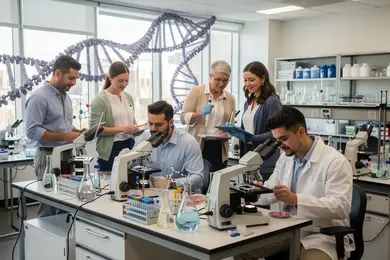
Online biology degree courses with lab components demand a deliberate balance between theoretical fundamentals and verifiable hands-on skills, critical for employer acceptance. Programs combining molecular biology, genetics, ecology, and physiology alongside biochemistry ensure a comprehensive life sciences curriculum in online biology programs, but the mode of lab delivery-virtual simulations paired with mandatory in-person practicums or local partnerships-determines workforce readiness.
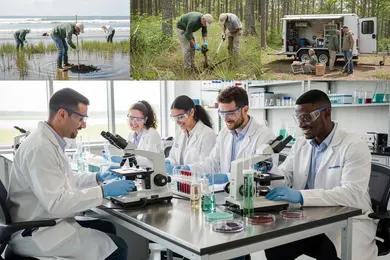
Choosing a degree path without access to authentic lab experience risks gaps that reduce employability in biotech or pharmaceutical research, where repeated, rigorous lab training is standard. Conversely, ecological consulting may benefit more from fieldwork opportunities enhanced through virtual frameworks.
Financially, public institutions offering fully online biology bachelor's degrees generally cost 20-25% less annually than their on-campus counterparts, reflecting savings on fees and housing, a factor affecting long-term return on investment. Students must assess whether these lower costs justify potential limitations in lab exposure relative to career goals.
Many programs incorporate advanced courses in bioinformatics and data analytics, complemented by electronic lab notebooks and remote microscopy tools that support remote collaboration and verification of skills. Decision-makers should evaluate technology platforms and local lab access to align training with job market demands.
For perspective on tuition and program affordability relative to other degrees, consider reviewing the MLIS degree cost as a comparative benchmark of specialized online program pricing structures.
What are the typical admission requirements for online biology degree programs?
Admission to online biology degree programs demands a clearer alignment between foundational skills and the realities of remote science education. Simply holding a high school diploma with biology and math prerequisites is often insufficient without strong performance in lab-based sciences, since practical competence heavily influences success in virtual coursework and later employment.
Test-optional policies are common, but candidates should expect institutions to weigh cumulative GPA, ideally near or above 3.0, and relevant STEM coursework more heavily than generic academic records. Transfer students and working professionals face additional scrutiny to verify prior credits or general education completion, ensuring they can handle advanced biology topics without disrupting progression.
Technical proficiency with digital tools is more than a convenience; it is essential for navigating virtual labs and simulations, skills employers increasingly expect in tech-driven healthcare or research contexts. Graduates lacking such competencies risk underperformance or delayed entry into medical and clinical laboratory fields, which command a median wage of $63,630 and moderate job growth.
Admission criteria thus function as early filters for workforce readiness. Candidates weighing online biology degrees should consider whether their academic background, digital literacy, and self-directed learning preparedness will withstand these practical demands and translate into meaningful, time-efficient career outcomes.
How long do online biology degrees take and what do they cost to complete?
Completing an online biology degree requires a strategic balance between time, cost, and future workforce demands. Full-time study usually spans three to four years, aligning with campus-based programs, while part-time students may take five or more years due to external obligations. Those targeting medical or health-related careers should allocate at least four years because of intensive lab requirements and essential pre-med coursework that directly impact medical school competitiveness.
Financially, public universities offer lower in-state tuition ranging roughly from $7,000 to $15,000 annually, with out-of-state fees exceeding $20,000. Private institutions often charge above $30,000 per year. Additional costs-such as virtual lab kits, exams requiring proctoring, and technology fees-can add $1,000 to $3,000 over the degree duration, presenting a significant but sometimes underappreciated expense.
The 27% increase in U.S. MD program applicants in 2024 emphasizes the growing imperative for strong biology foundations. Underestimating the necessary investment in time or money risks inadequate preparation, diminished admission prospects, and weaker employability.
Working professionals debating accelerated or competency-based models must weigh the intensive weekly commitment against the benefit of shorter completion times. Conversely, a prolonged pace reduces immediate financial pressure but delays workforce integration or graduate study. Effective upfront planning to align program duration and budget with career objectives is essential.
- Full-time: 3-4 years, part-time: 5+ years
- In-state tuition: $7,000-$15,000/year; out-of-state: $20,000+
- Additional fees: $1,000-$3,000 total
- Tradeoffs: accelerated programs demand self-discipline, slower pacing delays career progress
What biology-related careers can I pursue with an online biology degree?
An online biology degree can facilitate entry into specialized roles such as laboratory technicians, environmental consultants, and regulatory affairs specialists without requiring further schooling beyond a bachelor's. However, employers in the biotechnology and clinical laboratory sectors expect demonstrable hands-on skills, necessitating hybrid or local lab components. This requirement inherently limits the fully remote experience, forcing students to balance flexibility with practical competency demands.
Students must actively pursue internships or research opportunities locally, as online formats rarely provide on-campus placements-a critical factor given the premium placed on direct experience in hiring decisions. For working parents and first-generation students, online biology programs improve accessibility, with enrollment patterns notably higher among these groups compared to on-campus alternatives.
Alignment between elective coursework and industry-specific needs is essential. For example, candidates targeting pharmaceutical sectors benefit from courses in molecular biology and pharmacology, whereas ecological roles often demand wildlife management expertise. Prospective students should rigorously evaluate curricula to ensure they support their targeted labor market specialization.
Tradeoffs involved in online biology degrees include balancing remote study convenience against mandatory in-person requirements, practical skills development demands, and the proactive search for local experiential learning. Graduates must weigh these factors carefully to optimize employability in diverse biological science fields.
How much do biology graduates earn and what is the job outlook?
Graduates with biology degrees face a significant stratification in income and job prospects based on specialization and sector focus. While the median annual salary hovers around $59,000, environmental biology entrants typically start closer to $50,000, whereas those targeting biotechnology or pre-health roles often exceed $70,000 due to strong employer demand for technical expertise.
This wage gap reinforces the necessity of choosing programs offering specialized tracks-a trend evident in over 60% of online biology bachelor's programs in 2024. Employment growth for biology-related roles is estimated at 5% through 2032, but is uneven across the field. Biotechnology and pharmaceutical research sectors expand more rapidly, driven by innovation and investment, contrasting with slower growth and greater competition in academic research or generalist biology roles.
This disparity highlights the risk for graduates who pursue broad, non-specialized degrees without additional credentials or graduate education. Professionals aiming for clinical or allied health positions must anticipate extra qualifications beyond a bachelor's, which delays earning potential.
In contrast, regulatory, conservation, and biomanufacturing roles tend to offer more stable job availability and median salaries between $60,000 and $80,000. Prioritizing applied lab skills and data analysis in one's curriculum is critical, especially given employer emphasis on practical competencies aligned with growth industries.
Are any licenses, certifications, or advanced degrees needed for biology careers?
Licenses, certifications, and advanced degrees in biology represent distinct tradeoffs tied to job function and employer expectations. Entry-level roles such as research technicians often require only a bachelor's degree, but advancing to independent research or clinical positions almost always demands a master's or PhD. Clinical and diagnostic careers specifically necessitate credentials like Certified Biology Technician (CBT) or Clinical Laboratory Scientist (CLS).
Environmental and ecological roles impose additional barriers, including state or federal licenses related to pesticide use or wildlife management, realistically extending training time beyond formal education. A 2024 study highlighted that candidates skilled in virtual lab simulations scored 8-12% higher on assessments, suggesting that certification programs integrating such tools can boost employability through practical competency.
Biomedical research positions regularly require PhDs to manage projects or win funding, while biotech jobs may accept master's degrees paired with certifications in quality control or regulatory affairs. Transitioning from a bachelor's degree to higher-tier roles typically involves targeted skills upgrades in laboratory techniques and data analysis.
Prospective students should weigh longer educational horizons and licensure delays-often 1-2 years postgraduation-against higher salary prospects and job stability in fields like clinical biology. Understanding these requirements enables clearer pathways aligned with personal timelines and professional goals.
How can I choose a reputable online biology program that fits my goals?
Choosing an online biology program requires prioritizing accreditation and curricular relevance to avoid dead ends in licensure or graduate study eligibility. For instance, professionals aiming at biotechnology should verify course content in molecular biology and bioinformatics, whereas those targeting environmental roles must choose programs emphasizing ecology and conservation. The lack of these focused elements can delay employability or necessitate supplemental training.
Practical experience remains a decisive factor. Programs providing virtual labs, internships, or fieldwork better prepare students for a competitive labor market, anticipating over 20,000 openings annually in biological sciences through 2034. Conversely, programs without applied components risk producing graduates who struggle with employer expectations for technical proficiency.
Flexibility in course design must be weighed against the educational tradeoffs. Fully asynchronous programs accommodate work and family schedules but may limit synchronous lab opportunities essential for skill mastery. Cohort models might offer immersive learning but constrain timing, affecting degree completion speed.
Evaluating graduate outcomes through published employment rates and alumni career trajectories sheds light on a program's ability to translate academic knowledge into meaningful job market advantages. Employers now seek candidates with a balance of theoretical and technical aptitude applicable across biotechnology innovation, healthcare diagnostics, and environmental monitoring sectors.
Other Things You Should Know About Biology
Online biology degrees in 2027 often use virtual simulations, at-home lab kits, and partnerships with local institutions to fulfill lab requirements. These innovative methods ensure students gain hands-on experience while accommodating the flexible nature of online learning.
Many online degrees focus on broad foundational knowledge but may lack the intensive research exposure found in traditional settings. This can limit preparedness for competitive graduate programs or research careers unless supplemented by internships, independent research projects, or post-degree laboratory experience. Selecting a program with strong ties to research institutions or offering mentored projects improves prospects.
Employer acceptance varies by sector. Entry-level positions in environmental science or biotechnology may prioritize practical skills and internship experience over degree delivery method. However, academia and highly technical roles often prefer degrees with verified lab proficiency and peer-reviewed research exposure, which some online programs struggle to demonstrate. Candidates should emphasize relevant competencies and hands-on experience alongside their degree.
A broad life sciences degree offers flexibility but may lack depth needed for specialized careers like molecular genetics or ecology. A specialized track improves technical expertise and signals focused preparation to employers and graduate schools. Students confident about their career direction should prioritize specialization, while those needing career adaptability might benefit more from a broad curriculum.
References
- Fast Way to Get an Online Biology Degree | Straighterline https://www.straighterline.com/blog/how-to-earn-an-online-biology-degree
- Online Degree Programs from GMC's Global Online Leadership College https://online.gmc.edu/programs/biology/
- Best Online Life Sciences Courses and Programs | edX https://www.edx.org/learn/life-sciences
- Top 20 Online Universities in the USA https://www.euroamerican.eu/top-20-online-universities-in-the-usa
- Online Biology Courses by World-Class Scientists https://www.ibiology.org/online-biology-courses/
- Top 15 Highest‑Paying Pharmacy Jobs in the UK 2025 (Including Salaries) https://apexlearning.org.uk/highest-paying-biology-degree-jobs-2025-2026/
- Online Biology Course: Complete Guide to Flexible Science Education [2025] - Prereqcourses https://www.prereqcourses.com/online-biology-course/
- How to Deliver High-Quality Biology Labs Online and On Campus https://www.scienceinteractive.com/blog/2026/how-to-deliver-high-quality-biology-labs-online-or-on-campus/
- Careers in Biology https://www.aibs.org/careers/
- Online Life Science Certificate Program https://www.baypath.edu/academics/undergraduate-programs/online-life-sciences-certificate-program/