2027 Best LLM Courses for Internal Knowledge Systems

Co-Founder and Chief Data Scientist
Organizations increasingly rely on internal knowledge systems to streamline operations and improve decision-making. However, many professionals find it challenging to implement the latest advancements without formal expertise in large language models (LLM). This gap often slows innovation and limits competitive advantage. For those aiming to pivot into the AI industry, selecting the right LLM courses can be pivotal for mastering practical skills that empower efficient knowledge management.
This article reviews leading LLM courses designed for flexible, accredited learning paths to help prospective students and professionals overcome these challenges and successfully transition into AI-related roles.
Key Things You Should Know
- In 2026, LLM courses emphasize practical skills for integrating language models into internal knowledge systems, with 78% of programs offering hands-on projects involving real-world datasets.
- Advanced courses increasingly include ethical considerations, addressing data privacy and AI bias, critical for managing enterprise knowledge responsibly.
- Job placement for graduates of specialized LLM programs rose by 22% in 2025, reflecting growing demand for AI-literate professionals skilled in automating and enhancing organizational information workflows.
Advance Your Career with AI Online Courses
Artificial Intelligence: Implications for Business Strategy
This program provides an introduction to Artificial Intelligence and their implications for business strategy. Earn an official digital certificate.

Oxford Artificial Intelligence Programme
Explore this Oxford Artificial Intelligence programme offered in a flexible learning environment and explore topics like machine learning, automation, and robotics.

Implementing Agentic AI: Building Your Organizational Playbook
This online MIT Agentic AI course offers a practical approach to deploying AI agents in your organization, including a custom playbook. 3 weeks, exclusive launch price.

AI Adoption: Driving Business Value and Impact
This online MIT AI Adoption: Driving Business Value and Impact offers practical frameworks to close the gap between AI potential and business reality.

Artificial Intelligence in Pharma and Biotech
Discover the applications and limitations of artificial intelligence in pharma and biotech with this MIT online short course.

What is an LLM for internal knowledge systems and how is it used in organizations?
An LLM for internal knowledge systems is a large language model specialized in handling proprietary organizational data. These models help streamline access to internal documents, manuals, databases, and communication logs, allowing employees to rapidly retrieve accurate and relevant information without extensive manual searching. Many companies deploy LLMs to reduce time spent on repetitive knowledge retrieval tasks, speeding up decision-making and fostering collaboration across teams. This is a key example of how LLM applications for internal knowledge management improve workplace efficiency.
Organizations typically integrate these models within intranet portals, knowledge bases, or chatbot interfaces that understand natural language queries. Customer support teams may use an LLM-powered assistant to access policy updates or troubleshooting guides instantly. Similarly, R&D teams leverage LLMs to summarize large volumes of technical reports and historical data, accelerating innovation cycles. Some models are domain-specific, trained on legal, medical, or engineering corpora, which enhances accuracy in specialized environments. These demonstrate how organizations use large language models for knowledge systems tailored to specific industry needs.
According to a McKinsey survey, employees spend up to 30% of their time searching for or recreating existing internal information. Deploying generative AI for knowledge management can reduce this time by up to 50%, yielding significant productivity gains. For those interested in AI education, prioritizing courses in knowledge engineering, natural language processing, and enterprise AI deployment is essential. Developing skills in data annotation, fine-tuning models on proprietary datasets, and building AI workflows equips learners to maximize the potential of LLMs in business settings.
Prospective students should consider enrolling in a computer science accelerated degree program to gain relevant expertise and advance their careers in this growing field.
Advance Your Career with AI Online Courses
Artificial Intelligence: Implications for Business Strategy
This program provides an introduction to Artificial Intelligence and their implications for business strategy. Earn an official digital certificate.
Oxford Artificial Intelligence Programme
Explore this Oxford Artificial Intelligence programme offered in a flexible learning environment and explore topics like machine learning, automation, and robotics.
Implementing Agentic AI: Building Your Organizational Playbook
This online MIT Agentic AI course offers a practical approach to deploying AI agents in your organization, including a custom playbook. 3 weeks, exclusive launch price.
What types of LLM courses focus specifically on building internal knowledge systems?
LLM courses specializing in internal knowledge management focus on integrating large language models with organizational data to improve information retrieval. These programs teach practical skills such as knowledge representation, data curation, and custom model fine-tuning tailored for enterprise environments. Key topics include building domain-specific embeddings, designing context-aware retrieval augmented generation (RAG) frameworks, and establishing secure data pipelines that protect proprietary knowledge.
Enterprise-focused LLM training programs for knowledge systems usually cover:
Students often work on projects like building chatbots that access company manuals or AI assistants to navigate complex internal policies. These courses prepare learners for careers as Knowledge Engineers, AI Integration Specialists, or Product Managers focusing on internal knowledge capabilities. Since roles requiring generative AI and LLM skills are projected to grow about 30% annually through 2028, demand for such expertise is accelerating.
Prospective students should choose programs offering modules on vector databases and LLM APIs, essential tools for enterprise use. Considering factors like the mechanical engineering degree online cost can also help evaluate educational investments in related tech fields.
How do you choose the best LLM course for internal knowledge systems for your career goals?
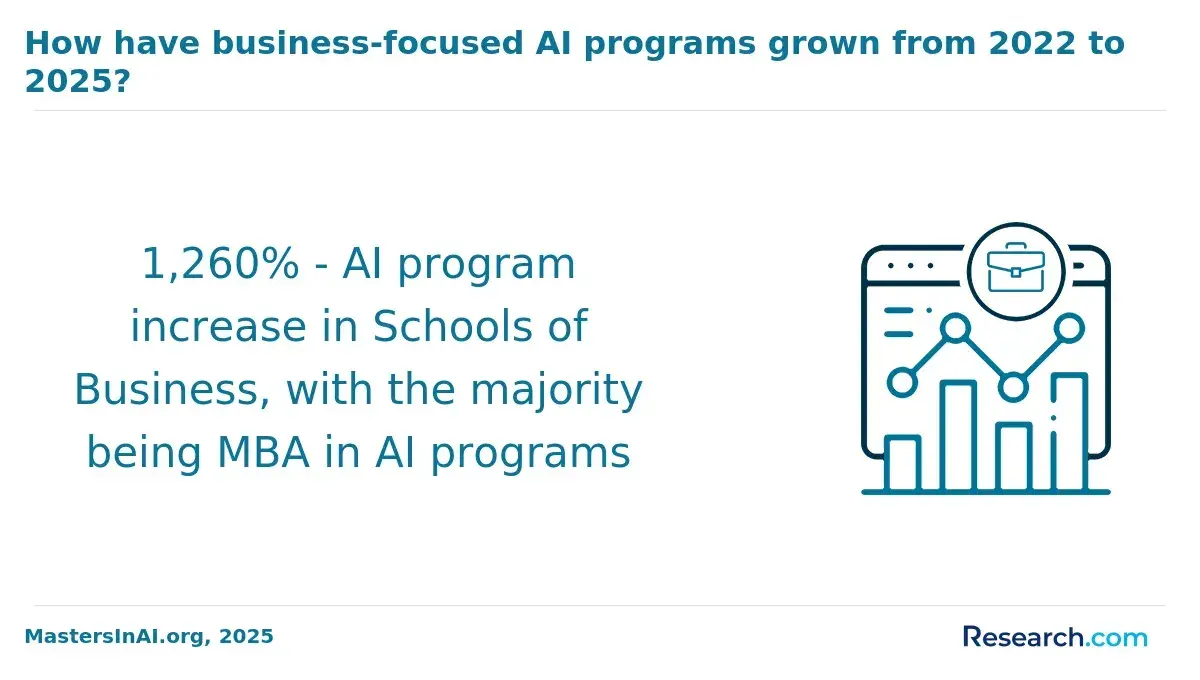
Choosing among the best LLM courses for internal knowledge management means focusing on practical skills aligned with career goals. Key competencies include natural language processing, prompt engineering, and knowledge graph integration. Prioritize programs emphasizing hands-on projects and real-world applications, such as conversational agents or automated document indexing, which support organizational workflow improvements.
Look for top LLM programs for career growth in knowledge systems that incorporate cutting-edge technologies like transformer-based models, fine-tuning techniques, and frameworks such as LangChain. Courses integrating API usage for knowledge retrieval offer valuable industry relevance. Consider course length and format; intensive bootcamps may suit faster career entry, while longer programs serve those aiming for research depth.
Research from Accenture highlights that companies deploying LLM-based internal knowledge assistants experience productivity increases of 20-40% and cost savings between 15-30%. These benefits underscore the importance of selecting courses that teach scalable LLM deployment and effective impact measurement, helping professionals demonstrate AI ROI to employers.
Evaluate instructor expertise in enterprise AI deployments and the availability of career support like mentorship or employer connections. Free programs provide a useful introduction, but accredited courses tend to offer stronger job placement outcomes. For advanced study options, consider exploring the PhD in artificial intelligence USA for further specialization.
What are the typical admission requirements for LLM-focused AI and machine learning programs?
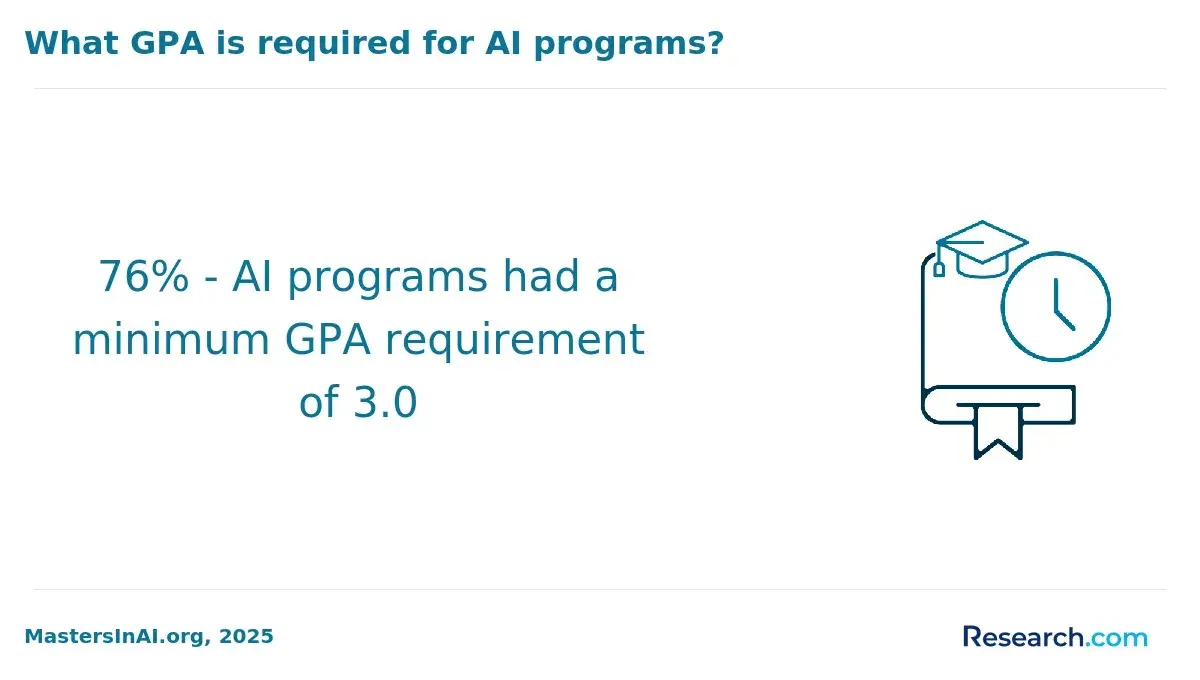
LLM-focused artificial intelligence and machine learning programs in North America typically require a bachelor's degree in computer science, engineering, mathematics, or a related STEM field. Some programs accept applicants with strong quantitative backgrounds in physics or economics if they demonstrate foundational programming skills. Most programs expect official transcripts with a minimum GPA of 3.0, though competitive programs often prefer higher academic performance.
Entrance criteria for advanced LLM courses in artificial intelligence and machine learning within the United States and Canada often include GRE scores, but some institutions waive this for candidates with relevant experience. Proof of proficiency in programming languages such as Python, R, or Java is essential, demonstrated via coursework, certifications, or professional projects. Knowledge of key mathematical concepts like linear algebra, calculus, probability, and statistics is also expected.
Letters of recommendation from academic or professional supervisors who can attest to technical skills and research potential are required along with a clear statement of purpose outlining motivation and experience with AI technologies tied to internal knowledge system development. Given the growing importance of retrieval-augmented generation (RAG) models, employers anticipate over 60% of large enterprises deploying RAG-based applications by 2027, highlighting the need for practical experience.
Relevant work experience, internships, and English proficiency tests such as TOEFL or IELTS (for international students) strengthen applications. Prospective students may also explore military friendly online electrical engineering degree programs to complement their AI expertise.
How do online, hybrid, and campus-based LLM courses for internal knowledge systems compare?
Online LLM courses offer flexibility through asynchronous lectures, ideal for working professionals and geographically dispersed learners. They enable balancing study with work but may lack real-time interaction, which can limit problem solving related to knowledge management frameworks. Hybrid programs blend online learning with periodic campus sessions, providing hands-on experience with enterprise AI tools and in-person engagement without full relocation. Campus-based courses immerse students in collaborative environments, valuable for mastering complex issues like data governance and model grounding within organizations.
IBM's Generative AI in the Enterprise study reveals that 47% of organizations see hallucinations and unreliable internal knowledge as barriers to adopting generative AI. Additionally, 59% prioritize tools that tightly constrain models to trusted enterprise sources. Campus and hybrid formats often provide access to labs and enterprise partnerships to teach these constraints effectively, while online courses typically use simulations or case studies.
Choosing the right format depends on learning style and career goals. Online courses suit those needing flexibility and immediate work application. Hybrid courses offer structured interaction without full-time residency. Campus programs support those focused on deep research or collaboration on internal AI systems. Aligning course format with practical training on managing hallucinations and integrating enterprise data is crucial for success in this evolving field.
What core skills, tools, and topics do LLM courses for internal knowledge systems usually cover?
LLM courses tailored for internal knowledge systems equip professionals with specialized skills to design and manage language model applications in organizations. Core topics cover natural language processing (NLP) fundamentals such as tokenization, embeddings, and semantic search to enable effective knowledge extraction and retrieval.
- Prompt engineering and model fine-tuning: optimizing responses and adapting pretrained models to enterprise needs.
- Data integration and management: combining documents, databases, and APIs into accessible knowledge bases.
- Evaluation and bias mitigation: assessing model accuracy, fairness, and relevance to uphold trust and compliance.
- Deployment pipelines and infrastructure: utilizing cloud platforms, containerization, and monitoring for scalable, secure operations.
Hands-on experience often involves frameworks like Hugging Face Transformers and vector databases such as Pinecone or FAISS. Projects may include building knowledge graphs, developing conversational agents, or automating document summarization. A key challenge remains balancing model complexity with efficiency to process diverse internal data effectively.
A recent Deloitte survey on AI workforce readiness reveals that only 22% of organizations consider their staff sufficiently skilled to handle LLM systems, while 71% plan significant investment in LLM training within two years. This emphasizes the critical need for comprehensive courses that combine foundational theory and practical skills aligned with evolving enterprise demands.
How long do these LLM programs take, and what tuition and total costs should you expect?
LLM programs designed for internal knowledge systems vary in length, typically spanning 3 to 12 months based on format and intensity. Part-time or modular courses tailored for working professionals often last close to a year, while full-time or bootcamp-style programs can be finished within a quarter. Certificate courses that emphasize practical deployment skills commonly take between 3 and 6 months.
Tuition costs differ significantly depending on the provider and course depth. Entry-level certificates usually range from $1,000 to $3,000, whereas university-affiliated or professional development programs with in-depth curricula and faculty support cost between $5,000 and $15,000. Intensive full-time bootcamps or specialized programs with applied learning and projects may surpass $20,000.
Additional expenses may include software licenses, cloud computing credits for training, and lost income from time off work, which can raise the overall investment. However, these programs deliver strong value: research.com highlights a Boston Consulting Group study showing LLM-based knowledge search can reduce query resolution costs to roughly one-tenth of traditional help-desk methods, resolving 60-70% of issues without human assistance.
When choosing a program, consider your current job commitments and learning goals. Shorter courses suit those needing targeted technical skills quickly, while longer, costlier programs better prepare candidates for leadership roles in AI integration.
Which accreditations and industry-aligned certificates matter for LLM and AI programs in the U.S.?
Accreditation and recognized certificates play a critical role in validating expertise in LLM and AI programs in the U.S. Programs accredited by respected bodies such as ABET (Accreditation Board for Engineering and Technology) or regional agencies guarantee that curricula align with rigorous academic and industry requirements. Specialized accreditations relevant to AI, including CAHIIM (Commission on Accreditation for Health Informatics and Information Management Education) where applicable, are especially important for programs with domain-specific focuses.
Industry-aligned certificates from leading tech companies and professional organizations add practical value. Notable examples include Microsoft Certified: Azure AI Fundamentals, Google Professional Machine Learning Engineer, and certifications from the Association for Computing Machinery (ACM) or IEEE. These credentials highlight competence with current tools and frameworks vital for rapid advances in the AI field.
Professionals should prioritize certificates covering LLM operations, vector database management, and AI deployment. According to IDC's 2025 Generative AI Infrastructure report, spending in these areas is growing at 70% year-over-year, reflecting strong workforce demand. Certificates that blend theoretical knowledge with hands-on experience offer the greatest market advantage.
When choosing programs, seek those combining accredited academic courses with vendor-neutral and vendor-specific certificates. This ensures comprehensive training recognized by employers. Avoid programs offering certificates alone without accompanying accredited credits, as they often lack depth and may not meet industry expectations.
What careers use LLMs for internal knowledge systems, and what are typical salary ranges?
Careers leveraging large language models (LLMs) for internal knowledge systems focus on roles that optimize data management, compliance, and operational efficiency. Key positions include data scientists, machine learning engineers, knowledge engineers, and AI product managers. These professionals build and maintain LLM-driven platforms that enable secure information retrieval, improved decision-making, and automated business processes.
Salary ranges in the U.S. generally fall within these brackets:
- Data scientists: $95,000 to $150,000 per year
- Machine learning engineers: $110,000 to $170,000 per year
- Knowledge engineers: $85,000 to $130,000 per year
- AI product managers: $120,000 to $180,000 per year
Expertise in data governance and security is increasingly critical, as a 2024 Cisco AI Readiness report shows 69% of organizations have delayed or limited generative AI initiatives amid data leakage and compliance concerns. This raises the importance of features like data residency and access control in internal LLM platforms. Professionals well-versed in privacy frameworks gain an advantage.
Jobs in regulated fields such as finance, healthcare, and government command higher pay, reflecting the complexity of protecting sensitive information. These roles often require integration of LLMs with existing enterprise software, auditability, and ensuring compliance through natural language customization.
Building a combination of technical skills and regulatory knowledge positions students and professionals to excel in this evolving domain and enhance their employability in AI-driven careers.
What is the job outlook and demand for professionals building LLM-powered internal knowledge systems?
The demand for professionals building large language model (LLM)-powered internal knowledge systems is growing rapidly. By 2030, AI assistants will mediate over 80% of knowledge-worker interactions with enterprise systems, according to Forrester's 2025 generative AI outlook. This means specialists who design, develop, and maintain these systems will be highly sought after in industries such as healthcare, finance, legal, technology, and government.
Key roles include AI system architects, data engineers, prompt designers, and knowledge management analysts who combine technical expertise with organizational insight to create tailored solutions. Practical skills in natural language processing, prompt engineering, system integration, and cloud AI platforms are essential. Additionally, understanding data governance, ethics, and bias mitigation is critical to ensure trustworthy AI-powered knowledge management.
Organizations benefit from these technologies by reducing operational friction, improving compliance, and accelerating workflows-such as legal firms automating contract review or healthcare providers consolidating patient data to speed diagnosis and treatment. The evolving nature of this field requires ongoing training and adaptation to new AI models, offering strong career growth and above-average compensation.
Prospective students and career changers should focus on hands-on experience and continuous learning to stay competitive in this dynamic sector driven by emerging AI capabilities.
Other Things You Should Know About Artificial Intelligence
In 2027, top LLM courses for enhancing internal knowledge systems include courses from Stanford University, MIT, and the University of Oxford. These courses focus on integrating large language models to refine and streamline company knowledge management, offering advanced techniques in data processing, retrieval, and organizational intelligence enhancement.
Artificial intelligence enhances internal knowledge management by automating information retrieval, categorization, and updating processes. It enables enterprises to quickly access relevant data, reduce redundant efforts, and personalize information delivery. These systems improve organizational efficiency by linking disparate data sources and supporting data-driven decision-making.
Common challenges include data quality issues, integration difficulties with existing systems, and talent shortages. Organizations often struggle with insufficient or biased data, which limits AI performance. Technical complexity and resistance to change can also slow AI adoption, while acquiring skilled AI practitioners remains a competitive challenge.
Artificial intelligence is expected to become more context-aware, explainable, and integrated across industries. Advances in natural language understanding and reasoning will enable smarter interactions and improved automation. Ethical AI frameworks and regulations are likely to mature, guiding safer and more responsible use cases in business and society.
References
- LLM Training Courses 2026: How to Choose the Right Course? https://agilefever.com/llm-training-courses/
- How to Match Your LL.M. to Your Career Goals | LLM GUIDE https://llm-guide.com/articles/how-to-match-your-llm-to-your-career-goals
- Machine Learning PhD Applications — Everything You Need to Know — Tim Dettmers https://timdettmers.com/2018/11/26/phd-applications/
- Bring Your Own Knowledge: A Survey of Methods for LLM Knowledge Expansion https://arxiv.org/html/2502.12598v1
- Leveraging LLMs on your domain-specific knowledge base https://www.ml6.eu/en/blog/leveraging-llms-on-your-domain-specific-knowledge-base
- Blog https://admissiongoals.com/post/ai-machine-learning-programs-europe-admission-guide-international-students
- Difference between Hybrid, Online & In-Class Degree Programmes | BSBI https://www.berlinsbi.com/blog/what-is-the-difference-between-hybrid-online-and-in-class-degree-programmes
- AI in Knowledge Management: 3% of Firms Use AI—Join Them https://masterofcode.com/blog/ai-for-knowledge-management
- Computing (Artificial Intelligence and Machine Learning) MEng https://www.imperial.ac.uk/study/courses/undergraduate/computing-artificial-intelligence-meng/
- Artificial Intelligence Certification | AI Certification | USAII® https://www.usaii.org/artificial-intelligence-certifications