2027 Best AI Courses for Knowledge Graphs and AI

Co-Founder and Chief Data Scientist
Many professionals face difficulty breaking into the artificial intelligence field without a strong background in computer science or data analytics. This gap hinders their ability to understand complex knowledge graphs and leverage AI effectively in real-world applications. As AI continues to transform industries, the demand for accessible, high-quality education in this niche grows.
Navigating the vast number of courses and varying quality can overwhelm learners seeking a flexible and accredited path to pivot careers. This article highlights top AI courses focused on knowledge graphs and AI, guiding readers toward programs that combine practical skills with academic rigor to bridge this skills gap efficiently.
Key Things You Should Know
- Top AI courses in 2026 emphasize knowledge graph construction, semantic data integration, and graph-based machine learning to meet rising demand in tech and research sectors.
- Recent studies show a 45% growth in AI jobs requiring knowledge graph proficiency since 2024, highlighting the value of specialized education in this field.
- Leading programs combine practical coding skills with theoretical foundations in databases and graph neural networks, preparing students for diverse AI applications.
Advance Your Career with AI Online Courses
Artificial Intelligence: Implications for Business Strategy
This program provides an introduction to Artificial Intelligence and their implications for business strategy. Earn an official digital certificate.

Oxford Artificial Intelligence Programme
Explore this Oxford Artificial Intelligence programme offered in a flexible learning environment and explore topics like machine learning, automation, and robotics.

Implementing Agentic AI: Building Your Organizational Playbook
This online MIT Agentic AI course offers a practical approach to deploying AI agents in your organization, including a custom playbook. 3 weeks, exclusive launch price.

AI Adoption: Driving Business Value and Impact
This online MIT AI Adoption: Driving Business Value and Impact offers practical frameworks to close the gap between AI potential and business reality.

Artificial Intelligence in Pharma and Biotech
Discover the applications and limitations of artificial intelligence in pharma and biotech with this MIT online short course.

What are the best AI courses and programs focused on knowledge graphs and applied AI?
Top AI courses for knowledge graph applications combine rigorous theory with practical skills in graph construction, semantic modeling, and AI integration. Notable examples include Stanford's CS520 (Knowledge Graphs and Semantic Web) and Georgia Tech's Knowledge Graphs Specialization on Coursera, which focus on real-world applications such as query optimization, entity resolution, and graph embeddings-essential for managing large-scale data relationships.
Platforms like edX and Udacity offer specialized courses featuring hands-on projects that utilize tools such as Apache Jena, Neo4j, and RDF frameworks to enhance applied proficiency. Universities increasingly incorporate machine learning, natural language processing, and reasoning techniques to meet the demand for scalable knowledge systems.
Industry-aligned programs in data science and applied AI address graph neural networks, crucial for predictive analytics on graph data. These courses equip learners to develop solutions for complex challenges like recommendation engines and fraud detection.
Given Gartner's projection that by 2027 over 35% of large organizations will trade data, knowledge, or AI models in online marketplaces-up from fewer than 10% in 2024-the need for expertise in structured knowledge assets is growing rapidly. This trend underscores the importance of selecting top programs in applied AI and knowledge graph technology for career advancement.
Prospective students should consider programs offering curricula blending theoretical foundations with applied case studies, access to graph database platforms, exposure to AI marketplaces, and collaborative industry projects. For those seeking accelerated pathways, a valuable resource is accelerated computer science programs, which often include relevant AI coursework.
Advance Your Career with AI Online Courses
Artificial Intelligence: Implications for Business Strategy
This program provides an introduction to Artificial Intelligence and their implications for business strategy. Earn an official digital certificate.
Oxford Artificial Intelligence Programme
Explore this Oxford Artificial Intelligence programme offered in a flexible learning environment and explore topics like machine learning, automation, and robotics.
Implementing Agentic AI: Building Your Organizational Playbook
This online MIT Agentic AI course offers a practical approach to deploying AI agents in your organization, including a custom playbook. 3 weeks, exclusive launch price.
How do knowledge graph and AI courses differ by level, from certificates to graduate degrees?
Knowledge graph and AI courses differ notably by certification level, designed to meet various learner needs and career paths. Certificate programs emphasize foundational skills such as data modeling, semantic technologies, and graph databases. These targeted courses typically last weeks to a few months, ideal for professionals seeking quick upskilling or domain-focused expertise without a long-term commitment. This makes certificate programs a practical entry point compared to graduate degrees versus certificate programs in knowledge graph and AI.
Undergraduate programs integrate knowledge graph theory with core computer science and artificial intelligence principles. Students engage with algorithms, natural language processing, and knowledge representation while completing projects that develop applied skills for entry-level positions involving complex data relationships. Graduate degrees, including master's and PhDs, prioritize research, advanced theory, machine learning integration, and AI-driven reasoning, preparing candidates for leadership and innovation roles in academia and advanced R&D.
Job market trends confirm rising demand. LinkedIn's 2024 Global Skills Report notes job posts mentioning "knowledge graph" grew by roughly 40% between 2021 and 2023, outpacing overall tech job growth. This highlights the value of advanced skills typically honed through graduate degrees along with practical knowledge accessible via certificates and undergraduate programs.
For those exploring educational options, assessing career goals is vital. Certificates deliver fast, technical entry; bachelor's degrees build comprehensive expertise; and graduate degrees open pathways for specialized research and senior roles in AI and knowledge graph domains. Resources such as AI degrees provide valuable guidance on affordable and flexible learning paths.
What should you look for in a high-quality knowledge graph and AI curriculum?
A high-quality knowledge graph and artificial intelligence course features a blend of theoretical foundations and hands-on skills. Core topics include graph theory, semantic web technologies, ontology design, and linked data principles. Practical experience with graph databases such as Neo4j, Apache Jena, or Amazon Neptune is essential for applying concepts effectively in real-world projects.
The best curriculum elements for knowledge graph and artificial intelligence learning emphasize AI techniques tailored for knowledge graphs, such as natural language processing for entity extraction, machine learning for link prediction, and reasoning algorithms for inference. Mastery of programming languages like Python, along with specialized graph analytics libraries, further develops students' technical abilities.
Focused modules on data integration challenges, schema alignment, and knowledge representation address common industry problems, while courses on scalability and performance prepare learners for enterprise-level graph deployments. Collaborative capstone projects and partnerships with industry provide critical networking and practical experience.
The 2024 Dice Tech Salary Report found that U.S. professionals with graph-related roles like "graph data engineer" or "graph data scientist" earned average salaries exceeding $150,000, highlighting the strong return on investment for specialization in this field.
Many students also explore complementary paths such as a masters in game design to enhance interdisciplinary skills. Combining foundational theory, applied artificial intelligence techniques, practical tools, and industry-aligned problem solving equips learners to meet evolving demands in knowledge graph and AI careers.
How do online knowledge graph and AI programs compare to campus-based options?
Online knowledge graph and artificial intelligence programs provide greater flexibility and often more current content compared to campus courses. These virtual formats especially suit working professionals balancing career and study. Many online courses focus on practical skills with tools like Neo4j or AWS Neptune, reflecting rapid industry adoption of AI technologies. Over 60% of large enterprises now use generative AI and graph databases, according to a Deloitte survey. In contrast, campus programs tend to offer deeper theoretical foundations and research opportunities for those pursuing academic or R&D careers.
Cost and accessibility also distinguish these options. Online programs usually have lower overall expenses and remove relocation costs, expanding access nationwide. They come in various formats, including self-paced, cohort-based, and hybrid models. Campus-based studies offer direct interaction with faculty and peers, which supports networking and mentorship critical for career growth in academia or industry. Prospective students can explore affordable choices such as a cheapest online computer science degree to suit their budgets.
For those weighing differences between virtual and on-campus knowledge graph and AI training, career goals and learning preferences matter. Individuals aiming to implement AI-driven business solutions may benefit from project-focused online offerings, while those interested in foundational research might prefer campus programs with faculty-led labs and publication opportunities.
Online programs continue evolving by adding live sessions, industry partnerships, and capstone projects, blending flexibility with practical experience to meet the demands of the fast-changing AI landscape.
Which U.S. institutions offer accredited programs specializing in knowledge graphs and AI?
Several leading U.S. institutions offer accredited programs centered on knowledge graphs and AI integration. Carnegie Mellon University's School of Computer Science highlights knowledge representation, semantic web technologies, and machine learning, preparing students to implement knowledge graphs in practical AI systems for advanced data retrieval and interpretation.
The Massachusetts Institute of Technology (MIT) focuses on scalable semantic databases and AI reasoning systems, enabling graduates to develop knowledge-augmented retrieval methods vital for enhancing factual accuracy in large language models (LLMs).
The University of California, Berkeley provides interdisciplinary research and courses combining knowledge graphs with natural language processing and vector search technologies, promoting innovative AI applications.
Stanford University emphasizes knowledge graphs within retrieval-augmented generation (RAG) systems. A recent industry benchmark showed that combining vector search with knowledge graphs improved LLM factual accuracy by 20-40 percentage points on complex enterprise queries compared to vector-only approaches.
Additional options for professionals include certificates and minors at Georgia Tech and the University of Washington, featuring hands-on projects with graph databases like Neo4j and semantic web frameworks, which are increasingly important in enterprise AI.
What are the typical admission requirements for knowledge graph and AI programs?
Admission into knowledge graph and AI programs generally requires a solid background in computer science, mathematics, and data science. Many universities and MOOC platforms expect proficiency in programming languages such as Python or Java, along with a good grasp of algorithms and data structures. Undergraduate degrees in computer science, engineering, mathematics, or related fields are often prerequisites for advanced studies.
Applicants usually need to provide transcripts showing coursework in linear algebra, calculus, statistics, and probability, fundamental to machine learning and graph theory. Experience with databases, graph databases, or semantic web technologies is increasingly favored, given their relevance to knowledge graph construction.
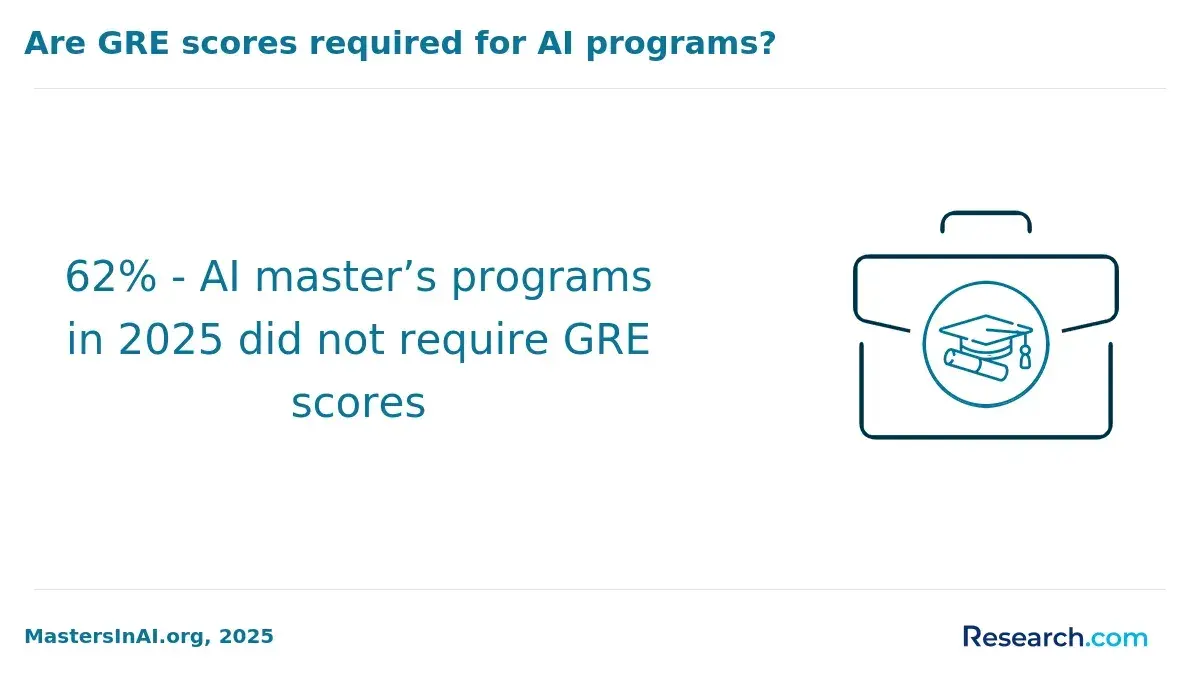
Graduate programs may require GRE scores, though many certificate and MOOC-based courses waive formal testing in favor of project portfolios or coding assessments. Professional experience in data-related roles can sometimes replace academic requirements, especially for executive or professional certification courses.
Between 2022 and early 2025, platforms like Coursera and DeepLearning.AI expanded their AI and knowledge-graph-related course catalog by over 30%, highlighting rising demand for these skills.
Prospective students should showcase both theoretical knowledge and practical abilities, such as portfolios featuring projects on knowledge graph embedding or natural language processing, to strengthen their applications. Clear prerequisites maintain rigor and prepare learners for complex topics.
How long do knowledge graph and AI programs take, and what do they cost?
Knowledge graph and AI programs come in a variety of durations, from short, intensive courses lasting 4-8 weeks to comprehensive specializations or professional certificates spanning 3 to 6 months. Many of these programs offer self-paced learning, giving students the flexibility to complete courses on their own schedule, although this may extend overall duration.
Subscription-based platforms such as Coursera and DeepLearning.AI typically charge between $39-$79 per month, granting full access to course materials during the subscription period. This pricing allows learners to manage costs by speeding up or slowing their learning pace.
These programs are significantly more affordable compared to traditional graduate courses, which often exceed $2,000 per course. Entry-level offerings usually focus on foundational concepts and can cost under $200 if finished within a typical two-month subscription. Advanced tracks covering knowledge graph construction and AI integration usually require longer commitments but remain cost-effective due to monthly billing.
Prospective students should consider:
- Time availability and learning goals to choose between intensive bootcamps (15-20 hours per week) or longer part-time courses.
- Detailed syllabi and reviews to understand workload and avoid unexpected costs or delays.
For further information on professional AI and knowledge graph courses, visiting Coursera and DeepLearning.AI is recommended.
What careers can a knowledge graph and AI background prepare you for?
A background in knowledge graphs and artificial intelligence equips professionals for roles involving data integration, semantic understanding, and advanced analytics. Careers such as knowledge engineer, data scientist, AI researcher, and semantic web developer focus on designing knowledge graph architectures that enhance data linkage, improve query response times, and support better decision-making.
These specialists often work in industries like finance, healthcare, and logistics. For instance, finance professionals use knowledge graphs to detect fraud and assess risks more efficiently. Healthcare data scientists integrate patient records and clinical data to support personalized medicine. Logistic analysts optimize supply chains and routing through interconnected datasets.
A study by the Alan Turing Institute demonstrated organizations using knowledge graphs achieved up to 70% reductions in data-integration costs and significantly faster query responses compared to traditional relational databases. This data emphasizes efficiency gains offered by experts in this field.
Other relevant roles include AI product managers who guide knowledge graph-powered applications, ontology architects formalizing domain knowledge, and machine learning engineers incorporating graph-based features into models. Proficiency in graph databases, SPARQL, and AI algorithms is essential.
Challenges addressed in these careers include heterogeneous data integration, real-time information retrieval, and AI explainability. These areas provide growth opportunities in industries demanding scalable, intelligent data management solutions.
What is the salary potential and job outlook for roles using knowledge graphs and AI?
Knowledge graphs play a crucial role in advancing artificial intelligence applications, leading to strong salary potential for professionals in this area. Data scientists and AI engineers focusing on knowledge graphs typically earn between $95,000 and $150,000 annually, with senior roles surpassing $180,000 depending on experience and location. Niche positions like knowledge graph engineers, semantic web developers, or AI architects command some of the highest salaries due to specialized skills.
The job outlook is highly positive as adoption expands across industries such as healthcare, finance, supply chain, and cybersecurity. Neo4j's cloud graph database usage more than doubled year-over-year, driven primarily by AI and knowledge graph workloads, signaling increasing market demand.
Employers seek candidates with skills in graph databases (Neo4j, TigerGraph, Amazon Neptune), AI-powered knowledge services, semantic search, and the ability to model complex relationships across diverse data sets. Knowledge of natural language processing and machine reasoning also adds value. Developing these interdisciplinary skills can position candidates to secure competitive salaries and long-term career growth in this rapidly evolving field.
Are there industry certifications or standards that strengthen knowledge graph and AI careers?
Certifications and industry standards serve as essential benchmarks for professionals working with knowledge graphs and artificial intelligence, offering verifiable expertise that employers highly value. Credentials such as the Certified Knowledge Graph Professional (CKGP) validate skills in semantic technologies, ontology engineering, and managing graph databases. Alongside these, certifications offered by leading AI platforms enhance proficiency in integrating knowledge graphs with advanced AI systems.
Standards from organizations like W3C, including RDF (Resource Description Framework) and OWL (Web Ontology Language), establish foundational protocols for developing scalable, interoperable knowledge graphs. Additionally, ISO standards for data management and AI ethics are becoming crucial for professional credibility in this evolving field.
Projected industry trends suggest graph technologies will support over 80% of data and analytics innovations involving context-aware AI by 2030. This emphasizes the career advantage of holding certifications that cover both AI fundamentals and graph technologies. Such credentials help professionals stand out during hiring and promotion processes.
Common challenges like integrating diverse data sources, ensuring semantic accuracy, and maintaining performance in large-scale graphs are addressed by certification frameworks offering theoretical knowledge and hands-on training. Prospective learners should consider programs that include practical tool-specific training on platforms such as Neo4j, GraphDB, or AWS Neptune.
Other Things You Should Know About Artificial Intelligence
In 2027, leading AI courses on knowledge graphs and AI include Stanford's "Machine Learning with Graphs," Coursera's "Knowledge Graphs for AI," and MIT's "AI: Networked Intelligence." These courses cover the integration and use of AI within knowledge graphs, offering cutting-edge techniques and tools.
Artificial intelligence plays a crucial role in knowledge graph development by enabling automated extraction, integration, and reasoning over large datasets. AI techniques such as natural language processing and machine learning help identify entities, relationships, and context, thus improving the accuracy and scalability of knowledge graphs.
Key skills for working in artificial intelligence and knowledge graphs include proficiency in programming languages like Python, understanding of machine learning algorithms, and experience with graph databases. Familiarity with data modeling, semantic web technologies, and natural language processing is also important for effectively managing and applying knowledge graphs.
Yes, a background in artificial intelligence provides valuable skills that are transferable to many technology fields such as data science, robotics, and software engineering. The ability to design intelligent systems, analyze complex data, and develop predictive models is widely applicable across industries, enhancing problem-solving capabilities beyond AI-specific roles.
References
- Knowledge Graphs: The AI Engine Powering Modern Business Intelligence https://www.strategy.com/software/blog/knowledge-graphs-the-ai-engine-powering-modern-business-intelligence
- Shortlisted & Invitee Institutions | World Data Science & AI Initiative (WDSAI) https://www.wdsai.org/invitee-institutions
- LLM-Assisted Knowledge Graph Completion for Curriculum and Domain Modelling in Personalized Higher Education Recommendations https://arxiv.org/html/2501.12300v1
- How Knowledge Graph Helps Developers Build Better AI Tools https://chanzuckerberg.com/blog/knowledge-graph-ai-education/
- Knowledge Graph For Skill Development https://www.meegle.com/en_us/topics/knowledge-graphs/knowledge-graph-for-skill-development
- The future of AI: Machine learning and knowledge graphs - Graph Database & Analytics https://neo4j.com/blog/genai/future-ai-machine-learning-knowledge-graphs/
- How a Knowledge Graph Supports AI: Technical Considerations - Enterprise Knowledge https://enterprise-knowledge.com/how-a-knowledge-graph-supports-ai-technical-considerations/
- Your Knowledge Graph Journey In Three Simple Steps https://graphwise.ai/blog/your-knowledge-graph-journey-in-three-simple-steps/
- Best AI Certifications to Boost Your Career in 2026 – Dataquest https://www.dataquest.io/blog/best-ai-certifications/
- What is a Knowledge Graph? How Enterprises Use Graph-Based Data Governance https://www.actian.com/knowledge-graph/