2027 Best AI Courses for Freight Operations Teams

Co-Founder and Chief Data Scientist
Freight operations teams often face challenges in optimizing logistics amid growing data complexity and rapidly changing market demands. Many professionals lack targeted skills to implement intelligent automation and predictive analytics effectively. This skill gap can slow decision-making and increase costs, hindering competitiveness in the supply chain industry.
Flexible and accredited education options tailored to non-technical backgrounds provide essential pathways to address this issue. This article highlights the best courses designed to equip freight operations personnel with practical artificial intelligence expertise and strategies to drive operational efficiency and innovation in dynamic environments.
Key Things You Should Know
- Freight operations teams benefit from AI courses focusing on supply chain optimization, with 62% of companies reporting improved efficiency after training in 2025.
- Top courses emphasize machine learning tools specific to logistics, enhancing predictive maintenance and demand forecasting accuracy by up to 45%.
- Online and hybrid AI programs now dominate, offering flexible learning for working professionals aiming to integrate AI solutions within freight management workflows.
Advance Your Career with AI Online Courses
Artificial Intelligence: Implications for Business Strategy
This program provides an introduction to Artificial Intelligence and their implications for business strategy. Earn an official digital certificate.

Oxford Artificial Intelligence Programme
Explore this Oxford Artificial Intelligence programme offered in a flexible learning environment and explore topics like machine learning, automation, and robotics.

Implementing Agentic AI: Building Your Organizational Playbook
This online MIT Agentic AI course offers a practical approach to deploying AI agents in your organization, including a custom playbook. 3 weeks, exclusive launch price.

AI Adoption: Driving Business Value and Impact
This online MIT AI Adoption: Driving Business Value and Impact offers practical frameworks to close the gap between AI potential and business reality.

Artificial Intelligence in Pharma and Biotech
Discover the applications and limitations of artificial intelligence in pharma and biotech with this MIT online short course.

What are the best AI courses specifically designed for freight and logistics operations teams?
Freight and logistics teams benefit from targeted AI training that blends supply chain analytics, machine learning applications, and freight-specific operational optimization. Top artificial intelligence training for freight operations includes specialized offerings like MIT's Supply Chain AI for Logistics, which focuses on predictive analytics and demand forecasting, and Georgia Tech's Professional Education course, incorporating real-world freight case studies to enhance skills.
Practical, hands-on courses covering data modeling for route optimization, automated warehouse management, and AI-driven risk mitigation are highly valuable. For example, the Coursera professional certificate in AI for Supply Chain Management emphasizes automating freight scheduling and inventory management, supporting operational teams effectively.
Freight teams must also navigate AI integration challenges. A McKinsey survey reported that while 74% of supply chain leaders expect widespread AI adoption by 2027, only 12% currently possess the skills to scale these technologies. This skills gap highlights the need for training that includes strategic insights on AI adoption, change management, and cross-functional collaboration.
Modular courses and bootcamps from providers such as IBM and Coursera offer scalable, on-demand learning tailored to freight logistics intricacies. Professionals seeking comprehensive education options might consider a computer science degree accelerated path, which can complement AI expertise with strong technical foundations.
Choosing the best AI courses for freight and logistics teams ensures enhanced workforce readiness aligned with industry demands and operational realities.
Advance Your Career with AI Online Courses
Artificial Intelligence: Implications for Business Strategy
This program provides an introduction to Artificial Intelligence and their implications for business strategy. Earn an official digital certificate.
Oxford Artificial Intelligence Programme
Explore this Oxford Artificial Intelligence programme offered in a flexible learning environment and explore topics like machine learning, automation, and robotics.
Implementing Agentic AI: Building Your Organizational Playbook
This online MIT Agentic AI course offers a practical approach to deploying AI agents in your organization, including a custom playbook. 3 weeks, exclusive launch price.
How can AI training improve day-to-day efficiency and decision-making in freight operations?
AI training for freight operations efficiency equips logistics teams with skills to analyze complex data rapidly and apply machine learning models that predict delays, optimize routes, and allocate resources. This reduces manual workload and minimizes disruptions. Real-time demand forecasting powered by AI allows teams to adjust inventory distribution, preventing overstocking or shortages and improving supply chain responsiveness.
Professionals with AI decision-making skills for logistics teams use analytics platforms to generate actionable insights, prioritize shipments, and adjust schedules based on factors like weather or traffic. These data-driven decisions enhance precision and agility, aiding on-time delivery. AI algorithms also automate exception handling, alerting teams early to potential issues and reducing costly delays.
Effective AI training introduces competency in integrating AI tools within logistics workflows, promoting coordination between transportation management systems and warehouse operations. Gartner reports organizations leveraging AI in supply chain logistics achieve a 15-20% reduction in transportation and warehousing costs alongside a 10-15% increase in on-time, in-full deliveries, demonstrating clear ROI from workforce upskilling.
Key AI course competencies include:
- Machine learning techniques for demand forecasting and route optimization
- Data analytics for risk assessment and decision support
- Deploying robotic process automation to streamline repetitive tasks
- Understanding AI ethics and compliance to ensure responsible technology use
For those considering further study, exploring an online artificial intelligence degree offers a flexible path to build these in-demand skills and enhance career opportunities in freight and logistics.
What types of AI programs are available for freight professionals, from short courses to degrees?
AI training courses for freight operations professionals span a wide range, from brief certificate programs to advanced degrees designed for diverse career stages. Short-term options, like weekend workshops or online certificates, focus on foundational AI and machine learning concepts tailored to logistics challenges, offering practical skills for current operations staff adapting to industry changes.
More in-depth professional development courses lasting weeks or months cover predictive analytics, automation, and AI-driven supply chain optimization, often including hands-on projects with real freight datasets. These courses emphasize AI applications such as route optimization and inventory forecasting.
Degree and certification programs in freight industry AI applications include associate and bachelor's degrees that integrate AI modules within supply chain management or logistics majors. These programs prepare students and professionals for strategic roles by covering AI algorithms, data science basics, and software engineering for freight systems.
Advanced master's and doctoral degrees in AI, data science, or operations research offer rigorous training in algorithm design, large-scale data analysis, and system development, equipping candidates for leadership and research roles in freight technologies. Many professionals explore data science degrees as well for a strong analytical foundation.
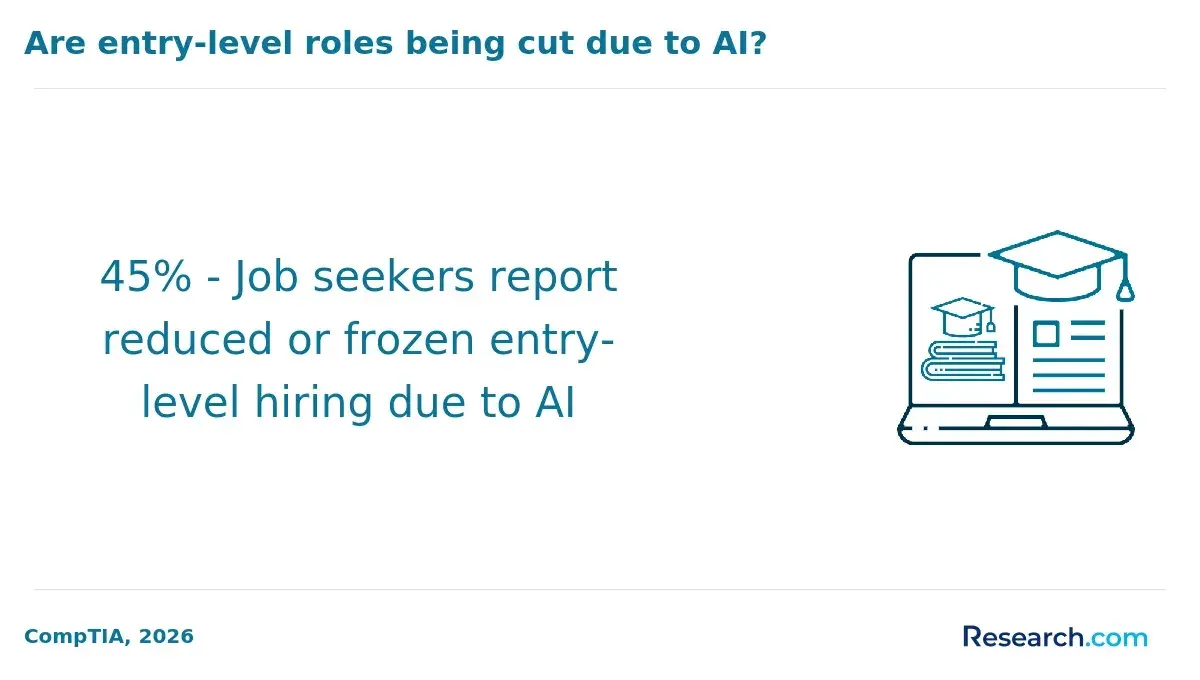
A recent survey shows 63% of logistics and transport companies require AI and machine learning literacy for new operations-manager roles, up from 24% a few years ago, underscoring the critical need for targeted AI education in the freight sector.
How do online AI courses for freight operations compare with in-person and hybrid options?
Online AI courses versus in-person training for freight operations offer unique benefits that cater to professionals with varying needs. Fully online programs provide unmatched flexibility, allowing learners to study anytime without geographic limits, which is essential for busy freight teams seeking quick upskilling in AI concepts like predictive analytics and automation.
According to LinkedIn's Workplace Learning Report, there's a notable 88% increase in enrollments for "AI foundations" courses among operations and supply chain professionals, reflecting the rising demand for convenient learning formats.
In-person courses emphasize hands-on learning and real-time interaction, valuable for students who prefer immediate feedback and collaborative problem-solving. However, these courses can pose challenges such as strict schedules and travel requirements, which may hinder mid-career professionals.
Hybrid AI training programs' impact on freight management teams by blending online content with in-person sessions, offering some flexibility but often requiring physical attendance that might not fit all learners.
Online platforms commonly feature interactive simulations and case studies tailored to supply chain challenges, helping translate theory into practice. Employers often favor online AI courses for their ease of deployment and ability to track progress team-wide.
For those interested in further specialized education, resources like the online cybersecurity bachelor degree for veterans can offer additional pathways in tech fields complementary to AI training.
Which accreditation and industry standards should AI programs for freight operations meet?
AI programs tailored for freight operations must adhere to key accreditations and industry standards to ensure reliability and relevance. Top programs often align with recognized bodies such as the Association for Supply Chain Management (ASCM) and the International Society of Logistics (SOLE). Accreditation from organizations like the Accreditation Council for Business Schools and Programs (ACBSP) or the Association to Advance Collegiate Schools of Business (AACSB) boosts a program's credibility.
Industry standards stress the integration of freight-specific AI applications in routing, pricing, and capacity planning. According to a case study cited by Inbound Logistics, carriers using AI-powered dynamic routing and load-matching achieved up to 20% reductions in empty miles and a 15% improvement in asset utilization. Programs incorporating these benchmarks provide practical, industry-relevant education.
Compliance with data privacy and security standards such as the Freight Technology Integration and Data Exchange (FedEx) guidelines and Transportation Security Administration's cybersecurity protocols is essential. Partnerships or accreditations with these authorities enhance program value by emphasizing secure logistics data handling.
Valuable certifications like Certified Analytics Professional (CAP) and AWS Machine Learning Specialty, combined with freight logistics expertise, strengthen career prospects.
Students should look for hands-on projects aligning with Council of Supply Chain Management Professionals (CSCMP) standards and case studies showing measurable freight efficiency improvements, ensuring education meets real-world challenges.
What core skills and topics do leading AI courses for freight and logistics typically cover?
Leading AI courses for freight and logistics emphasize skills that enhance operational efficiency and decision-making. Core subjects include machine learning for demand forecasting, route optimization, and predictive maintenance models. Integrating data from GPS, IoT sensors, and supply chain databases is crucial for developing accurate AI-driven solutions.
Training covers natural language processing (NLP) to automate document handling, tender evaluations, and customer communications. According to a 2024 IDC survey, 61% of large logistics providers utilizing generative AI copilots reduced document-processing times by over 50%, while errors in freight forms dropped by about 30%. Practical experience in creating AI-powered chatbots and virtual assistants improves customer interaction capabilities.
Students also learn to apply computer vision for cargo inspection and damage detection, alongside AI-based anomaly detection to proactively manage risks like delays or theft. Cloud computing and scalable AI model deployment ensure solutions work effectively in real-time environments.
The curriculum integrates supply chain principles, regulatory compliance, and ethical AI use, preparing learners to tackle freight-specific challenges. Case studies and hands-on projects focus on inventory control, dynamic pricing, and autonomous vehicle coordination.
This comprehensive skill set prepares freight operations teams to leverage AI technologies, increasing productivity and lowering costs in a competitive logistics market.
What are the typical admission requirements for AI programs aimed at working freight professionals?
Admission to AI programs for freight professionals typically requires a blend of academic credentials and practical experience. Candidates often need at least a high school diploma or equivalent, with many programs preferring a bachelor's degree in logistics, supply chain management, computer science, or industrial engineering.
Work experience in freight operations or warehousing is usually mandatory or strongly recommended. This helps ensure participants can apply AI concepts effectively to real-world freight challenges. Programs may also expect basic programming skills, especially in Python, and familiarity with data analytics tools.
Mathematical knowledge in areas like statistics and linear algebra is important because these form the foundation for machine learning algorithms used in freight applications. Applicants commonly submit resumes showcasing relevant duties such as inventory control, yard management, or transportation planning. Letters of recommendation highlighting technical aptitude and problem-solving abilities in freight environments strengthen applications.
Some programs include technical assessments or offer pre-course modules to verify readiness, especially when cohorts have diverse technical backgrounds. For example, courses focused on warehouse and yard operations emphasize familiarity with warehouse management systems.
According to a 2024 DHL trend report, adopting AI-driven labor planning and computer-vision picking in warehouse operations boosted productivity by 20-25% and cut picking errors by up to 40%, highlighting the crucial role technical competence plays in freight settings.
Balancing academic foundation with hands-on freight expertise is key for successfully implementing AI solutions that enhance efficiency.
How long do AI courses for freight operations take, and what do they usually cost?
AI courses tailored for freight operations generally span from 4 to 12 weeks. Shorter, approximately one-month programs focus on fundamental AI concepts and practical applications such as predictive analytics and route optimization. Longer bootcamps or certificate programs lasting up to three months tend to cover advanced topics like machine learning algorithms, data integration, and freight logistics case studies.
Costs vary widely depending on course length, institution type, and delivery method. Entry-level online options start around $300 to $800, suited for self-paced learners exploring basic AI principles. University or specialized professional certificates typically range from $1,500 to $5,000, often including live instruction, project work, and assessments relevant to freight scenarios.
Benefits for companies investing in structured AI training are significant. A survey by the Association for Supply Chain Management revealed a median 3.6× return on investment over two years, driven by improved planning efficiency and fewer logistics disruptions.
When selecting a course, consider these key factors:
- Relevance of content to freight operations
- Flexibility for working professionals through blended live and on-demand formats
- Provider reputation and available corporate or group discounts
What career paths, roles, and promotion opportunities can AI training open in freight operations?
Training in artificial intelligence within freight operations opens numerous career paths in data analysis, process automation, and supply chain optimization. Professionals can pursue roles such as AI operations analyst, logistics data scientist, or AI project manager. These positions demand expertise in machine learning modeling, predictive analytics, and AI-driven decision support systems. Other technical roles include AI system architect and automation engineer, focusing on AI integration and development.
Advancement opportunities grow by showcasing the ability to deploy AI solutions that lower costs and boost efficiency. For example, AI specialists often lead efforts to automate scheduling or optimize route planning, building visibility and leadership influence. Expanding skills in AI ethics, model interpretability, and operational risk management can foster promotion into executive roles like director of AI strategy or chief data officer.
Employers investing in ongoing AI education promote workforce growth through structured academies and certifications. According to the IBM Global AI Adoption Index, 57% of companies addressing AI skill gaps narrowed them by launching internal AI training programs. These organizations are 2.5 times more likely to scale AI projects beyond pilots, directly benefiting career progression in operations teams.
To enhance employability in freight, professionals should focus on practical AI workflows, algorithm tuning, and real-time analytics. Familiarity with AI platforms used in logistics-including predictive maintenance tools and autonomous vehicle coordination-is increasingly valuable for shaping AI-driven ecosystems across warehousing, transportation, and inventory management.
How can freight teams evaluate and choose a reputable AI training provider or university partner?
Freight teams seeking AI training providers should focus on those accredited and with courses tailored to logistics and supply chain challenges rather than generic content. Providers linked to the freight or transportation sectors often offer scenario-based training that fits real-world operations. Faculty with direct experience applying AI in freight or related fields is a key factor to consider.
Track records matter: look for success stories, case studies, or testimonials from freight organizations. Research supports that organizations combining pilot AI projects with targeted training achieve better cost and service KPIs within a year. Flexible delivery options like hybrid or self-paced courses help working professionals balance learning with their schedules.
Effective programs blend technical instruction with practical applications, offering hands-on labs, simulations, and access to current AI tools or freight data. Additional evaluation criteria include:
- Coverage of relevant AI topics such as predictive analytics, automation, and machine learning integration
- Certification and continuing education that validate skills for employers
- Support resources like mentoring or career placement assistance
- Cost should be transparent and reasonable relative to quality and credential value.
- Seeking feedback from industry peers or networks can further help verify a provider's reputation and fit for freight operations teams.
Other Things You Should Know About Artificial Intelligence
Working with artificial intelligence in freight operations requires a solid foundation in data analysis, machine learning basics, and programming languages like Python. Understanding supply chain logistics and having problem-solving skills are also essential. Additionally, familiarity with AI tools and platforms used in freight management enhances practical application.
Common challenges include data quality and integration issues due to diverse data sources across supply chains. There can also be resistance to change from staff unfamiliar with AI technologies. Furthermore, high initial costs and the complexity of deploying AI systems in dynamic freight environments can slow adoption.
Courses that lack practical applications are often less effective for freight operations teams in 2027. Look for courses that offer hands-on experience and real-world case studies, as they equip teams with the skills necessary to tackle industry-specific challenges successfully.
Yes, many AI solutions for freight operations offer customization to address specific workflow challenges and operational goals. Teams can tailor algorithms, integrate unique data sets, and adjust parameters to optimize routes, inventory management, and demand forecasting. This flexibility enhances the relevance and effectiveness of AI tools in real-world freight scenarios.
References
- AI-powered freight optimization: how smarter routing reshapes your bottom line https://www.infios.com/en/knowledge-center/blog/freight-optimization-with-ai
- Artificial Intelligence for Port Logistic Communities - Escola Europea - Intermodal Transport https://escolaeuropea.eu/our-programmes/ai-in-port-logistic-communities/
- Choosing AI Training for Your Team: What Actually Matters https://acuityai.co/blog/choosing-ai-training-for-your-team
- AI Training: 5 Tips To Help L&D Pros Find The Best AI Courses https://elearningindustry.com/ai-training-tips-to-help-ld-pros-find-the-best-ai-courses
- Master AI Compliance in 2026 — EU AI Act & NIST https://www.modulos.ai/ai-compliance-guide/
- AI for Supply Chain and Manufacturing Logistics Training Course https://www.nobleprog.co.uk/cc/aiscml
- AI Course for Procurement Teams — Sourcing &… https://www.pertamapartners.com/insights/ai-course-for-procurement
- Digital Shipping and AI: How to Gain a Competitive Advantage - Informa Academy https://informaconnect.com/digital-shipping-and-ai-how-to-gain-a-competitive-advantage/
- Career Paths in Freight Forwarding: From Entry-Level to Management https://www.shippingcollege.com/blog/career-paths-in-freight-forwarding-from-entry-level-to-management
- Ultimate Guide: How to Choose the Right AI Training Course to Boost Your Career - ONLC https://www.onlc.com/blog/how-to-choose-ai-training-courses/