2027 Best AI Courses for Fine-Tuning Fundamentals

Co-Founder and Chief Data Scientist
Many professionals face challenges when attempting to fine-tune artificial intelligence models without a strong technical background. This gap often leads to inefficiencies and stalled career progress.
Understanding foundational techniques in fine-tuning is essential for adapting pre-trained models to specialized tasks and industries. For those transitioning from unrelated fields, clear guidance is crucial to master these skills efficiently while balancing work and study. This article will explore top courses that offer flexible, accredited learning paths tailored to beginners, enabling a smooth shift into artificial intelligence through practical, fundamentals-focused training.
Key Things You Should Know
- Fine-tuning is essential for customizing AI models, with 67% of industry experts emphasizing its role in improving model accuracy and relevance in 2025.
- Top courses in 2026 emphasize hands-on projects using Transformer architectures, reflecting a 45% surge in demand for practical AI skills since 2024.
- Certification in fine-tuning fundamentals enhances career prospects, with graduates reporting a 30% higher likelihood of landing AI-related roles in the competitive U.S. market.
Advance Your Career with AI Online Courses
Artificial Intelligence: Implications for Business Strategy
This program provides an introduction to Artificial Intelligence and their implications for business strategy. Earn an official digital certificate.

Oxford Artificial Intelligence Programme
Explore this Oxford Artificial Intelligence programme offered in a flexible learning environment and explore topics like machine learning, automation, and robotics.

Implementing Agentic AI: Building Your Organizational Playbook
This online MIT Agentic AI course offers a practical approach to deploying AI agents in your organization, including a custom playbook. 3 weeks, exclusive launch price.

AI Adoption: Driving Business Value and Impact
This online MIT AI Adoption: Driving Business Value and Impact offers practical frameworks to close the gap between AI potential and business reality.

Artificial Intelligence in Pharma and Biotech
Discover the applications and limitations of artificial intelligence in pharma and biotech with this MIT online short course.

What are the best AI courses to learn fine-tuning fundamentals from scratch?
Top online AI courses for fine-tuning fundamentals blend hands-on training with solid theory to build skills from the ground up. Stanford's "CS230 Deep Learning" course delivers in-depth lectures and assignments that explore transfer learning and fine-tuning pretrained models. Another leading option is Andrew Ng's "Deep Learning Specialization" on Coursera, which offers well-structured modules focused on adapting models using small datasets, a vital ability for many real-world applications.
For those seeking the best beginner AI fine-tuning classes with certification, Udacity's "AI for Everyone" introduces fine-tuning concepts through accessible projects suited to absolute beginners. These projects emphasize real-world deployment and optimization strategies.
Fundamental course skills include:
- Expertise in pretrained architectures like transformers or CNNs
- Techniques for freezing and unfreezing layers during training
- Methods to avoid overfitting on limited data
- Domain-specific evaluation metrics for fine-tuned models
- Practical exercises using PyTorch or TensorFlow frameworks
Mastering fine-tuning is valuable: McKinsey's 2024 Global AI Survey reports that companies heavily investing in AI achieve an average 3.5× ROI, with top performers reaching over 4.6×. These gains depend on how effectively organizations tailor AI models. For those exploring career paths, more insight is available about earning an artificial intelligence degree.
Advance Your Career with AI Online Courses
Artificial Intelligence: Implications for Business Strategy
This program provides an introduction to Artificial Intelligence and their implications for business strategy. Earn an official digital certificate.
Oxford Artificial Intelligence Programme
Explore this Oxford Artificial Intelligence programme offered in a flexible learning environment and explore topics like machine learning, automation, and robotics.
Implementing Agentic AI: Building Your Organizational Playbook
This online MIT Agentic AI course offers a practical approach to deploying AI agents in your organization, including a custom playbook. 3 weeks, exclusive launch price.
How do AI fine-tuning courses differ from general machine learning and AI programs?
AI fine-tuning courses stand apart from general machine learning programs by focusing specifically on adapting pre-trained models to specialized tasks. These courses emphasize transfer learning, parameter tuning, and prompt engineering, equipping students with skills to refine large language models (LLMs) or other deep learning systems using smaller, domain-specific datasets.
In contrast, broader AI programs cover wide-ranging topics like data preprocessing, algorithm fundamentals, and overall model evaluation.
The key benefits of specialized AI fine-tuning training include practical experience with frameworks such as Hugging Face Transformers and strategies to improve model accuracy and efficiency without training from scratch. For instance, a healthcare professional can fine-tune an LLM to excel at medical text analysis, showcasing application-specific expertise missing in general AI programs.
Job market data highlights growing demand: according to Lightcast labor market analytics, postings mentioning "fine-tuning" or "LLM" increased by 61% globally between Q1 2023 and Q1 2024, outpacing general AI job growth. Employers seek professionals who can quickly adapt AI models to particular company data, reducing deployment time and expenses.
Fine-tuning programs also cover challenges like bias mitigation, resource management during adaptation, and robustness evaluation, often featuring industry-relevant case studies and projects rather than broad theoretical foundations. Many students pursue online engineering degrees to access such advanced training flexibly and affordably.
What types of degrees, certificates, and bootcamps teach AI fine-tuning skills?
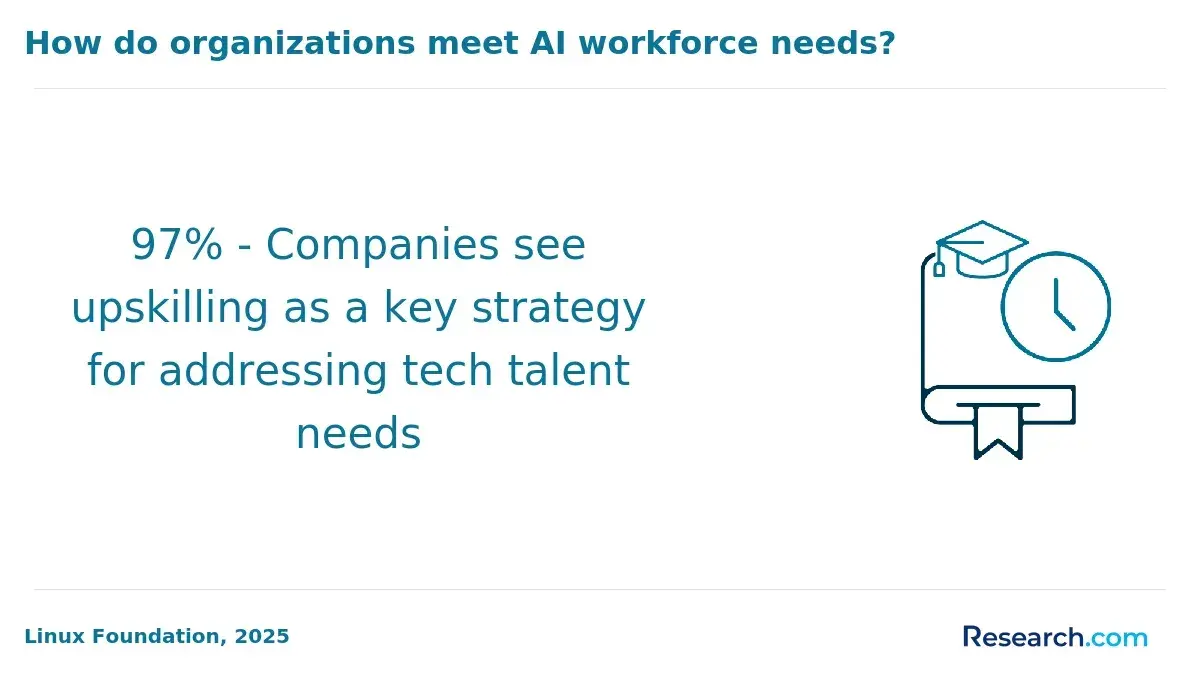
AI fine-tuning skills are developed mainly through specialized degrees, professional certificates, and intensive bootcamps. Bachelor's and master's degrees in computer science or data science provide foundational knowledge in machine learning, neural networks, and natural language processing, setting the groundwork for advanced fine-tuning expertise.
Graduate programs in AI or machine learning often incorporate practical fine-tuning modules focused on transformer architectures and large language models (LLMs).
Certificate courses, including many available on platforms like Coursera and edX, target essential topics such as transfer learning and model optimization. These ai fine-tuning certification programs emphasize hands-on projects using frameworks like PyTorch and TensorFlow, helping professionals quickly gain applicable skills.
Bootcamps offer a condensed, practical approach, combining foundational ai concepts with applied fine-tuning techniques. These short-term programs cover critical elements like dataset preparation, hyperparameter tuning, and efficiency improvements for production-ready models. They are especially suited for career changers or those eager to swiftly enter the AI engineering field. For learners exploring related fields, a game design degree online might also be of interest.
Salary data highlights the high demand for these competencies. U.S. roles titled "AI engineer" or "LLM engineer" report median base salaries of $180,000 to $205,000, with top quartile offers exceeding $300,000. Earnings reflect the premium placed on fine-tuning prowess. Degrees and bootcamps for ai fine-tuning skills that deliver hands-on experience with large-scale models and deployment are critical for aligning with industry needs.
How can I choose an accredited AI program that properly covers fine-tuning?
When selecting accredited artificial intelligence fine-tuning programs, it is crucial to verify their accreditation status through recognized organizations like ABET or regional U.S. accreditors. Accreditation confirms that the curriculum adheres to established educational standards and is respected by employers and graduate schools.
The best AI courses for mastering fine-tuning techniques include practical projects using real datasets and cover essential topics such as transfer learning, parameter-efficient tuning, and domain adaptation.
Look for courses that incorporate leading architectures like transformers and offer hands-on experience with frameworks such as Hugging Face or TensorFlow. Curricula referencing industry trends are vital, as 73% of enterprises experimenting with generative AI now use custom or fine-tuned models, according to Gartner's Generative AI Adoption Survey. This highlights the growing demand for fine-tuning skills in professional settings.
Faculty expertise, especially those engaged in active research or collaboration with AI labs, ensures current and relevant instruction. Programs offering internships or partnerships with AI companies provide beneficial real-world experience. Practical advice includes:
- Ensuring coverage of both theoretical foundations and applications of fine-tuning
- Including model evaluation and ethical deployment considerations
- Providing access to cloud computing or GPU labs for training
- Offering flexible specialization tracks focused on fine-tuning
For those seeking related fields, exploring a cybersecurity online degree can complement AI expertise and expand career opportunities.
What core topics and hands-on projects are included in AI fine-tuning curricula?
Fine-tuning pre-trained models is a cornerstone of AI specialization, focusing on transfer learning, dataset curation, hyperparameter tuning, and evaluation metrics like accuracy and F1-score. Key model architectures such as transformers and convolutional neural networks require tailored strategies to optimize performance in specific tasks.
Practical projects enhance learning by applying fine-tuning to language tasks like sentiment analysis, question answering, or summarization using datasets such as IMDb reviews or SQuAD. Multi-task fine-tuning enables models to handle related tasks simultaneously, improving their adaptability.
Computer vision applications also feature prominently, where models are fine-tuned for image classification or object detection with datasets like CIFAR-10 and COCO. Techniques like layer freezing, learning rate scheduling, regularization, and data augmentation help prevent overfitting and increase model robustness.
Economic considerations heavily influence curricula. Training a state-of-the-art large language model from scratch can exceed $100 million in compute costs, while fine-tuning typically costs between $100,000 and $2 million. This cost efficiency drives adoption in both industry and research, emphasizing fine-tuning optimization and deployment skills.
Students gain hands-on experience with open-source tools such as Hugging Face Transformers and TensorFlow, enhancing their ability to deploy and monitor models in production. This balanced approach equips learners for AI careers demanding specialization without the prohibitive expenses of full-scale model training.
How do online AI fine-tuning courses compare with campus-based and hybrid options?
Online ai fine-tuning courses offer unmatched flexibility and scalability compared to campus-based or hybrid programs. Learners can access updated content and practical exercises anytime, which suits the fast evolution of AI models. Campus programs typically provide deeper theoretical knowledge and face-to-face mentorship but may lack rapid updates of fine-tuning techniques. Hybrid courses blend both approaches but often include fixed schedules, limiting flexibility for working professionals.
Studies, such as the 2024 Microsoft and OpenAI research, demonstrate the value of hands-on training by showing a 30-percentage point accuracy improvement when fine-tuning GPT-4 using 50,000 domain-specific examples. Online courses often leverage cloud platforms and offer datasets that replicate real-world conditions. Campus settings may provide access to high-performance computing resources but usually on limited timetables.
Key factors for prospective students to consider include:
- Availability of hands-on labs and real-world datasets to build fine-tuning expertise.
- Access to expert instructors skilled in domain adaptation challenges.
- Scheduling flexibility that accommodates full-time work or internships.
Campus environments encourage peer collaboration and direct faculty feedback, benefiting those new to ai fine-tuning. Online options enable faster skill updates through modular content, ideal for professionals needing rapid reskilling. Hybrid models cater to those who want structured learning but require balancing time commitments carefully.
The choice depends on individual career stage, learning preferences, and access to resources essential for applying fine-tuning techniques in enterprise workflows.
What are the typical admission requirements and prerequisites for AI fine-tuning study?
Admission to AI fine-tuning programs generally demands strong skills in computer science, mathematics, and programming. Most applicants must have completed coursework in linear algebra, calculus, probability, and statistics.
Proficiency in Python is critical, as it is the dominant language for developing and experimenting with machine learning models. Experience with frameworks like TensorFlow or PyTorch is often required since fine-tuning focuses on adapting pre-trained models rather than building new ones from scratch.
Graduate-level courses typically expect candidates to hold undergraduate degrees in computer science, data science, or related STEM fields. For certifications or bootcamps, practical AI or machine learning project experience may sometimes replace formal education. Applicants might also need to submit coding portfolios or complete assessments testing their knowledge of neural networks, optimization, and data preprocessing.
The open-source ecosystem plays an important role. Platforms such as Hugging Face host over 120,000 transformer-based models, with more than 40% classified as fine-tuned or adapter-based variants. This reflects the importance of familiarity with transfer learning and parameter-efficient fine-tuning techniques. Skills in model customization, evaluation metrics, and domain adaptation are commonly evaluated during admission.
Proficiency with cloud computing platforms and version control systems is essential for collaborative fine-tuning projects. Together, these requirements emphasize a balance of foundational knowledge and hands-on experience aligning with the evolving AI fine-tuning landscape.
How long do AI fine-tuning programs take, and what do they typically cost?
AI fine-tuning programs vary significantly in length, typically from one week to three months, depending on the curriculum depth and delivery format. Short courses lasting one to four weeks focus on essentials like transfer learning, hyperparameter tuning, and dataset preparation, ideal for professionals seeking a fast skill upgrade.
Longer, comprehensive programs often include hands-on projects using cloud platforms such as AWS, Azure, and Google Cloud to replicate real-world production settings.
Costs also differ widely, reflecting course intensity and teaching style. Basic online options usually cost less than $500, while instructor-led bootcamps and specialized certifications range from $1,000 to $5,000. Enterprise-level training for teams can exceed these amounts, driven by customization and resource needs. Many programs now bundle access to managed fine-tuning platforms due to increased cloud adoption.
Between 2023 and 2024, usage of managed fine-tuning services on major cloud providers more than tripled, emphasizing practical skills and impacting program cost and duration.
- Shorter courses suit those needing rapid skill acquisition.
- Longer, pricier programs target roles requiring full project deployment expertise.
- Budgeting $500 to $3,000 covers most individual learning paths.
Choosing the right program demands weighing pace, cloud access, and certification benefits for your career goals.
What careers, job titles, and industries can AI fine-tuning training prepare me for?
Fine-tuning expertise in artificial intelligence equips professionals to tailor machine learning models for specific applications, opening pathways to roles such as machine learning engineer, data scientist, AI research scientist, NLP engineer, and AI product manager. These positions focus on modifying pre-trained models by adjusting parameters and training on domain-specific datasets to boost performance and relevance.
Industries leveraging fine-tuning skills include:
- Technology firms improving virtual assistants, recommendation engines, and computer vision tools.
- Healthcare providers refining AI for diagnostic imaging, patient data interpretation, and drug development.
- Financial institutions applying AI to fraud detection, algorithmic trading, and risk evaluation.
- Marketing companies using fine-tuned models for customer sentiment insights and targeted content creation.
- Education platforms personalizing learning experiences through AI adaptation.
Mastering AI fine-tuning allows professionals to tackle challenges like enhancing model accuracy with limited data, mitigating bias, and optimizing models for deployment in resource-constrained settings.
A 1,060% enrollment surge in generative AI and large language model courses via Coursera between 2022 and 2024, underscores strong demand for these skills. This trend signals that fine-tuning capabilities are essential for those seeking resilient careers as AI continues evolving to meet emerging data and application needs.
What salary ranges and job outlook can AI fine-tuning specialists expect in the U.S.?
AI fine-tuning specialists in the U.S. receive competitive salaries reflecting their technical skills and business impact. Entry-level roles start near $90,000 annually, while mid-level engineers earn between $120,000 and $160,000. Senior experts, especially those managing teams or complex projects, can exceed $200,000 yearly. Salary growth is closely tied to experience in model customization, domain adaptation, and large-scale deployment.
The demand for AI fine-tuning specialists is growing rapidly, driven by industries seeking productivity boosts. Accenture's 2025 Generative AI outlook highlights that fine-tuned models can increase labor productivity by up to 40% in knowledge-intensive jobs, with a projected global economic impact of $6-8 trillion annually. This creates strong incentives for employers to hire professionals who deliver task-specific AI solutions.
Key industries hiring include technology, healthcare, finance, and companies using AI in customer service or operations. Roles span work with large language models, computer vision customization, and recommendation systems. Skills in prompt engineering, dataset creation, and performance evaluation open more opportunities where AI productivity gains are prioritized.
For those pursuing education in AI fine-tuning, focus on courses covering transfer learning, domain adaptation, and evaluation metrics. Experience with cloud platforms and MLOps can accelerate career growth and salary potential.
Other Things You Should Know About Artificial Intelligence
The 2027 best AI courses for fine-tuning fundamentals focus on up-to-date techniques like Transfer Learning and Reinforcement Learning. They offer hands-on experience with cutting-edge tools, ensuring students can effectively adapt and enhance AI models to meet specific needs, emphasizing expertise in diverse applications.
Fine-tuning can inadvertently amplify biases present in the training data, leading to unfair or discriminatory model behavior. It is crucial to carefully curate fine-tuning datasets and incorporate fairness assessment tools during model adjustment. Regular evaluations should be conducted to identify and mitigate bias throughout the fine-tuning process.
Yes, fine-tuning is especially effective for adapting pre-trained models to specialized domains, such as medical imaging or natural language processing in legal texts. By training on domain-specific data, models can achieve higher accuracy and relevance compared to general-purpose AI. This makes fine-tuning a critical step in deploying AI for niche applications.
Fine-tuning large models often requires substantial computational resources and careful hyperparameter tuning to avoid issues like catastrophic forgetting. Managing model size and memory consumption can be difficult in resource-constrained environments. Furthermore, monitoring for unintended performance degradation on original tasks is essential during the fine-tuning process.
References
- Full Guide to Choosing the Right AI Stack. Part 1: RAG vs. Fine-Tuning vs. Hybrid - Intersog Israel https://intersog.co.il/blog/full-guide-to-choosing-the-right-ai-stack-part-1-rag-vs-fine-tuning-vs-hybrid/
- Comparing LLM fine-tuning methods https://www.signalfire.com/blog/comparing-llm-fine-tuning-methods
- Artificial Intelligence Salary: What To Expect in 2026 https://keepsanity.ai/blog/artificial-intelligence-salary
- Should You Use RAG or Fine-Tune Your LLM? https://www.actian.com/blog/databases/should-you-use-rag-or-fine-tune-your-llm/
- Free Course on Training & Fine-Tuning LLMs for Production https://learn.activeloop.ai/courses/llms
- Fine-Tuning vs Transfer Learning: Key Differences for ML and LLM Workflows https://greennode.ai/blog/fine-tuning-vs-transfer-learning
- Comprehensive Guide to LLM Fine-Tuning - hiberus blog - Exploring Technology, AI, and Digital Experiences https://www.hiberus.com/en/blog/guide-to-llm-fine-tuning/
- Future-proof your career: 5 skills you need to stay relevant in the age of AI | Multiverse https://www.multiverse.io/blog/future-proof-your-career-ai
- Finetuning Large Language Models https://www.deeplearning.ai/courses/finetuning-large-language-models
- What is fine-tuning? A guide to fine-tuning LLMs https://cohere.com/blog/fine-tuning