2027 Educational Policy Degree Programs That Accept Transfer Credits
Audited and Verified:
Our Editorial and Data Verification Process
Research.com uses government datasets, official education statistics and primary institutional information to support its career and degree guides. Our review process checks factual accuracy, occupational definitions, source dates and the requirements associated with the credentials discussed.
How This Article Was Fact-Checked
Our editorial team verifies salary estimates, employment projections, education requirements and program information against original data providers and official organizations. Salary figures are checked against the relevant occupational definitions and reporting periods. Information about licensure, accreditation and required in-person training is reviewed separately.
Fact-checked and verified on:

Co-Founder and Chief Data Scientist
Many prospective students encounter uncertainty when moving credits into educational policy degree programs. GPA requirements often go beyond 3.0, courses need to have been finished within the last seven years, and certain concentrations add further limits on transfer eligibility.
Documentation has to be carefully assembled to make sure credits are counted. Together, these factors commonly shrink the number of transferable credits, lengthening the time needed to complete the degree. Since educational policy professionals earn a median salary of $75,000 nationwide, grasping transfer details influences career timelines and financial results.
This article breaks down these rules and provides practical advice for navigating transfer credit acceptance effectively.
Key Things to Know About Educational Policy Degree Programs That Accept Transfer Credits
- Most programs require transfer courses to meet a minimum GPA to ensure transferred credits reflect adequate mastery of foundational educational policy concepts.
- Course recency rules typically limit transfer credits to those completed within five to seven years, protecting relevance in an evolving educational policy landscape.
- Concentration-specific restrictions frequently exclude general education or unrelated coursework from counting toward specialized educational policy tracks, affecting credit applicability.
Which Educational Policy Degree Programs That Accept Transfer Credits Are Available at the Undergraduate Level?
Undergraduate educational policy degree programs that take transfer credits provide a range of flexible choices for students with varied academic backgrounds.
Many institutions promote clear transfer credit policies to assist community college graduates, working adults, military veterans, and career changers who want accelerated pathways.
- Associate-to-Bachelor Pathways: These options let students apply credits from an associate degree, usually earned at community colleges, directly toward a bachelor's degree in educational policy or related fields. Statewide articulation agreements and regional accreditation often help ensure smoother credit transfer and guaranteed acceptance.
- Bachelor's Completion Programs: Intended for students who have already finished substantial undergraduate coursework, these programs focus on transfer credits and provide flexibility to cut down on repeated courses. Transfer eligibility commonly depends on GPA minimums around 2.0 to 2.5 and on how recent prior coursework is.
- Traditional Four-Year Degrees with Transfer Friendly Policies: Many conventional programs openly welcome transfer students, offering detailed course equivalency guides, choices for resequencing concentration credits, and clear documentation processes such as transcripts and syllabus reviews.
- Accreditation and Credit Transfer: Regional accreditation remains an important factor. Programs accredited by recognized bodies usually offer the most dependable transfer credit acceptance, since they uphold curriculum quality and credit comparability standards.
- Practical Considerations: Beyond policy wording, students should consider GPA thresholds, course recency limits that may restrict older coursework, and concentration-specific credit requirements that affect degree progress.
The availability of undergraduate educational policy programs with flexible transfer credit policies varies widely, so selecting a transfer-friendly program early is vital to make the most of credits and streamline degree completion.
Students should also look into related academic opportunities, such as the best online master's in artificial intelligence, to broaden interdisciplinary expertise and career options.
What Are the Most Common Transfer Credit Policies Among Accredited Educational Policy Programs?
Transfer credit acceptance in accredited educational policy degree programs usually follows a structured framework that balances academic standards with flexibility for incoming students.
This framework often mirrors common accreditation standards for transfer credits in educational policy degrees, making sure transfer credits satisfy institutional rigor and relevance.
- Maximum Transfer Credit Caps: Institutions commonly limit transfer credits to between 50% and 75% of total degree requirements. Community colleges that offer bachelor's completion pathways generally allow fewer transferable credits than four-year universities, which may have articulation agreements that make greater credit acceptance possible.
- Course Equivalency Reviews: Schools closely assess transferred coursework for content equivalency, learning outcomes, and academic rigor. This review often calls for detailed course syllabi or official descriptions, particularly at private or research-intensive universities.
- Grade Thresholds: A minimum grade of C or higher is usually required. Some programs enforce stricter GPA standards or restrict acceptance to recently completed courses to keep knowledge current in the field.
- Institution Type Variations: Public universities often put statewide transfer articulation agreements in place that ease credit transfers from in-state community colleges, while private institutions conduct individualized assessments. Four-year public schools frequently provide formal transfer pathways that may not exist at private counterparts.
- Additional Restrictions: Some programs limit transfer credits in specialized educational policy courses or internships. Military veterans may benefit when institutions recognize service training as experiential credit.
- Documentation and Application Processes: Students must submit official transcripts and may need to complete specific transfer evaluation forms. Contacting admissions or academic advisors early clarifies how prior coursework aligns with degree requirements.
Choosing programs with transparent, favorable transfer credit evaluation criteria in educational policy programs can shorten time to degree completion and lower costs.
Prospective students, whether returning adults, veterans, or community college graduates, should compare these policies directly to make sure their academic histories match program expectations. This careful comparison allows informed choices and supports pathways into bachelor degrees that pay well.
How Many Transfer Credits Can Students Typically Apply Toward a Educational Policy Degree?
Transfer credit acceptance in accredited educational policy programs usually ranges from 30 to 60 semester credits, representing a significant share of the total degree requirements.
This can noticeably reduce both the time needed to graduate and overall tuition costs, particularly when credits come from regionally accredited institutions with recognized academic standards.
- Transfer Credit Limits: Usually, schools limit transfer credits to 60-75% of the degree, requiring completion of remaining credits "in residence" to ensure academic integrity.
- Major-Specific Credits: Although many transfer credits may be accepted overall, the number that applies directly to educational policy major or concentration requirements is often much smaller. Electives and general education courses typically transfer more smoothly than specialized upper-level classes.
- Credit Quality and Verification: Minimum GPA thresholds, often around 2.5 to 3.0, are enforced, and some institutions require official course descriptions or syllabi to confirm equivalency. This step helps safeguard program rigor and learning outcomes.
- Recency Rules: Several programs set time limits on acceptable transfer credits, favoring recent coursework in foundational topics to keep students' knowledge current.
- Pre-Admission Evaluations: Prospective students should ask for a thorough transfer credit assessment before enrollment to clarify how prior coursework will apply toward degree progress and prevent surprises later.
- Articulation Agreements: State and institutional partnerships ease credit transfer pathways, particularly helping adult learners, military veterans, and community college graduates pursuing bachelor's completion.
Regarding how many transfer credits students can usually apply toward an educational policy degree, a professional who recently completed the program shared that "navigating the transfer process was challenging due to varying course equivalencies and documentation requirements."
"The initial evaluation helped set realistic expectations, but some major courses still had to be retaken despite prior credits. It was reassuring to know that nearly half my credits transferred, which shortened my time to graduation significantly." He stressed the value of persistence and early communication with advisors to fully use transfer opportunities while preparing for some unavoidable in-residence coursework.
Four-year institutions that offer educational policy degree programs often create formal or informal agreements with community colleges and other two-year schools to support transfer credit acceptance.
These partnerships help streamline pathways for students by matching community college coursework with bachelor's degree requirements, reducing duplicated classes and easing transitions.
- Transfer Partnerships: Universities often establish articulation agreements that specify which community college courses count toward educational policy degrees. These may also guarantee admission for students who meet certain GPA criteria, supporting smoother transfers into the program.
- Associate Degree Transfer Pathways: Transfer Associate degrees or Transfer Pathway degrees are increasingly common and are designed to match four-year curricula in educational policy. Earning such a degree can help ensure that core and introductory policy courses completed at the community college level satisfy university requirements.
- State Transfer Programs: Policies vary by state but often provide structured pathways, such as:
- California's Associate Degree for Transfer (ADT) guarantees junior standing admission to California State Universities for students who complete designated transfer degrees.
- Florida's Statewide Articulation Agreements support seamless credit transfer across public universities, including educational policy majors.
- New York offers various transfer and articulation policies that guide community college graduates toward bachelor's degree completion in educational policy.
- Credit Evaluation Factors: Transfer credit acceptance depends on other variables such as minimum GPA thresholds (often 2.5+), recent coursework, how relevant specific course content is to the educational policy concentration, and earned grades.
- Advising and Verification: Prospective transfer students should consult both their community college and the receiving institution to confirm existing articulation agreements. Early academic advising and submitting syllabi or course descriptions can improve the likelihood that credits are accepted.
Those seeking a bachelor's degree in criminal justice or related fields will benefit from carefully navigating these transfer policies to maximize credit acceptance and shorten time to degree completion.
Transfer credit acceptance for educational policy programs usually depends heavily on GPA thresholds that differ by institution. Most programs require a cumulative GPA between 2.5 and 3.0 for transfer admission.
This baseline helps make sure prior coursework matches the academic demands of the new program. However, a separate, often higher GPA requirement (typically 3.0 or above) applies to courses that count toward the educational policy major or core curriculum. This difference means transfer students with GPAs near the minimum may have fewer courses that qualify to fulfill major requirements.
Some institutions use a sliding-scale model in which students with stronger GPAs can transfer more credits. This approach balances credit quantity with academic quality while preserving program standards.
Prospective students should carefully review official transfer credit policies instead of relying only on admissions materials, since institutional guidelines detail GPA cutoffs, course equivalencies, and documentation rules that ultimately govern credit acceptance. Those below minimum GPA thresholds often can retake required courses at the new school to satisfy degree needs.
A professional who built her career after completing an educational policy degree shared how navigating transfer policies felt overwhelming at first, particularly when her GPA hovered close to the minimum. She recalled spending a great deal of time reviewing official transfer credit guides and communicating with academic advisors to clarify which courses counted toward her major.
Instead of assuming all previously completed classes transferred, she carefully retook a few key courses at her new institution to strengthen her academic record. Looking back, she described the experience as "a practical process of aligning past work with new standards," emphasizing that persistence and informed planning eased what might have been a confusing transition.
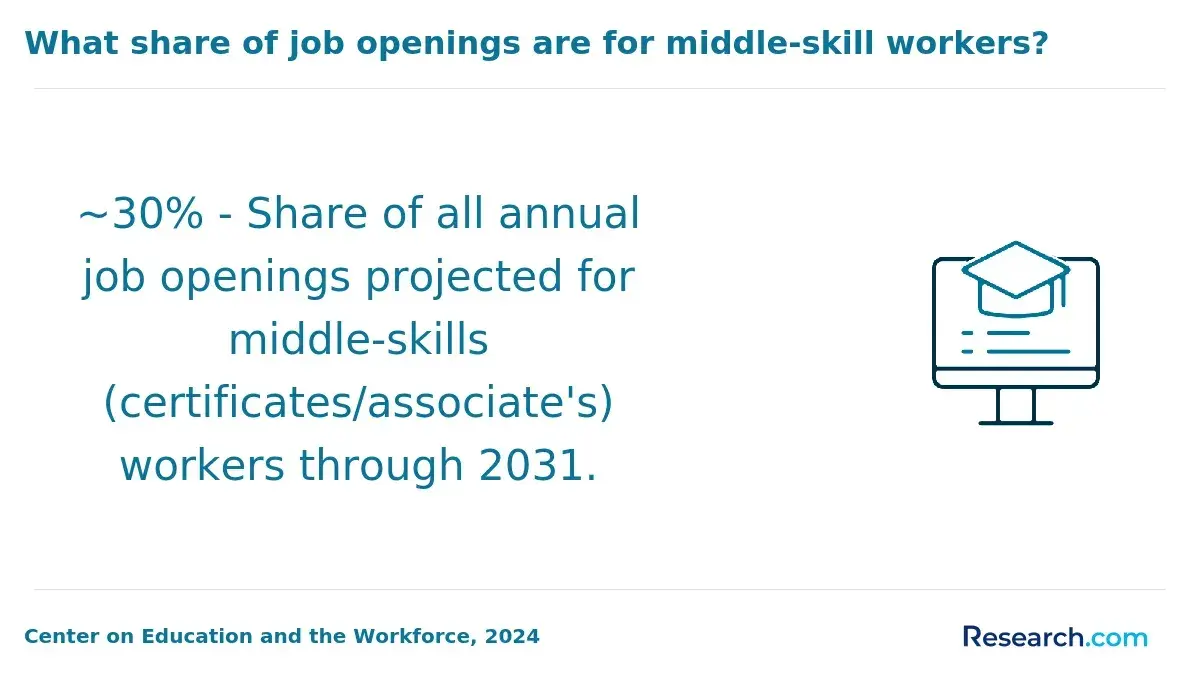
Non-traditional credits, such as those earned through military service, professional development, or employer-funded education, are increasingly recognized by accredited educational policy programs.
Institutions commonly use established tools to evaluate these credits, making sure they align with academic standards and program requirements.
- ACE Credit Recommendations: The American Council on Education's guidelines act as a primary reference, providing equivalency evaluations for military and workplace learning experiences.
- CLEP Exams: The College-Level Examination Program allows students to earn credit by demonstrating subject expertise through standardized testing accepted by many schools.
- Portfolio Review: Some universities conduct thorough assessments of students' portfolios, including syllabi, certifications, evaluations, and licenses, to verify learning outcomes.
- Recognized Experiences: Training in areas such as leadership, organizational policy, and educational administration frequently qualifies for credit within educational policy tracks.
- Consortium Participation: Prospective students should confirm whether their institution belongs to networks like the National College Credit Recommendation Service, which supports transfer credit acceptance nationwide.
Strong, detailed documentation greatly affects transfer evaluations, so gathering official records before the review process is essential. Policies vary widely depending on state articulation agreements, GPA minimums, course relevance, and recency limits.
Notably, a 2023 survey showed that 68% of educational policy programs formally accept credits from professional training, demonstrating a significant shift toward embracing diverse prior learning.
Online educational policy degree programs with the most flexible transfer credit policies usually come from regionally accredited institutions that prioritize adult learners and career changers.
These programs often limit residency requirements to 30 credit hours or fewer, allowing transfer of up to 75% of total credits and enabling students to use prior coursework efficiently. This flexibility reflects the highly competitive online education market, which targets students with existing college credits who seek accelerated degree paths.
Key factors that shape flexibility in transfer credit acceptance include:
- Residency Limits: Programs with low residency caps allow faster degree completion by transferring most applicable prior coursework.
- Wide Credit Acceptance: Many programs accept transfer credits from community colleges, military training, and regionally accredited universities, as long as courses meet GPA and content equivalency standards.
- Transfer Criteria: These programs often have lower GPA thresholds and accept older coursework, relaxing recency requirements compared with traditional offerings.
- Concentration Considerations: Some programs place restrictions on transferring credits within specialized educational policy tracks, making it essential to review major-specific rules.
- Accreditation Status: Regional accreditation is crucial for credit acceptance and employer recognition; programmatic accreditation may also matter for certain career fields.
Online educational policy programs tend to offer greater transfer credit flexibility than campus-based counterparts because they serve a diverse adult learner population that balances education with work and family responsibilities.
However, trade-offs include possible reductions in experiential learning opportunities and differing employer perceptions. Some employers may prefer degrees from institutions with strong reputations or additional accreditations.
Prospective students should carefully verify program accreditation, residency requirements, and transfer restrictions before enrolling to make sure prior credits count and the program aligns with their educational and professional objectives.
Accreditation type strongly affects how credits transfer in educational policy programs, an important factor when students plan to move coursework between institutions or seek recognition by employers and graduate schools.
The U.S. Department of Education and CHEA define accreditation as a quality assurance process, separating regional from national accreditation based on scope and reciprocity in credit acceptance. Regional accreditation is usually awarded to institutions in specific geographic areas and is viewed as the gold standard for academic quality and transferability.
This means that regionally accredited programs generally allow smoother credit transfers within their network, a key element in how regional accreditation affects transfer credits for educational policy programs. National accreditation, however, is often awarded to career, technical, or specialized schools and applies regardless of geography.
These institutions usually enforce stricter transfer policies, resulting in more limited acceptance of credits by regionally accredited programs. Students who enroll in nationally accredited educational policy programs without carefully checking transfer policies risk significant setbacks, including credit rejections and financial losses.
Students who hope to transfer credits from nationally accredited schools to regional institutions may face delayed degree progress or unexpected costs because of limited reciprocity. Written confirmation of credit acceptance from the receiving institution before enrollment is essential to prevent surprises.
Often pursuing bachelor's completion pathways at four-year regional schools, such students succeed by understanding regional accreditation's transfer benefits and limitations. Working adults and veterans must closely assess prior credits and experiences, mindful of differences between national and regional accreditation transfer policies in educational policy degrees, to ensure smooth transitions.
Students should also consider factors such as GPA thresholds, course recency, and documentation requirements, which affect how many credits actually count toward degree completion. For those exploring related fields or dual interests, an online communications degree may offer alternative accredited pathways that complement educational policy studies.
Formal, negotiated contracts between two academic institutions are known as articulation agreements, and they guarantee that particular educational policy courses or full degree sequences can be transferred. By spelling out exactly which credits will transfer, these agreements lessen the uncertainty that many students encounter when they change schools.
The most typical arrangements include bilateral agreements linking two institutions, statewide articulation agreements that cover several colleges, and national transfer frameworks designed to standardize credit acceptance across regions. For educational policy transfer, such state articulation agreements matter particularly in U.S. colleges because they offer consistent pathways.
Students ought to check if their present school holds an active articulation agreement with the educational policy program they intend to enter. They can do this by reviewing official college websites or by talking with academic advisors.
While reviewing these agreements, students need to pinpoint the specific course equivalencies given by course codes and to observe which classes transfer fully, partially, or not at all. Verifying an agreement's validity is important since these contracts are renegotiated from time to time to reflect curriculum changes and revised transfer policies.
Students who work proactively with academic advisors at both the sending and receiving institutions can use articulation agreements as strategic road maps, which supports informed degree planning starting in the first semester.
Conditions such as GPA thresholds, course recency, and documentation requirements, when understood, further clarify how many credits really count toward an educational policy degree. For those considering accelerated paths, resources like accelerated speech pathology programs online may prove valuable for comparison.
Prior learning assessment (PLA) gives educational policy students a structured way to earn college credit by validating skills and knowledge gained outside formal classrooms. Unlike transfer credit, which is based on prior college courses, PLA credits require thorough documentation and are granted after careful institutional review.
- CLEP Exams: Standardized tests that let students bypass introductory educational policy courses by demonstrating subject mastery.
- DSST Exams: Also called DANTES Subject Standardized Tests, these evaluate competency in diverse topics and grant credit when passed.
- Institutional Challenge Exams: Exams created by individual schools to confirm understanding of specific educational policy concepts, speeding up degree completion.
- Portfolio Assessment: Students compile evidence of prior learning, such as work experience and training, aligned with educational policy outcomes for review.
- ACE-Evaluated Training: The American Council on Education assesses military and professional training programs, recommending college credit that is widely accepted in educational policy programs.
PLA credits are different from transfer credits because their award depends more on individualized assessment and additional proof than on transcripts. These credits usually appear on transcripts with special notation and may receive varied recognition by employers or accreditation agencies.
According to the Council for Adult and Experiential Learning, PLA can shorten degree completion time by up to 12 months and lower tuition expenses, critical advantages for working adults, veterans, and career changers. Prospective students should always verify PLA policies with their program registrar to make sure their experiential learning is appropriately credited.
Transfer credit acceptance in educational policy graduate programs differs considerably, particularly between professional master's tracks and research-based degrees.
Programs such as master's degree completion, bridge programs, post-baccalaureate certificates, and accelerated or hybrid formats often let relevant undergraduate or prior graduate coursework count toward degree requirements. These are designed for career changers, working adults, or students finishing interrupted studies.
Research-focused degrees, such as thesis-based master's or doctoral programs, usually require most credits to be earned in residence to maintain academic rigor and program cohesion, restricting transfer acceptance to exceptional cases.
Key factors in transfer credit decisions include:
- Academic Level Equivalency: Transfer credits usually must reflect graduate-level rigor; lower-division undergraduate courses are generally not accepted except as foundational.
- Course Recency: Many programs limit transfers to courses completed within five to seven years to keep content relevant.
- Institution Accreditation: Credits are accepted mainly from regionally accredited schools, protecting quality and comparability.
- Curricular Fit: Courses transferred should match closely with the program's core or advanced requirements.
- GPA Thresholds: Minimum grades, often a B or better, are generally required for eligible credits.
- Concentration Restrictions: Some programs restrict transfers to specific policy areas or electives only.
- Documentation Requirements: Official transcripts and detailed course syllabi or descriptions may be required to verify content and standards.
Prospective students should always request a formal graduate credit evaluation during admissions. This provides clear guidance on which prior courses contribute toward degree completion, helping avoid repeated study and accelerating progress.
What Graduates Say About Educational Policy Degree Programs That Accept Transfer Credits
- Wendy: "What really impressed me about the educational policy degree was how clear the GPA thresholds were for accepting transfer credits. Knowing that I needed a minimum 3.0 for courses to count made planning much easier. I also valued that most programs I looked into required coursework to be recent, which encouraged me to keep my credits fresh and relevant. Finally, the documentation requirements were straightforward, reducing much of the usual stress when transferring credits. It felt as though the program respected both my past efforts and future goals."
- Harlan: "Looking back on my journey through the educational policy degree, I found concentration-specific restrictions to be a crucial factor that many overlook when transferring credits. Some classes I wanted to apply did not fit the concentration rules, limiting the potential for credit transfer. In addition, understanding strict course recency rules gave me a clearer picture of which courses I needed to retake. Finally, the GPA thresholds, while challenging, ensured the program maintained a high academic standard, which ultimately made my degree feel more valuable. These insights clearly shaped how I navigated my choices."
- Carmen: "My experience with the educational policy degree program was deeply professional, not only in how the curriculum was structured but also in the rigor of the credit transfer process. The documentation requirements were quite specific, calling for detailed syllabi and official transcripts, something I had not anticipated and had to carefully prepare for. The concentration-specific restrictions meant my prior credits did not all count, but it pushed me to diversify my knowledge base, which I now see as a benefit. At the same time, the enforcement of GPA thresholds ensured that only the highest quality credits contributed toward the degree, which made me confident in the program's integrity."
Other Things You Should Know About Educational Policy Degrees
Transferred credits usually remain eligible for application toward an educational policy degree for up to five to seven years from the date they were earned. Many programs enforce a recency rule to ensure foundational knowledge is current, which is especially important in dynamic fields like educational policy where regulations and best practices evolve. Students should confirm specific timelines with their prospective institutions to understand how long prior coursework will count.
Foundations courses in educational policy, research methods, and ethics are often reviewed individually and are rarely exempt. Most programs require an official syllabus, a grade of C or better, and course descriptions before they approve equivalency. Graduate programs also limit transfer to 6 to 12 semester credits.
Educational policy programs usually require international transfer credits to undergo an evaluation by a credential assessment service to verify equivalency to U.S. coursework. This includes translating documents and assessing course rigor and content alignment. Transferability may be limited when courses do not closely match core educational policy curriculum standards, so prospective students should consult their program advisors early in the application process.
- Transfer College Credit Limits https://www.ivyscholars.com/transfer-college-credit-limits/
- Full Transfer Guide - OnlineDegree.com https://www.onlinedegree.com/full-transfer-guide/
- Credit Transfer Policy | Eton University https://www.eton-university.us/credit-transfer-policy
- Prior Learning Assessment and Recognition (PLAR) https://www.sait.ca/admissions/transfer-options/prior-learning-assessment-and-recognition
- The Most Transfer-Friendly Online Colleges: What Works, What Doesn’t, And How To Keep Your Credits | University of the People | https://www.uopeople.edu/blog/the-most-transfer-friendly-online-colleges/
- The Role and Benefits of Articulation Agreements — American Education Board https://www.americaneducationboard.org/blog/blog-post-two-bw5b2
- What Is an Articulation Agreement? Transfer Guide 2026 https://www.edvisorly.com/student-guides/what-is-an-articulation-agreement
- Understanding the Difference Between Regional and National Accreditation https://www.qahe.org/article/understanding-the-difference-between-regional-and-national-accreditation/
- Articulation Agreements and Prior Learning Assessments - Center for American Progress https://www.americanprogress.org/article/articulation-agreements-and-prior-learning-assessments/
- Updated Credit Mobility Policies to Strengthen Transfer Student Outcomes - WSCUC https://www.wscuc.org/post/updated-credit-mobility-policies-to-strengthen-transfer-student-outcomes/