2027 Web Development ROI by Institution Type: Public vs Private vs Nonprofit Online Programs

Co-Founder and Chief Data Scientist
A prospective student comparing online web development programs encounters strikingly similar curricula but widely varying tuition, graduation rates, and post-graduation debt levels. A 2024 National Center for Education Statistics report highlights that nonprofit online programs demonstrate a 15% higher average completion rate than equivalent public options, yet often come with increased upfront costs. This discrepancy reveals a critical tension: lower-priced programs may leave students with less institutional support and weaker employer recognition, while higher-cost institutions do not guarantee better long-term career outcomes.
Navigating these complexities is essential for avoiding costly investment mistakes and understanding true ROI differences across public, private, and nonprofit online web development programs. This article analyzes these distinctions to guide prospective students toward informed, outcome-focused decisions.
Key Things to Know About Web Development ROI by Institution Type
- Public institutions often offer lower total costs but higher graduation risks, reflecting tradeoffs between affordability and completion rates that can delay career advancement and affect long-term ROI for working adults.
- Private institutions typically provide stronger employer connections and specialized career services, which may enhance placement but come with higher tuition, requiring careful evaluation of actual job market leverage.
- Nonprofit online programs balance flexibility and moderate costs; however, their variable accreditation status can influence employer recognition, making due diligence on institutional reputation critical for ROI timing and value.
- Key Things to Know About Web Development ROI by Institution Type Key Things to Know About Web Development ROI by Institution Type
- What Does ROI Mean for a Web Development Program and How Is It Measured? Understanding Web Development Program ROI
- How Do Public, Private, and Nonprofit Online Web Development Programs Differ in Overall Value? Value by Institution Type
- How Do Tuition Costs Affect the ROI of a Web Development Program Across Institution Types? Tuition Costs and ROI
- How Do Graduation Rates Influence Web Development Program ROI? Graduation Rates Impact ROI
- What Role Do Career Outcomes Play in the ROI of a Web Development Degree? Career Outcomes and ROI
- How Does Student Debt Impact the Long-Term ROI of a Web Development Program? Debt vs. Long-Term ROI
- How Do Flexibility and Adult Learner Support Affect Web Development Program Value? Flexibility and Program Value
- How Do Accreditation and Institutional Reputation Influence Web Development ROI? How Do Accreditation and Institutional Reputation Influence Web Development ROI?
- How Does Time-to-Degree Affect the ROI of Public, Private, and Nonprofit Web Development Programs? How Does Time-to-Degree Affect the ROI of Public, Private, and Nonprofit Web Development Programs?
- How Can You Choose the Best Web Development Program Based on Your ROI Goals? Choosing Programs by ROI
What Does ROI Mean for a Web Development Program and How Is It Measured?
Return on investment for a web development program is best understood as a multi-dimensional calculation that prioritizes educational quality, career alignment, and financial prudence over simple salary gains. For example, a public online program with lower tuition and a higher completion rate may reduce upfront debt but could lack direct employer connections that a private nonprofit program might offer, potentially influencing job placement in highly specialized roles. Evaluating ROI means analyzing total costs-including tuition, fees, and opportunity costs from lost income during study-and weighing those against realistic career outcomes, such as network access and job market competitiveness, that vary widely by institution type and individual goals.
Measuring roi for online web development courses also requires attention to time-to-degree and graduation rates, as extended completion times can erode financial benefits and delay earnings growth. Different learners face distinct tradeoffs: adult professionals working while studying may manage opportunity costs differently than full-time students, impacting the true value of their educational investment. According to recent research from the National Center for Education Statistics, public institutions frequently have higher completion rates, but private programs may provide stronger curricular relevance and ongoing career support, which influences long-term employability and skill adaptability.
Students with diverse circumstances should thus assess how institutional reputation, program rigor, and learner support align with their specific career aims rather than defaulting to the lowest-cost option. For those seeking to balance affordability with quality, exploring pathways beyond web development-such as related fields highlighted in online SLP master's programs-can sometimes offer competitive ROI through different industry demands and employer expectations. Ultimately, the nuanced analysis of roi metrics tailored to one's situation provides a more reliable framework than oversimplified formulas driven solely by immediate postgraduation salaries.
How Do Public, Private, and Nonprofit Online Web Development Programs Differ in Overall Value?
Public, private, and nonprofit online web development programs offer distinct combinations of costs, support, and outcomes that make their overall value highly context-dependent. Public programs generally deliver lower tuition, helping to minimize debt for students who must balance education with financial constraints, but this often comes with larger class sizes and less personalized guidance. Conversely, nonprofit programs, with tuition typically higher by design, tend to show about a 10% higher graduation rate, reflecting stronger advising and more intentional flexibility for adult learners; however, the upfront cost can diminish returns if earnings post-completion don't offset increased debt.
Private institutions may add value through enhanced career preparation such as portfolios and internships, but their reputational variability means students must carefully weigh financial risks against potential hiring advantages, especially since employer recognition favors regionally accredited nonprofits and publics over lesser-known for-profits.
Flexibility and credit-transfer policies also vary, with many public universities supporting asynchronous schedules that help working adults manage coursework alongside job demands. Nonprofits often supplement this flexibility with more robust career services and alumni connections, which can boost long-term employability but require a financial premium upfront. These differences underline that ROI is not solely about sticker price but includes graduation likelihood, debt-to-earnings ratios, and the quality of learner support, all of which align differently with individual priorities. For example, a learner focused on minimizing debt while completing a credential on a tight timeline might prefer a public program, whereas someone valuing tailored mentorship and networking might justify a nonprofit's higher cost despite greater initial borrowing.
One adult learner facing these choices weighed a public university's lower tuition and broader access against a nonprofit's structured advising and career networks. They found the private program's innovation appealing but were wary of paying more without clear evidence of employer recognition or strong completion rates.
Ultimately, the student chose the nonprofit option, appreciating that while it involved more debt, the higher graduation rates and career support aligned better with their goal of entering a new field without repeated coursework or delays. This decision reflected a practical balance of affordability, support, and outcomes rather than defaulting to institutional prestige or lowest cost alone.
How Do Tuition Costs Affect the ROI of a Web Development Program Across Institution Types?
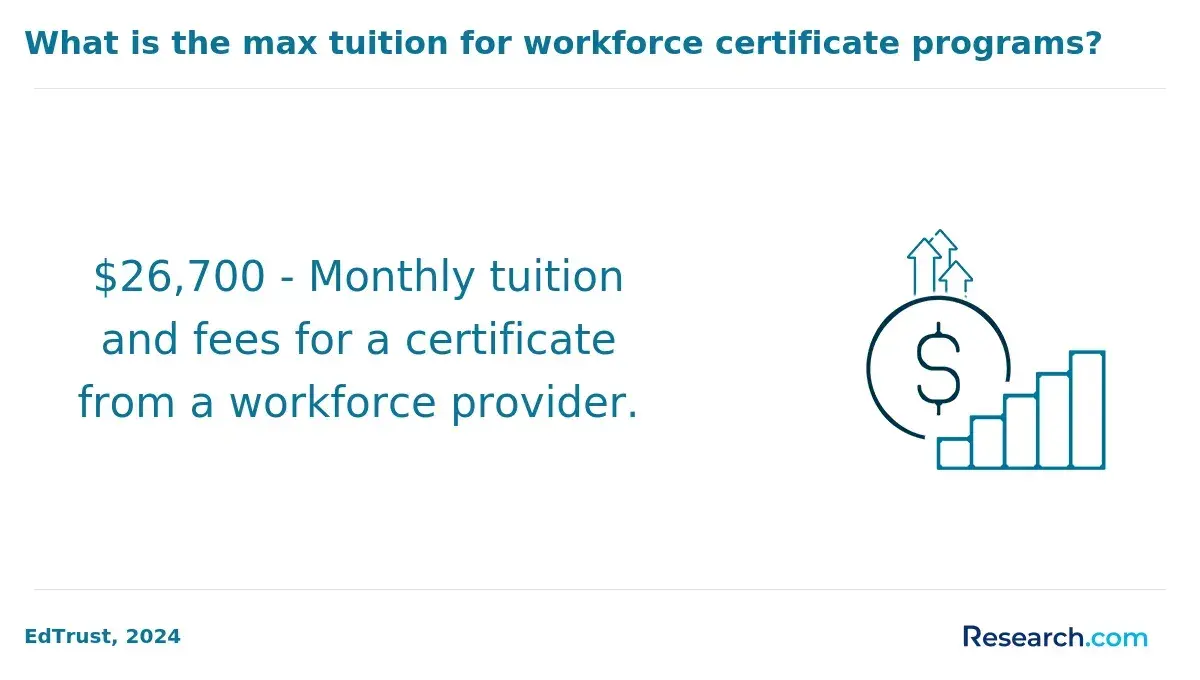
The financial return of pursuing a web development program varies significantly with tuition costs across institution types, but lower price tags at public schools do not necessarily translate to better ROI. While public online bachelor's programs generally charge about 35% less after financial aid compared to private nonprofits, according to the National Center for Education Statistics in 2024, this difference must be contextualized. For example, a working adult balancing employment and study may find that private nonprofit programs-though costlier-offer more comprehensive support services and higher completion rates that shorten time-to-degree and potentially reduce total debt and opportunity costs.
Debt burden and career outcomes add further nuance: students at private nonprofits often incur higher tuition-related debt but may benefit from stronger employer networks and career placement services that enhance salary prospects soon after graduation.
Conversely, graduates from public institutions tend to borrow less upfront but may encounter more modest starting salaries depending on geographical and institutional factors. For a learner prioritizing minimal financial exposure and rapid workforce entry, public programs might offer a more pragmatic path, whereas those seeking extensive experiential learning and networking that align tightly with employer expectations might justify the premium of nonprofit programs despite the higher initial expense.
Ultimately, the decision hinges on accurately weighing tuition savings against longer-term educational efficacy and post-graduation earning potential. Program flexibility and institutional support play a critical role, especially for nontraditional students who cannot afford prolonged study periods. Understanding that sticker price is only one variable among many is vital; careful evaluation of how program quality, completion success, and career services interact with cost can uncover which investment aligns best with a student's practical goals and financial circumstances.
How Do Graduation Rates Influence Web Development Program ROI?
Graduation rates play a significant role in shaping the return on investment for online web development programs, yet they must be assessed alongside factors like student support and institutional mission to grasp their true impact. Public institutions typically report higher online graduation rates-around 55% according to the National Center for Education Statistics 2024-often paired with lower tuition and faster completion, which can mitigate debt accumulation and improve ROI. However, private and nonprofit programs deliberately serve more diverse and part-time learners who balance complex external commitments, causing longer time-to-degree metrics that can obscure short-term ROI but may ultimately enhance long-term career trajectories.
Student success and ROI in web development programs are influenced by persistence and the quality of academic advising, which are critical to on-time graduation and employment outcomes. While completion rates remain useful indicators of institutional effectiveness, they do not fully capture the value in programs offering flexible pacing and tailored support aligned with adult learners' realities.
For those weighing program affordability and value, comparing graduation data alongside debt levels and workforce alignment is essential, especially given how employers increasingly emphasize demonstrated coding skills and project portfolios over diplomas alone. Prospective learners may also consider exploring executive MBA programs as part of a broader investment in applicable tech and business competencies.
What Role Do Career Outcomes Play in the ROI of a Web Development Degree?
Career outcomes significantly shape the return on investment for online web development degrees, with employment rates and job placement speed driving early financial returns. Public programs show an average 78% employment rate within six months, slightly below the 82% and 80% reported by private and nonprofit institutions, respectively, according to the National Center for Education Statistics. However, this marginal difference often balances against tuition costs, as public and nonprofit options generally demand lower upfront investment, reducing debt burden and enhancing long-term ROI.
Employers prioritize tangible technical skills and practical experience over institutional prestige, which means graduates from lower-cost programs with aligned curricula and access to employer networks can achieve comparable career mobility, especially when programs emphasize current industry standards and certification support.
This dynamic influences not only immediate job placement but also mid-term career mobility. Workforce Analytics Institute data shows 65% of nonprofit program graduates report meaningful career advancement within two years, outpacing public and private peers. Such trends underscore how institutional focus on professional development and networking can translate into upward trajectory post-graduation, which matters for adult learners and career changers balancing time-to-degree and financial constraints. Selecting a program thus entails weighing employment and advancement statistics alongside affordability rather than assuming higher-priced private programs guarantee superior outcomes.
One graduate reflected that the decision to pursue an online web development degree hinged on assessing whether improved job prospects would justify tuition and time spent. Initially skeptical about how much the credential would impact internal promotions, they found that over 18 months, the new skills opened doors to expanded responsibilities and cross-functional projects. While salary jumps were modest, the degree facilitated practical recognition and a clearer career path within their company, illustrating that career outcomes often manifest as incremental gains in role complexity and professional credibility rather than immediate financial windfalls.
How Does Student Debt Impact the Long-Term ROI of a Web Development Program?
Student debt levels disproportionately influence the long-term ROI of a web development program, with public institutions typically offering lower borrowing requirements than private or nonprofit online schools. For example, a graduate burdened with significantly higher debt from a private program may delay purchasing a home or advancing in their career due to monthly loan payments constraining disposable income. This dynamic highlights the need for cost-conscious adult learners to assess not only tuition rates but also expected graduation debt relative to entry-level salaries in web development, as the impact of student loan repayment on web development career returns can markedly differ by institution type.
While private and nonprofit programs occasionally deliver stronger industry connections or specialized curricula that lead to higher starting wages, these benefits must be weighed against the risks of elevated debt and default rates, which are notably higher among some private online cohorts. Graduates facing greater repayment pressure may experience reduced career flexibility and hesitancy to invest in skills enhancement, diminishing the net value of their education over time. Prospective students comparing programs should account for how differences in borrowing strategies, completion timelines, and institutional support affect their realistic financial outlook.
Evaluating program quality and affordability alongside long-term financial repercussions is crucial; this includes reviewing differential graduation outcomes and repayment environments to gauge practical ROI. Those exploring accessible pathways in web development should also consider program lengths and costs reflected in options like lMFT programs, which illustrate how compressed schedules and financing approaches interplay with debt and career advancement possibilities.
How Do Flexibility and Adult Learner Support Affect Web Development Program Value?
The capacity to accommodate complex schedules through asynchronous learning and part-time enrollment profoundly shapes the return on investment for web development programs, particularly for working adults and career changers balancing multiple commitments. Public institutions that integrate flexible delivery models with transfer-friendly credit policies tend to reduce opportunity costs, making degree completion more attainable and financially manageable. For example, a learner juggling a full-time job and family obligations may find that programs allowing asynchronous course access and credit transfers enable faster progression without excessive debt, compared to rigid private alternatives. A 2024 National Center for Education Statistics report highlights this by showing a 30% higher graduation likelihood within six years for students in flexible programs versus those in strictly full-time, synchronous tracks.
Beyond scheduling, robust support systems targeting adult learners-such as personalized academic advising, career counseling, and faculty mentorship-directly influence persistence and career outcomes. Nonprofit programs often distinguish themselves here, offering tailored services that address skill gaps and evolving labor market demands, thereby enhancing employability post-graduation.
Conversely, some private online options, despite higher tuition fees and career-oriented resources, may limit value by restricting transfer credits and providing fewer accommodations for military-affiliated or working students, which can hinder retention and completion rates. Prospective students must weigh these operational tradeoffs, recognizing that while upfront costs matter, long-term ROI hinges on how well a program aligns with their personal and professional realities.
How Do Accreditation and Institutional Reputation Influence Web Development ROI?
Accreditation and institutional reputation critically shape the return on investment for Web Development programs by influencing both immediate career prospects and long-term educational flexibility. Graduates from regionally accredited programs are 12% more likely to secure full-time employment within six months, according to the 2024 National Postsecondary Accreditation Report, reflecting the tangible advantage of recognized academic standards. For example, a working professional choosing between a lower-cost public university and a private nonprofit program must weigh not only tuition but how accreditation affects eligibility for federal aid, transfer credit acceptance, and graduate school options-factors that affect debt levels and future mobility.
Employer priorities increasingly emphasize demonstrable skills and certifications over brand prestige, yet nearly 35% of tech-sector managers acknowledge that graduates from highly reputable and well-accredited programs often demonstrate stronger foundational knowledge and professional readiness.
This dynamic can create a nuanced tradeoff: private institutions may offer stronger alumni networks but higher costs, while public universities typically provide more affordable tuition with solid graduation and retention rates, factors strongly linked to ROI. Nonprofit institutions frequently balance mission-driven support with variable institutional prominence, requiring cost-conscious students to critically evaluate how reputation aligns with career objectives and financial constraints.
Ultimately, decision-makers must consider how accreditation and reputation intersect with practical elements like employer recognition, credit transfer, and financial aid, as these directly impact the total cost and long-term value of a Web Development credential. Those prioritizing cost-efficiency often find better ROI at public institutions with regional accreditation, while others may justify higher expenses for programs that provide stronger professional networks or specialized accreditation signaling alignment with industry standards. Balancing these variables is essential to optimizing educational investment amid evolving hiring expectations and workforce demands.
How Does Time-to-Degree Affect the ROI of Public, Private, and Nonprofit Web Development Programs?
The relationship between time-to-degree and return on investment (ROI) in public, private, and nonprofit online web development programs hinges on navigating tuition exposure and opportunity costs against program flexibility. Public institutions typically offer extended degree timelines due to higher rates of part-time enrollment, which can lessen immediate financial strain but lengthen exposure to tuition and delay workforce entry. For working adults balancing family and jobs, this flexibility may improve completion rates despite longer overall duration, a critical factor since incomplete degrees yield no employer premium.
Private and nonprofit online programs frequently emphasize accelerated pathways and cohort-based models that shorten time-to-degree, lowering total educational cost and facilitating earlier career progression. However, rigid pacing can limit adaptability for students managing complex schedules, sometimes undermining persistence. Transfer credit policies and enrollment intensity further influence how swiftly students can graduate, impacting debt accumulation and earning potential. Adult learners evaluating the effect of program duration on ROI for nonprofit online web development degrees should weigh these tradeoffs carefully.
Employers prioritize practical skills and demonstrated competencies even more than credentials, making program curriculum and portfolio-building essential to ROI alongside completion speed. Students considering these dynamics may also explore competency based degree options that align pace with mastery, offering a tailored balance of affordability, quality, and timely degree completion. Ultimately, understanding how time-to-degree impacts long-term value requires analyzing persistence trends, credit transfer efficiency, and real-world scheduling constraints across institutional types.
How Can You Choose the Best Web Development Program Based on Your ROI Goals?
The best return on investment in a web development program hinges on aligning institutional features with your specific financial situation, career aims, and personal responsibilities rather than relying solely on whether a program is public, private, or nonprofit. Public institutions generally offer lower tuition and reduced average student debt, as reflected in 2024 data from the National Center for Education Statistics, but may provide fewer financial aid options and less flexibility. Private colleges often boast stronger brand recognition and employer networks, which some students may value in competitive markets, while nonprofit programs usually emphasize learner support and adaptable pacing, crucial for working professionals and career changers balancing jobs and family.
Graduation and employment rates are essential metrics, yet their impact on ROI differs with individual context. Accelerated public tracks may lead to quicker workforce entry but may sacrifice curriculum depth, whereas nonprofit programs' flexible pacing can accommodate those managing transition risks but may extend time-to-degree. Accreditation and curriculum relevance to current industry demands are critical across all institution types to ensure employability. Careful evaluation of these factors alongside cost, debt, and expected wage outcomes will better serve those choosing the best online web development degree for career growth. For comprehensive comparisons, prospective students can explore options among online colleges with weekly start dates.
References
- Considering Outcomes, Cost, and ROI in Developmental Education Reforms - Center for the Analysis of Postsecondary Readiness https://postsecondaryreadiness.org/considering-outcomes-cost-roi/
- How to Calculate the ROI of Your College Degree - The College Funding Coach https://www.thecollegefundingcoach.org/how-to-calculate-the-roi-of-your-college-degree/
- Is Rising Student Debt Harming the U.S. Economy? | Council on Foreign Relations https://www.cfr.org/backgrounders/us-student-loan-debt-trends-economic-impact
- Explore the Best Web Development Degree Programs | Cyberdegrees.org https://www.cyberdegrees.org/listings/web-development/best-programs/
- What is ROI and How to Measure It in Software Development Outsourcing? - Ambitious Solutions https://ambitioussolutions.mk/blog/what-is-roi-and-how-to-measure-it/
- Flexible Programs Assist Adult Learners to Thrive - The EvoLLLution https://evolllution.com/opinions/flexible-programs-assist-adult-learners-to-thrive
- The Economics of Accreditation: Costs, Benefits, ROI - Course Accreditation https://course-accreditation.com/blog/the-economics-of-accreditation-costs-benefits-roi/
- Website as a Service vs Traditional Web Development: Which is Right for You? - InstaWP https://instawp.com/website-as-a-service-vs-traditional-web-development/
- Online degrees roi | DegreeMath https://degreemath.com/guides/online-degrees-roi
- Custom web application development: Discover the key benefits, ROI advantages, and factors for success in your business strategy | Ronas IT https://ronasit.com/en/blog/custom-web-application-development-benefits-and-roi-for-your-business/
Other Things You Should Know About Web Development
Employer expectations in web development often prioritize demonstrated skills and portfolio quality over institutional prestige. However, private programs sometimes embed more specialized, up-to-date technologies and project work aligned with industry trends, boosting early-career hireability. Public programs typically provide broader foundational knowledge but may lack immediate alignment with employer tools or workflows, potentially lengthening ramp-up time post-graduation. For applicants targeting fast-paced tech markets, private programs can yield quicker ROI despite higher costs, while public programs may serve those valuing stable, incremental career growth.
Private and nonprofit programs frequently demand heavier workloads and tighter deadlines reflecting fast-track or immersive learning models, which can accelerate skill acquisition and income potential but may challenge working professionals balancing job and life commitments. Public programs often pace coursework more moderately, allowing learners more flexibility but potentially extending time before benefits materialize. Students must weigh whether accelerated learning and early workforce entry justify the added stress and time investment found more in private or nonprofit options.
Private online web development programs often provide curated networking events, mentorships, and direct links to tech employers, thus enhancing job placement prospects and salary negotiation leverage. Public programs, while offering larger alumni bases, usually lack the targeted industry connectivity, which can slow post-graduation job search momentum. Nonprofits sit between these extremes but vary greatly by program. For career changers or those new to tech, private institution networks may provide more tangible, immediate ROI through hiring pipelines.
Adult learners juggling employment or family should consider that public programs typically offer greater flexibility and lower cost but often deliver slower ROI due to reduced immersion and fewer employer partnerships. Private and nonprofit programs focus more on career acceleration but demand significant time and financial investment upfront. If earning while learning takes priority, a public program may minimize debt and stress, though this can delay reaching peak career earnings compared to intensive alternatives.