2027 Web Development Salary Trends Report: Are Wages Keeping Up With Tuition and Inflation

Co-Founder and Chief Data Scientist
A prospective web development student weighs the rising costs of tuition against potential salary gains after graduation. With higher education expenses climbing and inflation affecting everyday life, it is no longer enough to simply consider starting salaries.
Assessing whether a degree offers a meaningful financial return requires deeper analysis of how earnings, tuition, and inflation interact over time. This complexity challenges students to look beyond initial paychecks and evaluate long-term earning potential.
Salary growth, education costs, and inflation frequently move at different rates, complicating straightforward calculations of degree value. Understanding these dynamics is essential for making informed decisions about investment in a web development education.
This article explores current salary trends alongside tuition increases and inflation, examining their combined impact on return on investment and affordability. It also considers key factors shaping the long-term financial benefits of pursuing a web development degree.
Key Things to Know About Web Development Salary Trends
- Median starting salaries for web development graduates rose 5% in 2024 but lag behind a 7% increase in average tuition, signaling growing upfront investment versus immediate earnings.
- Inflation-adjusted wages for junior developers have plateaued since 2022, indicating early earning power may not offset rising living costs without rapid skill diversification.
- Long-term earning potential strongly correlates with specialization in emerging frameworks, suggesting that targeted skill acquisition enhances career resilience beyond base programming proficiency.
- Key Things to Know About Web Development Salary Trends Key Things to Know About Web Development Salary Trends
- What Is the Current Salary Outlook for Web Development Graduates? Salary Outlook
- Are Web Development Salaries Keeping Up With Inflation? Inflation Impact
- How Do Tuition Costs Compare With Web Development Salary Growth? Tuition vs Salary
- Does a Web Development Degree Deliver a Positive Return on Investment? Degree ROI
- Which Industries Offer the Highest Salaries for Web Development Graduates? Which Industries Offer the Highest Salaries for Web Development Graduates?
- Which States and Cities Offer the Highest Pay for Web Development Professionals? Which States and Cities Offer the Highest Pay for Web Development Professionals?
- How Do Web Development Salaries Grow Throughout a Career? Career Growth
- How Do Web Development Salaries Compare With Similar Degrees? Salary Comparison
- How Is Employer Demand Affecting Web Development Salary Trends? Employer Demand
- How Can Students Maximize Their Lifetime Earnings With a Web Development Degree? Maximizing Earnings
What Is the Current Salary Outlook for Web Development Graduates?
The current earnings for web development graduates reflect a cautiously positive outlook shaped by multiple influencing factors. Entry-level salaries typically range from $55,000 to $70,000 annually, with median wages around $60,000 according to the latest data from the U.S. Bureau of Labor Statistics and supported by the Stack Overflow Developer Survey 2024.
However, two graduates with similar degrees might see markedly different outcomes depending on their skills and focus areas-one specializing in popular frameworks like React or Angular and developing full-stack capabilities is more likely to secure a salary near the upper end of this range. Geographic location and specific industry demand also play significant roles, indicating that early earnings are just one piece of a more complex financial landscape.
Evaluating web developer salary trends 2024 requires looking beyond starting pay to long-term career trajectories. While tuition costs and inflation have pressured some new graduates, wage growth generally improves with experience, with many surpassing $100,000 within five to ten years when leveraging specialized roles such as front-end engineer or UI/UX designer.
Employers' ongoing emphasis on digital presence and e-commerce solutions continues to drive job demand, suggesting that strategic skill development can enhance both employability and income potential. Prospective students might consider balancing immediate salary expectations with programs that offer accelerated learning tracks or certifications; for example, exploring 1 year master's programs online could expedite entry into the workforce or provide a competitive edge.
Interpreting the salary outlook for web development graduates means acknowledging individual variation amid economic pressures and shifting job markets. Some early-career professionals may struggle to match steadily rising tuition expenses and inflation, as noted in recent reports from the National Association of Colleges and Employers.
Yet, the stable demand for digital skills and upward salary mobility over time create a scenario where investment in skill specialization and practical experience often justifies the cost of education, especially when pursued with a clear understanding of the evolving industry landscape.
Are Web Development Salaries Keeping Up With Inflation?
Nominal wage increases in web development often give the impression that salaries are keeping pace with inflation, yet this overlooks the reality of purchasing power. For example, while recent data from the U.S. Bureau of Labor Statistics shows median wages for web developers grew about 5.3% year-over-year-slightly above the 4.2% rise in the Consumer Price Index-this margin narrows when factoring in stagnant benefits and uneven regional pay growth.
A recent graduate entering a saturated local market may find their nominal salary rise just matches or falls short of rising living costs, effectively reducing their real compensation despite headline increases. This illustrates that web development salary growth versus inflation is not uniform, and nominal gains can mask erosion in actual take-home value.
Whether web developer wages keep up with rising costs depends heavily on variables like experience, skill specialization, and geographic mobility. Developers specializing in in-demand frameworks or working in high-cost urban hubs often outpace inflation, while entry-level workers or those in oversupplied regions may face stagnant or sub-inflationary pay rises.
Additionally, the cost of attaining a online bachelor degree in related fields is rising faster than wages, increasing the financial pressure on newcomers. Prospective students and career changers must evaluate how localized market conditions and evolving education costs impact their net returns from pursuing a web development path.
How Do Tuition Costs Compare With Web Development Salary Growth?
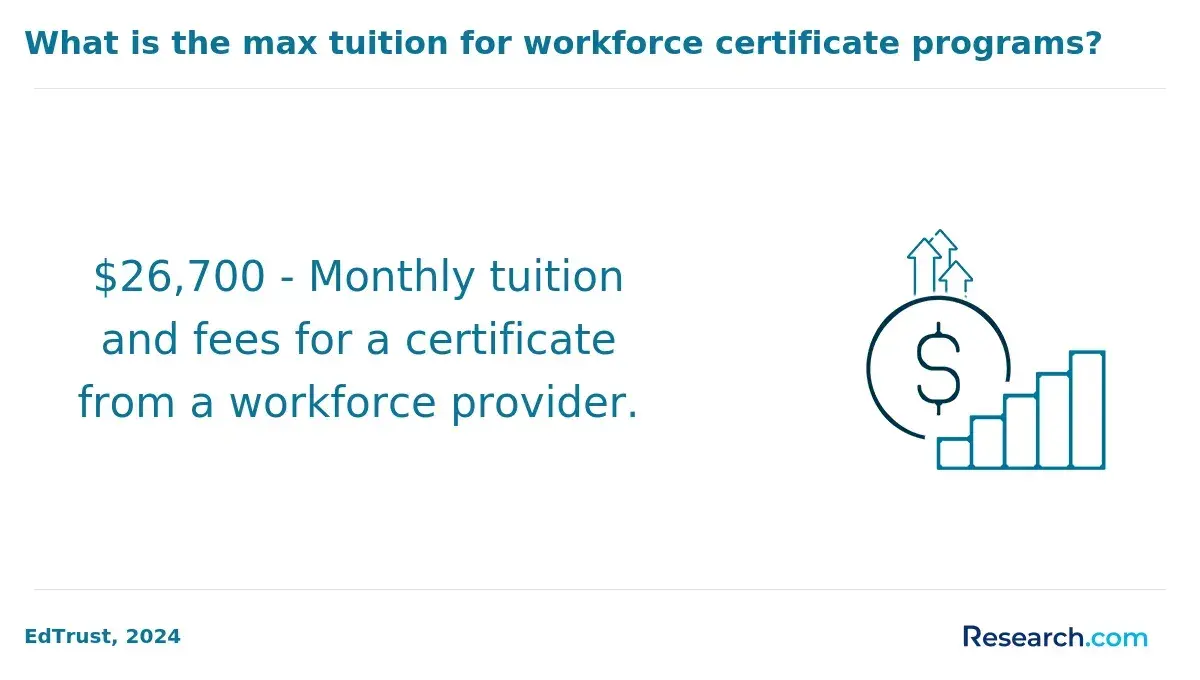
Evaluating tuition costs alongside salary growth offers a clearer picture of the financial trade-offs involved in pursuing a web development degree. While average tuition at public four-year institutions has climbed by roughly 3.1% annually over the past ten years, median starting salaries for web development graduates have increased at only about 2% per year, according to data from the National Center for Education Statistics and the U.S. Bureau of Labor Statistics in 2024.
This disparity means that although entry-level salaries hover near $60,000, tuition now exceeds $10,000 annually, pushing students to extend repayment periods or shoulder higher debt burdens. Comparing these figures helps reveal how rising education costs may erode the real purchasing power of early career earnings, a nuance lost when looking at salary or tuition independently.
This dynamic impacts students differently based on their financial situation and career stage. For example, a recent graduate who financed their entire education with loans may find the 40% increase in tuition over a decade dwarfs their 20% gain in starting salary, delaying financial stability.
Conversely, mid-career web developers earning between $85,000 and $95,000 could offset tuition inflation more effectively, but that progression typically unfolds over years and is vulnerable to market shifts and additional upskilling costs. Such variability underscores how broader economic factors, including inflation and evolving tech demands, shape the long-term value of a web development degree beyond simple earnings comparisons.
One graduate recalled hesitating before enrolling as tuition neared $10,000 per year, worried that the slower wage growth would prolong their return on investment. Despite initial relief after securing a $58,000 entry-level job, they quickly realized monthly loan payments and living expenses made budgeting tight.
Over time, pursuing specialized certifications helped increase their salary, easing pressure, but the early financial strain reinforced the importance of considering both tuition trends and realistic salary projections when deciding whether and how to invest in a web development education.
Does a Web Development Degree Deliver a Positive Return on Investment?
Return on investment (ROI) in higher education extends beyond initial salaries to encompass the total costs of earning a web development degree weighed against long-term earnings, career stability, and skill advancement opportunities. For example, a graduate who finances tuition at a rising cost today but benefits from consistent wage growth driven by strong demand for digital expertise may eventually recoup upfront expenses within a few years.
According to the U.S. Bureau of Labor Statistics and the National Center for Education Statistics in 2024, entry-level wages for web development degree holders exceed the national average for all degree recipients, providing a tangible financial advantage early in their careers.
That said, the positive ROI is not guaranteed for every individual, as tuition inflation and broader economic factors alter the calculus. Tuition rates have consistently risen faster than general inflation over the past decade, increasing student debt burdens and delaying breakeven points on education investments.
However, workforce analyses highlight that wage growth in web development tends to outpace inflation, supported by sustained industry demand and shorter degree completion times relative to other tech fields. This dynamic can mitigate some risks, yet the final ROI depends on variables such as program cost, local job markets, and a graduate's ability to update skills amid evolving technologies.
Balancing these factors, a web development degree can deliver a positive ROI for many, especially if paired with strategic financial planning and continuous professional development. Graduates who leverage certifications and internships to enhance employability may accelerate their earnings trajectory, reducing payback periods despite rising tuition.
Ultimately, the decision hinges on evaluating individual circumstances against market conditions, as the degree's financial value remains robust but sensitive to changes in education expenses and labor demand.
Which Industries Offer the Highest Salaries for Web Development Graduates?
Salary potential for graduates with a web development degree varies considerably by industry, heavily influenced by the complexity of projects, the scale of digital transformation, and specialized skill demands. Data from the U.S. Bureau of Labor Statistics underscores that technology-driven fields consistently top the charts for compensation.
However, understanding how these industries translate demand into pay requires examining real-world dynamics: a web developer working on cutting-edge cloud-based applications will command a higher salary than one maintaining basic websites in less tech-centric sectors.
For those mapping out their future, here are the highest paying industries for web development graduates, reflecting where long-term opportunity and rewarding salaries often intersect:
- Software Publishing: This sector leads in compensation due to its intense focus on developing innovative software products and platforms. Web developers here are integral to creating user interfaces and managing complex, scalable web applications. Mastery of full-stack development and agile methodologies frequently boosts earning potential in this fast-paced environment.
- Financial Services: Banks, investment firms, and insurance companies invest heavily in secure, robust digital platforms. Web development professionals skilled in both front-end and back-end technologies are sought after to support high-stakes, secure online systems, typically earning salaries well above average in return for meeting stringent regulatory and performance standards.
- IT Consulting: Consulting firms offer lucrative pay structures, often blending salaries with performance bonuses based on client satisfaction and project outcomes. Developers working across diverse industries develop a broad skill set that enhances long-term career growth and remuneration.
- Cloud Computing: Companies leading in cloud services seek web developers who can integrate and optimize cloud-based frameworks into web applications. Specialized skills in cloud platforms like AWS or Azure often result in premium salaries, as these roles are critical to digital scalability.
- Artificial Intelligence: Firms in AI-driven industries demand developers adept at embedding machine learning components into web systems. This emerging sector rewards candidates with expertise in advanced scripting languages and data integration with higher-than-average salaries.
- Education and Nonprofit: These sectors generally offer lower salaries due to budget constraints despite growing digitization needs. Web development graduates prioritizing mission-driven work should balance lower pay against the intangible benefits these roles can provide.
Recognizing these nuances equips prospective students and graduates with clearer guidance on how to align their career strategies with sectors that offer the highest paying industries for web development-related occupations. Those weighing the return on investment of a online degree business administration or similar credentials should factor in industry-specific salary expectations alongside their skill development plans.
Which States and Cities Offer the Highest Pay for Web Development Professionals?
In assessing where web development professionals command the highest salaries, location plays a pivotal role shaped by local economies, industry concentration, and living costs. Data from the U.S. Bureau of Labor Statistics and recent industry reports highlight significant regional wage gaps that go beyond simple salary figures.
For instance, while some tech hubs offer six-figure incomes, these are often counterbalanced by steep housing and daily expenses, affecting net financial gain. Understanding these factors helps students and graduates weigh potential returns on their educational investment.
Below are key states and cities where web development pay typically rises above national averages, along with crucial considerations for evaluating the overall cost-benefit balance:
- California Silicon Valley: San Jose and San Francisco lead with median annual wages often exceeding $120,000 due to the concentration of tech giants and startups. However, extremely high living costs, especially housing, can erode take-home income, requiring careful financial planning.
- Washington State Seattle: Seattle competes closely with California's tech salary levels, driven by major corporations and robust digital industries. The city offers somewhat more affordable living but still demands a premium, influencing quality of life.
- Massachusetts Boston: Boston benefits from a blend of technology companies and research universities, resulting in average wages above $100,000. Professionals here should account for a competitive but high-cost urban environment when considering net earnings.
- New York City: High salaries often near or above $100,000 are offset by some of the nation's most expensive housing markets. Job diversity and networking opportunities are strong incentives, though living costs heavily impact disposable income.
- Texas Austin and Dallas: These cities offer wages typically in the $90,000 range but with a markedly lower cost of living compared to coastal hubs. For many, this balance delivers attractive real-world value, especially for recent graduates navigating tuition debt.
How Do Web Development Salaries Grow Throughout a Career?
Early in a web development career, salaries tend to start modestly, often near a median of $60,000 annually according to the 2024 U.S. Bureau of Labor Statistics data. Wage increases during the first three years typically remain gradual as professionals solidify foundational skills and adapt to workplace dynamics.
By mid-career, spanning roughly from four to nine years of experience, median wages typically jump to between $85,000 and $95,000, driven by expanded technical expertise as well as new responsibilities like team leadership and client communications. These figures reflect a wider industry trend where mid-level developers commonly see a near 40% salary increase compared to their entry-level counterparts, underscoring the importance of skill diversification and role evolution.
Senior developers, with a decade or more in the field, can command salaries from $110,000 to $130,000 or more, contingent on factors such as location, specialization, and company size. Yet, long-term salary growth depends heavily on choices beyond tenure: pursuing certifications, shifting into management, or specializing in high-demand technologies can differentiate earnings significantly.
For example, two graduates with identical Web Development degrees could diverge starkly if one remains in a purely technical role while the other transitions into project management or UX design. Ultimately, steady skill enhancement combined with strategic career moves has the greatest impact on a web developer's financial trajectory.
One graduate recalls hesitating to leave a stable junior developer role, uncertain whether additional certifications justified the cost and time. Pressed by rising living expenses, they chose instead to specialize in cloud-based solutions over the next several years.
This pivot brought not only a sharper salary increase than their peers but also relief from plateauing wages. Their story highlights how deliberate skill investments aligned with market demand can markedly accelerate earnings growth, even amid broader industry challenges like tuition inflation and wage stagnation.
How Do Web Development Salaries Compare With Similar Degrees?
Recent data from the U.S. Bureau of Labor Statistics and the National Association of Colleges and Employers reveal that salaries for web development graduates are competitive but generally fall short compared to some closely related technology degrees. The median annual wage for web developers is about $78,000, which offers solid earning potential, especially when considering the faster workforce entry and shorter study duration typical of these programs.
However, prospective students must weigh this against rising tuition and potential tuition inflation. The following comparison outlines how web development salaries typically measure up against related fields, providing a clearer view for those weighing long-term earnings and career flexibility:
- Computer Science: Graduates usually command starting salaries ranging from $85,000 to $90,000, driven by the program's broader scope and deeper technical emphasis. This degree leads to diverse roles in software development, data science, and advanced computing fields, justifying the higher pay linked to greater technical depth.
- Information Technology: General IT degrees average around $70,000 annually. While they offer versatile tech roles, their less specialized nature often results in lower salary growth compared to web development, which benefits from ongoing demand in digital commerce and startup environments.
- Software Engineering: This field typically offers higher salaries than web development, reflecting the complexity of designing large-scale systems and advanced problem-solving skills. Software engineers often earn more due to the technical requirements and critical role in system architecture.
For those exploring career options, understanding these distinctions alongside the cost and duration of study is vital. Web development's earning potential can be enhanced by continuously updating skills in modern frameworks, a strategy that sustains job stability in a competitive market.
Additionally, individuals seeking flexible education routes might consider accelerated speech pathology programs online as a parallel example of how skill-specific routes can impact earning trajectories in related fields.
How Is Employer Demand Affecting Web Development Salary Trends?
Employer demand directly shapes web developer salary trends by dictating how competitive the job market becomes for qualified candidates. When demand is strong, companies increase hiring efforts and often raise compensation to secure professionals with proven skills, especially those proficient in specialized frameworks or full-stack development.
For example, a mid-sized tech firm in a competitive metro area might significantly boost entry-level salaries to attract talent amid tight local competition, despite broader economic uncertainties. This dynamic explains why the U.S. Bureau of Labor Statistics projects web developer employment growth faster than average, which heightens employer demand impact on web development salaries.
However, employer demand is only one of several factors influencing wages. Experience level, technical specialization, organizational budgets, and regional economic conditions also play critical roles. Starting salaries have risen modestly according to the National Association of Colleges and Employers, but they do not always keep pace with inflation and tuition increases, tempering real income growth.
In saturated markets or less innovative sectors, wage growth slows despite steady demand, illustrating how web developer salary trends in relation to job market conditions remain complex and regionally varied.
Prospective and current students should balance these trends against rising education costs and living expenses. Developing advanced skills and strategically choosing geographic locations can enhance long-term earnings potential. Those interested might also explore military friendly online photography degree programs as alternative or supplementary educational routes that reflect similar dynamics of employer demand and salary trends.
How Can Students Maximize Their Lifetime Earnings With a Web Development Degree?
Maximizing lifetime earnings with a web development degree requires strategic specialization, practical experience, and continuous skill enhancement. Data from the U.S. Bureau of Labor Statistics and industry surveys in 2024 highlight that mastery of emerging technologies combined with chosen industry sectors significantly influences income trajectories.
For example, a graduate who prioritizes cloud technologies and secures internships within fintech firms is more likely to experience steady salary growth over time compared to peers focusing solely on generic programming skills.
Below are key effective strategies students should consider to improve their long-term financial outcomes:
- Technical Specialization: Focus on in-demand areas like cloud computing, cybersecurity, or AI integration. This deep expertise commands premium salaries and aligns with employer demand for niche skills.
- Target High-Growth Industries: Prioritize sectors such as finance, healthcare, and enterprise software, which consistently offer superior compensation relative to smaller markets.
- Internships and Networking: Early connections with companies investing in digital transformation create pathways to more lucrative and stable roles.
- Continuous Learning: Stay adaptable by updating skills with new frameworks and languages, increasing relevancy in fast-evolving tech landscapes.
- Geographic Strategy: Consider relocating to metropolitan tech hubs, where salaries typically exceed national averages due to high demand and cost of living adjustments.
- Professional Certifications: Earning certifications in specialized tools or methodologies enhances credibility and can boost starting salaries and promotion prospects.
References
- Web Developer Career Path https://4dayweek.io/career-path/web-developer
- Web Developer: Salary, Studies https://www.ece.fr/en/faq-all-the-answers-to-your-questions/what-is-the-salary-of-a-web-developer/
- What Makes Web Development an Exciting Career Path? — by Noble Desktop https://blog.nobledesktop.com/why-web-development-is-an-exciting-career
- Has pay kept up with inflation? - The Hamilton Project https://www.hamiltonproject.org/data/has-pay-kept-up-with-inflation/
- Web Developer https://www.meritize.com/web-developer/
- Web Development Degree ROI: Is It Worth the Investment? https://hakia.com/degrees/web-development/salary-roi/
- Is a Career Path In Software Development Right For You? - Code Institute Global https://codeinstitute.net/se/blog/software-career-progression/
- Web Development Pay: What to Expect - LoudlyDev Global Solutions https://loudlydev.com/web-development-pay/
- Web Developer Job Titles and What They Mean https://junocollege.com/blog/popular-web-developer-job-titles-and-what-they-mean/
- Web developer salary data https://skillpanel.com/blog/web-developer-salary/
Other Things You Should Know About Web Development
Bootcamps often offer faster, more affordable routes and can lead to entry-level jobs, but they may not provide the same long-term salary growth or comprehensive skills as traditional degrees. If your goal is rapid employment and minimizing debt, bootcamps are practical, but for sustained wage increases and broader career options, investing in a degree might prove more beneficial despite higher upfront costs.
Unpaid internships and intensive projects can build practical skills valued by employers, but they come with opportunity costs that impact short-term earnings. Prioritize programs that integrate paid work experiences or clear pathways to paid roles, as these enhance your resume without prolonged income loss and can accelerate salary growth more effectively than unpaid training alone.
Entering the workforce early provides immediate income but risks stagnating at lower salary brackets due to limited credentials. Conversely, investing more time in education increases costs and delays earnings but can unlock higher salary tiers faster. Carefully evaluate personal financial resilience; if you can afford longer education, the wage premium typically outweighs inflation erosion over time.
Early career wage stagnation reflects market saturation and employer reluctance to offer raises without upgraded skills or credentials. Use this plateau as a signal to pursue targeted certifications or advanced learning that aligns with in-demand technologies, which can break the stagnation cycle and lead to meaningful salary gains. Continuous upskilling is critical to outpace inflation and tuition costs in this field.