2027 Secondary Education Degree Concentration Trends: Which Specializations Are Growing the Fastest

Co-Founder and Chief Data Scientist
Maria, a career changer with a background in biology, weighs her options between science and general secondary education concentrations. Concerned about job security, she notices that STEM-related teaching specializations saw a 12% enrollment increase nationwide in 2024, reflecting rising employer demand for educators skilled in science, technology, engineering, and math.
By contrast, traditional humanities fields face slower growth, signaling tighter competition and limited openings. Choosing the wrong concentration could mean struggling to find stable positions or limiting future advancement opportunities. This article analyzes recent trends in secondary education degree specializations, helping readers pinpoint concentrations with the strongest growth and best alignments with shifting labor market needs.
Key Things to Know About Secondary Education Degree Concentration Trends and Fast-Growing Specializations
- Specializations in STEM-related secondary education are rapidly expanding due to increasing employer demand for teachers capable of integrating advanced technology, though this creates tradeoffs with traditional humanities and arts emphasis.
- Employers increasingly prioritize candidates with dual certifications or interdisciplinary expertise, reflecting shifts toward versatile skill sets that influence hiring and long-term career stability within secondary education roles.
- Programs focusing on emerging specializations often require greater time and financial investment, impacting accessibility and necessitating careful consideration of short-term costs versus long-term professional advancement in secondary education.
- Key Things to Know About Secondary Education Degree Concentration Trends and Fast-Growing Specializations Key Things
- What Are the Most Popular Secondary Education Degree Concentrations Today? Popular Degree Concentrations
- Which Secondary Education Degree Specializations Are Growing the Fastest? Fastest Growing Specializations
- Why Are Certain Secondary Education Degree Concentrations Experiencing Rapid Growth? Reasons for Rapid Growth
- Which Industries Are Driving Demand for Fast-Growing Secondary Education Degree Specializations? Industries Driving Demand
- What Are the Highest-Paying Secondary Education Degree Concentrations? Highest-Paying Concentrations
- How Are Technology and Innovation Influencing Secondary Education Degree Specialization Trends? Tech and Innovation Impact
- What Career Opportunities Are Available in Fast-Growing Secondary Education Degree Concentrations? Career Paths in Growth Areas
- Which Online Secondary Education Degree Concentrations Are Seeing the Most Growth? Concentrations Growth
- What Is the Future Outlook for Emerging Secondary Education Degree Specializations? Future Outlook
- How Can You Choose the Right Secondary Education Degree Concentration Based on Your Career Goals? Choosing Your Degree Concentration
What Are the Most Popular Secondary Education Degree Concentrations Today?
Current popularity among secondary education degree concentrations reflects a clear shift toward fields that align with workforce demands and technological advancements rather than traditional preferences alone. STEM-related specializations, particularly in mathematics and science education, show the fastest growth due to increased employer focus on preparing students for digital economies and innovation-driven industries. However, choosing these specializations often means navigating more rigorous content requirements and staying updated with rapid curricular changes, which can influence long-term career adaptability and job mobility within education systems.
The demand for secondary education degree concentrations in demand is also reshaping attention toward areas like special education and English as a second language, driven by demographic shifts and federal education mandates emphasizing inclusivity. Enrollment in these fields grows as schools seek qualified educators to address shortages in diverse classroom needs. Meanwhile, concentrations in English and social studies, though maintaining steady enrollment, present a tradeoff: higher competition for positions and less alignment with fast-growing labor market niches, which may require graduates to deliberately develop complementary skills or certifications to enhance employability.
For prospective students evaluating degree options, interpreting concentration popularity alongside labor market factors is crucial. For example, the Bureau of Labor Statistics projects accelerated job growth for educators in specialized STEM and language acquisition fields, which corresponds with rising institutional support evidenced by expanded curricula and funding. In contrast, navigating more saturated fields demands strategic planning.
Those interested in cost-effective pathways to qualifying in high-demand areas might explore programs such as the cheapest FNP program online as a model for balancing affordability with career relevance, focusing on how similar approaches could apply within education degree planning.
Which Secondary Education Degree Specializations Are Growing the Fastest?
Growth in secondary education degree specializations is strongly influenced by shifts in labor market demands and educational policies rather than mere popularity. Notably, teaching positions focused on mathematics and science are projected to expand approximately 8% in the next decade, outpacing general teaching employment, according to the U.S. Bureau of Labor Statistics 2024 projections. This reflects a systemic push toward strengthening STEM education to meet evolving workforce needs that prioritize analytical and technical proficiency.
However, candidates should weigh that regional variations and student demographics can significantly affect demand, with urban areas often showing increased interest in dual-language and culturally responsive teaching tracks, suggesting that specialization choice must account for local education landscapes and not just national growth trends.
Specializations in special education and computer science are also gaining traction, driven by regulatory requirements and the rising integration of technology in classrooms. The expanding need for educators equipped to support inclusive learning environments and digital literacy signals curriculum updates and professional skills evolving alongside these trends.
Still, pursuing highly specialized tracks such as cybersecurity teaching entails understanding that the associated skill sets may require continual updating to remain relevant, a strategic tradeoff compared to broader secondary education fields offering more career flexibility. Students need to critically assess how these dynamics influence both their initial job prospects and adaptability over time within educational systems undergoing rapid technological and policy changes.
A recent graduate considering the fastest-growing secondary education specializations described a methodical decision process that combined reviewing government labor projections with conversations with faculty and current teachers. Initially drawn to computer science due to its growth potential, the graduate hesitated after exploring curriculum intensity and the demand for ongoing technical certifications, which contrasted with the broader appeal but slower growth of special education.
Evaluating online versus in-person program options added complexity as they weighed convenience against the depth of hands-on training. Ultimately, the graduate sought a specialization balancing emerging market trends with personal teaching strengths, illustrating the nuanced, often non-linear path students face when aligning specialization choices with evolving workforce realities.
Why Are Certain Secondary Education Degree Concentrations Experiencing Rapid Growth?
The primary drivers behind the rapid expansion of certain secondary education degree concentrations are tangible labor market demands and regulatory mandates that reshape district hiring priorities. For instance, STEM-related fields see accelerated growth as schools adopt more advanced technological curricula, requiring educators with both deep subject knowledge and proficiency in digital instructional tools.
The U.S. Bureau of Labor Statistics projects a 12% increase in demand over the next decade for teachers specializing in STEM, bilingual, and special education fields, reflecting a strategic response to workforce shortages and evolving employer expectations rather than generic market shifts.
However, the growth trajectory of these specializations brings important practical considerations. Programs emphasizing bilingual or special education respond directly to federal and state policies that impose higher service standards, translating into more rigorous certification requirements and the necessity for emotional resilience among educators.
Similarly, STEM teachers face ongoing pressure to update technical skills amid rapidly changing technologies, which can impact professional stability and workload. Prospective students should weigh these operational realities carefully, recognizing that while enrollment numbers and job openings increase, successful long-term engagement demands continuous adaptation, specialized training, and alignment with localized demographic needs.
Which Industries Are Driving Demand for Fast-Growing Secondary Education Degree Specializations?
Growth in secondary education degree specializations is closely tied to industry demand rather than academic trends alone, with technology, healthcare, and STEM fields leading this shift. Employers increasingly require educators skilled in computer science and data analytics as workplaces undergo digital transformation, reflected in a projected 15% employment increase for computer and information technology roles according to the U.S. Bureau of Labor Statistics. This dynamic compels schools to prioritize hiring teachers with expertise aligned to market needs, especially in rapidly evolving technical subjects where certification challenges may limit the available workforce.
Healthcare's expanding labor demands also influence specialization growth, particularly in biotechnology and health informatics. State mandates emphasizing STEM curricula tied to health sciences mirror broader labor market movements toward telehealth and chronic disease management, requiring educators who can navigate these complex changes.
Students considering secondary education workforce demand trends must balance these sector-specific growth areas with credentialing realities and regional variations, recognizing that fields like environmental science also gain traction amid sustainability concerns. For those interested in integrating health sector opportunities, exploring health information management online programs offers a practical pathway aligned with current workforce priorities.
What Are the Highest-Paying Secondary Education Degree Concentrations?
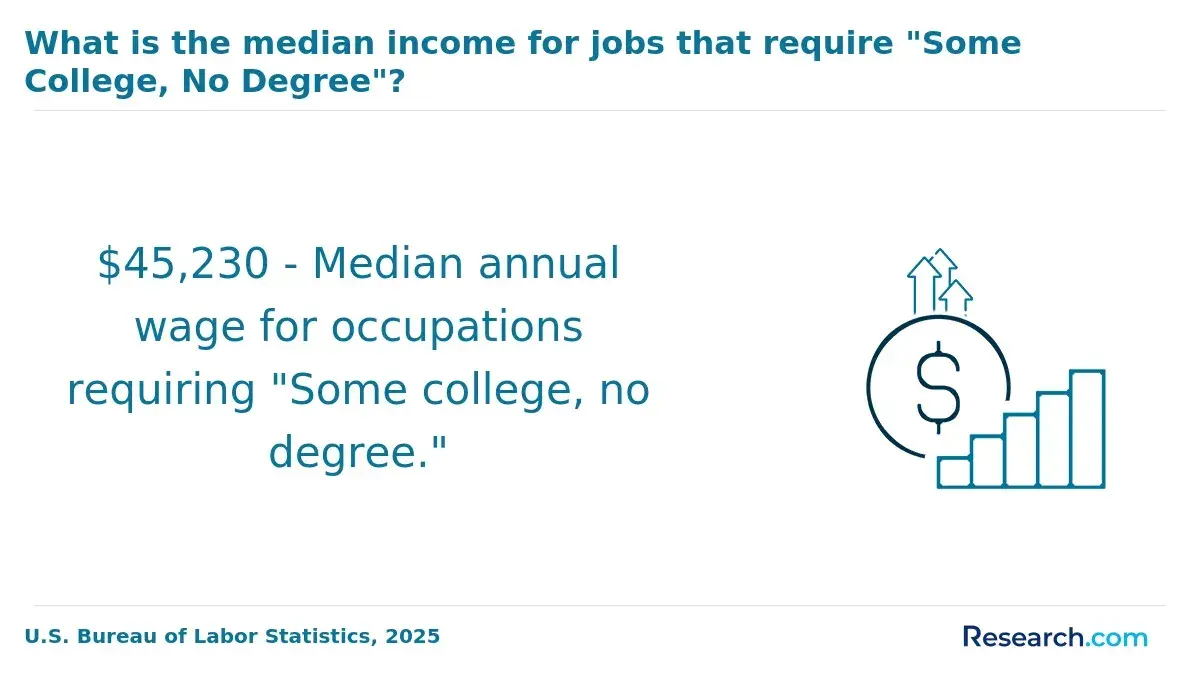
Secondary education degree concentrations aligned with STEM fields, special education, and career and technical education consistently command higher earnings due to acute skill shortages and evolving labor market demands. The U.S. Bureau of Labor Statistics reported in 2024 that educators specializing in mathematics and science enjoy notably higher median salaries, reflecting sustained employer competition for instructors with deep technical expertise.
Similarly, special education teachers navigate complex federal regulations, such as the IDEA, which results in additional certifications and responsibilities that justify elevated compensation. These specializations, however, often require extensive preparation and involve higher workload complexities compared to general education, creating a tradeoff between income potential and professional demands.
Career and technical education (CTE) pathways targeting health sciences, IT, and skilled trades illustrate how secondary educators can benefit financially by aligning teaching competencies with direct workforce needs. Districts are increasingly investing in teachers who can integrate industry-specific skills into classroom instruction, responding to broader economic shifts emphasizing workforce readiness.
However, regional funding variability and certification complexities mean that earning potential in these fields can fluctuate considerably, making localized labor market analysis essential when choosing a concentration. Prospective educators must also consider that leadership roles or program development duties tied to these specializations offer additional earning opportunities but require navigating administrative layers beyond teaching.
One recent graduate grappled with selecting between STEM and special education tracks after reviewing employment and salary reports. Conversations with faculty illuminated the rigorous certification hurdles and emotional challenges inherent in special education, despite its higher pay.
Meanwhile, the STEM path promised steadier demand but involved ongoing content mastery and updating skills to remain competitive. Ultimately, weighing personal interests against these realities helped her cautiously opt for STEM, recognizing that while special education offered immediate financial incentives, it might not align as well with her career sustainability and work-life expectations.
How Are Technology and Innovation Influencing Secondary Education Degree Specialization Trends?
Shifts in secondary education technology integration trends reveal a clear employer preference for educators versed in STEM disciplines, particularly computer science and information technology education. This focus is not merely academic; secondary education degree programs are integrating artificial intelligence, coding, and data analytics into their core curricula to prepare teachers for a digitally enriched classroom environment. However, students must consider regional disparities in technological access, as not all school districts can support high-tech specializations, affecting where graduates can realistically apply their skills.
Programs emphasizing educational technology and data-driven decision-making attract growing interest, as modern schools increasingly rely on learning platforms and metrics to personalize instruction. These innovations are changing specialization demand, reinforcing the need for secondary education graduates with the ability to interpret data and integrate technology effectively.
Concurrently, emerging fields like cybersecurity education and digital media literacy offer pathways that align with workforce priorities on secure information management and critical evaluation of digital content. For current educators or career changers, expanding competencies in these areas or considering pathways like the CMA to LPN bridge program may provide practical options for navigating evolving career landscapes.
What Career Opportunities Are Available in Fast-Growing Secondary Education Degree Concentrations?
Demand for secondary education specializations increasingly reflects shifts toward technological fluency, cultural responsiveness, and legal compliance in schools. For instance, STEM education roles are growing faster than average, as reported by the U.S. Bureau of Labor Statistics in 2024, driven by the need for educators adept at integrating digital tools and preparing students for STEM-related careers.
However, this concentration often requires ongoing technical skill development and familiarity with rapidly evolving learning technologies, positioning graduates well for roles connected to innovation but requiring continuous adaptation.
Bilingual education's expansion responds directly to demographic changes and mandates for equitable language access, producing educators who frequently move beyond classroom instruction into program coordination and policy advocacy. Meanwhile, special education remains a steady field influenced by legal frameworks like IDEA, demanding expertise in individualized education planning and interdisciplinary collaboration.
Graduates in special education may experience more stable employment across regions due to these regulatory pressures, though advancement often entails deepening specialization or branching into administration and advocacy rather than classroom teaching alone.
Choosing between these fast-growing concentrations shapes not only immediate employment prospects but also longer-term professional trajectories, including access to leadership roles and cross-functional teams. STEM and bilingual tracks may offer broader skill portfolios linked to emerging educational technologies and cultural competence, but with variability depending on regional market needs.
Special education tends to provide a more secure foundation with less volatility but may limit lateral mobility without additional credentials. Awareness of these dynamics is essential for aligning educational choices with realistic labor market conditions and personal career priorities.
Prospective educators seeking to enter these growing specializations efficiently should investigate whether an accelerated bachelor's degree in secondary education can provide the foundational pedagogical and subject-matter competencies required for licensure, reducing time to classroom readiness without sacrificing credential quality.
Which Online Secondary Education Degree Concentrations Are Seeing the Most Growth?
Growth in online secondary education degree concentrations is closely tied to broader workforce shifts, particularly the increasing need for teachers equipped to handle rapidly evolving STEM curricula and diverse learner requirements. STEM-related specializations such as mathematics, science, and computer science education are expanding due to sustained federal and industry emphasis on technology integration, reflecting employer shortages exacerbated by a projected 6% growth in STEM secondary educators from 2022 to 2032, according to the U.S. Bureau of Labor Statistics.
However, prospective students must consider that such demand, while promising, also entails navigating complex certification requirements and potentially uneven regional opportunities, which may affect job placement and long-term career stability.
Similarly, special education concentrations are growing in response to legislative mandates promoting inclusivity and heightened identification of diverse learner needs. Expansion of online programs targeting these roles illustrates a strategic alignment with regulatory priorities and labor market shortages, but entrants should be aware of the dual challenge of emotional resilience and specialized skill acquisition this path demands.
Evaluating program outcomes alongside local employment conditions is crucial, as high enrollment growth does not necessarily translate to consistent practical opportunities nationwide. Ultimately, specialization choices should be grounded in an understanding of how shifting policy, technology, and labor market realities intersect to shape both educational pathways and teacher workforce dynamics over the coming decade.
What Is the Future Outlook for Emerging Secondary Education Degree Specializations?
The future trajectory of secondary education specialization growth trends is heavily shaped by increasing employer demand for STEM expertise combined with digital literacy. The U.S. Bureau of Labor Statistics projects a 10% growth rate from 2024 to 2034 for secondary school teachers in STEM fields, underscoring how national priorities around workforce readiness and STEM literacy directly influence hiring and curriculum development.
This aligns with the expansion of computer science education, cybersecurity fundamentals, and data literacy programs, reflecting broader shifts in technology integration across K-12 education. However, prospective students must consider that such specializations often require continual professional development to stay current with rapidly evolving technologies and educational tools, which can impact long-term career stability and advancement.
Bilingual and ESL education also represent expanding secondary education degree concentrations, driven by demographic changes and federal policies promoting multicultural and multilingual competencies. Rising immigrant populations and associated enrollment growth in these programs indicate sustained regional demand for culturally responsive teaching professionals.
However, this area's employment opportunities can be uneven and heavily influenced by local regulatory environments and funding priorities. Students weighing future career prospects for secondary education concentrations should also recognize the emerging importance of interdisciplinary approaches that combine subject expertise with technology skills to remain competitive. For those contemplating diverse healthcare-related career paths adjacent to education, understanding specialized roles such as an autopsy technician may offer additional avenues outside traditional teaching trajectories.
How Can You Choose the Right Secondary Education Degree Concentration Based on Your Career Goals?
Selecting a secondary education degree concentration demands careful alignment with labor market realities and long-term professional flexibility. Concentrations in STEM fields and special education provide distinct advantages due to their expanding demand and adaptability to evolving educational technologies.
For example, a candidate focused solely on traditional subjects such as English or social studies may encounter slower job growth and fewer advancement opportunities compared to peers in STEM or special education, where enrollment and employment needs have noticeably increased. According to the National Center for Education Statistics, special education programs saw a 15% enrollment surge recently, reflecting a solid labor market signal for stability and career development.
Students assessing how to choose a secondary education degree concentration for career goals should weigh skill development in emerging areas like computer science education alongside their own professional interests and regional workforce demands. Many employers now prefer candidates with interdisciplinary certification or technological proficiency, traits more common in newer specializations. This strategic choice impacts graduate education pathways and job roles available, influencing long-term career advancement and adaptability. For those seeking straightforward pathways into healthcare-adjacent roles, considering alternatives such as easy admission LPN programs may present pragmatic options outside the education sector.
Ultimately, the best secondary education specializations for career advancement combine robust employment prospects with relevance to current and anticipated educational trends. Balancing personal interests against these factors can prevent misalignment that limits professional growth. Decision-makers should incorporate reliable labor market insights and anticipate workforce shifts rather than relying on conventional choices or transient popularity in their decision calculus.
References
- Careers in Education: Opportunities to Enter, Advance In, and Navigate the Field | ProFellow https://www.profellow.com/fellowships/careers-in-education-opportunities-to-enter-advance-in-and-navigate-the-field/
- Tips for Choosing Your Graduate Concentration - Graduate Programs for Educators https://www.graduateprogram.org/blog/tips-for-choosing-your-graduate-concentration/
- Choosing a Major to Support Your Career Goals | Wizeprep Blog https://www.wizeprep.com/blog/choosing-a-major-to-support-your-career-goals
- EducationDynamics https://www.educationdynamics.com/nces-data-modern-learners-prioritizing-career-focused-degrees/
- Issue Brief: Degree Trends in High-Demand Teaching Specialties - American Association of Colleges for Teacher Education https://aacte.org/report/issue-brief-degree-trends-in-high-demand-teaching-specialties/
- How Higher Ed Can Meet Demand for Online Degree Programs | ACE Blog https://ace.edu/blog/how-higher-ed-can-meet-demand-for-online-degree-programs/
- Choosing the right training or education program | United Way Worldwide https://www.unitedway.org/choosing-the-right-training-or-education-program
- Transformative Trends: Impact of Technology on Education https://www.gisma.com/blog/the-impact-of-technology-on-education-trends-innovations-and-challenges
- What Types of Education Jobs Are in High Demand Right Now? | Jobs in Education https://jobsineducation.com/blog/what-types-of-education-jobs-are-in-high-demand-right-now/
- An Overview of Specialization Options in Education Degrees https://www.euroeducation.net/articles/an-overview-of-specialization-options-in-education-degrees.htm
Other Things You Should Know About Secondary Education
Students must weigh the appeal of fast-growing specializations like STEM or special education against the sustained demand for core subjects such as English or social studies. Emerging areas often promise wider job markets and innovation-driven curricula but may require navigating evolving certification or technology integration demands. Prioritizing a specialization that aligns with local district needs and one's long-term interests tends to yield better employment stability than following trends alone.
Specializations in fields like computer science or engineering education often entail more rigorous technical coursework and continuous upskilling due to rapid changes in these disciplines. This can increase workload and require ongoing professional development after graduation. Students should consider their capacity for lifelong learning and technical fluency, as employer expectations in these sectors emphasize adaptability and mastery of emerging tools.
Choosing a highly specialized concentration can limit transferability to other subjects or educational levels, potentially narrowing job opportunities if demand shifts. Conversely, broader or interdisciplinary specializations offer more diverse career options but may face stronger competition. For those valuing long-term adaptability, blending specialization with foundational pedagogical skills is advisable to maintain career resilience.