2027 Marine Science Degree Concentration Trends: Which Specializations Are Growing the Fastest

Co-Founder and Chief Data Scientist
Emma, a recent environmental studies graduate, faces a critical crossroads: should she specialize in marine ecology, ocean technology, or coastal management for her master's in marine science? With climate change intensifying and federal agencies increasing funding for blue economy initiatives, demand for expertise in marine technology has surged by 18% since 2023, reflecting a shift toward applied innovation roles. Meanwhile, traditional research tracks like marine ecology show slower growth in job openings.
Choosing the wrong concentration could limit access to emerging sectors or leave graduates underprepared for evolving employer needs. This article analyzes recent marine science degree concentration trends to identify the fastest-growing specializations aligned with career advancement and market demand.
Key Things to Know About Marine Science Degree Concentration Trends and Fast-Growing Specializations
- Emerging marine biotechnology specializations emphasize applied genetic and biochemical skills but require extended lab experience, delaying graduation timing and increasing educational costs compared to traditional environmental science tracks.
- Employers increasingly demand expertise in data analytics within oceanography roles, shifting workforce expectations toward candidates proficient in computational modeling, thus narrowing employability for those with purely field-based skills.
- Enrollment growth in sustainable fisheries management reflects industry recognition of long-term resource challenges; however, limited program availability can restrict access, influencing students' specialization choices and career trajectories.
- Key Things to Know About Marine Science Degree Concentration Trends and Fast-Growing Specializations Key Things to Know About Marine Science Degree Concentration Trends and Fast-Growing Specializations
- What Are the Most Popular Marine Science Degree Concentrations Today? Popular Degree Concentrations
- Which Marine Science Degree Specializations Are Growing the Fastest? Fastest Growing Specializations
- Why Are Certain Marine Science Degree Concentrations Experiencing Rapid Growth? Reasons for Rapid Growth
- Which Industries Are Driving Demand for Fast-Growing Marine Science Degree Specializations? Industries Driving Demand
- What Are the Highest-Paying Marine Science Degree Concentrations? Highest-Paying Concentrations
- How Are Technology and Innovation Influencing Marine Science Degree Specialization Trends? Tech and Innovation Impact
- What Career Opportunities Are Available in Fast-Growing Marine Science Degree Concentrations? Career Paths in Growth Areas
- Which Online Marine Science Degree Concentrations Are Seeing the Most Growth? Which Online Marine Science Degree Concentrations Are Seeing the Most Growth?
- What Is the Future Outlook for Emerging Marine Science Degree Specializations? What Is the Future Outlook for Emerging Marine Science Degree Specializations?
- How Can You Choose the Right Marine Science Degree Concentration Based on Your Career Goals? Choosing Your Degree Concentration
What Are the Most Popular Marine Science Degree Concentrations Today?
The shifts in the most popular marine science degree concentrations reflect a clear alignment with evolving environmental priorities and employer demands for specialized expertise. Ecological and environmental marine science fields lead in popularity, underscoring a broader societal push toward addressing critical issues such as biodiversity loss, sustainable fisheries, and climate change impacts.
This trend is reinforced by a 12% enrollment increase documented by the National Center for Education Statistics in 2024 for programs focused on marine ecology and conservation biology, signaling both heightened student interest and expanding institutional support. Prospective students should recognize that these concentrations directly connect to roles in regulatory agencies and nonprofits where applied conservation science informs policy decisions, but the tradeoff often involves intensive fieldwork and interdisciplinary collaboration that may limit focus on laboratory or technology-centered careers.
Marine biotechnology's nearly 15% rise in program offerings presents an alternative growth path driven by advances in molecular biology and bioengineering applied to ocean resources. This specialization caters to emerging sectors such as pharmaceuticals and sustainable aquaculture, reflecting a demand for graduates who integrate biology, chemistry, and technology in problem-solving, sometimes at the expense of traditional ecological training.
Meanwhile, physical oceanography and marine geology maintain steady interest but have grown increasingly specialized, emphasizing data analytics and climate modeling skills critical to research institutions and forecasting agencies. Choosing among these specializations requires careful weighing of the 1 year masters degree online options or longer study commitments against the practical workforce needs in a rapidly changing marine science labor market.
Which Marine Science Degree Specializations Are Growing the Fastest?
Specializations in marine science tied to conservation, biotechnology, and oceanographic data science are expanding most rapidly due to shifting employer demands and evolving industry challenges. The U.S. Bureau of Labor Statistics projects an 8% growth in environmental specialist roles through 2034, reflecting a broader push for expertise in habitat restoration and sustainable fisheries amid rising climate concerns.
Concurrently, breakthroughs in marine-derived bioproducts have heightened graduate program enrollment by over 15%, signaling biotech's intensifying focus on novel pharmaceuticals and sustainable materials sourced from ocean organisms. These areas require students to develop technical proficiency in emerging tools and interdisciplinary methods, often demanding ongoing skill updates to maintain relevance as regulatory standards and technologies advance.
This trend toward specialization affects curricular design and career adaptability: programs increasingly integrate data analytics, policy, and biotech applications to meet real-world professional expectations. However, students must weigh the tradeoffs between broader marine sciences versus narrow, high-tech concentrations that may offer faster entry into specialized sectors but limit cross-field mobility.
For example, oceanographic data science's alignment with NOAA's growing data-centric roles suggests strong immediate prospects but necessitates commitment to advanced computational skills. Choosing a specialization requires careful assessment of how growth rates correspond to sustainable, long-term job opportunities rather than transient enthusiasm driven by short-term funding spikes or enrollment surges.
A recent graduate contemplating marine science specializations initially favored the rapidly growing biotechnology track due to its impressive enrollment and industry buzz. After reviewing labor reports and consulting advisors, they questioned whether the biotech surge truly indicated lasting workforce demand or a transient trend driven by recent medical research investments.
Weighing course loads and potential career paths, the graduate also considered marine conservation's steadier growth and broader policy applicability, ultimately opting for a hybrid approach. This decision reflected nuanced skepticism about market hype balanced against a pragmatic desire to maintain adaptability amid evolving environmental and technological landscapes.
Why Are Certain Marine Science Degree Concentrations Experiencing Rapid Growth?
The surge in demand for certain marine science degree concentrations stems primarily from the intensifying complexity of environmental challenges and the accelerating integration of advanced technologies. Employers increasingly require specialists skilled not only in traditional ecological and conservation disciplines but also in fields like marine technology and big data analytics, driven by the rise of autonomous underwater vehicles and sophisticated remote sensing tools.
For instance, the U.S. Bureau of Labor Statistics projects a 12% growth in environmental science roles through 2034, underscoring sustained industry need for professionals who combine scientific expertise with technical fluency. However, this expansion often intersects with regulatory shifts, as stricter marine policies create demand for experts adept at navigating compliance frameworks and resource management protocols.
While fast-growing concentrations offer clear advantages in market relevance, they also introduce practical tradeoffs that students must weigh carefully. Specializations tied to emerging industries-such as marine biotechnology or renewable ocean energy-may lead to accelerated hiring but can present narrower career trajectories and require ongoing skill adaptation amid evolving technologies.
Conversely, fields addressing workforce shortages offer less competition but may limit job diversity and geographic mobility. Prospective marine science students should therefore consider how concentration choices align with their tolerance for specialization versus versatility, the anticipated longevity of sector demand, and the balance between regulatory knowledge and technical proficiency to optimize long-term professional development.
Which Industries Are Driving Demand for Fast-Growing Marine Science Degree Specializations?
Industry demand, more than academic trends, is the primary driver shaping which marine science degree specializations expand fastest. The renewable energy field, especially offshore wind and tidal energy, has spurred growth in oceanography and marine ecology concentrations due to its focus on ecological risk assessment and spatial planning. The U.S. Bureau of Labor Statistics forecasts over 15% job growth in alternative energy roles from 2022 to 2032, signaling increased employer investments toward sustainable sea-based resource extraction. This trend highlights the importance for students to weigh how expertise in environmental impact and regulatory navigation aligns with evolving green technologies.
Meanwhile, fisheries and aquaculture sectors increasingly seek professionals adept in population dynamics, genetics, and advanced ecosystem modeling, reflecting global seafood demand and tighter international quotas. Employers in these industries emphasize data analytics and compliance skills, illustrating that specializations strong in quantitative methods and environmental law offer tangible workforce advantages.
Consistent hiring by environmental consulting and government agencies for climate adaptation and coastal management specialists further underscores how marine science job market trends in North America reflect multidimensional policy shifts. Prospective students balancing career goals with academic commitments may also consider fields intersecting with broader justice and compliance requirements, such as criminal justice bachelor degree knowledge, to enhance versatility across sectors.
What Are the Highest-Paying Marine Science Degree Concentrations?
Specializations within marine science that integrate technical expertise with regulatory and operational challenges typically command the highest compensation, reflecting the scarcity of professionals who can navigate these complex fields. For example, marine engineering roles that focus on offshore infrastructure design remain highly valued due to the combination of engineering rigor and maritime environment knowledge these positions require. According to recent 2024 labor data from the U.S. Bureau of Labor Statistics, demand continues to grow most rapidly in areas where regulatory oversight and technological innovation intersect, such as oceanographic instrumentation and marine environmental policy. This demand reflects broader industry trends emphasizing sustainability compliance and advanced data analytics, which in turn push employers in energy, government, and private sectors to offer premium wages for specialists capable of addressing both technical and legal challenges simultaneously.
However, pursuing these high-paying concentrations often involves navigating tradeoffs, including a narrower entry point and the need for continual upskilling to keep pace with evolving regulations and emerging technologies. Occupational opportunities can also vary geographically, with higher compensation frequently tied to regions with offshore industry activity or stricter environmental enforcement. Prospective students should weigh their personal aptitude for interdisciplinary work-merging engineering, policy, and environmental science-against the reality that some specialized areas, while lucrative, may limit flexibility in job functions and locations. Earning potential thus correlates not only with technical proficiency but also with the capacity to manage complex compliance frameworks and lead in regulated environments.
One recent graduate described the decision-making process as a balancing act between marine environmental policy and oceanographic technology. They recalled reviewing detailed employment projections and speaking at length with faculty who emphasized that while the engineering track offered the highest starting salaries, policy specializations opened doors to leadership roles addressing climate and conservation challenges. They ultimately chose a path based on a mix of earning potential and passion for regulatory work, noting it felt prudent to ensure the chosen specialization aligned with longer-term goals rather than just immediate financial outcomes.
How Are Technology and Innovation Influencing Marine Science Degree Specialization Trends?
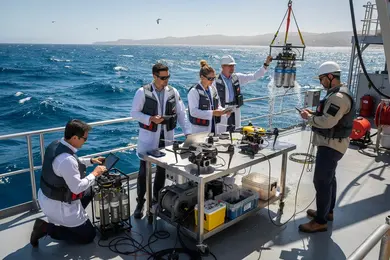
Technological innovation is sharply redefining marine science degree specializations, with employer demand increasingly favoring expertise in digital analytics, autonomous systems, and AI-driven ecological modeling. For example, the rise of autonomous underwater vehicles (AUVs) and drones compels programs to prioritize hands-on skills in programming and real-time data integration, as manual data collection no longer meets modern research accuracy or scale. These shifts force students to reconcile traditional marine biology knowledge with advanced computational capabilities to remain competitive, affecting long-term career resilience by aligning skill sets with emerging industry expectations.
However, specialized technical tracks come with trade-offs, often narrowing exposure to broader ecological or policy perspectives essential for versatile employment. Employers now seek graduates who not only navigate vast data streams but also grasp core marine systems and environmental contexts, highlighting a strategic tension in specialization choices. Prospective students evaluating fast-growing concentrations within marine science should balance these demands carefully, considering how well a program's curriculum supports both innovation-driven skill mastery and foundational understanding. For those exploring educational pathways, it is useful to compare offerings with resources such as the best online finance degree programs to gauge how accelerated, skill-focused learning environments support completion and professional applicability.
What Career Opportunities Are Available in Fast-Growing Marine Science Degree Concentrations?
Marine science degree concentrations tied to environmental science and biotechnology are expanding in ways that reflect shifting employer priorities toward technology integration and sustainability. The 2024 projections from the U.S. Bureau of Labor Statistics indicate a 6% growth rate in occupations spanning environmental and marine biology fields, signaling strong demand for specialists who combine traditional ecological expertise with skills in GIS, remote sensing, and data analytics. For instance, graduates focusing on marine conservation find themselves well positioned for roles in habitat restoration and environmental policy, where the interplay of technological proficiency and regulatory understanding shapes hiring decisions and career trajectories.
Specializations in marine biotechnology cater to sectors developing pharmaceuticals and bioengineered products derived from marine organisms, requiring mastery of molecular biology and chemistry alongside business savvy to navigate commercial collaborations. Meanwhile, physical oceanography and climate science concentrations address the increased need for professionals adept at integrating complex oceanographic data with climate models for disaster prediction and policy advising, a demand driven by heightened public and governmental attention to climate resilience. Selecting a concentration thus crucially affects not only the immediate employability of graduates but also their adaptability to evolving interdisciplinary roles, underscoring the importance of aligning specialization choice with both current market signals and long-term professional flexibility.
Which Online Marine Science Degree Concentrations Are Seeing the Most Growth?
Growth in online marine science degree concentrations is closely tied to evolving employer needs and regulatory pressures, rather than general popularity alone. Specializations in climate resilience, coastal management, and marine ecology are expanding due to heightened demand for professionals capable of addressing environmental degradation and advancing ecosystem restoration. For example, NOAA's 2024 report highlights a 15% enrollment surge in these areas over two years, reflecting urgent workforce needs in managing ocean health amid climate change and increasing legal requirements for environmental impact assessments.
Meanwhile, marine biotechnology and aquaculture fields see robust growth driven by technological innovation and market demand for sustainable seafood. Employment projections exceeding 10% growth suggest expanding roles in genetic analysis and bioinformatics, but students should balance this with the technical intensity and narrower focus typical of such specializations.
Cross-disciplinary skills, including data science and policy understanding, are becoming essential across all marine science tracks, underscoring the need for adaptable curricula and analytical capabilities. Prospective students must carefully weigh how a specialization aligns with both immediate job market realities and potential shifts in environmental regulation and technology over time.
What Is the Future Outlook for Emerging Marine Science Degree Specializations?
The trajectory of emerging marine science degree specializations is strongly influenced by environmental policy shifts, technological advances, and evolving labor needs. Employment for environmental scientists and specialists, many with marine-focused expertise, is projected to grow 8% through 2034 according to the U.S. Bureau of Labor Statistics (2024), signaling robust demand especially in climate adaptation and oceanography. This hiring outlook reflects broader industry moves toward ecosystem restoration and climate resilience roles, where graduates equipped with both scientific and applied skills find the strongest prospects. However, students should recognize tradeoffs: specializations tied closely to volatile funding or narrower private sector demand, such as certain marine policy fields, may face greater uncertainty and require adaptable skill sets to remain competitive.
Technological integration is reshaping which marine science fields expand most rapidly. Advances in sustainable aquaculture and offshore renewable energy drive interest in marine biotechnology and ocean engineering, sectors benefiting from increased government funding like that documented by NOAA's ocean technology initiatives.
Meanwhile, data science applications-spanning autonomous underwater vehicles to geospatial modeling-are generating growing employment niches, with academic programs responding through new marine informatics tracks. For those weighing emerging career opportunities in marine science degree fields, aligning specialized training with areas emphasizing big data analytics and cross-disciplinary collaboration can improve resilience against shifting market demands and funding cycles.
Prospective students confronting long-term career implications must balance specialization choice with program strengths in practical training, internships, and network access, not just academic reputation. Considering these dimensions alongside emerging job growth in marine science specializations can guide more strategic decisions, especially for those exploring diverse pathways including career changers or professionals seeking applied expertise. For additional context on balancing cost and program duration when advancing your education, see cheapest 1 year online MBA programs as an example of how practical considerations factor into graduate-level choices.
How Can You Choose the Right Marine Science Degree Concentration Based on Your Career Goals?
Choosing a marine science degree specialization demands a strategic evaluation of how specific concentrations correlate with long-term employability and sector demand. For example, focusing on marine ecology or environmental marine science suits those targeting roles in conservation or policy, which tend to require expertise in ecosystem management and regulatory frameworks. Conversely, students aiming for technology-driven roles should consider oceanographic modeling or marine geosciences, which emphasize quantitative skills and data analysis. Misalignment between concentration and career objectives can limit professional opportunities, particularly in a field where employers favor targeted expertise coupled with relevant applied experience.
The U.S. Bureau of Labor Statistics projects a 7% growth in oceanography and marine biology employment by 2034, highlighting the importance of choosing concentrations aligned with this trajectory. Emerging interdisciplinary fields like marine biotechnology and ocean data science integrate marine science with computer science and engineering, offering rapid expansion but demanding a hybrid skill set that not all students may be prepared to develop. This tradeoff underscores the necessity for careful planning, especially for those considering graduate education or roles in research institutions, government agencies, and environmental organizations looking for specialization depth.
Deciding on a concentration should also factor in how well the specialization supports adaptability and skill development in light of workforce shifts. Students must weigh immediate employment prospects against niche areas like biotechnology, which may provide cutting-edge opportunities but require broader competencies, akin to stepping into a cyber security course in terms of interdisciplinary demands. Aligning your marine science degree specialization career paths with these market realities enables a pragmatic balance between your professional interests and evolving employer expectations.
References
- So you want to become a Marine Biologist? | National Marine Aquarium https://www.national-aquarium.co.uk/learning-at-the-aquarium/marine-biologist/
- Marine Conservation Jobs | Ultimate Guide | Conservation Careers https://www.conservation-careers.com/marine-conservation-jobs/
- Subjects you should consider at school to become a marine biologist https://wiseoceans.com/subjects-you-should-consider/
- Marine Biology Degree Programs in the U.S. | MarineBio Conservation Society https://www.marinebio.org/careers/us-schools/
- Home https://www.husson.edu/online/online-degrees/bachelor-of-science-in-marine-biology-and-conservation
- Research Area 3: Emerging Technologies Enabling Advanced Marine Science https://www.iow.de/research-area-3/articles/research-area-3-emerging-technologies-enabling-advanced-marine-science.html
- 10 Jobs You Can Get With a Marine Biology Degree https://www.seamester.com/blog/10-jobs-you-can-get-with-a-marine-biology-degree/
- What Are the Best Schools to Study Marine Biology? https://www.scubadiving.com/best-schools-study-marine-biology
- What Can You Do with a Degree in Marine Biology? Explore Careers and Skills https://www.coltie.com/post/what-can-you-do-with-a-degree-in-marine-biology-explore-careers-and-skills
- Top 5 Master Programs in Marine Sciences • Blue-Jobs • The online platform to find a job in marine sciences https://blue-jobs.com/2024/06/12/top-5-master-programs-in-marine-sciences/
Other Things You Should Know About Marine Science
Specialized certifications in areas like marine biotechnology or ocean engineering can boost employability in niche sectors but often require focused coursework and hands-on training that may limit broader learning. Employers in emerging fields tend to favor candidates with deep expertise aligned to specific technologies or regulations, so prioritizing a specialization adds job-market value. However, if you're uncertain about your exact career path or want flexibility across multiple roles, pursuing a concentration that maintains foundational marine science skills with some cross-disciplinary exposure is more practical. Ultimately, balancing credential depth against versatility depends on your career timeline and whether you prioritize targeted roles or sustained adaptability.
Marine renewable energy is one of the fastest-growing concentrations due to rising climate initiatives and legislative support, but it remains a technically demanding field with fewer entry-level openings compared to traditional marine biology roles. Prospective students should recognize that programs emphasizing offshore wind, tidal power, or marine photovoltaics often integrate engineering-heavy coursework and require strong quantitative skills. If you aim for this path, prioritize programs with industry partnerships to improve internship and job placement prospects, as self-guided study risks underexposure to practical applications. Otherwise, if immediate job placement is critical, more established concentrations with larger employer bases might offer steadier short-term outcomes.
Choosing a recently developed specialization involves accepting some uncertainty regarding employer recognition, salary trajectories, and career advancement pathways because these programs lack long-term alumni data. While emerging fields can position you at the forefront of industry innovation, they may also require additional continuous education or networking to remain competitive as standards evolve rapidly. Graduates should be prepared for potentially atypical career paths that may differ from established marine science roles, including more consulting or policy-related work. For those prioritizing stable, well-charted careers, combining emerging specialization with broader marine science skills can mitigate risks.