2027 Management Information Systems Degree Enrollment Trends by Age Group: Traditional Students vs Adult Learners

Co-Founder and Chief Data Scientist
The demand for management information systems professionals continues to evolve alongside rapid technological advancements and organizational shifts. Notably, enrollment data reveal that 42% of management information systems degree students are adults aged 25 and older, reflecting workforce transition patterns driven by credential inflation and the need for upskilling in data analytics and cybersecurity.
Traditional students, typically younger than 24, often pursue these degrees as a direct pathway into entry-level roles influenced by employer preferences for formal education. Meanwhile, adult learners balance program accessibility with career pragmatism, indicating that age-related enrollment trends signify a bifurcation in educational function: preparing newcomers versus supporting mid-career advancement within the field.
Key Things to Know About Management Information Systems Degree Enrollment Trends by Age Group
- Enrollment among traditional-age students often reflects a quicker entry into the workforce but risks skill gaps due to limited practical experience, affecting employer perceptions of readiness in complex MIS roles.
- Adult learners show increased enrollment rates post-2023, signaling a workforce trend where experience supplements formal MIS education, pressuring programs to balance theoretical and applied curricula.
- Programs attracting older students frequently face higher per-credit costs and longer completion timelines, influencing accessibility and return-on-investment calculations critical for career-switching professionals.
- Key Things to Know About Management Information Systems Degree Enrollment Trends by Age Group Key Things to Know About Management Information Systems Degree Enrollment Trends by Age Group
- Which Age Groups Represent the Largest Share of Management Information Systems Students? Students by Age Group
- Why Do Traditional Students Choose Management Information Systems Degree Programs? Traditional Students
- Why Do Adult Learners Return to School for a Management Information Systems Degree? Adult Learners
- How Do Academic Goals Vary Between Younger and Older Management Information Systems Students? Academic Goals by Age Group
- How Do Financial Concerns Differ Between Traditional Students and Adult Learners? Financial Concerns by Age Group
- What Challenges Do Adult Learners and Traditional Students Face While Earning a Management Information Systems Degree? Student Challenges by Age Group
- How Does Age Affect Management Information Systems Degree Student Retention? Age and Student Retention
- Which Management Information Systems Specializations Are Most Popular Among Adult Learners? Top Specializations for Adult Learners
- How Does Age Affect Job Opportunities for Management Information Systems Graduates? Impact of Age in Job Opportunities
- What Do Current Management Information Systems Enrollment Trends Reveal About Future Demand? What Do Current Management Information Systems Enrollment Trends Reveal About Future Demand?
Which Age Groups Represent the Largest Share of Management Information Systems Students?
Management information systems programs attract students from various stages of life, yet enrollment tends to cluster heavily within certain age groups. These patterns reflect differences in when individuals enter the workforce, their financial capacity to pursue education, and the typical structure of higher education pathways.
Instead of purely academic preference, the age distribution reveals how broader labor market demands and accessibility affect who enrolls and when. Understanding these dynamics helps clarify enrollment behavior beyond surface-level age categories.
- Ages 18-24: This group accounts for the largest share of management information systems degree enrollment by age group, as many students transition directly from high school to college. Their enrollment is supported by the full-time, on-campus model popular in undergraduate programs and social immersion that enhances peer learning. Early career timing allows these students to build foundational technical and business skills before entering the job market, aligning well with employers valuing theoretical knowledge coupled with internship experiences.
- Ages 25-34: Adult learners in this range increasingly seek management information systems education for career pivots or skill upgrades tied to digital transformation. Despite their growing presence, their participation is moderated by competing priorities like full-time work and family obligations, often leading to part-time or flexible enrollment. This cohort values practical, immediately applicable knowledge that can enhance job-role effectiveness, attracting programs that offer hybrid or online formats.
- Ages 35 and older: Representing a smaller portion of students, this group faces higher opportunity costs and financial barriers that limit broad enrollment. Their educational pursuits tend to be highly targeted, often focused on leadership skills or specialized tech-business integration critical for upward mobility within existing careers. Employers frequently appreciate the dual advantage these learners bring-work experience coupled with relevant academic credentials-viewing them as job-ready with contextual understanding.
Observed trends in management information systems degree enrollment by age group parallel nationwide shifts noted by the National Center for Education Statistics, where adult learners balance education with life responsibilities and seek credentials that align tightly with career goals. Such demographic shifts highlight the importance of program flexibility and relevance, which prospective students must weigh when choosing their educational pathways.
Those interested in exploring nontraditional options may benefit from reviewing available offerings at online colleges, which increasingly accommodate diverse age groups and schedules.
Why Do Traditional Students Choose Management Information Systems Degree Programs?
Traditional students pursuing management information systems degrees often select this path due to a convergence of academic interests and pragmatic early career planning. The field's balance of business principles and technology appeals to students aiming to build versatile skill sets applicable in diverse industries, providing strong signaling value to employers.
Early exposure to tech-driven problem-solving encourages learners to explore management information systems as a viable major that connects classroom concepts with tangible workplace demands. According to data from the National Center for Education Statistics, approximately 35% of traditional students identify career preparedness as a primary motivator, underscoring the practical orientation in their academic choices.
Beyond individual interests, the decision to enroll in management information systems programs often reflects structured influences such as university recruitment pipelines and academic advising that highlight the field's job market stability. Guidance counselors and faculty frequently emphasize technology-integrated business roles as resilient career options amid evolving economic conditions.
Additionally, secondary education curricula and early college coursework increasingly expose students to information systems concepts, shaping perceptions and easing the transition into specialized study. These interrelated factors help explain why many traditional learners choose programs aligned not only with their interests but also with clear pathways to internships, employment, and long-term career trajectories within rapidly shifting digital environments.
Several factors explain why some states have a greater concentration of management information systems programs than others. One primary driver is the state's economic landscape, particularly the presence of industries heavily reliant on information technology and business analytics.
States with robust tech sectors, financial services, or manufacturing hubs often have more colleges and universities offering management information systems degrees to meet local employer demand. This geographic alignment encourages institutions to develop relevant programs that supply a skilled workforce attuned to regional economic needs.
Higher education infrastructure also plays a significant role. States with larger public university systems or more comprehensive community colleges tend to offer a wider variety of programs, including management information systems. These institutions often receive state funding that supports program development and growth, allowing them to expand offerings in high-demand fields.
Demographic composition influences program availability as well. States with a higher percentage of traditional-age college students-those aged approximately 18 to 24-usually see greater enrollment demand in undergraduate programs, prompting schools to increase the number of management information systems options. Conversely, states with older populations or more adult learners might emphasize flexible, online, or part-time tracks instead.
Policy initiatives and workforce development strategies also affect how many programs exist. Some states actively encourage STEM-related education through grants, scholarships, or partnerships between industry and academia. These policies boost the creation and expansion of management information systems courses, recognizing the field's critical role in economic competitiveness.
Regarding student motivations, data from the National Center for Education Statistics (NCES) in 2024 reports that about 35% of traditional students cite career preparedness as a key reason for selecting their major. Management information systems appeals to this demographic because it combines business acumen with technological expertise, positioning graduates for roles in an evolving job market.
Traditional students often seek programs promising practical skills applicable to analytics, cybersecurity, and systems management, aligning with employer expectations for tech-savvy professionals.
Moreover, traditional students are drawn by clear career pathways and competitive starting salaries associated with this discipline. The field's interdisciplinary nature supports diverse interests and offers versatility, which can be critical for young learners navigating uncertain economic environments.
Thus, program proliferation in certain states often reflects a combination of local industrial needs, student demographics, and institutional capacity to adapt to shifting educational and labor trends.
For those interested in expanding their education options, there is growing information surrounding a construction management degree that some might find relevant when considering interdisciplinary pathways or alternative management fields.
Why Do Adult Learners Return to School for a Management Information Systems Degree?
Adult learners returning to school for a Management Information Systems degree are primarily driven by the need to enhance career mobility, achieve salary growth, or pivot into technology-driven roles from different industries. Data from the National Center for Education Statistics shows that over 45% of students in these programs are aged 25 or older, illustrating a substantial trend toward mid-career re-skilling.
Many adult students weigh the tangible benefits of higher wages and increased job stability against the costs and time commitments of returning to school. With labor market projections indicating a 15% growth rate for related roles over the next decade, the program offers practical value for professionals seeking to maintain relevance amid rapid digital transformation.
Beyond immediate career incentives, factors such as employer tuition reimbursement programs and the widespread availability of flexible online or part-time options heavily influence adults' enrollment decisions. These learners often seek not only foundational technical skills but also strategic insights that integrate business and information technology, reflecting evolving employer expectations.
Additionally, credential inflation in management and IT sectors means prior experiential knowledge often requires formal validation through updated degrees. The necessity to continuously refresh technical competencies in an accelerating innovation environment further compels adult professionals to pursue these degrees.
The increasing presence of adult learners also affects program design and delivery, encouraging institutions to expand online infrastructure and modular curricula that accommodate diverse scheduling needs. This shift shapes classroom demographics where peer learning includes a broader range of experience levels, enriching discussions with real-world business and technology applications.
As these adult participants account for a growing share of enrollment, their priorities are redefining educational access and outcomes within Management Information Systems programs, positioning lifelong learning as a central element of workforce adaptability.
How Do Academic Goals Vary Between Younger and Older Management Information Systems Students?
Younger management information systems students often view their education as a broad exploration aimed at building foundational competencies necessary for entry-level employment or further graduate study. At this stage, developing a well-rounded understanding of core concepts-such as systems design, programming, and theoretical frameworks-takes precedence over immediate specialization.
A 2024 report from the National Center for Education Statistics notes that about 68% of students aged 18 to 24 focus on credentials that unlock early career opportunities, reflecting their emphasis on broad-based skill acquisition aligned with labor market entry. This cohort's academic choices frequently include internships and cooperative education experiences, which provide practical exposure but remain exploratory rather than deeply targeted toward specific career niches.
In contrast, older management information systems students typically pursue education with precise occupational outcomes in mind, leveraging existing work experience to inform focused skill development. Their academic goals often center on certifications or coursework that directly translate to job role transitions, technical upskilling, or leadership responsibilities, emphasizing measurable applicability in current employment settings.
Many adult learners prefer flexible formats such as evening or online classes, balancing education with professional and personal demands. The 2024 EDUCAUSE survey highlights this group's priority on efficient program completion and immediate workplace relevance, which shapes their decisions more around credentialing speed and practical outcomes than foundational theory.
An adult learner returning to school after a decade in IT found the rolling admissions process both a challenge and an opportunity. She hesitated initially, weighing whether to delay enrollment to improve her application with updated technical certifications.
When acceptance came quicker than expected, she experienced relief but had to rapidly adjust her plans to begin coursework. This timing uncertainty underscored how older students often negotiate strategic decisions about when to engage academically, balancing the urgency of career needs with preparation to maximize educational investment.
How Do Financial Concerns Differ Between Traditional Students and Adult Learners?
Traditional students enrolled in management information systems programs generally depend on family support, federal loans, grants, and scholarships to manage educational expenses. Their financial concerns tend to focus heavily on tuition sticker price and anticipated long-term student debt, with many weighing potential salary growth post-graduation against the burden of loan repayment.
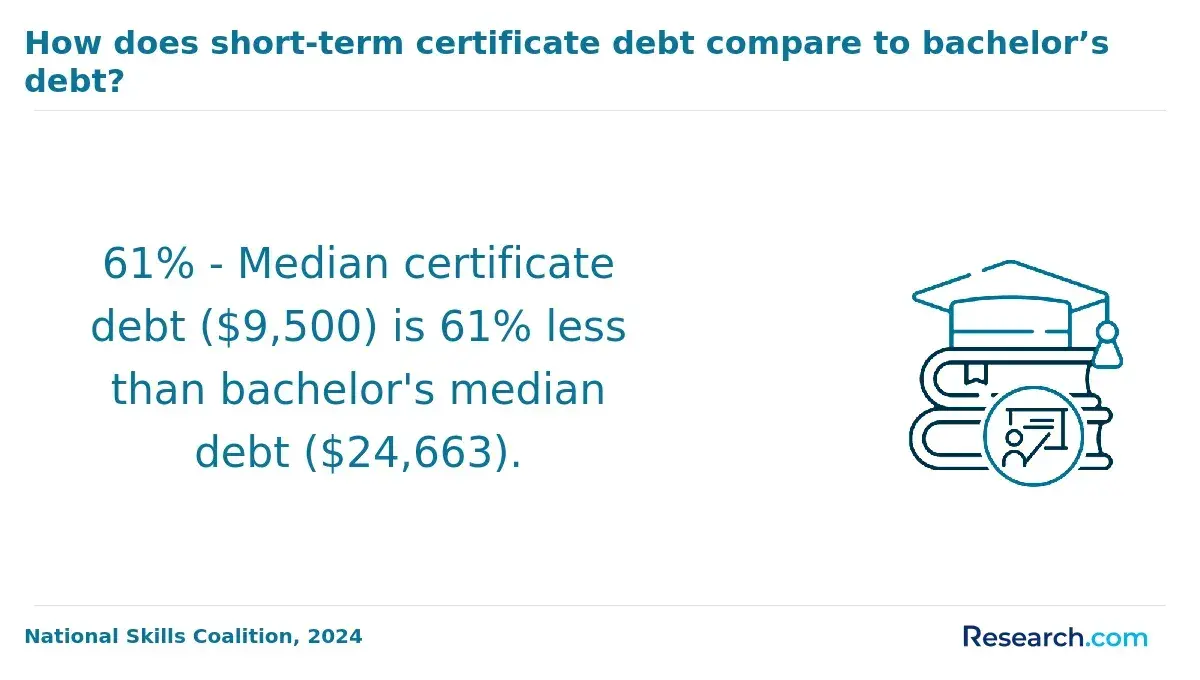
According to a 2024 report from the National Center for Education Statistics, around 70% of traditional undergraduates rely on financial aid, graduating with an average debt close to $30,000.
This cohort's financial decision-making often revolves around securing the most advantageous institutional aid packages and maintaining eligibility, reflecting different income status and dependency relative to adult learners facing the financial challenges faced by traditional vs adult students.
Adult learners in management information systems programs encounter a more complex financial landscape shaped by ongoing family responsibilities, mortgages, and healthcare costs, alongside the direct cost of education. Many face opportunity costs associated with reduced work hours or temporary income loss and often turn to employer tuition assistance or personal savings to fund their studies, limiting the accumulation of new debt.
A recent 2024 survey by the Lumina Foundation shows that nearly 55% of adult learners prefer employer reimbursement programs, which can cover up to 80% of tuition but require navigating workplace policies and visible relevance to job roles.
As such, financial decisions for adult students weigh longer-term income disruption and value return on investment more heavily, reflecting distinct cost considerations for adult learners in management information systems programs.
These differing financial pressures significantly influence enrollment priorities and program choices, with adult learners often favoring flexible, accelerated, or online formats that minimize opportunity cost, while traditional students remain sensitive to sticker price and scholarship eligibility. Adult learners' focus on balancing work, family, and education means programs that align with employer reimbursement strategies are more attractive.
Understanding these lifecycle economic decision-making patterns clarifies why adult students and traditional undergraduates diverge in their educational funding behavior and long-term financial planning.
For those exploring affordable credential options, insights into this dynamic may provide useful context when comparing pathways, such as through resources like the cheapest paralegal certificate online.
What Challenges Do Adult Learners and Traditional Students Face While Earning a Management Information Systems Degree?
Traditional students pursuing a management information systems degree often face challenges rooted in adjusting to the increased academic rigor and developing effective time management skills within a highly structured learning environment. Many come directly from high school without substantial prior exposure to professional expectations or self-directed study, making the transition to balancing complex IT and business coursework especially demanding.
These students must quickly build foundational discipline and practical skills while navigating academic pressures and peer dynamics on or near campus. Financial concerns frequently compound these difficulties, as 64% express anxiety over potential student debt despite access to scholarships or financial aid, highlighting how monetary worry intersects with academic adjustment.
Adult learners in management information systems programs confront a different set of obstacles shaped by their simultaneous commitments to full-time employment, family caregiving, and educational pursuits. Returning to an academic environment after a career hiatus or professional focus requires reorienting to current technology trends and institutional expectations, which may expose gaps in technical proficiency.
These learners face higher opportunity costs, often juggling rigid work schedules and personal responsibilities that limit flexibility in class attendance or study time. Data from the U.S. Department of Education in 2024 shows that adult learners are 30% more likely to pause their studies due to caregiving demands, underlining how external pressures critically affect persistence and program completion.
Institutions offering management information systems degrees increasingly tailor support services and flexible learning modalities to accommodate this diversity. Designing curriculum delivery that permits asynchronous learning and providing targeted advising can mitigate some challenges but require ongoing adaptation to address the varied educational life cycles of traditional and adult students.
Recognizing how different learners engage with technology, time management, and financial stressors allows programs to foster better retention and skill acquisition aligned with employer demands for cybersecurity, data analytics, and project management competencies in the workforce.
How Does Age Affect Management Information Systems Degree Student Retention?
Younger management information systems students often face retention challenges linked to the transition into higher education, where gaps in academic readiness and unclear professional objectives can hinder persistence. The exploratory nature of this life stage, combined with social integration pressures and the need to adapt to rigorous curricula, frequently results in less consistent commitment during the critical first year.
National Center for Education Statistics data from 2024 highlights that traditional students aged 18 to 24 tend to have retention rates notably lower than those of older peers, reflecting difficulties in sustaining engagement without immediate career incentives.
In contrast, older students pursuing management information systems degrees typically exhibit higher retention due to clearer occupational goals and prior work experience that contextualizes academic content. However, their persistence is often limited by competing demands, including employment and family responsibilities, which require flexible scheduling and targeted institutional support to accommodate.
This demographic's advanced life stage brings both motivation and practical constraints, making tailored academic advising and accessible course formats crucial for sustaining enrollment and completion outcomes.
One management information systems graduate recounted the delicate timing involved in navigating admissions as a nontraditional student. Initially hesitant to apply due to uncertainty about balancing job responsibilities and coursework, the rolling admissions cycle created a narrow window where hesitation risked delaying enrollment by a semester.
The graduate recalled thinking, "I needed to decide quickly but also be sure I could handle the workload." Ultimately, submitting materials just before the deadline offered relief and a sense of preparedness, underscoring how strategic timing and self-assessment during admissions can influence persistence from the outset.
Which Management Information Systems Specializations Are Most Popular Among Adult Learners?
Adult learners pursuing a management information systems degree show clear preferences for specializations that align closely with their existing professional experience and offer pathways for tangible career advancement.
Unlike younger, traditional students who might explore broader fields for academic curiosity or long-term exploration, adult learners often select concentrations that provide immediate skill enhancement or support career transitions. This focus reflects the need to balance education with ongoing work and personal commitments while maximizing employability and income potential.
Data from a 2024 report by the National Center for Education Statistics indicates that around 62% of adult learners in management information systems programs concentrate on areas like cybersecurity, data analytics, or project management.
These fields are prized for their direct relevance to workforce demands, offering skills that enhance leadership prospects and salary growth.
- Cybersecurity: With rising digital threats, cybersecurity remains a dominant choice. Adult learners appreciate its practical certification routes and the potential for roles that offer remote or flexible work options, directly impacting their work-life balance and job security.
- Data Analytics: Popular among those seeking to leverage existing analytical skills or pivot into data-driven business roles, this specialization supports critical thinking and data-informed decision-making-attributes increasingly valued across industries.
- Project Management: This specialization attracts learners wanting to formalize leadership and organizational skills they've developed on the job, helping them advance into managerial positions or improve effectiveness within current teams.
- Enterprise Systems: Adult students with backgrounds in IT or business often select this area to deepen expertise in integrated software solutions that drive operational efficiency and scalability in complex organizations.
- Information Governance: For professionals aiming to enhance compliance and risk management skills amidst tighter regulatory environments, this specialization offers practical tools to navigate policy and safeguard data assets.
These specialization choices reflect adult learners' strategic approach to education, prioritizing immediate applicability and return on investment while managing the complexities of professional and personal responsibilities.
Such preferences distinguish mature students from traditional cohorts, illustrating a pragmatic navigation of the management information systems degree specializations favored by adult learners.
For those evaluating these pathways, programs that enable flexible scheduling and targeted skill acquisition often prove most conducive to balancing ongoing work demands.
Prospective students seeking affordable options might also explore related fields such as library science degree programs, which offer distinct career trajectories and are increasingly integrated within information management disciplines.
How Does Age Affect Job Opportunities for Management Information Systems Graduates?
Younger management information systems graduates generally benefit from structured entry points into the workforce, with many employers targeting recent college-age students for internships and entry-level roles designed to build technical proficiency and organizational familiarity.
These pathways often reflect labor market expectations that younger candidates can rapidly adapt to emerging technologies and commit to long-term career trajectories within companies.
Early exposure to training programs and peer networks frequently facilitates access to advancement opportunities, shaping distinct hiring patterns for this group. The advantage of youth in structured career pipelines remains significant when assessing management information systems graduate job prospects by age group.
In contrast, adult learners pursuing management information systems degrees often approach the labor market with a different set of advantages and challenges, shaped largely by their prior work experience and transferable skills.
While some employers may harbor biases favoring younger hires seen as more attuned to current technologies, approximately 40% of graduates aged 30 and above secure positions with higher starting salaries, reflecting the value placed on mature problem-solving and industry knowledge.
Nonetheless, navigating these perceptions requires deliberate emphasis on continuous learning, certifications, and relevant project work to align with employers' expectations.
For those assessing career advancement opportunities for adult learners in management information systems, practical considerations around balancing experience with demonstrated technical currency remain central.
Prospective students interested in this field should also consider the best online animal science degree and similar resources for insight into online degree accessibility and cost structures supporting adult learners.
What Do Current Management Information Systems Enrollment Trends Reveal About Future Demand?
Recent enrollment patterns in Management Information Systems programs reflect a shifting landscape of student priorities and perceived career value. While traditional students aged 18 to 24 remain the majority, there is a notable rise in adult learners, driven by mid-career transitions and upskilling demands.
This demographic shift highlights growing recognition of MIS credentials as essential for adaptation within rapidly evolving technology sectors. The 2024 National Center for Education Statistics report documents a 12% increase in adult enrollment over two years, underscoring flexible program formats like part-time and online study as critical to broader accessibility and sustained academic interest.
These enrollment dynamics correspond closely with labor market signals emphasizing applied technical skills paired with business acumen. Employers increasingly prioritize candidates who combine formal education with practical experience, encouraging programs to integrate internships and project-based courses.
The expanding adult learner segment also signals maturation in the workforce, with ongoing digital transformation driving sustained demand for MIS expertise across industries.
Consequently, academic offerings may expand and specialize further to align with sector-specific skill shortages and industry growth, suggesting robust long-term prospects for graduates in both traditional and non-traditional student populations.
References
- 11 Reasons to Consider Returning to College as an Adult https://www.georgefox.edu/bruin-blog/posts/2021/02/adp-11-reasons/index.html
- How Higher Education Institutions Can Address the Needs of Adult Learners https://www.higheredtoday.org/2022/04/18/how-higher-education-institutions-can-address-the-needs-of-adult-learners/
- Tech Trends 2025 https://www.deloitte.com/us/en/insights/topics/technology-management/tech-trends.html
- 8 Reasons to Go Back to School as an Adult https://chartercollege.edu/news-hub/reasons-go-back-school-even-adult/
- Strategic Trends in Information Technology Shaping Enterprise IT https://www.realvnc.com/en/blog/trends-in-information-technology/
- Future management systems https://www.canea.com/blog/en/blog/the-management-system-of-the-future
- Emerging Trends in Information Systems – Introduction to Information Systems Management https://open.ocolearnok.org/informationsystems/chapter/chapter-11-emerging-trends-in-information-systems/
- Non-Traditional Student Management: Essential Strategies for Supporting Today's Diverse Learners https://moderncampus.com/blog/traditional-vs-non-traditional-students.html
- Adult learners: who they are and what they want out of college | EAB https://eab.com/resources/blog/adult-education-blog/adult-learners-who-they-are-what-they-want-college/
- Best Online Management Information Systems Bachelor's Degree Programs, Jobs, and Salaries https://careerkarma.com/blog/best-online-management-information-systems-bachelors-degrees/
Other Things You Should Know About Management Information Systems
Traditional students often favor on-campus, full-time formats that align with their available time and learning preferences, enabling immersion in academic and social environments. Adult learners, balancing work and family, tend to prioritize flexible online or hybrid formats, but this can lead to tradeoffs in networking opportunities and hands-on experiences critical for technical proficiency. Programs that do not account for these differences may inadvertently limit adult learner engagement or overwhelm traditional students with rigid schedules.
Mixed-age cohorts provide diverse perspectives but present challenges in aligning learning styles and technological comfort levels. Traditional students may expect fast-paced, theory-oriented curricula, whereas adult learners often seek applied, real-world relevance. Programs that fail to balance these needs may see diminished peer collaboration quality and uneven skill acquisition, ultimately impacting cohort cohesion and individual success.
Traditional students face the practical risk of skill gaps emerging between graduation and workforce entry due to rapid technology evolution. Prioritizing internships, continuous certifications, and experiential learning during studies is crucial to maintain relevance. Adult learners, often already employed in the field, can integrate new learning immediately and thus experience less skill lag. For younger students, proactively seeking real-world applications during education offers a critical advantage.