2027 Information Security & Assurance Career Outcomes by Degree Level Report: Pay, Employment, and Advancement Patterns

Co-Founder and Chief Data Scientist
Deciding whether to pursue an associate, bachelor's, or master's degree in information security & assurance can pose a critical dilemma for working professionals and adult learners aiming for meaningful career advancement. The stakes are high: a 2024 ISC² report reveals that 60% of cybersecurity professionals with advanced degrees experience faster promotion rates, highlighting degree level as a pivotal factor in career mobility. Yet, entry points and pay scales vary widely by credential, complicating cost-benefit analyses. Understanding these nuances is essential to align educational investments with realistic employment prospects and long-term advancement.
This article examines pay, employment outcomes, and career progression patterns by degree level to help readers make informed decisions grounded in current workforce data.
Key Things to Know About Information Security & Assurance Career Outcomes by Degree Level
- Associate degrees often lead to quicker labor market entry but limit advancement beyond technician roles, reflecting a tradeoff between early employment and long-term managerial access.
- Bachelor's credentials dominate employer hiring for mid-tier cybersecurity roles, signaling their role as a practical minimum credential despite growing certificate popularity.
- Master's degrees boost leadership eligibility but require significant time and cost investment, affecting accessibility and making timing crucial in credential progression decisions.
- Key Things to Know About Information Security & Assurance Career Outcomes by Degree Level Key Things to Know About Information Security & Assurance Career Outcomes by Degree Level
- What Career Outcomes Can Students Expect From Each Information Security & Assurance Degree Level? Career Outcomes by Degree
- How Much Do Information Security & Assurance Graduates Earn by Degree Level? Salary by Degree Level
- Which Information Security & Assurance Degree Level Offers the Strongest Employment Prospects? Best Degrees for Employment
- What Entry-Level Jobs Can You Get With a Information Security & Assurance Degree? Entry-Level Career Opportunities
- How Do Information Security & Assurance Degree Levels Affect Career Advancement and Promotion Opportunities? Career Growth by Degree
- Is a Information Security & Assurance Degree Worth It Based on Salary, Employment, and ROI? Salary, ROI, and Value
- How Do Associate, Bachelor's, Master's, and Doctoral Information Security & Assurance Degrees Compare? Comparing Degree Levels
- Which Industries and Employers Hire Information Security & Assurance Graduates by Degree Level? Which Industries and Employers Hire Information Security & Assurance Graduates by Degree Level?
- What Skills, Credentials, and Experience Improve Information Security & Assurance Career Outcomes? What Skills, Credentials, and Experience Improve Information Security & Assurance Career Outcomes?
- Which Information Security & Assurance Degree Level Is Best for Your Career Goals? Choosing the Right Degree
What Career Outcomes Can Students Expect From Each Information Security & Assurance Degree Level?
Information security & assurance career outcomes significantly diverge by degree level, shaping how accessible roles are and the trajectory for advancement. For working professionals or those entering the field from unrelated sectors, certificate programs provide a focused, efficient route into technical positions like security analysts but often cap growth without further education. Associate degrees expand practical competencies and open more varied entry-level cybersecurity roles, often allowing credits to transfer toward bachelor's programs that are crucial for mid-tier positions including risk analysts and compliance officers.
Choosing an associate degree can balance time investment against greater employment flexibility, yet many employers still prefer bachelor's graduates for comprehensive role readiness and competitive positioning, a trend underscored by employment data from the U.S. Bureau of Labor Statistics emphasizing better growth prospects for those with higher qualifications.
Bachelor's degrees in information security & assurance serve as a critical threshold for securing more complex and diverse positions with clearer leadership pathways, thanks in part to embedded internships and project-based learning. Master's degrees typically position graduates for faster entry into senior roles such as cybersecurity architects or program managers by offering specialization in advanced topics like cryptography and threat intelligence, aligning with growing employer expectations for strategic expertise beyond foundational knowledge.
Doctoral credentials, though rare and requiring significant time and research commitment, remain essential for those targeting executive leadership, academic careers, or shaping industry-wide frameworks and standards. Across these levels, certification alignment and practical experience continue to influence hiring and advancement, making decisions about degree type, transfer planning, and program duration critical for adult learners and military-affiliated students balancing multiple priorities. Individuals exploring extended graduate education options may consider cheapest PhD programs online as viable pathways to maximize long-term career mobility and leadership potential in this evolving sector.
Given the diverse employment and advancement patterns for information security & assurance graduates, practical considerations such as time flexibility, prior credit applicability, and specialization relevance often carry as much weight as academic prestige. While certificates and associate degrees provide quicker workforce entry, their limitations in leadership readiness and pay ceilings often become apparent without ongoing education or certification.
Bachelor's and graduate degrees generally correspond to stronger employer credential preferences and improved job stability, especially in high-demand sectors where hybrid skills and soft competencies matter. Prospective students and degree completers should thus weigh these factors carefully, aligning educational pathways with realistic labor market expectations and personal circumstances to optimize career outcomes.
How Much Do Information Security & Assurance Graduates Earn by Degree Level?
Earnings for graduates in information security & assurance vary notably by degree type, reflecting distinct employer expectations and career trajectories rather than a simple pay scale hierarchy. Entry-level roles accessible with certificates or associate degrees commonly offer median salaries between $55,000 and $70,000, but these positions often emphasize routine monitoring tasks with limited upward mobility without further education or significant experience.
Bachelor's degree holders, typically the core workforce, secure median wages from $80,000 to $95,000, benefiting from broader technical responsibilities and greater job stability, especially where employers mandate this credential for permanent roles. Master's graduates can expect salaries rising between $105,000 and $130,000, often tied to leadership positions and strategic functions; however, the decision to pursue this level requires balancing the wage premium against additional time, cost, and the ability to leverage credits from previous programs.
Doctoral and professional degree holders stand at the top of the compensation range, frequently exceeding $140,000, though such roles often demand extensive experience or niche certifications beyond the degree itself to impact earnings immediately. Geographic location and industry specialization remain critical variables shaping compensation, while factors like certification attainment and work experience significantly influence employability and advancement as well.
Importantly, wage data should be considered alongside career flexibility and completion timelines: adults, military-affiliated learners, and working professionals might find the incremental benefits beyond the bachelor's level insufficient when measured against the cost and delay of extended study. National data indicate that approximately 40% of master's graduates transition into mid-to-senior management within five years, underscoring that advanced degrees align with leadership paths but may not accelerate salary growth quickly for all.
One graduate initially planned to advance from an associate to a master's but adjusted expectations after evaluating regional demand and employer requirements. Discovering local postings favored bachelor's-level credentials and certifications over master's degrees for many mid-tier jobs, the student chose instead to complete a bachelor's online while gaining industry certifications, viewing this path as a pragmatic compromise. This decision reflected concerns about the time and expense of graduate education versus the tangible wage and responsibility gains observed through job market research and networking conversations. The graduate expressed relief in avoiding over-investment in advanced degrees that might not yield immediate financial returns, highlighting the importance of aligning educational goals with real-world employer priorities and personal circumstances.
Which Information Security & Assurance Degree Level Offers the Strongest Employment Prospects?
Employment outcomes in information security & assurance strongly favor those with at least a bachelor's degree, which serves as the primary qualifier for most entry-level and mid-career roles. According to 2024 data from the U.S. Bureau of Labor Statistics, the projected growth rate for information security analysts stands at 31%, reflecting sustained demand that is largely contingent on candidates meeting this credential baseline. While associate degrees and certificates offer faster access to the workforce, they often restrict advancement into specialized or leadership positions, making them more suitable for individuals prioritizing immediate employment or career transitions rather than long-term progression within large organizations or regulated sectors.
Graduate-level degrees-master's and doctoral programs-tend to unlock roles requiring deeper technical expertise, strategic oversight, or research capabilities, with accompanying benefits such as lower unemployment and higher career mobility reported by the National Center for Education Statistics. However, the added time and financial investment can challenge professionals balancing work and study. Moreover, practical experience and recognized certifications like CISSP remain critical factors, sometimes offsetting formal degree requirements, especially in regions or sectors with variable demand. Thus, a common pathway involves early entry via associate or certificate programs followed by degree completion while employed to optimize both access and advancement potential in a competitive labor market.
What Entry-Level Jobs Can You Get With a Information Security & Assurance Degree?
Entry-level Information Security & Assurance job opportunities vary substantially based on degree level, hands-on experience, and industry certifications. Associate degree holders often start in technician or support roles where foundational IT skills matter most, but these positions typically offer limited upward mobility without further education or credentialing. In contrast, bachelor's degree graduates are more competitive for analyst-level roles focusing on threat detection and policy enforcement, although 65% of such hires now require at least a bachelor's degree, according to data from the National Center for Education Statistics. Students without internships or certifications may find it difficult to secure these roles, underscoring the strategic value of early skill validation through certifications like CompTIA Security+ or CEH to bridge experience gaps.
For recent graduates navigating Information Security & Assurance careers, geographic and institutional variables shape employer expectations and remote work possibilities, with metropolitan areas offering more structured training and advancement pathways. Internship-integrated programs provide tangible advantages by exposing students to real-world scenarios crucial for professional growth and employment stability. Students weighing degree options should consider how entry-level roles align with long-term goals: associate pathways may suffice for immediate employment but often require subsequent credentials or degrees for meaningful advancement.
Those interested in graduate studies or roles demanding specialized expertise must factor in how early career experiences, practical labs, and recognized certifications impact sustainable career mobility within this expanding field. For comparison on cost-effective educational options supporting these pathways, learners might explore cheap online accounting degree resources as a proxy to understanding affordable degree planning frameworks.
How Do Information Security & Assurance Degree Levels Affect Career Advancement and Promotion Opportunities?
Advancement timing and promotional access in information security & assurance differ markedly by degree level, with bachelor's graduates typically qualifying for technical roles yet facing extended waits before moving into supervision unless complemented by certifications or relevant experience. Graduate degrees often expedite progression into management and strategic positions by equipping professionals with leadership skills and domain-specific expertise sought for policy roles and oversight in both corporate and government sectors. Data from the National Center for Education Statistics (2024) highlights that those holding master's or higher degrees are 20-30% more likely to occupy managerial roles within five years compared to bachelor's degree holders, underscoring how advanced education can align with employer preferences for credential stacking and risk governance capabilities.
In contrast, associate degrees generally provide foundational competencies but impose higher ceilings on advancement without significant on-the-job learning or additional qualifications. Transfer credits and articulation agreements increasingly matter for working adults returning to education, as compressed timelines combined with prior experience can shift promotion prospects more rapidly than degree attainment alone. Employers often incorporate certification requirements, such as CISSP or equivalent, layered with degree qualifications, meaning educational decisions should carefully weigh if further degrees meaningfully shorten career trajectory or simply maintain competitiveness at mid-tier levels.
A security analyst with a few years of experience faced a decision between finishing an associate degree or enrolling directly in a master's program after transferring credits. Hesitant about the time commitment, the analyst noted that their organization's leadership roles mandated a graduate degree or equivalent certification, causing them to prioritize a master's despite the longer path. This choice reflected realistic employer screening practices rather than personal ambition alone, as the analyst balanced immediate work demands with future eligibility for supervisory assignments, revealing the practical tensions between education level and promotion timing in the field.
Is a Information Security & Assurance Degree Worth It Based on Salary, Employment, and ROI?
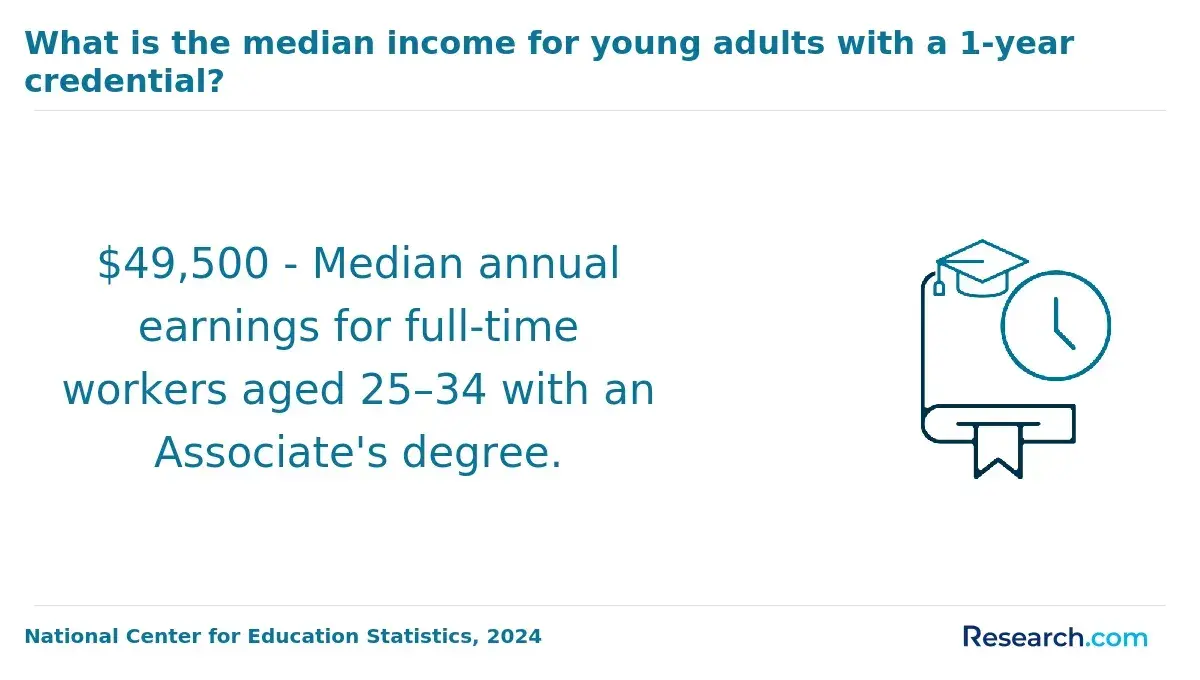
Salary outcomes for information security & assurance degree holders vary significantly by degree level, regional demand, and credential issuance. In metropolitan tech hubs, bachelor's degree graduates typically see meaningful wage premiums over associate degree holders, reflecting employer expectations for proven technical competence and foundational cybersecurity knowledge. Graduate degrees further differentiate earners by enabling access to leadership and specialized roles. However, for many adult learners and transfer students, the opportunity cost related to time out of the workforce and potential debt load complicates the straightforward valuation of these salary gains, especially when regional jobs cluster tightly in specific tech corridors.
Employment stability and career mobility correlate closely with continual skill development and industry certifications, which may in some cases outweigh degree level in hiring decisions. While information security & assurance degree salary comparisons favor those with advanced degrees for long-term leadership trajectories, many employers prioritize candidates with certified expertise, practical experience, and updated threat landscape knowledge. This dynamic influences return on investment differently for full-time students versus working professionals or military-affiliated learners who may pursue part-time or online programs to balance costs and completion timelines. Awareness of these tradeoffs is essential when assessing employment and ROI outcomes for information security & assurance graduates.
Prospective students should also consider alternative educational pathways and cross-disciplinary opportunities, such as related fields or advanced professional doctorates, to optimize career prospects. For example, exploring PsyD programs might be relevant for professionals interested in cybersecurity's human factors or behavioral analysis aspects. Ultimately, a nuanced evaluation combining local labor market conditions, credential value, educational costs, and personal circumstances will better inform decisions about whether further investment in this degree offers practical career and financial benefits.
How Do Associate, Bachelor's, Master's, and Doctoral Information Security & Assurance Degrees Compare?
Information security & assurance degrees at the associate level often serve as affordable entry points to operational roles like junior analyst or technician, but they come with lower completion rates and limited advancement potential. Students intending to progress should note that credits typically transfer well into bachelor's programs, which remain the most common credential for mid-level technical and analyst roles. Bachelor's degrees provide broader access to specialized job functions such as incident response and systems administration, supported by stronger employer recognition and alignment with in-demand certifications. According to the U.S. Department of Education's College Scorecard (2024), employment rates rise notably from about 70% at the associate level to over 85% for master's graduates, revealing real labor market benefits tied to higher qualifications.
Master's degrees in information security & assurance emphasize technical depth and leadership skill development, often integrating stackable credentials and positioning graduates for roles like security architect or consultant. However, the increased financial and time investment requires clear justification based on career goals, as many roles accessible with a bachelor's may adequately support salary and stability needs. Doctoral programs typically appeal to those targeting academic, research, or niche policy roles where deep expertise is critical but practical employer demand is limited. Prospective students should weigh the doctoral path's extended duration and potential debt load against its more specialized applicability, as most industry positions do not explicitly require a terminal degree.
Which Industries and Employers Hire Information Security & Assurance Graduates by Degree Level?
Employers in government, finance, healthcare, and technology sectors increasingly tailor their hiring of Information Security & Assurance graduates based on degree levels, reflecting distinct operational demands and career trajectories. For example, associate degree holders frequently fill entry-level roles in smaller firms or public agencies focused on technical support, where certifications and hands-on skills often outweigh formal education in strategic planning. In contrast, bachelor's degree graduates find broader opportunities in mid-level analyst and engineering positions at large financial institutions and consulting firms, with about 60% of advertised security analyst jobs requiring at least this level of education, emphasizing the importance of formal training in risk management and secure software development.
Master's degree holders typically gain access to leadership and highly specialized roles such as security architects and incident response managers in corporations and defense contractors, where advanced expertise correlates with strategic responsibility. This level often substitutes for extensive years of experience in competitive markets, with approximately 40% of security management job postings preferring candidates holding master's degrees. Doctoral graduates mainly pursue research and academic careers within government R&D labs or university centers, focusing on innovation and policy analysis, while professional certificates serve as targeted credentials valued for niche skills in cloud security, ethical hacking, or forensic analysis. Decisions to advance through degree levels should weigh these practical distinctions, considering whether alignment with employer preferences, role complexity, or specialization opportunities better fits long-term career aims versus immediate workforce entry.
What Skills, Credentials, and Experience Improve Information Security & Assurance Career Outcomes?
Industry certifications remain a key determinant in information security & assurance career outcomes, often outweighing degree credentials alone in early hiring decisions. According to a 2024 survey by (ISC)², over 70% of employers prioritize certifications like CISSP and CompTIA Security+ because they prove validated technical skills that academic programs may not fully cover. However, advancement beyond entry-level roles requires more than credential stacking-it demands demonstrated applied experience, leadership exposure, and specialization in areas such as cloud security or compliance auditing. For example, a candidate with a bachelor's degree who complements technical expertise with portfolio evidence and internship experience typically gains better promotion readiness than an associate degree holder who lacks such applied learning.
The essential skills and experience for information security & assurance jobs now extend beyond technical proficiency to analytical reasoning, adaptable communication, and problem-solving aptitude, making these soft skills crucial for mid-career mobility. Experiential learning through internships, military service, or apprenticeships significantly raises employment rates post-graduation, as noted by NCES findings, especially when pursued alongside targeted certifications. Graduate degrees often provide advantages in leadership training and niche specialization but require active project involvement to evidence practical capabilities. This nuanced balance is critical for adult learners and working professionals weighing the trade-offs between degree level, cost, timing, and the timely acquisition of marketable skills.
Students and transfer candidates should consider how combining prior credits with new credentials aligns with long-term goals, understanding that a broader foundation from associate or bachelor's degrees supports eligibility for multiple certifications but may limit immediate leadership pathways. Those seeking specialized advancement might explore specialized credentials within focused domains and take deliberate steps to build professional networks through applied projects. For learners evaluating trade-offs across fields, comparing varied pathways like those outlined in the best online architecture degree programs can further inform realistic workforce alignment strategies.
Which Information Security & Assurance Degree Level Is Best for Your Career Goals?
Choosing the appropriate degree level in information security & assurance shapes both immediate job access and long-term career trajectories. Associate degrees provide a faster, lower-cost entry point, which suits individuals prioritizing rapid employment but can restrict eligibility for advanced technical or managerial roles. In contrast, bachelor's degrees better align with employer expectations for many cybersecurity positions, increasing job market competitiveness and mobility; data from the National Center for Education Statistics shows employment rates for bachelor's holders in cybersecurity are about 20% higher than for those with only an associate degree. For working adults or transfer students, understanding transfer pathways is critical, and increasingly, programs offer flexible options-learn more about how you can transfer credits into an MBA program, which may intersect with information security leadership roles.
Graduate degrees in information security & assurance become relevant when specialization, research, or senior leadership is the goal. These degrees often enhance qualifications for certifications and higher salary brackets but come with increased time and financial costs. Students balancing work and study should consider opportunity cost and program selectivity, since not all graduate pathways facilitate seamless credit transfer or part-time study. Many employers expect a bachelor's at minimum for specialized roles, so doctoral or master's-level study typically targets those pursuing strategic influence or subject-matter expertise. The best degree level, therefore, depends heavily on individual career outcomes-whether prioritizing quick workforce entry, advanced specialization, or leadership preparation.
References
- What Cyber Security Career Path are you on? - Intellectual Point https://intellectualpoint.com/what-cyber-security-career-path-are-you-on/
- Cyber Security vs Information Assurance: What’sthe Difference https://cyber-security.degree/resources/cybersecurity-vs-information-assurance/
- Is a Cybersecurity Degree Worth It in 2026? - tripleten.com/blog https://tripleten.com/blog/posts/is-a-cybersecurity-degree-worth-it
- Cybersecurity Degree Requirements: What’s New for 2025 - Programs.com https://programs.com/resources/cybersecurity-degree-requirements/
- Cybersecurity Career Pathway https://www.cyberseek.org/pathway.html
- Cybersecurity Jobs Overview | CyberDegrees.org https://www.cyberdegrees.org/jobs/
- Cybersecurity Career Paths: Which Is the Right One for You? https://www.aiuniv.edu/degrees/information-technology/articles/cyber-security-careers
- Guide to Careers in Cybersecurity & Information Assurance https://www.onlineeducation.com/cybersecurity/career-guide
- ISACA | Empowering Careers. Advancing Trust in Technology. https://www.isaca.org/
- How to Choose Cybersecurity Courses Aligned with Your Career Goals | Cybrary https://www.cybrary.it/blog/choose-cybersecurity-courses-aligned-career-goals
Other Things You Should Know About Information Security & Assurance
Longer degree programs, such as master's or doctoral levels, often require significant time and financial investment, but their practical payoff depends heavily on your career goals. If your aim is to enter mid-level roles quickly, a bachelor's degree typically offers a better balance of time and employability outcomes. Conversely, advanced degrees tend to open doors in specialized research or leadership positions but may delay immediate earnings and require navigating a more theoretical curriculum with fewer directly applicable skills early on.
Employers in information security & assurance value hands-on skills and certifications alongside formal education, sometimes more than the degree's prestige itself. Higher degree levels may signal expertise but often require complementary practical experience to translate into promotions or salary increases. Prioritizing programs with integrated internships or real-world projects can provide an edge, especially if you choose master's or doctoral paths that risk being too academic without applied components.
Bachelor's degrees tend to blend technical training with foundational theory, offering diverse course formats that accommodate working adults better than master's or doctoral tracks, which often demand intensive research or highly focused study. The latter can impose heavy time commitments and less flexible schedules, which may impact work-life balance and slow career progress if you are employed while studying. Evaluating whether a program's format aligns with your current responsibilities is crucial to avoid burnout and maximize learning.
For career changers aiming to break into high-level information security roles, advanced degrees can provide a necessary credential boost and foundational knowledge. However, these degrees are most beneficial when paired with strategic entry-level experience or certifications. Without relevant practical background, an advanced degree alone may not overcome hiring barriers-so consider programs that emphasize applied skills or provide pathways into internships and project work to enhance employability during or shortly after completion.