2027 Higher Education Career Outcomes by Degree Level Report: Pay, Employment, and Advancement Patterns

Co-Founder and Chief Data Scientist
Choosing the right degree level often confronts students with opaque career outcomes, especially when balancing current job demands or military obligations. A 2024 study found that employment rates differ significantly by degree level, with bachelor's degree holders experiencing 15% higher workforce participation than those with only an associate degree. This gap reveals critical mobility and access disparities that affect long-term earnings growth and job stability. For adults weighing immediate employment against future advancement, understanding these nuanced patterns can prevent costly missteps.
This article examines pay, employment, and career advancement trends across degree levels to equip learners with clear, actionable insights for their educational investments.
Key Things to Know About Higher Education Career Outcomes by Degree Level
- Associate degrees offer quicker labor-market entry but limit advancement, reflecting tradeoffs between shorter time-to-work and narrower credential recognition in competitive job sectors.
- Employers increasingly prefer bachelor's or higher credentials for mid-level roles, reinforcing credential inflation that raises barriers for certificate or associate-level workers despite comparable skills.
- Master's and doctoral degrees, while costly and time-intensive, significantly enhance access to leadership and specialized positions, highlighting crucial timing and cost considerations for career investments.
- Key Things to Know About Higher Education Career Outcomes by Degree Level Key Things to Know About Higher Education Career Outcomes by Degree Level
- What Career Outcomes Can Students Expect From Each Higher Education Degree Level? Career Outcomes by Degree
- How Much Do Higher Education Graduates Earn by Degree Level? Salary by Degree Level
- Which Higher Education Degree Level Offers the Strongest Employment Prospects? Best Degrees for Employment
- What Entry-Level Jobs Can You Get With a Higher Education Degree? Entry-Level Career Opportunities
- How Do Higher Education Degree Levels Affect Career Advancement and Promotion Opportunities? Career Growth by Degree
- Is a Higher Education Degree Worth It Based on Salary, Employment, and ROI? Salary, ROI, and Value
- How Do Associate, Bachelor's, Master's, and Doctoral Higher Education Degrees Compare? Comparing Degree Levels
- Which Industries and Employers Hire Higher Education Graduates by Degree Level? Which Industries and Employers Hire Higher Education Graduates by Degree Level?
- What Skills, Credentials, and Experience Improve Higher Education Career Outcomes? What Skills, Credentials, and Experience Improve Higher Education Career Outcomes?
- Which Higher Education Degree Level Is Best for Your Career Goals? Choosing the Right Degree
What Career Outcomes Can Students Expect From Each Higher Education Degree Level?
Students and career-focused learners should assess how employment and advancement patterns by degree credential correspond to their specific industry standards and professional goals. Degrees at the higher end—master's and doctoral—often yield greater long-term stability and leadership potential but may limit flexibility during early career stages due to longer completion times and niche specialization. Conversely, certificates and associate degrees provide faster labor market entry and reskilling options but tend to plateau in supervisory or specialized roles unless supplemented by further education. Understanding these tradeoffs is essential for making strategic decisions that balance immediate employability with sustainable career growth.
How Much Do Higher Education Graduates Earn by Degree Level?
Wage outcomes for higher education graduates differ markedly by credential level, shaped by factors beyond diploma titles. For instance, bachelor's degree holders average a median weekly wage near $1,330, but the jump to a master's degree often correlates with specialized roles commanding about $1,554 weekly, reflecting the impact of advanced skills and licensure requirements in fields such as healthcare and management.
Those with certificates or associate degrees generally earn less, around $700 to $938 weekly, though targeted technical certificates in high-demand sectors may outperform some associate degrees depending on local labor needs and employer preferences. The payoff for higher degrees must be considered against extended study time, tuition costs, and potential delays entering the workforce, especially for working adults or military-affiliated students balancing family and employment.
Employment stability also varies, with bachelor's degree holders experiencing lower unemployment rates—approximately 2.6% compared to 5.7% for certificate holders—reflecting how certain credentials offer resilience in shifting labor markets. Advancement opportunities often depend on credential-related eligibility for supervisory or licensed positions rather than pay alone, making the decision to pursue graduate studies a calculation of both financial and career trajectory returns.
Transfer credits and institutional policies significantly influence the feasibility of progressing from one degree to another, affecting how quickly students can capitalize on wage premiums associated with higher credentials. Geographic factors and industry demand further complicate this landscape, signaling the importance of localized labor market research alongside published median earnings.
A student pursuing a technical certificate struggled initially to reconcile published wage data with local job ads showing some associate degree roles offering similar or higher starting pay. After consulting employers and academic advisors, the student reconsidered pursuing an associate degree to improve long-term advancement options but remained cautious due to the extra year of study and associated costs. The eventual decision reflected balancing immediate workforce entry against the financial and time investment needed for degrees with stronger employment stability and advancement potential, underscoring the layered complexity behind surface-level earnings comparisons.
Which Higher Education Degree Level Offers the Strongest Employment Prospects?
Bachelor's degrees generally offer the most balanced access to employment opportunities by meeting the credential expectations of a wide range of employers while enabling entry into graduate education and professional licensing. For example, a candidate with a bachelor's in business is often eligible for both management trainee roles and graduate-level certifications, combining workforce entry with progression pathways. While associate degrees and certificates can accelerate labor market entry-often within technical or trade sectors-they tend to cap earnings and limit advancement options due to narrower qualification recognition and fewer opportunities for career mobility.
Graduate degrees, especially master's and doctorates, increasingly differentiate candidates for specialized, regulated, or leadership positions, reflected in median unemployment rates below 1.5% in fields like healthcare and STEM as reported by the U.S. Bureau of Labor Statistics in 2024. However, the higher upfront time and financial investments do not guarantee proportional returns across all sectors, especially where practical experience or employer networks weigh more heavily than advanced credentials. Deciding whether to pursue further education while working or to enter the labor market sooner often hinges on regional labor demands and specific industry credentialing standards, highlighting the importance of aligning educational strategy with targeted career trajectories.
Employment potential and advancement capacity do not always move in tandem; quicker employment through certificates may lack the upward mobility unlocked by bachelor's or graduate degrees. For prospective students weighing immediate income against long-term career flexibility, a layered approach—starting with a certificate or associate credential and transferring credits toward a bachelor's—can balance early earnings with future opportunities. Understanding employer expectations, license requirements, and sector-specific growth patterns is essential to avoid underemployment or credential inflation, particularly where degree inflation raises barriers to advancement despite lower initial unemployment statistics among higher-degree holders.
What Entry-Level Jobs Can You Get With a Higher Education Degree?
Entry-level career opportunities with a higher education degree vary significantly by credential level, reflecting differing employer expectations and required competencies. Associate degrees often lead to roles in technical support or community outreach, which prioritize certifications and practical experience over formal academic preparation. In contrast, bachelor's degree holders typically access positions such as research assistants or program support specialists, where communication and teamwork skills developed through coursework and internships are essential.
Notably, many employers now expect some prior experience even for entry-level roles, with recent data from the U.S. Bureau of Labor Statistics indicates that about 68% of such jobs request work experience or portfolio evidence, complicating immediate workforce entry for new graduates.
The pathway to more advanced roles in higher education, such as counseling or administration, frequently requires a master's degree and relevant licensure, and these positions may remain out of reach without additional experiential credentials. Students should consider the trade-offs between pursuing graduate studies and gaining hands-on experience, as certain sectors favor on-site presence while others offer remote work flexibility.
This reality particularly affects geographic mobility and career progression in education fields. For those weighing degree options, including specialized credentials like an MHA degree, understanding how entry-level job options correspond with employment stability and skill-building potential is critical for informed decision-making and long-term career planning.
How Do Higher Education Degree Levels Affect Career Advancement and Promotion Opportunities?
Degree levels within higher education distinctly impact eligibility and pacing for promotions, particularly in roles requiring supervisory or strategic responsibilities. Employers often prioritize bachelor's and advanced degrees, viewing them as indicators of critical thinking, leadership skills, and specialized knowledge, which are prerequisites for many managerial tracks.
For example, mid-career professionals with prior experience who complete a master's or professional doctorate tend to unlock advancement opportunities earlier than those stopping at associate degrees or certificates, a pattern supported by 2024 analysis from the National Center for Education Statistics. However, credential decisions should consider alignment with industry licensure demands and the practical skillsets embedded in programs, as not all degrees equally facilitate upward mobility or broad intersectoral career shifts.
The timing of degree completion also plays a critical role: adult learners often leverage accumulated work history combined with credential attainment to accelerate promotion but face trade-offs in delaying education against early job tenure. Many leadership positions require ongoing continuing education or recognized certifications beyond initial degrees, reinforcing that advancement depends on integrating formal academic credentials with professional development. This nuance is central for transfer students and military-affiliated learners who must weigh the incremental value of advanced degrees against employer-specific expectations and internal promotion criteria that vary widely across sectors.
A recently graduated professional recalled hesitating before enrolling in a master's program, uncertain if it would meaningfully improve eligibility for a management role in a mid-size nonprofit educational institution. Though initially frustrated by prolonged promotion wait times after completing an associate degree, the decision to pursue a master's became clearer after consultations revealed that leadership tracks explicitly required it for supervisory credentials. The individual found that combining formal degree attainment with targeted certification substantially increased the confidence of hiring managers and internal evaluators, ultimately resulting in a promotion within 18 months.
Is a Higher Education Degree Worth It Based on Salary, Employment, and ROI?
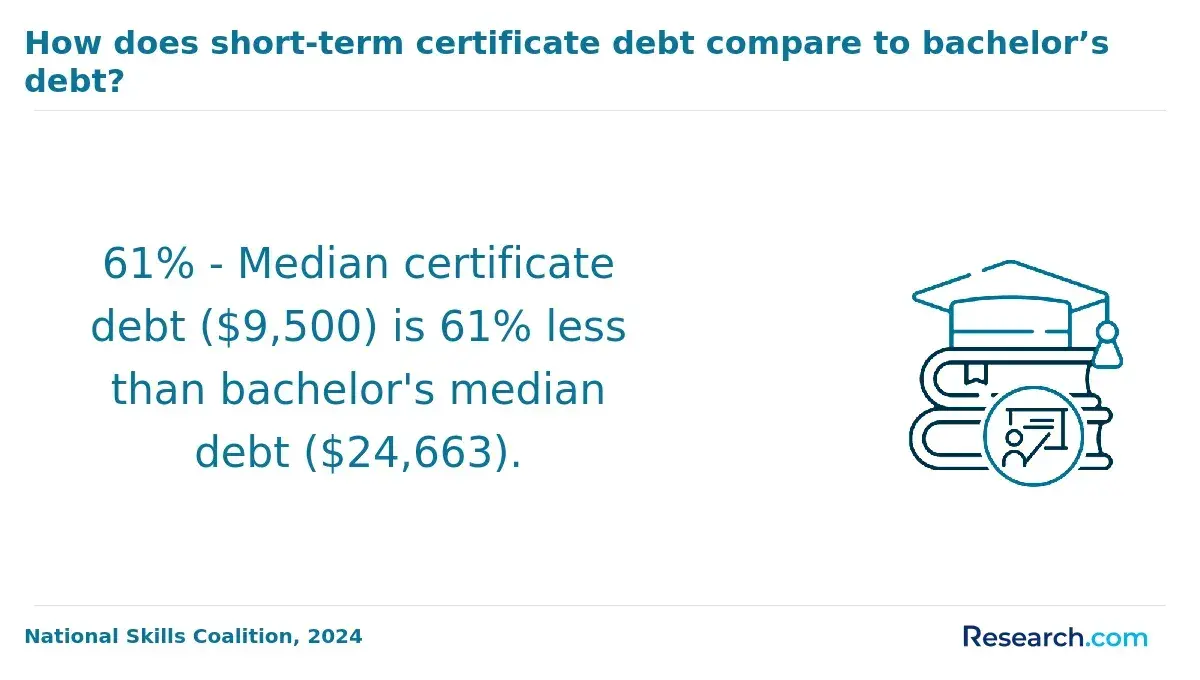
Salary and employment outcomes differ markedly by degree level, making it critical for students to evaluate the practical trade-offs before committing to higher education. While workers with bachelor's degrees earn roughly 65% more than those holding only a high school diploma, the investment in terms of time and cost varies, especially for adult learners balancing work or family obligations. For example, transfer students or working professionals considering an online bachelor's in kinesiology may find flexibility but must weigh delayed earnings against tuition and debt burdens.
Employment stability also improves with education; a bachelor's degree holder faces significantly lower unemployment rates than someone without, yet regional labor demand and field-specific credentialing often shape actual career prospects more than degree level alone.
Assessing the return on investment for different degree levels in higher education requires analysis beyond salary gains, incorporating debt loads, completion time, and advancement potential. Public institutions typically offer lower annual tuition compared to private ones, but opportunity costs from extended study durations can diminish overall value, particularly if part-time attendance prolongs graduation.
Certain sectors like STEM and healthcare demonstrate faster upward mobility with advanced degrees, whereas others may reward relevant experience or certifications over formal education. Prospective students must analyze these nuances in light of their financial situations, career goals, and the real-world demand for their chosen credentials to make informed decisions grounded in labor market dynamics rather than generic outcomes.
For those exploring healthcare-adjacent paths with a faster return on investment, medical coding classes offer a shorter, credential-focused alternative to a full degree, appealing to students who want to enter the healthcare workforce with lower upfront costs and less time to completion than a traditional bachelor's program.
How Do Associate, Bachelor's, Master's, and Doctoral Higher Education Degrees Compare?
Advancing from an associate degree to higher credentials often dictates not only entry-level access but also trajectories for skill depth, leadership readiness, and job security. For instance, an associate degree may enable quicker workforce entry in technical roles within healthcare or manufacturing but typically limits upward mobility without further credential layering. Employers in regulated fields commonly require bachelor's degrees as a baseline for professional and managerial positions, and completion rates around 60% highlight the challenges and resource demands of reaching that level. Importantly, transfer policies between associate and bachelor's programs can vary widely, affecting cost and time investment decisions for students considering stacking credentials.
Master's degrees tend to offer tangible benefits in specialized sectors like education and technology, often accelerating transitions into management and expanding employment stability. However, the increased financial and time commitments must be weighed against the actual gains in earnings and role flexibility, which differ significantly by industry. Doctoral studies, while opening doors to research-intensive careers and academic leadership, require deep alignment with field-specific expectations and institutional prestige to justify the extended duration and opportunity cost. Many doctoral holders face difficulties translating highly specialized skills beyond academia, making this path most suitable for those targeting niche expert or licensure roles that demand the highest credential tier.
These degree-level distinctions influence not only initial hiring but also ongoing career adaptability and advancement potential. For working adults, choices about whether to pause at an associate or bachelor's degree or return for graduate study hinge on balancing immediate employment needs with long-term professional mobility. Factors such as licensing mandates, employer preferences, and the availability of stackable credits shape these decisions, while the rising complexity of labor markets increasingly rewards those who match educational investment with clear, field-specific advancement prospects rather than generic degree accumulation.
Which Industries and Employers Hire Higher Education Graduates by Degree Level?
Employment outcomes for higher education graduates vary markedly by degree level, shaping the industries and employer types they access. Associate degree holders typically enter sectors such as manufacturing, healthcare support, and administrative services where technical skills and faster credential completion meet immediate labor demands. Bachelor's degree graduates, comprising about 60% of those in professional and managerial roles according to the National Center for Education Statistics, are often recruited by business, finance, technology, education, and government organizations that emphasize analytical and communication competencies. This divergence reflects employer expectations that bachelor's credentials signal readiness for more complex problem-solving and leadership potential than associate-level training.
Advancement into specialized or senior roles frequently requires master's or doctoral qualifications, with master's recipients commonly employed in healthcare administration, engineering, education leadership, and policy analysis roles. These positions demand a blend of theoretical knowledge and practical supervisory skills, prized in management consulting firms, research organizations, and health service providers. Doctoral graduates are concentrated in research-intensive, academic, and high-level policy innovation roles, where expertise in knowledge creation and advanced leadership is essential.
For those weighing educational investments, professional certificates may offer quicker access to niche technical roles in IT or healthcare but often limit upward mobility compared to academic degrees. Understanding how degree level aligns with employer screening, job function expectations, and sector-specific licensure or certification requirements is critical when targeting effective hiring markets and career trajectories.
What Skills, Credentials, and Experience Improve Higher Education Career Outcomes?
Employers now demand a strategic blend of technical skills, industry credentials, and demonstrable applied experience to differentiate graduates in competitive hiring markets. For example, an associate degree holder who supplements their education with certifications or apprenticeships gains far greater job readiness and access to employment opportunities than one relying solely on academic qualifications. Similarly, bachelor's and graduate degree holders improve promotion prospects and career mobility by combining specialization with leadership exposure and interpersonal skills valued by 78% of hiring managers, according to recent reports. These patterns underscore the practical importance of aligning credential stacking with role-specific competencies rather than pursuing degrees in isolation.
Experience and certifications boosting higher education career outcomes become especially critical for working adults, transfer students, and military-affiliated learners who must optimize prior learning and industry experience within evolving workforce demands. Internships, apprenticeships, and related applied learning act as essential portfolio evidence, offering tangible proof of job readiness beyond transcripts. Employers increasingly verify such experiential learning and credential authenticity to ensure alignment with operational requirements, which influences advancement readiness and long-term career flexibility. Navigating these tradeoffs requires adult learners to evaluate whether incremental credential upgrades or targeted certifications better serve their goals without prolonging time to employment or advancement.
Decision-makers seeking specialized fields can also benefit from exploring programs with integrated practical training, such as 5-year speech pathology programs, which couple degree attainment with experiential components. This combination can strengthen both employment access and pay scales, reflecting a holistic understanding of labor market realities. Ultimately, critical evaluation of how technical skills, soft skills, credential combinations, and applied experiences interact at each degree level can more effectively guide individual education investments toward measurable career returns.
Which Higher Education Degree Level Is Best for Your Career Goals?
Deciding on the best higher education degree level requires assessing how each credential aligns with employer expectations, time investment, and career flexibility. Associate degrees often serve those seeking rapid workforce entry, especially in technical or skilled trades, with about 82% securing employment within a year according to the National Center for Education Statistics. However, their narrower scope can limit advancement or access to specialized roles, which often require a bachelor's degree or higher. Bachelor's degrees, recognized for broader occupational versatility, typically enhance opportunities for specialization, professional licensing, and graduate study preparation, factors critical for those aiming beyond entry-level roles or planning career mobility.
Graduate and professional degrees demand more time and money but are increasingly necessary for leadership, research, or regulated professions, though not universally required. Many sectors equally value work experience or certifications, which can influence whether continuing education provides a meaningful return on investment or simply delays earning potential. Adult learners and transfer students must weigh credit transfer policies and part-time or accelerated options to minimize opportunity costs. For those exploring fields with specific certification requirements or seeking flexible credential paths, programs such as an environmental health and safety degree online exemplify how degree choices reflect evolving workforce demands while balancing education affordability and career outcomes.
Choosing the most fitting degree level directly affects long-term career trajectories and employer engagement, making clear understanding of the higher education degree level career outcomes essential. Those focused on securing the best higher education credential for career advancement should consider the interplay between educational cost, time to completion, credential portability, and field-specific demands to make informed decisions that align with practical workforce realities.
References
- The UK Degrees With The Best Earning Potential | Oxford Learning College https://www.oxfordcollege.ac/news/the-uk-degrees-with-the-best-earning-potential/
- Here’s How to Choose the Right Education Degree for Your Career Goals https://www.keytostudy.com/heres-how-to-choose-the-right-education-degree-for-your-career-goals/
- Top 10 jobs for higher ed majors and who’s hiring https://joinhandshake.com/blog/students/top-jobs-for-higher-ed-majors/
- Is College Worth It? - Public Policy Institute of California https://www.ppic.org/publication/is-college-worth-it/
- Labor Market | ELA https://ela.nauka.gov.pl/en/labor-market/who_earns_more_after_studies
- How to Choose the Right Educational Path for Your Career Goals - SkillX Education https://skillxeducation.com/how-to-choose-the-right-educational-path-for-your-career-goals/
- Does Going to College Make Financial Sense Anymore? https://www.wealthenhancement.com/blog/is-college-worth-it-financially
- New measure shows substantial differences in likely job and study outcomes for students - Office for Students https://www.officeforstudents.org.uk/news-blog-and-events/press-and-media/new-measure-shows-substantial-differences-in-likely-job-and-study-outcomes-for-students/
- Research Summary: Education and Lifetime Earnings https://www.ssa.gov/policy/docs/research-summaries/education-earnings.html
- The Skills Higher Ed Professionals Need Now - Higher Education Jobs - Higher Education Recruitment Consortium https://www.hercjobs.org/career-advice/the-skills-higher-ed-workforce-need-now/
Other Things You Should Know About Higher Education
Longer degree programs, such as master's or doctoral studies, require significant time and effort that can delay entry into the workforce. While these degrees may lead to higher pay or advancement potential in some cases, students should carefully assess whether the added workload and extended timeline align with their career goals and financial situation. For many roles in higher education, particularly administrative or practitioner positions, a bachelor's degree supplemented with relevant experience can offer competitive outcomes without the additional burden of advanced study.
Employers in higher education often value demonstrated experience and practical skills alongside formal credentials. In fields where hands-on leadership, program management, or student support skills are essential, advanced degrees may be less critical than proven effectiveness. Prospective students should prioritize programs that integrate internships, practicums, or relevant project work, as these elements frequently influence hiring decisions and career progression more than degree level alone.
Higher degree levels such as doctorates often lead to specialized roles focused on research or academic leadership, which may limit flexibility in shifting between administrative, teaching, or student-services positions. Conversely, bachelor's or master's degrees generally enable greater role diversity and adaptability, allowing graduates to move laterally within institutions or shift between different types of higher education organizations. Those valuing broad career options should weigh this tradeoff, as over-specialization can constrain employment opportunities outside academia.
Advanced degrees come with increased tuition and living costs that may not always be offset by proportional salary increases or promotion speed in many higher education roles. Particularly in public institutions or non-profit sectors, compensation growth can be modest, making the return on investment variable. Students are advised to consider part-time or employer-sponsored programs that reduce financial strain while maintaining career momentum, and to clearly evaluate whether the degree's credential advantages justify the incremental cost given their targeted career path.