2027 What Requirements Do You Need for an Online Entrepreneurship Bachelor's Degree? Admission Rules, Credits & Eligibility

Co-Founder and Chief Data Scientist
Imagine a professional with a non-business undergraduate degree seeking to switch careers by earning an online entrepreneurship bachelor's degree. Navigating varied admission rules, credit transfers, and eligibility criteria can be overwhelming.
Nearly 40% of online business degree candidates face challenges in meeting prerequisites or understanding credit requirements, causing delays or lost tuition. Without clarity, applicants risk applying to programs that do not match their academic background or career goals. This article clarifies common admission standards, credit policies, and eligibility for online entrepreneurship bachelor's programs, helping prospective students identify suitable pathways and streamline their transition into this dynamic field.
Key Benefits of Preparing for Online Entrepreneurship Bachelor's Degree Requirements
- Choosing the right program involves assessing accreditation, curriculum focus, and flexibility to align with career goals and personal circumstances.
- Maximizing transfer credits can reduce time and cost; verify limits and equivalencies beforehand to avoid unexpected setbacks.
- Completing degree requirements opens diverse career opportunities, with 87% of graduates reporting improved job prospects within a year of graduation.
What Are the Basic Eligibility Requirements to Apply for an Online Entrepreneurship Bachelor's Degree?
In undergraduate online admissions, eligibility defines the basic qualifications and conditions a student must satisfy to apply for a degree program. This differs from acceptance, which is the institution's decision to admit a student, and enrollment, when the student officially registers for classes.
Eligibility ensures applicants have the foundational academic background, legal status, and preparation necessary to begin the application process for an online entrepreneurship bachelor's degree. According to the U.S. Department of Education and information from multiple schools, eligibility includes academic credentials as well as legal and residency documentation, which together form the baseline for admission consideration.
Most accredited institutions require applicants to meet specific criteria such as holding a high school diploma or GED equivalent, meeting minimum age requirements, and providing proof of citizenship or legal residency. Accurately understanding online entrepreneurship bachelor's degree admission criteria-such as minimum GPA and credit hours for entrepreneurship degree programs-is essential for students planning their educational journey.
Below are key eligibility factors prospective students should evaluate and confirm with admissions offices, as policies and standards vary between programs.
- High School Diploma or GED Equivalency: Completion of a recognized secondary education credential is mandatory to confirm basic academic readiness for college coursework.
- Minimum Age Requirement: Typically, applicants must be at least 17 or 18 years old to demonstrate academic and personal maturity appropriate for higher education.
- Citizenship and Residency Status: Proof of U.S. citizenship, permanent residency, or a valid visa is usually required, affecting both eligibility and financial aid opportunities.
- English Language Proficiency: Non-native speakers often need to provide standardized test scores like TOEFL or IELTS to verify their ability to succeed in English-language programs.
- Additional Academic Standards: Some schools set minimum GPA requirements, require placement tests, or personal statements to assess student readiness and fit.
Because transfer credit policies, financial aid pathways, and program-specific rules differ widely, students should explore easy degrees to get online and verify all eligibility details with admissions advisors. This tailored approach helps applicants position themselves for the most affordable, credit-efficient path to an entrepreneurship degree that matches their goals.
What Is the Minimum GPA Required for Admission to an Online Entrepreneurship Bachelor's Degree Program?
Minimum GPA requirements for admission to an online entrepreneurship bachelor's degree program vary by institution, with some accepting a cumulative high school GPA as low as 2.0, especially those with open admission policies. More selective programs often require a minimum GPA of 2.5 or higher, emphasizing academic readiness.
The required GPA to enter an online bachelor's program in entrepreneurship is only one part of a holistic admission review that also considers class rank, standardized test scores, letters of recommendation, personal statements, and extracurricular involvement.
Many schools differentiate between weighted and unweighted GPA scales, accounting for advanced coursework like honors or Advanced Placement classes. Students with borderline GPAs may still gain admission through conditional or probationary terms, providing a chance to demonstrate academic skills through initial college-level classes.
Prospective students should carefully calculate and report their GPA, using official transcripts or GPA calculators aligned with the institution's scale, as misreporting weighted versus unweighted GPAs can cause challenges in the admission process.
Gathering all necessary documents, asking admissions offices about specific GPA scales, transfer credit policies, accreditation, and English language proficiency helps applicants position themselves for the most affordable, credit-efficient path to their degree.
For those interested in graduate options in related fields, researching masters programs in psychology may provide additional career pathways.
- GPA Range Flexibility: Admission GPA requirements typically range between 2.0 and 2.5, with flexibility depending on the institution's selectivity and mission.
- Holistic Review Process: Beyond GPA, schools evaluate test scores, class rank, recommendations, and personal essays to assess applicant suitability comprehensively.
- Weighted vs. Unweighted GPA: Understanding the difference is critical as some institutions adjust GPA calculations for course difficulty, impacting admission chances.
- Conditional Admission Options: Students near GPA cutoffs may be admitted on a probationary basis, allowing them to build academic performance during early coursework.
- Accurate GPA Reporting: Use official transcripts, confirm the correct GPA scale with admissions, and avoid discrepancies in self-reporting to ensure a smooth application process.
2026 Update: Online Enrollment Format and Readiness Checks
For 2026, this section adds practical enrollment-readiness factors that can affect whether an online entrepreneurship bachelor’s program fits your schedule, learning style, and business goals before you apply.
- Check whether courses are asynchronous, live, or hybrid, since required meeting times can affect working students.
- Review start-date options, including semester, accelerated, or rolling admissions formats.
- Confirm whether the program uses cohort-based progression or allows flexible course sequencing.
- Ask about required online tools, proctoring systems, business simulation software, or collaboration platforms.
- Review expected weekly time commitments for courses with projects, pitch decks, or venture planning assignments.
- Check whether internships, capstones, or business launch projects have location-based or scheduling requirements.
Looking beyond basic admission rules helps students choose a program they can realistically complete while balancing work, family, and entrepreneurial plans.
Do Online Entrepreneurship Bachelor's Degree Programs Require SAT or ACT Test Scores?
Many online bachelor's degree programs in entrepreneurship, particularly those aimed at adult learners and working professionals, have shifted toward test-optional or test-free admissions in recent years. This trend, which gained momentum after 2020, seeks to remove testing barriers and promote greater access for diverse applicants.
Nevertheless, some programs still require SAT or ACT scores, mainly for awarding merit-based scholarships, gaining entry to honors tracks, or applying to highly selective entrepreneurship degrees. In these cases, schools often set minimum score standards-for example, an SAT range between 1100 and 1300 or an ACT composite score from 22 to 29-though these vary by institution.
Applicants are advised to consult each school's official admissions website frequently as policies continue to evolve in response to changing educational landscapes and pandemic impacts. Staying informed ensures no surprises about testing or other criteria arise during application.
- Test-Optional Admissions: Many entrepreneurship programs now accept applications without standardized test results, instead emphasizing prior academic performance and professional experience.
- Scholarship and Honors Eligibility: Test scores may still play a role in distinguishing candidates for scholarships or special programs that seek high-achieving students.
- Typical Score Ranges: Publicly available data suggests that competitive entrepreneurship programs often look for SAT totals between 1100 and 1300 or ACT scores near 22 to 29.
- Individual School Variations: Testing requirements differ widely across colleges, highlighting the importance of reviewing details from each program promptly.
- Growing Test-Optional Movement: Over 1,700 U.S. institutions, a 40% increase since 2019, have embraced test-optional policies according to the National Center for Fair & Open Testing.
A professional who recently enrolled in an online entrepreneurship bachelor's program shared how the test-optional policy eased his path to admission. He described feeling anxious about standardized testing in past years but appreciated being able to apply without the pressure of submitting scores.
"It made the process less stressful, allowing me to focus on showcasing my work experience and motivation," he said. However, he noted that for scholarship opportunities, he still prepared to submit qualifying scores, explaining that navigating those requirements involved careful communication with admissions counselors to clarify expectations and deadlines.
His experience underscores how test policies can influence both application strategy and financial planning.
How Many Total Credit Hours Are Needed to Complete an Online Entrepreneurship Bachelor's Degree?
Most accredited online entrepreneurship bachelor's degree programs require approximately 120 credit hours for completion, though some tracks may extend up to 128 or 130 credits depending on the chosen major. These credits are divided mainly among general education courses, entrepreneurship core subjects, elective options, and a final capstone or practicum component, designed to provide comprehensive knowledge and practical experience.
General education credits often cover subjects like mathematics, English, and social sciences, while core entrepreneurship courses focus on business planning, finance, marketing, and innovation. Electives allow students to explore related fields or deepen specific expertise within the discipline.
Prospective students should note the distinction between semester credit hours (SCH) and quarter credit hours; one quarter credit is roughly two-thirds of a semester credit, making it important to understand credit conversion in different academic calendars.
Prior learning assessments, such as Advanced Placement (AP) credits or College-Level Examination Program (CLEP) test results, can help reduce the total credit hour load. Transfer credits from other accredited programs may also count toward degree requirements, shortening time and cost to graduation.
It's wise for students to verify credit transfer policies before enrolling to ensure maximum recognition of previous coursework.
For those interested in related fields, exploring programs like a construction management degree online can offer alternative career pathways leveraging similar skills and knowledge.
- Total Credit Hour Baseline: Most programs require about 120 credit hours, with variations depending on curriculum depth and major specifics, sometimes reaching 130 credits.
- Credit Distribution: Courses are typically allocated between general education, entrepreneurship core classes, electives, and a capstone experience to ensure a balanced degree.
- Semester vs. Quarter Hours: Understanding that quarter credits equal roughly two-thirds of semester credits helps students accurately calculate credit requirements across systems.
- Reducing Credit Requirements: AP scores, CLEP exams, and transfer credits can lower the number of credits needed to complete the degree, speeding up graduation.
- Checking Transfer Policies: Confirming how previous coursework is credited by the target school prevents redundant courses and maximizes credit acceptance.
What High School Courses or Prerequisites Are Required Before Enrolling in an Online Entrepreneurship Bachelor's Degree?
Students aiming for an online entrepreneurship bachelor's degree usually need to complete core high school courses before admission. Mandatory classes often include algebra and English composition, which build critical thinking and communication skills necessary for business studies.
Basic economics or social studies may also be required to provide broader context on markets and society.
Additional coursework like statistics, business fundamentals, and computer literacy is generally recommended but not required. These subjects help strengthen applications and introduce practical knowledge useful in entrepreneurial environments.
High school students frequently take advantage of dual enrollment or community college courses to meet these prerequisites early. This strategy can shorten the time and reduce expenses associated with the degree program.
However, students lacking certain requirements might need to enroll in bridge or remedial classes offered by some programs, which can increase overall study time.
- Mandatory Courses: Algebra and English composition ensure essential analytical and writing skills are developed before starting the degree.
- Recommended Classes: Subjects like business basics and computer literacy enhance preparedness though aren't compulsory.
- Dual Enrollment Advantages: Earning college credits in high school can fulfill prerequisites and accelerate degree completion.
- Remedial Options: Bridge courses help fill gaps but may prolong program length.
- Admissions Variability: Requirements vary, so checking with each institution is key to planning effectively.
A professional who completed an online entrepreneurship master's recalls how navigating prerequisite requirements felt daunting at first, especially balancing work and family commitments. She appreciated programs offering flexible remedial classes that allowed her to catch up without delaying progress excessively.
"Taking those extra courses online gave me confidence and prepared me to handle advanced topics," she explained. Her experience highlights the value of careful planning and leveraging available support to overcome initial hurdles on the path to earning an entrepreneurship degree.
Can Transfer Credits Count Toward an Online Entrepreneurship Bachelor's Degree, and How Many Are Accepted?
Most accredited institutions typically accept between 60 and 90 transfer credits toward a bachelor's degree, but the exact limit varies depending on the school's policies. Transfer-friendly schools, such as community colleges with 2+2 articulation agreements, often allow a full two years of coursework to count toward the degree.
This helps students complete their entrepreneurship degree online without losing previously earned credits.
Some institutions, especially private or specialized ones, have stricter transfer policies. They may only accept credits from regionally accredited schools or limit the number of vocational or lower-level credits that qualify.
These restrictions can impact how many credits apply to your entrepreneurship program.
During transcript evaluations, admissions offices-often the registrar's department-examine your transcripts to determine coursework equivalency. They check if the courses align with the university's entrepreneurship curriculum and meet required academic standards.
Credits may be denied if courses don't match program content or if the grades fall below a minimum threshold.
Entrepreneurship degrees usually require specific courses in business, economics, and management. Transfer credits must correspond to these areas to be accepted, although general education credits like math and English are generally easier to transfer.
Requesting a formal transfer credit evaluation during admissions is crucial. This process clarifies exactly how many credits will count, helping you avoid wasting time and money on non-transferable courses.
- Transfer Limits: Most schools cap transfer credits between 60 and 90 hours, varying by institution and accreditation.
- Transfer-Friendly Schools: Community colleges with articulation agreements facilitate smoother credit transfers for entrepreneurship degrees.
- Transcript Review: Registrars verify course equivalency and grade requirements to approve transferable credits.
- Course Alignment: Entrepreneurship programs require relevant business and management courses for transfer credit acceptance.
- Official Evaluation: A formal transfer credit assessment during admissions ensures clear understanding of applicable credits.
According to the National Student Clearinghouse Research Center, nearly 40% of bachelor's students transfer credits between colleges, underscoring the importance of transfer policies.
Does Accreditation Status Affect Admission Requirements for an Online Entrepreneurship Bachelor's Degree?
Accreditation plays a crucial role in shaping admission requirements for an online bachelor's degree and ensuring the program's credibility. Institutional accreditation, often regional or national, is recognized by the Council for Higher Education Accreditation (CHEA) or the U.S. Department of Education.
Regional accreditation confirms overall institutional quality and impacts credit transferability, easing transitions between schools or entry into graduate programs.
- Regional accreditation from agencies recognized by CHEA or the U.S. Department of Education ensures that credits earned in an online entrepreneurship bachelor's degree program are transferable between accredited institutions. It also guarantees that employers recognize the validity of the degree. Attending a regionally accredited school provides important flexibility for students in their academic and career progress.
- Programmatic accreditation applies to specialized entrepreneurship programs that pursue discipline-specific credentials. These accreditors may enforce curriculum standards or faculty qualifications that influence admission requirements and how students are evaluated. It is essential to verify if your chosen program holds such accreditation.
- Degrees from unaccredited institutions often face difficulties with employer acceptance, graduate school admissions, and licensing boards. Lack of accreditation can severely limit career and professional advancement opportunities for graduates.
- Accreditation also impacts admission policies, including minimum GPA standards and acceptance of prerequisite courses. Accredited programs usually follow consistent national or regional guidelines, whereas unaccredited ones may have less rigorous or unclear admission criteria.
- Students enrolled in accredited programs are typically eligible for federal financial aid, grants, and scholarships, which can significantly affect the affordability of their education.
- Recent Trend: Over 90% of employers prefer candidates with degrees from regionally accredited institutions, highlighting accreditation's role in career advancement.
- Research Accreditation Status: Confirm both institutional and programmatic accreditation to avoid wasted resources.
- Credit Transfer Clarity: Ensure credits earned can apply toward future degrees if needed.
- Ask Admissions Directly: Verify how accreditation impacts admission requirements, transfer policies, and degree recognition.
What Documents Do You Need to Apply for an Online Entrepreneurship Bachelor's Degree Program?
Applying to an online bachelor’s degree program usually requires submitting a standard set of documents that help schools evaluate your academic background and readiness. Prepare in advance to make the application process smoother and to stay organized.
- Official Transcripts: Most online entrepreneurship bachelor's degree application documents include official high school transcripts as primary proof of academic background. Applicants with prior college experience must also submit official college transcripts. These documents need to be sent directly from the issuing institutions to ensure authenticity and acceptance during the admissions process.
- Government-Issued ID: A valid government-issued photo ID, such as a passport or driver's license, is typically required to confirm your identity. This aligns with other submitted documents and helps the admissions office verify that the applicant is the rightful owner of the application materials.
- Essays: Many programs request one or more essays that explore your motivation to pursue entrepreneurship, your career goals, and how the degree aligns with your plans. These essays are crucial for assessing communication skills and demonstrating commitment to the field, an important aspect of the required paperwork for entrepreneurship bachelor's admission.
- Additional Materials: Selective entrepreneurship programs may ask for supporting documents like a résumé, letters of recommendation, a personal statement, or a portfolio showcasing relevant projects. These additions provide depth by highlighting experience and skills beyond academics.
- Official vs. Unofficial Documents: Official documents come directly from institutions with seals or signatures; unofficial ones are often copies you provide yourself. While admissions typically require official versions for final acceptance, unofficial documents may be accepted during early review stages. International students should submit certified translations of any documents not originally in English to avoid processing delays when applying to U.S.-based online programs.
- Timing of Document Preparation: Start gathering your application materials at least two to three months in advance. This buffer accounts for mailing times of transcripts and reference letters, especially if applying to programs with strict semester deadlines or rolling admissions. Early preparation helps ensure you meet all cutoff dates.
Prospective students aiming for an affordable, credit-efficient path should also explore options like a cheap online real estate school, which can complement entrepreneurship studies through additional business-related credentials.
Are There English Language Proficiency Requirements for Non-Native Speakers Applying to an Online Entrepreneurship Bachelor's Degree?
Most accredited U.S. online entrepreneurship bachelor's degree programs require non-native English speakers to demonstrate English language proficiency before enrollment. This ensures students can fully engage with coursework and academic activities.
Commonly accepted assessments include the TOEFL iBT, IELTS Academic, and Duolingo English Test, which evaluate listening, speaking, reading, and writing skills relevant to academic success.
- Accepted Tests: Programs typically require scores from TOEFL iBT, IELTS Academic, or the Duolingo English Test. These assessments are standard for evaluating the English proficiency of applicants for online entrepreneurship degree programs.
- Minimum Scores: TOEFL iBT scores for undergraduate admission usually fall between 61 and 80, with IELTS Academic bands ranging from 6.0 to 6.5, and Duolingo English Test minimums often starting near 90. Specific requirements vary by institution, so confirming with each program is essential.
- Exemptions: Applicants from English-speaking countries or those who have completed multiple years of education in English-medium institutions may be exempt from submitting test scores. This includes students who earned credits or diplomas where English was the primary language of instruction.
- Conditional Admission: Some entrepreneurship programs provide conditional acceptance paired with an ESL bridge or preparatory program. This supports students who don't yet meet proficiency standards but show potential for academic success.
Prospective students planning to apply to online entrepreneurship programs should confirm language test requirements early through admissions offices. Preparing English proficiency documentation in advance can streamline the process.
For those exploring efficient degree paths, resources like the computer science accelerated program listings may offer additional insight into credit transfer and admission criteria.
Do Online Entrepreneurship Bachelor's Degree Programs Accept CLEP Exams or Prior Learning Credits?
The College-Level Examination Program (CLEP) offers students a chance to earn college credit by passing standardized tests. A score of 50, recommended by the American Council on Education (ACE), can secure credit at over 2,900 colleges nationwide.
However, whether these credits apply to an online entrepreneurship bachelor's degree depends on each institution's rules.
- Institution-Specific Policies: Some entrepreneurship programs accept CLEP credits toward most degree requirements, while others restrict their use to general education courses, requiring traditional classes for core subjects.
- Other Prior Learning Assessments: Beyond CLEP, options like DANTES/DSST tests, portfolio evaluations, and credits for professional certifications, military service, or relevant work experience may be accepted, validating knowledge gained outside the classroom.
- Early Registrar Contact: Reaching out to the registrar's office early can clarify credit transfer policies and necessary documentation, helping to plan an affordable, streamlined degree pathway.
- Cost and Time Savings: Applying prior learning credits can reduce tuition costs and shorten program length, benefits especially valuable for adult learners balancing education with other commitments.
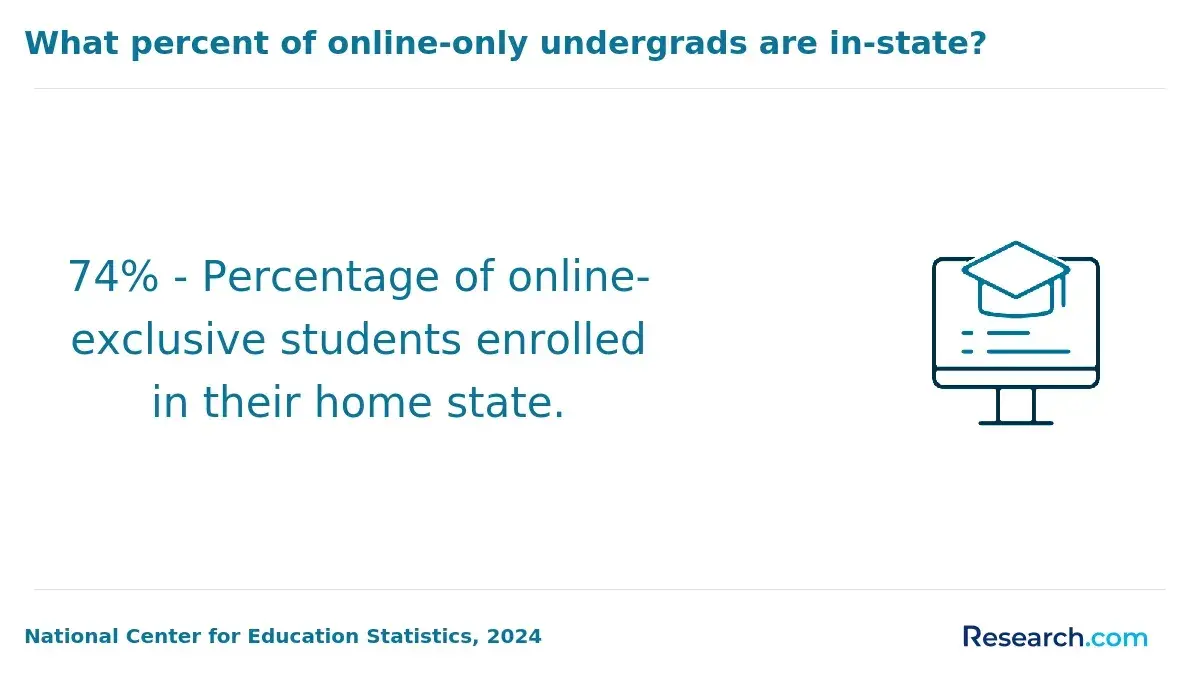
Are There Residency or In-State Tuition Requirements That Affect Enrollment in an Online Entrepreneurship Bachelor's Degree?
Many public universities provide in-state tuition rates to online students regardless of where they live, often through state authorization reciprocity agreements (SARA). SARA is a multi-state agreement that lets colleges offer online programs to students outside their home state without breaching state regulations.
This arrangement broadens access and can lower tuition costs for students.
However, some schools do charge out-of-state rates for their online offerings, making it vital to confirm tuition details before enrolling in an entrepreneurship program. Establishing in-state residency for tuition purposes may require submitting documents such as utility bills, voter registration, or a driver's license.
- SARA Framework: An agreement allowing institutions in member states to provide online education to out-of-state students while complying with state authorization rules, simplifying cross-state enrollment.
- Tuition Differences: Not all schools adopt in-state rates for online learners; understanding each institution's policy helps avoid unexpected costs during your entrepreneurship studies.
- Residency Verification: Students may need to prove residency through official documents like utility statements, voter registration, or driver's licenses to qualify for reduced tuition.
- Financial Considerations: Confirming tuition and residency requirements ahead of time can prevent surprise fees and help plan an affordable path to earning your entrepreneurship degree.
What Graduates Say About Preparing for the Online Entrepreneurship Bachelor's Degree Requirements
- Danielle: "Pursuing my online entrepreneurship bachelor's degree truly transformed my career trajectory. Understanding the admission requirements early on helped me focus my applications and avoid wasted time. Also, getting a clear grasp of credit policies meant I could transfer previous coursework smoothly, which sped up my graduation and gave me the confidence to start my own consulting firm."
- Blake: "When I first considered an online entrepreneurship degree, I was overwhelmed by the eligibility criteria and credit transfer options. But once I took the time to fully understand those details, the entire process became manageable and transparent. This foundation laid the groundwork for my current role as a business strategist, and I appreciate how the degree opened real professional doors."
- Bonnie: "The precision in knowing exact admission requirements and credit policies was a game changer for me. It allowed me to select the right program that matched my goals, making every step toward my degree purposeful. Today, I'm thriving in the startup world, and I attribute much of my success to that thorough preparation and the skills I gained through the program."
Other Things You Should Know About Entrepreneurship Degrees
Students pursuing an online entrepreneurship bachelor's degree can access various financial aid options, including federal grants, student loans, and work-study programs. Many institutions also offer scholarships specifically for business or entrepreneurship students. It is important to complete the FAFSA early and check with the school's financial aid office for program-specific opportunities.
The typical time to complete an online entrepreneurship bachelor's degree ranges from three to four years for full-time students. Part-time students and those transferring credits may take longer, depending on their course load and credit transfer policies. Some accelerated programs can shorten this duration to around two to three years.
In 2027, applying for an online entrepreneurship bachelor's degree typically includes submitting transcripts, a personal statement, and sometimes recommendation letters. Some programs may require standardized test scores, although many are becoming test-optional. It's important to check specific program requirements as they can vary.
References
- In-State Tuition and State Residency Requirements - Finaid https://finaid.org/otheraid/stateresidency/
- Comprehensive Guide to Pursuing Online Business Degree Programs: Key Factors to Consider https://www.asksus.com/content/1329001-comprehensive-guide-to-pursuing-online-business-degree-programs-key-factors-to-consider.html
- Graduate faster with SNHU's credit transfer system | SNHU - SNHU https://in.snhu.edu/blogs/importance-of-university-accreditation
- Credit for Prior Learning https://www.umassd.edu/online/support/credit-prior-learning/
- In-State Tuition Residency Requirements https://www.accesslex.org/in-state-tuition-residency-requirements
- Bba Entrepreneurship https://www.gotouniversity.com/programs/bachelors/united-states-of-america/business-and-management/entrepreneurship/kennesaw-state-university/bba-entrepreneurship
- How to Get a Degree in Entrepreneurship https://www.uschamber.com/co/start/startup/entrepreneurship-degree
- Online Bachelor's Degree in Entrepreneurship https://online.wilson.edu/programs/bachelors-degrees/entrepreneurship/
- Bachelor’s level – Poznań University of Economics and Business https://ue.poznan.pl/en/applicants/bachelors-level/