2026 What Can You Do with a Public Administration Doctorate? Careers, Salaries, Academic Roles, and Industry Paths

Co-Founder and Chief Data Scientist
A doctorate in Public Administration can open doors beyond traditional government work, but its value depends on the career outcome you want. According to the U. S. Bureau of Labor Statistics, workers with doctoral degrees had median weekly earnings of $2,083 in 2024, higher than master's-level workers. This guide is for professionals weighing a DPA, PhD, or online doctorate against leadership, academic, consulting, nonprofit, and policy roles. You will learn where the degree helps most, where experience matters more, and how to judge whether it is the right investment.
Key Things to Know About Online Public Administration Doctorate Career Outcomes
- A Public Administration doctorate is most useful for senior leadership, policy research, university teaching, consulting, and complex public-sector or nonprofit management roles; it is less useful if your target job only requires an MPA plus experience.
- Salary outcomes vary widely by sector: BLS May 2024 data places management analysts at a median annual wage of $101,190, top executives at $103,840, and social and community service managers at $78,240.
- Cost and time matter: NCES data released in 2024 shows average graduate tuition and required fees of $12,596 at public institutions and $29,931 at private nonprofit institutions, before books, technology, travel, and living costs.
What skills do you gain from Public Administration doctorate degrees?
A Public Administration doctorate, whether a Doctor of Public Administration or a research-focused PhD, builds advanced capacity in governance, evidence-based decision-making, institutional leadership, and policy evaluation. The practical value comes from learning how to diagnose public problems, defend recommendations with data, and lead organizations where legal, political, budgetary, and community pressures intersect.
The table below summarizes the major skill areas and how they translate into real career use. This matters because many employers will not hire someone for the doctorate alone; they look for a clear connection between the credential, experience, and job performance.
| Skill area | What you learn | Where it is used |
| Policy analysis | Evaluating policy alternatives, trade-offs, impacts, and implementation barriers | Government agencies, think tanks, legislative offices, advocacy organizations |
| Public budgeting and finance | Interpreting budgets, funding models, grants, cost-benefit analysis, and fiscal constraints | City management, state agencies, nonprofits, public higher education |
| Organizational leadership | Managing change, leading cross-sector teams, improving accountability, and navigating public ethics | Executive leadership, nonprofit administration, public health systems |
| Research methods | Designing studies, analyzing quantitative and qualitative data, and translating findings for decision-makers | Academia, consulting, program evaluation, policy research |
| Strategic governance | Understanding intergovernmental relations, regulation, public-private partnerships, and institutional risk | Federal contracting, public affairs, emergency management, infrastructure planning |
| Technology and analytics | Using data systems, AI-assisted analysis, dashboards, and evidence frameworks responsibly | Performance management, smart-city initiatives, compliance, government innovation teams |
One current trend is the growing expectation that public leaders understand AI, data governance, and algorithmic accountability. A doctorate can help if your program includes analytics, ethics, and applied research; it is less valuable if the curriculum is mostly theoretical and disconnected from modern public-sector operations.
If your intended work is more about supply chains, process optimization, or private-sector operations than public governance, comparing this path with an MBA operations management online may be more practical. The right choice depends on whether you want to lead public systems or optimize business operations.
What specializations can you pursue within Public Administration doctorate degrees?
Public Administration doctoral programs often allow students to focus on a specialization that shapes their dissertation, applied project, electives, and career positioning. A broad concentration offers flexibility, while a niche concentration can make you more competitive for specific roles such as emergency management director, public finance analyst, or health policy researcher.
The table below compares common specializations with the career paths they most naturally support. Use it to avoid a common mistake: choosing a concentration only because it sounds interesting, without checking whether it aligns with actual roles, employers, and salary expectations.
| Specialization | Best fit for | Potential career paths | When it may not fit |
| Public policy and analysis | Professionals who want to shape or evaluate laws, regulations, and social programs | Policy director, research fellow, legislative analyst, program evaluator | If you prefer direct operations management over research and policy design |
| Public finance and budgeting | Leaders working with grants, public budgets, procurement, and fiscal accountability | Budget director, finance administrator, municipal executive, grant strategy consultant | If you have limited interest in quantitative analysis or fiscal policy |
| Nonprofit leadership | Mission-driven executives managing fundraising, boards, programs, and community impact | Executive director, chief program officer, foundation leader, social impact consultant | If you primarily want federal or corporate policy roles |
| Emergency management and homeland security | Professionals in resilience, disaster planning, public safety, and risk management | Emergency management executive, homeland security analyst, resilience director | If you do not want high-pressure, incident-driven work |
| Health policy and administration | Professionals focused on public health systems, Medicaid policy, hospitals, or community health | Health policy director, public health administrator, healthcare program evaluator | If you want a clinical credential or patient-care licensure |
| Urban governance and community development | Leaders interested in housing, transportation, zoning, sustainability, and local government | City administrator, community development director, urban policy consultant | If your career goals are mostly national or international policy research |
| Higher education administration | Professionals pursuing university leadership, academic policy, or institutional research | Dean, provost-track administrator, institutional effectiveness director | If you want faculty research roles outside education or public affairs departments |
A general Public Administration doctorate can be better for career flexibility if you are still deciding between government, nonprofit, consulting, and teaching. A niche specialization usually works better when you already have sector experience and want to become known for a defined area of expertise.
Are online Public Administration doctorate programs respected by employers?
Online Public Administration doctorates can be respected by employers when they come from institutionally accredited universities, include rigorous research or applied doctoral work, and match the candidate's career goals. Employers usually care less about whether coursework was online and more about the school's credibility, the quality of the dissertation or capstone, and whether the graduate can lead, publish, evaluate programs, or solve organizational problems.
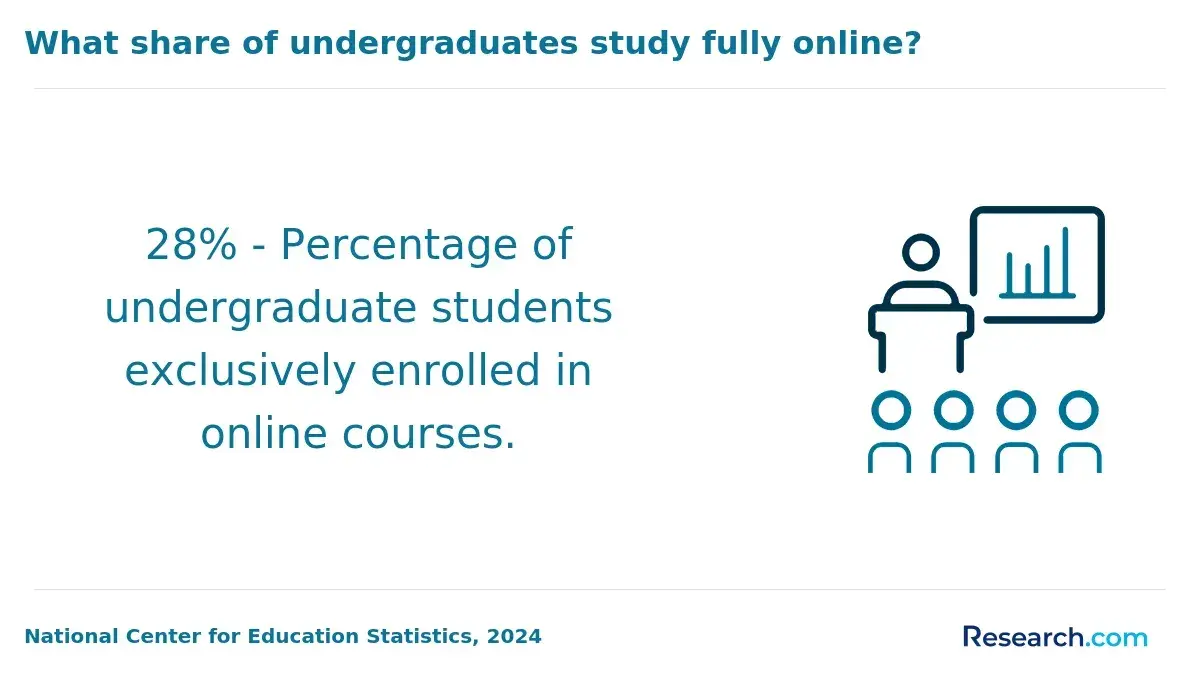
Distance learning is now mainstream in graduate education. NCES data released in 2024 showed that more than half of U.S. graduate students took at least one distance education course in fall 2022, which helps explain why many hiring managers no longer treat online study as unusual.
The bigger distinction is not online versus campus; it is quality versus weak fit. Before enrolling, verify that the university holds recognized institutional accreditation, examine faculty expertise, ask how doctoral advising works, and review whether graduates move into roles similar to your target career.
Online programs make the most sense for working professionals who need to keep a full-time job, live far from a campus, or want to apply doctoral research to their current organization. Hybrid programs may be better if you want face-to-face networking, intensive residencies, or stronger access to faculty and peer communities. Campus-based programs may still be preferable for students pursuing traditional academic careers where research assistantships, teaching experience, and faculty mentorship are central.
Be careful with public versus private comparisons. Public universities may have lower in-state tuition, but private nonprofit universities can offer scholarships, employer partnerships, or flexible formats that improve affordability. Institution type alone does not determine ROI; fit, cost after aid, reputation in your field, and career outcomes matter more.
What industries value professionals with Public Administration doctorate degrees?
Public Administration doctorate holders are valued in sectors where decisions involve public resources, regulations, community outcomes, and institutional accountability. The degree is especially relevant when an employer needs someone who can combine leadership experience with research, evaluation, budgeting, and policy judgment.
The table below shows industries and sectors where this credential can be useful. It also clarifies whether the doctorate is commonly a preferred advantage or mainly beneficial for advancement after substantial experience.
| Industry or sector | Why the doctorate is valued | Common roles | Credential value |
| Federal, state, and local government | Agencies need leaders who can manage policy, budgets, regulations, and public accountability | Agency director, city manager, policy executive, budget administrator | Strong for senior advancement, especially with relevant public-sector experience |
| Nonprofit and philanthropy | Organizations need evidence-based program design, fundraising strategy, governance, and impact evaluation | Executive director, chief program officer, foundation officer | Strong when paired with leadership and grant experience |
| Healthcare and public health | Complex systems require policy literacy, community health strategy, compliance, and program evaluation | Health policy director, public health administrator, community health executive | Useful for administrative and policy roles, not a substitute for clinical licensure |
| Higher education | Universities value research, teaching, institutional governance, and public affairs expertise | Professor, dean, institutional effectiveness leader, policy center director | Essential or highly preferred for tenure-track and senior academic roles |
| Consulting and research firms | Clients need rigorous analysis of government programs, organizational performance, and policy outcomes | Management consultant, program evaluator, policy consultant | Strong when supported by a portfolio, methods training, and client experience |
| Government contracting and public affairs | Firms need leaders who understand procurement, compliance, stakeholder engagement, and public systems | Public sector strategy lead, compliance director, government relations executive | Useful for specialized leadership roles, especially with sector knowledge |
BLS employment projections for 2024 to 2034 show management analysts growing faster than the average for all occupations, which supports demand for professionals who can evaluate organizations and recommend improvements. For doctorate holders, that demand is most meaningful when they can translate research into practical implementation rather than only produce academic analysis.
For readers comparing public administration with direct human services leadership, the best online MSW programs may be worth reviewing if your goal involves clinical practice, case management, or social work licensure rather than governance and policy leadership.
What executive or leadership roles can Public Administration doctorate degrees qualify you for?
A Public Administration doctorate can support executive or leadership roles, but it rarely replaces the need for managerial experience. The strongest candidates typically combine the doctorate with a track record in budgeting, staff leadership, public communication, program results, and stakeholder management.
The table below uses BLS May 2024 wage data for selected U.S. occupations that commonly overlap with public administration leadership. These figures are not salaries for doctorate holders specifically, but they help set a realistic market context for roles where the credential may strengthen candidacy.
| Role category | Median annual wage, BLS May 2024 | How the doctorate can help | What else employers usually expect |
| Top executives | $103,840 | Supports strategic leadership, governance, policy interpretation, and executive credibility | Senior management experience, measurable results, political and organizational judgment |
| General and operations managers | $101,280 | Helps with performance management, systems thinking, and cross-functional leadership | Operational experience, budgeting, team supervision, process improvement |
| Administrative services and facilities managers | $108,390 | Can support leadership in large public institutions and compliance-heavy environments | Facilities, procurement, safety, and administrative operations background |
| Management analysts | $101,190 | Strengthens research design, evaluation, organizational diagnosis, and evidence-based recommendations | Consulting experience, data analysis, client communication, sector expertise |
| Social and community service managers | $78,240 | Supports program strategy, grant evaluation, community impact measurement, and executive growth | Human services experience, fundraising, staff leadership, community partnerships |
| Postsecondary education administrators | $103,960 | Can help with institutional governance, policy leadership, accreditation, and academic administration | Higher education experience, faculty relations, compliance, student success strategy |
Leadership paths make the most sense if you want to influence institutions from the inside. They may not be ideal if you prefer independent research, teaching, or project-based consulting. The best executive outcomes usually come when the dissertation or applied project solves a problem directly connected to your current or target sector.
Are there academic careers available for Public Administration doctorate holders?
Yes. Public Administration doctorate holders can pursue academic careers as faculty members, researchers, program directors, department chairs, policy center leaders, or higher education administrators. The right doctorate type matters: a PhD is usually stronger for research-intensive faculty roles, while a DPA or other applied doctorate may fit professional schools, practitioner-focused teaching, and administrative leadership.
Academic careers should be evaluated differently from executive roles because the rewards and risks are different. The table below compares common academic options and what they usually require.
| Academic path | Typical setting | What matters most | Fit for DPA or PhD holders |
| Tenure-track professor | Universities with public affairs, political science, policy, or administration departments | Research agenda, publications, teaching record, dissertation quality | Often better aligned with PhD training, though some applied programs can fit practice-oriented schools |
| Clinical or professional faculty | Professional schools, online universities, practitioner-focused programs | Professional experience, teaching ability, applied scholarship, field credibility | Strong fit for DPA holders with leadership experience |
| Adjunct instructor | Community colleges, universities, online programs | Subject expertise, teaching availability, graduate credentials | Accessible but often part-time and not a reliable primary income source |
| Research center role | University-based policy centers, institutes, and grant-funded research units | Methods training, grant writing, publications, policy expertise | Strong fit for research-focused doctoral graduates |
| Academic administrator | Colleges, universities, public systems, accreditation offices | Institutional leadership, compliance, assessment, faculty and student policy | Good fit for experienced administrators with doctoral credentials |
BLS May 2024 data places the median annual wage for postsecondary teachers overall at $83,980, though pay varies substantially by discipline, institution type, rank, and contract status. That means an academic path can be intellectually rewarding but may not automatically out-earn executive or consulting roles.
Time to completion is another factor. NCSES doctoral data released in 2024 shows that many non-STEM doctorates take several years beyond coursework because dissertation research, advising, and professional obligations can extend the timeline. If your goal is a faculty role, ask programs about research mentorship, teaching opportunities, placement history, and whether online students receive the same scholarly support as campus-based students.
Are there consulting opportunities for Public Administration doctorate holders?
Consulting can be one of the strongest uses of a Public Administration doctorate because clients often pay for specialized judgment, evaluation expertise, and credibility with public-sector systems. Doctorate holders may consult independently, join management consulting firms, work with research organizations, or build advisory practices around public finance, nonprofit strategy, performance measurement, equity audits, emergency preparedness, or organizational change.
Consulting paths differ from full-time leadership roles in how income, risk, and day-to-day work are structured. The table below highlights the main trade-offs so you can decide which model fits your goals.
| Path | Best for | Advantages | Risks or limitations |
| Independent consultant | Experienced professionals with a strong network and defined niche | Flexibility, high autonomy, ability to choose projects | Unstable income, business development burden, limited benefits |
| Consulting firm employee | Doctorate holders who want structured client work and team-based delivery | Stable salary, larger clients, mentorship, exposure to multiple sectors | Travel, utilization targets, less control over projects |
| Research and evaluation contractor | Professionals with strong methods training and grant or program evaluation experience | Clear use of doctoral research skills, strong fit for public agencies and nonprofits | Project funding cycles can be uncertain |
| Internal consultant | Employees who want to improve their current agency, university, or nonprofit from within | Stable employment, direct organizational influence, practical application of research | May have less external visibility or earning upside |
BLS May 2024 data reports a $101,190 median annual wage for management analysts, and BLS projections for 2024 to 2034 show faster-than-average growth for that occupation. For a Public Administration doctorate holder, this suggests opportunity, but the degree is most marketable when paired with a consulting-ready portfolio: evaluation reports, dashboards, policy briefs, grant outcomes, presentations, and measurable organizational improvements.
A common mistake is assuming that "doctor" automatically creates consulting demand. Clients usually buy a solution, not a credential. Before pursuing this route, define the problem you solve, the buyers who fund that work, and the evidence you can show that your recommendations improve outcomes.
What nonprofit or public sector roles are open to Public Administration doctorate holders?
Public Administration doctorate holders can pursue roles across government agencies, public universities, foundations, advocacy groups, community organizations, and mission-driven nonprofits. These paths often appeal to professionals who care about public impact as much as income, but they still require careful evaluation because salaries, benefits, advancement structures, and political pressures vary significantly.
The roles below are common options for doctorate holders who want to stay close to public service. They are especially relevant for professionals who already have experience in government, nonprofit management, social policy, public health, housing, education, or community development.
- City or county administrator: Oversees local government operations, budgets, public services, and elected-official relationships.
- Policy director: Leads policy research, legislative strategy, stakeholder engagement, and implementation planning.
- Program evaluation director: Measures whether public or nonprofit programs are effective, equitable, and financially sustainable.
- Foundation program officer: Designs grant strategies, evaluates proposals, manages community partnerships, and assesses social impact.
- Nonprofit executive director: Leads strategy, fundraising, board relations, staffing, compliance, and mission delivery.
- Public health or human services administrator: Manages community programs, interagency partnerships, compliance requirements, and service outcomes.
Nonprofit and public-sector work may pay less than private consulting or corporate strategy roles, but it can offer stronger mission fit, public pension access in some government roles, and direct influence over community outcomes. The doctorate is most useful when it helps you lead larger systems, compete for executive roles, or bring stronger evaluation and policy capacity to an organization.
If you are earlier in your education journey and are drawn to social behavior, inequality, communities, and institutions, the best online bachelors in sociology programs can provide a foundation that later connects well with public administration, public policy, nonprofit leadership, or social research.
How do Public Administration doctorate degrees impact long-term earning potential?
A Public Administration doctorate can improve long-term earning potential, but the impact is indirect. The degree may help you qualify for senior roles, academic appointments, consulting work, or research leadership, yet salary still depends on sector, location, prior experience, employer budget, and whether the job actually rewards doctoral-level expertise.
BLS 2024 education earnings data shows doctoral degree holders had median weekly earnings of $2,083, compared with $1,840 for master's degree holders. This gap is useful for broad context, but it is not specific to Public Administration and should not be treated as a guaranteed return on investment.
The table below compares the most important financial factors that shape whether the doctorate pays off over time. It is designed to help you think beyond headline salaries.
| Financial factor | Why it matters | How to evaluate it |
| Tuition and required fees | NCES data released in 2024 reported average graduate tuition and required fees of $12,596 at public institutions and $29,931 at private nonprofit institutions for 2022-23 | Compare total program cost after scholarships, assistantships, employer support, and transfer credits |
| Time to completion | Part-time students may preserve income but extend the dissertation timeline | Ask for median completion time for students in your format, not just the advertised minimum |
| Opportunity cost | Even online students spend time on coursework, research, residencies, and writing | Estimate whether the degree will delay promotions, consulting work, or family responsibilities |
| Sector salary ceiling | Government and nonprofit roles may have pay bands that limit immediate salary jumps | Review salary ranges for your target job title before enrolling |
| Employer support | Tuition assistance can reduce risk and signal organizational value | Ask whether your employer funds doctoral study, requires service commitments, or supports applied research |
| Credential requirement | Some roles require or strongly prefer a doctorate, while others value experience more | Analyze job postings and talk with people already in your target roles |
The highest-paying outcomes usually come from combining the doctorate with executive responsibility, specialized consulting, institutional leadership, or a high-demand niche such as public finance, health policy, analytics, emergency management, or government contracting. The weakest ROI often occurs when students enroll without a target role, choose a specialization with limited demand, or assume the doctorate alone will create a promotion.
How can you assess if a doctorate degree in Public Administration is aligned with your career goals?
The best way to decide is to connect the degree to a specific career outcome before you apply. A Public Administration doctorate is usually a stronger fit for experienced professionals who want senior leadership, applied research, policy authority, consulting credibility, or academic opportunities; it is often a weaker fit for someone who mainly needs a faster master's credential for entry into public service.
Use the steps below to test whether the doctorate aligns with your goals. These are practical filters for comparing online, hybrid, public, private nonprofit, and campus-based programs without relying only on rankings.
- Define your target role first, such as city manager, policy professor, nonprofit executive, public finance consultant, or agency director.
- Check whether job postings for that role require a doctorate, prefer a doctorate, or mainly emphasize experience and an MPA.
- Compare DPA and PhD formats based on your goal: applied leadership and practice for many DPA programs, research and academic preparation for many PhD programs.
- Verify institutional accreditation and confirm whether the program has public administration faculty who publish, consult, or lead in your area of interest.
- Ask for completion data, dissertation support details, residency requirements, and examples of recent student projects or dissertations.
- Calculate total cost after aid, employer reimbursement, travel, fees, technology, and reduced work capacity.
- Interview alumni in your target field and ask whether the degree changed their opportunities, credibility, compensation, or job scope.
- Choose a specialization based on employer demand, not interest alone.
- Plan how you will use your dissertation or capstone as a career asset, such as a policy model, evaluation framework, or consulting portfolio piece.
If you discover that your immediate goal is public-sector entry, a promotion requiring a master's degree, or faster credentialing rather than doctoral-level research, a 1 year MPA online may be a more efficient step before considering a doctorate later.
Watch for red flags before enrolling. These problems do not always mean a program is poor, but they should prompt deeper questions.
- The program cannot explain where recent graduates work or how the curriculum supports specific career paths.
- Faculty expertise does not match your intended dissertation, policy area, or leadership niche.
- The school markets the doctorate as a guaranteed path to executive salary increases.
- Residency, dissertation, or technology costs are unclear until late in the admissions process.
- The program is flexible but offers limited advising, limited research-methods support, or no structured dissertation milestones.
- You are choosing the degree mainly for prestige rather than a defined career use.
A strong decision comes down to fit. If the doctorate helps you solve more complex problems, qualify for roles that genuinely value doctoral expertise, and build a credible body of work, it can be a worthwhile investment. If your target employers do not reward the credential, a shorter graduate certificate, MPA, MBA, MSW, or specialized professional credential may produce a better return.
Other Things You Should Know About Public Administration
Many programs take about three to seven years, depending on transfer credits, enrollment pace, dissertation progress, and whether the student is working full time. The dissertation or applied doctoral project is often the part that extends the timeline.
A DPA is generally designed for applied leadership and practitioner problem-solving, while a PhD is usually more research-intensive and better aligned with tenure-track academic careers. Program design varies, so review curriculum, faculty research, and dissertation expectations.
Many applied doctorate programs prefer or require professional experience because coursework often assumes familiarity with organizations, budgets, policy, and leadership challenges. Research-focused PhD programs may place more weight on academic preparation, research fit, and writing potential.
Most Public Administration doctorates require either a dissertation or a substantial applied doctoral project. Some professional programs use practice-based capstones, but students should still expect advanced research, writing, defense, and faculty review.
References
- 5 Jobs a Public Administration Degree Can Help You Land | UT Permian Basin Online https://online.utpb.edu/about-us/articles/political-science/5-jobs-a-public-administration-degree-can-help-you-land
- 17 Public Administration jobs - Academic Positions https://academicpositions.co.uk/jobs/field/public-administration
- What Does a Public Administrator Do? https://www.allbusinessschools.com/public-administration/career-paths/
- Highest Paying Careers & Jobs in Public Administration https://mpadegree.org/highest-paying-careers-jobs-in-public-service-sector/
- 4 Careers You Can Pursue with a Doctoral Degree in Public Administration https://smceducation.com/blog/careers-phd-public-administration/
- Best Public Administration Career Guide, Updated for 2026 https://www.publicadministrationdegrees.com/careers-public-administration
- Career Opportunities in Public Administration after a Masterâs Programme https://www.sciencespo.fr/ecole-affaires-publiques/en/careers/actions-opportunities/career-opportunities-public-administration/