
2026 What Can You Do with a Health Services Doctorate? Careers, Salaries, Academic Roles, and Industry Paths

Co-Founder and Chief Data Scientist
A Health Services doctorate can move your career from managing programs to shaping systems, policy, research, and executive strategy. The decision matters because healthcare leadership demand remains strong: the U. S. Bureau of Labor Statistics projects medical and health services manager employment to grow 29% from 2023 to 2033. This guide is for working healthcare professionals, administrators, clinicians, analysts, and educators comparing doctoral options. You will learn which careers the degree supports, how salaries vary, where online doctorates are respected, and how to decide whether the investment fits your goals.
Key Things to Know About Online Health Services Doctorate Career Outcomes
- A Health Services doctorate is most useful for senior leadership, applied research, policy, consulting, and faculty roles; BLS data lists the May 2024 median pay for medical and health services managers at $117,960.
- Online programs can be respected when they are institutionally accredited, rigorous, and aligned with the role you want; employers usually weigh accreditation, experience, dissertation or capstone relevance, and measurable leadership outcomes more than delivery format alone.
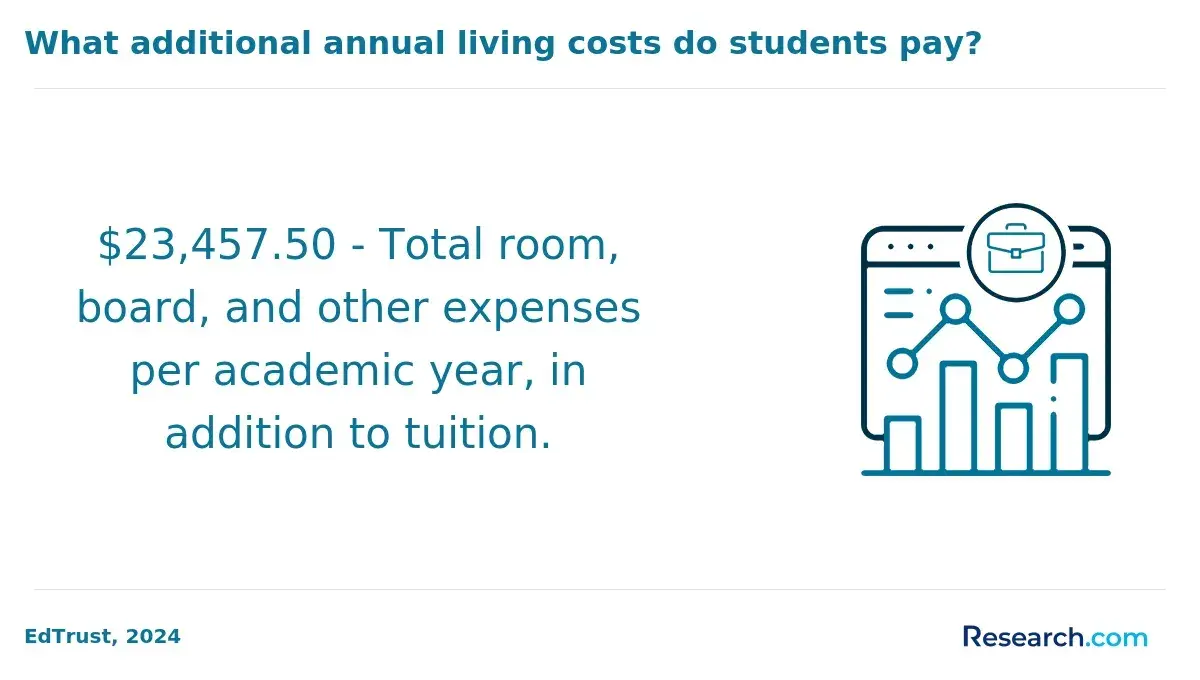
- Cost and payoff vary widely: NCES-published graduate tuition benchmarks show annual graduate tuition and required fees around $12,600 at public institutions and around $29,900 at private nonprofit institutions, so ROI depends heavily on program price, employer tuition support, time to completion, and target sector.
What skills do you gain from Health Services doctorate degrees?
A Health Services doctorate is an advanced degree focused on improving healthcare delivery, operations, outcomes, policy, and organizational performance. Depending on the program, the credential may be a PhD in Health Services or Health Services Research, a Doctor of Health Administration, a Doctor of Health Science, or a related applied doctorate. The key difference from a master's degree is depth: doctoral students are expected to evaluate evidence, design solutions, lead change, and contribute original applied or scholarly work.
| Skill area | What it means in practice | Career value |
| Health systems analysis | Evaluating how hospitals, insurers, public agencies, and community organizations interact | Useful for strategy, operations, policy, and population health leadership |
| Applied research design | Building studies, program evaluations, quality improvement projects, and evidence reviews | Supports academic, consulting, analytics, and executive decision-making roles |
| Healthcare finance and resource allocation | Interpreting budgets, reimbursement models, cost drivers, and performance metrics | Important for service-line leadership, administrative roles, and value-based care work |
| Quality, safety, and outcomes improvement | Using data to reduce variation, improve patient outcomes, and redesign care processes | Highly relevant in hospitals, health systems, accreditation, and consulting |
| Policy and regulatory interpretation | Understanding how federal, state, payer, and accreditation requirements affect care delivery | Valuable in government, nonprofits, compliance, advocacy, and executive roles |
| Leadership and change management | Guiding teams, stakeholders, and organizations through complex transformation | Central to C-suite, director, dean, and consulting pathways |
| Data-informed communication | Translating research findings into board presentations, grant proposals, publications, and strategy documents | Helps doctorate holders influence senior stakeholders and cross-functional teams |
If you are still building foundational administrative knowledge, a masters in healthcare administration may be a better first step than a doctorate. A doctorate generally makes more sense when you already have substantial experience and need research, strategy, teaching, policy, or executive credibility for your next move.
One common mistake is enrolling because the title sounds prestigious without identifying the skill gap you need to close. Before applying, map your current resume against the job descriptions you want; if the missing requirements are doctoral-level research, senior leadership, teaching, or systems strategy, the degree is more likely to be relevant.
What specializations can you pursue within Health Services doctorate degrees?
Specialization choice can shape your career more than the degree title itself. A broad Health Services doctorate may offer flexibility, while a focused concentration can help you compete for roles in analytics, policy, quality, informatics, or executive administration.
The table below shows common specialization areas and how they tend to connect to career outcomes. Use it to compare whether you want maximum flexibility or a clearer niche.
| Specialization | Best fit for | Common career directions |
| Health administration and leadership | Professionals aiming for executive or senior operational roles | Chief operating officer, vice president of operations, health system administrator |
| Health policy | Professionals interested in regulation, advocacy, payment models, or government work | Policy director, legislative analyst, public health agency leader, advocacy executive |
| Quality and patient safety | Clinicians and administrators focused on performance improvement | Chief quality officer, director of patient safety, accreditation consultant |
| Population health | Professionals working across communities, payers, and health systems | Population health executive, value-based care strategist, community health director |
| Health informatics or data analytics | Professionals who want to use data, AI tools, and digital systems to improve care | Health analytics director, informatics leader, digital transformation consultant |
| Health services research | Students seeking academic, think tank, or advanced research roles | Research scientist, faculty member, evaluation director, principal investigator |
| Education and workforce development | Healthcare educators and leaders responsible for training programs | Program director, faculty member, dean, clinical education executive |
A niche specialization is strongest when it matches a market need and your existing background. For example, health informatics and analytics are gaining attention as healthcare organizations adopt AI-assisted decision tools, but employers still need leaders who understand governance, privacy, bias, workflow integration, and clinical impact rather than technology alone.
If cost is the main barrier and you are still deciding between undergraduate, master's, and doctoral routes, comparing a cheapest online healthcare administration degree can help you understand lower-cost entry points before committing to doctoral tuition. The mistake to avoid is choosing a concentration based only on personal interest without checking employer demand in your target geography or sector.
Are online Health Services doctorate programs respected by employers?
Online Health Services doctorate programs can be respected by employers when the school is institutionally accredited, the curriculum is rigorous, faculty have relevant expertise, and the doctoral project or dissertation produces work that applies to real healthcare problems. For many working professionals, online or hybrid delivery is not a shortcut; it is the only practical way to continue full-time leadership work while completing advanced study.
Employer perception usually depends on four signals: accreditation, institutional reputation, program rigor, and career fit. A hospital, payer, university, consulting firm, or public agency is more likely to value an online doctorate when the graduate can show evidence of applied impact, such as a publishable study, cost-reduction project, quality improvement initiative, or policy evaluation.
The comparison below can help you decide whether online, hybrid, or campus-based delivery fits your learning style and target career.
| Format | Best for | Potential limitation |
| Fully online | Working professionals who need geographic flexibility and asynchronous coursework | May require extra effort to build faculty relationships and research networks |
| Hybrid | Students who want flexibility plus periodic in-person residencies, labs, or networking | Travel costs and residency timing can complicate budgeting |
| Campus-based | Students pursuing intensive research training, assistantships, or traditional academic careers | Less flexible for full-time executives or professionals who cannot relocate |
Online education is now common across graduate healthcare programs, but you should still verify quality rather than assume all programs are equivalent. Ask whether the institution is regionally or institutionally accredited, whether dissertation chairs have health services research expertise, how often students interact with faculty, and whether graduates have moved into roles similar to your goal.
Students comparing speed and flexibility should also understand the trade-offs of accelerated healthcare programs. Faster formats can reduce opportunity cost, but they can also intensify workload, limit time for research development, and make it harder to balance executive responsibilities with doctoral writing.
What industries value professionals with Health Services doctorate degrees?
Health Services doctorate holders are valued in industries where decisions affect care quality, cost, access, compliance, and population outcomes. The degree is especially useful when employers need leaders who can interpret evidence, evaluate programs, and guide complex organizations rather than simply manage daily operations.
The table below summarizes industries where the credential may carry value and explains what each sector typically looks for.
| Industry or sector | Why the doctorate is valued | Examples of roles |
| Hospitals and health systems | Complex operations, quality improvement, regulatory compliance, and service-line strategy require evidence-based leadership | Chief quality officer, vice president of operations, director of population health |
| Insurance and managed care | Payers need leaders who understand value-based care, utilization, outcomes, and cost management | Medical economics leader, population health strategist, quality analytics director |
| Consulting firms | Clients pay for specialized expertise in transformation, performance improvement, and policy implementation | Healthcare consultant, principal consultant, strategy advisor |
| Universities and academic medical centers | Teaching, research, grants, and program leadership often require or prefer doctoral credentials | Faculty member, program director, research center leader |
| Government agencies | Public programs need policy, evaluation, compliance, and population-level health expertise | Health policy analyst, program evaluator, public health administrator |
| Nonprofit and advocacy organizations | Mission-driven organizations need credible leaders who can connect evidence, funding, and community outcomes | Executive director, grant-funded program leader, policy director |
| Health technology and informatics organizations | Digital health, AI, and data platforms need leaders who understand workflows, ethics, outcomes, and adoption | Clinical transformation director, informatics strategist, product advisor |
BLS employment projections show why healthcare management remains attractive: medical and health services manager jobs are projected to grow 29% from 2023 to 2033. That figure does not mean every doctorate holder will move into management, but it signals that organizations are likely to keep needing leaders who can handle growth, regulation, digital transformation, and workforce pressure.
The best industry choice depends on your risk tolerance and preferred impact. Corporate and consulting roles may pay more and move faster, while nonprofit and public-sector roles may offer mission alignment, policy influence, and broader population impact.
What executive or leadership roles can Health Services doctorate degrees qualify you for?
A Health Services doctorate can support advancement into executive and senior leadership roles, especially when paired with substantial professional experience. The degree alone usually does not replace operational credibility; instead, it strengthens your profile for roles that require strategic judgment, evidence-based decision-making, and cross-functional influence.
The roles below are common targets for experienced professionals who use the doctorate to move beyond department-level management.
| Leadership role | Typical scope | How the doctorate helps |
| Chief executive officer | Overall organizational strategy, financial performance, stakeholder relations, and mission execution | Signals advanced systems thinking, research literacy, and executive-level expertise |
| Chief operating officer | Daily operations, process improvement, workforce coordination, and service delivery | Supports evidence-based operational redesign and performance measurement |
| Chief quality officer | Patient safety, quality improvement, accreditation, outcomes, and risk reduction | Builds credibility in evaluation methods, quality science, and organizational change |
| Vice president of population health | Care coordination, risk stratification, community partnerships, and value-based initiatives | Helps connect data, policy, clinical operations, and population outcomes |
| Director of health analytics | Data strategy, performance dashboards, predictive modeling, and decision support | Strengthens ability to interpret evidence and lead analytics teams responsibly |
| Dean or academic program leader | Curriculum, faculty supervision, accreditation, student outcomes, and institutional strategy | Often meets doctoral credential expectations for higher education leadership |
According to BLS May 2024 wage data, the median salary for medical and health services managers was $117,960, while the highest earners in the occupation exceeded $239,200. This range matters because executive outcomes depend on organization size, geography, prior experience, and whether the role sits in a hospital system, payer, university, government agency, or consulting environment.
For leadership advancement, the doctorate is most effective when you can connect it to measurable results. Before applying, identify one or two strategic problems in your current organization that could become doctoral project material, such as reducing readmissions, improving access, redesigning care coordination, or evaluating a new digital health tool.
Are there academic careers available for Health Services doctorate holders?
Yes, Health Services doctorate holders can pursue academic careers, but the right pathway depends on the type of doctorate and the institution. A PhD is typically the strongest fit for tenure-track research positions, while applied doctorates such as a DHA, DHS, or DrPH may align well with teaching, program leadership, clinical education, executive education, or practice-focused faculty roles.
The academic market rewards publication potential, teaching ability, grant experience, and methodological skill. A doctorate can open the door, but your scholarly record, research agenda, and fit with the department are usually decisive.
| Academic path | Best-fit doctorate profile | What hiring committees look for |
| Tenure-track professor | Research-intensive PhD or equivalent scholarly doctorate | Publications, research methods, grant potential, clear research agenda |
| Clinical or practice professor | Applied doctorate plus strong professional leadership experience | Teaching skill, field credibility, applied project expertise |
| Adjunct instructor | Doctorate or advanced master's degree with professional experience | Subject expertise, availability, teaching evaluations, industry relevance |
| Program director | Doctorate plus curriculum, accreditation, or administrative experience | Leadership ability, accreditation knowledge, student outcome management |
| Research scientist | PhD or research-heavy doctorate | Study design, publications, data analysis, funded-project experience |
BLS May 2024 data lists the median annual wage for postsecondary health specialties teachers at $105,650. That figure is useful as a broad benchmark, but academic pay varies significantly by institution type, rank, discipline, grant funding, and whether the position is tenure-track, non-tenure-track, or part time.
Academic careers make sense if you enjoy writing, research, mentoring, curriculum design, and long timelines for impact. They may be less satisfying if your main goal is rapid compensation growth, daily operational authority, or immediate executive decision-making.
Are there consulting opportunities for Health Services doctorate holders?
Yes, consulting can be one of the strongest ways to use a Health Services doctorate, especially for professionals with a clear niche and a track record of measurable results. Consultants help healthcare organizations solve problems in quality improvement, operations, compliance, strategy, value-based care, analytics, workforce development, and digital transformation.
Consulting can be full time, independent, project-based, or combined with an executive or academic role. The best fit depends on how much you value autonomy, income variability, travel, business development, and client-facing work.
| Consulting model | Best for | Main trade-off |
| Large consulting firm | Professionals who want structured teams, major clients, and rapid exposure to complex projects | High workload, travel, and less control over project selection |
| Boutique healthcare consulting | Experts in quality, compliance, analytics, operations, or policy | Requires specialized credibility and strong client relationships |
| Independent consulting | Experienced leaders with a strong network and marketable niche | Income can fluctuate and business development becomes part of the job |
| Academic or executive consulting | Faculty members or executives who consult part time | May require conflict-of-interest review and careful workload management |
To decide whether consulting is realistic, look for proof that people will pay for your expertise. Strong signals include invitations to speak, repeated requests for advice, published work, successful internal projects, grant experience, or a specialized skill that organizations struggle to hire internally.
Several steps can help you position a doctorate for consulting without overrelying on the credential itself:
- Choose a doctoral project that produces a reusable framework, evaluation model, or implementation playbook.
- Build a portfolio with case studies, publications, presentations, or measurable project outcomes.
- Define your buyer clearly, such as hospitals, payers, public agencies, universities, or nonprofits.
- Translate academic language into business value, including cost, quality, risk, access, compliance, or workforce impact.
- Develop pricing and scope discipline before accepting independent projects.
The common mistake is assuming "doctor" automatically creates a consulting market. Clients hire consultants to solve urgent problems, so your doctorate should strengthen a practical offer rather than replace one.
What nonprofit or public sector roles are open to Health Services doctorate holders?
Nonprofit and public-sector roles can be a strong fit for Health Services doctorate holders who want to influence access, equity, policy, funding, community health, and program outcomes. These roles may not always match the highest private-sector salaries, but they can offer broad impact and leadership responsibility.
The table below shows where the doctorate can be useful in mission-driven settings.
| Role type | Where it appears | How the doctorate adds value |
| Public health administrator | Local, state, or federal agencies | Supports program design, evaluation, policy implementation, and systems coordination |
| Policy director | Advocacy groups, foundations, think tanks, professional associations | Builds credibility when interpreting evidence and advising on regulation or payment reform |
| Program evaluator | Government agencies, nonprofits, grant-funded initiatives | Uses research methods to measure whether programs improve outcomes |
| Executive director | Community health nonprofits, coalitions, health advocacy organizations | Combines strategy, fundraising, evidence use, and stakeholder leadership |
| Grant or research center leader | Universities, foundations, public-private partnerships | Helps manage funded initiatives and translate findings into practice |
These paths make sense if you want to influence population-level outcomes rather than focus only on organizational revenue or internal operations. They may be less ideal if your primary goal is maximizing compensation quickly, because public budgets and grant cycles can limit pay flexibility.
Before choosing this route, examine job postings from agencies and nonprofits you would actually work for. Pay attention to whether they require a doctorate, prefer it, or value it only when combined with grant writing, policy analysis, epidemiology, data analytics, or executive leadership experience.
How do Health Services doctorate degrees impact long-term earning potential?
A Health Services doctorate can improve long-term earning potential when it helps you move into senior leadership, consulting, specialized research, analytics, or academic administration. However, the degree should be evaluated as a career investment, not as an automatic salary upgrade. Federal wage data is organized by occupation rather than exact degree title, so the most reliable way to estimate payoff is to compare target roles before and after the credential.
The table below uses occupation-level salary benchmarks to show how career direction affects earning potential. These figures should be used as planning ranges, not promises.
| Career direction | Relevant salary benchmark | What it means for ROI |
| Healthcare executive or senior administrator | Medical and health services managers had a May 2024 median wage of $117,960 | ROI is strongest when the doctorate supports promotion into system-level leadership |
| High-level healthcare management | Top earners in medical and health services management exceeded $239,200 in May 2024 | Higher pay is possible, but usually requires experience, scale, and organizational responsibility |
| Academic health specialties teaching | Postsecondary health specialties teachers had a May 2024 median wage of $105,650 | Academic ROI depends on rank, institution, tenure status, grants, and administrative appointments |
| Consulting | Income varies by firm level, client type, specialization, and utilization | ROI may be high for experts with a marketable niche, but income can be less predictable |
| Public sector or nonprofit leadership | Pay varies by agency, budget, grant funding, and region | ROI may include influence, stability, and mission impact rather than salary alone |
Cost is the other side of the ROI equation. NCES-published graduate tuition benchmarks show annual graduate tuition and required fees at roughly $12,600 for public institutions and roughly $29,900 for private nonprofit institutions; over three years, that creates a tuition-only benchmark of about $37,800 to $89,700 before books, fees, travel, lost time, and financing costs. A part-time online program can reduce relocation and income loss, but it may extend the time before the degree produces career benefits.
Comparing doctorate outcomes with master's-level roles is especially important in informatics, analytics, and administration. For example, reviewing health information management salary data can help you decide whether a doctorate is necessary for your target role or whether certifications, analytics training, or a master's degree would produce a better near-term return.
To estimate your personal payoff, focus on the role you want next, not the degree in isolation. If your current employer offers tuition assistance, promotion pathways, research support, or paid time for doctoral work, the investment becomes less risky. If you would need to borrow heavily without a clear target role, waiting or choosing a lower-cost program may be wiser.
How can you assess if a doctorate degree in Health Services is aligned with your career goals?
The right question is not simply whether a Health Services doctorate is "worth it." The better question is whether the degree is the most efficient path to the career outcome you want. It is a strong fit for some professionals and an expensive distraction for others.
Use the checklist below to test alignment before you apply. The goal is to connect your program choice to a specific career path, not just a credential.
- Define your target role in one sentence, such as "I want to become a chief quality officer," "I want to teach full time," or "I want to consult on value-based care."
- Review 20 job postings for that role and record whether a doctorate is required, preferred, or rarely mentioned.
- Identify the skills you lack, such as research methods, finance, policy analysis, informatics, teaching, or executive leadership.
- Compare degree types, including PhD, DHA, DHS, DrPH, and EdD-style health leadership programs, based on your preferred career setting.
- Verify institutional accreditation and any field-specific accreditation or professional expectations relevant to your sector.
- Ask programs for completion timelines, dissertation or capstone expectations, faculty availability, residency requirements, and recent graduate outcomes.
- Calculate total cost, including tuition, fees, travel, books, technology, financing, and reduced work capacity.
- Speak with at least three people who hold the type of role you want and ask whether the doctorate changed their opportunities.
The following comparison can help you decide whether the doctorate matches your stage and goal.
| If your goal is... | A Health Services doctorate may make sense when... | It may not be the best next step when... |
| Executive advancement | You already manage teams or budgets and need systems-level credibility | You still need basic management experience or an entry-level administrative role |
| Academic career | You want to teach, publish, lead programs, or conduct research | You dislike writing, long research timelines, or uncertain faculty hiring markets |
| Consulting | You have a defined niche and evidence that clients value your expertise | You lack a network, portfolio, or clear problem you can solve |
| Policy or public sector leadership | You want to evaluate programs, shape policy, or lead mission-driven initiatives | You are primarily seeking the highest possible private-sector compensation |
| Career change into healthcare | You already have adjacent leadership, research, or analytics experience | You are using the doctorate to enter the field without healthcare exposure |
Common red flags include choosing a school without verifying accreditation, assuming online means easier, ignoring dissertation support, selecting a specialization without market research, and borrowing based on best-case salary assumptions. A strong program should be able to explain who it serves, what graduates do, how students are supported, and how the curriculum connects to real healthcare problems.
If you are comparing public and private universities, avoid assuming institution type alone determines ROI. A lower-cost public program can be a strong value, but a private nonprofit program with better faculty fit, employer connections, or dissertation support may be worthwhile for some students. The best choice is the one that combines affordability, credibility, completion support, and career alignment.
Other Things You Should Know About Health Services
Yes. Many programs admit healthcare administrators, analysts, policy professionals, educators, and nonprofit leaders. Clinical experience can help in some pathways, but it is not always required. Admissions requirements vary by school, so review prerequisites carefully.
Many applied programs take about three to five years, while research-intensive PhD pathways can take longer depending on dissertation scope, enrollment pace, and research requirements. Part-time online students should ask programs for actual median completion times, not only the advertised minimum.
Many do, but some applied doctorates use a doctoral capstone, practice project, or applied research project instead. A dissertation is usually more research-focused, while a capstone often emphasizes solving a practical healthcare problem.
It depends on your goal. An MBA may be better for finance, general management, entrepreneurship, or corporate strategy. A Health Services doctorate is usually stronger for research-informed leadership, policy, quality improvement, teaching, and senior healthcare systems work.
References
- What Can You Do With a Public Health Degree? https://www.publichealthdegrees.org/careers/what-can-you-do-with-public-health-degree/
- Doctorate in Healthcare Administration: Lead With Prevention https://staginglungcancer.org/doctorate-in-healthcare-administration-lead-with-prevention
- Top 30 Healthcare Management Degree Options - Healthcare Management Degree Guide https://www.healthcare-management-degree.net/top-healthcare-management-degree-options/
- Careers in healthcare and public health - MSc/PhD Advice 19405 https://www.postgraduatestudentships.co.uk/advice/careers-in-healthcare-and-public-health/19405
- PhD in Public Health: Career Paths & Opportunities https://dblp.ucnedu.org/blog/career-paths-with-a-phd-in-public-health/
- Health Management Careers https://www.ache.org/Career-Resources/Start-Your-Career/Health-Management-Careers
- How to Doctorate in Healthcare Management | Eduminds Learning https://www.edumindslearning.com/blog/How-to-Doctorate-in-Healthcare-Management-Complete-Guide
- Top Doctor of Health Science Careers | University of Bridgeport https://www.bridgeport.edu/news/top-careers-with-doctor-of-health-science/
- Leadership at Scale: Exploring Doctoral Paths in Health Administration https://www.scuhs.edu/drwhl-article/leadership-at-scale-exploring-doctoral-paths-in-health-administration/


