2027 Shortest Online Supply Chain / Logistics Associate Degree Programs: Fast AS, AA, AAS, and Transfer Degree Options

Co-Founder and Chief Data Scientist
Choosing the fastest online supply chain or logistics associate degree means balancing speed with transfer value, cost, and job readiness. This guide is for students who want a practical credential without spending unnecessary semesters in school.
The field remains timely: the U. S. Bureau of Labor Statistics reported a May 2024 median annual wage of $80,880 for logisticians, showing why faster entry into supply chain roles can matter. You'll learn how AA, AS, AAS, and transfer pathways compare so you can choose a program that fits your timeline and goal.
Key Things You Should Know
- The shortest realistic online supply chain or logistics associate degrees are usually 60-credit programs with year-round enrollment, 5-week to 8-week courses, and generous transfer-credit policies; many motivated full-time students finish in about 12 to 18 months.
- Speed does not always mean lower cost: College Board's 2024 data placed average published in-district tuition and fees at public two-year colleges at $4,050 for 2024-25, but online fees, books, retaken courses, and lost transfer credits can change the total.
- An AAS is often faster for workforce entry, while AA and AS options usually transfer more cleanly into bachelor's programs; the best choice depends on whether your priority is employment, bachelor's transfer, promotion, or career change.
Which Online Supply Chain / Logistics Associate Degree Programs Can Be Completed in the Shortest Time?
The fastest online supply chain and logistics associate degree programs are usually not "short" because they require fewer academic standards. They are faster because they use compressed terms, accept more previous credit, offer courses year-round, and avoid slow prerequisite sequences.
Most associate degrees require about 60 credits. A student starting with no transfer credits usually needs four traditional semesters, but an accelerated calendar can reduce the calendar time if the student can handle a heavier pace. The table below compares the program models that most often produce the shortest completion timelines.
| Program model | Typical credits | Shortest realistic timeline | Best fit | Main caution |
| Accelerated AAS in logistics or supply chain management | 60 to 65 | 12 to 18 months with full-time, year-round study | Students seeking entry-level logistics, warehouse, procurement, or operations roles quickly | Some technical credits may not transfer cleanly to a bachelor's degree |
| Online AS in business with supply chain concentration | 60 | 15 to 20 months with 8-week terms | Students who want both job preparation and a stronger bachelor's-transfer pathway | May include more general education and quantitative coursework |
| Online AA transfer degree with logistics electives | 60 | 16 to 24 months, depending on course availability | Students planning to transfer into business, operations, or supply chain bachelor's programs | May be less specialized for immediate logistics employment |
| Degree-completion associate pathway with transfer credits | Remaining credits vary | Under 12 months if many credits apply to the degree | Students with prior college, military training, AP, CLEP, or workforce learning | "Accepted" credits may not all count toward required logistics, business, or general education categories |
For students starting from zero credits, the shortest dependable option is often an AAS with accelerated online courses and summer availability. For students with prior credits, the fastest option is usually the school that applies the most credits directly toward the degree, not necessarily the school with the most aggressive advertised timeline.
Before choosing a fast program, ask the admissions or advising office for a degree audit, not just a brochure timeline. A useful audit should show how many credits you still need, which courses are offered in each term, whether any courses have prerequisites, and whether the program has internships, proctored exams, or in-person requirements.
Fast programs are usually best for students who already have strong time-management skills, stable internet access, and enough weekly availability to take multiple compressed courses. Students working unpredictable shifts, returning after a long academic break, or needing developmental math or writing may be better served by a slightly longer plan that protects completion and grades.
How Do AA, AS, and AAS Online Supply Chain / Logistics Associate Degrees Differ in Completion Time?
AA, AS, and AAS degrees can all lead to a supply chain or logistics-related credential, but they are designed for different outcomes. The completion time can look similar on paper because most require about 60 credits, yet the fastest practical path depends on the mix of general education, technical courses, electives, and transfer requirements.
The table below shows how each associate degree type usually functions for online logistics students. Use it to match the degree format to your next step rather than choosing only by the number of months advertised.
| Degree type | Primary purpose | Typical logistics content | Speed advantage | Best choice when |
| AA | Bachelor's transfer, often into business or liberal arts-based programs | Usually electives or a concentration rather than deeply technical logistics courses | Can be efficient if it follows a statewide transfer plan | You want maximum flexibility for a bachelor's degree |
| AS | Bachelor's transfer with more business, math, analytics, or science orientation | Often includes business, statistics, economics, operations, or supply chain courses | Can reduce repeated coursework after transfer | You want a balance of transfer readiness and supply chain relevance |
| AAS | Workforce preparation | Usually includes transportation, inventory, procurement, warehousing, ERP, or logistics operations | Often feels more direct because fewer courses are unrelated to the occupation | You want employment or advancement as soon as possible |
| Associate transfer degree | Guaranteed or preferred transfer pathway into a partner bachelor's program | Varies by articulation agreement | Can save time later by preventing credit loss | You already know the bachelor's program you want |
An AAS can be the fastest route to job-focused skills because it often emphasizes applied coursework. However, a student who later wants a bachelor's in supply chain, operations, business administration, or project leadership should check transfer rules carefully. If long-term advancement matters, comparing an associate plan with a future project manager bachelor degree can prevent choosing credits that do not support the next credential.
A common mistake is assuming that "career-focused" always means better. An AAS may be better for warehouse operations, logistics coordination, dispatch support, purchasing support, or inventory control. An AA or AS may be better if the student's real goal is analyst, operations manager, procurement manager, or supply chain leadership work that commonly favors a bachelor's degree.
Which Online Supply Chain / Logistics Associate Degree Programs Accept the Most Transfer Credits?
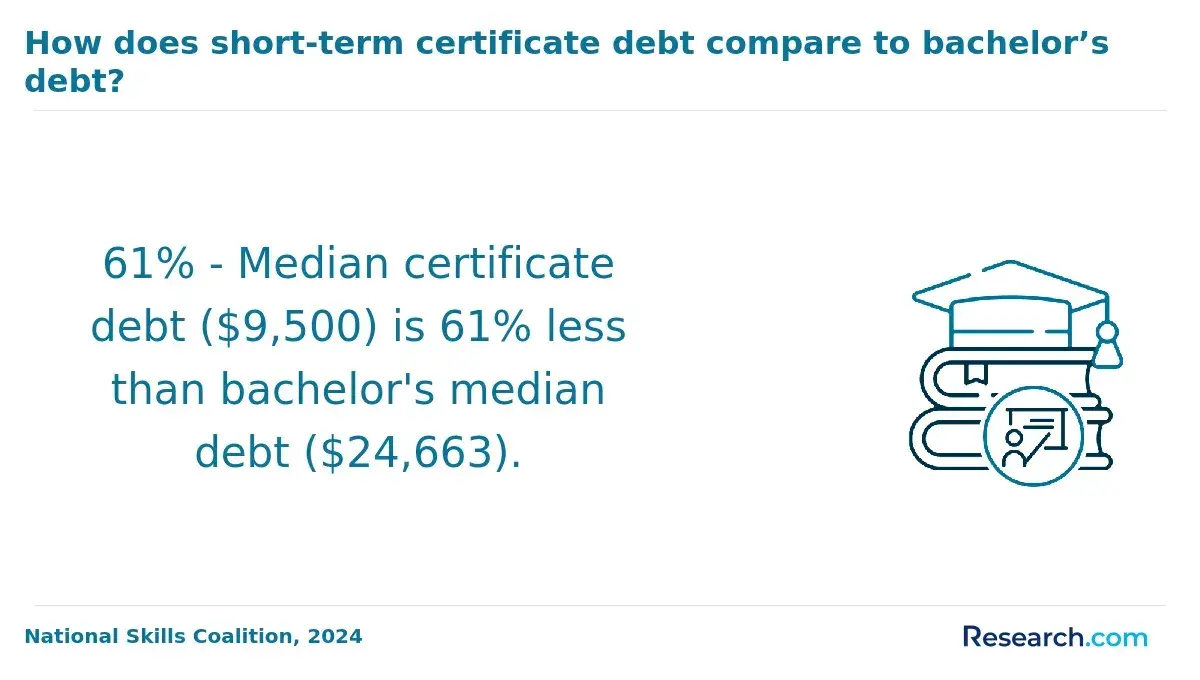
The programs that accept the most transfer credits usually have clear transfer-credit maximums, published residency requirements, credit for prior learning options, and flexible general education rules. A school may advertise that it accepts many transfer credits, but the more important question is how many credits apply to the exact supply chain or logistics degree plan.
Transfer-friendly programs often evaluate several types of prior learning. The table below explains which credit sources may shorten completion time and what students should verify before enrolling.
| Credit source | How it can shorten the degree | What to verify |
| Prior college coursework | May satisfy general education, business, math, or elective requirements | Whether the credits apply to required categories or only count as free electives |
| Military training | May count through evaluated training recommendations | Whether the institution uses recognized military transcript evaluations |
| AP, CLEP, or DSST exams | May replace introductory general education or business courses | Minimum scores, credit limits, and whether exams satisfy degree requirements |
| Industry training or certifications | May support prior learning assessment in some programs | Documentation requirements, portfolio fees, and maximum credits allowed |
| Workforce or experiential learning | May reduce elective or technical coursework in schools with portfolio assessment | Whether the process is available for logistics-related experience |
Students trying to finish quickly should complete a transfer-credit review before committing to a start date. The fastest-looking program may become slower if key courses do not transfer, while a less advertised program may be faster after a careful credit evaluation.
Use this sequence when comparing transfer-heavy options:
- Request an unofficial degree audit using all prior transcripts, exam scores, military records, and training documentation.
- Ask how many credits remain after transfer, not just how many credits were accepted by the college.
- Confirm the residency requirement, which is the minimum number of credits you must complete at that school.
- Check whether logistics, business, math, and computer courses have expiration rules or minimum grade requirements.
- Ask for a term-by-term completion map showing when each remaining course is offered.
The biggest red flag is vague language such as "up to" a high number of transfer credits without a written audit. Transfer speed depends on course equivalency, degree requirements, institutional policy, and whether the student's previous credits fit the logistics curriculum.
Shorter terms can reduce calendar time, but they do not reduce the total academic work. A 3-credit logistics course still requires the same learning outcomes whether it is taught over 5 weeks, 8 weeks, 10 weeks, or a traditional semester.
The table below shows how course length affects pace. It helps students see why accelerated courses can be efficient for focused learners but risky for students who underestimate weekly workload.
| Course length | Typical experience | Timeline benefit | Best for | Risk |
| 5-week courses | Very compressed, often one course at a time | Can allow many start dates and rapid credit accumulation | Students with strong weekly availability and few competing obligations | Falling behind for even a few days can be difficult to recover from |
| 8-week courses | Common accelerated online format | Allows two sessions within a traditional semester window | Students balancing speed with manageable workload | Taking too many courses at once can quickly become overwhelming |
| 10-week courses | Moderately accelerated | Useful for summer or quarter-based calendars | Students who want faster progress without the intensity of 5-week terms | Course availability may vary by term |
| 15-week courses | Traditional semester pace | Slower by calendar but often steadier | Students working full time or returning after an academic break | May extend completion if required courses are offered only once per year |
Accelerated formats work best when courses are sequenced consistently. For example, a supply chain degree may require introduction to business before procurement, spreadsheet skills before analytics, or accounting before operations management. If a prerequisite is offered only once or twice per year, the advertised accelerated calendar may not apply to every student.
Before enrolling in a 5-week or 8-week plan, ask the school these questions:
- Are all required logistics, business, and general education courses available online every term?
- Can students take two accelerated courses at once, or does the school recommend one at a time?
- Are summer, winter, or mini-term courses available for required classes, not just electives?
- Do any courses require synchronous meetings, campus testing, internships, labs, or employer-based projects?
- What happens if a student fails or withdraws from a prerequisite course in an accelerated sequence?
A fast calendar is valuable only if the course rotation supports it. Students should compare actual course availability, not just the length of each term.
Finishing faster can reduce some costs, especially if it lowers the number of terms in which a student pays fees or allows the student to qualify for jobs sooner. But a faster program is not automatically cheaper. Online course fees, digital materials, proctoring, transfer-credit loss, repeated courses, and tuition differences can offset the savings.
College Board's 2024 pricing data reported average published in-district tuition and fees of $4,050 at public two-year colleges for 2024-25. That number is useful as a benchmark, but online logistics students should calculate their own cost-to-completion because tuition varies widely by residency, institution, and delivery format.
The table below shows how speed can either reduce or increase the total amount a student pays.
| Cost factor | How faster completion may help | How faster completion may hurt |
| Tuition per credit | Transfer credits can reduce the number of credits purchased | Accelerated private or out-of-state programs may charge more per credit |
| Term-based fees | Fewer terms may mean fewer recurring fees | Some schools charge online, technology, or course-specific fees each session |
| Books and materials | Open educational resources can lower costs in some community college programs | Digital access codes and software subscriptions can add costs |
| Financial aid pacing | Full-time enrollment may preserve aid eligibility | Dropping or failing accelerated courses can affect satisfactory academic progress |
| Opportunity cost | Earlier completion may support earlier job entry or promotion consideration | Overloading courses can lead to withdrawal, retakes, or delayed graduation |
The most useful cost comparison is not tuition per credit alone. Students should estimate the total cost to finish the exact remaining credits under each school's calendar.
Use this cost checklist before choosing the shortest program:
- Calculate tuition for only the credits you still need after transfer evaluation.
- Add online learning fees, technology fees, proctoring fees, graduation fees, and transcript fees.
- Ask whether books, supply chain software, spreadsheet tools, or digital course materials are included.
- Compare full-time, part-time, and year-round schedules for both cost and financial aid eligibility.
- Estimate the cost of withdrawing from or repeating an accelerated course if the workload becomes unrealistic.
Speed is financially helpful when it reduces paid credits, avoids extra terms, and supports completion. It can be expensive when the student pays a premium for acceleration but loses credits, repeats classes, or chooses a degree that does not support the next career or transfer step.
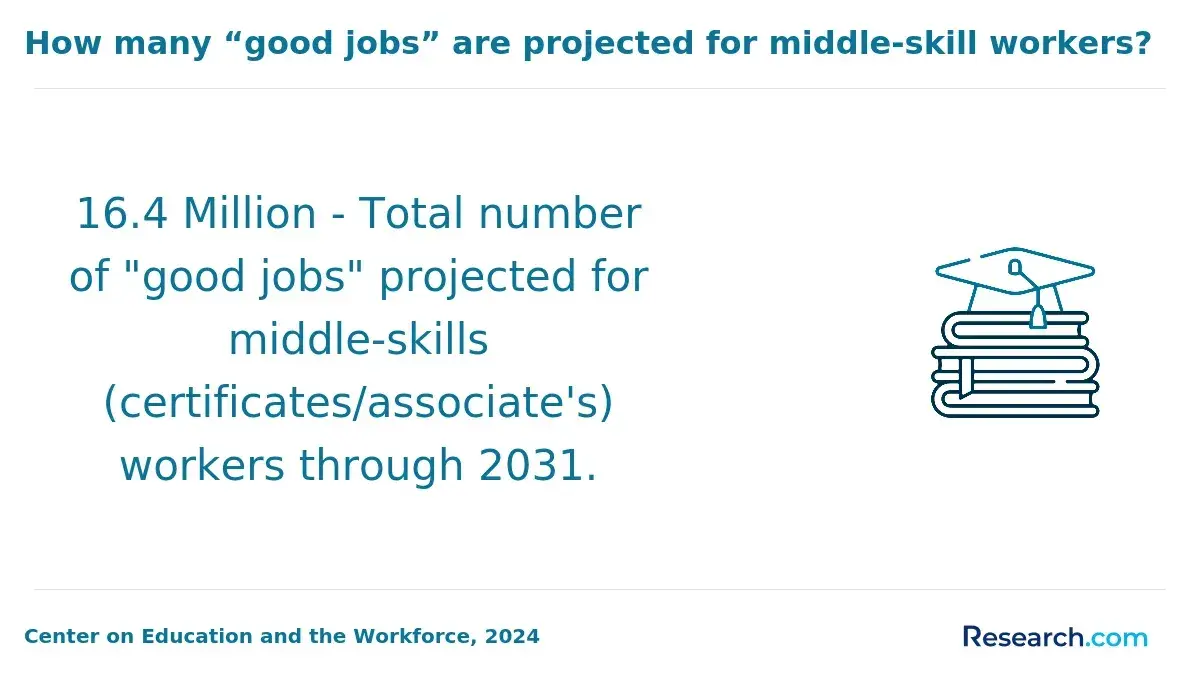
A fast online associate degree can require a substantial weekly commitment. The federal credit-hour framework generally expects one credit to reflect one hour of instruction and at least two hours of outside work each week over a standard term, or the equivalent amount of work in a shorter format.
The table below translates that idea into practical weekly time estimates for a single 3-credit course. Actual workload varies by school, instructor, student preparation, writing requirements, math intensity, and software assignments.
| Course format | Approximate weekly time for one 3-credit course | What that means in practice |
| 15-week course | About 9 hours per week | More time to absorb readings, assignments, and exams |
| 10-week course | About 13 to 14 hours per week | Manageable for many students taking one or two courses |
| 8-week course | About 16 to 17 hours per week | Common accelerated pace that requires consistent weekly study blocks |
| 5-week course | About 27 hours per week | Intensive pace that may be difficult alongside full-time work |
Supply chain and logistics courses can involve more than reading and discussion boards. Students may need time for spreadsheet analysis, inventory calculations, transportation case studies, procurement simulations, presentations, or team projects.
A realistic fast-degree workload might look like this:
- One 8-week course at a time may be workable for students employed full time.
- Two 8-week courses at once may resemble a full-time academic load.
- Three accelerated courses at once can be difficult unless the student has limited work and family obligations.
- Courses involving accounting, statistics, analytics, or supply chain software may require more study time than introductory business courses.
Students who want the shortest timeline should build a weekly calendar before registering. If the calendar does not show enough study time, a slightly slower plan may be the faster route in reality because it lowers the chance of withdrawals and retakes.
Accreditation is one of the most important checks for any fast online associate degree. It affects federal financial aid eligibility, transfer credit, employer recognition, and whether a bachelor's program will accept the coursework later.
For supply chain and logistics associate degrees, institutional accreditation is usually the key requirement. Programmatic business accreditation may be a positive signal, but it is not typically a licensure requirement for logistics roles in the way that nursing or certain allied health programs may require specialized approval.
Students should verify accreditation directly rather than relying only on marketing language. Follow these steps before applying:
- Search the college in the U.S. Department of Education's accreditation database and confirm the institution is currently accredited.
- Check whether the accreditor is recognized for institutional accreditation and whether the school has any warnings, probation, or teach-out notices.
- Ask the registrar or transfer office whether credits from the program are commonly accepted by public universities or partner bachelor's programs.
- If the program claims business accreditation, confirm the accrediting body and whether the specific business unit or program is included.
- Save written confirmation of accreditation, transfer agreements, and credit policies before enrolling.
Be cautious with programs that advertise extreme speed but avoid clear accreditation details. Also be careful with terms such as "nationally recognized," "career approved," or "industry aligned" if they are used instead of verifiable accreditation status.
Accreditation does not guarantee a job or transfer admission. It simply establishes that the school meets recognized standards, which gives students a stronger foundation for financial aid, credit mobility, and employer review.
The degrees that can lead to employment the fastest are usually AAS or applied AS programs with practical coursework in inventory control, transportation, procurement, warehousing, enterprise systems, spreadsheets, and business communication. These programs align more directly with entry-level roles than broad transfer degrees do.
Employment speed depends on the student's prior work history, local labor market, employer requirements, and willingness to start in operations support roles. The table below connects common associate-degree emphases with jobs students may pursue while recognizing that employers set their own requirements.
| Degree emphasis | Relevant entry-level roles | Why it may lead to work faster | Best additional preparation |
| Logistics operations | Logistics coordinator, dispatch assistant, transportation clerk, shipping coordinator | Directly matches transportation, routing, and shipment-tracking duties | Transportation software, customer communication, and spreadsheet skills |
| Warehouse and inventory management | Inventory control associate, warehouse lead, materials coordinator | Builds skills in stock control, receiving, cycle counts, and fulfillment processes | Warehouse management systems and safety training |
| Procurement or purchasing support | Purchasing assistant, procurement clerk, vendor support specialist | Connects to ordering, vendor records, purchase orders, and cost tracking | Business writing, Excel, and basic accounting |
| Business administration with supply chain electives | Operations assistant, administrative coordinator, customer operations associate | Provides broader business preparation for smaller companies or cross-functional roles | Project coordination and data reporting skills |
AI and automation are changing these roles rather than eliminating the need for practical supply chain knowledge. Employers increasingly value workers who can use dashboards, interpret inventory data, communicate exceptions, and coordinate across purchasing, transportation, and customer service.
Students who want the fastest employment path should choose programs with career services, employer-aligned projects, software exposure, and résumé-ready coursework. If the target role blends logistics coordination with scheduling, budgets, and team execution, comparing a project management degree online can also help clarify whether a broader operations credential would be more useful.
The fastest employment option is not always the fastest degree. For some students, a shorter certificate in logistics, transportation, procurement, or warehouse operations can support immediate job entry while associate-degree credits continue in the background. This works best when the certificate is stackable into the associate degree.
The most efficient transfer degrees are usually AA, AS, or designated transfer associate programs with formal articulation agreements. These programs are built to satisfy lower-division general education and introductory business requirements so students do not repeat credits after transfer.
A transfer-efficient logistics pathway usually includes general education, business foundations, economics, accounting, statistics or quantitative reasoning, computer applications, and introductory operations or supply chain coursework. If the bachelor's destination is business administration, an online business degree comparison can help students understand how associate credits may apply to broader business majors.
The table below shows which associate options tend to transfer most smoothly and why.
| Associate option | Transfer efficiency | Why it works | Potential issue |
| AA transfer degree | High for general education transfer | Often follows statewide or institutional transfer frameworks | May lack specialized supply chain courses |
| AS in business or supply chain | High when aligned with a business bachelor's plan | Often includes math, economics, accounting, and business prerequisites | Requires careful course selection to avoid excess electives |
| AAS in logistics | Moderate to low unless an articulation agreement exists | Applied courses may support career entry and some bachelor's completion programs | Technical credits may transfer as electives rather than major requirements |
| Associate-to-bachelor's guided pathway | Highest when the student follows the exact plan | Maps courses from the associate program into a specific bachelor's program | Less flexible if the student changes schools or majors |
Students should avoid assuming that all 60 associate credits will automatically count toward a bachelor's degree. The important question is whether those credits apply to the bachelor's general education, business core, major prerequisites, or elective space.
Before choosing a transfer-oriented program, request answers to these questions:
- Which bachelor's programs have written articulation agreements with this associate degree?
- Will the associate degree satisfy all lower-division general education requirements?
- Which courses are required for admission to the bachelor's major?
- How many credits will transfer as electives only?
- Will any logistics or technical courses be excluded from the bachelor's degree plan?
For students who want both speed and long-term mobility, the best plan is often an AS or transfer associate degree with logistics electives, followed by a bachelor's program in supply chain management, operations management, business administration, or project management.
How Should Students Compare Completion Time, Cost, Transferability, and Career Outcomes for Online Supply Chain / Logistics Associate Degrees?
The best fast online supply chain or logistics associate degree is the one that reaches the student's goal with the least wasted time, unnecessary cost, and future credit loss. A 12-month AAS may be excellent for a student seeking a logistics coordinator role, while a slower AS may be better for a student planning a bachelor's degree.
Use the table below as a decision scorecard. It summarizes the main trade-offs students should compare before enrolling.
| Decision factor | What to compare | Why it matters |
| Completion time | Remaining credits, course length, term availability, prerequisites, and residency rules | Advertised timelines may not apply to students with different transfer histories |
| Total cost | Tuition, fees, books, software, repeated courses, and financial aid pacing | The cheapest per-credit program may not be the cheapest to finish |
| Transferability | Articulation agreements, bachelor's prerequisites, and how credits apply | Lost transfer credits can add semesters and cost later |
| Career preparation | Applied logistics courses, software skills, projects, internships, and career services | Job-focused students need evidence of practical skill development |
| Flexibility | Asynchronous access, start dates, part-time options, and support services | Flexibility can determine whether an accelerated plan is actually sustainable |
| Accreditation and reputation | Institutional accreditation, transfer acceptance, and employer relevance | Fast completion has limited value if credits or credentials are not recognized |
A practical comparison process should begin with the student's goal. Students interested in long-term operations leadership may eventually compare graduate options such as an MBA operations management online, but the associate degree should first provide affordable progress toward employment, transfer, or advancement.
Follow this process before enrolling:
- Define the primary goal: fast employment, bachelor's transfer, promotion, career change, or degree completion.
- Choose the degree type that matches the goal: AAS for applied workforce preparation, AA or AS for transfer, or a guided transfer degree for a specific bachelor's pathway.
- Request a written degree audit showing remaining credits after transfer and prior learning evaluation.
- Build a term-by-term schedule using actual course offerings, including summer or accelerated sessions.
- Calculate total cost to completion, including fees, books, technology, and possible retake costs.
- Verify accreditation and transfer agreements before paying deposits or registering for classes.
- Compare career support, software exposure, employer partnerships, and résumé-building projects.
Common mistakes include choosing the program with the fewest advertised months, ignoring prerequisite sequencing, assuming "100% online" means no proctored or scheduled requirements, and taking an unrealistic course load. The safest accelerated plan is one that is fast enough to save time but realistic enough to finish successfully.
A shortest online supply chain or logistics associate degree is worth considering when it aligns with a clear career or transfer goal. It is less advisable when speed becomes more important than accreditation, affordability, academic readiness, or long-term opportunity.
Other Things You Should Know About Supply Chain / Logistics
Most associate programs do not require previous logistics experience. Typical admissions requirements include a high school diploma or equivalent, placement information, transcripts, and sometimes basic readiness in math, writing, and computer use.
They can be useful, especially for students targeting inventory, procurement, transportation, or warehouse roles. Certifications are usually optional, but they may help show focused skills when paired with an accredited degree and relevant work experience.
Yes, but the course load must be realistic. Many full-time workers do better with one accelerated course at a time or a part-time year-round plan instead of stacking several compressed courses in the same session.
Spreadsheet skills are essential. Students also benefit from exposure to inventory systems, warehouse management systems, transportation management systems, ERP concepts, data dashboards, and clear business communication tools.
- AA vs AS Degree: Key Differences You Should Know https://www.edvisorly.com/student-guides/aa-vs-as-degree
- 2025 Most Affordable Online Supply Chain Management Degrees https://www.onlineu.com/most-affordable-colleges/supply-chain-management-degrees
- Choose the Right Supply Chain Management Degree for Global Careers | BSBI https://www.berlinsbi.com/blog/how-to-choose-the-right-supply-chain-management-degree-for-global-careers
- Supply Chain Management A.A.S. | SUNY Schenectady https://sunysccc.edu/Academics/Business-Criminal-Justice-and-Law/Academic-Programs/Supply-Chain-Management-AAS.html
- Logistics & Supply Chain Management | UNOH https://www.unoh.edu/academics/college-of-occupational-professions/logistics-supply-chain-management.html
- Supply Chain Management and Logistics https://www.chattahoocheetech.edu/business-and-professional-studies/logistics.html
- Associate Logistics Management Degree | Sullivan University https://www.sullivan.edu/logistics-transportation/management-degree
- Top 35 SCM Associate Degree Programs https://supplychainmanagementedu.org/editors-choice/best-associate-programs-supply-chain-management/
- MIT SCALE Scholarships for Supply Chain Programs | ZLC https://www.zlc.edu.es/education/scholarships/
- Supply Chain Management https://www.ntc.edu/academics-training/programs/all/associate-degree/supply-chain-management