2027 Self-Paced Online Professional Writing Bachelor's Degree Programs

Co-Founder and Chief Data Scientist
Balancing a full-time job with progressing in a new career can stall many adults seeking a professional writing bachelor's degree. Traditional programs often lack the flexibility needed by those juggling work and family responsibilities. Self-paced online professional writing degrees offer a practical solution, allowing learners to tailor study schedules to their lives.
According to the National Center for Education Statistics, over 30% of bachelor's degree earners now pursue online programs, reflecting growing demand for adaptable education models. This article explores self-paced options and provides guidance to help readers choose programs that fit their unique goals and time constraints.
Key Benefits of Self-Paced Online Professional Writing Bachelor's Degree Programs
- Self-paced online professional writing programs offer unmatched flexibility, allowing working professionals to study around demanding schedules and balance education with employment and family commitments.
- These programs enable accelerated skill acquisition by letting students progress through coursework based on mastery rather than fixed semesters, reducing time to degree completion.
- They provide cost-effective pathways through lower tuition rates, credit transfer options, and recognition of prior learning, making accredited credentials more accessible to non-traditional students.
What Are Self-Paced Online Professional Writing Bachelor's Degree Programs, and How Do They Differ From Traditional Online Formats?
Self-paced learning in online higher education offers a flexible alternative to cohort-based and asynchronous-but-scheduled Professional Writing bachelor's degree programs. Instead of moving through courses with a fixed group on set timelines, self-paced programs allow students to start anytime and advance according to their own schedules. These programs are designed to fit diverse lifestyles, accommodating work, family, and personal commitments while providing an adaptive academic path.
Key structural features define self-paced online professional writing bachelor's degree programs. Open enrollment permits students to begin their studies without waiting for traditional academic terms. Flexible timelines grant learners the ability to take more or less time per course as needed, providing control over their educational journey. Milestone-based progression emphasizes proving mastery through projects and assessments rather than adhering to fixed calendar deadlines.
Compared to traditional online formats, self-paced programs demand more proactive time management and self-discipline, as deadlines are generally fluid. Faculty interaction tends to be less synchronous but remains accessible through messaging, discussion boards, or scheduled virtual meetings to support student progress. This structure increases student accountability, requiring effective organization without the rigid support systems present in more structured courses.
- Flexible Enrollment: Students can start their coursework at any time, removing barriers tied to fixed academic calendars.
- Personalized Pace: The program allows learners to accelerate or decelerate studies based on individual needs and availability.
- Competency Emphasis: Mastery of content through assessments drives progression over preset schedules.
- Self-Management Required: Student discipline is essential to meet milestones without stringent external deadlines.
These programs especially benefit working professionals, non-traditional students, or first-time college enrollees seeking maximum flexibility. Many self-paced online professional writing bachelor's degree programs integrate transfer credit policies, prior learning assessments, and financial aid options to make education more accessible. Those exploring affordable degree pathways might also consider an online mba cheap program, which offers similar flexibility for career advancement within business fields.
Which Accredited Institutions Offer Self-Paced Online Professional Writing Bachelor's Degree Programs?
Several regionally accredited institutions in the United States offer self-paced online professional writing bachelor's degree programs tailored to working professionals and non-traditional students. These programs frequently employ competency-based education models, promoting schedule flexibility and allowing learners to accelerate their path to graduation. Tuition frameworks differ, featuring per-credit costs or subscription-based rates granting unlimited course access for set periods. Such flexibility is especially attractive for those pursuing top flexible online accredited bachelor's degrees in professional writing.
- Western Governors University: Accredited by the Northwest Commission on Colleges and Universities, WGU provides a competency-based professional writing bachelor's degree with flat-rate tuition every six months. Students advance at their own speed, often finishing faster than four years depending on prior knowledge. The program grants transfer credits and prior learning assessments to reduce completion time and expense.
- Capella University: Regionally accredited by the Higher Learning Commission, Capella's FlexPath online bachelor's degree allows mastery-based progression. Tuition follows a monthly subscription model, enabling enrollment in multiple courses per term. Credit transfer is welcomed and individualized learning plans support efficient degree completion.
- Southern New Hampshire University: Accredited by the New England Commission of Higher Education, SNHU offers a fully online, self-paced professional writing bachelor's degree. Using a per-credit tuition rate, they support accelerated courses through seven yearly start dates and have broad transfer policies. Students also access academic advising and tailored financial aid.
- University of Wisconsin Flexible Option: Under Higher Learning Commission accreditation, this competency-based, self-paced program charges a flat subscription fee for six months of access. Learners can rapidly progress by demonstrating skills and assessments. Prior credits and experiential learning evaluations shorten time to degree.
- Liberty University: Regionally accredited by the Southern Association of Colleges and Schools Commission on Colleges, Liberty offers an online Bachelor of Arts in professional writing with competency-based structure accessible anytime. Tuition is per credit hour with multiple start dates and credit transfer options. The curriculum prioritizes practical writing skills relevant across professional contexts.
Prospective students should consider how transfer credits, prior learning assessments, and financial aid eligibility affect their journey. Exploring degrees that pay well can also inform decisions about investing in online professional writing programs.
2026 Update: Portfolio and Career-Ready Writing Support
For this 2026 refresh, we reviewed the practical writing supports students should look for beyond flexible pacing, especially if they plan to use the degree to change careers, advance at work, or build a professional portfolio.
- Whether courses produce polished samples for web, business, technical, creative, or editorial writing portfolios.
- How often students receive instructor feedback on drafts, revisions, grammar, tone, and audience fit.
- Whether the program includes a capstone, client-style project, or final portfolio review.
- Access to writing labs, tutoring, citation help, and editing support for online learners.
- Career services tailored to writing roles, including resume, cover letter, and portfolio guidance.
- Whether students retain usable copies of their work for job applications or freelance opportunities.
Checking these details helps students choose a self-paced writing program that is not only flexible, but also useful for building evidence of real writing ability.
How Long Does It Take to Complete a Self-Paced Online Professional Writing Bachelor's Degree?
Completion times for self-paced online professional writing bachelor's degrees vary greatly. Some students finish in less than two years, while others take the customary three to six years. According to the U.S. Department of Education's National Center for Education Statistics, part-time bachelor's degree students generally graduate in about six years, offering a useful comparison for those balancing studies with other responsibilities.
- Prior Credits: Transferring credits from previous college courses can drastically cut time to graduation. Many programs allow up to 90 transfer credits, enabling learners to concentrate on advanced professional writing subjects.
- Transfer Coursework: Completed classes from accredited schools aligned with degree requirements help speed progress, avoiding redundant courses and smoothing the academic path.
- Weekly Study Hours: Students dedicating 20 or more hours weekly to their studies often finish within 18 to 24 months, while those with lighter weekly commitments may need longer to complete the degree.
- Prior Learning Assessments: Some schools grant credit for relevant work experience or verified skills, which can reduce degree length by allowing candidates to bypass certain classes.
- Support Services: Tools like academic advising, tutoring, and time-management resources help learners build achievable schedules and maintain steady progress, improving chances for on-time completion.
A professional who pursued a self-paced online professional writing bachelor's degree shared that balancing coursework with full-time work was challenging yet manageable. He noted, "Setting small, consistent goals each week helped me stay focused, even when deadlines felt overwhelming." He also appreciated the program's flexibility, mentioning, "Being able to transfer credits and get credit for my prior writing experience made a huge difference." The regular check-ins with advisors motivated him to keep momentum, turning what seemed like a long-term commitment initially into a realistic and rewarding journey.
What Are the Admission Requirements for Self-Paced Online Professional Writing Bachelor's Degree Programs?
Admission requirements for self-paced online professional writing programs are generally more flexible than traditional brick-and-mortar degrees. These programs often cater to adult learners and prioritize proof of high school completion and prior experience over standardized test scores.
Educational Credential: Most self-paced online professional writing bachelor's programs require applicants to hold a high school diploma or equivalent, such as a GED, to establish foundational academic readiness. This baseline credential is essential for entry into college-level studies.
GPA Requirements: While some programs set minimum GPA thresholds-typically between 2.5 and 3.0 on a 4.0 scale-many self-paced options offer open-enrollment or rolling admissions, lowering barriers for non-traditional and returning students seeking flexible learning paths.
Prerequisites: Certain programs may recommend or mandate previous coursework in English or writing-focused subjects to ensure students have the skills necessary for success. However, open-access policies often waive these requirements, enhancing accessibility.
Selective vs. Open-Enrollment: Selective programs generally require stronger application materials and provide increased academic support-such as tutoring and advising-while open-enrollment models prioritize accessibility over selectivity, offering fewer specialized resources.
Application Enhancement: Applicants who don't meet standard criteria can strengthen their candidacy by submitting compelling personal statements, relevant work samples, or letters of recommendation. Completing community college courses or professional writing certificates can also improve admission prospects and credit transfer opportunities for professional writing online degrees.
best online mft programs reflect similar flexible admissions trends applicable across many self-paced degrees.
How Much Does a Self-Paced Online Professional Writing Bachelor's Degree Cost, and What Affects Tuition?
The cost of a self-paced online bachelor's degree in professional writing typically ranges from $15,000 to $45,000 for the entire program. However, because these programs are "competency-based," your final bill is often determined by your speed rather than a fixed price per year.
Tuition Models: Many programs charge by credit hour, typically between $300 and $600 per credit, influenced by institutional prestige and residency status. Alternatively, some schools offer flat-rate subscriptions, allowing unlimited course access within a set timeframe-this can reduce costs for students who accelerate through material.
Bundled Fees: Certain programs combine tuition, technology, and course materials into one upfront payment. While this simplifies budgeting, the initial price may be higher compared to per-credit billing.
Additional Expenses: Beyond tuition, students should budget for technology fees (ranging from $50 to $200 each semester), online proctoring costs, and software or material fees not always included in the base price.
Pacing Impact: Programs priced per credit might seem cheaper initially, but longer completion times increase total costs. Subscription models often incentivize faster progression, lowering overall expenses for motivated learners.
Credit Transfers and Prior Learning: Many institutions accept transfer credits or offer prior learning assessments to reduce required coursework, which can shorten degree time and cut tuition fees.
Financial Aid Variations: Availability of federal aid, scholarships, and employer tuition assistance differs by program type and accreditation, substantially affecting net costs.
One professional who completed a self-paced online professional writing bachelor's degree described the journey as both challenging and rewarding. She noted that while managing pacing independently was initially overwhelming, the flexibility allowed her to balance work and study effectively. "Scheduling exams and handling the extra fees for online proctoring required careful planning," she recalled. Her ability to transfer prior college credits and apply work experience through assessments helped shorten her path and reduce expenses significantly. Reflecting back, she emphasized that understanding all potential costs upfront-beyond just tuition-was essential to avoid surprises and maintain motivation through the program.
What Financial Aid Options Are Available for Self-Paced Online Professional Writing Bachelor's Programs?
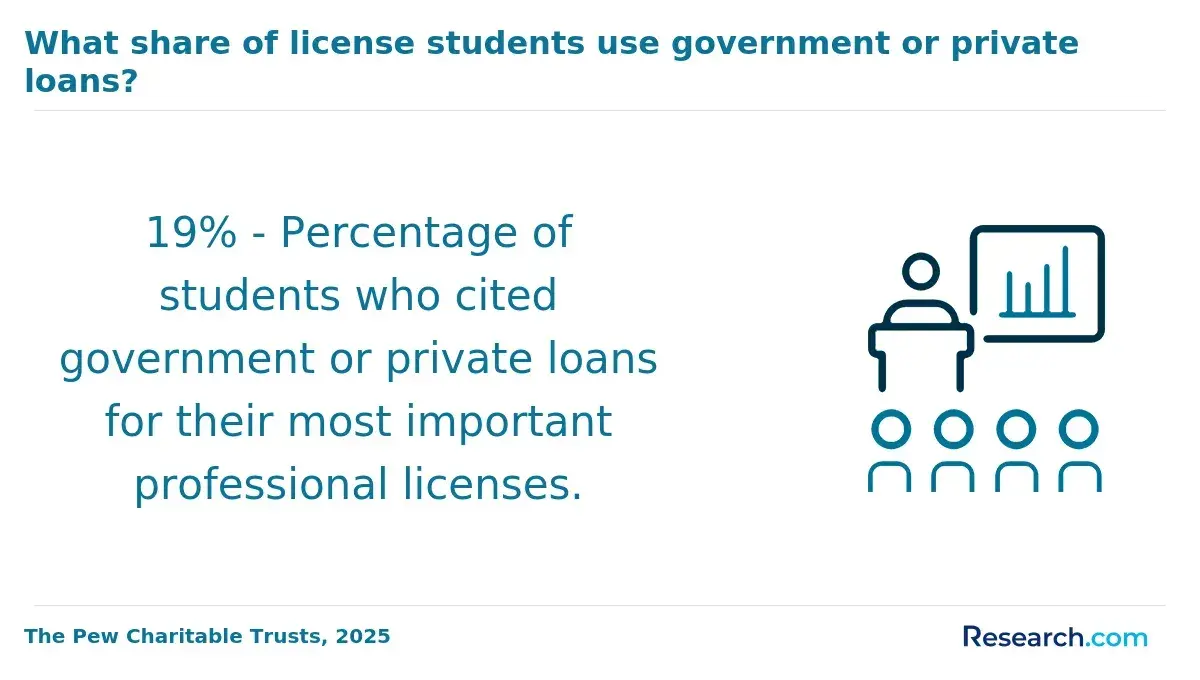
Financial aid for self-paced online professional writing bachelor's programs includes options from federal, state, and institutional sources. Many students become eligible for federal aid by submitting the Free Application for Federal Student Aid (FAFSA). However, competency-based education (CBE) programs sometimes impose specific eligibility rules related to credit-hour equivalencies, which can impact when and how aid is distributed. It's important for students to verify these conditions with their school's financial aid office prior to enrollment.
State financial assistance varies considerably based on residency and the online program's structure. Some states limit aid to courses that follow traditional semester schedules, potentially excluding certain self-paced models. Colleges often provide scholarships and grants aimed at online learners, enhancing affordability for those pursuing professional writing degrees.
Additional funding may come from scholarships offered by professional associations focused on writing and communication. These discipline-specific awards are designed to support students dedicated to careers in professional writing, supplementing conventional forms of financial aid.
According to the College Board's Trends in Student Aid, roughly 85% of undergraduate students receive some type of financial assistance, which on average covers close to 44% of tuition expenses. Online students, including those in self-paced programs, increasingly benefit from aid packages, though they must carefully navigate program-specific financial policies and disbursement schedules.
- Federal Aid Eligibility: FAFSA submission is critical, but CBE programs may require additional documentation of credit equivalencies, affecting aid approval and timing.
- State and Institutional Grants: Availability depends on residency and program accreditation; institutional scholarships often target online or nontraditional students.
- Specialized Scholarships: Writing-focused organizations commonly offer awards for students pursuing professional writing careers, providing extra financial support.
- Disbursement Variability: Self-paced formats may alter usual aid release schedules, making early communication with financial aid offices essential.
- Increasing Aid Reach: Growing numbers of online learners utilize financial aid, which helps reduce out-of-pocket costs for professional writing students.
How Do Competency-Based Education (CBE) Models Work in Self-Paced Online Professional Writing Programs?
Competency-based education (CBE) models in self-paced online professional writing programs emphasize mastery of skills over time spent in class. Learners demonstrate proficiency through assessments like written projects, portfolios, and practical exercises, rather than accumulating credit hours. This approach allows students to progress at their own pace once they prove competency, making it especially suitable for busy professionals or non-traditional students seeking flexibility.
For financial aid, many CBE programs convert competencies into credit-hour equivalents, enabling eligibility for federal aid and smoother credit transfers. Some institutions offer direct assessment models that forgo traditional credit hours altogether, continuously measuring mastery and awarding credentials based purely on performance rather than seat time. Credit-hour-equivalent programs maintain alignment with standard academic credits, balancing flexibility with conventional academic structures.
Programs such as Western Governors University, Southern New Hampshire University's College for America, and Capella University's FlexPath exemplify CBE in professional writing degrees. They use diverse assessment methods-timed writing assignments, peer reviews, and practical projects-and provide structured faculty mentoring to support student success. Employers increasingly value CBE credentials, recognizing their focus on tangible, real-world abilities relevant to workplace demands.
Success in CBE requires substantial self-discipline and effective time management since students often navigate coursework without fixed schedules. Prospective enrollees should evaluate their motivation and learning preferences carefully before committing. According to a 2023 Online Learning Consortium report, enrollment in CBE programs increased by 12%, highlighting growing interest in flexible higher education pathways.
- Mastery Over Time: Students advance by demonstrating competency through practical assessments instead of credit hours, allowing personalized pacing focused on skill acquisition.
- Credit Hour Translation: Programs either convert competencies to credit-hour equivalents for financial aid or use direct assessment models that eliminate traditional seat time.
- Program Examples: Western Governors, Southern New Hampshire, and Capella offer self-paced professional writing degrees featuring diverse assessments and robust faculty support.
- Employer Recognition: Increasing acceptance of CBE credentials stems from their emphasis on real-world skills applicable to professional environments.
- Self-Discipline Needed: Independent motivation and time management are vital; candidates should assess whether the self-paced CBE model aligns with their learning style.
What Accreditation Should a Self-Paced Online Professional Writing Bachelor's Program Hold?
Accreditation is a crucial element that determines the recognition and quality of regionally accredited online professional writing bachelor's degrees. Regional accreditation holds higher esteem among employers and graduate schools compared to national accreditation, as regional bodies emphasize academic rigor and institutional integrity, while national accreditors often focus on vocational or for-profit institutions. The six regional accrediting agencies recognized by the U.S. Department of Education-the Middle States Commission on Higher Education (MSCHE), New England Commission of Higher Education (NECHE), Higher Learning Commission (HLC), Northwest Commission on Colleges and Universities (NWCCU), Southern Association of Colleges and Schools Commission on Colleges (SACSCOC), and Western Association of Schools and Colleges (WASC)-oversee standards in their geographic areas and certify the quality of most reputable self-paced professional writing bachelor's programs.
Some self-paced professional writing bachelor's programs might also have programmatic accreditation related to communication or writing disciplines, offering an added level of assurance about specialized curriculum and faculty expertise. However, this type of accreditation is less common.
Choosing a nationally accredited or non-accredited program poses risks-credits may not transfer easily to regionally accredited institutions, potentially hindering further education or access to graduate programs. Employers may also view these degrees with skepticism, limiting career advancement opportunities. Prospective students should use the U.S. Department of Education's accreditation database and the Council for Higher Education Accreditation's (CHEA) directory to verify a program's status prior to enrolling. For those exploring flexible degree options that align with career goals, additional guidance is available through resources such as online masters mental health counseling.
- Regional Accreditation: Holds the highest academic esteem, accepted widely by employers and graduate programs for professional writing degrees.
- National Accreditation: Generally applies to vocational or trade schools and may limit credit transferability and employer recognition in professional writing fields.
- Six Regional Bodies: MSCHE, NECHE, HLC, NWCCU, SACSCOC, and WASC oversee academic standards within their geographic regions.
- Programmatic Accreditation: Less common but offers an extra level of curriculum specialization in some professional writing programs.
- Risks of Non-Regional: Reduced credit transfer options and potential career limitations due to employer skepticism.
- Verification Resources: Use the U.S. Department of Education and CHEA directories to confirm any program's accreditation before enrolling.
How Many Transfer Credits Can Be Applied Toward a Self-Paced Online Professional Writing Bachelor's Degree?
Transfer credit policies for self-paced online professional writing bachelor's degrees vary widely but generally aim to maximize previously earned academic work and experiential learning. Many programs accept a significant number of transfer credits-often up to 90 semester hours-toward the 120-credit requirement, allowing students to accelerate degree completion and reduce tuition expenses. Transfer eligibility depends on institutional standards such as the accreditation of prior coursework and its relevance to the professional writing curriculum. Including these considerations helps ensure quality and consistency across programs.
Some universities also accept military training credits evaluated by the American Council on Education (ACE), providing additional credit opportunities for veterans and active military personnel. Community college articulation agreements with four-year institutions further simplify the transfer process, benefiting students transferring with associate degrees by avoiding duplicate coursework. Prospective students should carefully review these agreements as part of their planning.
Before committing to enrollment, requesting a formal transfer credit evaluation is essential to clarify exactly how many credits will transfer and to identify any remaining program requirements. This evaluation helps students understand their true remaining credit load and estimate tuition costs, which is critical for budgeting and timely degree completion. Researching programs with the most generous transfer credit policies can provide added flexibility for diverse learners.
- Maximum Transfer Credits: Many institutions permit up to 90 semester credits to transfer, significantly reducing the time and cost needed to complete a professional writing bachelor's degree.
- Military and ACE Credits: Credits for military training evaluated by ACE are often recognized, rewarding service members with academic credit for their professional experience.
- Articulation Agreements: Established partnerships between community colleges and universities streamline credit transfers, enabling a smooth transition for students holding associate degrees.
- Transfer Credit Evaluation: A required step before enrollment, this detailed review ensures students fully understand how previously earned credits will apply.
- Accreditation and Relevance: Transfer approvals typically depend on prior institutions' accreditation status and the alignment of completed courses with the professional writing curriculum.
For those exploring flexible and affordable options, consider programs featured among the most accessible offerings on affordable online interdisciplinary studies degrees lists, as these often incorporate professional writing tracks with favorable transfer policies.
Can Students Earn Credit Through Prior Learning Assessment in Self-Paced Online Professional Writing Programs?
Prior Learning Assessment (PLA) allows self-paced professional writing students to earn college credit for knowledge gained outside the classroom. This includes professional experience, military training, industry certifications, and self-study. Common methods to earn credit include portfolio reviews, challenge exams, and standardized tests such as CLEP and DSST. These options enable faster degree completion by acknowledging existing skills and learning.
Programs known for accommodating PLA include Excelsior College, Thomas Edison State University, and Charter Oak State College. They typically impose credit limits ranging from 30 to 60 credits and provide clear procedures for submitting documentation. These institutions often offer advisors to assist with compiling portfolios or scheduling exams.
The American Council on Education (ACE) plays a crucial role by endorsing credit equivalencies, especially for military and professional experiences. ACE recommendations help streamline credit transfers at many accredited programs, benefiting service members and working professionals alike.
To maximize credit awards, students should thoroughly document their prior learning. Effective evidence includes detailed job descriptions, certificates, writing samples, and reflective essays that demonstrate alignment with academic outcomes.
Nearly 80% of institutions offering online degrees now incorporate PLA options, highlighting its growing importance in flexible, non-traditional education paths.
- Assessment Options: Students can demonstrate prior knowledge through portfolios, challenge exams, and recognized standardized tests to earn credit.
- ACE Credit Recognition: ACE evaluations validate military and professional learning for credit transferability across many schools.
- Generous PLA Policies: Excelsior and Thomas Edison State Universities offer PLA credit limits up to 60 with user-friendly submission processes.
- Comprehensive Documentation: Clear evidence like job roles, certificates, and reflective writing boosts chances for maximum credit.
- Wide Adoption: About 80% of online programs now include PLA, making education more accessible for adult learners.
What Concentrations or Specializations Are Available in Self-Paced Online Professional Writing Bachelor's Programs?
Self-paced online professional writing bachelor's programs typically offer several common concentrations, each linked to distinct career paths and salary expectations based on BLS data.
- Technical Writing: Prepares students to develop manuals and documentation for sectors like IT and healthcare. Median salaries hover around $74,650. Internships may be beneficial but additional certification or licensure is generally not required.
- Creative Writing: Focuses on fiction, poetry, and literary craftsmanship, ideal for aspiring authors and editors. Earnings vary widely, with no formal certifications needed, though a strong portfolio is essential for job placement.
- Business and Professional Communication: Emphasizes corporate writing, marketing, and public relations skills. Median wages are approximately $61,000. Some students pursue supplemental certificates in digital marketing or PR to increase employability.
- Grant and Proposal Writing: Concentrates on securing funding within nonprofit and government sectors. Median salaries are near $68,000. While formal certifications are uncommon, practical experience through internships boosts job prospects.
- Digital Content Strategy: Combines writing skills with SEO and analytics useful for content managers and social media specialists. Salaries generally exceed $60,000. Licensing is typically not required, but familiarity with digital tools is important.
Choosing the appropriate concentration influences how quickly students complete their degree-intensive coursework may extend timelines, while targeted tracks can accelerate progress. Aligning specialization choices with personal interest and labor market demand optimizes career readiness and earnings potential.
What Graduates Say About Self-Paced Online Professional Writing Bachelor's Degree Programs
- Jireh: "I chose the self-paced online professional writing bachelor's degree program primarily because of the flexibility it offered-I could work full-time while studying. The affordability was a big plus as well, making it easier for me to invest in my education without accumulating heavy debt. This program has truly opened doors for me in content creation and editing roles that I previously thought were out of reach."
- Henrik: "Reflecting on my journey, the self-paced nature of the professional writing bachelor's program was essential for balancing family commitments alongside my studies. The cost was reasonable compared to traditional programs, which eased my initial hesitation to enroll. Since graduating, I've gained confidence and credibility that have significantly boosted my freelance writing career."
- Weston: "As a professional seeking career advancement, I valued how the self-paced professional writing bachelor's degree allowed me to tailor my learning around my schedule. The program's cost-effectiveness made it a smart investment to enhance my skills without financial strain. After completing the degree, I secured a position in technical communication-something I attribute directly to the comprehensive curriculum and practical approach."
Other Things You Should Know About Professional Writing Degrees
In 2027, self-paced online professional writing bachelor's programs offer unparalleled flexibility, allowing students to tailor their learning schedules. This structure supports diverse learning speeds, enabling students to progress according to their personal timelines and commitments without sacrificing educational quality.
These programs offer flexibility by allowing students to complete coursework at their own pace, which is ideal for balancing education with work and family commitments. Support services often include academic advising, tutoring, and technical assistance available during extended hours. Additionally, prior learning assessments and transfer credit options can reduce the time and cost required to earn the degree.
Graduates of professional writing programs can pursue careers in areas such as content creation, editing, technical writing, and communications. Entry-level salaries typically range from $40,000 to $55,000 annually, with potential to increase significantly in specialized fields or managerial roles. The degree also opens doors to freelance opportunities and writing-related roles in various industries.
References
- The Complete Guide to Competency-Based Education https://www.d2l.com/blog/the-complete-guide-to-competency-based-education/
- MFA Programs That Pay You to Write: A Debt-Free Guide https://wisesphere.blog/mfa-programs-pay-you-to-write
- CBE Crash Course Lesson 2: How are CBE Programs Structured? https://www.wgulabs.org/posts/lesson-2-how-are-cbe-programs-structured
- 4 Reasons Online Writing Courses are Totally Worth the Money — Capturing Your Confidence https://www.capturingyourconfidence.com/blog/online-courses-are-worth-it
- Online Writing Degrees: 8 Steps to Choose Your Program https://www.automateed.com/online-writing-degrees
- Professional Writing and Editing Bachelor's Degree | Malone University https://www.malone.edu/programs/professional-writing-and-editing/
- 10 Key Components of a Competency-Based Education Program https://www.openlms.net/blog/education/10-key-components-competency-based-education-program/
- Picture an Online Degree at Your Own Pace https://www.snhu.edu/about-us/newsroom/education/picture-an-online-degree-at-your-own-pace
- The Benefits of Self-Paced Learning: Why It Works https://www.sophia.org/blog/higher-education/benefits-of-self-paced-learning/
- Self-Paced vs Structured Learning: 5 differences between Self-Paced and Structured Learning in Online Courses https://writersking.com/self-paced-vs-structured-learning/