2027 Returning to Practice with an Inactive or Lapsed Nursing License
Audited and Verified:
Our Editorial and Data Verification Process
Research.com uses government datasets, official education statistics and primary institutional information to support its career and degree guides. Our review process checks factual accuracy, occupational definitions, source dates and the requirements associated with the credentials discussed.
How This Article Was Fact-Checked
Our editorial team verifies salary estimates, employment projections, education requirements and program information against original data providers and official organizations. Salary figures are checked against the relevant occupational definitions and reporting periods. Information about licensure, accreditation and required in-person training is reviewed separately.
Fact-checked and verified on:

Co-Founder and Chief Data Scientist
An inactive or expired nursing license can interrupt your return to work even if you have years of experience. The path back depends on your license status, the state that issued it, how long you have been away, and whether you plan to practice as an RN, LPN/LVN, or APRN.
This guide helps returning nurses identify the right board process, decide whether a refresher course is necessary, and plan for supervised training, expenses, and a realistic transition into a new job.
Key Things You Should Know
- An inactive or expired license does not authorize nursing practice; confirm your status with the issuing state board before accepting patient-care duties.
- Reactivation requirements vary by state and time away from practice. A board may require continuing education, evidence of recent practice, a refresher course, or supervised clinical experience.
- License restoration and job readiness are separate decisions: even after approval, an employer may require orientation and observed competency before assigning independent duties.
How do you reactivate an inactive or lapsed nursing license?
Start with your state board of nursing's license lookup and instructions for your license type. Inactive generally means you placed a license in a nonpracticing status; expired or lapsed means it was not renewed on time. These statuses may have different applications. A suspended, revoked, or otherwise restricted license requires its own board-directed process, not ordinary reactivation.
Use the following sequence before paying for a course or committing to a start date:
- Confirm the license number, status, expiration date, issuing state, and any restrictions in the board's records.
- Find the board's reactivation, renewal, or reinstatement instructions for your specific credential, including any rules tied to time away from practice.
- Gather required documents, which may include identification, prior license information, continuing-education records, employment or practice verification, and explanations of reportable disciplinary or criminal matters.
- Submit the required application and fees, complete any background-check or education requirements, and follow up on missing items.
- Verify that the board has issued an active license - and any separate authorization your role requires - before performing licensed nursing duties.
Do not assume that submitting an application or receiving an employer offer permits practice while the board reviews your file. If a refresher course includes patient care, ask the board and course provider what authorization and supervision must be in place first.
If your goal is to return to your nursing practice and start diagnosing and treating patients as an advanced practice nurse, accelerated direct-entry nursing master's pathways is worth looking into.
What requirements apply when returning to nursing practice after a long absence?
After a long absence, boards may look beyond unpaid renewal fees. Depending on the jurisdiction and length of the gap, a returning nurse may need continuing education, evidence of practice within a specified period, an approved refresher course, a competency assessment, supervised clinical experience, or another board-approved route. The requirements for an RN may differ from those for an LPN/LVN. An APRN should also check whether advanced-practice authorization and national certification need separate renewal or restoration.
Recent practice and readiness are not identical. A board may accept documented work as evidence of eligibility, while an employer still needs to assess current medication-safety practices, documentation, equipment use, and setting-specific skills. Conversely, completing education does not make an inactive license active.
If you have worked in a nonclinical role, ask whether those duties count toward the board's practice requirement rather than assuming they do. Keep dated employer records and course certificates: boards may specify both the type of activity and how it must be documented.
An RN with an associate degree should check whether target employers require a BSN. If a bachelor's degree completion is an actual barrier, explore BSN completion programs using workplace-based projects.
Do you need a nursing refresher course to restore your license?
Not every returning nurse needs a refresher course. The answer depends on the issuing board's rules and your individual record. A short absence with otherwise satisfied renewal requirements may call for continuing education and an application. A longer gap - or inability to document qualifying practice - may trigger a formal reentry course or another board-approved competency pathway.
Ask the board whether a course is required for license restoration, merely one option among several, or not required at all. Then ask what must be completed before clinical placement. This distinction prevents two expensive mistakes: enrolling in a course the board will not accept and attempting patient care without authorization.
A nurse may also choose a refresher voluntarily. That can be worthwhile when clinical routines have changed substantially or a structured return would build confidence, even if the board does not require it. In that case, compare the course with an employer's orientation: they serve different purposes, and neither automatically replaces the other.
Nurses who are planning to pursue a doctorate should look into fast-track DNP study options to earn their degree in the soonest possible time.
State boards set their own reinstatement procedures, so advice based on another nurse's state may not apply to you. The comparison below shows which differences matter when reading your board's rules; it does not substitute for those rules.
| Question to check | Why states may reach different outcomes |
| License status | Voluntarily inactive, expired, and disciplined licenses may follow different processes. |
| Time away and practice history | A board may apply additional requirements after a specified period or when recent practice cannot be documented. |
| Accepted preparation | Boards may differ on continuing education, approved refresher courses, competency assessments, and supervised practice. |
| Clinical authorization | Rules may differ on permits or other authorization needed before a course's patient-care component. |
| Location of future practice | Restoring one state's license does not, by itself, establish authorization in every other state. |
If you have moved, distinguish restoring your old license from applying for licensure by endorsement in the state where you intend to work. Ask the destination board which license status and documents it requires. A former multistate privilege should not be treated as active while the underlying license is inactive or expired.
Those who are planning to return to practice and progress in their profession in the long-term, should consider pursuing an MSN later. And if specializing in mental health is something you're interested in, check out online PMHNP certificate clinical requirements.
For a previously licensed nurse, the most direct route back is usually the board-required reactivation work - not another degree. Choose education according to the gap you actually need to close. A refresher course targets return-to-practice knowledge and skills; continuing education addresses narrower subjects; an employer transition program adds supervised, setting-specific onboarding after hiring.
A degree pathway makes sense only when it also serves a separate career goal. For example, an ADN-prepared RN considering graduate study can review ADN-to-MSN bridge curriculum options, but an MSN is not a substitute for restoring an RN license. Before enrolling in any degree, ask whether it requires an active license at admission, during clinical work, or throughout the program.
An online refresher may be acceptable, but online delivery does not establish board acceptance. Some programs deliver theory online while requiring in-person skills assessment or supervised clinical practice. A fully remote course may not satisfy a board rule that calls for observed patient-care experience.
Before enrolling, obtain written answers from the provider and, when necessary, the board about the exact course version you plan to take: whether it meets your state's reentry rules, who arranges and approves clinical placement, where skills assessments occur, what authorization is needed before patient care, and what completion documentation the board receives. Check scheduling as carefully as format; self-paced lectures do not make a fixed clinical rotation flexible.
For RNs who plan to pursue a graduate nursing education, master's nursing education on a BSN graduate's budget is a useful cost comparison.
Refresher courses typically revisit clinical judgment, current standards of care, assessment, pharmacology and medication safety, infection prevention, documentation, communication, and escalation of patient concerns. Depending on the course and board requirements, learning may include online or classroom instruction, skills labs, simulation, and supervised clinical practice.
Compare the curriculum with your intended job. A general RN refresher can help rebuild foundations, but it may not prepare you to work independently in an ICU, operating room, or another specialty. Those transitions usually call for employer-led orientation, appropriate supervision, and demonstrated competence. Course completion documents learning; it is not a guarantee of independent clinical readiness.
An ADN-prepared RN considering to become a nurse practitioner need not study to earn their BSN first. There are bridge programs from an ADN to an MSN.
There is no dependable national price or completion time for nursing reentry. The total depends on your board's requirements, the provider's charges, clinical-placement availability, and how quickly you can complete required components. Request a written cost and schedule estimate before enrolling.
Budget for more than tuition. Ask about registration and lab fees, textbooks or technology, background checks, immunizations, liability coverage if required, transportation, and time away from paid work. Add board application and license fees separately. A lower-priced course can become the costlier option if it cannot arrange an acceptable clinical placement or delays your return to employment.
For timing, ask for the earliest realistic completion date - not just the length of online lessons. Clinical scheduling, required authorization, documentation review, and board processing may all affect when you can start work.
There are guides to online nurse practitioner affordability to help you plan ahead how to fund your MSN studies to become an NP.
"Accredited" can describe an institution or nursing education program, but it does not automatically mean a refresher course satisfies your board's reactivation rules. For this decision, board acceptance of the specific reentry course and clinical arrangement matters most. Institutional or nursing program accreditation, when applicable, answers a different question.
Compare providers against the same checks before paying a deposit:
- Board fit: Is this course accepted for your license type, state, and time away from practice?
- Clinical access: Who secures the site, approves the supervisor, and documents the required experience?
- Authorization and safety: What must be approved before you work with patients, and how are skills assessed?
- Practical fit: What attendance, travel, deadlines, cancellation terms, and additional charges apply?
- Evidence of completion: What record will you receive, and will it contain everything the board requests?
If a provider promises "guaranteed reinstatement," ask for its basis. Only the board can decide whether your application satisfies its requirements.
If you plan to practice as an NP in the future and specialize in the field of psychiatry, you can look into psychiatric nurse practitioner study on a budget.
What jobs and salaries can returning nurses expect?
After restoration, returning RNs may seek hospital, ambulatory, long-term care, home health, or community-based positions; LPNs/LVNs should evaluate roles within their own state-defined scope. Your previous specialty can be an advantage, but employers may weigh how recently you practiced, what competencies you can demonstrate, and the orientation they can provide. A role with a supported transition may be a better first step than one expecting immediate independent specialty performance.
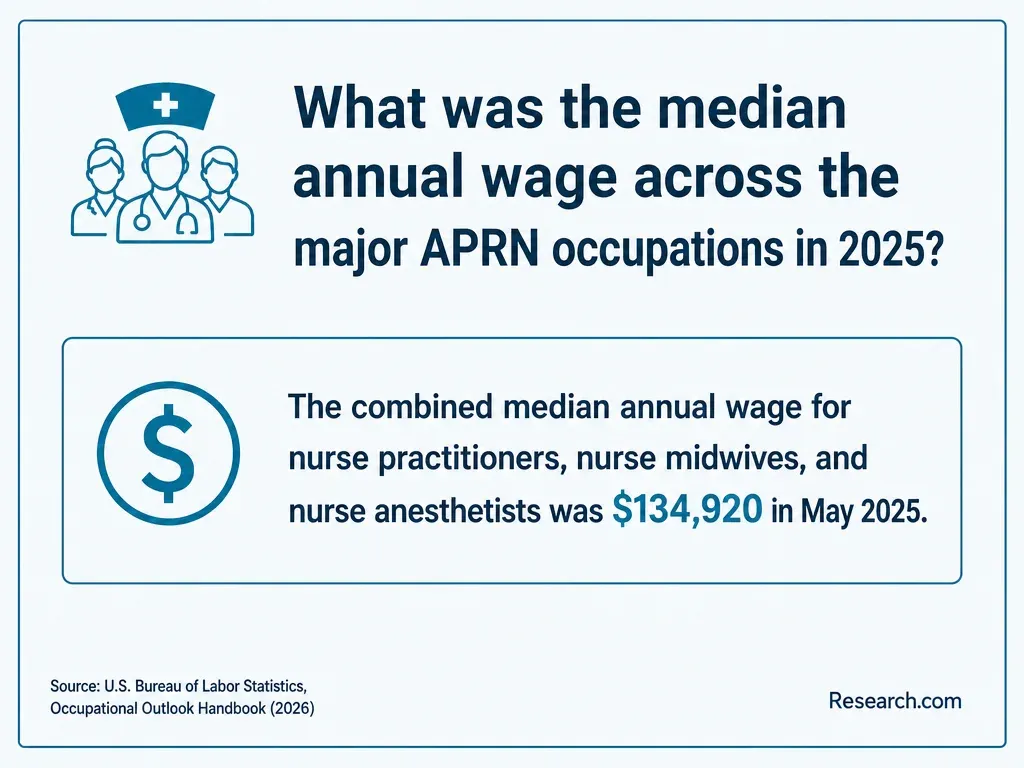
The U.S. Bureau of Labor Statistics reports wages for the RN and LPN/LVN occupations, not a separate salary for nurses returning after a lapse. Those occupation-wide figures can provide context, but they cannot predict your offer. Compare local postings and ask employers about pay during orientation, shifts, benefits, patient assignment, preceptor support, and how competency will be assessed before accepting a position.
If your priority is direct advanced patient care, exploring accelerated family NP certificates after a master's may help you with a career decision in the future.
Other Things You Should Know About Nursing
Not necessarily. Ask your board about your circumstances; do not assume an expired license automatically requires another examination.
Do not perform duties requiring a nursing license until you have the required authorization. Unpaid work does not create an exemption from licensure rules.
Follow the board's instructions for updating your record and submitting supporting documents so your application, prior license, and identification can be matched.
No. Check the certification organization's separate renewal or reinstatement rules, particularly if an employer requires that credential.
- Continuing Education | iowa.gov https://dial.iowa.gov/licenses/health-professions/nursing-professional-midwifery/continuing-education
- Continuing Education for License Renewal | ca.gov https://www.rn.ca.gov/licensees/ce-renewal.shtml
- Rule 4723-7-09 - Ohio Administrative Code https://codes.ohio.gov/ohio-administrative-code/rule-4723-7-09
- Education - Continuing Competency Requirements https://www.bon.texas.gov/education_continuing_education.asp.html
- 18VAC90-19-140. Provisional licensure of applicants for licensure as registered nurses. | virginia.gov https://law.lis.virginia.gov/admincode/title18/agency90/chapter19/section140/
- Board of Nursing - Missouri Division of Professional Registration https://pr.mo.gov/nursing-license-status-explanations.asp
- Delaware Regulations - Title 24 1900 https://regulations.delaware.gov/AdminCode/title24/1900.shtml
- FAQs - LifeLong Learning - UT Health San Antonio https://keeplearning.uthscsa.edu/rn-refresher-course/faqs/
- 22 Tex. Admin. Code § 221.10 | State Regulations | US Law | LII / Legal Information Institute https://www.law.cornell.edu/regulations/texas/22-Tex-Admin-Code-SS-221-10