2027 Return on Investment of an Online Public Policy Bachelor's Degree: Salary vs Cost

Co-Founder and Chief Data Scientist
Consider a mid-career professional aiming to transition into public policy but concerned about the financial feasibility of an online bachelor's degree. The upfront costs and time investment raise questions about whether salary gains justify the expense. Data from the National Center for Education Statistics reveals that graduates holding a bachelor's in public policy earn on average 20% higher salaries than those with no degree in the field within five years.
This article examines the salary outcomes relative to tuition and ancillary costs-helping prospective students evaluate the true return on investment of an online public policy bachelor's degree.
Key Things to Know About the Return on Investment of an Online Public Policy Bachelor's Degree
- Average tuition for online public policy bachelor's degrees ranges from $15,000 to $30,000-significantly lower than many traditional programs, easing upfront financial burdens for students.
- Graduates report median salaries near $60,000 annually-20% higher than those without degrees-demonstrating a strong correlation between degree completion and income growth.
- Beyond salary, degree holders gain greater career advancement potential, improved job security, and enhanced professional development opportunities within government and nonprofit sectors.
What is the true cost of earning an online public policy bachelor's degree from enrollment to graduation?
When evaluating the online public policy degree total cost, several direct and indirect expenses must be considered. These costs go beyond tuition, including fees and materials essential for successful program completion.
- Tuition Fees: Tuition accounts for the largest share and varies by institution and residency. IPEDS data shows annual tuition ranges from about $7,000 at public in-state schools to over $20,000 at private institutions. A full bachelor's program typically requires 120 credit hours, with sticker prices from $28,000 to $80,000 before aid.
- Technology and Course Fees: Most online programs charge mandatory technology fees, usually $200 to $600 per semester, to support access to digital platforms. Proctoring fees for online exams, averaging $30 to $60 each, may add $300-$600 depending on the number of assessments.
- Textbooks and Materials: Unlike traditional courses, online programs often require purchasing digital or physical textbooks, costing between $500 and $1,200 annually. Additional materials such as software licenses or subscriptions might also be needed.
- Net Price After Financial Aid: Many students pay substantially less than the published tuition thanks to grants and scholarships. Data from the National Center for Education Statistics indicates typical reductions between 30% and 50%. Using online net price calculators helps estimate individual out-of-pocket costs more accurately.
Adding all components together, the estimated total cost to earn an online public policy bachelor's degree ranges from $20,000 to $50,000 for most students. This figure serves as a realistic baseline to weigh against salary outcomes and other benefits when assessing return on investment.
For those comparing career paths or deciding among college majors, understanding these cost breakdowns for an online public policy bachelor's degree is crucial to making an informed choice.
How does the starting salary for public policy bachelor's degree graduates compare to the total cost of the degree?
Graduates with a bachelor's degree in public policy commonly pursue careers in social services, government administration, and policy analysis. Data from the Bureau of Labor Statistics (BLS) Occupational Outlook Handbook shows that entry-level positions such as policy analysts, social and community service managers, and public administration assistants have median starting salaries between $50,000 and $62,000. When compared to the total cost of an online public policy degree-ranging from $20,000 to $50,000 depending on tuition and financial aid-the financial return on investment becomes clearer.
Under a favorable scenario with low tuition and ample aid, a student's $20,000 investment could be recouped in roughly four to five months of starting salary. Conversely, if tuition climbs to $50,000 with minimal aid, it might take closer to ten months of income to offset these costs. This analysis highlights the importance of examining personalized tuition expenses and aid options when considering the starting salary compared to online public policy degree cost.
More importantly, starting salary represents just the initial financial stage. The BLS anticipates faster-than-average growth in public policy roles, reflecting career advancement and growing specialization. Over a 5- to 10-year period, wages often rise substantially, enhancing the long-term return on investment for graduates. Beyond immediate earnings, degree holders also benefit from improved job security and professional skills, adding value beyond salary figures.
For those weighing programs, it's useful to consider related fields as well. For example, some may explore accelerated MSW programs online to expand opportunities in social service management.
- Median Starting Salary: Entry-level public policy graduates typically earn $50,000 to $62,000 annually, with variations depending on role and location.
- Total Degree Cost: Online public policy programs generally cost between $20,000 and $50,000, influenced by tuition rates and financial aid.
- Months to Offset Cost: Tuition can be recouped in about four to five months under best-case financial aid scenarios, or nearly ten months in worst-case conditions.
- Projected Salary Growth: Salaries tend to increase considerably within 5 to 10 years as roles advance and specialize.
- Beyond Finances: Graduates gain career advancement, job security, and professional development, enhancing overall return on investment.
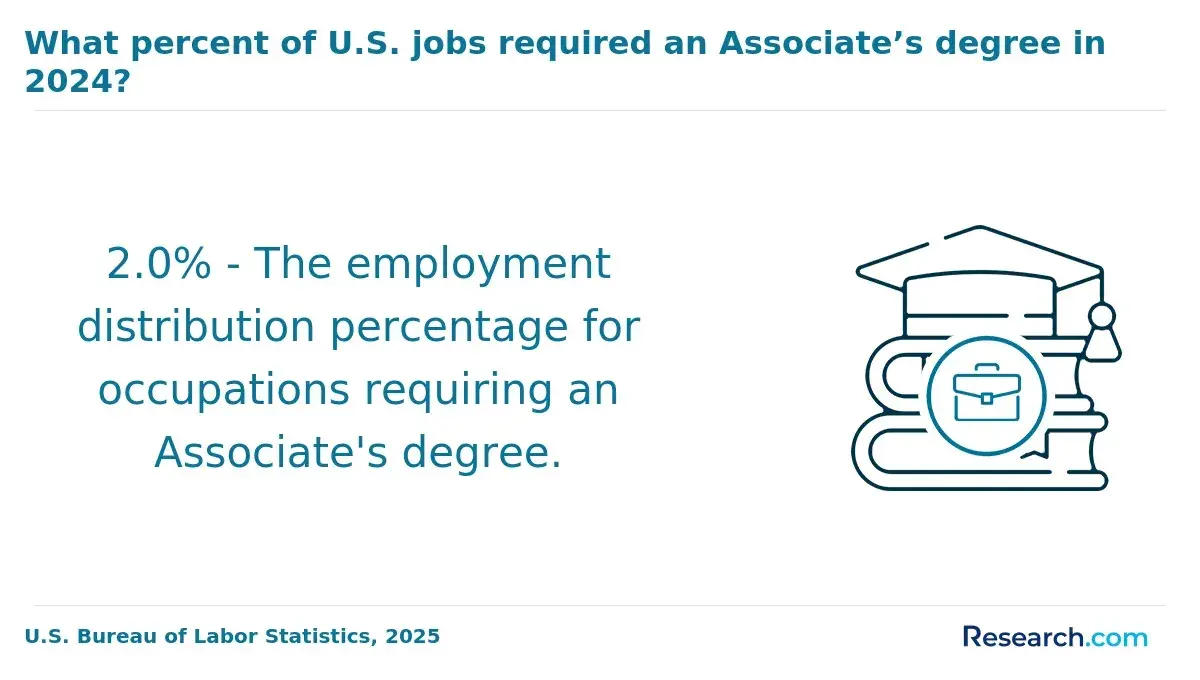
What is the average return on investment (ROI) for an online public policy bachelor's degree over a 10-year career?
Return on investment (ROI) in higher education measures the financial benefits gained from a degree by subtracting the total cost of earning it from the additional cumulative earnings over 10 years, compared to individuals with only a high school diploma or associate degree in the same field.
Research from the Georgetown University Center on Education and the Workforce and PayScale's College ROI Report highlights that public policy bachelor's degrees provide a solid economic return when lifetime earnings are considered.
Based on 2024 Bureau of Labor Statistics median annual wages for public policy analysts at roughly $65,000-with a typical 3% yearly raise-projected earnings over 10 years reach nearly $720,000. A high school graduate's earnings in the same timeframe are closer to $460,000. Deducting $30,000 to $60,000, the usual cost for an online public policy bachelor's degree, shows a significant positive ROI.
- Degree Cost Impact: Tuition and fees for online public policy programs generally total between $30,000 and $60,000, which heavily influences return calculations.
- Earnings Premium: Graduates earn about $25,000 more per year than those with a high school diploma, resulting in over $250,000 in extra income over a decade.
- Calculated ROI: After considering expenses, the estimated 10-year ROI ranges from $190,000 to $220,000, indicating a strong financial benefit.
- National Comparison: This ROI is competitive with the average $200,000 return for all bachelor's degrees nationwide, reinforcing the value of an online public policy credential.
A professional who completed an online public policy bachelor's degree after carefully analyzing its cost versus expected returns shared that balancing work, studies, and personal commitments was challenging. He explained, "At first, I was concerned about the tuition and whether I could make a sustainable investment."
However, by mapping out projected salary growth and job advancement opportunities, he felt reassured. He noted that "knowing the degree's potential to increase my earnings and open doors made the stress worthwhile," reflecting how a well- informed decision on ROI can guide successful career planning.
How do online public policy program tuition rates compare across public, private, and for-profit institutions?
Public institutions typically offer the most budget-friendly tuition for online public policy programs, especially for in-state students who benefit from significantly lower rates-often two to three times cheaper than private options. Many public universities use a flat-rate tuition model for online learners, which simplifies financial planning. Out-of-state students may face costs closer to private school rates, although some public programs maintain consistent tuition regardless of residency.
Private nonprofit institutions generally have higher tuition-sometimes double that of public universities-but they often provide stronger reputations and extensive alumni networks. Financial aid can help reduce sticker shock. Higher graduation rates and better employment outcomes usually improve long-term ROI.
For-profit colleges, tuition rates tend to be competitive with or below private nonprofits, making them attractive for working adults or those seeking lower upfront costs. However, these programs often show lower graduation success and face skepticism from employers, which can negatively affect job placement. Career services may be less comprehensive, potentially limiting salary growth after graduation.
Choosing the cheapest tuition does not always ensure the best return on investment, particularly when outcomes vary widely. It is essential to compare tuition costs alongside graduation and employment data to find an online public policy program that aligns with financial and career goals. For those exploring affordable options, reviewing the best associates degrees to get can also provide helpful pathways.
What long-term salary growth can public policy bachelor's degree holders expect over a 20- to 30-year career?
Salary growth for individuals with a public policy bachelor's degree generally rises steadily as experience accumulates and career progression occurs. Early-career professionals, within the first five years, typically see salaries increase by about 3% to 5% annually. This growth reflects advances from entry-level analyst roles into more specialized positions or junior management, driven by skill-building and early recognition.
- Mid-Career Jump: Around 10 years of experience, salary advances become more pronounced. This stage often coincides with promotions to roles like senior analyst, project manager, or policy advisor. Research including the American Community Survey and PayScale indicates mid-career public policy workers earn 20% to 30% more than their early-career counterparts, reflecting greater responsibility and leadership.
- Career Peak: Between 15 and 20 years, many reach senior management or specialist positions such as policy directors or consultants. Although salary increases may slow here, earnings at this level often double starting salaries, signaling a high return on long-term commitment.
- Lifetime Earnings Advantage: Over a 20- to 30-year span, cumulative earnings for degree holders surpass those without a degree by approximately $750,000 to $1 million. This premium encompasses both a higher salary baseline and sustained growth enabled by stronger opportunities for advancement.
One professional who established her career after completing an online public policy bachelor's degree shared that balancing work, study, and family was a major challenge initially. She mentioned, "Earning a degree online gave me flexibility, but it demanded consistent discipline and focus."
Over time, the specialized knowledge and credentials helped her secure increasingly senior roles. Reflecting on her journey, she noted that the financial gains were important, but the confidence and expanded professional network were equally valuable, providing a foundation for long-term career growth and fulfillment.
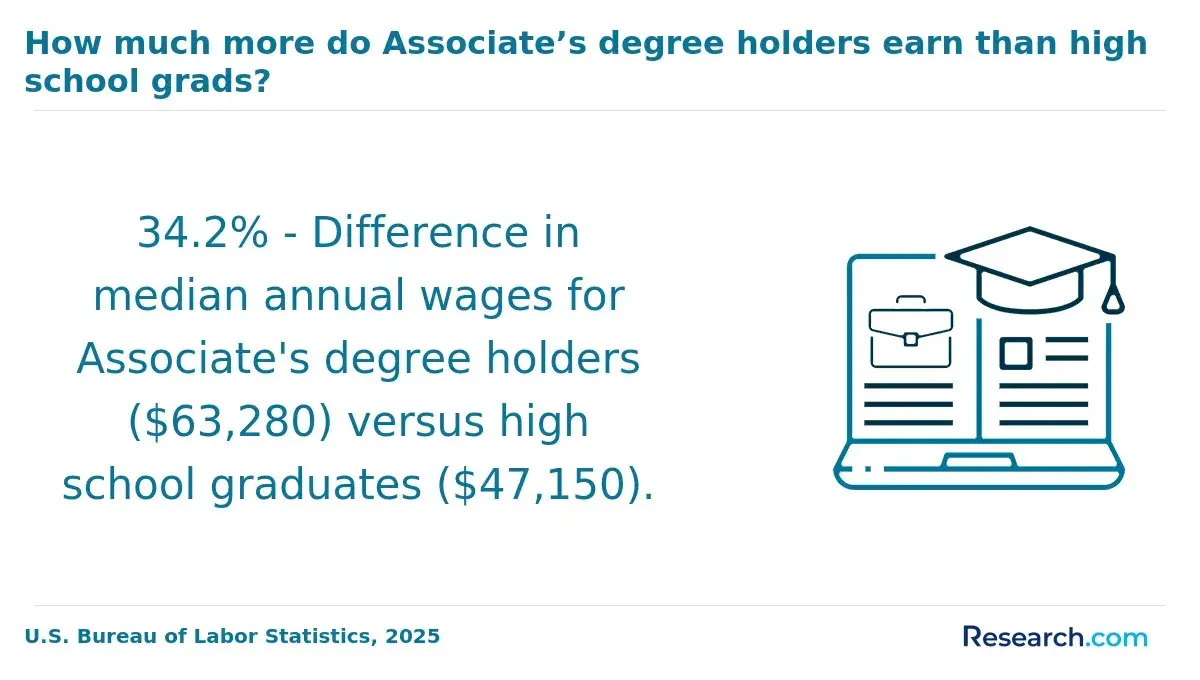
How does the ROI of an online public policy bachelor's degree compare to an associate degree or a professional certificate?
The investment required for an online public policy bachelor's degree is notably higher than for associate degrees or professional certificates, but this difference reflects more than just cost. According to the National Center for Education Statistics, associate degrees typically cost less than half as much as a four-year bachelor's program, making them a practical choice for those requiring affordable and swift qualifications.
- Cost Efficiency: Certificates and associate degrees demand significantly lower tuition fees, which appeals to students prioritizing immediate accessibility and minimal debt.
- Entry-Level Earnings: Those with certificates can often secure roles with starting salaries near $35,000 to $40,000, while associate degree holders usually see a modest increase, earning roughly $40,000 to $50,000 annually, based on Bureau of Labor Statistics data.
- Long-Term Salary Potential: Bachelor's degree holders frequently achieve median salaries above $65,000 as careers progress. The Lumina Foundation emphasizes that completing a bachelor's degree supports sustained income growth and expands professional opportunities, resulting in greater financial returns within about a decade despite upfront expenses.
- Career Advancement: Higher-level positions such as management, specialized policy analysis, and leadership roles often require a bachelor's degree, offering enhanced job stability and pathways for skill development beyond entry-level positions.
- Decision Framework:
- Opt for a certificate if your goal is prompt entry into the field with limited educational costs, focusing on administrative or support roles.
- Choose an associate degree if you seek foundational knowledge with flexible scheduling while minimizing longer-term tuition commitments.
- If your priorities include greater earning potential, career progression, and access to diverse roles, investing in an online public policy bachelor's degree usually delivers the best return over time.
Which online public policy specializations or concentrations yield the highest earning potential after graduation?
The choice of specialization in an online public policy bachelor's degree significantly impacts earning potential and return on investment. Data from the U.S. Bureau of Labor Statistics (BLS) highlights considerable salary differences across various concentration tracks, helping students and professionals align their educational investment with career goals.
- Health Policy: Graduates focusing on health policy typically enter healthcare administration or government health roles, where median salaries often exceed $100,000. This specialization often requires ongoing certification in healthcare administration or public health, which adds to total costs and time before ROI is realized.
- Environmental Policy: Careers in regulatory agencies or nonprofit sustainability organizations offer median salaries between $70,000 and $85,000. Additional licensure such as environmental impact assessment credentials may be necessary, contributing to extra education expenses and delaying financial returns.
- Urban and Regional Planning: With median incomes near $75,000, this track involves city planning and development jobs. Many roles require certification from the American Institute of Certified Planners, which entails further study and exam fees, influencing overall investment and time-to-ROI.
- Economic Policy: This concentration can command salaries ranging from $80,000 to $100,000, especially in federal agencies and consulting firms. Though specific certifications are rare, advanced education is often recommended for long-term growth.
- General Public Policy: Generalist graduates typically earn between $60,000 and $70,000 but benefit from lower upfront costs and flexibility across industries, potentially leading to a faster initial return on investment.
Choosing the right specialization depends on balancing salary premiums against the cost and time required for certifications or licensure. Working professionals with experience may favor health or economic policy for higher earnings over time, while first-generation college students on tight budgets might prioritize general public policy or environmental tracks for manageable educational expenses. Aligning specializations with personal circumstances and career trajectories optimizes both earning potential and speed to financial return.
How do employer tuition reimbursement and financial aid reduce the net cost of an online public policy bachelor's degree?
Employer tuition reimbursement programs for online public policy degrees can substantially lower the out-of-pocket cost by covering a significant portion of tuition. Under IRS Section 127, employers may offer up to $5,250 annually in tax-free educational assistance.
This benefit allows many working students to receive tuition support without increasing taxable income. According to the Society for Human Resource Management (SHRM), about 66% of U.S. employers provide some form of tuition assistance, making it a widely available benefit.
Federal and institutional financial aid further reduce the net tuition costs. Grants such as Pell Grants, state awards, and scholarships target students with financial need, while subsidized loans offer low-interest borrowing that lessens immediate financial pressure. Combining these resources with employer tuition reimbursement makes pursuing an online public policy bachelor's degree considerably more affordable.
To illustrate, consider a working professional enrolled in an online public policy program with $20,000 annual tuition. If their employer reimburses $5,250 annually tax-free and the student qualifies for a $5,500 Pell Grant plus a $3,000 scholarship, total financial aid reaches $13,750. This reduces their net cost to $6,250 per year before loans. Over four years, this combination dramatically cuts total expenses compared to published tuition.
For students balancing work and studies, reviewing options like 6 week classes can also help accelerate completion while managing costs effectively.
- Employer Tuition Reimbursement: Employers frequently fund education up to the IRS tax-free limit of $5,250 annually, easing financial burdens while encouraging degree completion.
- Prevalence of Assistance: Approximately two-thirds of U.S. employers offer tuition benefits, reflecting strong support for employee higher education goals.
- Federal and Institutional Aid: Grants, scholarships, and subsidized loans significantly reduce tuition costs, especially for students demonstrating financial need.
- Combined Impact: When employer aid is paired with federal and institutional awards, students can lower net tuition by more than half, increasing access to an online public policy degree.
- Worked Example: A student receiving employer reimbursement plus Pell Grants and scholarships might pay only $6,250 yearly on a $20,000 tuition, demonstrating the practical benefits of leveraging multiple aid sources.
What hidden costs should students factor into the total investment of an online public policy bachelor's degree?
When budgeting for an online public policy bachelor's degree, students often factor in tuition but overlook ongoing expenses for online public policy degree students that can significantly increase the overall cost. College Board research and institutional disclosures indicate these indirect costs of earning an online public policy bachelor's degree may add between $1,000 and $2,500 beyond tuition. Such fees extend the timeline for achieving a return on investment, affecting how quickly graduates break even financially.
Many programs impose technology fees ranging from $100 to $400 per semester to support digital platforms, software updates, and IT help. Remote proctoring services for online exams, costing $20 to $50 each, represent another recurring expense.
Course-specific software licenses-such as those for statistical or data visualization tools-can add $200 to $700 annually depending on program requirements. Graduation fees-charged upon degree completion-may add $100 to $300, while professional memberships in organizations like the American Society for Public Administration, costing $50 to $150 yearly, are often overlooked but beneficial for career advancement.
Prospective students should request a full cost-of-attendance statement-including all mandatory and optional fees-to avoid unexpected expenses and realistically assess salary gains versus total educational costs. Evaluating these hidden costs alongside verified salary outcomes from sources like the Bureau of Labor Statistics and IPEDS provides a clearer picture of the degree's value.
For those comparing programs, reviewing rankings such as the best online electrical engineering programs USA offers insight on cost and ROI variations applicable across disciplines.
- Technology Fees: Charges for access to digital platforms and technical support typically range from $100 to $400 per semester, accumulating considerably over the program's duration.
- Proctoring Services: Online exams usually require paid remote proctoring at $20 to $50 per test, becoming a notable recurring cost during the degree.
- Software Licenses: Specialized course software needed in public policy can cost between $200 and $700 annually and is rarely included in tuition.
- Graduation Fees: Mandatory charges for diploma processing and ceremonies add approximately $100 to $300 at program completion.
- Professional Memberships: Optional memberships, costing $50 to $150 yearly, support networking and career growth but are often excluded from budgeting.
How does the accreditation status of an online public policy program affect graduate salary and employability?
Regional accreditation is the highest standard for online public policy programs, covering entire institutions and ensuring consistent quality. Programmatic accreditation targets specific disciplines but is less typical for these degrees. Employers overwhelmingly prefer graduates from regionally accredited schools, associating them with rigorous academic standards and trustworthy credentials.
According to surveys by the National Association of Colleges and Employers (NACE), hiring managers often question the value of degrees from non-accredited or nationally accredited-only institutions, which can negatively affect job offers and salary negotiations.
Attending programs without proper accreditation can also restrict access to essential licensure exams and admissions to graduate programs, both of which are vital for career growth. Furthermore, many government and healthcare employers require degrees from accredited institutions, limiting job opportunities for those without recognized credentials.
Prospective students are advised to verify program accreditation through the U.S. Department of Education's accreditation database or the Council for Higher Education Accreditation (CHEA) before enrolling.
- Employability Advantages: Graduates from regionally accredited programs are favored by employers who view their education as more credible and reliable, enhancing job prospects.
- Stronger Salary Negotiation: Accredited degrees provide graduates with better leverage during salary discussions, supported by employer trust in the program's quality.
- Licensure and Graduate School Access: Proper accreditation is often mandatory for taking licensure exams and pursuing advanced degrees, which are critical for professional advancement.
- Restrictions in Key Sectors: Government and healthcare fields commonly require accredited degrees, limiting opportunities for graduates from unaccredited or less recognized programs.
- Verification Importance: Checking accreditation status via official resources safeguards students from investing in programs that could hinder career progress.
What entry-level job titles and salary ranges are available to graduates of online public policy bachelor's programs?
Graduates holding an online public policy bachelor's degree typically access a wide range of entry-level positions that vary in pay depending on industry and experience. Salary benchmarks reflect both the interdisciplinary skill set and practical demands across sectors like government, technology, healthcare, and finance. Early-career roles offer differing compensation that impacts how quickly tuition costs are recouped.
- Policy Analyst: Median starting salaries range from $50,000 to $65,000, with government agencies and consulting firms paying at the higher end.
- Legislative Assistant: Entry pay generally falls between $40,000 and $55,000, especially from federal government or advocacy organizations.
- Research Assistant: Salaries start around $35,000 to $50,000, often in academic or think tank environments, where nonprofit sectors provide more stability.
- Program Coordinator: Compensation usually runs from $42,000 to $58,000 in healthcare and education nonprofits; project management certification can increase starting pay.
- Community Outreach Specialist: Pay ranges from $38,000 to $54,000, with tech companies and government roles offering premiums for digital engagement skills.
- Public Affairs Associate: Salaries start from $45,000 to $60,000, commonly found in corporate and finance sectors where communication skills matter.
- Compliance Analyst: Entry-level earnings fall between $48,000 and $62,000, primarily in finance and healthcare; certifications like CCEP boost potential.
- Data Analyst (Entry-Level): Starting salaries range from $50,000 to $68,000, especially in tech and government settings; expertise in statistics or data science enhances opportunities.
Internships, specialized certifications, and focused concentrations can elevate initial salaries and accelerate return on investment. For career changers and first-generation students managing limited resources, choosing programs emphasizing practical experience and credentials directly linked to higher-paying roles offers a clearer path to financial and professional advancement.
What Graduates Say About the Return on Investment of Their Online Public Policy Bachelor's Degree
- Tony: "I chose the online public policy bachelor's degree after thoroughly evaluating its ROI against traditional programs. The flexibility allowed me to continue working while studying, reducing financial strain significantly. Beyond just the cost, the program opened doors to leadership roles I hadn't previously considered, making the investment worthwhile in more ways than one."
- Denver: "Reflecting on my journey, the non-financial returns of my online public policy degree have been just as valuable as the financial gains. The enhanced job security and expanded professional network I gained helped me navigate career transitions smoothly. This degree truly provided a solid foundation for lifelong growth rather than just immediate monetary benefits."
- Kai: "From a professional standpoint, the online public policy bachelor's degree accelerated my career trajectory remarkably. The program's curriculum was practical and relevant, equipping me with skills that employers highly value. Investing in this degree has paid off through promotions and higher earning potential-I couldn't be more satisfied with the decision."
Other Things You Should Know About Public Policy Degrees
Salary outcomes for public policy graduates differ significantly by location and industry. Graduates working in urban areas or regions with a high concentration of government and nonprofit organizations generally earn higher salaries. Industry sectors like government, research institutes, and consultancy typically offer better pay compared to entry-level roles in local nonprofit agencies or smaller organizations.
Employer surveys consistently highlight analytical and policy evaluation skills as highly valued for public policy graduates. Labor market data indicates growing demand for professionals who can navigate regulatory environments and program management. This demand supports positive job placement rates and salary improvements for degree holders in this field.
Besides salary gains, earning a public policy degree online offers important non-financial benefits such as increased career flexibility and enhanced critical thinking skills. Graduates often find improved job security and opportunities for leadership positions. These factors contribute to the degree's overall value by supporting long-term professional growth and personal development.
References
- Associate degrees and certificates are more valuable than you may think https://fordhaminstitute.org/national/commentary/associate-degrees-and-certificates-are-more-valuable-you-may-think
- ROI in Higher Education - FREOPP https://freopp.org/roi-in-higher-education/
- Is College Worth it? | Return on Investment Analysis of College Degree https://educationdata.org/college-degree-roi
- Return on Education for Bachelor’s Degrees | SoFi https://www.sofi.com/learn/content/roi-by-bachelor-degree/
- Tuition Reimbursement: How Do Employers Benefit from It? | KBI Benefits https://www.kbibenefits.com/tuition-reimbursement-benefits
- Online Learning and College Costs - Public Policy Institute of California https://www.ppic.org/blog/online-learning-and-college-costs/
- What are the best graduate degrees for policy work? - Emerging Technology Policy Careers https://emergingtechpolicy.org/pathways/graduate-school/2-comparing-options/
- Top 10 Careers in Public Administration https://online.eou.edu/resources/article/careers-in-public-administration/
- The Truth About ‘Free’ and Low-Cost Online Colleges: Catches and Hidden Costs to Consider https://www.investopedia.com/the-truth-about-free-online-colleges-catches-and-hidden-costs-to-consider-11789310