2027 Return on Investment of an Online Business Communications Bachelor's Degree: Salary vs Cost

Co-Founder and Chief Data Scientist
An online business communications bachelor’s degree can be a useful credential for people who want to move into communications, marketing, public relations, corporate messaging, or management-support roles. The harder question is financial: will the salary gain, promotion potential, and career flexibility justify the tuition, fees, and time required to finish the degree?
For working adults, that decision is rarely about tuition alone. It also includes financial aid, employer reimbursement, lost time, technology costs, transfer credits, accreditation, and the kinds of jobs graduates actually obtain. Research indicates that graduates with a business communications degree earn a median annual salary approximately 15% higher than those without this credential, but the return varies by school price, specialization, industry, and career stage.
This guide breaks down the full investment from enrollment to graduation, compares degree costs with starting salaries and long-term earnings, and explains how to evaluate whether an online business communications bachelor’s degree fits your budget and career goals.
Key Things to Know About the Return on Investment of an Online Business Communications Bachelor's Degree
- Average tuition for online business communications bachelor's degrees ranges from $15,000 to $30,000-significantly lower than many traditional programs-making cost management feasible for budget-conscious students.
- Graduates see median salaries near $65,000 annually, with a 15% job growth rate expected over the next decade according to the Bureau of Labor Statistics.
- Non-financial benefits include improved career advancement prospects, enhanced job security, and access to professional development that supports long-term career growth.
What Is the True Cost of Earning an Online Business Communications Bachelor's Degree From Enrollment to Graduation?
The true cost of an online business communications bachelor’s degree is the total amount you pay to enroll, complete coursework, use required technology, buy materials, and graduate. Tuition is the largest expense, but it is not the only one. According to IPEDS data, tuition fees for the full degree range on average from $15,000 to $35,000, with public universities usually costing less for in-state students and private institutions typically charging more.
Most students should estimate a total investment of $20,000 to $45,000 for an online business communications bachelor’s degree after adding fees and materials. The final amount depends heavily on transfer credits, residency status, institutional aid, employer reimbursement, and whether the program charges flat-rate or per-credit tuition.
- Tuition: The largest cost is usually the per-credit or flat-rate tuition charged by the college. Public institutions may offer lower in-state rates, while private and some for-profit institutions may charge higher prices.
- Technology and access fees: Many online programs charge between $200 and $1,000 annually for learning platforms, software access, technical support, and digital services.
- Course materials: Textbooks, e-books, digital resources, and publisher access codes can total $500 to $1,500, although some schools use inclusive-access models that may reduce separate purchases.
- Proctoring and exam fees: Remote proctoring may cost $20 to $50 per test. If several courses require monitored exams each term, these costs can become meaningful by graduation.
- Net price versus sticker price: The advertised price is not always what students pay. Per the National Center for Education Statistics, many students pay only 60% to 70% of the sticker price because of financial aid and scholarships.
Before enrolling, ask each school for a written cost-of-attendance estimate that includes tuition, mandatory fees, books, software, graduation fees, and expected annual increases. Students comparing broader business programs can also review online business degree cost factors to understand how tuition, aid, and fees affect affordability across related degrees.
If speed matters as much as cost, compare completion timelines carefully. Some learners researching other accelerated education pathways may also review accelerated EdD programs online to see how time-to-completion affects total investment in different fields.
How Does the Starting Salary for Business Communications Bachelor's Degree Graduates Compare to the Total Cost of the Degree?
Starting salary is one of the clearest ways to test whether a business communications bachelor’s degree is financially reasonable. Graduates commonly begin in roles such as public relations specialist, marketing coordinator, corporate communications assistant, content writer, or communications specialist. According to the latest Bureau of Labor Statistics (BLS) Occupational Outlook Handbook data, the median annual salary for business communications bachelor’s degree graduates ranges from $45,000 to $55,000.
Total degree costs vary widely. A low-cost online program with substantial aid may cost around $15,000, while a higher-priced program without significant aid can cost upwards of $45,000. At the lower end, a graduate could theoretically earn the equivalent of the degree cost in about 3 to 4 months of gross salary. At the higher end, the same comparison may require a full year or longer. This is not the same as paying the debt off, because taxes, living expenses, interest, and repayment terms matter, but it gives students a practical break-even benchmark.
- Median starting salary: Entry-level business communications roles pay between $45,000 and $55,000 annually according to BLS data.
- Degree cost range: Total costs may range from $15,000 for affordable, aid-supported programs to $45,000 for more expensive programs without significant aid.
- Offset timeframe: Graduates at the lowest cost level may recoup the equivalent of tuition in about 3 to 4 months of salary, while graduates at the highest cost level may need a full year or longer.
- Salary growth potential: The BLS projects consistent salary growth of about 3 percent annually or more in many communications-related roles.
- Planning value: Comparing tuition, aid, debt, salary range, and promotion potential helps students choose a program that fits both their budget and career expectations.
The best ROI usually comes from choosing an accredited program with reasonable tuition, strong transfer-credit policies, practical coursework, and internship or portfolio opportunities. Students comparing salary potential across bachelor’s programs can also review 4 year degrees that pay well for broader context.
What Is the Average Return on Investment (ROI) for an Online Business Communications Bachelor's Degree Over a 10-Year Career?
ROI for an online business communications bachelor’s degree is best measured by comparing the added earnings a graduate may receive over time with the total cost of earning the degree. In higher education, ROI is commonly calculated by subtracting degree costs from additional earnings over a set period compared with someone who has only a high school diploma or associate degree in a related field.
Georgetown University Center on Education and the Workforce and PayScale’s College ROI Report provide authoritative data for these types of comparisons. Using median wage figures from the Bureau of Labor Statistics (BLS) for business communications careers, plus typical annual raises, can help prospective students estimate the long-term value of the degree.
For example, an entry-level business communications professional may start with a median salary near $48,000. Assuming a steady 3% yearly raise, cumulative earnings over ten years reach about $546,000. By comparison, a high school graduate working in a related administrative role may start around $30,000 and earn roughly $360,000 over the same period because of slower wage growth. With average total tuition and fees of $40,000 for an online business communications bachelor’s degree, the ROI amounts to $146,000, calculated as the difference in earnings minus the cost of the degree.
This return surpasses the national average for bachelor’s degrees, which hovers near $100,000 over ten years. That does not mean every student will see the same result. ROI improves when students minimize debt, transfer credits, use employer reimbursement, graduate on time, and move into higher-paying industries such as technology, finance, healthcare, or corporate communications.
- ROI definition: ROI is the net financial gain from the degree after subtracting education costs from added income over time.
- Data foundation: Georgetown and PayScale provide respected nationwide labor market and education ROI benchmarks.
- Sample calculation: A $48,000 starting salary with a 3% yearly raise produces about $546,000 in ten-year earnings, compared with roughly $360,000 for a related administrative role starting around $30,000.
- Estimated net return: After subtracting $40,000 in tuition and fees, the example produces an ROI of $146,000.
- Key limitation: ROI depends on actual job placement, salary growth, debt interest, local labor markets, and whether the student completes the degree.
A professional who enrolled in an online business communications bachelor’s program described the decision as a balancing act: “I weighed the $40,000 tuition against the projected salary increases and job security. It wasn’t just about immediate costs but the long-term payoff.” He also noted the difficulty of completing coursework while working full time and managing family responsibilities.
His view changed as the degree began to support promotions and stronger workplace confidence. “Knowing the degree’s ROI helped me push through tough moments-it wasn’t just an expense, it was an investment in building a stable career path.”
How Do Online Business Communications Program Tuition Rates Compare Across Public, Private, and For-Profit Institutions?
Tuition for online business communications programs differs sharply by institution type. Public universities are often the most affordable option for in-state students. Private nonprofit colleges usually charge more but may offer stronger advising, alumni networks, or institutional scholarships. For-profit colleges may appeal to working adults because of flexible schedules, but students should examine accreditation, graduation outcomes, transfer policies, and employer reputation before enrolling.
Public institutions: In-state public universities commonly charge between $300 and $500 per credit hour for online business communications programs. Some use flat-rate online pricing, which can simplify budgeting. Out-of-state students should check whether the school charges a different rate, because the total cost can rise substantially.
- Private nonprofit institutions: These schools typically charge $500 to $1,200 per credit hour. The higher price may be partly offset by scholarships, grants, stronger student services, smaller classes, or alumni networks. Students should compare net price rather than published tuition.
- For-profit colleges: For-profit schools sometimes advertise flexible formats, career support, or accelerated schedules. Their tuition can match or slightly undercut public in-state rates in some cases. However, students should scrutinize graduation rates, accreditation, employer perception, credit transferability, and loan outcomes because these factors can affect ROI even when the advertised price looks manageable.
Tuition alone should not decide the choice. A lower-cost program that students do not complete may deliver a weaker return than a moderately priced program with better support and stronger employment outcomes. Students should compare total cost, transfer-credit acceptance, time to completion, graduation rates, faculty access, internship options, and career services.
For students who need a lower-cost starting point, an associate degree can sometimes serve as a stepping stone before transferring into a bachelor’s program. Those weighing shorter credential routes may review associates degrees while comparing cost and transfer options.
What Long-Term Salary Growth Can Business Communications Bachelor's Degree Holders Expect Over a 20- to 30-Year Career?
Business communications bachelor’s degree holders can expect their salary potential to grow as they gain experience, build a portfolio, specialize, and move into roles with broader responsibility. The largest gains often come from progressing from support roles into specialist, manager, director, or strategic communications positions.
- Early career growth: Within the first five years after graduation, salaries for business communications bachelor’s degree holders typically begin in the range of $45,000 to $55,000 and rise as employees gain practical experience, stronger writing skills, campaign experience, and cross-functional responsibilities.
- Mid-career acceleration: Around a decade into the field, professionals may see earnings climb to approximately $75,000 to $85,000, especially if they supervise teams, manage campaigns, handle executive communications, or specialize in high-demand areas.
- Advanced career milestones: Between 15 and 20 years of experience, many professionals reach senior management or strategic roles with salaries of $90,000-$110,000. Compensation at this level may include bonuses and performance-based incentives.
Lifetime earnings premium: Over a full career span, degree holders can expect a cumulative earnings advantage of roughly $500,000 to $700,000 compared to peers without a degree in similar communication roles. This premium comes from access to higher-paying roles, stronger promotion potential, and greater job security.
Salary growth is not automatic. Graduates who keep building digital communication skills, analytics knowledge, presentation ability, project management experience, and leadership capacity are usually better positioned for advancement. Industry choice also matters: corporate, healthcare, finance, technology, and specialized consulting roles may offer stronger compensation than some nonprofit or entry-level public-sector positions.
One graduate described the degree as a long-term confidence builder as much as a salary driver. While balancing full-time work with online coursework was demanding, the leadership and communication skills gained through the program helped him pursue promotions he had not previously considered realistic.
How Does the ROI of an Online Business Communications Bachelor's Degree Compare to an Associate Degree or a Professional Certificate?
An online business communications bachelor’s degree usually has a stronger long-term ROI than an associate degree or professional certificate, but it also requires a larger upfront investment. The right choice depends on whether the student needs fast entry into the workforce, lower debt, transfer flexibility, or access to management-track roles.
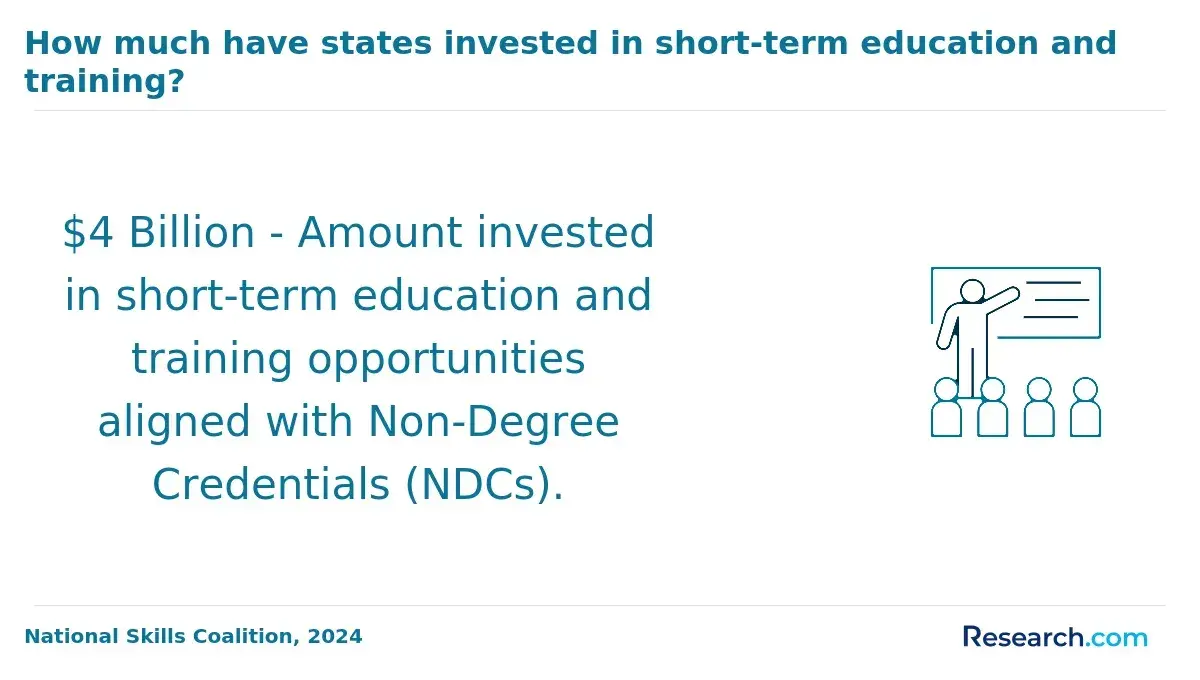
- Cost: Online business communications bachelor’s degrees typically cost $20,000 to $40,000. Associate degrees usually cost between $8,000 and $15,000. Professional certificates often cost between $1,000 and $5,000, making them the lowest-cost option.
- Salary outcomes: Median wages differ by credential level. Bachelor’s degree holders in related communication fields earn about $65,000 annually, while associate degree holders earn near $45,000. Certificate holders mostly enter with salaries from $35,000 to $40,000.
- Short-term ROI: Certificates and associate degrees can be attractive for students who need employment quickly, want to limit debt, or are testing interest in the field before committing to a four-year degree.
- Long-term ROI: Over 10 to 15 years, a bachelor’s degree generally produces greater earnings because it supports higher starting salaries, broader job eligibility, and stronger promotion potential.
- Lifetime income: Research by the Lumina Foundation suggests bachelor’s holders earn approximately 70% more lifetime income than those with an associate degree.
- Career advancement and security: Bachelor’s graduates are more likely to qualify for leadership, managerial, and strategic roles that may not be open to associate degree or certificate holders.
- Decision framework: Students with tight budgets or uncertain goals may start with a certificate or associate degree, then transfer credits later. Career changers and working professionals who already know they need a bachelor’s credential for advancement may see stronger value from enrolling directly in an online bachelor’s program.
The best strategy is to compare credentials by total cost, time to completion, transferability, employer recognition, and the roles each option can realistically unlock. A low-cost certificate can be valuable, but it may not substitute for a bachelor’s degree when employers require a four-year credential for advancement.
Which Online Business Communications Specializations or Concentrations Yield the Highest Earning Potential After Graduation?
Specialization can affect salary more than the degree title alone. Students who choose a concentration aligned with employer demand, measurable skills, and higher-responsibility roles may see a stronger return than those who pursue a broad generalist path without a clear career target.
- Corporate communications: This concentration prepares graduates for internal communications, executive messaging, crisis communication, employee communication, and external corporate reputation work. According to BLS data, communication managers earn a median annual salary near $120,000-almost double the average $65,000 for general business communications positions.
- Marketing communications: This path focuses on campaigns, brand messaging, social media strategy, customer engagement, and content planning. Median salaries typically range between $60,000 and $85,000. Digital marketing certifications may improve competitiveness, though they can add upfront costs.
- Technical communication: This specialization emphasizes manuals, product documentation, guides, training materials, and complex information design. Median salaries span from $70,000 to $95,000. Students may need specialized software skills or certifications, which can raise initial costs but improve long-term value.
- Public relations and media: PR specialists have median earnings around $62,000, with advancement paths into management roles that exceed $100,000. Students should expect to build strong writing samples, media-relations skills, and campaign experience.
- Health communication: This emerging area focuses on communication within healthcare systems, public health messaging, patient education, and organizational communication. Median wages vary widely-from $50,000 to $90,000-depending on licensures or certifications that may increase educational expenses but support job security and growth.
Students should choose a specialization by comparing salary potential with the extra time, software, certification, or portfolio work required. Corporate communications and technical communication may offer faster ROI for students who can demonstrate employer-recognized skills. Marketing communications and public relations can also pay well, but outcomes often depend on internships, campaign results, analytics skills, and industry connections.
How Do Employer Tuition Reimbursement and Financial Aid Reduce the Net Cost of an Online Business Communications Bachelor's Degree?
Employer tuition reimbursement and financial aid can turn a high sticker price into a much more manageable net cost. For working adults, these funding sources can be the difference between taking on heavy debt and completing the degree with limited out-of-pocket expense.
Under IRS Section 127, employers may provide up to $5,250 annually in tax-free educational assistance. Nearly 60% of U.S. employers offer some form of tuition aid, according to the Society for Human Resource Management (SHRM). Students should ask whether their employer reimburses only completed courses, requires a minimum grade, limits eligible schools, or requires employees to remain with the company for a set period after reimbursement.
Federal and institutional aid can reduce costs further. Grants and scholarships do not require repayment. Subsidized federal loans may also help because the government covers interest while the student remains in school. Many online students combine employer reimbursement with grants, scholarships, and federal loans to reduce the amount they need to pay directly.
For example, a student in an online business communications bachelor’s program with a total tuition cost of $30,000 might receive $5,250 annually from an employer and qualify for $10,000 in grants and scholarships. This reduces the remaining balance to about $14,750. Subsidized loans can further ease short-term cash-flow pressure, although loans still require repayment.
- Employer tuition assistance: Employers may provide up to $5,250 per year in tax-free tuition reimbursement under IRS Section 127.
- Benefit availability: Nearly 60% of employers offer tuition aid, according to SHRM.
- Federal and institutional aid: Grants, scholarships, and subsidized loans can reduce net tuition and limit interest costs while the student is enrolled.
- Combined impact: Using employer tuition reimbursement with federal and institutional aid can cut effective program costs by more than half.
- Worked example: A $30,000 tuition cost can decrease to under $15,000 after employer benefits and scholarships.
Before enrolling, students should complete the FAFSA if eligible, ask employers for written reimbursement rules, and request a school aid estimate that separates grants, scholarships, loans, and out-of-pocket costs. Learners comparing related online programs may also review online colleges for hospitality management to see how financial aid considerations apply across other career-focused degrees.
What Hidden Costs Should Students Factor Into the Total Investment of an Online Business Communications Bachelor's Degree?
Hidden costs can materially change the ROI of an online business communications bachelor’s degree. Students often budget for tuition but overlook required fees, technology tools, software, proctoring, and graduation expenses. Based on College Board research and institutional disclosures, these additional costs typically range from $500 to over $1,200 annually.
- Technology fees: Annual charges between $100 and $400 may cover platform access, learning management systems, digital services, and IT support.
- Proctoring services: Remote exam monitoring can cost $30 to $75 per test, which adds up when several courses require proctored assessments.
- Graduation fees: One-time diploma processing and degree completion fees may range from $100 to $200.
- Course-specific software: Some business communications courses require design tools, analytics platforms, presentation software, or publisher systems that can add several hundred dollars per semester.
- Professional memberships: Industry associations may cost about $100 annually. These memberships are optional in some cases, but they can support networking, internships, and job searches.
These costs can delay the break-even point by a year or more, especially for students with limited savings or high borrowing needs. Before committing, request a full cost-of-attendance statement and ask whether any courses require paid software, exam proctoring, portfolio platforms, or travel for in-person requirements.
Students should compare hidden costs alongside verified salary outcomes and career services. Those comparing other creative or communications-related pathways may also review the best 2 year graphic design degree online to evaluate how different programs structure fees, tools, and career preparation.
How Does the Accreditation Status of an Online Business Communications Program Affect Graduate Salary and Employability?
Accreditation affects whether employers, graduate schools, and financial aid systems recognize a degree as legitimate. For an online business communications program, accreditation can influence job eligibility, salary negotiations, transfer credit, graduate admission, and access to federal aid.
Regional accreditation applies to the entire institution and is widely viewed as the highest standard for academic quality in the U.S. Programmatic accreditation focuses on a specific field, such as business or communications, and may signal that the curriculum meets discipline-specific expectations. Both can matter, but regional institutional accreditation is the first status students should verify.
Surveys from the National Association of Colleges and Employers (NACE) and the Society for Human Resource Management (SHRM) show that hiring managers prefer applicants with degrees from regionally accredited schools. Degrees from non-accredited or nationally accredited-only institutions may raise concerns about academic rigor, which can affect salary offers, promotion opportunities, and employer confidence.
- Scope of accreditation: Regional accreditation covers the whole institution, while programmatic accreditation evaluates quality within a specific discipline.
- Employer confidence: Hiring managers often view regionally accredited degrees as stronger evidence of academic preparation.
- Graduate school access: Unaccredited programs may create barriers for students who later want to enter graduate programs.
- Licensure and regulated roles: Some government, healthcare, or regulated positions may require credentials from accredited institutions.
- Salary leverage: An accredited degree can strengthen a graduate’s credibility when negotiating pay, benefits, and advancement opportunities.
- Verification step: Students should confirm accreditation through the U.S. Department of Education’s accreditation database and the Council for Higher Education Accreditation (CHEA) before enrolling.
The safest approach is to verify accreditation before applying, not after admission. Students should also confirm that credits will transfer, the degree title matches career goals, and employers in their target field recognize the institution.
What Entry-Level Job Titles and Salary Ranges Are Available to Graduates of Online Business Communications Bachelor's Programs?
Graduates of online business communications bachelor’s programs can pursue entry-level roles across marketing, public relations, human resources, corporate communications, sales support, and digital content. Salary ranges vary by industry, location, experience, internships, portfolio strength, and technical skills.
- Communications specialist: Starting salaries typically range from $45,000 to $55,000. Healthcare and technology employers may pay more because they need clear communication across multiple platforms and audiences.
- Marketing coordinator: Salaries generally fall between $42,000 and $52,000. Finance and technology companies may offer stronger compensation, especially for candidates with digital marketing or analytics skills.
- Public relations assistant: Pay generally ranges from $40,000 to $50,000. Government and nonprofit agencies may offer stable opportunities but may pay less than corporate firms.
- Content writer: Median pay ranges from $38,000 to $48,000. Technology companies and digital media organizations often value candidates who can combine writing ability with content strategy.
- Social media coordinator: Entry salaries usually span $40,000 to $50,000. Skills in analytics, paid social, scheduling tools, and campaign reporting can improve earning potential.
- Corporate communications assistant: Typical starting wages are between $44,000 and $54,000. Finance and healthcare employers may offer stronger compensation packages.
- Human resources assistant: Pay generally falls from $38,000 to $48,000. Education and government roles may emphasize stability, while certifications can influence salary tiers.
- Sales support specialist: Salaries vary from $37,000 to $47,000, with higher pay often found in technology and finance industries.
Students who complete internships, build a writing or campaign portfolio, and earn relevant certifications in project management, social media analytics, or digital marketing are more likely to reach the upper end of entry-level salary bands. Concentrations can also help by aligning coursework with specific roles rather than leaving the degree too general.
What Graduates Say About the Return on Investment of Their Online Business Communications Bachelor's Degree
- : "Choosing the online business communications bachelor’s degree was a strategic decision for me-I carefully balanced the tuition cost against the career benefits and realized it was a smart investment. Beyond just financial returns, the program opened doors to leadership roles and improved my workplace confidence significantly. Completing this degree has been pivotal in securing job stability in a competitive market. — Louie"
- : "Reflecting on my journey, the non-financial returns of the online business communications bachelor’s degree truly stand out-enhanced networking opportunities and continuous professional growth were worth every moment. Although I was initially concerned about the cost, the practical skills I gained have accelerated my promotions and increased my earning potential. This program has been a transformative experience on both personal and career levels. — Zamir"
- : "From a professional standpoint, the ROI of pursuing an online business communications bachelor’s degree exceeded my expectations-it improved my critical thinking and presentation skills, which employers highly value. I opted for the online format to maintain my full-time job, allowing me to apply new concepts in real time while managing expenses wisely. The degree has been instrumental in elevating my career trajectory and expanding my professional network. — Matthew"
Other Things You Should Know About Business Communications Degrees
Most graduates of online business communications programs can expect to recoup their tuition costs within five to seven years after entering the workforce. This timeframe depends on factors such as the total cost of the program and the starting salary in their chosen industry. Higher salaries in sectors like corporate communications or public relations can shorten the payoff period, while entry-level positions in non-profit organizations might extend it.
Salary outcomes vary significantly based on geographic location and industry sector. Graduates working in metropolitan areas with a high concentration of businesses, such as New York or San Francisco, tend to earn more than those in rural regions. Additionally, industries like technology, finance, and healthcare communication generally offer higher salaries compared to education or government sectors, affecting overall return on investment.
Employer surveys and labor market research consistently highlight strong demand for graduates with business communications skills. Many employers value the degree for its blend of writing, strategic thinking, and digital literacy, which are critical for effective organizational communication. These competencies translate into steady job placement rates and competitive salary offers, underscoring the degree's positive return on investment.
Non-financial returns, such as personal growth and networking opportunities, can enhance the overall value of the degree. However, these benefits are subjective and don't directly influence the salary vs. cost analysis for the 2027 ROI of an online business communications bachelor's degree.
References
- Types of Entry-Level Jobs for Communications Majors | Career Advice & Interview Tips | WayUp Guide https://www.wayup.com/guide/types-entry-level-jobs-communications-majors/
- Surprise, Surprise! Hidden Expenses in Online College - Bachelors Degree Center https://www.bachelorsdegreecenter.org/hidden-expenses-online-college/
- Why and How Employers Help With Education Costs - BenefitEd https://youbenefited.com/resource/why-and-how-employers-help-with-education-costs/
- Best MBA Communications Degree Programs + Online Masters vs Bachelors https://www.businessstudent.com/online-degrees/communications-degree/
- Online Communications Degrees - Unigo.com https://www.unigo.com/online-colleges/communications-degrees
- The Hidden Costs of College: What Students Don’t Plan For – The Coach Space https://thecoachspace.com/blog/hidden-costs-of-college/
- How does the accreditation of 1 yr online MBA programs affect my future job prospects? https://www.lsib.co.uk/2022/answers.aspx
- Average Private vs Public College Tuition [2025]: Data Analysis https://educationdata.org/private-vs-public-college-tuition
- Cost of Online College vs. Traditional | Champlain College Online https://online.champlain.edu/blog/cost-of-online-education-vs-traditional-education