
2027 Questions to Ask Before Accepting a Transplant Nurse Coordinator Position
Audited and Verified:
Our Editorial and Data Verification Process
Research.com uses government datasets, official education statistics and primary institutional information to support its career and degree guides. Our review process checks factual accuracy, occupational definitions, source dates and the requirements associated with the credentials discussed.
How This Article Was Fact-Checked
Our editorial team verifies salary estimates, employment projections, education requirements and program information against original data providers and official organizations. Salary figures are checked against the relevant occupational definitions and reporting periods. Information about licensure, accreditation and required in-person training is reviewed separately.
Fact-checked and verified on:

Co-Founder and Chief Data Scientist
A transplant nurse coordinator offer can sound like a move away from bedside nursing, but the job may bring urgent calls, complex care coordination, and responsibility for patients over many years. If you are an RN considering the transition, the most important details are in the offer's scope, staffing, training, and schedule—not its title.
This guide explains what coordinators do and gives you specific questions to ask before accepting, so you can judge whether the position fits your experience, finances, and capacity for on-call work.
Key Things You Should Know
- Clarify the assignment: Ask whether you will coordinate evaluations, living donors, waitlisted patients, post-transplant care, or several of these; the workload and ethical responsibilities differ.
- Get the schedule in writing: Compare the number of patients assigned, after-hours call frequency, backup coverage, and compensation for call and overtime before judging the salary.
- Verify the pathway: These positions generally require an active RN license and substantial relevant clinical experience, but degree, certification, and prior transplant experience requirements depend on the employer.
What does a transplant nurse coordinator do?
A transplant nurse coordinator is an RN who helps patients and the transplant team navigate evaluation, transplantation, and follow-up. The position may focus on an organ such as kidney, liver, heart, or lung, and it may serve recipients, living donors, or both through separate teams. Duties can include arranging testing, tracking candidacy decisions, teaching patients, reviewing results for timely escalation, coordinating with other clinicians, and documenting care.
Ask which phase of care the offer actually covers. A pre-transplant role may involve evaluation requirements and waitlist communication; a post-transplant role may emphasize medication education, surveillance appointments, and responding to concerning results. A living-donor role requires particular attention to donor independence and the center's safeguards against pressure. Coordinators communicate and escalate concerns within policy; they do not independently make surgical, allocation, or prescribing decisions outside their authorized scope.
Request a sample week and a written job description. Ask how many patients are assigned per coordinator, which tasks require same-day action, who handles insurance or social-work issues, and who covers absences. Those answers reveal more about the job than the title. This is an RN coordination role, not a practical-nursing role; hybrid practical nursing study options lead to a different license and should not be mistaken for a direct route into an RN-designated opening.
What education and nursing degree are required for transplant nurse coordinators?
Most RN-designated coordinator openings require graduation from an RN-qualifying nursing program and an active RN license. Employers may accept an associate degree in nursing (ADN) or require or prefer a Bachelor of Science in Nursing (BSN). Read the posting closely: "BSN preferred," "BSN required," and "BSN required within a specified period" create different commitments.
Ask the hiring manager: Is my current degree sufficient on the start date? If a BSN is expected later, what is the deadline, and does the employer provide paid study time or tuition assistance? Get any completion condition in writing. An experienced ADN-prepared RN should not assume a master's degree is needed for this job; nursing master's bridges for ADN graduates are worth considering only if a separate long-term goal justifies their cost and time.
An MSN or DNP may support later leadership, education, or advanced practice goals, but neither degree automatically provides transplant-coordinator competence. If an offer describes nurse practitioner duties, clarify whether it is actually an APRN position with separate education, certification, and state authorization requirements.
What RN licensing requirements apply to transplant nurse coordinator positions?
Confirm that your RN license is active and appropriate for every state in which the employer expects you to practice. A multistate license may provide a compact privilege in participating states, but it does not automatically authorize practice everywhere; location-specific rules also matter when work includes remote patient communication. The employer should explain its licensing and credential-verification process.
Before accepting, ask where patients will be located, whether you will provide care across state lines, and whether the role includes tasks governed by additional facility policies or credentials. Do not treat passing the NCLEX, holding an RN degree, or having an offer as a substitute for an active, applicable license. An LPN/LVN considering this career needs an RN-qualifying route, not just transplant experience; accelerated LPN-to-RN admission planning is a separate step that does not itself guarantee RN licensure or a coordinator job.
There is no single experience minimum that applies to every transplant-coordinator employer. Relevant backgrounds may include transplant units, critical care, dialysis, hepatology, cardiology, oncology, or complex ambulatory care. The strongest match depends on the organ, patient population, and whether the opening centers on evaluation or long-term follow-up.
Ask which experiences are essential on day one and which the center will teach. If you have strong assessment and care-coordination skills but no transplant background, request examples of how past hires made that transition. A new graduate should be especially cautious about a position with independent triage or call before supervised specialty preparation. For someone not yet licensed, planning applications to accessible nursing schools addresses entry into nursing—not the clinical experience an employer may later expect for transplant coordination.
Experience alone is not proof of readiness for every task. Ask how the center checks competence in escalation, patient teaching, documentation, and organ-specific workflows before assigning an independent caseload.
Ask whether the posting requires a specific specialty certification at hire, expects one after hire, or merely prefers it. A transplant-focused credential, when relevant to the position, is distinct from RN licensure and from employer training. Eligibility, fees, and renewal rules belong to the awarding organization and should be checked against its current requirements before you promise a completion date.
Also ask who pays exam and renewal costs, whether study time is available, and whether certification changes pay or promotion eligibility. Do not buy an unrelated credential to strengthen this application without checking its value with the employer. For example, psychiatric nurse practitioner study on a budget pertains to a different advanced practice career; it does not replace transplant orientation or confer coordinator authority.
For a job offer, the most consequential "training program" is often the employer's orientation. Ask for its length, assigned preceptor, organ-specific learning objectives, observed practice opportunities, competency checks, and criteria for taking calls independently. Orientation should address the center's referral and evaluation workflow, patient education, documentation systems, escalation pathways, and coordination with pharmacists, social workers, surgeons, and other clinicians.
Ask what happens if you have not met a competency by the planned end of orientation. A credible answer includes further supervision and reassessment, rather than simply assigning a full caseload. If your actual goal is advanced practice rather than RN coordination, examine that education separately: shorter psychiatric-mental health nursing master's pathways prepare for a different role and do not substitute for transplant-center onboarding.
Online coursework can be useful for an already-licensed RN completing a BSN or studying relevant subjects. It cannot, by itself, establish competence in a transplant center's patient population or eliminate any supervised clinical requirements of a prelicensure program. If a posting requires a BSN, RN-to-BSN pathways without standard hospital rotations may be worth comparing, but confirm each program's actual practice, project, and on-site requirements.
Do not confuse an online degree with a remote coordinator job. Ask whether the position requires clinic attendance, hospital rounds, travel between sites, or on-site availability during calls. If you need predictable hours for caregiving or another job, obtain the actual weekly schedule and call rotation rather than relying on "hybrid" or "flexible" in the posting.
For an RN who already meets the job's degree requirement, additional schooling may cost nothing because it may not be necessary. If a BSN is required later, an RN-to-BSN timeline and total price depend on accepted credits, course availability, enrollment pace, and required projects or visits. A prelicensure ADN or BSN is a substantially different investment for someone who is not yet an RN.
Before committing to both an offer and a program, calculate tuition and fees alongside books, travel, reduced work hours, and any employer reimbursement conditions. Ask whether reimbursement is available from the first term, whether it has a yearly cap, and whether leaving the job triggers repayment. A graduate degree is a separate financial decision: a master's nursing education on a BSN graduate's budget should be weighed against a defined advancement goal, not treated as a default cost of entering transplant coordination.
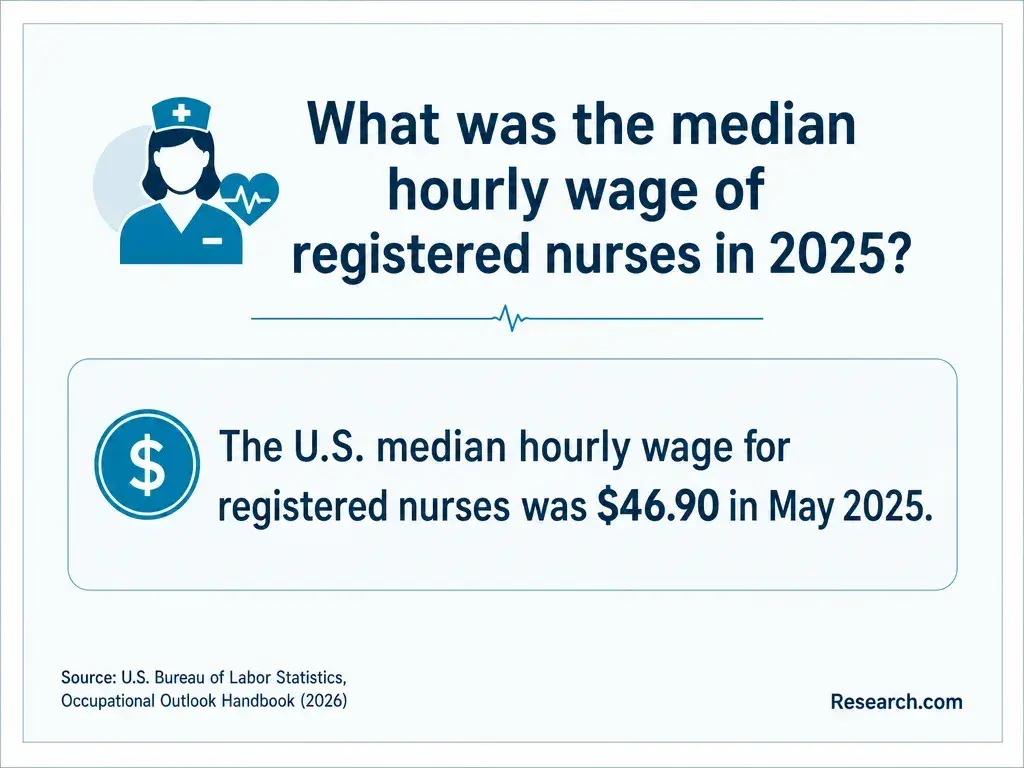
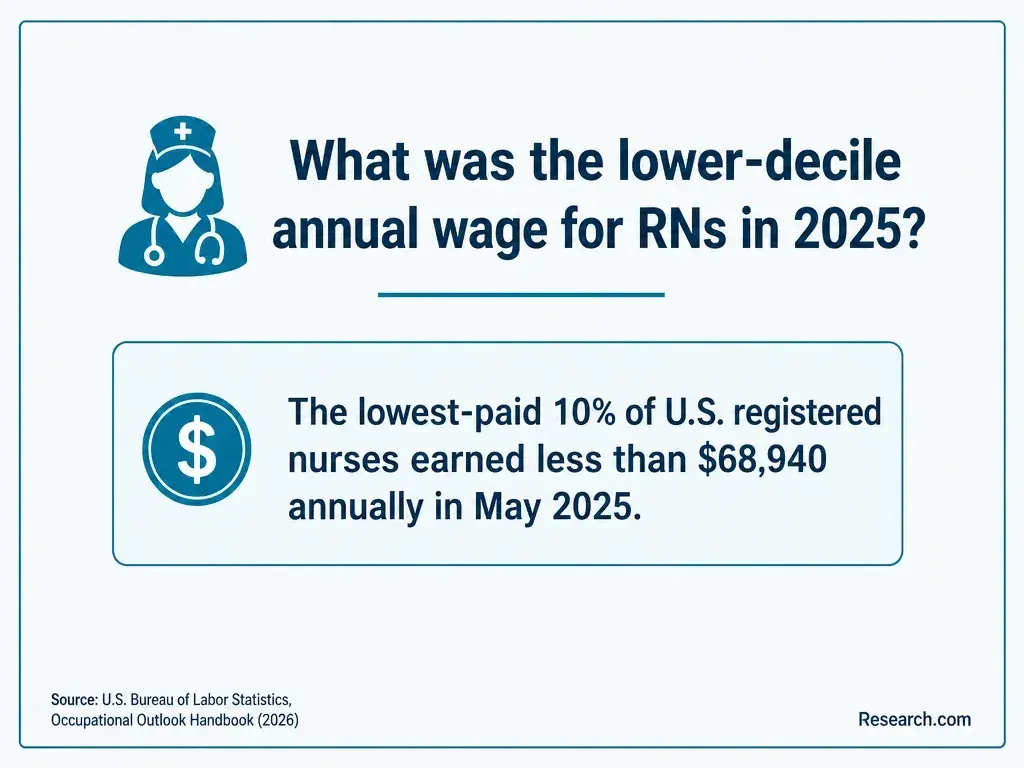
Evaluate the employer's complete offer rather than relying on a generic coordinator salary estimate. The U.S. Bureau of Labor Statistics reports wages for the broader registered-nurse occupation, not a separate transplant nurse coordinator category. Its RN median therefore cannot tell you what this center will pay for this caseload, location, and call schedule.
Ask for base pay, differentials, call stipends, rules for time worked while on call, overtime eligibility, benefits, and compensation review criteria in writing. Compare the offer with the hours you expect to work—not just your current annual salary. Clarify whether advancement means a senior coordinator role, program management, education, or a separately qualified clinical position. If leadership is the goal, comparing accelerated DNP programs may be useful later, but a doctorate is not a standard prerequisite for accepting this RN role.
How can you evaluate a reputable nursing program for transplant coordination?
First determine whether a new degree is necessary. If it is, verify the institution's accreditation, the nursing program's applicable accreditation, and—for initial RN preparation—state board approval and eligibility for licensure in your intended jurisdiction. These are different checks. Then confirm that the program's schedule, costs, and outcomes fit the requirement in your offer.
A reputable degree program is not the same as a well-supported transplant job. Ask the employer to let you speak with a current coordinator about caseloads, call, preceptor access, and turnover. Request the written orientation plan and find out who responds when a patient concern exceeds your experience. Programs advertising clinical placement support in other specialties, such as online FNP programs that provide preceptors, should not be confused with an employer's obligation to train you for its transplant-coordinator workflows.
Before you say yes, reconcile the posting, written offer, and manager's answers. If the role requires an independent call immediately, has no defined backup, or leaves essential degree and pay conditions unwritten, ask for clarification before accepting.
Other Things You Should Know About Nursing
Some coordination tasks may be done remotely, but the arrangement depends on the center's workflow and the states where patients receive care. Confirm required on-site days, travel, and remote-work licensing expectations with the employer.
Centers must protect the living donor's independent interests. Ask how the program separates donor and recipient teams, manages conflicts, and provides donor advocacy rather than assuming a combined assignment is appropriate.
Follow the center's escalation process and involve the appropriate prescriber, pharmacist, social worker, or financial-assistance staff. Before accepting the job, ask what resources coordinators can reach when access problems arise after hours.
Base your decision on the staffing, coverage, and orientation available now. Ask for a concrete plan and timeline, but do not assume a future hire will reduce your initial caseload or call burden.
- The Liver Transplant Process - NIDDK https://www.niddk.nih.gov/health-information/liver-disease/liver-transplant/preparing-transplant
- Compensation | colorado.gov https://dhr.colorado.gov/state-hr-professionals/compensation
- Workforce, task performance, and analysis of organ transplant coordinators in Korea: a survey study - PMC https://pmc.ncbi.nlm.nih.gov/articles/PMC11464151/
- Pay Differentials Library - CalHR Website - CA.gov https://www.calhr.ca.gov/about-calhr/divisions-programs/personnel-management/pay-differentials/
- Fact Sheet #22: Hours Worked Under the Fair Labor Standards Act (FLSA) | dol.gov https://www.dol.gov/agencies/whd/fact-sheets/22-flsa-hours-worked
- Examining the critical role of advanced practice providers on a multidisciplinary transplant team - ScienceDirect https://www.sciencedirect.com/science/article/pii/S1600613522088323
- Duke University Health System (DUHS) Job Descriptions https://forms.hr.duke.edu/descriptions/duhs/select.php
- The Role of the Transplant Coordinator | Springer Nature Link https://link.springer.com/rwe/10.1007/978-3-319-19617-6_31
- Organ Transplants: What to Expect | umms.org https://www.umms.org/ummc/health-services/transplant/process/expect
- Navigating the organ transplant evaluation process | mayoclinic.org https://mcpress.mayoclinic.org/living-well/navigating-the-organ-transplant-evaluation-process/


