2027 Questions to Ask Before Accepting a Fertility Clinic Nurse Position
Audited and Verified:
Our Editorial and Data Verification Process
Research.com uses government datasets, official education statistics and primary institutional information to support its career and degree guides. Our review process checks factual accuracy, occupational definitions, source dates and the requirements associated with the credentials discussed.
How This Article Was Fact-Checked
Our editorial team verifies salary estimates, employment projections, education requirements and program information against original data providers and official organizations. Salary figures are checked against the relevant occupational definitions and reporting periods. Information about licensure, accreditation and required in-person training is reviewed separately.
Fact-checked and verified on:

Co-Founder and Chief Data Scientist
A fertility clinic offer can look appealing until you learn who handles urgent calls, how early monitoring starts, or whether you will be trained to coordinate complex treatment cycles. If you are an RN considering reproductive care - or a new graduate evaluating a specialty opening - the job description alone is not enough.
This guide turns the offer into specific questions about scope, onboarding, workload, compensation, and growth, while explaining which education and credentials actually matter. Use the answers to compare clinics and decide whether the position is safe, sustainable, and right for you.
Key Things You Should Know
- Ask for the actual weekly schedule, weekend and on-call rotation, patient assignment method, and coverage plan; fertility treatment often depends on time-sensitive monitoring and communication.
- Confirm your license matches the role and ask for a written orientation plan with supervised competency checks. An RN degree, specialty course, or certification does not replace clinic-specific training.
- Compare the full offer - not just base pay - including callback expectations, overtime treatment, benefits, and paid training. There is no reliable national salary figure specific to fertility clinic nurses.
What does a fertility clinic nurse do?
Fertility clinic RNs commonly educate patients about treatment plans, coordinate monitoring visits, relay results and clinician-approved instructions, teach medication administration, document care, and triage concerns. Duties vary substantially: one job may center on in vitro fertilization (IVF) cycle coordination, while another includes procedure-area nursing or calls after hours. Embryology laboratory work is generally a separate role, not an assumed RN duty.
Ask the hiring manager to walk you through a typical cycle and identify who makes each clinical decision. The distinctions below help reveal whether the advertised caseload reflects the work you would actually do.
| Work area | Question to ask before accepting | Why the answer matters |
| Cycle coordination | How many active patients does an RN manage, and who covers absences? | Assignments and backup determine whether communication remains timely. |
| Results and instructions | Who interprets results, approves plan changes, and communicates them? | Clear escalation protects patients and keeps decisions within scope. |
| Procedures | Will I work in a procedure area, and what training is required? | Procedure responsibilities may require different competencies and staffing. |
| After-hours care | Who takes urgent calls, and how are calls documented and compensated? | On-call duties affect both safety and life outside work. |
If the posting combines RN coordination with independent diagnosis or prescribing, ask whether it actually describes an advanced practice position. Online FNP clinical coordination options concern a distinct nurse practitioner education pathway; they do not expand an RN's authority in a fertility clinic.
What education is required to become a fertility clinic nurse?
For an RN-designated position, the essential educational starting point is completion of a nursing program that qualifies the graduate to seek RN licensure, followed by an active license. Employers may accept an associate degree in nursing (ADN) or require or prefer a bachelor of science in nursing (BSN). There is no universal fertility-nursing degree that every clinic requires.
Ask which qualification is required for this opening, rather than relying on a general career description. Also ask whether the clinic hires new graduates, requires ambulatory or women's health experience, or offers structured specialty onboarding. If you are still comparing entry routes, online coursework formats in practical nursing programs illustrate an important distinction: LPN/LVN preparation is not an RN pathway, and an LPN/LVN license does not qualify you for an RN-designated opening.
What nursing license do fertility clinic nurses need?
An RN position requires an active RN license and authorization to practice where the care is delivered. Graduation and passing the NCLEX-RN are steps toward licensure, not substitutes for a license. Ask the employer which jurisdictions the job covers, especially if you will triage or educate patients remotely, and confirm practice requirements with the relevant boards of nursing.
Clarify who holds responsibility for assessment, orders, medication changes, and escalation. A clinic may employ RNs alongside nurse practitioners or other licensed clinicians, but sharing a workplace does not give them interchangeable scopes. Similarly, PMHNP certificate programs by duration concern preparation for a different advanced practice population focus; a certificate does not authorize an RN to take on advanced practice duties.
If you already hold an RN license and meet the offer's degree requirement, another degree is unlikely to be the fastest way to prepare for this specific job. Relevant clinical experience, a strong orientation, and demonstrated patient-education and triage skills may matter more. If the employer requires a BSN, ask whether an ADN-prepared RN can start while completing an RN-to-BSN program and whether tuition assistance is available.
For someone entering nursing, an approved prelicensure ADN or BSN program can lead toward RN eligibility, subject to the applicable board's requirements. A BSN may broaden hiring options, but neither route guarantees fertility-clinic placement. An experienced ADN-prepared RN considering leadership or another graduate-level goal can separately review ADN-prepared RN graduate study options; an MSN is not a standard prerequisite for an RN fertility clinic position.
General nursing education builds assessment, pharmacology, medication safety, patient education, documentation, and clinical judgment. Fertility-clinic orientation should then connect those foundations to the employer's workflows: treatment-cycle terminology, medication teaching, specimen and result communication protocols, sensitive conversations, privacy, and escalation of potentially urgent symptoms. Ask which skills are taught, which are observed in practice, and who signs off on independent assignments.
Request examples of supervised onboarding rather than assuming prior coursework covers the job. For instance, reading about hormonal treatment is not the same as safely teaching a clinic's medication protocol or recognizing when to escalate a patient call. 12-month family NP study schedules address a separate advanced practice route; completing one quickly would not replace the clinic-specific competencies required for this RN role.
Online coursework can support nursing knowledge, but an initial RN program still needs required hands-on learning and must meet the applicable board's eligibility rules. For an already licensed RN, online BSN completion may be practical if the employer prefers a bachelor's degree. Neither format, by itself, verifies competence in IVF coordination, procedure-area care, or telephone triage.
Before enrolling to meet an offer condition, ask the school about in-person requirements and ask the employer whether the credential satisfies its policy. BSN completion pathways with alternative practice experiences may suit some licensed RNs, but the program format should not be mistaken for fertility-specific clinical training.
There usually is no separate academic admission requirement for becoming a fertility clinic RN: you first qualify for an RN pathway, then meet a particular clinic's hiring criteria. Prelicensure schools set their own prerequisites and selection rules; postlicensure programs generally require an RN license. Before paying an application fee, confirm whether a program prepares non-nurses for initial RN licensure or assumes they are already licensed.
If a posting mentions a graduate credential, ask what duties justify it and which exact track the employer accepts. For example, comparing shorter MSN-PMHNP routes may be useful for a psychiatric advanced practice goal, but those routes are not a fertility RN admission requirement. For this job, the more immediate question is whether your current education, license, and experience satisfy the clinic's written qualifications.
If you are already an eligible RN, there may be no additional degree to fund before taking the job; the relevant timeline is the clinic's paid orientation and the point at which your competency will be assessed. If you are not an RN, an ADN commonly takes about two academic years of nursing study after any required prerequisites, while a traditional BSN is commonly structured as a four-year degree. Individual timelines and total costs depend on prerequisites, enrollment, clinical scheduling, and the school.
Ask the clinic whether orientation, required courses, professional development, and on-call training are paid. If further study is required or encouraged, get the tuition benefit's eligibility date, reimbursement cap, grade rules, and repayment conditions in writing. Cost-focused MSN pathways for bachelor's-prepared nurses are worth comparing only if a separate graduate-level goal warrants that investment; they are not a default cost of entering fertility nursing.
Ambulatory care, women's health, procedure-area, medication-teaching, and telephone-triage experience can be relevant, depending on the assignment. When interviewing, give concrete examples of patient education, accurate documentation, difficult conversations, teamwork, and recognizing when a concern needs escalation. Ask whether the clinic requires any specific certification and verify its issuing organization's eligibility rules before spending money on it.
A specialty credential can demonstrate focused professional development, but it does not replace an RN license, employer orientation, or observed competence. A post-master's route - such as a guide to accelerated post-master's FNP study - serves a different advanced practice objective and should not be treated as a standard way to strengthen an RN application. The stronger offer may be the one that assigns a trained preceptor and defines how you progress from observation to your own patient assignments.
What salary and job outlook can fertility clinic nurses expect?
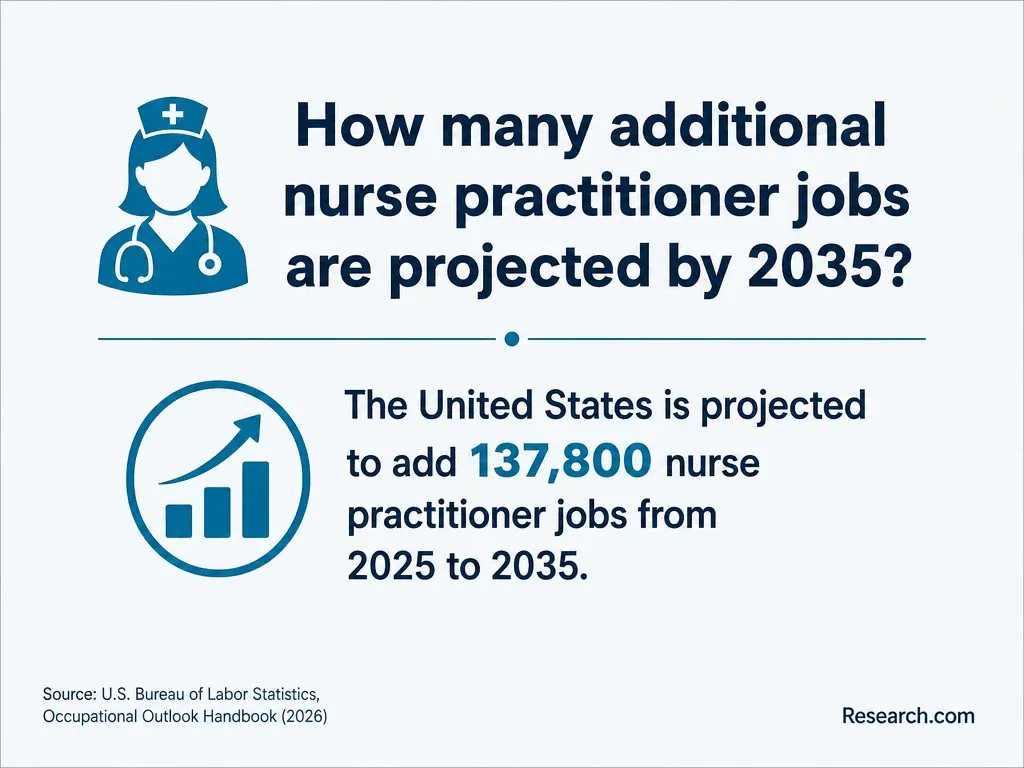
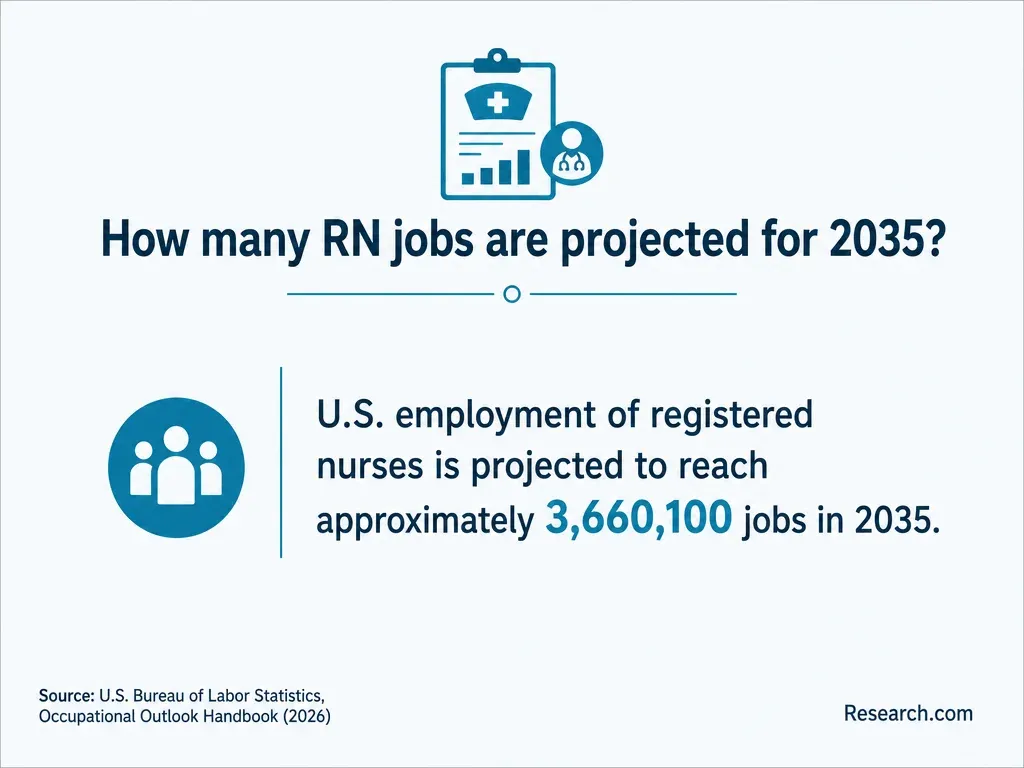
The U.S. Bureau of Labor Statistics reports pay and employment projections for the broader registered nurse occupation, not a separate fertility clinic nurse occupation. Those national figures can provide background, but they cannot tell you what this specialty, employer, location, or schedule will pay. Compare written local offers using base rate, hours, overtime eligibility, on-call and callback pay, benefits, paid time off, and any productivity measures.
Ask for the expected pay range and how compensation changes after orientation or with additional responsibilities. Also ask about turnover, vacancies, and advancement opportunities; answers specific to the clinic are more useful for judging this offer than occupation-wide growth projections. Leadership DNP education after a nursing master's is a separate career investment, not a sound basis for estimating the salary or promotion prospects of an RN fertility clinic offer.
Other Things You Should Know About Nursing
Yes. Ask what follow-up support patients receive after unsuccessful cycles or pregnancy loss, how nurses are trained for these conversations, and whether staff have access to debriefing or other support.
Yes. A clinic may permit an appropriately arranged visit that protects patient privacy. If shadowing is unavailable, request a conversation with a nurse currently doing the job.
Ask which record system the clinic uses, how verbal instructions are verified, and how handoffs and patient messages are documented. Clear processes matter when plans change quickly.
Ask the employer to state the condition, deadline, and consequences in writing before accepting. Do not assume you can practice in a role or receive a promised pay rate before meeting its stated requirements.
- Fact Sheet #53 - The Health Care Industry and Hours Worked | U.S. Department of Labor https://www.dol.gov/agencies/whd/fact-sheets/53-healthcare-hours-worked
- Medication Dispensing Errors and Prevention - NCBI - NIH https://www.ncbi.nlm.nih.gov/books/NBK519065/
- Nursing and Patient Safety | PSNet https://psnet.ahrq.gov/primer/nursing-and-patient-safety
- Value-Based Care | cms.gov https://www.cms.gov/priorities/innovation/key-concepts/value-based-care
- Nurse - Explore Healthcare Careers | Mayo Clinic College of Medicine and Science https://college.mayo.edu/academics/explore-health-care-careers/careers-a-z/nurse/
- A Day in the Life of An IVF Nurse: Go Inside a Fertility Clinic | Illume Fertility https://www.illumefertility.com/fertility-blog/a-day-in-the-life-of-an-ivf-nurse
- In vitro fertilization (IVF) | mayoclinic.org https://www.mayoclinic.org/tests-procedures/in-vitro-fertilization/about/pac-20384716
- In Vitro Fertilization Treatment Journey | American Society for Reproductive Medicine https://www.reproductivefacts.org/patient-journeys/in-vitro-fertilization-treatment/