2027 Questions to Ask Before Accepting a Correctional Nurse Position
Audited and Verified:
Our Editorial and Data Verification Process
Research.com uses government datasets, official education statistics and primary institutional information to support its career and degree guides. Our review process checks factual accuracy, occupational definitions, source dates and the requirements associated with the credentials discussed.
How This Article Was Fact-Checked
Our editorial team verifies salary estimates, employment projections, education requirements and program information against original data providers and official organizations. Salary figures are checked against the relevant occupational definitions and reporting periods. Information about licensure, accreditation and required in-person training is reviewed separately.
Fact-checked and verified on:

Co-Founder and Chief Data Scientist
A correctional nursing offer can look familiar on paper while placing you in a very different clinical and security environment. Before accepting, you need to know who provides backup, how patients reach care, and what happens when a medical need conflicts with a custody procedure. This guide is for licensed nurses and nursing graduates considering a jail or prison job. It explains the work, qualifications, pay context, and risks, then gives you questions to use when comparing an offer with your current role.
Key Things You Should Know
- Ask who covers emergencies, medication administration, and clinical decisions on every shift - not just how many nurses appear on the staffing roster.
- Compare the written offer with the schedule, orientation, safety procedures, benefits, and actual employer; correctional facilities may hire directly or through a healthcare contractor.
- The U.S. Bureau of Labor Statistics reported a $93,600 median annual wage for all registered nurses in May 2024, but it does not publish a separate correctional-nurse median. Use local offers, not the national median, to judge pay.
What does a correctional nurse do in a prison or jail?
Correctional nurses assess and treat people held in jails or prisons while working within facility security procedures. Depending on the assignment, an RN may perform intake assessments, administer medications, respond to urgent symptoms, manage chronic conditions, coordinate outside appointments, and document care. An LPN/LVN may perform assigned care within state scope-of-practice rules and the employer's supervision structure. Neither role is a custody-officer position.
Ask which duties belong to nurses, on-site prescribers, behavioral health clinicians, and custody staff. Mental health needs can be prominent, but an RN position does not confer authority to diagnose or prescribe as a psychiatric nurse practitioner. If that is your longer-term goal, shorter online mental health NP master's programs are a separate educational pathway requiring appropriate preparation, certification, and state authorization.
What qualifications do you need to become a correctional nurse?
Most correctional nursing vacancies specify an active RN or LPN/LVN license and any experience the employer requires. Some facilities hire new graduates; others seek nurses comfortable with independent assessment, emergency response, or chronic-disease management. Read the posting for the particular shift and facility: a large prison clinic with on-site clinicians is not the same assignment as overnight coverage in a small jail.
If you are not yet a nurse, first choose a prelicensure program that qualifies graduates to seek the appropriate state license. Nursing schools with flexible admission criteria may be worth comparing, but easier admission does not replace checking state board approval, clinical preparation, and NCLEX eligibility. Graduation alone does not authorize nursing practice.
Which nursing degree is best for correctional nursing?
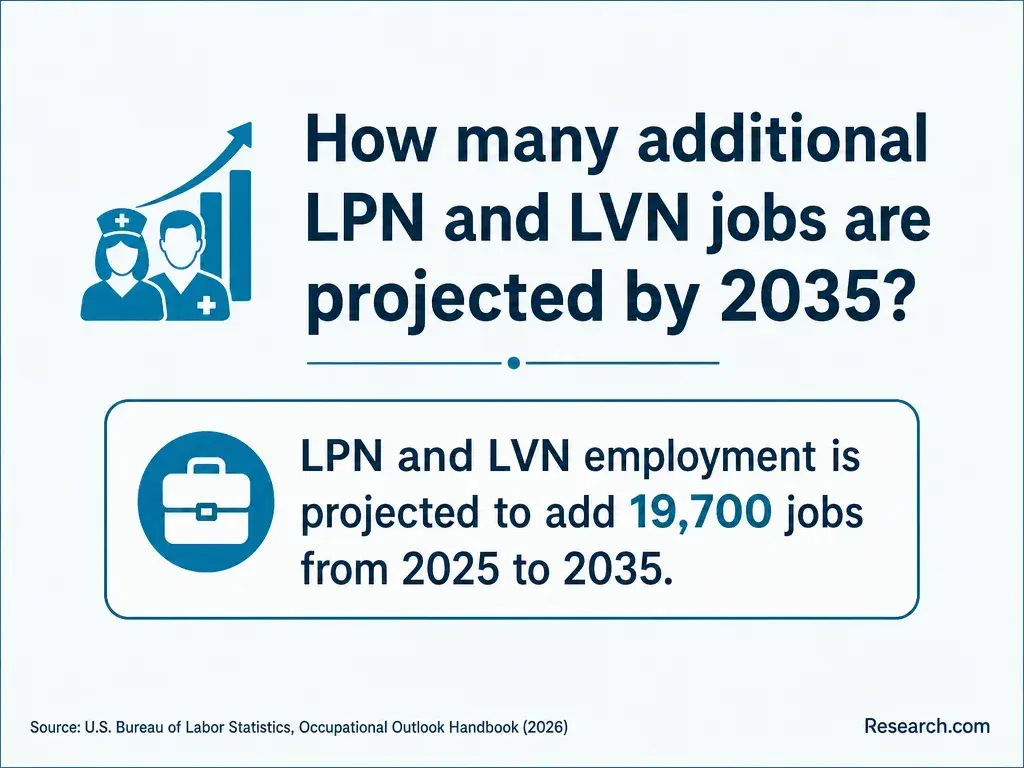
For an already-licensed nurse, the best next step is usually facility-specific orientation and demonstrated competence, not another degree. ADN- and BSN-prepared RNs can both pursue RN jobs when they meet the employer's requirements. A BSN may matter for a particular leadership vacancy or employer preference, but it does not expand an RN's legal scope by itself. LPN/LVN positions have different responsibilities and advancement options.
If you are planning a longer-term move into management, education, or advanced practice, compare the target job's requirements before enrolling. ADN-to-MSN program planning can help an ADN-prepared RN assess a graduate route, but an MSN is not automatically an advanced practice qualification. Ask whether the intended track actually prepares graduates for the role and credential you want.
You need the nursing license specified for the job and authorization to practice in the facility's state. Confirm with the employer and relevant state board whether your current license or compact privilege applies. A background check, employer training, and facility clearance may also be conditions of employment; they are distinct from nursing licensure.
Correctional nursing specialty certification may be useful for professional development, but do not assume it is mandatory or substitutes for orientation. Ask whether the employer requires a particular credential, pays its fees, or recognizes it for advancement. Likewise, an RN considering an NP role should verify the required graduate population focus, certification, and state authorization. Accelerated postgraduate family NP certificates concern a different role and do not change what an RN license permits in a correctional job.
The daily workflow depends on whether the facility is a jail, where turnover and intake can be frequent, or a prison, where ongoing care may be a larger share of the work. Nurses may move between scheduled clinics, medication passes, patient requests, urgent assessments, and coordination with outside services. Security counts, escorts, restricted items, and limited movement can delay a planned task even when the clinical need is clear.
During an interview, ask to walk through a recent de-identified shift: How many intakes, medication rounds, and urgent calls were typical? Who triaged competing requests? What work carried over? If you are pursuing a BSN while employed, ask about shift predictability rather than assuming an online program will fit. BSN completion pathways with alternative practice experiences still require you to check each program's assignments and attendance expectations.
Strong assessment, prioritization, medication safety, documentation, and calm communication are especially valuable when resources are not immediately at the bedside. Emergency department, medical-surgical, behavioral health, community health, and substance-use care experience can transfer, but none eliminates the need to learn the facility's procedures and demonstrate competence.
Ask how orientation teaches recognition and escalation of clinical deterioration, withdrawal concerns, suicide risk, and infectious-disease issues without expecting a new hire to manage unfamiliar cases alone. Also ask who reviews decisions when a patient's account, available records, and custody information differ. For nurses eyeing later administrative or educational work, affordable master's progression for bachelor's-prepared RNs is an option to evaluate against actual job requirements - not a prerequisite for becoming effective in direct correctional care.
There is no single reliable national correctional-nurse wage to apply to an offer. Pay varies by location, license, experience, shift, overtime rules, and whether the employer is a government agency or contractor. The BLS occupation-wide figures below are benchmarks, not correctional-facility rates or predictions of what you will earn.
This comparison shows why you should match an offer to the correct nursing license before using national wage data.
| U.S. occupation | Median annual wage, May 2024 | Limit for offer comparisons |
| Registered nurses | $93,600 | Includes RNs across settings, not only corrections |
| Licensed practical and licensed vocational nurses | $62,340 | Includes LPNs/LVNs across settings, not only corrections |
Compare hourly base pay, guaranteed hours, differentials, overtime eligibility, retirement contributions, insurance costs, and commuting expenses. Ask whether mandatory holdovers occur and whether reported annual earnings assume overtime. A higher-paying NP career is a separate comparison requiring additional qualifications; affordable online advanced practice nursing routes should not be treated as a guaranteed salary increase or a condition for accepting an RN offer.
Risks can include exposure to violence, infectious disease, distressing events, and delayed access to emergency resources. The relevant question is not whether a facility promises a "secure environment," but how it manages specific situations. Ask when an officer is present, how staff summon help, where assessments occur, how potentially dangerous items are controlled, and what happens after a threat or injury.
Clinical safety matters too. Establish who can make urgent medical decisions, how patients reach care after hours, and how a nurse escalates a concern if a security process delays treatment. Ask about exposure protocols, incident reporting, and support after a critical event. Leadership education - such as a guide to DNP programs without traditional clinicals - may support a later quality-improvement goal, but it cannot replace an employer's operational safeguards or a nurse's supervised onboarding.
Benefits are employer-specific. A government position and a contractor position at the same facility may differ in pension access, insurance, paid leave, overtime policies, tuition assistance, and what happens if the contract changes. Request the benefits summary and determine when coverage begins, what you contribute, and whether leave or education assistance has service requirements.
Potential next steps include charge or supervisory work, staff education, quality improvement, case management, or a move to another clinical setting. Ask for examples of recent internal promotions and the qualifications used to select candidates. If a DNP is mentioned as a leadership goal, comparing accelerated DNP programs only makes sense after confirming that the desired position values that degree; experience or targeted training may be more direct.
How can you evaluate a correctional nurse job offer?
Compare the specific post and shift, not the appeal of correctional nursing in general. Request written terms, speak with a nurse who works the proposed shift if possible, and ask the hiring manager to explain any difference between the posting and day-to-day practice.
These questions surface the conditions most likely to change whether the offer is safe, sustainable, and worth its compensation:
- Staffing: How many licensed nurses and on-site clinicians cover this shift, and who responds when someone is absent?
- Orientation: How long is supervised onboarding, who evaluates competencies, and what happens if a new hire needs more time?
- Emergencies: Who makes clinical decisions after hours, how is outside transport arranged, and what is the escalation path when access is delayed?
- Safety: When are officers present for patient encounters, and how are threats, exposures, and staff injuries handled?
- Compensation: What are the base rate, differentials, overtime rules, benefits costs, and any required on-call or holdover hours?
- Employment terms: Who is the legal employer, what happens if a service contract changes, and are there repayment or notice obligations?
If an employer promotes future education as part of the offer, get the reimbursement policy and promotion criteria in writing. For example, comparing DNP admission criteria may inform a distant educational plan, but it should not distract from unresolved questions about staffing, supervision, or the job you are accepting now. If the employer cannot explain those basics, consider another offer.
Other Things You Should Know About Nursing
No. Nursing and custody are different jobs. Nurses must follow applicable security procedures, but their clinical responsibilities remain governed by nursing scope, professional standards, and employer policy.
Incarceration does not automatically remove a patient's rights concerning consent and refusal. The applicable rules depend on the situation and jurisdiction; ask how the facility handles refusals, capacity concerns, and documentation.
You can ask, although security rules may limit access. If a tour is unavailable, request a detailed description of your work areas, equipment, staffing, and emergency procedures.
Not necessarily. An offer may depend on license verification, background screening, health requirements, or security clearance. Ask which conditions remain and avoid resigning from another job until you understand the employer's timeline and written terms.
- Summary of the HIPAA Privacy Rule | hhs.gov https://www.hhs.gov/hipaa/for-professionals/privacy/laws-regulations/index.html
- Retirement plans definitions | Internal Revenue Service https://www.irs.gov/retirement-plans/plan-participant-employee/retirement-plans-definitions
- Nursing and Patient Safety | PSNet https://psnet.ahrq.gov/primer/nursing-and-patient-safety
- Mandatory Overtime for Nurses | Department of Labor - NY.gov https://dol.ny.gov/mandatory-overtime-nurses
- Workforce Issues in Corrections - National Institute of Justice https://nij.ojp.gov/topics/articles/workforce-issues-corrections
- Types of Retirement Plans | dol.gov https://www.dol.gov/general/topic/retirement/typesofplans
- Nurse Staffing, Work Hours, Mandatory Overtime, and... - PMC https://pmc.ncbi.nlm.nih.gov/articles/PMC11091319/
- Patient Confidentiality - StatPearls - NCBI Bookshelf - NIH https://www.ncbi.nlm.nih.gov/books/NBK519540/
- eCFR:: 42 CFR Part 2 -- Confidentiality of Substance Use Disorder Patient Records https://www.ecfr.gov/current/title-42/chapter-I/subchapter-A/part-2
- Workplace Violence - Overview | Occupational Safety and Health Administration https://www.osha.gov/workplace-violence