
2027 Public Health Nurse Orientation: Training, Competency Reviews, and Support to Compare
Audited and Verified:
Our Editorial and Data Verification Process
Research.com uses government datasets, official education statistics and primary institutional information to support its career and degree guides. Our review process checks factual accuracy, occupational definitions, source dates and the requirements associated with the credentials discussed.
How This Article Was Fact-Checked
Our editorial team verifies salary estimates, employment projections, education requirements and program information against original data providers and official organizations. Salary figures are checked against the relevant occupational definitions and reporting periods. Information about licensure, accreditation and required in-person training is reviewed separately.
Fact-checked and verified on:

Co-Founder and Chief Data Scientist
Starting in public health nursing means learning more than a new set of clinical tasks. A nurse may need to conduct home visits, investigate health concerns, coordinate community services, and document work across an entire population. For new graduates, experienced RNs changing settings, and students planning this career, the quality of orientation matters as much as the degree pathway.
This guide explains what training and competency reviews should cover, how to judge workplace support, and when additional education is—or is not—the right next step.
Key Things You Should Know
- A useful public health nurse orientation combines supervised fieldwork, population health training, and documented competency reviews; finishing a checklist alone does not establish independent readiness.
- Compare at least three forms of support before accepting a role: a qualified preceptor, protected learning time, and a clear route to clinical or public health consultation.
- RN licensure is distinct from employer orientation and optional public health credentials. An additional degree may help with specialized roles, but targeted onboarding may be the more direct investment.
What does a public health nurse do, and where do they work?
Public health nurses apply nursing judgment to the health of individuals, families, and communities. Depending on the employer, they may provide immunization services, support communicable-disease follow-up, assess needs during home visits, teach health promotion, coordinate referrals, or help evaluate outreach programs. Their work often involves both direct care and population-level activities, but the balance varies substantially by position.
Common employers include local and state health departments, community clinics, school systems, home-visiting programs, and nonprofit organizations. A job title alone will not tell you whether a position involves independent visits, evening events, emergency response, or primarily office-based coordination. Ask for the actual caseload, travel area, populations served, and escalation arrangements.
Public health nursing is generally an RN role, not a shortcut to advanced practice. Nurses seeking diagnosis and prescribing responsibilities should evaluate a separate NP pathway; 12-month FNP program options address a different educational goal and do not replace public health nurse orientation.
What education and training are required to become a public health nurse?
The usual starting point is an RN-qualifying nursing program and an active RN license. Employers may prefer or require a BSN, particularly for positions emphasizing population assessment, program planning, or leadership; requirements differ by employer and jurisdiction. An RN moving from hospital practice may already have strong assessment and patient-education skills but still need supervised training in home-visit safety, community resources, surveillance workflows, and agency documentation.
For someone entering nursing from another field, an approved prelicensure pathway comes before public health specialization. An ADN or BSN may lead toward initial RN licensure, while an accelerated BSN may suit an applicant who already holds a bachelor's degree and meets the school's prerequisites. Accelerated BSN options beyond highly selective schools may help with that initial-program search, but an accelerated schedule does not reduce the need for supervised clinical preparation.
Once hired, compare the employer's training against the actual job: Will the nurse observe visits before leading them? Who reviews documentation and clinical decisions? What training covers local reporting procedures and emergency assignments? These answers are more useful for immediate readiness than the number of orientation days alone.
How do public health nurses earn RN licensure and public health credentials?
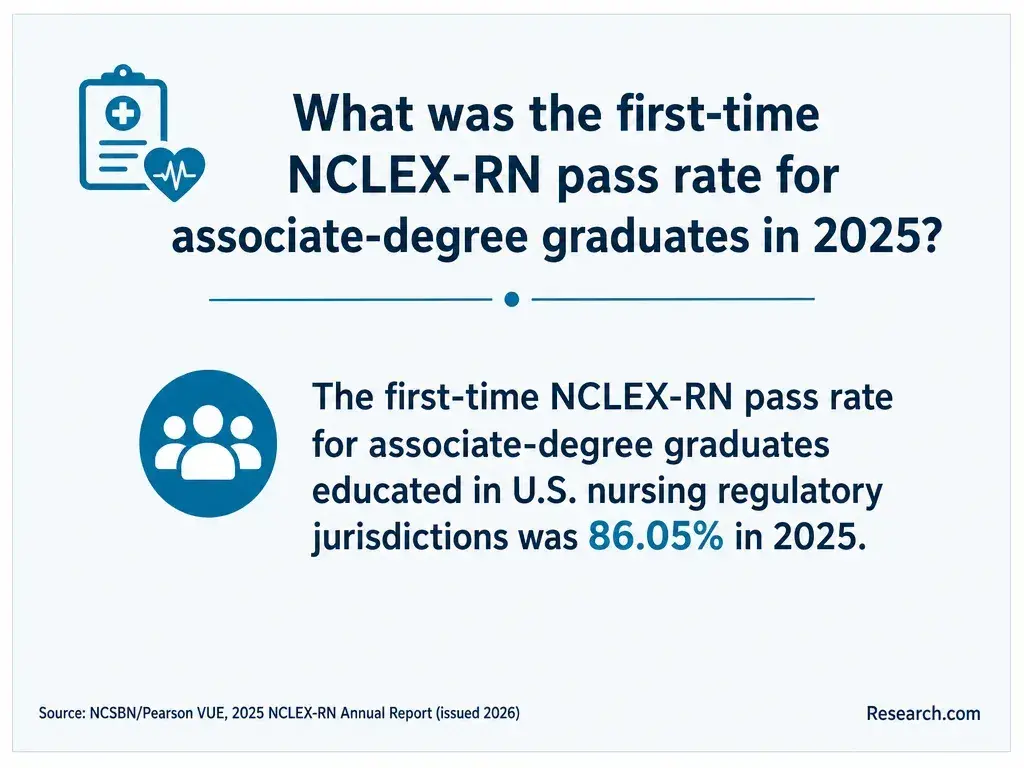
Initial RN licensure generally requires completion of a state-accepted nursing education pathway, eligibility determined by the relevant board of nursing, passage of the NCLEX-RN, and fulfillment of other state requirements. Graduation, examination passage, and an active license are separate milestones. Nurses should verify the license and any jurisdiction-specific practice conditions before beginning a role.
Public health certificates, continuing education, and specialty credentials may document additional learning, but they do not replace RN licensure or an employer's competency validation. Eligibility for any professional credential depends on the issuing organization's current rules. Likewise, fast-track LPN programs with online coursework prepare for a different license; an LPN/LVN pathway should not be mistaken for RN preparation when a vacancy requires an RN.
Before paying for a credential, check whether target employers require it, recognize it as preferred, or instead provide the relevant training after hire. For many entry-level public health RN positions, demonstrated community-health skills and strong orientation support will be more immediately relevant than an unrelated certificate.
Effective orientation measures performance in the work the nurse will actually do. Agencies can use public health nursing standards and established public health competency frameworks to design a role-specific assessment, then adapt it to local policy, patient populations, and the nurse's experience. A hospital RN should not automatically be treated as either a novice in all nursing skills or independently ready for field practice.
The following comparison separates exposure to a topic from evidence that a nurse can perform the assigned work safely:
| Competency area | Useful orientation experience | Evidence for review |
| Community assessment and outreach | Observe and then conduct supervised visits or outreach | Observed assessment, appropriate referrals, and follow-up |
| Communicable-disease and prevention workflows | Practice agency reporting and education procedures | Accurate documentation and timely escalation under policy |
| Safety, ethics, and communication | Rehearse field safety, privacy, and interpreter access | Observed decisions in realistic scenarios and fieldwork |
| Population-health improvement | Review a local measure or outreach process | Sound interpretation of data and a feasible, approved response |
Reviews should identify who observes performance, what standard is applied, how gaps are addressed, and when the nurse may take on greater responsibility. Simulation can help prepare for uncommon events, but it does not automatically substitute for observed field performance. A leadership-focused doctorate, including advanced nursing leadership doctorates online, serves a different purpose; it cannot replace employer validation of current field competencies.
Prelicensure nursing programs commonly introduce community and population health alongside assessment, pharmacology, clinical judgment, and supervised nursing practice. Postlicensure BSN coursework may go further into epidemiology, health promotion, evidence appraisal, policy, and community assessment. Graduate public health or population health tracks may add program evaluation, leadership, and methods for using population data. Course names, field experiences, and degree requirements vary by school.
Compare coursework with the duties of the role you want. A nurse preparing for outreach and care coordination may benefit more from applied community assessment and accessible field experiences than from a narrowly specialized graduate track. Conversely, a psychiatric NP curriculum—including online psychiatric NP master's schedule options—prepares for a distinct advanced practice role and should not be treated as interchangeable with public health nursing coursework.
Ask how students demonstrate learning: a course title alone does not establish competence in home visiting, reporting, or community partnership. Clarify which activities are supervised clinical experiences and which are classroom projects or volunteer service.
Online delivery can make lectures and assignments more accessible to working nurses, but effectiveness depends on the curriculum, feedback, supervised practice, and student support—not the delivery label. An online course may still have fixed live sessions, group work, local field requirements, simulation days, or campus visits. These commitments matter especially when coordinating shifts, travel, or caregiving.
For an already-licensed RN, a postlicensure program may offer online population-health coursework without traditional bedside rotations. A guide to RN-to-BSN programs with no clinicals can help frame that comparison, but verify each school's actual community projects, fieldwork, and attendance rules. "No clinicals" in a program description also says nothing about the employer's required orientation after graduation.
Ask who arranges any local experience, how site suitability is approved, and what happens if a placement falls through. If the goal is immediate job readiness, compare the quality of supervised community exposure rather than assuming either online or campus instruction is inherently better.
Requirements depend first on whether the program prepares students for initial RN licensure or assumes they are already licensed. Prelicensure applicants may need specified science courses, grades, entrance assessments, and clinical-placement clearances. RN-to-BSN applicants generally need a qualifying nursing credential and RN-license status meeting the school's policy. Graduate programs may additionally assess prior degrees, statistics preparation, professional experience, recommendations, and the proposed area of study.
An ADN-prepared RN considering graduate study should check whether a bridge awards a BSN along the way, which prerequisites apply, and whether the curriculum fits a public health goal. ADN-to-MSN admission requirements can be a starting point for questions, not evidence that every bridge admits every licensed RN or provides public health specialization.
Request a written review of prerequisites, transfer credits, license requirements, and any required field experience before committing. Admission to a university is not necessarily admission to its nursing track, and admission does not guarantee a suitable community placement.
There is no single public health nursing program length or price. The relevant comparison depends on whether the student needs an initial RN degree, an RN-to-BSN completion program, or graduate education. Transfer credit decisions, course sequencing, enrollment pace, and fieldwork availability can change the time to completion. A newly hired RN's orientation is a separate employer process, not another academic degree.
For a meaningful cost comparison, obtain each school's individualized estimate of tuition and required fees, then account for books, technology, travel, any site requirements, and earnings affected by the schedule. A low advertised tuition rate can be less attractive if required visits or delayed courses increase total cost. For an RN considering graduate study, BSN-to-MSN bridge cost comparisons are relevant only if that degree advances the intended role; they are not a reason to buy more education when employer training would address the skill gap.
Ask the employer whether orientation time is paid, whether continuing education is funded, and whether tuition assistance has service commitments. Compare the full out-of-pocket and time costs before assuming that an additional credential offers a financial return.
Public health RNs may develop careers in communicable-disease services, maternal and child health, school or community health, emergency preparedness, program coordination, and supervision. Advancement depends on the employer's job classifications, experience requirements, demonstrated skills, and sometimes additional education. A clinical or program management position should be evaluated by its actual responsibilities rather than its title.
The U.S. Bureau of Labor Statistics reports wages and employment projections for registered nurses as an occupation, not a distinct national salary or growth rate for public health nurses. RN figures therefore provide broad labor-market context, not a dependable estimate of a particular health department offer. Public-sector pay scales, geography, union agreements, schedules, and seniority may matter more to an individual applicant. Compare the posted range and benefits for the actual vacancy.
If the goal is independent advanced clinical practice rather than public health RN work, NP preparation is a different investment. Nurse practitioner education on a budget may inform that separate decision, but an NP degree is not a routine requirement for public health RN advancement.
How can students compare accredited public health nursing programs and support services?
Start with the qualification the target job actually requires. For an initial RN pathway, verify that the specific nursing program meets the relevant state board's requirements for licensure eligibility. Separately check the institution's accreditation and any applicable nursing program accreditation, such as ACEN or CCNE; these are different forms of review. For postlicensure study, confirm that the degree, curriculum, and available field experiences fit the intended public health role.
Then compare support that affects completion and transition to practice. The following questions help distinguish a strong fit from an attractive program description:
- Who approves and arranges community learning sites, and what happens if a site becomes unavailable?
- What in-person, live-online, and supervised activities are required each term?
- Who provides academic advising, accessibility support, and help resolving fieldwork problems?
- What completion or licensure outcomes are published, for which cohorts and reporting periods?
- What orientation, mentoring, and competency reviews will the prospective employer provide after graduation?
A doctorate may suit a nurse pursuing advanced leadership or another specific graduate goal, but it is not a substitute for a sound entry pathway or supported onboarding. Even a guide to DNP program admission accessibility should be weighed against the duties of the intended job. The strongest choice is the least unnecessary education that meets the role's requirements while providing credible preparation and support.
Other Things You Should Know About Nursing
Possibly. Some agencies include outbreak response, shelters, or other emergency assignments. Ask whether participation is required, how training is provided, and how duties change during an activation.
Ask about visit screening, check-in procedures, travel boundaries, paired visits, communication equipment, and the process for ending or escalating an unsafe encounter.
Not automatically. The nursing program must determine whether a site, supervisor, activities, and documented hours meet its requirements. Valuable volunteer experience may still be separate from approved clinical education.
Learn the employer's interpreter-access procedures and practice documenting communication accurately. Do not assume that family members, bilingual ability alone, or translated handouts replace qualified interpretation when policy or the situation requires it.
- Using action research to evaluate a nursing orientation... - PMC https://pmc.ncbi.nlm.nih.gov/articles/PMC8105551/
- The Role of Nurses in Improving Health Equity - NCBI - NIH https://www.ncbi.nlm.nih.gov/books/NBK573898/
- Competencies for Public Health Professionals | cdc.gov https://www.cdc.gov/infrastructure/training-professional-development/competencies-for-public-health-professionals.html
- Community Health Nurse vs. Public Health Nurse | American Public University https://www.apu.apus.edu/area-of-study/nursing-and-health-sciences/resources/community-health-nurse-vs-public-health-nurse/
- What Is a Public Health Nurse? Roles and Responsibilities Explained - Notre Dame of Maryland https://absn.ndm.edu/blog/public-health-nurse/
- Mentorship and Preceptorship in Nursing | Texas Woman's University https://onlinenursing.twu.edu/blog/mentorship-preceptorship-nursing
- Competencies for Public Health Nursing Practice Instrument | umn.edu https://nursing.umn.edu/centers/center-child-and-family-health-promotion-research/resources/competencies-public-health
- Preparing Preceptors and Mentors: A Vital Component of Nursing Education and Practice | The University of Iowa https://nursing.uiowa.edu/ionrp/blog/preparing-preceptors-and-mentors
- Interventions that support novice nurses' transition into practice: A realist review - ScienceDirect https://www.sciencedirect.com/science/article/pii/S002074892400097X


