2027 Post-Master's Nursing Education Certificates for Nurses in South Carolina: Teaching Preparation and Practicum
Audited and Verified:
Our Editorial and Data Verification Process
Research.com uses government datasets, official education statistics and primary institutional information to support its career and degree guides. Our review process checks factual accuracy, occupational definitions, source dates and the requirements associated with the credentials discussed.
How This Article Was Fact-Checked
Our editorial team verifies salary estimates, employment projections, education requirements and program information against original data providers and official organizations. Salary figures are checked against the relevant occupational definitions and reporting periods. Information about licensure, accreditation and required in-person training is reviewed separately.
Fact-checked and verified on:

Co-Founder and Chief Data Scientist
An experienced South Carolina nurse may know how to care for patients or mentor colleagues but still need preparation to design courses, teach clinical judgment, and evaluate learners. A post-master's nursing education certificate can address that gap without requiring another full degree.
The important choice is not simply online versus campus study: it is whether a program offers the supervised teaching experience, credential recognition, and schedule your intended role requires. This guide explains what to check before applying, especially when a practicum must fit around an existing nursing job.
Key Things You Should Know
- A post-master's nursing education certificate builds teaching skills; it does not award an RN or APRN license or automatically confer educator certification.
- Compare three practicum details before enrolling: who approves the site, who supervises and evaluates your teaching, and when required activities occur.
- Confirm the exact certificate and its accreditation status before comparing tuition; accreditation of a school's MSN does not necessarily extend to a non-APRN educator certificate.
What is a post-master's nursing education certificate in South Carolina?
It is graduate-level study for a nurse who already holds a master's degree and wants formal preparation to teach nursing students, practicing nurses, or patients. Its emphasis is educational practice - curriculum design, instruction, assessment, and teaching experience - rather than a new direct-care specialty. A certificate is an academic award, not another MSN or a license.
The right pathway depends on your starting point. An MSN-prepared RN seeking faculty or staff-development work may benefit from an educator certificate. An RN without a master's degree needs to check graduate-degree admission first; associate-degree RN to MSN options address a different entry point. An APRN seeking a new patient population needs an appropriate clinical specialty pathway, not an educator certificate.
What are the admission requirements for South Carolina nursing education certificates?
Expect schools to review your graduate nursing degree, transcripts, RN license, and academic standing. A program may also request a résumé, statement of teaching goals, recommendations, or relevant practice experience. Requirements differ: some accept applicants with an MSN or higher nursing degree, while others specify prior graduate coursework or a particular license status.
Ask admissions to confirm that your specific prior degree qualifies, particularly if it is a DNP, a master's in another field, or a graduate entry degree. Request a written review of any coursework you hope to apply toward the certificate. Previous teaching or precepting is valuable evidence of readiness but should not be assumed to replace required courses or supervised practicum work.
This is a postlicensure route, not an alternative admission route into nursing. Someone who has not earned RN licensure should investigate initial nursing education separately; articles on accessible admission routes to accelerated nursing study address that earlier decision, not admission to an educator certificate.
How do nursing education certificates prepare nurses for teaching and practicum experiences?
Coursework typically moves from learning theory and instructional design to teaching, feedback, and assessment. A teaching practicum should let you plan instruction, deliver it to an appropriate group, receive observation and feedback, and revise your approach. Depending on program approval, the setting might be a nursing course, simulation lab, clinical teaching environment, or workplace education department.
The practicum is the decisive comparison point for a working nurse. Obtain answers to these questions before committing to a program:
- Who finds and approves the site, and may you use your employer if teaching is separate from your usual duties?
- What qualifications must the mentor or preceptor hold, and how will faculty observe and evaluate your work?
- Which activities and hours count, and are classroom, clinical teaching, simulation, or staff-development experiences acceptable?
- What approvals, privacy safeguards, and scheduling commitments are required before the practicum begins?
Do not treat an existing preceptor role as automatically equivalent to a supervised teaching practicum. Likewise, a RN-to-BSN capstone and practice requirements discussion describes a different academic level; the receiving certificate program decides what satisfies its educator objectives.
A reliable list requires confirmation of two separate facts for the intended entry term: that a school is currently admitting students to a standalone post-master's nursing education certificate, and what accreditation, if any, covers that exact award. An accredited MSN nurse educator concentration is not necessarily a post-master's certificate. South Carolina institutions with graduate nursing study, including the University of South Carolina and Clemson University, are reasonable places to inquire, but their graduate nursing offerings alone do not establish that either currently offers the certificate described here.
Use the same comparison for each school you contact. "Not confirmed" means you should obtain a current catalog entry or written program response before treating the school as an option.
| Verification point | Evidence to request | Why it matters |
| Exact award | Current catalog listing and admitting term | Separates a certificate from an MSN concentration or continuing-education course |
| Accreditation | Institutional accreditation and the nursing accreditor's scope for the exact program | Accreditation of another nursing award may not cover an educator certificate |
| Teaching practicum | Written site, mentor, hour, and evaluation policies | Determines whether completion is feasible where you live and work |
| Enrollment eligibility | Confirmation for South Carolina residents and your intended practicum location | Online admission and placement permissions can differ |
Check the institution's current catalog and the applicable accreditor's program listing, then ask the school to resolve any difference between them. Do not infer educator-practicum assistance from another specialty's placement policies: FNP programs with support finding preceptors address supervised patient-care placements, not necessarily teaching placements.
Online coursework can reduce commuting, but it does not make scheduled discussions, live teaching demonstrations, group work, or an in-person practicum optional. Campus-based study may provide easier access to faculty observation and teaching facilities, while requiring more predictable travel and time away from work.
Compare the actual calendar rather than the delivery label: ask for required live-session times, campus visits, practicum days, and whether teaching must occur during standard academic or business hours. An evening-shift RN might manage asynchronous coursework yet struggle to observe daytime classes; a nurse whose employer hosts an approved education department may have the opposite experience.
Budget for delivery differences as well as tuition. The travel and technology issues discussed in online NP tuition and fee considerations can serve as prompts, but verify the educator certificate's own charges and attendance rules.
Common subjects include teaching and learning theory, curriculum or instructional design, assessment of learners, educational technology or simulation, and an applied teaching practicum. Course titles and sequencing vary. Look beyond the title to the work required: designing a lesson, aligning objectives with assessments, providing feedback, and evaluating whether learners met stated outcomes are more informative than a course name alone.
Match electives and practicum opportunities to the role you want. Prospective academic faculty should ask about classroom and clinical-student evaluation; hospital educators may prioritize staff development, competency assessment, and simulation. An educator curriculum is distinct from FNP certificate routes for changing advanced practice focus, which involve preparation for a different clinical role and its eligibility requirements.
Completion time depends on the school's credit and course sequence, enrollment pace, start dates, and when an approved practicum is available. A short published curriculum can take longer if a required course runs only once a year or a teaching placement cannot be arranged in the planned term. Ask for a term-by-term plan based on your start date and intended pace, not just an advertised minimum.
Have the program identify the latest date for securing a mentor and site. This matters particularly if you need to adjust work shifts or obtain employer permission. Published PMHNP certificate completion timelines concern a different kind of supervised preparation and should not be used to estimate an educator certificate's finish date.
There is no defensible single price without a current school-specific tuition schedule and confirmed number of billable credits. Request an itemized estimate for your residency and enrollment status. Compare total cost, not just the advertised per-credit rate: mandatory university and technology fees, books, practicum-related travel, any campus visits, and earnings lost when teaching activities conflict with paid shifts can change the result.
Ask whether the certificate qualifies for your employer's tuition assistance and whether any reimbursement requires a grade, continued employment, or advance approval. Confirm financial-aid eligibility with the school rather than assuming that aid available for a degree applies to a certificate. Comparing psychiatric NP program costs may illustrate why full-program estimates matter, but its prices are not prices for South Carolina educator certificates.
Potential roles include nursing school instructor, clinical instructor, simulation educator, hospital nurse educator, and nursing professional development specialist. Academic teaching centers on courses and student evaluation; staff-development roles center on employee learning and competency processes. Employers may require an MSN, relevant clinical experience, an active RN license, or particular teaching experience in addition to - or instead of - a certificate.
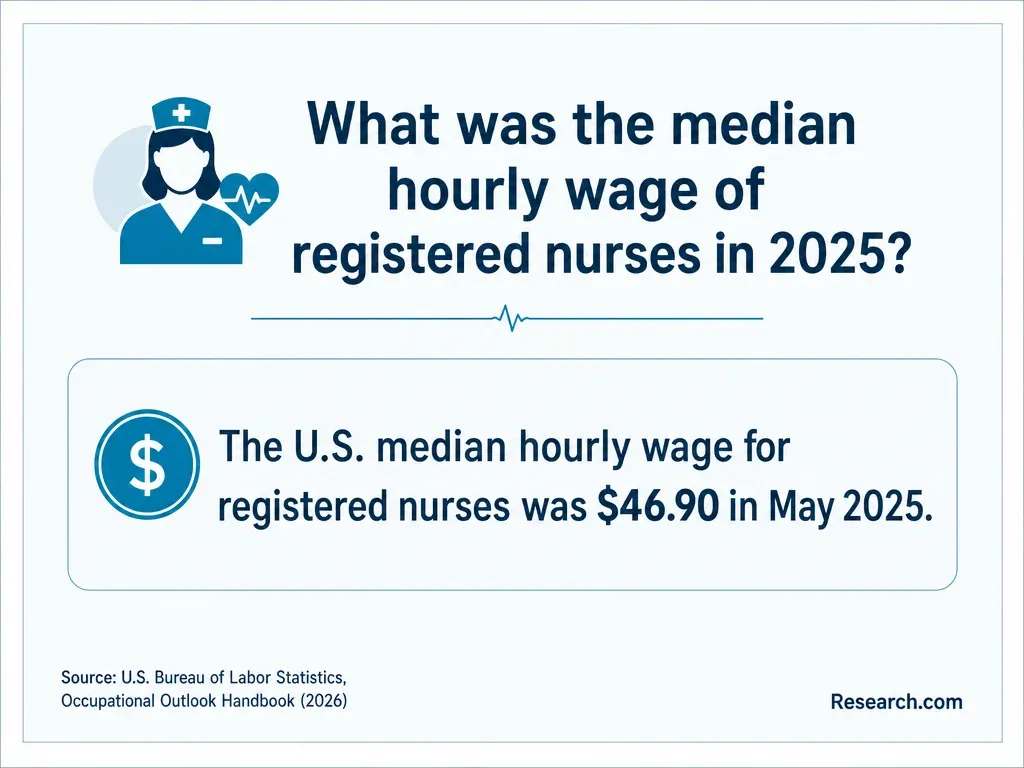
For pay comparisons, use the U.S. Bureau of Labor Statistics occupation that matches the job's duties, such as nursing instructors and teachers, postsecondary, rather than an RN-wide wage figure. An occupation-wide median is not a certificate graduate's starting salary or a South Carolina offer. Also compare contract length, full-time versus adjunct status, benefits, and whether an educator job replaces paid clinical shifts.
A certificate may be a focused next step when a suitable role calls for documented teaching preparation. A DNP may fit a broader practice-leadership goal, but it is not automatically a better teaching credential; descriptions of DNP programs without traditional clinicals should not be mistaken for evidence that an educator practicum can be skipped.
Do South Carolina nurse educators need licensure or professional certification?
Keep three credentials separate. An academic educator certificate documents completed coursework. An RN license authorizes nursing practice within its applicable terms; teaching responsibilities involving clinical nursing may require current licensure under the school's, site's, and South Carolina Board of Nursing's rules. Professional nurse educator certification is a separate, voluntary credential unless an employer specifically requires it.
The National League for Nursing offers nurse educator certification pathways with their own eligibility and examination rules. Check the current requirements of the particular credential before assuming a post-master's certificate qualifies you to sit for an exam. For a job posting, ask whether "certification required" means professional board certification, an academic educator certificate, or employer-validated teaching competencies.
Entry tests are another distinct matter. Information about nursing schools with no TEAS score requirement concerns admission to other nursing programs, not nurse educator licensure or certification.
Other Things You Should Know About Nursing
Possibly. Hiring standards depend on the position and institution. Compare postings for your target role; a certificate may strengthen teaching preparation without being mandatory for every job.
Only if the certificate program approves the setting, activities, supervision, and evaluation. Routine nursing or informal precepting should not be assumed to count.
The academic certificate may be useful, but the hiring institution and any applicable clinical-teaching or nursing-license rules determine eligibility. Check the requirements where you intend to teach.
Choose based on the target job. Focused educator training may suffice for a limited preceptor role; a certificate offers more structured curriculum and assessed teaching practice for broader educator responsibilities.
- Certificate of Graduate Study (post-master's certificate) | University of South Carolina https://sc.edu/study/colleges_schools/nursing/academic_programs/graduate_programs/certificate_programs/
- Post-Master's Nursing Education CERTIFICATE | jhu.edu https://nursing.jhu.edu/programs/post-degree/nursing-education/
- Five Differences Between CNE and NPD Certification | Cleveland State University Online https://onlinelearning.csuohio.edu/blog/five-differences-between-cne-and-npd-certification
- Nurse Educator Certificate vs. MSN: Which Fits You? | Arkansas State University Online https://degree.astate.edu/online-programs/healthcare/nursing-certificates/graduate-nurse-educator/certificate-vs-msn-nurse-educator/
- Nursing Education Post Master's Certificate (Nurse Educator) | Herzing University https://www.herzing.edu/nursing/post-masters-certificate-ne
- Nursing Education, Post-Master's Graduate Certificate | USC Upstate Academic Catalog https://academic-catalog.uscupstate.edu/graduate-programs/nursing/nursing-education-post-masters-graduate-certificate/