2027 PhD in Nursing Programs for Nurses in Maine: BSN, MSN, and DNP Entry Routes and Research Fit
Audited and Verified:
Our Editorial and Data Verification Process
Research.com uses government datasets, official education statistics and primary institutional information to support its career and degree guides. Our review process checks factual accuracy, occupational definitions, source dates and the requirements associated with the credentials discussed.
How This Article Was Fact-Checked
Our editorial team verifies salary estimates, employment projections, education requirements and program information against original data providers and official organizations. Salary figures are checked against the relevant occupational definitions and reporting periods. Information about licensure, accreditation and required in-person training is reviewed separately.
Fact-checked and verified on:

Co-Founder and Chief Data Scientist
A Maine nurse who wants to conduct original research may need to look beyond the state for a nursing PhD, while a nurse focused on improving clinical practice may find a DNP closer to home. That distinction affects which programs to investigate, how prior BSN, MSN, or DNP work counts, and whether a potential advisor can support the research you want to do. This guide explains the entry routes, Maine-based alternatives, enrollment checks, and career trade-offs so you can build a realistic shortlist rather than choosing by degree title alone.
Key Things You Should Know
- A nursing PhD prepares nurses to produce original research; a DNP generally emphasizes applying evidence to practice and systems improvement. Neither degree automatically grants APRN authority.
- BSN-to-PhD, MSN-to-PhD, and DNP-to-PhD routes can all be possible, but admission and credit recognition depend on the receiving program; a DNP does not automatically shorten the dissertation.
- For Maine residents, the decisive checks are whether a nursing PhD is accepting applicants, whether its faculty match the proposed research, and whether its residency and data-access requirements are workable from Maine.
What PhD in nursing programs are available for nurses in Maine?
Do not assume that a Maine nursing school offering a DNP also offers a nursing PhD. The University of Maine and the University of Southern Maine are sensible starting points for investigating in-state doctoral nursing study, but applicants should verify each school's current degree inventory, admitting status, and exact award before describing an option as a PhD. A graduate catalog listing is more useful than an older program directory; an admissions office can confirm whether a cohort is actually recruiting.
If no Maine-based nursing PhD has the faculty and admissions route you need, an out-of-state PhD that permits Maine-based study may be the stronger option. Compare access to an advisor and research collaborators before treating proximity as the main advantage. Conversely, if the goal is practice improvement rather than original research, compare Maine DNP offerings with DNP programs organized by completion time; a short advertised timeline still needs to fit your entry degree and project requirements.
Start a shortlist with the exact degree name, admitting term, eligible entry credential, dissertation requirement, faculty whose work overlaps yours, and required visits. Ask the program to confirm each item for the cohort you would enter.
Which entry routes lead to a nursing PhD in Maine?
The route depends on the PhD program's entry policy, not simply on the highest degree a nurse holds. These routes describe how a Maine nurse might enter an in-state program, if available, or an out-of-state program that enrolls Maine residents.
The comparison below separates prior education from the research preparation each applicant may still need.
| Entry route | Likely advantage | Issue to verify |
| BSN-to-PhD | Direct progression toward research training without first earning an MSN | Whether the program admits BSN-prepared RNs and includes needed graduate-level preparation |
| MSN-to-PhD | Prior graduate coursework and a clearer specialty or teaching focus | Which courses count and whether prior methods training meets program expectations |
| DNP-to-PhD | Substantial practice scholarship and an established clinical or systems problem | How much coursework transfers and what new research training the PhD requires |
A DNP project can help define a dissertation question, but implementing a local change is not the same as designing research that produces generalizable knowledge. Likewise, MSN clinical hours should not be assumed to replace research coursework. An ADN-prepared RN considering bridge programs from an ADN to an MSN should first ask target PhD programs which completed degrees they accept; a bridge is not automatically the shortest research route.
How do Maine nursing PhD programs differ from DNP programs?
A PhD is the better match when you want to formulate research questions, select methods, analyze data, and defend an original dissertation. A DNP is generally the better match when you want to lead evidence-based changes in a clinical organization and evaluate a practice project. A PhD candidate studying rural care access, for example, must establish a defensible design and data source; a DNP student might instead implement and assess an approved care-coordination change at a particular site.
Neither label tells you whether a program prepares nurse practitioners. Some DNP routes include APRN population-focus education; others serve nurses already qualified for their roles or pursue non-APRN leadership goals. Nurses who do not need a new specialty can examine DNP pathways that do not add a new clinical specialty, while checking what project or practice experiences remain required.
If the intended job is faculty researcher, prioritize PhD mentorship and opportunities to publish or assist with studies. If it is a practice-leadership role, compare DNP project support and employer expectations. An MSN, educator preparation, or focused professional development may be sufficient when neither doctoral deliverable is required.
Check three different questions separately: Is the institution appropriately accredited? What is the applicable accreditation status and scope of its nursing program? Does your intended clinical role require a license, population-focus education, and national certification that this particular track supports? Institutional accreditation, nursing program accreditation, and Maine Board of Nursing authority are not interchangeable.
A research PhD does not itself grant an RN or APRN license. A non-APRN DNP does not qualify its graduate to practice as a family nurse practitioner. An RN who wants that role should compare qualifying specialty education - including, when appropriate, exploring accelerated family NP certificates after a master's - against the current requirements of the program, certifying organization, and Maine Board of Nursing.
Before depositing tuition, request written confirmation of the degree and track's accreditation status, Maine enrollment eligibility, and any clinical-placement or certification implications relevant to your goal. For an out-of-state school, ask specifically whether it may enroll you while you live in Maine; permission to enroll is distinct from authority to practice there.
Some doctoral nursing study can be completed remotely, but online coursework is not a promise of a no-travel doctorate. A PhD may require synchronous seminars, research intensives, qualifying examinations, or dissertation meetings. A DNP may require campus visits, approved practice experiences, and a project site. Published delivery descriptions can also differ by track or entering cohort.
Ask for a calendar showing required visits, live-session times, dissertation or project milestones, and the policy for completing work from Maine. If you need a psychiatric-mental-health specialty rather than a research degree, PMHNP certificate completion timelines offer a different scheduling comparison; verify their supervised clinical and state-eligibility requirements instead of assuming online means self-paced.
For a working nurse, the hardest scheduling conflict may be protected time for data collection and writing - not the number of online lectures. Confirm who helps secure a clinical project site or research access before choosing a format.
PhD study commonly develops research design, quantitative or qualitative methods, statistics, theory, research ethics, and dissertation scholarship. DNP study generally emphasizes evidence appraisal, systems leadership, quality improvement, and evaluation of a practice-focused project. The exact courses and milestones must come from the current catalog of the school you choose, not from the degree abbreviation.
Research fit is more specific than a shared clinical specialty. A nurse interested in rural mental health, for instance, should ask whether a prospective advisor works with the intended population or methods, whether usable data can be obtained, and which organization must authorize access. A proposed study involving people or identifiable records may require institutional review board review and site permissions. Do not assume that employment at a hospital gives a student permission to use its patient data.
If the actual goal is to become a psychiatric-mental-health NP, compare qualifying specialty education, such as fast-track mental health nursing graduate study, rather than selecting a PhD for its topic alone. Researching mental health and gaining authority to provide advanced practice care are different outcomes.
Requirements vary by institution and entry route. Expect a review of prior nursing degrees, transcripts, RN license status where required, graduate academic preparation, recommendations, a statement of research interests, and fit with available faculty. A program may also request a writing sample, interview, or evidence of methods and statistics readiness. Do not assume a publication, thesis, or GRE score is universally required.
Before applying, send admissions a concise description of your question, potential study population, prior methods training, and likely data-access constraints. Ask whether a suitable advisor is available for the intended start term and whether the program admits applicants with your specific BSN, MSN, or DNP preparation. A conversation about fit does not guarantee admission or faculty supervision.
If you are not yet an RN, establish the licensure route first: planning an accelerated practical nursing pathway addresses a different license level and does not substitute for an RN credential required by a particular PhD.
There is no reliable single Maine nursing-PhD price or completion time to apply across programs and entry routes. Coursework, qualifying milestones, dissertation research, and the availability of an advisor or usable data all affect duration. A DNP has a different project sequence; an advertised minimum completion time is not a guarantee for a working student.
Compare written estimates for required credits, per-credit tuition, mandatory fees, continuing-enrollment charges, travel, and any reduced work hours. Request the funding terms as well: an assistantship may involve work duties and may not cover every year of dissertation enrollment. If you are comparing doctoral study with specialty preparation, lower-tuition psychiatric nursing graduate programs provide an alternative cost category - not a substitute for the research training a PhD supplies.
Ask each program for a sample degree plan for your entry credential and a cost estimate through a plausible dissertation-completion term. That exposes the financial difference between finishing scheduled courses and remaining enrolled while research is underway.
PhD graduates may pursue nursing research, tenure-track or other faculty positions, research administration, or evidence-focused roles in health systems. DNP graduates may pursue advanced clinical practice when separately qualified, practice leadership, quality and safety work, or teaching. Hiring depends on the position's actual duties, prior experience, licensure, and specialty - not possession of a doctorate alone.
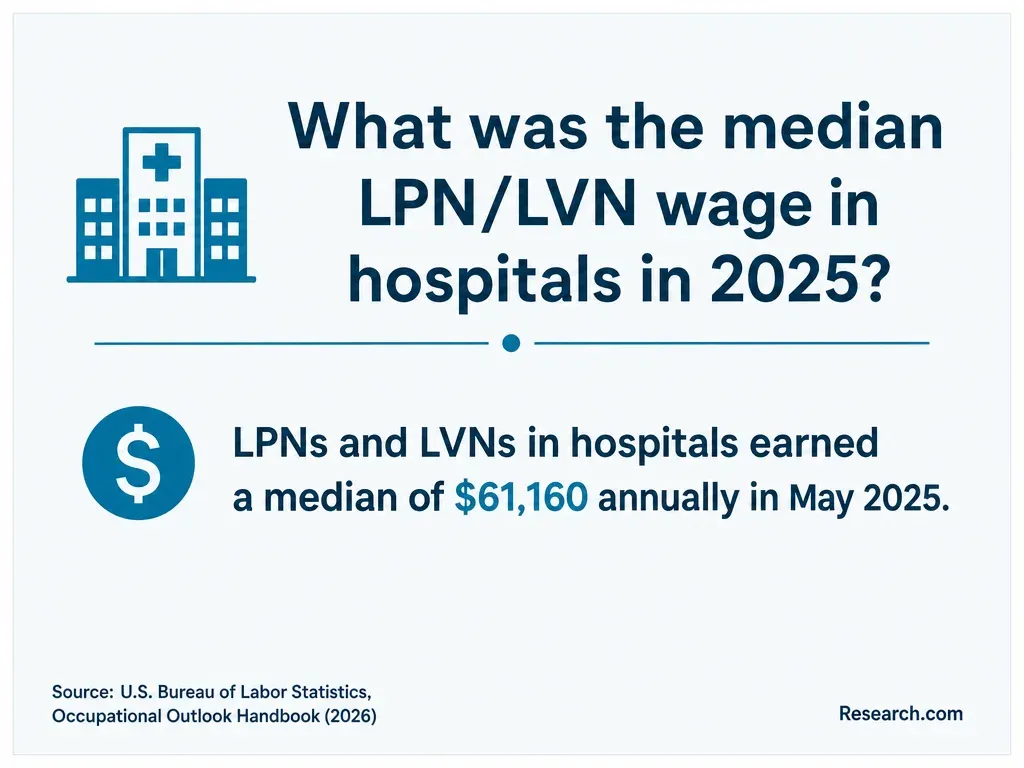
Salary comparisons require an occupation and location, not a degree label. The U.S. Bureau of Labor Statistics reports occupation-wide wages for roles such as registered nurses, nurse practitioners, and postsecondary nursing instructors; those figures are not Maine doctoral-graduate starting salaries. A faculty offer may differ substantially from an experienced APRN offer, and neither establishes a return on the cost of a PhD.
If your target job is psychiatric-mental-health NP rather than researcher, check certification and Maine practice requirements before comparing degree costs. PMHNP certificate completion timelines can help frame a shorter specialty route for eligible nurses, but prior education and supervised clinical requirements control whether that route is available.
Additionally, it's important to note that nursing program options without HESI scores concern earlier nursing-school admissions, not a waiver of doctoral requirements.
How strong is the job outlook for doctoral-prepared nurses in Maine?
There is no single labor-market category called "doctoral-prepared nurse." Demand for nurse practitioners does not measure openings for nursing researchers, and RN hiring does not establish demand for PhD faculty. Maine's smaller employment market also means a statewide trend may reveal little about vacancies in a specific nursing school, health system, or specialty.
Evaluate the actual postings you would pursue: note whether a PhD is required or preferred, whether teaching experience or a research record matters, and whether a clinical position requires APRN certification. For an NP goal, compare the local positions and total educational investment with cost comparisons across online NP pathways; a PhD is not necessary solely because a clinical occupation has a promising outlook.
A practical test is to identify several plausible employers before enrolling and work backward from their qualifications. If they seek independent research and grant activity, advisor fit and scholarly output deserve priority. If they seek clinical coverage or operational improvement, specialty preparation or a practice-focused route may be the more direct investment.
Other Things You Should Know About Nursing
Possibly, but employment does not grant research access. The organization, program, and applicable ethics reviewers must approve the proposed activities and data use.
Not necessarily. Relevant methods expertise, access to collaborators, and capacity to supervise the proposed question can matter as much as a matching specialty label.
It can motivate a research question, but the PhD program will determine whether the proposed dissertation meets its standards for original research. Prior project results cannot simply be relabeled.
Check the program's policy first. Where contact is encouraged, a brief message describing your question, preparation, and proposed methods can help establish whether supervision may be available.
- RN Nursing Programs | maine.gov https://www.maine.gov/boardofnursing/education/rn-nursing-programs
- Nurse Corps: Funding for Nurses and Nursing Students | hrsa.gov https://bhw.hrsa.gov/programs/nurse-corps
- DNP in Nursing - University of Southern Maine https://usm.maine.edu/school-nursing/dnp-in-nursing/
- Doctoral Education - School of Nursing | Credit for Prior Learning https://umaine.edu/nursing/doctoral-education/
- Program: Nursing, D.N.P. - University of Southern Maine https://catalog.usm.maine.edu/preview_program.php
- Doctor of Philosophy in Nursing (PhD) | Bouvé College of Health Sciences https://bouve.northeastern.edu/programs/doctor-of-philosophy-in-nursing-phd/
- DNP vs. PhD Nursing: Choosing Your Path | Berkley School of Nursing https://nursing.georgetown.edu/special-story/dnp-vs-phd-choosing-your-path-in-doctoral-nursing-at-georgetown/
- DNP vs. PhD in nursing | A.T. Still University https://www.atsu.edu/college-of-graduate-health-studies/academics/doctor-of-nursing-practice-online/dnp-vs-phd
- DNP Accreditation | University of Maine at Fort Kent https://www.umfk.edu/releases/dnp-accreditation/
- PhD in Nursing vs DNP: What's the Difference? | ucsf.edu https://nursing.ucsf.edu/phd-nursing-vs-dnp-whats-difference