2027 Perioperative Nursing: Preoperative, Intraoperative, and Postanesthesia Roles
Audited and Verified:
Our Editorial and Data Verification Process
Research.com uses government datasets, official education statistics and primary institutional information to support its career and degree guides. Our review process checks factual accuracy, occupational definitions, source dates and the requirements associated with the credentials discussed.
How This Article Was Fact-Checked
Our editorial team verifies salary estimates, employment projections, education requirements and program information against original data providers and official organizations. Salary figures are checked against the relevant occupational definitions and reporting periods. Information about licensure, accreditation and required in-person training is reviewed separately.
Fact-checked and verified on:

Co-Founder and Chief Data Scientist
Perioperative nursing is not one job performed in one room. A nurse who prepares patients for surgery, an operating room circulator, and a postanesthesia care unit (PACU) nurse work at different points in the same care journey - and may need different onboarding.
For nursing students and RNs considering a surgical-care role, those differences matter more than a program's specialty label. This guide explains the responsibilities, education, supervised preparation, credentials, and workplace questions that can help you choose a suitable entry point.
Key Things You Should Know
- Perioperative RNs may work before surgery, in the operating room, or during recovery; an RN license is essential, but a separate perioperative degree is not generally required.
- New graduates may enter some operating room training programs, while PACU positions commonly seek prior acute-care experience; neither route makes a nurse independently competent without supervised orientation.
- The U.S. Bureau of Labor Statistics reports a $93,600 median annual wage for all registered nurses in May 2024 - not a perioperative-specific salary or a new-graduate offer.
What does a perioperative nurse do before, during, and after surgery?
Perioperative nursing covers nursing care surrounding an operation. Preoperative nurses prepare and assess patients before the procedure. Intraoperative nurses coordinate safe care in the operating room (OR). Postanesthesia nurses monitor patients as they recover from anesthesia and determine, with the care team and applicable criteria, when they are ready for transfer or discharge.
These jobs connect through handoffs, but they are not interchangeable assignments. A strong preoperative assessment alerts the OR team to a concern; accurate OR documentation helps the recovery nurse understand what happened; and PACU observations may reveal a complication requiring prompt escalation.
Nurses interested instead in longitudinal primary care would be considering a different role and education pathway; even family NP programs that help arrange clinical placements do not prepare an RN to skip OR-specific onboarding.
How do you become a perioperative nurse in the United States?
First, complete an RN-qualifying nursing program, meet the applicable state board's requirements, pass the NCLEX-RN, and obtain an RN license. Then seek a preoperative, OR, or PACU position with a structured transition plan. A hospital's job posting - not the broad title "perioperative nurse" - will tell you whether it accepts new graduates or requires prior experience.
For an OR applicant, a useful offer includes a named preceptor, progressively supervised assignments, exposure to different procedures, and documented competency checks before independent assignments. Ask how the employer teaches sterile technique, circulating duties, emergency response, and communication with surgeons and anesthesia professionals. For PACU, ask what critical-care or emergency experience is expected and how the unit evaluates airway assessment, monitoring, and escalation skills.
If you already hold a non-nursing bachelor's degree, compare RN-qualifying options rather than assuming a graduate degree is necessary for OR work. Some comparing direct-entry MSN completion times resources can help frame the time question, but confirm that any specific program prepares you for initial RN licensure in your state and includes required in-person clinical learning.
What education and nursing degree are required for perioperative nursing?
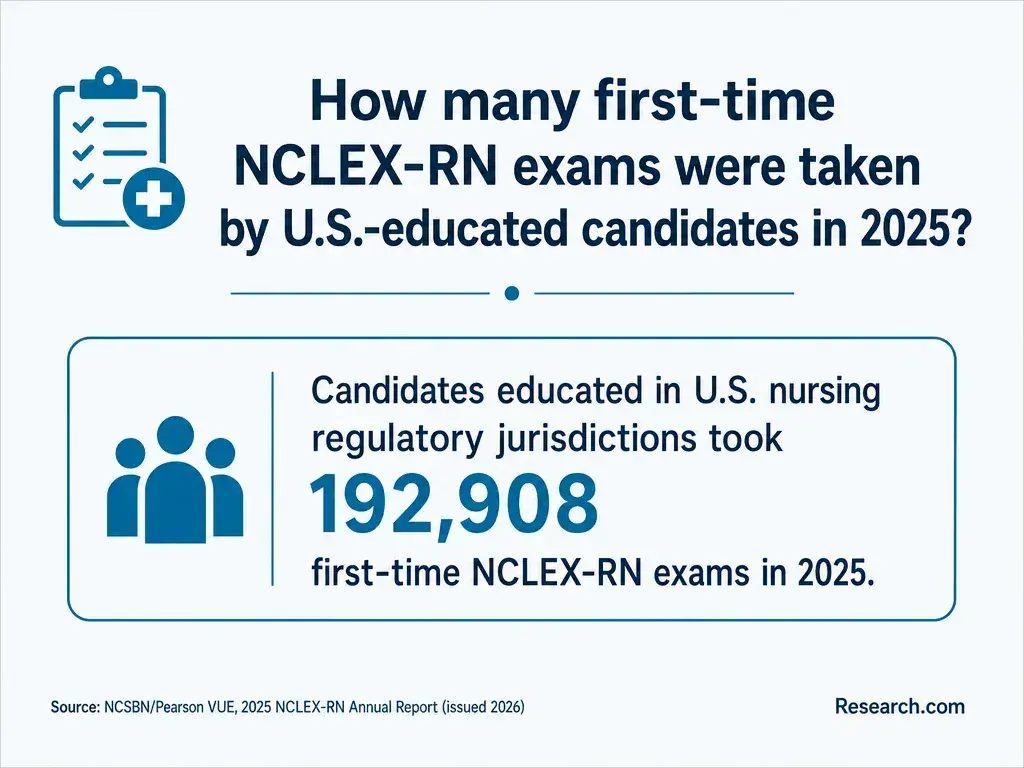
An active RN license is the central credential for perioperative RN positions. An associate degree in nursing (ADN/ASN), nursing diploma, or bachelor of science in nursing (BSN) may provide an RN-qualifying route, subject to state rules. Employers can still prefer a BSN or set additional experience requirements. A perioperative-focused master's or doctorate is not a standard prerequisite for bedside preoperative, OR, or PACU nursing.
The comparison below separates entry-to-practice education from later academic advancement. It helps an applicant avoid paying for a credential that the target job does not require.
| Education route | Relevant outcome | Perioperative decision |
| RN-qualifying ADN/ASN or diploma | Can support an application for initial RN licensure when the program and applicant meet state requirements | Check whether target employers hire graduates of the route and offer specialty orientation. |
| RN-qualifying BSN | Can support initial RN licensure while adding broader bachelor's-level study | Consider employer preferences, total cost, and time - not an assumed OR pay premium. |
| Postlicensure RN-to-BSN or graduate study | Builds on an existing RN license; does not replace initial licensure or specialty onboarding | Choose it for a defined education or advancement goal, not merely to enter the OR. |
An already licensed ADN-prepared RN considering leadership or another graduate-level goal can separately examine ADN-to-MSN bridge programs. That decision should follow, rather than substitute for, checking the actual qualifications of the perioperative job sought.
The point at which a nurse receives the patient changes the immediate safety priorities. The table summarizes typical RN responsibilities; exact assignments depend on the patient, facility policy, team composition, and demonstrated competence.
| Phase | Typical RN responsibilities | Key transition |
| Preoperative | Assess and document relevant health information; check that required records, orders, and consent documentation are present; prepare and educate the patient; communicate concerns to the appropriate clinician. | Give the OR team an accurate handoff before the procedure. |
| Intraoperative | As a circulating RN, coordinate care outside the sterile field, support required safety checks, help account for instruments and supplies under policy, document events, and speak up about safety concerns. Some appropriately trained RNs also scrub. | Communicate procedure events and concerns to recovery staff. |
| Postanesthesia | Assess recovery from anesthesia, including airway, breathing, circulation, pain, and other relevant findings; carry out ordered care; recognize deterioration; and communicate with anesthesia and surgical clinicians. | Transfer or discharge the patient only under applicable orders, criteria, and policy. |
A crucial distinction for career planning is that the circulating RN, scrub role, and PACU RN require different demonstrated skills. Likewise, academic practice hours associated with comparing doctoral nursing projects and practice hours are not a substitute for observed competence in any of these bedside assignments.
"Perioperative program" may mean employer orientation, a continuing-education course, a certificate, or coursework within a nursing degree. Content and hands-on access vary. OR training commonly addresses surgical asepsis, patient positioning, equipment and specimen workflows, safety checks, documentation, and team communication. Preoperative and PACU preparation places greater emphasis on phase-specific assessment, monitoring, patient education, handoffs, and escalation.
Before enrolling in a course, ask whether it includes supervised practice in the role you want, who evaluates competency, and whether the employer recognizes the training. A completion certificate documents coursework, not independent clinical readiness. Graduate study is a separate choice: admission-focused nursing practice doctorate comparisons address an advanced academic decision, not a requirement for learning OR circulating skills.
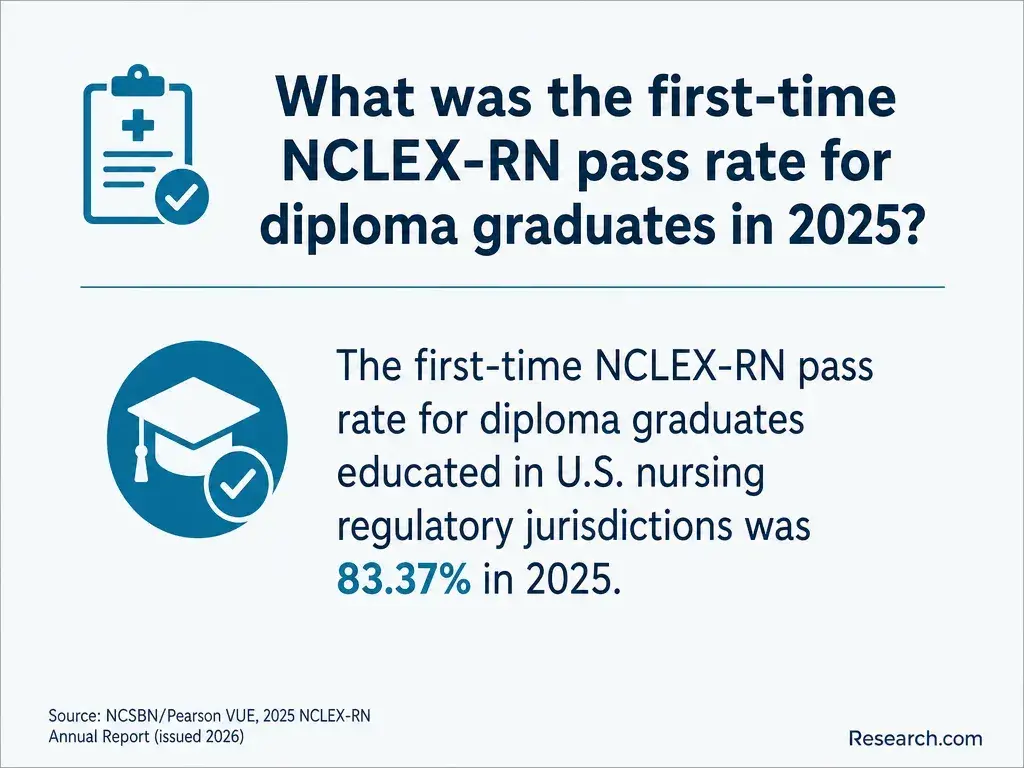
Perioperative RN jobs require RN licensure appropriate to the practice location. A state board determines licensure; an employer determines whether the nurse meets its hiring and competency requirements. Neither a school certificate nor a specialty credential replaces the RN license.
Specialty certification is a separate, usually voluntary credential unless an employer requires it for a particular position. The Competency & Credentialing Institute awards the CNOR credential for eligible perioperative nurses and the CPAN and CAPA credentials associated with postanesthesia and ambulatory perianesthesia practice. Eligibility, examination, and renewal requirements differ; check the awarding organization's current rules before paying for preparation.
A nurse exploring comparing online PMHNP certificate schedules is evaluating advanced practice education, not an alternative perioperative specialty certification.
There is no single perioperative training length or price. A prospective RN must first complete an RN-qualifying program and obtain licensure; a licensed RN may instead enter employer-paid specialty orientation or purchase a separate course. Program length depends on prior education, course sequencing, clinical availability, and whether the training prepares someone for licensure or only for a specialty role.
For a useful cost comparison, obtain a written estimate of tuition or course charges, required materials, travel and on-site attendance, examination fees if applicable, and wages lost during training. Ask whether an employer pays for orientation, requires a service commitment, or reimburses an outside course only after completion.
A shorter non-RN route may cost less but leads to a different job: shorter LPN education program comparisons should not be treated as shortcuts to perioperative RN eligibility.
Online instruction can teach perioperative concepts, but it cannot by itself establish safe performance in a preoperative unit, OR, or PACU. For an RN-qualifying degree advertised as online or hybrid, verify state board eligibility, applicable institutional and nursing program accreditation, required labs and clinical placements, and where in-person activities occur.
For a postlicensure specialty course, check who developed it, what it covers, and whether supervised clinical learning or employer competency validation follows.
Admissions convenience is a different question from clinical quality. For example, comparing no-TEAS nursing programs may help an applicant identify entrance-exam policies, but it does not establish that a program offers appropriate perioperative experience or qualifies graduates for licensure in a particular state.
Perioperative RNs work in hospitals, outpatient surgery centers, and other facilities that provide surgical care. The setting affects procedure mix, patient acuity, call expectations, shift patterns, and available support. An OR position may involve call and urgent cases; a preoperative or PACU position may involve early starts, late recoveries, or fluctuating case volume. Ask about those terms in the specific offer.
The Bureau of Labor Statistics reports a May 2024 median annual wage of $93,600 for registered nurses overall. It does not publish that figure as a perioperative-specific median, and it cannot predict an individual offer.
Compare the posted base rate with call pay, differentials, overtime rules, benefits, and expected hours. If a BSN-prepared RN is considering exploring less expensive MSN pathways after a BSN, the relevant financial question is whether a defined future role requires the MSN - not whether graduate tuition will automatically raise OR wages.
What is the job outlook for perioperative nurses and related roles?
The Bureau of Labor Statistics projects 5% employment growth for registered nurses from 2024 to 2034. That occupation-wide projection does not isolate OR, preoperative, or PACU openings. Local surgery volume, staffing, turnover, and an employer's willingness to train new hires are more useful indicators for a particular applicant.
Search postings for the phase of care you want, then compare required experience, call schedules, orientation length, and clinical support. If OR employers near you hire new graduates but PACU employers require acute-care experience, entering through an OR transition program or gaining relevant bedside experience may be more realistic than buying another degree.
A move toward advanced primary care would be a different career decision; FNP programs with shorter completion timelines should be assessed against their own admission and clinical requirements, not the RN perioperative job outlook.
Other Things You Should Know About Nursing
No. Both may work at the sterile field, but a scrub nurse is an RN, while a surgical technologist follows a different education and job pathway. Facilities assign duties according to role, training, and policy.
Perioperative RNs care for patients around anesthesia and collaborate with anesthesia professionals, but a staff RN role is not the same as a nurse anesthetist role. Responsibilities depend on licensure, orders, competence, and facility policy.
Possibly. Call requirements vary by employer and service line. Ask how often staff take call, the required response time, how call is paid, and whether new hires take call during orientation.
Ask about an approved observation opportunity or speak with a nurse educator about the unit's workflow. Confirm visitor, privacy, and infection-prevention rules; observing a case does not count as clinical competency or specialty orientation.
- Anesthesia for ambulatory surgery - PMC - NIH https://pmc.ncbi.nlm.nih.gov/articles/PMC5548941/
- Surgical Site Infection (SSI) Prevention Guideline | cdc.gov https://www.cdc.gov/infection-control/hcp/surgical-site-infection/index.html
- Simulation-Based Trial of Surgical-Crisis Checklists | nejm.org https://www.nejm.org/doi/full/10.1056/NEJMsa1204720
- 31.2 Preoperative Phase - Fundamentals of Nursing | OpenStax https://openstax.org/books/fundamentals-nursing/pages/31-2-preoperative-phase
- Perioperative Nursing | Nursing CE Central https://nursingcecentral.com/lessons/perioperative-nursing/
- Preoperative Assessment and Optimisation for Adult Surgery | cpoc.org.uk https://www.cpoc.org.uk/preoperative-assessment-and-optimisation-adult-surgery
- Operating Room Nursing Roles and Responsibilities | quizlet.com https://quizlet.com/study-guides/operating-room-nursing-roles-and-responsibilities-bac063e4-2a25-4ec3-9a77-0263be8ffd60
- Time-Out Tips From the Trenches | Outpatient Surgery Magazine | Aorn.org https://www.aorn.org/outpatient-surgery/article/time-out-tips-from-the-trenches