2027 Online Web Development Master's Programs With No Letters of Recommendation

Co-Founder and Chief Data Scientist
Applicants without recent professors, supportive supervisors, or time to manage reference requests can still find online graduate pathways related to web development. Many schools package advanced web development study within information technology, software development, computer science, or digital design master's degrees and may not require recommendation letters.
This guide explains how to identify those programs, evaluate quality and cost, prepare replacement materials, and decide whether applying without references supports your career goal. For context, the U.S. Bureau of Labor Statistics projects 17% growth in software developer, quality assurance analyst, and tester jobs from 2023 to 2033.
Key Things to Know About Web Development Master's Programs with No Letters of Recommendation
- Online master's programs with web development coursework are commonly housed under information technology, software development, or computer science titles; several use applications based on transcripts, résumés, and statements rather than recommendation letters.
- A no-letter policy does not mean open admission: schools still evaluate academic readiness, relevant technical experience, writing quality, and fit with the curriculum. The U.S. Bureau of Labor Statistics projects 17% growth in software developer, quality assurance analyst, and tester employment from 2023 to 2033, so applicants should choose programs for skill depth rather than application convenience alone.
- Apply without letters when the program explicitly lists none as required, but pursue strong references for selective, research-oriented, scholarship, or employer-sponsored applications where an outside assessment can add meaningful evidence.
What purpose do letters of recommendation serve in Web Development admissions?
Letters of recommendation give an admissions committee third-party evidence that a candidate can succeed in graduate-level work. In web development-related programs, a professor, manager, or technical mentor may describe how the applicant solves problems, collaborates on code, learns new tools, communicates with stakeholders, and persists through complex projects.
Unlike a transcript, which records course outcomes, a useful letter adds context. It can explain an upward grade trend, validate professional responsibility, or show that a portfolio project reflects the applicant's independent contribution. Letters are particularly useful when an applicant has limited computer science coursework, is changing careers, or seeks a research-focused program.
The following comparison shows the qualities letters often address and the materials that can provide similar evidence when references are not required.
| What admissions teams may assess | Why it matters in web development study | Possible evidence without a letter |
| Academic preparation | Graduate courses may require programming, databases, systems, or quantitative work. | Official transcripts, prerequisite grades, completed certificates, or a concise academic statement. |
| Technical capability | Programs want evidence that applicants can build, test, and improve software. | A curated portfolio, Git repository, deployed project, technical résumé, or work samples. |
| Professional judgment | Team projects require communication, documentation, and responsible development practices. | A résumé with measurable responsibilities, project case studies, and a focused statement of purpose. |
| Readiness for advanced study | Online students must manage deadlines and learn independently. | Prior online coursework, employer training, recent academic work, and a clear study plan. |
Does missing a letter of recommendation hurt your admission odds for Web Development programs?
Missing a letter should not hurt admission odds when a program explicitly does not request one. In that situation, admissions reviewers are expected to assess every applicant using the required materials. Adding an unsolicited letter rarely compensates for weak transcripts, an unfocused statement, or missing prerequisites, and some application systems will not accept extra documents.
It can matter indirectly at programs where letters are optional, encouraged, or required for certain applicants. A strong letter can clarify a nontraditional academic record or substantiate technical experience that a résumé states only briefly. Conversely, a generic letter from someone who barely knows your work may add little value and can be weaker than a well-documented portfolio.
Use the published requirement as the decision rule. If the language says "not required," ask admissions whether optional letters are reviewed. If it says "required," do not assume a missing reference will be overlooked; contact the program before paying the application fee to ask whether a waiver or alternative evidence is possible.
Are there Web Development graduate programs that don't require letters of recommendation?
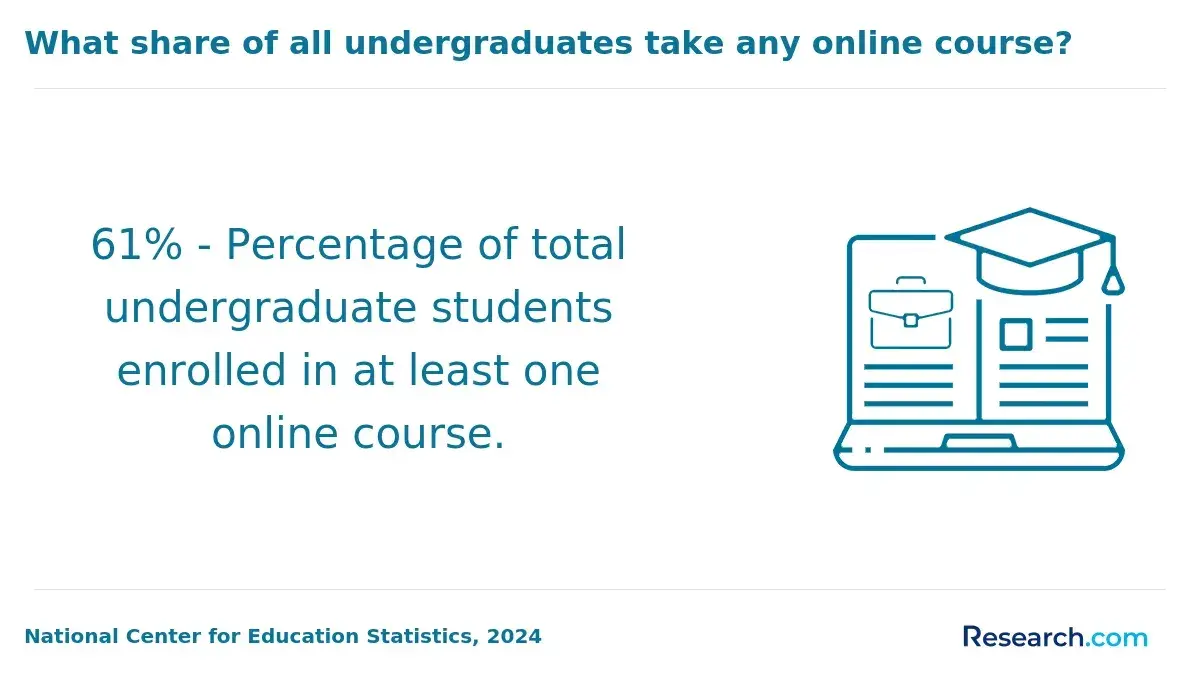
Yes. Graduate programs can waive or omit recommendation letters, especially professionally oriented online programs designed for working adults. Because "Web Development" is not a standardized master's-degree title, applicants should also search master's programs in information technology, software development, computer science, web design, digital media, and application development. Read the admissions page for the specific degree, not only the university-wide graduate admissions page.
Programs with flexible admissions can be a practical fit for experienced developers, career changers with documented projects, and applicants who have been out of school for years. They are not automatically the best choice for students who want thesis supervision, doctoral preparation, or competitive research opportunities, where faculty references can remain important.
Applicants exploring adjacent technical routes may also compare an online MS data science program when their career goal centers more on analytics, machine learning, or data engineering than front-end or full-stack development.
Before applying, confirm the points below directly with the school. Requirements can differ by concentration, applicant background, campus, and term.
- Locate the degree-specific admissions checklist and save a copy of the page for your records.
- Confirm whether letters are required, optional, waived for qualified applicants, or needed only for conditional admission.
- Check prerequisites, minimum GPA rules, transcript evaluation requirements, and whether a résumé or statement is mandatory.
- Ask whether the curriculum includes the languages, frameworks, databases, cloud tools, and capstone experience you need.
- Verify institutional accreditation, total tuition and fees, transfer-credit rules, and the availability of federal financial aid for eligible students.
Several online programs in closely related technical fields have published application processes that commonly emphasize transcripts and an application rather than recommendation letters. Since policies can change, treat this as a starting list and verify the current checklist with each institution before submitting an application. These degrees may not be titled "Web Development," but their curricula can support web, software, cloud, and application-development careers.
| School and online degree | How the degree relates to web development | Recommendation-letter consideration | What to verify before applying |
| Southern New Hampshire University - MS in Information Technology | Can support application, systems, and technology-management skill development depending on electives. | Its graduate admissions materials have generally not listed recommendation letters among standard application documents. | Current prerequisites, concentration options, tuition, and capstone requirements. |
| University of Maryland Global Campus - MS in Information Technology | Offers advanced IT study relevant to software, systems, databases, and web-adjacent technical work. | Its standard graduate application materials have generally emphasized transcripts and application information rather than letters. | Whether prior coursework or professional experience is needed for your intended specialization. |
| Western Governors University - MS in Information Technology Management | Focuses on IT leadership and applied technology rather than a dedicated web-development curriculum. | Its competency-based admissions process has generally not included recommendation letters as a standard requirement. | Whether the management emphasis matches a hands-on developer goal. |
| Franklin University - MS in Computer Science | Can provide broader software-development foundations that are relevant to back-end and full-stack work. | Its published graduate admissions process has generally focused on application and transcript review rather than standard letters. | Required programming background, available electives, and current document list. |
Do not choose solely on the absence of letters. Compare the curriculum, total price, schedule, support services, graduation requirements, and whether the credential aligns with the roles you want. A portfolio-intensive developer may benefit more from a program with substantial coding and capstone work than from a broadly titled IT degree with limited software-development depth.
Programs are moving toward more flexible applications because many online graduate students are working adults who may have left college long ago or changed employers several times. A former instructor may no longer remember an applicant's work, while a current manager may be unable to discuss an employee's job search confidentially. In these cases, a recent transcript, professional résumé, and demonstrated work can be more timely evidence.
Schools also increasingly use structured application review. Required essays, prerequisite checks, résumé review, and portfolio assessment can be evaluated more consistently than letters that vary widely in detail and candor. This does not make references irrelevant; it means programs may reserve them for applicants or degree types where personal evaluation adds the most value.
Flexibility also appears in other career-oriented graduate fields. For example, people comparing admissions models may encounter different requirements in BCBA certification online pathways, where degree coursework, supervised fieldwork, and certification rules create additional requirements beyond graduate admission.
A no-letter policy should be viewed as an access feature, not as proof of either high or low academic standards. Strong programs still set clear prerequisites, assess written communication, and maintain meaningful curriculum and completion expectations.
When letters are not required, admissions offices usually replace them with materials that show preparation, direction, and evidence of work. The best substitute depends on what your application needs to prove. A polished portfolio may be more persuasive for a developer with professional projects, while a transcript and prerequisite coursework may matter more for someone entering a theory-heavy computer science curriculum.
This table helps applicants choose materials that address the same concerns a recommender might otherwise explain.
| Alternative material | What it can demonstrate | How to make it useful |
| Official transcripts | Academic performance and completion of prerequisites. | Highlight relevant courses in your résumé or statement without altering the transcript. |
| Technical résumé | Employment history, tools used, scope of responsibility, and career progression. | Use concrete outcomes, such as features delivered, systems maintained, or processes improved. |
| Portfolio or code samples | Practical ability in design, coding, testing, accessibility, documentation, and deployment. | Include a short explanation of your role, technology choices, constraints, and results. |
| Statement of purpose | Career direction, program fit, readiness, and context for gaps or transitions. | Connect specific program features to a credible next step rather than repeating your résumé. |
| Professional certifications or training | Recent learning and focused technical development. | List completion dates and explain how the learning applies to graduate study goals. |
| Interview or skills assessment, if offered | Communication, motivation, and current technical knowledge. | Prepare examples that show how you approach a project from requirements through testing. |
Do not fabricate endorsements by uploading informal emails, screenshots, or testimonials unless the school expressly permits them. Admissions staff need documents they can authenticate and review consistently.
Yes. A reputable program can admit qualified applicants without recommendations when its published review process uses other meaningful evidence. Institutional accreditation, transparent tuition, identifiable faculty, a defined curriculum, student-support services, and clear policies matter far more than whether the application includes letters.
Evaluate the degree in relation to your goal. A professionally focused online IT or software program may suit a working developer who needs advanced coursework and a credential. A research-intensive computer science master's may be better for someone considering doctoral study, but it may also expect stronger academic references and more formal preparation.
Students considering helping professions should not assume admissions flexibility transfers to licensure pathways. Accredited masters in counseling programs may have programmatic accreditation, practicum, and state licensing considerations that are distinct from technology-degree evaluation.
Watch for red flags: vague claims about accreditation, no published curriculum, unclear total charges, pressure to enroll immediately, guaranteed job claims, or an inability to explain faculty qualifications and student services. Ask an admissions representative whether the degree is institutionally accredited, how credits transfer, what the total estimated cost is, and how online students receive academic and career support.
A no-letter application needs a coherent evidence trail: your transcript shows preparation, your résumé shows experience, your portfolio shows ability, and your statement explains why graduate study is the logical next move. Reviewers should not have to infer your role in a project or guess why the degree fits your plans.
Use these steps to make the application stronger before you submit it.
- Match your portfolio to the curriculum by selecting two to four projects that demonstrate relevant skills, such as responsive interfaces, APIs, databases, testing, accessibility, security, or deployment.
- Write project summaries that identify the problem, your individual contribution, the technology stack, technical trade-offs, and the result. Remove confidential code or client data.
- Address academic weaknesses briefly and constructively. Explain what changed, then point to recent coursework, work accomplishments, or completed training that demonstrates current readiness.
- Tailor the statement of purpose to the program by naming curricular features that support a specific goal, such as advancing from front-end work to full-stack development or moving into technical leadership.
- Have another person review the résumé and statement for accuracy, clarity, and consistency with your portfolio and transcript.
- Submit early enough to resolve transcript delays, prerequisite questions, and technical problems with application portals.
Keep career comparisons realistic. Compensation depends on role, location, experience, industry, and education level; it is not created by a degree title alone. Applicants researching different professional paths can see how role-specific factors shape earnings in resources discussing how much do forensic psychologists make, then apply the same caution when evaluating technology-degree return on investment.
If a target program requires references, start with people who can give specific, firsthand examples of your academic or technical work. The ideal recommender is not necessarily the most senior person you know; it is someone who can credibly describe your skills, reliability, growth, and readiness for graduate study.
These sources are often appropriate, depending on the relationship and the program's instructions.
- A professor, instructor, or teaching assistant who can discuss your programming, systems, design, or quantitative coursework.
- A current or former supervisor who has directly observed your software-development work, project ownership, communication, or leadership.
- A technical lead, engineering manager, project manager, or senior colleague who reviewed your work and can distinguish your individual contribution.
- A client or mentor from a substantial freelance, internship, open-source, or volunteer project when the program permits professional references.
Ask at least three to four weeks before the deadline when possible. Send a concise request with the program name, due date, submission instructions, résumé, unofficial transcript, draft statement, and a short reminder of projects or achievements they observed. Ask whether they can provide a strong recommendation, which gives the person a respectful way to decline if they do not know your work well enough.
Avoid asking relatives, friends, or prominent people with no direct knowledge of your performance. Also avoid submitting a letter written by you for someone else to sign unless the school explicitly allows a recommender to use applicant-provided notes; authenticity and specificity matter more than prestige.
Can you still apply to Web Development programs if you're unable to get a recommendation letter?
Yes, but the right approach depends on the requirement. Apply immediately to programs that explicitly require no letters and otherwise fit your academic and career needs. For a program that requires letters, contact admissions before applying to ask whether it offers an exception, accepts a professional substitute, or permits delayed submission. A waiver is discretionary, so do not treat it as automatic.
When explaining your situation, be brief and factual. For example, you may say that you have been out of school for several years, cannot disclose a job search to a current employer, or lack an appropriate academic reference. Then redirect attention to the evidence you can provide: transcripts, work history, portfolio projects, certifications, and a detailed statement of purpose.
Waiting for a stronger letter can make sense when the school is a clear first choice, the program is selective, and a qualified recommender can submit soon. Applying now to a no-letter program can make more sense when a deadline is close, your alternatives are strong, and you can demonstrate readiness independently. Do not miss a suitable program simply because you assume every graduate application requires faculty references.
If your immediate goal is to build employable skills rather than earn a graduate credential, compare the time and cost of a master's degree with shorter training options such as 6-month certificate programs that pay well. A certificate may be useful for targeted upskilling, while a master's can be a better fit for broader advanced study, career transition, or roles that prefer graduate education.
Other Things You Should Know About Web Development
Many professionally focused online technology master's programs are test-optional or do not require the GRE, but policies vary. Check the degree-specific application page because a school may have different rules for computer science, information technology, and software-development programs.
Usually not by itself. Most master's programs require a completed bachelor's degree from an appropriately recognized institution. A bootcamp can strengthen a portfolio or demonstrate recent preparation, but it may not replace degree or prerequisite requirements.
Program length depends on credit requirements, transfer credits, course load, and prerequisite needs. Full-time students may finish more quickly, while working professionals often choose part-time schedules. Confirm the school's published completion timeline and course availability before enrolling.
Employer practices vary. For developer roles, hiring teams often evaluate practical skills, project experience, technical interviews, communication, and the relevance of the degree. Choose an accredited institution, build a credible portfolio, and be prepared to explain the work you completed.
- Best Master's in Web Development Programs https://www.computerscience.org/degrees/masters/web-development/
- Alumni Outcomes Report | SANS.edu https://www.sans.edu/alumni-outcomes
- No GRE (or GMAT) Online Computer Science Master's Degree Programs https://www.onlineengineeringprograms.com/faq/no-gre-online-computer-science-programs
- Online Master's in English Programs No GRE Required (Master of Arts) https://www.mastersincommunications.com/faqs/online-masters-in-english-gre-requirements
- 2025 Most Affordable Online Master's Programs https://www.onlineu.com/most-affordable-colleges/masters-degrees
- Which Online Programs Are You Competing Against? https://encoura.org/resources/wake-up-call/which-online-programs-are-you-competing-against/
- 2025's Best Online Master's Programs: No GRE Required https://www.onlinemastersdegrees.org/best-programs/no-gre/
- 10 Ways to Increase Your Chances of Getting into Graduate School https://paloaltou.edu/resources/business-of-practice-blog/getting-into-graduate-school