2027 Online vs On-Campus School Psychology Doctorate Programs: Cost, Flexibility, and Employer Perception

Co-Founder and Chief Data Scientist
The hardest part of comparing online and on-campus School Psychology doctorate programs is knowing which differences actually affect licensure, cost, and hiring. The stakes are real, the U.S. Bureau of Labor Statistics reported a May 2024 median annual wage of $84,940 for school psychologists, but reaching that role usually requires supervised training and state approval.
This guide is for future doctoral students weighing flexibility against structure. You will learn how formats differ in tuition, fieldwork, dissertation support, and employer perception so you can choose the option that fits your goals, budget, and learning style.
Key Things to Know About Online vs On-Campus School Psychology Doctorate Programs
- Online programs can reduce commuting and relocation costs, but School Psychology doctoral training still includes in-person practicum, internship, assessment, supervision, and sometimes campus residencies.
- Use accreditation, licensure alignment, internship placement support, faculty advising, and graduate outcomes to judge quality, no national database reliably separates School Psychology doctoral salary, debt, completion, or employer outcomes by online versus campus format.
- NCES 2024 graduate tuition benchmarks show public institutions are often much less expensive than private nonprofit institutions, while BLS May 2024 data places the median school psychologist wage at $84,940.
What are the key differences between online vs on-campus School Psychology doctorate programs?
Online and on-campus School Psychology doctorate programs usually lead to similar academic goals, but they organize learning, supervision, peer interaction, and campus access differently. A School Psychology doctorate may be a PhD, PsyD, or EdD, and the best format depends less on the label and more on whether the program prepares you for your state's licensure, certification, internship, and career requirements.
The table below summarizes the practical differences most likely to affect your daily experience and long-term decision. Use it to identify which format matches your schedule, support needs, and career plans before you compare individual schools.
| Comparison factor | Online School Psychology doctorate | On-campus School Psychology doctorate |
| Course delivery | Online lectures, learning platforms, virtual discussions, and sometimes scheduled live classes | In-person classes, labs, seminars, and direct access to campus facilities |
| Flexibility | Often better for working professionals, caregivers, and students who cannot relocate | Usually more structured, with fixed class times and a campus-based cohort rhythm |
| Fieldwork | Completed in approved local sites when allowed, with remote and site-based supervision | Often arranged through university partnerships, local districts, clinics, or training sites |
| Networking | Requires intentional participation in virtual cohorts, residencies, conferences, and field sites | Built into campus life, faculty labs, assistantships, clinics, and informal peer interaction |
| Best fit | Students who need geographic flexibility and can manage independent study | Students who want intensive face-to-face mentoring, campus resources, and structured routines |
When you compare programs, start with accreditation and licensure alignment rather than convenience. For example, if you are searching for school psychology programs online accredited by NASP, confirm whether the doctoral pathway, not just the institution, aligns with the credential you want.
A common mistake is assuming "online" means fully remote from admission to graduation. In School Psychology, assessment training, supervised practicum, internship, and state credentialing requirements often create in-person obligations even when coursework is online.
Are online School Psychology doctorate programs as rigorous as on-campus programs?
Online School Psychology doctorate programs can be as rigorous as on-campus programs when they use the same academic standards, supervised fieldwork expectations, research requirements, and faculty review processes. Rigor is not determined by the delivery platform; it is determined by what the program requires students to demonstrate before graduation.
Look for the same markers of academic quality in both formats. These indicators matter because they affect licensure readiness, internship competitiveness, and the credibility of your doctoral training.
- Regional institutional accreditation and any relevant programmatic recognition or approval tied to School Psychology preparation.
- Required coursework in assessment, consultation, intervention, ethics, child development, research methods, and school systems.
- Supervised practicum and internship experiences that meet state, district, and credentialing expectations.
- Faculty with School Psychology expertise, active scholarship, and realistic advising loads.
- Transparent student outcomes, including internship placement, licensure or certification results, completion timelines, and dissertation support.
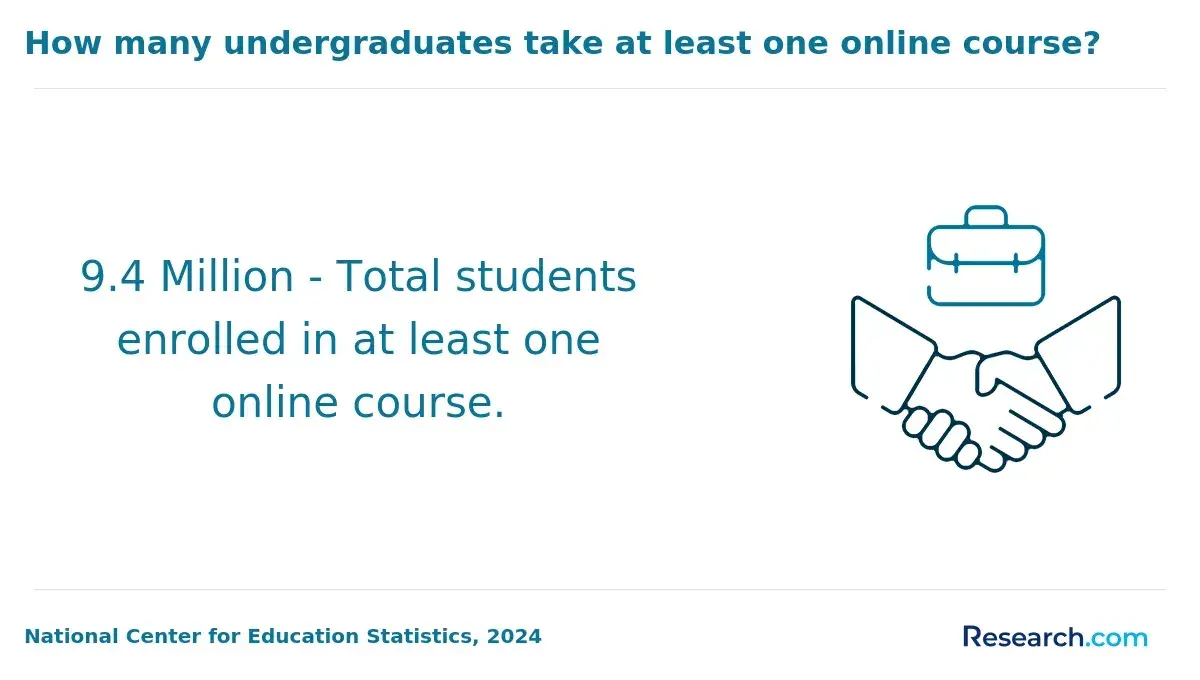
NCES 2024 distance education reporting shows that online graduate study is now a mainstream delivery mode, with more than one-third of graduate students enrolled exclusively in distance education in recent national tables. For readers, the implication is that online learning itself is no longer unusual, but program quality still varies widely.
Red flags include vague practicum language, no clear internship coordinator, limited information about assessment training, unclear dissertation expectations, or a program that cannot explain how it supports licensure in your state. If admissions staff cannot answer those questions directly, keep looking.
How does scheduling flexibility differ between online and on-campus School Psychology doctorate programs?
Scheduling flexibility is one of the biggest reasons students compare online and on-campus School Psychology doctorate programs. Online programs may offer asynchronous coursework, evening live sessions, part-time pacing, or hybrid residencies, while on-campus programs usually follow a more fixed weekly schedule.
The table below compares the scheduling realities behind each format. This is important because a doctorate in School Psychology is not just a set of classes; it is a multi-year commitment involving reading, assessment practice, supervision, research, and fieldwork.
| Schedule feature | Online format | On-campus format |
| Class meetings | May be asynchronous, synchronous, or a mix of both | Typically scheduled in classrooms, labs, or seminars |
| Work compatibility | Often easier to combine with employment during coursework | Can be difficult with full-time employment, especially during daytime classes |
| Pacing | May offer part-time or cohort-based pacing, depending on the school | Often follows a structured full-time sequence |
| Residencies | May require short campus visits for orientation, assessment labs, exams, or dissertation milestones | Campus presence is built into the program |
| Self-management demand | High, because students must plan study time without daily campus structure | High, but reinforced by physical attendance and routine peer contact |
Students sometimes compare School Psychology doctorates with accelerated education doctorates, but they are not always interchangeable. Short-format options such as 1 year EdD programs online may fit some educational leadership goals, but School Psychology licensure-focused doctoral training usually requires extensive supervised practice that cannot be compressed in the same way.
Choose online if you need geographic flexibility, can organize your own weekly workload, and have access to approved field sites. Choose on-campus if you learn best through face-to-face discussion, want easier access to faculty offices and labs, or need the accountability of a fixed schedule.
Fieldwork is the area where online and on-campus School Psychology doctorate programs are often more similar than applicants expect. Regardless of format, students must develop applied skills in real educational or clinical settings, typically through practicum, internship, assessment training, consultation, and supervised service delivery.
The table below shows how fieldwork logistics differ by format. These differences matter because placement access can affect your timeline, stress level, and ability to meet state credentialing requirements.
| Fieldwork issue | Online program | On-campus program |
| Placement location | Often near the student's home area, if approved by the program | Often near the university or through established regional partnerships |
| Placement support | May require more student initiative, especially in states far from the university | Often benefits from existing relationships with local schools and clinics |
| Supervision | Usually combines site supervision with faculty oversight through online systems | May include site supervision, campus-based supervision, and in-person faculty contact |
| Assessment practice | May require residencies, local testing arrangements, or approved in-person training | Often completed in campus labs, clinics, or partner sites |
| Risk to timeline | Higher if the student cannot secure an approved local site | Higher if local placements are competitive or tied to limited university capacity |
Before enrolling in an online program, ask how placements are approved in your state and who is responsible for finding them. A strong program should be able to explain site criteria, supervisor qualifications, evaluation methods, and what happens if your preferred placement falls through.
A serious red flag is any program that advertises maximum flexibility but gives only vague answers about practicum and internship. In School Psychology, fieldwork is not an administrative detail; it is central to professional preparation.
The dissertation process can feel different online, but the core challenge is usually the same: you must identify a researchable problem, work with a committee, collect or analyze evidence, revise repeatedly, and defend your work. Online students may complete these milestones through video meetings and digital research platforms, while on-campus students often have more informal access to faculty and peer writing groups.
The table below compares dissertation support features by format. Pay attention to these items because dissertation delays are one of the most common reasons doctoral timelines stretch longer than expected.
| Dissertation factor | Online format | On-campus format |
| Faculty access | Scheduled video meetings, email feedback, online office hours | Office visits, lab meetings, seminars, and informal campus interaction |
| Peer support | Virtual writing groups and cohort discussion boards, if offered | In-person writing groups, research teams, and cohort networks |
| Research resources | Digital library access, online methods support, remote data tools | Digital and physical library access, campus labs, clinics, and research centers |
| Defense format | May be virtual or hybrid, depending on policy | Often in person, though hybrid defenses may be allowed |
| Best-fit student | Independent, organized, comfortable seeking feedback proactively | Collaborative, campus-oriented, and motivated by frequent face-to-face contact |
Some education doctorates use capstones or applied doctoral projects instead of traditional dissertations. If you are comparing alternatives such as online EdD programs no dissertation, be careful not to assume those models satisfy School Psychology credentialing or employer expectations.
Before applying, ask how often dissertation chairs meet with students, whether the program tracks time-to-completion, how committee changes are handled, and what research methods support is available online or on campus. A convenient format will not help much if dissertation advising is weak.
Tuition comparisons are tricky because national datasets do not publish a clean average tuition figure specifically for online versus on-campus School Psychology doctorates. Schools may charge by credit, by term, by residency status, or by program, and online programs may or may not use separate tuition rates.
Use national graduate tuition benchmarks as a starting point, then verify the actual program price with each university. The figures below are useful for context, but they should not replace a school-specific cost sheet.
- NCES 2024 graduate tuition benchmark: public institutions reported much lower average graduate tuition and required fees than private nonprofit institutions in the latest national tables.
- Common online pricing pattern: flat per-credit tuition may reduce the in-state versus out-of-state gap, but technology fees and residency travel can narrow the savings.
- Common on-campus pricing pattern: public in-state tuition may be comparatively affordable, while out-of-state rates, relocation, and campus fees can raise total cost.
The table below explains how tuition structures usually differ. It helps you avoid comparing one program's per-credit price with another program's full annual cost, which is a common and expensive mistake.
| Tuition item | Online program | On-campus program | What to verify |
| Base tuition | Often charged per credit or per term | Often charged by credit, term, or residency status | Total credits required for the doctorate |
| Residency status | May use the same rate for all students, but not always | Public universities may charge different in-state and out-of-state rates | Whether online students qualify for in-state rates |
| Program fees | Technology, online platform, assessment, and residency fees may apply | Campus, health, activity, lab, and clinic fees may apply | Mandatory fees by semester and year |
| Tuition stability | May use cohort pricing or annual increases | May change with university tuition schedules | Whether tuition is locked for a cohort |
| Assistantships | Less common in many online professional programs | More common in some campus-based PhD programs, but competitive | Whether funding is guaranteed, competitive, or unavailable |
The best comparison is total tuition to degree, not tuition per credit. A program with a lower per-credit rate can still cost more if it requires more credits, more residencies, or extra semesters.
Cost of attendance includes more than tuition. For School Psychology doctoral students, the real financial difference between online and on-campus formats often comes from relocation, transportation, lost work hours, residency travel, health insurance, fees, and fieldwork expenses.
The table below separates common cost categories so you can estimate the full price of each format. This matters because the cheaper tuition option is not always the cheaper life option.
| Cost component | Online doctoral student | On-campus doctoral student |
| Housing and relocation | May remain in current location, which can reduce disruption | May need to move near campus or pay higher local living costs |
| Transportation | Lower weekly commuting costs, but possible residency travel | Regular commuting, parking, transit, or relocation-related costs |
| Employment impact | May allow continued work during coursework, depending on schedule | Full-time campus schedules can limit outside employment |
| Fieldwork expenses | Local travel, background checks, testing materials, and site documentation may apply | Similar fieldwork expenses, often near university partner sites |
| Campus fees | Technology and online learning fees may apply | Campus services, health, lab, activity, and facility fees may apply |
| Funding access | Assistantships may be limited in some online programs | Assistantships, fellowships, or tuition remission may be more available in some campus PhD programs |
There is no reliable national source that reports average student loan debt for School Psychology doctoral graduates by online versus on-campus format. Because of that limitation, the safest approach is to calculate borrowing at the program level before you enroll.
Use this process to compare total cost of attendance side by side.
- Request the full tuition and fee schedule for the entire doctoral sequence, not just the first year.
- Add required residencies, assessment materials, background checks, internship travel, parking, technology, and graduation fees.
- Estimate income changes during practicum and internship, especially if you plan to work full time during coursework.
- Ask whether assistantships, fellowships, or tuition remission are available to students in your exact format.
- Compare expected borrowing against realistic salary data for the state or district where you plan to work.
Avoid the mistake of treating online study as automatically cheaper. Online can be more affordable if it prevents relocation and allows continued income, but it can be more expensive if tuition is high and funding is limited.
Most School Psychology employers care less about whether coursework was online or on campus and more about whether the program is credible, accredited or appropriately recognized, fieldwork-rich, and aligned with licensure or certification requirements. Districts, agencies, and clinics typically focus on eligibility to practice, supervised experience, references, and fit for the role.
The table below translates employer perception into practical evaluation criteria. Use it to understand what hiring committees are likely to scrutinize when reviewing your doctoral background.
| Employer concern | Why it matters | How online and on-campus graduates can address it |
| Licensure or certification eligibility | Employers need candidates who can legally provide services in the role | Confirm state alignment before enrolling and keep documentation of supervised hours |
| Accreditation and program reputation | Signals that training met external academic or professional standards | Choose a recognized program and verify how it is listed on transcripts and credentials |
| Assessment and intervention competence | School psychologists must apply skills with real students, families, and teams | Build strong practicum records, supervisor evaluations, and work samples when appropriate |
| Internship quality | Internship performance often shapes references and first job opportunities | Prioritize programs with strong internship advising and site approval processes |
| Professional communication | Collaboration with teachers, parents, administrators, and clinicians is central to the job | Use fieldwork, presentations, and consultation experiences to demonstrate readiness |
There is no authoritative national employer dataset that ranks online School Psychology doctorates against on-campus doctorates in hiring preference. That absence is important: it means applicants should not rely on broad assumptions, but should ask the employers and licensing boards relevant to their target state.
Before committing to a program, contact district HR offices, state credentialing agencies, internship directors, or alumni in your region. Ask whether graduates from the program have been hired, whether the delivery format appears on transcripts, and whether the program's supervised experience meets local expectations.
Program format can affect job prospects indirectly, but it usually does not determine them by itself. The stronger predictors are licensure eligibility, internship quality, faculty recommendations, assessment and consultation experience, research or dissertation focus, and the professional network you build during training.
BLS May 2024 wage data places the median annual wage for school psychologists at $84,940. That figure is a useful labor-market benchmark, but it is not a promise; salaries vary by state, district, contract schedule, experience, role, and whether the job is in a school, clinic, hospital, or university setting.
The table below shows how format may influence preparation for different career paths. Use it to decide whether you need flexibility, research intensity, clinical depth, or campus-based networking.
| Career goal | Online format may help if | On-campus format may help if |
| K-12 school psychologist | You can complete approved local fieldwork and meet state credentialing rules | You want established district partnerships near the university |
| University faculty or researcher | The online program has strong research mentoring and publication opportunities | You want lab involvement, research assistantships, and frequent faculty collaboration |
| Clinical or assessment-focused role | The program provides robust in-person assessment training and supervised experience | You want access to campus clinics, testing libraries, and local clinical partnerships |
| District leadership or consultation | You are already working in education and can connect coursework to practice | You want face-to-face leadership networks and campus-based professional events |
| Alternative education career | You decide School Psychology licensure is not your goal | You want to explore adjacent campus programs before committing |
If your real goal is curriculum, training, learning technology, or workplace education rather than psychological services in schools, an adjacent degree may be a better investment. For example, candidates focused on learning systems rather than licensure can compare best online instructional design master's programs before committing to a longer doctorate.
The key is fit. An online doctorate can support strong job prospects when it leads to the right credential and includes high-quality fieldwork. An on-campus doctorate can also fall short if it lacks placement support, funding transparency, or alignment with your intended state.
How do you choose between online and on-campus School Psychology doctorate programs?
Choose between online and on-campus School Psychology doctorate programs by working backward from your career goal. Start with the credential you need, then compare format, cost, fieldwork, dissertation support, and employer expectations.
Use the steps below to build a practical shortlist. This sequence helps you avoid choosing based on convenience alone.
- Identify your target role, such as school psychologist, faculty researcher, district consultant, licensed psychologist, or educational assessment specialist.
- Check your state's credentialing and licensure rules before comparing tuition or schedules.
- Verify institutional accreditation and any programmatic recognition relevant to School Psychology preparation.
- Ask how practicum and internship placements are secured, approved, supervised, and documented.
- Compare total cost to degree, including fees, residencies, lost income, relocation, and funding availability.
- Evaluate dissertation support by asking about chair assignment, committee timelines, research methods help, and average completion patterns.
- Speak with current students or alumni in your preferred format to learn how the program actually operates.
- Confirm how the degree appears on transcripts and whether employers in your target region have hired graduates.
Watch for warning signs that a program may not be worth pursuing, regardless of format. These issues can affect licensure, completion, and return on investment.
- The program cannot clearly explain how it meets School Psychology credentialing requirements in your state.
- Admissions staff emphasize convenience but provide little detail about supervised fieldwork.
- Tuition information is incomplete, and fees or residency costs are difficult to verify.
- Dissertation or doctoral project support is vague, inconsistent, or dependent on finding your own advisor after enrollment.
- The program has limited faculty expertise in School Psychology or relies heavily on adjunct instructors without clear supervision structures.
- Graduate outcome data is unavailable, outdated, or not separated by program level.
An online program makes the most sense if you need flexibility, are comfortable managing your own schedule, and can complete approved fieldwork near you. An on-campus program makes the most sense if you want intensive face-to-face mentoring, campus research opportunities, stronger local placement networks, or potential assistantship funding.
Other Things You Should Know About School Psychology
Some students work during the coursework phase, especially in flexible online or hybrid programs. However, practicum, internship, assessment training, and dissertation milestones can make full-time work difficult, so ask each program for a realistic weekly time estimate.
They can, but the major requirements are often similar: transcripts, recommendations, a statement of purpose, relevant experience, and sometimes interviews or writing samples. Online programs may place extra emphasis on readiness for independent learning and access to suitable fieldwork sites.
Not automatically. Licensure and certification rules vary by state, and online students should confirm state alignment before enrolling. Ask the program and the state board or credentialing agency to verify coursework, internship, and supervised-hour requirements.
Hybrid programs can be a strong middle ground if you want online flexibility plus in-person assessment training, residencies, and cohort connection. Review the residency schedule carefully because travel, lodging, and time away from work can affect total cost.
- Employers' Perceptions of Online University Degrees and ... https://journals.um.si/index.php/oe/article/view/2425/2054
- Understanding the Differences Between Graduate Degrees in Clinical Psychology – IECA https://www.iecaonline.com/journal-article/understanding-the-differences-between-graduate-degrees-in-clinical-psychology/
- CBS-friendly (e.g. ACT, FAP) Pre-Doctoral Internship Sites https://contextualscience.org/book/export/html/55
- Best Online School Psychology Programs 2025 | Psychology.org https://www.psychology.org/rankings/best-online-school-psychology-programs/
- PhD in School Psychology | Why a pursue a Doctoral Degree in School Psychology? | School-Psychologists.com https://www.school-psychologists.com/articles/phd-school-psychology/
- Psychology Accreditation: What you need to know https://www.onlinepsychologydegrees.com/articles/accreditation/
- 2025 Most Affordable Online Colleges for a PhD in Psychology https://www.onlineu.com/most-affordable-colleges/psychology-doctoral-degrees
- Inside Online Master’s Programs in School Psychology https://www.onlinemastersdegrees.org/best-programs/psychology/school-psychology/
- Call for Systemic Changes to Alleviate International Students’ Practicum Barriers in APA Accredited Psychology Programs https://societyforpsychotherapy.org/call-for-systemic-changes-to-alleviate-international-students-practicum-barriers-in-apa-accredited-psychology-programs/