2027 Online School Psychology Doctorate Programs for First-Time Doctoral Students

Co-Founder and Chief Data Scientist
Choosing an online school psychology doctorate is a high-stakes decision because the degree can affect licensure options, debt, research expectations, and career mobility. The U.S. Bureau of Labor Statistics reported a May 2024 median annual wage of $84,940 for school psychologists, but doctoral value depends heavily on your role goal and state rules.
This guide is for first-time doctoral students comparing PhD, PsyD, EdD, hybrid, and online formats. You will learn how to judge program fit, support, cost, accreditation, and whether a doctorate is the right next step.
Key Things You Should Know
- The best online school psychology doctorate for a first-time doctoral student is usually not the fastest program; it is the one with verified accreditation or approval, clear fieldwork expectations, strong faculty mentoring, and a dissertation or capstone structure you can realistically complete.
- School psychology doctoral study is different from an EdS or master's pathway: an EdS often supports entry-level school psychologist credentialing, while a doctorate is usually better for advanced practice, supervision, research, leadership, higher education, or expanded clinical preparation.
- Cost and time vary widely, so students should compare total program cost rather than tuition alone; NCES data published in 2024 showed average graduate tuition and required fees were much higher at private nonprofit institutions than public institutions, making residency travel, dissertation extension fees, and reduced work hours important ROI factors.
Which Online School Psychology Doctorate Programs Are Best for First-Time Doctoral Students?
The best online school psychology doctorate programs for first-time doctoral students are structured, transparent, and aligned with the student's target career. Because school psychology is tied to state credentialing, practicum rules, internship expectations, and professional accreditation, "best" should mean "best fit for your intended outcome," not simply "most flexible" or "highest ranked."
For many first-time doctoral students, the safest programs to shortlist are those that clearly state whether they are designed for licensed or credentialed school psychologists, whether they prepare students for new credentialing, and whether their doctoral curriculum includes supervised fieldwork. Students who still need initial school psychologist preparation should also compare school psychology programs online accredited by NASP, because specialist-level or doctoral program recognition can matter more than online convenience.
The table below compares common doctoral pathways. Use it to identify which degree type matches your goal before comparing individual schools.
| Doctoral pathway | Best fit for first-time doctoral students who want | Typical strengths | Important caution |
| PhD in School Psychology | Research, faculty roles, policy work, advanced assessment, or scientist-practitioner training | Strong research methods, dissertation depth, potential preparation for academic careers | Often less available in fully online formats and may require substantial in-person clinical or research training |
| PsyD in School Psychology | Advanced professional practice, supervision, assessment, consultation, and applied service roles | Practice-focused training with applied research expectations | May be expensive, and students must verify licensure alignment and residency requirements |
| EdD with a school psychology, educational psychology, or leadership focus | School system leadership, program evaluation, district-level intervention, or applied educational research | Applied projects, practitioner-oriented coursework, often more flexible for working educators | May not qualify someone for school psychologist credentialing if the program is not specifically designed for that purpose |
| Post-specialist doctoral completion program | Credentialed school psychologists who already hold an EdS or comparable graduate preparation | Can build on prior coursework and professional experience | Usually not appropriate for applicants who still need foundational school psychology preparation |
A strong first-time doctoral program should make its expectations easy to verify before you apply. Look for curriculum maps, faculty research areas, dissertation timelines, internship or practicum guidance, state authorization details, and published student support services.
Common red flags include vague accreditation language, no clear dissertation sequence, unclear field placement responsibility, and marketing that implies the doctorate automatically leads to licensure or a salary increase. A doctorate can be valuable, but only when the degree type, professional recognition, and career path fit together.
What Should First-Time Students Expect From an Online School Psychology Doctorate?
First-time doctoral students should expect a school psychology doctorate to be more independent, research-heavy, and professionally specialized than a master's or EdS program. Online delivery may reduce commuting, but it does not remove doctoral-level reading, writing, fieldwork, statistics, ethical decision-making, or faculty-reviewed research expectations.
A school psychology doctorate typically prepares students to understand learning, behavior, mental health, assessment, intervention, consultation, and systems-level support in schools. Depending on the degree, students may study child and adolescent development, psychoeducational assessment, consultation models, academic and behavioral interventions, counseling, legal and ethical practice, research design, program evaluation, and advanced statistics.
The table below summarizes what online doctoral study often includes. It can help first-time students understand where the workload comes from and why online programs still require careful planning.
| Program component | What first-time doctoral students should expect | Why it matters |
| Advanced coursework | Graduate seminars in assessment, intervention, systems consultation, ethics, diversity, and research | Builds the knowledge base needed for advanced school psychology practice or scholarship |
| Research methods and statistics | Quantitative, qualitative, or mixed-methods training, often with software-based analysis | Prepares students for dissertation, capstone, or evidence-based decision-making roles |
| Practicum or internship | Supervised school, clinic, or community-based experiences when required by the program or credential path | Connects academic training to professional practice and may affect state credentialing |
| Residency or intensive sessions | Short campus visits, synchronous online weekends, assessment labs, or summer institutes | Supports skill development that may be difficult to assess asynchronously |
| Dissertation, capstone, or applied project | A faculty-supervised research or practice-based project completed over multiple terms | Often determines the final time-to-degree and should be evaluated early |
Students new to doctoral education should also expect the role of the instructor to change. Faculty may guide, critique, and mentor, but doctoral students are expected to manage literature searches, synthesize research, revise repeatedly, and move complex projects forward without weekly step-by-step instructions.
A practical way to test readiness is to review a recent school psychology journal article and ask whether you can identify the research question, method, sample, findings, and limitations. If that feels unfamiliar, you may still be a good candidate, but you should prioritize programs with built-in research boot camps, writing support, and early methodology courses.
What Admissions Requirements Should First-Time Applicants Expect for an Online School Psychology Doctorate?
Admissions requirements vary by school and degree type, but first-time doctoral applicants should expect programs to look for academic preparation, professional purpose, writing ability, and readiness for independent research. Some programs admit students with a bachelor's degree into a longer doctoral pathway, while others require a master's, EdS, school psychology credential, or related professional experience.
The table below shows common admissions expectations and how first-time doctoral students should interpret them. Requirements are not interchangeable, so applicants should confirm whether missing prerequisites can be completed before or during the program.
| Requirement | What programs may ask for | What it tells the admissions committee |
| Prior degree | Bachelor's, master's, EdS, or comparable graduate preparation | Whether the applicant has enough academic foundation for doctoral-level work |
| Relevant coursework | Psychology, child development, statistics, research methods, assessment, or education courses | Whether the student can enter advanced school psychology coursework without major gaps |
| Professional experience | School, counseling, assessment, special education, behavioral intervention, or mental health experience | Whether the applicant understands the settings and populations served by school psychologists |
| Writing sample or statement | Personal statement, scholarly paper, case-related writing, or research interest essay | Whether the applicant can communicate clearly and define a doctoral-level purpose |
| Recommendations | Academic, clinical, supervisory, or professional references | Whether others can speak to persistence, ethics, analytical ability, and readiness |
| Interview | Faculty interview, group interview, or admissions advising conversation | Whether the applicant's goals match the program's model, faculty expertise, and support structure |
First-time applicants should not assume that a strong GPA or prior master's degree automatically means they are ready for doctoral research. Admissions committees often care just as much about fit: whether your interests match faculty expertise, whether you understand the degree's purpose, and whether you can complete fieldwork or residency expectations.
Before applying, use this readiness checklist to identify gaps that could weaken your application or make doctoral study harder than expected:
- Confirm whether your target role requires a doctorate, an EdS, state certification, licensure, or a different credential.
- Compare your transcript against prerequisite coursework in psychology, research methods, statistics, assessment, and child development.
- Prepare a writing sample that shows analysis, source integration, and revision rather than only personal motivation.
- Identify faculty whose research or practice interests match your proposed doctoral focus.
- Ask admissions staff whether students without prior doctoral experience receive structured research and writing support in the first year.
A common mistake is applying broadly without understanding whether each program is entry-level, post-master's, or post-specialist. If a program is designed for credentialed school psychologists, a first-time doctoral student without that background may be technically admissible to a related EdD but not positioned for school psychology credentialing.
Research support is one of the biggest differences between a beginner-friendly online doctorate and a program that simply delivers graduate courses online. First-time doctoral students need more than access to a library; they need structured training in how to move from a broad interest to a feasible research question.
In a strong program, research support begins early and continues through proposal development, data collection, analysis, writing, and defense or final review. Online students should ask whether this support is embedded in courses or left to optional workshops.
The most useful research supports for first-time doctoral students usually include the following features:
- Sequenced research courses that move from literature review to methodology, analysis, proposal writing, and final project completion.
- Faculty advising that begins before the dissertation or capstone stage, not only after coursework is finished.
- Access to school psychology databases, research librarians, citation tools, assessment resources, and statistical software.
- Writing support that addresses scholarly synthesis, APA style, argument structure, and revision cycles.
- Opportunities to join faculty research groups, applied evaluation projects, or peer writing circles.
- Clear milestones for topic approval, committee formation, proposal defense, data collection, and final review.
AI tools are also changing doctoral research habits. Students may use AI-assisted search, transcription, coding support, or grammar tools when permitted, but ethical programs should teach what is allowed, how to protect confidential data, and how to avoid misrepresenting AI-generated text as original scholarship.
A useful question to ask is, "What happens if I finish coursework but struggle to complete my proposal?" The answer will reveal whether the program has a real doctoral support model or expects students to self-rescue after they reach the hardest stage.
The dissertation, capstone, or applied doctoral project can shape the entire student experience because it is often the point where coursework ends and independent progress becomes essential. First-time doctoral students should compare final project models before enrolling, not after they have already paid for multiple terms.
Some professional doctorates use applied capstones or improvement projects, while many PhD programs require a traditional dissertation. Students comparing options may also see broader education doctorates marketed as flexible or practice-based; for context, this overview of online EdD programs no dissertation can help clarify how non-dissertation models differ from research-intensive school psychology doctorates.
The table below explains the main differences. It is especially useful for students who are not yet sure whether they want a research career, advanced practice role, or education leadership pathway.
| Final project type | Typical purpose | Best fit | First-time student challenge |
| Traditional dissertation | Produces original research that addresses a scholarly or professional question | Students considering faculty, research, policy, or doctoral-level specialist roles | Requires sustained independent reading, methodology decisions, data analysis, and committee feedback |
| Applied dissertation | Uses research methods to investigate a practical problem in a school or system | Practitioners who want to improve interventions, services, or programs | Still requires rigorous design, permissions, data quality, and written defense |
| Capstone or doctoral project | Develops and evaluates a practice-based solution, model, or program | Students focused on leadership, implementation, or professional practice | May be more structured but can still require evaluation methods and stakeholder access |
Support matters because dissertation delays can increase cost through continuation fees, extra terms, and reduced work capacity. NCES data published in 2024 shows that graduate education already carries substantial tuition differences by institution type, so an extra year can materially change the degree's value.
Before enrolling, ask specific questions about completion support rather than accepting general claims about mentoring:
- How early do students choose a dissertation or capstone topic?
- When is the committee assigned, and how often must faculty respond to drafts?
- Are there required proposal-writing courses or only independent study credits?
- What research methods support is available for qualitative, quantitative, and mixed-methods projects?
- Are students allowed to collect data in their workplace, and what approvals are required?
- What fees apply if the final project extends beyond the standard program length?
A major red flag is a program that highlights flexibility but cannot describe the final project timeline. For first-time doctoral students, structure is not a limitation; it is often the difference between finishing and stalling.
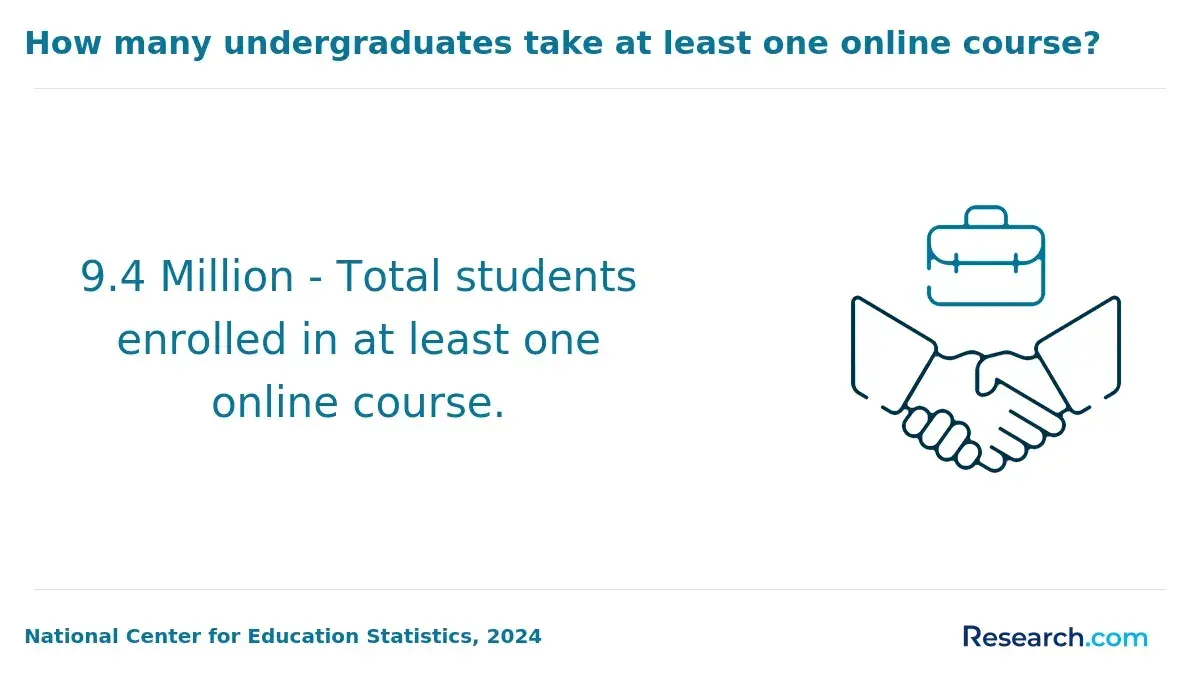
Online school psychology doctorates can be flexible, but they are rarely "study whenever you want" programs. First-time doctoral students should examine synchronous sessions, residency requirements, practicum schedules, internship expectations, assessment labs, and dissertation meetings before assuming the format will fit full-time work.
Accelerated education doctorates can look appealing to working professionals, and students researching speed may come across 1 year EdD programs online. School psychology doctorates, however, usually involve specialized research, supervised practice, or credential-sensitive requirements that make extremely short timelines uncommon and often unsuitable for students seeking school psychology preparation.
The table below compares delivery features that affect flexibility. Use it to separate real flexibility from marketing language.
| Format feature | What it may look like | How it affects first-time doctoral students |
| Asynchronous coursework | Recorded lectures, discussion boards, weekly assignments | Helpful for working adults, but still requires disciplined weekly study time |
| Synchronous online meetings | Evening seminars, live advising, weekend intensives | Builds connection and accountability but may conflict with work or caregiving |
| Campus residency | Short in-person sessions for orientation, assessment practice, research, or defense | Adds travel cost and time off work but may strengthen skill development |
| Local field placement | Practicum, internship, consultation, or applied research in a student's region | Can reduce relocation needs, but placement approval and supervision must be confirmed early |
| Part-time enrollment | Reduced course load across more terms | Often better for working professionals, though it can increase total time and fees |
Full-time study may work for students who can reduce employment, complete fieldwork during standard school hours, and keep a steady research schedule. Part-time study may be more realistic for practicing educators or school psychologists, but students should ask whether the program has a maximum time-to-degree policy.
A common mistake is comparing only weekly class time. Doctoral workload also includes reading, research design, data analysis, writing, group projects, supervision, and revision. A student who has ten hours free per week may manage one course but may struggle once fieldwork and dissertation work overlap.
Cohorts, mentorship, and support systems matter more for first-time doctoral students than many applicants expect. Doctoral study can be isolating in an online format, and students who are new to doctoral expectations often benefit from predictable advising, peer accountability, and clear academic milestones.
A cohort model usually means students move through courses with the same peer group. This can improve accountability and community, but it may reduce scheduling flexibility if courses are offered in a fixed sequence. A more independent model may suit experienced researchers, but it can be risky for students who need structure.
The following support features are especially important when evaluating whether an online program is beginner-friendly:
- Assigned faculty advisor from the first term, with a clear process for changing advisors if research interests shift.
- Regular cohort meetings or doctoral seminars that help students understand expectations, milestones, and professional identity.
- Accessible student services, including library help, writing center support, technology assistance, disability accommodations, and financial aid advising.
- Transparent faculty workload policies, including expected response times for dissertation drafts and advising questions.
- Peer support structures such as writing groups, research labs, group supervision, or online community spaces.
- Career advising that understands school psychology credentials, district leadership roles, clinical pathways, and higher education options.
Mentorship should also match your goal. A student pursuing research on behavioral interventions needs different faculty expertise than a student interested in district-level crisis response, assessment equity, teleassessment policy, or special education consultation.
Ask current students how often they interact with faculty outside class and whether support changes after coursework. If students describe strong support in courses but little guidance during dissertation or capstone work, that is a warning sign for first-time doctoral applicants.
Most first-time doctoral students should think in terms of total completion cost, not just advertised tuition per credit. Total cost can include tuition, fees, books, assessment materials, software, background checks, residency travel, internship expenses, dissertation continuation credits, and income lost from reducing work hours.
Time-to-completion depends on entry point. A bachelor's-to-doctorate pathway generally takes longer than a post-master's or post-specialist program. Students who already hold an EdS in school psychology may receive credit for prior graduate work, but transfer policies vary and may exclude older coursework, clinical courses, or credits from non-equivalent programs.
The table below gives a practical planning framework. It uses broad ranges because published program lengths differ by degree type, prior coursework, enrollment intensity, and final project pace.
| Student entry point | Common time pattern | Cost factors to verify | Planning note |
| Bachelor's degree | Longest path because foundational graduate coursework, field experiences, and doctoral research may all be required | Total credits, practicum fees, internship expectations, residency travel, and whether a master's or specialist credential is embedded | Best for students committed to a long professional psychology pathway and able to plan several years ahead |
| Master's degree in psychology, counseling, education, or related field | Moderate to long path depending on prerequisite gaps and accepted transfer credits | Bridge coursework, transfer-credit limits, supervised experience requirements, and dissertation fees | Good fit only if the prior degree aligns closely enough with school psychology expectations |
| EdS or school psychology credential | Often shorter than entry-level doctoral preparation, especially in post-specialist formats | Accepted specialist credits, doctoral residency, research sequence, and final project continuation costs | Often the most direct doctoral path for practicing school psychologists seeking advancement |
For cost context, NCES data published in 2024 reported average graduate tuition and required fees of $12,596 at public institutions and $29,931 at private nonprofit institutions for the 2022-23 academic year. Those figures are not school psychology-specific, but they show why students should compare total cost across institution types and not assume that online delivery is automatically cheaper.
Use a simple cost plan before applying. Estimate the number of credits you will actually need after transfer review, multiply by tuition, then add fees, travel, materials, loan interest exposure, and extra terms for dissertation or capstone completion. If the program does not provide enough information to make that estimate, ask for a written cost breakdown.
A doctorate may be worth the investment when it supports a specific outcome, such as university teaching, advanced leadership, specialized assessment, research, supervision, or eligibility for roles requiring doctoral preparation. It may be a poor investment if the student only wants initial school employment and could reach that goal through a less expensive specialist-level pathway.
An online school psychology doctorate can support several career directions, but outcomes depend on the degree type, accreditation, state credentialing rules, supervised experience, and employer requirements. Students should not assume the word "doctorate" has the same value in every school district, clinic, university, or state licensing system.
The U.S. Bureau of Labor Statistics reported a May 2024 median annual wage of $84,940 for school psychologists. This is a useful benchmark, but it does not prove that every doctorate holder will earn more than a specialist-level practitioner; pay may be determined by district salary schedules, licensure level, years of experience, union contracts, or administrative role.
The table below connects doctoral pathways to possible outcomes. It can help first-time students decide whether the degree supports the career they actually want.
| Career direction | How a doctorate may help | What to verify first |
| School psychologist in K-12 settings | May support advanced pay lanes, specialized assessment, consultation, supervision, or leadership | State credentialing rules, district pay policies, internship requirements, and NASP or state recognition |
| District or systems leadership | Can support roles in student services, mental health programming, special education, crisis response, or program evaluation | Whether employers value the doctorate, administrative credential expectations, and leadership experience requirements |
| Faculty or researcher | PhD or research-intensive training may support teaching, publication, grant work, or policy research | Faculty research productivity, dissertation rigor, publication opportunities, and expectations for tenure-track roles |
| Clinical or health-service psychology pathway | May support broader assessment or intervention roles if the program meets professional psychology requirements | APA accreditation, state psychology licensure rules, internship requirements, and supervised postdoctoral hours where applicable |
| Educational consulting or program evaluation | Can strengthen credibility in intervention design, assessment systems, MTSS, behavior supports, and data-based decision-making | Market demand, experience, legal scope of practice, and whether additional credentials are needed |
Some students interested in learning design, school technology, or adult training may discover that a school psychology doctorate is more clinical and assessment-focused than they need. If your goal is curriculum design, digital learning, or workforce training rather than school psychological services, comparing the best online instructional design master's programs may lead to a faster and more targeted credential.
Current trends also affect career planning. Schools continue to emphasize mental health supports, behavioral intervention, crisis response, assessment equity, and data-based decision-making. At the same time, AI-enabled assessment tools and telepractice raise ethical, privacy, and validity questions, so doctoral students should seek programs that teach responsible technology use rather than treating digital tools as shortcuts.
The strongest ROI case exists when the doctorate is connected to a role that clearly requires or rewards doctoral-level expertise. If your target employer does not pay more for a doctorate, does not require it for advancement, or values experience more than credentials, it may be better to gain field experience, complete a specialist credential, or pursue a more targeted graduate certificate before starting doctoral study.
How Should First-Time Students Choose an Online School Psychology Doctorate Program?
First-time doctoral students should choose an online school psychology doctorate by working backward from the career outcome, not forward from the program brochure. Start with the role you want, identify the credential required, then compare programs based on accreditation, fieldwork, research support, cost, schedule, and completion evidence.
Use the following step-by-step process to make a grounded decision. It is designed to prevent the most common mistakes: choosing by reputation alone, ignoring licensure, underestimating dissertation work, and focusing only on tuition.
- Define your target role in writing, such as K-12 school psychologist, district leader, faculty researcher, supervisor, clinical psychologist, program evaluator, or consultant.
- Check the credential rules for the state or states where you plan to work, including school psychologist certification, psychology licensure, internship, practicum, and supervised experience requirements.
- Verify program-level accreditation, approval, or recognition directly with the relevant accreditor or professional body, not only through marketing language on the program page.
- Ask whether the program is entry-level, post-master's, post-specialist, or designed for already credentialed school psychologists.
- Request a written transfer-credit review before assuming prior graduate coursework will shorten the program.
- Compare the dissertation, capstone, or applied project sequence, including when students choose topics and how often faculty review drafts.
- Calculate total completion cost, including tuition, fees, residency travel, software, materials, dissertation continuation credits, and possible income reduction.
- Ask current students about advising quality, workload realism, cohort support, faculty responsiveness, and what happens when students fall behind.
- Review program outcomes, including completion timelines, internship match or placement support where relevant, credentialing outcomes, and career services.
- Decide whether the degree's likely benefits justify the time, cost, and opportunity cost compared with an EdS, certificate, master's, or additional work experience.
A good program for first-time doctoral students should be transparent enough that you can explain its value in one sentence: "This doctorate is worth it for me because it meets the credential rules for my target role, offers the support I need to finish, and has a cost I can justify against my career plan."
You may not be ready to start a doctorate if you are unsure what role the degree supports, cannot commit regular research and writing time, have not checked state requirements, or need a much faster credential to change jobs. Waiting can be a smart decision if it allows you to gain school-based experience, strengthen research skills, reduce debt, or choose a better-aligned program later.
Bottom line: An online school psychology doctorate can be a strong investment for first-time doctoral students who need advanced research, leadership, practice, or faculty preparation. It is not automatically the best path for initial school psychology employment, and it should be chosen only after verifying accreditation, licensure fit, mentorship, total cost, and final project support.
Other Things You Should Know About School Psychology
No. School psychologists typically focus on assessment, learning, behavior, mental health consultation, intervention planning, and special education support. School counselors often focus on academic planning, social-emotional counseling, college and career readiness, and student guidance services.
Yes, depending on credentials and state rules. Some work in private schools, clinics, universities, hospitals, research organizations, government agencies, or consulting roles. Clinical or independent practice may require additional psychology licensure beyond a school-based credential.
Not always, but state authorization, field placement approval, and licensure alignment can create limits. Before enrolling, confirm that the program accepts students from your state and can support any practicum, internship, or credentialing requirements where you plan to work.
Helpful preparation includes academic writing, statistics, research reading, ethical reasoning, child development knowledge, assessment awareness, collaboration, time management, and comfort receiving detailed feedback. Experience in schools or youth-serving settings can also make doctoral coursework more meaningful.
- Best Accredited Online Psy.D. Programs | Psychology.org https://www.psychology.org/rankings/best-online-psyd-degree-programs/
- Educational Funding https://phdproject.org/educational-funding/
- PhD in Clinical Psychology https://www.fielding.edu/school-of-psychology/phd-in-clinical-psychology/
- Online and Hybrid PhD & PsyD Programs in Psychology https://www.psychologist-license.com/phd/
- Research mentorship for mental health research students https://riseglobaleducation.com/blogs/research-mentorship-for-mental-health-research-students
- COGDOP Graduate Student Scholarships - American Psychological Foundation https://ampsychfdn.org/funding/cogdop/
- Doctor of Psychology (PsyD) Online Degree Program https://www.calsouthern.edu/online-degree-programs/behavioral-sciences/doctor-psychology-psyd/
- PhD Scholarships: Explore Your Online Education Aid Options https://www.oedb.org/phd-scholarship/