2027 Online vs On-Campus Operations Management Doctorate Programs: Cost, Flexibility, and Employer Perception

Co-Founder and Chief Data Scientist
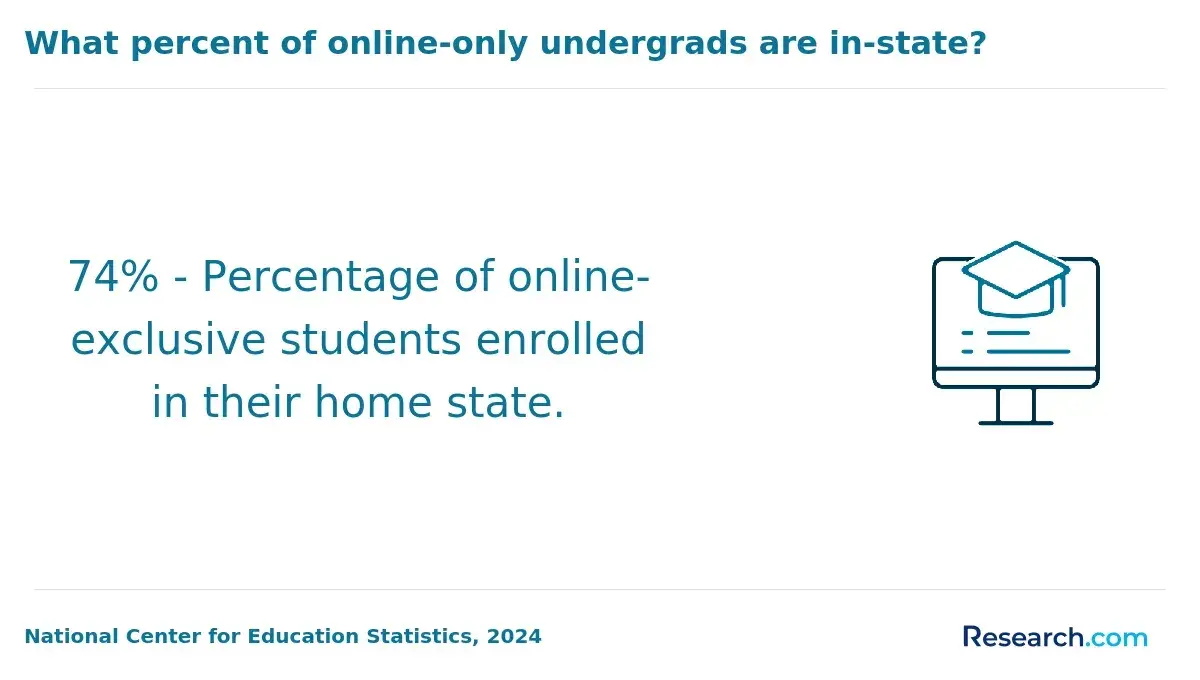
Your main decision is not just whether to earn an Operations Management doctorate; it is whether the format will support your budget, schedule, research goals, and career plans. NCES data published in 2024 show that about 61% of U. S. graduate students took at least one distance education course in fall 2022, making format choice a mainstream doctoral planning issue. This guide is for working professionals, aspiring faculty, consultants, and operations leaders comparing online and on-campus options. You will learn how to weigh cost, flexibility, rigor, fieldwork, dissertation support, and employer perception before enrolling.
Key Things to Know About Online vs On-Campus Operations Management Doctorate Programs
- Online Operations Management doctorates usually offer stronger schedule flexibility, but they still require advanced quantitative coursework, independent research, dissertation milestones, and sustained faculty interaction.
- There is no single national tuition average for online versus on-campus Operations Management doctorates; NCES graduate tuition benchmarks show that institution type and residency status can matter more than delivery format.
- Employers generally focus on accreditation, research quality, applied expertise, and institutional reputation rather than format alone, especially as graduate distance learning has become common in the U.S.
What are the key differences between online vs on-campus Operations Management doctorate programs?
Online and on-campus Operations Management doctorate programs usually cover similar academic territory: supply chain design, operations strategy, analytics, quality management, logistics, process improvement, forecasting, and research methods.
The practical differences are in how you attend class, access faculty, complete residencies, build professional networks, and manage research time.
An Operations Management doctorate may be structured as a PhD, DBA, Doctor of Management, or another applied doctoral degree. A PhD often emphasizes original scholarly research and academic placement, while a DBA or applied doctorate typically focuses on solving complex organizational problems through research-based practice.
The table below summarizes the format differences that most affect student experience and decision-making.
| Comparison factor | Online doctorate | On-campus doctorate | Why it matters |
| Class delivery | Asynchronous, synchronous, or hybrid online coursework | In-person seminars, labs, colloquia, and campus meetings | Determines how easily you can keep working while enrolled |
| Faculty access | Video meetings, learning platforms, email, virtual office hours | Face-to-face meetings, informal campus access, research groups | Affects mentoring, dissertation momentum, and networking |
| Research environment | Often independent or workplace-based, with remote advising | Often tied to faculty labs, centers, grants, or campus research teams | Important for students targeting academic or research-intensive careers |
| Residency requirements | May be fully remote, low-residency, or require short campus visits | Usually regular in-person attendance | Can change travel costs and work-life planning |
| Peer networking | Virtual cohorts, online discussion, occasional residencies | Campus seminars, assistantships, conferences, informal collaboration | Can influence academic hiring, consulting opportunities, and research partnerships |
In general, online programs make the most sense for experienced professionals who need geographic flexibility and can manage independent study. On-campus programs are often a better fit for students who want intensive faculty access, campus research infrastructure, funded assistantship opportunities, or a path toward tenure-track academic roles.
Are online Operations Management doctorate programs as rigorous as on-campus programs?
Online Operations Management doctorate programs can be as rigorous as on-campus programs when they have the same accreditation, doctoral faculty standards, research expectations, dissertation requirements, and assessment processes.
Rigor is not created by the classroom location; it comes from the curriculum, faculty expertise, research expectations, admissions selectivity, and quality of dissertation supervision.
For readers comparing program quality, the most important distinction is between delivery format and academic standard. A credible online doctorate should require advanced methods coursework, literature reviews, qualifying or comprehensive exams, dissertation proposal approval, institutional review board procedures when human subjects are involved, and a final defense.
Use the following checks to evaluate rigor before assuming that one format is stronger than the other:
- Confirm that the same regional or institutional accreditation covers the online and on-campus offerings.
- Review whether doctoral faculty publish in operations, supply chain, analytics, production, logistics, or management science fields.
- Ask how dissertation chairs are assigned and how often students meet with them.
- Check whether the program requires quantitative research methods, qualitative methods, or mixed-methods training appropriate to your topic.
- Look for transparent dissertation milestones, not vague promises of "flexible completion."
- Ask whether online students can access research databases, statistical software, library support, writing support, and methodology consultations.
A warning sign is any program that markets convenience but says little about faculty credentials, dissertation expectations, research support, or graduate outcomes. Convenience can help you persist, but it cannot replace doctoral-level research training.
How does scheduling flexibility differ between online and on-campus Operations Management doctorate programs?
Scheduling flexibility is usually the biggest advantage of online Operations Management doctorate programs. However, "online" does not always mean self-paced, and "on-campus" does not always mean inflexible. Some online programs require live evening sessions, cohort pacing, weekend residencies, or fixed dissertation deadlines, while some on-campus programs allow part-time enrollment.
NCES distance education data published in 2024 show that graduate-level online learning is now common, not exceptional. For prospective doctoral students, that means more programs are designing coursework for working adults, but it also means applicants must compare the details rather than relying on the word "online."
The table below compares common scheduling patterns and what they usually mean for your weekly planning.
| Format feature | Online impact | On-campus impact | Best fit |
| Asynchronous coursework | Students can review lectures and complete assignments within weekly deadlines | Less common in traditional campus programs | Working professionals with variable schedules |
| Live synchronous sessions | Requires attendance at set online meeting times | Comparable to scheduled seminars | Students who want structure and real-time faculty interaction |
| Cohort pacing | Provides peer support but limits acceleration | Common in structured doctoral programs | Students who benefit from predictable milestones |
| Part-time enrollment | Often available, especially in applied doctorates | Available at some institutions but not universal | Students balancing employment and family responsibilities |
| Campus-based research schedule | May require travel if residencies or defenses are in person | Requires regular presence for seminars, meetings, and research activities | Students seeking intensive academic immersion |
Before applying, map a realistic week. Include readings, quantitative assignments, discussion posts, faculty meetings, research design work, writing time, and dissertation tasks. Many doctoral students underestimate the amount of unscheduled research time required after coursework ends.
Fieldwork in Operations Management doctorates usually means applied research access rather than clinical placement. Depending on the program, students may collect data from a workplace, study supply chain performance, evaluate quality systems, analyze process bottlenecks, interview operations leaders, or use secondary datasets for dissertation research.
Online programs often allow students to use their own organization, industry network, or local business environment as the research site. This is useful for professionals who want to solve a real operational problem, but it also creates responsibilities around data access, confidentiality, employer approval, and research ethics.
On-campus programs may connect students with faculty research projects, industry partners, labs, analytics centers, or funded research initiatives. This can be especially valuable if your goal is academic publishing, research collaboration, or a faculty career.
When comparing fieldwork expectations, ask admissions or the program director these questions:
- Does the program require an applied research site, internship, practicum, consulting project, or residency?
- Can working students use their employer as a research site, and what approvals are required?
- Who helps students secure data access if they are not already employed in an operations role?
- Are online students allowed to participate in faculty research centers or industry-sponsored projects?
- Does the school provide institutional review board guidance for workplace-based research?
- Are there travel requirements for presentations, residencies, proposal defenses, or final defenses?
A common mistake is enrolling in an online program before confirming whether you can obtain the operational data needed for your dissertation. If your research depends on production, logistics, customer service, inventory, workforce, or process data, verify access before you commit.
The dissertation process is similar in purpose across online and on-campus Operations Management doctorate programs: students must identify a research problem, review the literature, design a defensible study, collect or analyze data, interpret findings, and defend the work. The difference is usually the level and style of support available throughout the process.
Online students need strong remote advising systems. Look for scheduled dissertation seminars, virtual writing groups, methodology support, statistical consulting, library access, and clear timelines for committee feedback. Without these supports, flexible programs can become isolating after coursework ends.
On-campus students may have easier access to informal faculty conversations, research workshops, brown-bag seminars, and peer writing groups. That environment can help students refine research questions and stay accountable, especially if they are new to scholarly research.
Use this sequence to compare dissertation support across formats:
- Ask for the dissertation handbook before applying, not after enrolling.
- Confirm when students choose a chair and how committee members are assigned.
- Review whether the program supports quantitative, qualitative, and mixed-methods dissertation designs.
- Ask how often students meet with dissertation chairs during proposal and writing stages.
- Request information on average time to dissertation completion if the school publishes it.
- Check whether defenses can be completed online or require campus travel.
Format should support your dissertation topic. If your study depends on access to executives, supply chain systems, or proprietary operational data, an online applied doctorate may fit well. If your topic depends on faculty datasets, grant-funded research, or academic publishing networks, an on-campus research environment may be stronger.
Tuition comparisons are difficult because U.S. institutions do not report a national average specifically for online versus on-campus Operations Management doctorates. Many schools charge doctoral tuition by credit, term, or dissertation phase, and online students may pay technology or distance-learning fees while on-campus students may pay campus, transportation, activity, and facility fees.
NCES graduate tuition data published in 2024 provide a useful benchmark: average graduate tuition and required fees were $12,596 at public institutions and $29,931 at private nonprofit institutions for the 2022-2023 academic year.
These figures are not Operations Management-specific, but they show why institution type, residency status, and fee structure can matter as much as online versus on-campus delivery.
The table below shows how tuition elements typically compare when you review program websites and financial aid pages.
| Cost element | Online doctorate | On-campus doctorate | What to verify |
| Base tuition | May be flat online rate or per-credit rate | May vary by residency, school, and enrollment status | Whether online students pay in-state, out-of-state, or separate online tuition |
| Program fees | Technology, platform, online course, or residency fees may apply | Campus, activity, facility, health, or transportation fees may apply | Whether fees are charged per credit, term, or year |
| Dissertation tuition | May shift to continuation, candidacy, or dissertation-course billing | Often similar but may include campus service fees | How many dissertation credits are required and what happens if you need extra terms |
| Assistantships | Less common in many online applied programs | More common in research-intensive campus PhD programs | Whether funding includes tuition remission, stipend, or work obligations |
| Travel | Possible residency, defense, or conference travel | Commuting, relocation, parking, or local housing | Whether in-person events are optional or mandatory |
If your main concern is price rather than doctorate format, compare total program cost across related management fields too. For example, readers evaluating built-environment operations roles may also want to understand how a cheapest online construction management degree differs in purpose and cost from a doctoral path.
Cost of attendance goes beyond tuition. Online students may save on relocation and commuting, but they can still face travel, technology, books, software, lost work time, childcare, and dissertation extension costs. On-campus students may gain access to assistantships or research funding, but relocation and reduced work hours can raise the true cost.
There is no current federal dataset that isolates average student loan debt for Operations Management doctoral graduates by online versus on-campus format. Because of that limitation, the most reliable approach is to request each school's estimated cost of attendance, financial aid options, completion timelines, and doctoral funding policies.
The table below separates common costs so you can compare formats more accurately before applying.
| Cost category | Online student considerations | On-campus student considerations |
| Tuition and fees | Online tuition may be predictable, but technology and residency fees can add up | Campus tuition may include residency-based pricing and required student fees |
| Housing and relocation | Usually no relocation required | May require moving near campus or paying higher local living costs |
| Employment impact | Often easier to keep full-time work, though workload remains demanding | May require reduced hours, especially with assistantships or daytime seminars |
| Travel | Low-residency programs may require flights, hotels, and meals | Daily commuting, parking, or public transportation may be recurring expenses |
| Research costs | May include survey tools, transcription, software, or data access | May be offset by lab, center, or faculty research resources |
| Time-to-completion risk | Extra dissertation terms can increase cost if remote support is weak | Extra terms can also add tuition, fees, and living expenses |
To estimate your true cost, build a spreadsheet with tuition, required credits, fees, travel, software, books, expected work reduction, dissertation continuation charges, and funding. If you are comparing adjacent pathways in infrastructure or construction operations, an accelerated construction management degree may be a shorter alternative, but it will not replace a doctorate for research-heavy or faculty-track goals.
Most Operations Management employers do not evaluate doctoral credentials by format alone. They usually care more about whether the institution is accredited, whether the degree aligns with the role, whether the dissertation or applied research is relevant, and whether the candidate can improve systems, reduce waste, analyze data, manage complexity, and lead change.
Employer perception is also shaped by the type of job. A university hiring committee may weigh research publications, teaching experience, dissertation quality, and faculty recommendations heavily. A corporation may focus more on applied results, analytics capability, leadership experience, process improvement, and industry credibility.
BLS employment projections released in 2024 show strong demand in analytical operations-related work, with operations research analyst employment projected to grow 23% from 2023 to 2033. That does not mean every doctorate holder will pursue that occupation, but it signals continued employer demand for advanced problem-solving, modeling, and decision-support skills.
To understand employer perception in your target market, do not rely only on general opinions about online degrees. Use direct evidence:
- Review job postings for preferred degrees, research experience, analytics tools, publication expectations, and industry credentials.
- Ask alumni in your target roles whether format came up during hiring or promotion discussions.
- Check whether the program's graduates work in faculty, executive, consulting, analytics, logistics, or supply chain leadership roles.
- Compare dissertation titles and applied research projects with the problems your target employers actually face.
- Confirm that the diploma and transcript do not carry wording that could create confusion about accreditation or delivery format.
A practical rule is simple: an online doctorate from a credible, accredited institution with strong research support is usually more defensible than an on-campus doctorate with weak faculty fit, poor completion support, or limited relevance to your goals.
Program format can affect job prospects indirectly, but it rarely acts alone. Online study may help experienced professionals keep earning, continue building leadership experience, and apply research to a current workplace. On-campus study may provide stronger access to teaching assistantships, research assistantships, academic conferences, faculty collaboration, and campus recruiting.
Salary data are usually reported by occupation, not by whether a degree was earned online or on campus. BLS May 2024 wage data list the median annual wage for operations research analysts at $91,290, which can serve as one labor-market reference point for analytics-intensive operations roles.
Doctoral graduates may pursue broader paths, so use occupation-specific wage data for your target role rather than treating one figure as a degree outcome. The table below shows how format may support different career goals.
| Career goal | Online format advantage | On-campus format advantage | Format risk to watch |
| Corporate operations leadership | Allows students to keep building work experience while studying | May offer stronger executive networks if the school is regionally connected | Choosing a research topic with little business relevance |
| Supply chain or process improvement consulting | Supports applied projects tied to current clients or employers | May provide stronger peer and faculty referral networks | Graduating without a clear portfolio of applied results |
| Faculty or research career | Possible if the program has strong research faculty and publication support | Often stronger for assistantships, seminars, and academic mentorship | Choosing a program with limited scholarly research expectations |
| Analytics or decision science roles | Can fit working professionals who want advanced methods training | May offer deeper access to research labs or quantitative faculty teams | Underinvesting in statistical, modeling, or programming skills |
| Executive teaching or practitioner education | Useful for experienced professionals seeking credibility and flexibility | Useful for those who want campus teaching experience | Assuming the doctorate alone replaces teaching practice |
If your goal is career advancement without committing to a dissertation, compare the doctorate against shorter graduate pathways. An MBA operations management online may fit professionals seeking management mobility, while a doctorate is usually better for original research, senior expertise, consulting authority, or academic ambitions.
How do you choose between online and on-campus Operations Management doctorate programs?
Choose the format that best supports your end goal, not the one that sounds easiest. An online Operations Management doctorate can be the right investment if you need location flexibility, already have access to operational problems or data, and can stay disciplined without daily campus structure. An on-campus doctorate may be worth the disruption if you want an academic career, funded research opportunities, close faculty mentorship, or immersion in a research community.
Use this decision process to build a shortlist and avoid costly mistakes:
- Define your target outcome: faculty role, executive leadership, consulting, analytics, supply chain strategy, or applied research.
- Decide whether you need a PhD, DBA, or applied management doctorate based on that outcome.
- Verify accreditation, faculty expertise, dissertation requirements, and research support before comparing price.
- Calculate total cost of attendance, including fees, travel, work reduction, software, and dissertation continuation terms.
- Ask whether online students receive the same library access, methodology support, career services, and faculty advising as campus students.
- Confirm residency, defense, fieldwork, and campus attendance requirements in writing.
- Review alumni outcomes and dissertation topics for evidence that the program supports your career direction.
- Speak with current students about workload, responsiveness of faculty, and dissertation-stage support.
Be especially careful with programs that advertise extreme speed, vague dissertation expectations, unclear accreditation, limited faculty information, or unusually low tuition without transparent fees. If your main need is faster career-oriented graduate training rather than doctoral research, an accelerated project management degree may be a more practical alternative.
The best choice is the format that you can complete, afford, and defend professionally. For many working operations professionals, that may be a well-supported online or hybrid doctorate. For aspiring researchers and professors, the stronger choice may be a campus-based program with faculty alignment, funding, and research infrastructure.
Other Things You Should Know About Operations Management
Sometimes. Many programs require a master's degree, professional experience, transcripts, recommendations, a statement of purpose, and evidence of research readiness. Online applied doctorates may emphasize work experience, while campus PhD programs may weigh research fit and quantitative preparation more heavily.
No. A PhD is usually more research- and theory-focused and may be preferred for tenure-track academic roles. A DBA is typically applied and practice-focused, making it more common among executives, consultants, and senior professionals solving organizational problems.
Some schools allow limited transfer credits, but policies vary widely. Dissertation credits, research seminars, and doctoral residency requirements are often not transferable, so ask for a written transfer evaluation before enrolling.
Not without checking quality. Low tuition can help ROI, but accreditation, dissertation support, faculty fit, completion policies, and employer relevance matter just as much. A cheap program that delays completion or lacks research support can become expensive over time.
- Co-Op Programs: Benefits & Co-Op vs Internship | ECE https://www.ece.org/Blogs/co-ops.htm
- Distance Learning vs. On-Campus: Which Format Suits You Better? https://studienfluesterer.com/en/blog/distance-learning-vs-on-campus/
- Online vs Onsite Doctorate in Management Program: Which is Best for Working Professionals? https://myexeed.com/online-vs-onsite-doctorate-in-management-program-which-is-best-for-working-professionals/
- Average Cost of a Master's Degree: 2025 Analysis https://educationdata.org/average-cost-of-a-masters-degree
- Online education Archives - Acacia https://acacia.edu/blog/tag/online-education/
- Tuition Fee | OUS Academy of Economics and Technology in Switzerland https://www.academy.zuerich/tuition-fee
- What Employers Actually Think About Online Degrees https://www.onlineu.com/magazine/what-employers-think-about-online-degrees
- How Employers View Online Degrees: Interviews with Nine Hiring Executives https://www.onlineeducation.com/features/how-employers-view-online-degrees
- Career paths https://career-service.tu-dortmund.de/en/career-paths/
- Exploring PhD Completion Rates: How Many Finish on Time? https://wallyboston.com/phd-completion-rates/