2027 Online vs On-Campus Criminal Justice Doctorate Programs: Cost, Flexibility, and Employer Perception

Co-Founder and Chief Data Scientist
The real choice is not just where you study; it is how the format affects your budget, research support, schedule, and career credibility. NCES distance-education data released through 2024 shows that more than half of U. S. postbaccalaureate students now take at least one online course, making format comparison essential for doctoral applicants. This guide is for working justice professionals, future faculty, agency leaders, and researchers comparing online and on-campus Criminal Justice doctorates. You will learn how to weigh cost, flexibility, fieldwork, dissertation support, and employer outlook before choosing the format that fits your goals.
Key Things to Know About Online vs On-Campus Criminal Justice Doctorate Programs
- Online Criminal Justice doctorates usually offer stronger schedule flexibility, while on-campus programs usually offer more built-in research networking, campus assistantships, and face-to-face faculty access.
- NCES graduate tuition data released through 2024 shows institution type often affects price more than delivery format, with average graduate tuition and required fees near $12,600 at public institutions and about $30,000 at private nonprofit institutions for 2022-23.
- Employers usually focus more on regional accreditation, university reputation, dissertation quality, research methods training, and role fit than whether the doctorate was completed online or on campus.
What are the key differences between online vs on-campus Criminal Justice doctorate programs?
Online and on-campus Criminal Justice doctorate programs can lead to the same types of credentials, but they organize learning, mentoring, research, and professional networking differently.
The key comparison is not whether one format is automatically better; it is whether the program's structure matches your work schedule, research goals, funding needs, and preferred learning environment.
A Criminal Justice doctorate may be a research-focused PhD, a professional doctorate such as a Doctor of Criminal Justice, or a related interdisciplinary doctorate in criminology, public policy, homeland security, public administration, or justice studies.
Online programs often serve working professionals who want to remain employed, while on-campus programs often serve students seeking intensive faculty collaboration, teaching experience, or a traditional academic pathway.
The table below summarizes the format differences that matter most when comparing programs. Use it as a starting point before looking at tuition, dissertation structure, faculty expertise, and career placement.
| Comparison factor | Online Criminal Justice doctorate | On-campus Criminal Justice doctorate |
| Course delivery | Often asynchronous or low-residency, with online discussions and virtual meetings | Usually scheduled seminars, campus research meetings, and in-person advising |
| Best fit | Working professionals, agency leaders, military-affiliated students, and students who cannot relocate | Students seeking intensive academic mentoring, teaching opportunities, and campus research culture |
| Networking | Built through cohorts, residencies, conferences, online research groups, and professional associations | Built through daily faculty access, seminars, assistantships, labs, and campus events |
| Cost profile | May reduce relocation and commuting costs, but technology fees and residency travel can add up | May offer assistantships, but relocation, parking, campus fees, and lost income can increase total cost |
| Credential signal | Strongest when regionally accredited and backed by clear faculty, research, and dissertation support | Strongest when tied to respected faculty, research productivity, and teaching or agency partnerships |
If you are still earlier in the education pipeline, reviewing an online criminal justice degree can also help you understand how online delivery works before committing to doctoral study. At the doctoral level, however, you should look beyond convenience and examine whether the format supports original research, advanced statistics, policy analysis, and a defensible dissertation.
Are online Criminal Justice doctorate programs as rigorous as on-campus programs?
Yes, an online Criminal Justice doctorate can be as rigorous as an on-campus program when it has the same accreditation, faculty qualifications, research expectations, dissertation standards, and admissions selectivity. Format alone does not determine academic quality; the program design does.
Rigorous programs, whether online or on campus, should require advanced study in criminological theory, quantitative or qualitative methods, policy analysis, ethics, justice administration, and original research. They should also require comprehensive exams or milestone assessments, a dissertation or applied doctoral project, and regular faculty evaluation.
Look closely at these quality markers before assuming an online or campus program is strong. These checks help you separate legitimate doctoral training from programs that are convenient but academically thin.
- Confirm that the university is regionally accredited and that the online doctorate is covered under the same institutional accreditation as campus programs.
- Review faculty profiles to see whether professors publish in criminology, criminal justice, public policy, corrections, policing, courts, victimology, or justice administration.
- Ask whether online students complete the same research methods sequence, dissertation milestones, and defense standards as on-campus students.
- Check whether students have access to statistical software, library databases, writing support, methodology consultation, and institutional review board guidance.
- Look for transparent completion expectations, dissertation timelines, and examples of recent student research topics.
A common mistake is assuming that asynchronous coursework means less work. In doctoral study, flexibility often shifts responsibility to the student. Online students may have fewer fixed meeting times, but they still need disciplined reading habits, weekly writing blocks, research planning, and proactive communication with faculty.
How does scheduling flexibility differ between online and on-campus Criminal Justice doctorate programs?
Scheduling flexibility is usually the biggest practical difference between online and on-campus Criminal Justice doctorates. Online programs may allow students to complete lectures, discussion boards, and assignments around work hours, while on-campus programs typically require attendance at seminars, research meetings, and campus events at fixed times.
Online flexibility comes in several forms, and each affects your weekly routine differently. The table below explains the main schedule models you are likely to see and why they matter for working professionals.
| Format model | Typical schedule | Best for | Potential drawback |
| Asynchronous online | Weekly deadlines with no required live class time | Full-time professionals with irregular shifts or agency responsibilities | Requires strong self-management and independent motivation |
| Synchronous online | Live evening or weekend virtual classes | Students who want real-time discussion without relocating | Less flexible for shift workers or students across time zones |
| Hybrid or low-residency | Online coursework plus short campus residencies | Students who want flexibility plus in-person research and cohort contact | Travel costs and time away from work may be required |
| Traditional campus | Scheduled weekday seminars, advising, and research activities | Students pursuing academic careers or assistantships | Harder to balance with full-time employment or relocation constraints |
NCES distance-education data released through 2024 shows that online graduate learning is now a mainstream option rather than a niche path. For Criminal Justice applicants, that means the more important question is not whether online study is normal, but whether the program's schedule is realistic for the level of doctoral reading, research, and writing required.
Before applying, ask admissions and faculty these schedule-specific questions. They will reveal whether the advertised flexibility matches the actual student experience.
- How many hours per week do successful students usually spend on coursework, research, and writing?
- Are live sessions required, optional, recorded, or scheduled in a specific time zone?
- How often must online students attend campus residencies, intensives, dissertation defenses, or orientations?
- Can students move between part-time and full-time enrollment without losing financial aid eligibility or faculty support?
- Are courses offered every term, or can a missed course delay the entire doctoral sequence?
Fieldwork in a Criminal Justice doctorate depends more on the program's purpose than on format. A research PhD may emphasize dissertation data collection, teaching, and methodology, while a professional doctorate may emphasize agency-based research, leadership practice, policy evaluation, or applied justice reform.
Online programs often let students complete field-based work in their local communities, especially if they already work in policing, corrections, courts, probation, emergency management, juvenile justice, or nonprofit justice services. On-campus programs may have stronger built-in partnerships with local agencies, faculty research projects, and campus-based research centers.
The most important difference is logistics. Online students may need to identify approved field sites near home, secure agency cooperation, and coordinate remote supervision. On-campus students may have easier access to faculty-led placements, but they may have less flexibility if the fieldwork site is tied to the university's region.
Because there is no single national rule for Criminal Justice doctoral fieldwork, verify these items before enrolling. They can determine whether the program fits your professional access, geographic location, and research topic.
- Whether fieldwork, practicum, or applied research is required for all students or only for certain tracks.
- Whether current employment can count as a field site if the project is academically supervised and ethically approved.
- Whether the university helps online students secure local agency partnerships or expects students to find sites independently.
- Whether fieldwork requires background checks, agency memoranda of understanding, liability coverage, or state-specific approvals.
- Whether dissertation data collection can be completed remotely, on site, through agency records, interviews, surveys, or mixed methods.
A major red flag is vague language such as "students arrange their own fieldwork" without clear approval procedures. Doctoral-level fieldwork can involve protected data, justice-involved populations, public agencies, and institutional review board requirements, so the program should provide clear supervision and ethical guidance.
The dissertation process should be academically comparable across formats, but the support structure may feel very different. On-campus students often have informal access to faculty, peer writing groups, research seminars, and hallway conversations.
Online students may receive support through scheduled virtual advising, online dissertation courses, remote library services, methodology clinics, and cohort-based milestones.
In both formats, the dissertation usually requires a proposal, literature review, methodology, data collection or analysis, committee review, revisions, and a final defense. Some professional doctorates may use an applied doctoral project instead of a traditional dissertation, but it should still demonstrate advanced research, policy analysis, and practical contribution to the field.
Use the following sequence to evaluate dissertation support before you apply. It gives you a practical way to compare programs beyond marketing language.
- Identify faculty whose research matches your interests in policing, corrections, courts, criminological theory, victim services, cybercrime, juvenile justice, or justice policy.
- Ask when students are assigned dissertation chairs and whether online students can choose from the same faculty pool as campus students.
- Review the required research methods sequence, including statistics, qualitative methods, mixed methods, program evaluation, and research ethics.
- Ask for typical dissertation milestone timing, including proposal approval, institutional review board review, data collection, defense, and revisions.
- Confirm whether dissertation defenses may be completed virtually and whether any campus visit is required.
Do not choose a program based only on coursework convenience. Doctoral attrition often happens after coursework, when students enter the independent dissertation stage. A strong format is one that gives you consistent advising, clear deadlines, research tools, and accountability when the work becomes self-directed.
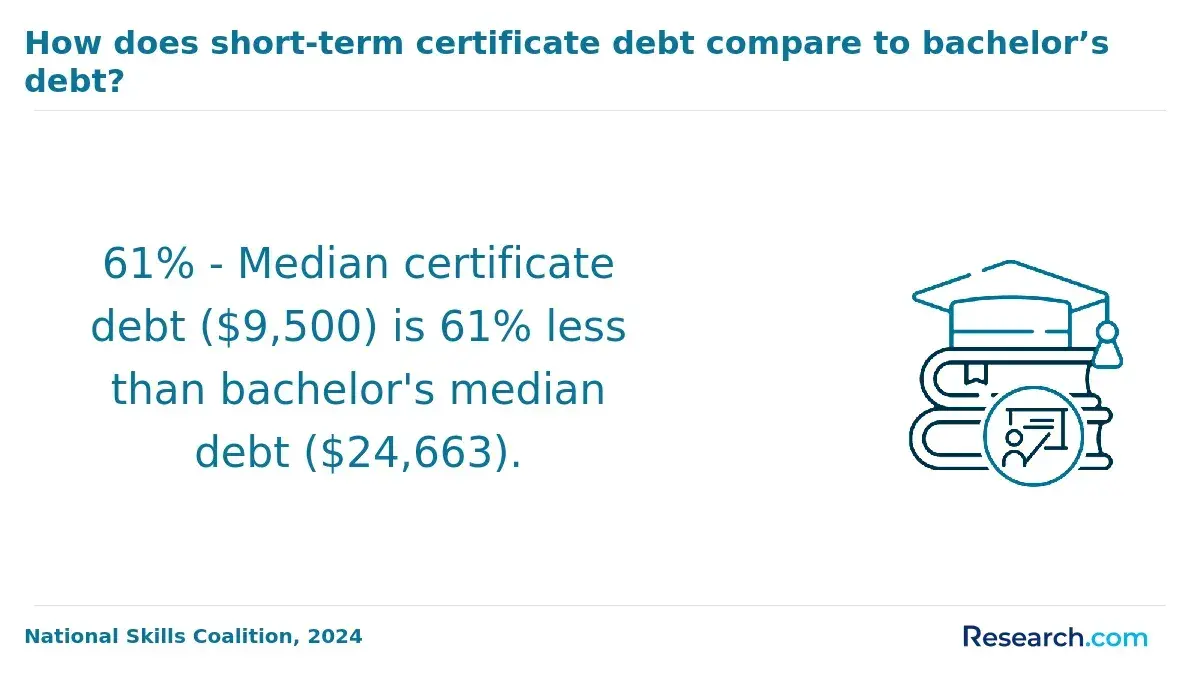
Tuition for Criminal Justice doctorate programs varies widely, and national datasets do not cleanly separate doctoral Criminal Justice tuition by online versus on-campus format. The most reliable starting point is to compare graduate tuition by institution type, then verify the actual per-credit or per-term rate for each program you are considering.
NCES graduate tuition and required-fee data released through 2024 shows that institution type can matter more than delivery mode. For 2022-23, average graduate tuition and required fees were approximately:
- $12,600 at public institutions
- $30,000 at private nonprofit institutions
Those figures are broad graduate averages, not Criminal Justice doctorate price quotes. Use them as a benchmark, then compare the specific doctorate's tuition, fees, residency costs, and total credits. A lower per-credit rate can still produce a high total cost if the program requires more credits or charges major dissertation continuation fees.
When comparing tuition, also check whether online students pay in-state, out-of-state, or special online tuition. Some public universities charge online doctoral students the same rate regardless of residency, while others maintain different rates. Some campus programs may appear more expensive but include tuition remission through assistantships.
For a broader breakdown of how tuition, fees, and delivery model affect justice-related programs, a guide to criminal justice degree price can help you build a side-by-side cost worksheet. At the doctoral level, adapt that worksheet to include dissertation fees, research travel, conference costs, and lost income.
Cost of attendance includes more than tuition. It can include fees, books, software, travel, housing, commuting, childcare, health insurance, dissertation expenses, professional conferences, and the income you may give up if you reduce work hours or relocate.
The table below shows the cost categories that commonly differ by format. It is useful because the cheaper-looking option on tuition alone may not be the cheaper option once your full doctoral budget is calculated.
| Cost category | Online format | On-campus format | Decision point |
| Tuition | May use online, flat, or residency-neutral rates | May use in-state, out-of-state, or cohort tuition | Compare total credits, not just per-credit price |
| Campus fees | May be lower, but technology or online course fees may apply | May include facilities, activity, health, transportation, and campus service fees | Ask for a full fee schedule by term |
| Travel | Usually lower unless residencies, defenses, or conferences are required | Usually includes commuting or relocation costs | Include parking, fuel, airfare, hotels, and meals |
| Housing | Often no relocation required | May require moving near campus | Compare local cost of living before deciding |
| Income impact | Often easier to keep full-time employment | May require reduced work hours, especially with assistantships | Estimate lost wages over the full program length |
| Funding access | Federal aid may apply if eligible, but assistantships may be limited | More likely to include teaching or research assistantships at some universities | Ask whether funding differs by format |
One common mistake is comparing only tuition and ignoring the opportunity cost of time. An on-campus program with an assistantship may reduce tuition but require lower-paid teaching or research work. An online program may cost more out of pocket but allow you to keep a professional salary while studying.
To estimate your true cost, build a three-column budget: tuition and fees, living or travel costs, and income changes. Then compare the total over the expected completion timeline, not just the first year.
Criminal Justice employers generally care less about the classroom format and more about the credibility of the institution, relevance of the research, leadership experience, writing ability, data skills, and fit for the role. This is especially true for applied roles in justice administration, policy analysis, agency leadership, corrections management, program evaluation, and public safety consulting.
For faculty roles, format may receive closer scrutiny because hiring committees often evaluate research output, teaching experience, dissertation quality, publications, conference participation, and faculty references. An online doctorate can still be competitive, but applicants may need to be especially intentional about publishing, presenting research, and building academic networks.
Employer perception tends to be strongest when the program has clear signals of quality. Before enrolling, evaluate whether the doctorate will help you demonstrate the following:
- Regional accreditation and a recognizable university name on the transcript and diploma.
- Strong research methods training, including statistics, qualitative methods, evaluation, and ethics.
- A dissertation or applied project tied to real Criminal Justice problems and defensible evidence.
- Faculty mentors with relevant publications, agency experience, or policy expertise.
- Opportunities to present, publish, teach, consult, or participate in professional associations.
Employers in adjacent public safety and compliance fields also evaluate specialized training and applied expertise, which is why students comparing justice leadership with safety, risk, or regulatory roles may also review options such as the best online environmental health and safety programs. The broader lesson is the same: format matters less when the credential is accredited, skill-rich, and aligned with the job.
Program format can influence job prospects indirectly, but it usually does not act alone. The bigger career drivers are research quality, professional experience, faculty mentorship, publications, teaching experience, data skills, leadership record, and whether the doctorate matches the role you want.
BLS wage data updated for 2024 shows that doctoral-level career paths in this field vary widely by role. For example, postsecondary teaching, public administration, research, consulting, and executive justice leadership follow different hiring criteria, salary structures, and advancement timelines.
That means you should judge the degree by your target job market, not by a single salary figure. Online programs may support advancement for current professionals who want to move into executive leadership, policy, consulting, or teaching while staying employed.
On-campus programs may be stronger for students who want a traditional academic career because they may provide teaching assistantships, research apprenticeships, faculty coauthorship, and daily exposure to scholarly networks.
Use this career-fit checklist when comparing formats. It helps connect the doctorate to actual job requirements instead of relying on assumptions about prestige or convenience.
- If your goal is university faculty work, prioritize dissertation mentorship, research productivity, teaching experience, and faculty placement history.
- If your goal is agency leadership, prioritize applied research, policy evaluation, organizational leadership, and the ability to study while employed.
- If your goal is consulting or policy analysis, prioritize quantitative methods, program evaluation, grant writing, publication opportunities, and portfolio-building projects.
- If your goal is career change, prioritize internships, fieldwork access, alumni networks, and employer-recognized specialization.
- If your goal is promotion in your current agency, ask supervisors or HR whether the doctorate's format, accreditation, and institution meet advancement criteria.
Do not assume that an online doctorate expands opportunities automatically. It can be valuable when it adds advanced expertise, but it should be paired with visible accomplishments: publications, presentations, policy reports, leadership outcomes, or measurable agency improvements.
How do you choose between online and on-campus Criminal Justice doctorate programs?
Choose the format that best supports your career goal, research topic, learning style, budget, and life constraints. The right choice is the one you can complete with strong mentorship and a credible scholarly or professional outcome.
Start by narrowing your goal. A future professor should weigh faculty research fit, teaching opportunities, and publication support heavily. A working police, corrections, courts, or policy professional should weigh flexibility, local fieldwork, employer tuition support, and applied dissertation options.
A student still building foundational credentials may want to compare earlier pathways, including the best online associate degree programs in criminal justice, before mapping a long-term route to doctoral study.
Follow this decision process before applying. It turns a broad format preference into a practical shortlist.
- Define your primary outcome: faculty career, agency leadership, consulting, research, policy, promotion, or career change.
- Verify regional accreditation and confirm that the online and on-campus options carry the same institutional recognition.
- Compare total cost of attendance, including tuition, fees, travel, residencies, relocation, assistantships, and lost income.
- Review faculty research fit and identify at least two potential dissertation mentors before applying.
- Ask how dissertation milestones, committee selection, defenses, and research support work for each format.
- Confirm fieldwork, residency, internship, or campus attendance requirements in writing.
- Ask about recent student outcomes, including completion patterns, job placements, publications, promotions, and time to degree.
- Speak with current students or alumni in the same format you are considering.
Watch for red flags regardless of format. Be cautious if a program will not disclose tuition and fees, has vague dissertation support, lacks faculty with Criminal Justice research expertise, pressures you to enroll quickly, avoids accreditation questions, or promises career outcomes that no degree can guarantee.
In simple terms, choose online if you need geographic flexibility, plan to keep working, and can stay disciplined without constant in-person structure. Choose on campus if you want immersive research culture, teaching experience, intensive faculty access, and are willing to relocate or adjust work around a campus schedule.
Other Things You Should Know About Criminal Justice
Usually, diplomas list the degree and institution rather than the delivery format, but policies vary by university. Ask the registrar how the diploma and transcript identify the program before enrolling.
They are often similar, especially at the same university. Common requirements include a master's degree, transcripts, recommendations, a statement of purpose, writing sample, resume, and research interests.
Some programs allow limited doctoral transfer credit, but policies vary. Credits usually must be recent, graduate-level, relevant, and approved by the program director or graduate school.
A PhD is usually better for research-intensive academic careers, while a professional doctorate may fit leadership, policy, consulting, or applied agency roles. The better choice depends on your target job.
- Best Online Criminal Justice Degrees https://www.onlineu.com/degrees/criminal-justice
- Top Online Criminal Justice Degrees https://www.criminaljusticeprograms.com/online-criminal-justice-degrees/
- Find Top Online Bachelor's In Criminal Justice Programs https://www.accreditedschoolsonline.org/criminal-justice/bachelors/
- Recognized Institutions https://transcriptresearch.com/pages/recognized-institutions
- Examining Employers’ Perceptions of Online Credentials - Ithaka S+R https://sr.ithaka.org/publications/examining-employers-perceptions-of-online-credentials/
- Employers' Perceptions of Online University Degrees and ... https://journals.um.si/index.php/oe/article/view/2425/2054
- Online Criminal Justice Degrees (Types, Benefits & FAQ) https://www.allcriminaljusticeschools.com/criminal-justice/criminal-justice-online-degree/
- Advantages of an Online Master's in Criminal Justice Degree https://www.widener.edu/academics/graduate-studies/masters-criminal-justice-mcj-degree/advantages-online-masters-criminal-justice-degree