2027 Online Public Relations Degree Programs With No Letters of Recommendation Required

Co-Founder and Chief Data Scientist
Applicants who lack recent academic or workplace references may want an online public relations degree without recommendation letters, but simplified admissions still require careful comparison. The National Center for Education Statistics reported that more than half of U.S. postsecondary students took at least one distance education course in fall 2022, underscoring how common online study has become.
This guide explains what "no letters required" actually means, what schools assess instead, and how to compare accredited programs, costs, timelines, and career fit before applying.
Key Things You Should Know
- "No letters of recommendation required" means the application does not require references for the specific online Public Relations program; it does not mean transcripts, minimum GPA rules, identity verification, essays, or placement requirements disappear.
- Most no-recommendation options are undergraduate communication, strategic communication, or public relations pathways. Evaluate the institution's recognized accreditation, curriculum, faculty, total price, and transfer policy - not admissions convenience alone.
- Public relations specialists had a median annual wage of $69,780 in May 2024, according to the U.S. Bureau of Labor Statistics; a degree can support entry into the field, but internships, writing samples, digital skills, and location also affect opportunities.
Which Online Public Relations Degree Programs Require No Letters of Recommendation?
Programs that clearly advertise "no recommendation letters" are more common at the bachelor's level than in selective master's programs. Many schools deliver Public Relations coursework through a broader online communication, strategic communication, journalism, or marketing degree rather than a standalone PR major. Applicants should confirm the requirement for their intended degree, term, and applicant type because transfer, international, and graduate applicants can face different rules.
The examples below illustrate the types of online undergraduate pathways worth reviewing. Admission policies can change, so treat this as a starting shortlist and verify the current program-specific checklist with the university before paying an application fee.
| Online pathway to investigate | Typical PR-focused study | Recommendation-letter point to verify | Best fit |
| Bachelor's in communication with a public relations concentration | Media writing, campaigns, audience analysis, crisis communication | Whether the undergraduate application lists letters as not required for first-year and transfer applicants | Students seeking a broad communication foundation |
| Bachelor's in strategic communication | Brand messaging, digital content, social media, research, campaign planning | Whether references are optional rather than mandatory | Working adults and career changers interested in integrated communications |
| Bachelor's in public relations or journalism/public relations | Press materials, media relations, ethics, PR writing, portfolio development | Whether a portfolio, essay, or interview replaces references | Students wanting a more specialized PR curriculum |
| Degree-completion communication program | Upper-division communication and professional electives | Whether transfer applicants need only official college transcripts | Applicants with substantial prior college credit |
Search an institution's official admissions page and the program catalog separately. A general university application may omit letters, while a competitive honors track, scholarship, internship placement, or graduate pathway may request them later. Students considering career-focused majors can also compare communication outcomes with other online programs that pay well before committing to a field.
Use the following steps to establish whether a school truly has a no-letter policy for you:
- Choose the exact online degree, concentration, entry term, and applicant category.
- Read the official admissions checklist and the program's catalog page, including footnotes.
- Look for the words "required," "optional," "recommended," and "waived," which have different meanings.
- Ask admissions for written confirmation that recommendation letters are not required for your application.
- Save a copy of the current checklist before submitting your application.
What Are the Admission Requirements for Online Public Relations Degree Programs With No Recommendation Letters?
A no-letter policy removes one document, not the school's responsibility to assess academic readiness. For an online bachelor's degree, the core application usually includes an application form, official high school or college transcripts, and proof of graduation or a recognized equivalent. Schools may use a minimum cumulative GPA, placement measures, prerequisite coursework, or a personal statement.
The table distinguishes common requirements by degree level. Individual schools set their own standards, and "test optional" does not necessarily mean that every applicant is exempt from submitting test scores.
| Application item | Online bachelor's program | Online master's program | Why it may matter |
| Official transcripts | Usually required | Usually required from all prior colleges | Shows completed coursework, grades, and degree eligibility |
| Minimum GPA | May be required or reviewed holistically | Commonly required or strongly considered | Helps the school judge readiness for academic writing and research |
| Personal statement | Sometimes required | Commonly required | Explains goals, preparation, and fit when references are absent |
| Résumé | Sometimes requested | Frequently requested | Documents communications experience, internships, and relevant skills |
| Standardized test score | Often optional or not used | May be optional, waived, or required by program | Policies vary substantially by institution and applicant profile |
| Recommendation letters | May be not required | Less often omitted, especially in selective programs | Always verify the program-level rule |
Applicants should not assume a school will overlook a weak transcript because it does not request letters. If your GPA is below a published threshold, ask whether the institution offers conditional admission, a review process, or preparatory coursework. Submit every required record promptly; missing transcripts are among the most common causes of delayed decisions.
Are Online Public Relations Programs With No Letters of Recommendation Easier to Get Into?
Not necessarily. Removing recommendation letters reduces application friction, particularly for adult learners, military-affiliated students, and applicants who have been away from school. It does not show that the curriculum is less rigorous or that admission is automatic. A program can use transcripts, GPA, prerequisite grades, writing samples, and enrollment capacity to make admission decisions.
At the undergraduate level, institutions with broad-access missions may use straightforward eligibility criteria. At the graduate level, an online strategic communication or public relations program may waive letters but still expect a completed bachelor's degree, solid academic performance, a statement of purpose, and professional experience. Selectivity also differs by term and by whether applicants are first-year, transfer, or degree-completion students.
Compare the trade-off rather than treating easier paperwork as a quality signal. Students who need a faster undergraduate route may find useful context in these accelerated online degrees, but an accelerated schedule can increase weekly workload and may not suit every learner.
These warning signs can help applicants avoid a poor decision:
- Do not interpret "no letters required" as guaranteed acceptance.
- Do not choose solely by a low admissions barrier without reviewing curriculum, faculty access, and career support.
- Do not rely on a third-party listing when the university's current application page says something different.
- Do not confuse institutional accreditation with a marketing claim about approval or recognition.
Recommendation letters traditionally offer outside evidence of an applicant's reliability, communication ability, and readiness. When a program does not require them, admissions staff typically rely more heavily on materials the applicant can document directly. This can be useful for applicants with professional experience but no recent professor or supervisor available to serve as a reference.
Schools may evaluate the following evidence in combination, rather than using any one item as a complete substitute:
- Official transcripts and cumulative GPA, including grades in English, communication, research, or media-related courses.
- A personal statement that connects career goals to public relations study and demonstrates clear, audience-aware writing.
- A résumé showing relevant employment, volunteer work, military experience, campus activities, freelance writing, or communications responsibilities.
- A portfolio of writing, campaign, content, or design work when the program requests or permits one.
- Prerequisite completion, especially for upper-division or graduate coursework.
- An interview, placement assessment, or supplemental questionnaire at institutions that use one.
Strengthen the materials you control. Tailor your statement to the program's curriculum, proofread it carefully, and quantify responsibilities only when you can support them. A short portfolio can demonstrate practical ability, but do not submit one unless the school invites it or accepts optional supporting materials. Public relations work increasingly intersects with social listening, analytics, AI-assisted drafting, and reputation management; applicants should be prepared to show ethical judgment and strong editing skills, not just familiarity with tools.
Start with institutional accreditation recognized by the U.S. Department of Education or the Council for Higher Education Accreditation. Institutional accreditation is especially important for federal aid eligibility, transfer-credit evaluation, graduate-school plans, and employer confidence. Public relations does not generally require a state professional license, so there is no universal programmatic PR accreditation equivalent to licensure-oriented fields.
A legitimate online program should identify the degree-granting institution, its accreditation status, tuition structure, faculty, curriculum, complaint process, and student-support services. For communication programs, additional quality signals can include a curriculum with PR writing, research, ethics, digital communication, campaign planning, and experiential learning.
Before enrolling, complete these checks through official sources and direct questions to the school:
- Confirm the institution's accreditation record in the federal accreditation database and compare the listed school name with the name on the enrollment agreement.
- Read the online program catalog to confirm the exact degree title, required credits, concentration, and learning format.
- Ask whether online students receive the same diploma wording as campus students and whether required experiences can be completed remotely or locally.
- Request the full cost of attendance, including technology, course-material, graduation, and possible residency fees.
- Review faculty biographies and ask how students receive feedback on writing, campaigns, and portfolio work.
- Check transfer-credit rules and withdrawal/refund policies before sending tuition.
Be cautious if a provider promises a degree in an implausibly short time, will not identify its accreditor, pressures you to enroll immediately, or refuses to provide a written total-cost estimate. A streamlined application is not itself a red flag; lack of transparent academic and financial information is.
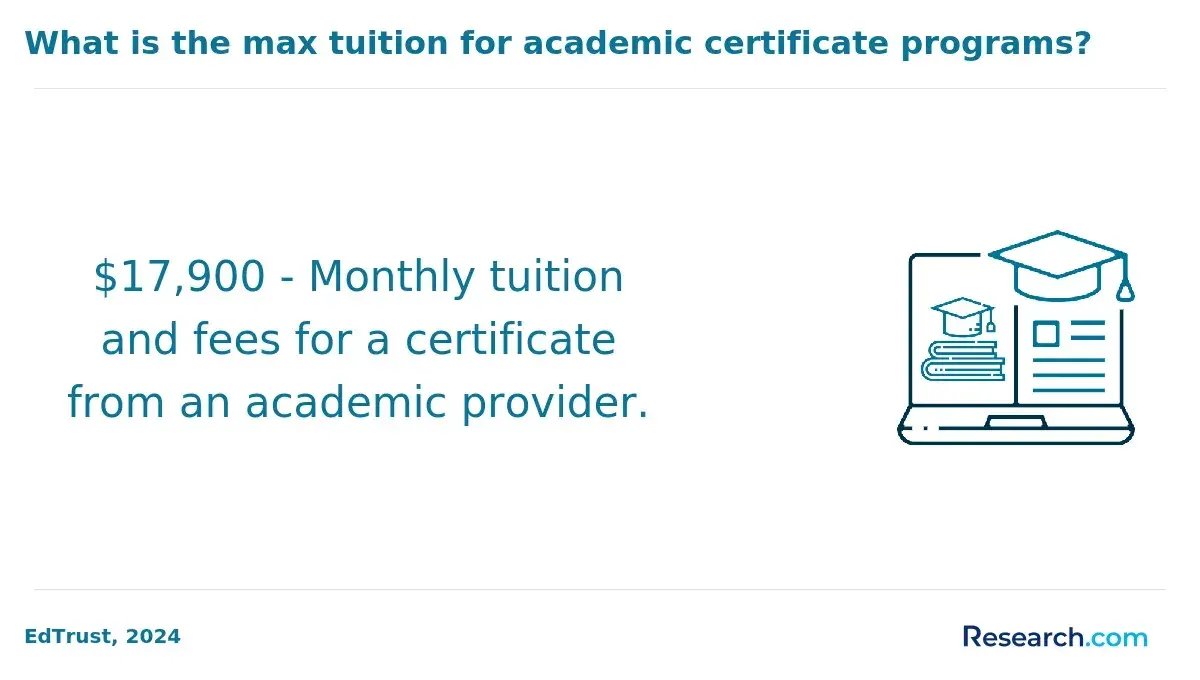
No-recommendation admissions do not determine tuition. Cost depends on whether the institution is public or private, resident status rules, number of transfer credits accepted, delivery fees, and whether a program charges a flat term rate or per-credit tuition. As a broad U.S. comparison point, College Board reported average published tuition and fees of $11,610 for in-state students at public four-year colleges in the 2024-25 academic year. That benchmark is not an online PR program price, but it helps put institutional quotes in context.
Instead of comparing only a per-credit figure, compare the estimated cost to graduation. The following cost components should appear in a written estimate.
| Cost factor | What to compare | Potential effect on total cost |
| Tuition model | Per credit versus flat rate per term | A flat rate can favor students able to take a heavier course load |
| Transfer credit award | Maximum accepted credits and course equivalencies | More applicable credits can reduce remaining tuition and time |
| Mandatory fees | Technology, distance-learning, student-service, and graduation fees | Fees can change the apparent value of a low tuition rate |
| Materials and technology | Books, subscriptions, webcam, software, and reliable internet needs | Often paid separately from tuition |
| Residency or field experience | Travel, lodging, and local project expenses | May apply even to primarily online programs |
Ask for net-price information after grants and scholarships, not merely the published rate. Students comparing communications with more quantitatively focused business paths may also explore online finance degrees; earnings potential and course requirements differ, so the best option depends on interests and career goals.
Yes. Admissions simplicity does not prevent financial aid eligibility. Students in an eligible program at an institution that participates in federal student aid programs can generally submit the Free Application for Federal Student Aid (FAFSA) for grants, work-study consideration, and federal loans, subject to federal eligibility rules. Enrollment intensity, satisfactory academic progress, prior borrowing, dependency status, and program eligibility can affect the amount and type of aid available.
Online learners should also ask about institutional scholarships, employer tuition assistance, military education benefits, and state aid. Some scholarships request references even when the degree application does not, so applicants should read each scholarship's requirements independently.
Take these practical steps before accepting aid:
- Submit the FAFSA early and list every institution you are seriously considering.
- Compare each school's aid offer by grants, scholarships, work-study, and loans rather than looking only at the total.
- Ask whether online enrollment changes eligibility for institutional aid or course-load requirements.
- Confirm the amount you would need to borrow for the entire degree after transfer credits and expected grants.
- Review loan terms and repayment obligations before accepting optional federal or private loans.
Financial aid should support a realistic completion plan. A lower monthly payment during enrollment can still lead to a higher overall borrowing need if a student takes extra credits or repeats courses that do not apply to the degree.
Most online bachelor's degrees require about 120 semester credits. A student beginning with no transfer credit often needs approximately four years when attending full time, while part-time pacing takes longer. Degree-completion programs can be shorter for students bringing in accepted associate-degree or prior college credits. An online master's degree commonly requires fewer credits but may include sequenced courses or a capstone that limits how quickly students can finish.
Admissions requirements and completion speed are separate issues. A program that does not request references can still have fixed start dates, course prerequisites, group projects, internships, or a final campaign portfolio. Confirm whether classes are asynchronous, live, or mixed, because scheduled sessions can affect a working student's pace.
The table summarizes the variables most likely to alter the timeline.
| Timeline factor | How it affects completion | Question to ask |
| Accepted transfer credits | Reduces the number of courses remaining when credits apply to requirements | How many credits will apply after an official evaluation? |
| Course format | Short terms can speed progression but increase weekly workload | How many hours per week does each course typically require? |
| Course sequencing | Prerequisites may delay advanced PR or capstone courses | Can required courses be taken every term? |
| Internship or practicum | May require advance planning and local placement | Is an internship required, optional, or arranged by the student? |
| Personal schedule | Work and caregiving can make a lower course load more sustainable | Can students pause, change pace, or reenter without losing progress? |
Choose an accelerated format only if you can consistently meet its workload. Students researching short-format options in other disciplines may find examples in accelerated mental health counseling programs online, although counseling has separate clinical and licensure requirements that do not apply to public relations.
Usually, yes. Transfer review is generally based on official transcripts, course content, credit level, grades, accreditation or institutional recognition, and how courses fit the receiving school's requirements - not on recommendation letters. A no-letter admissions policy may make the application simpler, but it does not guarantee that credits will transfer or satisfy major requirements.
Students can often transfer general education courses such as composition, public speaking, psychology, sociology, economics, or introductory media studies. PR major courses are evaluated more closely because schools may require comparable learning outcomes, recent coursework, or a minimum grade. Credit for prior learning, industry training, military coursework, or examinations may be available at some institutions, but policies vary.
Before enrolling, obtain an official transfer evaluation whenever possible. Compare the evaluation against the degree audit and ask which courses satisfy general education, major, concentration, and elective requirements. Keep syllabi and course descriptions for disputed or unclear equivalencies. Do not withdraw from a current program based only on an informal estimate from a recruiter or website transfer tool.
How Should You Compare Online Public Relations Degree Programs That Do Not Require Letters of Recommendation?
The right program is one that combines accessible admissions with the academic preparation, cost, schedule, and career support you need. A no-recommendation requirement is especially helpful for applicants without convenient references, but it should be one criterion in a broader comparison. Public relations professionals may work in agencies, corporations, nonprofits, government, healthcare, education, or as independent consultants; the strongest curriculum for you should match your intended setting.
Use this comparison framework to narrow choices before applying.
| Comparison category | What a strong answer looks like | Why it matters |
| Admissions policy | Written confirmation that letters are not required for your applicant type | Prevents late surprises and incomplete applications |
| Accreditation and transparency | Recognized institutional accreditation and a clear online catalog | Supports aid, transfer, and credibility checks |
| Curriculum | PR writing, media relations, digital strategy, research, ethics, and campaign work | Builds skills employers can evaluate through work samples |
| Applied learning | Portfolio, client project, internship support, or simulations | Helps translate coursework into demonstrable experience |
| Student support | Online advising, tutoring, library access, career services, and technical support | Can influence persistence and completion |
| Total cost and aid | Written estimate after transfer credit and likely grants | Shows the realistic financial commitment |
| Schedule | Course availability and pacing compatible with work and caregiving | Reduces the risk of delayed completion |
Ask admissions representatives direct, documentable questions: Are recommendation letters required, optional, or waived for my application type? What is the complete graduation cost after my transfer evaluation? Which PR courses require live attendance? How are internships supported? What portfolio work will I complete? A school that answers clearly gives you better information for a high-stakes decision.
If you are comparing admissions flexibility across career-oriented fields, resources on MSW programs with high acceptance rate can illustrate why program-specific requirements, field placements, and professional outcomes must be evaluated separately in each discipline.
An online PR degree is likely a good fit if you enjoy persuasive writing, relationship building, research, ethical decision-making, and adapting messages for different audiences. It may be a weaker fit if you want a role centered mainly on visual design, coding, or licensed clinical practice. In those cases, compare adjacent majors and job descriptions before applying.
Other Things You Should Know About Public Relations
Often, yes. No-recommendation programs can be particularly practical for adults without recent academic references. You will still typically need official transcripts and proof of prior education. A résumé and personal statement can help explain your professional background and goals when requested.
Yes. "Optional" means you may submit letters, while "not required" means the school does not need them to complete your application. Optional letters may still be useful when they add specific, credible evidence of writing ability, leadership, or communications experience. Do not send them unless the school permits additional materials.
Useful skills include clear writing, editing, media research, audience analysis, social media strategy, campaign planning, presentation, basic analytics, and crisis communication. Employers also value ethical judgment because PR professionals influence public understanding and organizational reputation.
Employers commonly focus on the degree-granting institution, relevant skills, experience, and portfolio quality. Confirm that the school is properly accredited and that the program provides opportunities to produce polished writing and campaign work. Your transcript or diploma may not state the delivery format, but policies vary by institution.
- Program Certification & Accreditation https://www.commissionpred.org/the-professional-bond/program-certification-accreditation/
- M.A. in Communication and Public Relations https://www.saintpeters.edu/academics/graduate-programs/master-of-arts-communication-and-public-relations/admission-requirements/
- Admissions Requirements for Master's in Communication Programs (Campus, Online) https://www.mastersincommunications.com/faqs/admissions-requirements
- Comparing College Offers | FAFSA: The How-To Guide for High School Students https://understandingfafsa.org/comparing-college-offers/
- 2025 Most Affordable Online Public Relations Degrees https://www.onlineu.com/most-affordable-colleges/public-relations-degrees
- Online Public Relations Degree Programs: Bachelors, Masters, MBA https://www.onlineeducation.com/communication/faqs/online-public-relations-degree-programs
- What Financial Aid Offers Don't Tell You About the Cost of College | U.S. GAO https://www.gao.gov/blog/what-financial-aid-offers-dont-tell-you-about-cost-college
- Financial Aid Terms | PA State System of Higher Education https://www.passhe.edu/students/financial-aid-terms.html
- Making Sense of Student Financial Aid https://feea.org/2026/02/making-sense-of-student-financial-aid/
- Best Master's in Public Relations in New York (2027) https://www.mastersincommunications.org/online-public-relations/new-york/