2027 Best Online Public Relations Degree Programs at Nonprofit Universities

Co-Founder and Chief Data Scientist
Choosing an online public relations degree means balancing affordability, credible academic quality, and career relevance. The U.S. Bureau of Labor Statistics reports that public relations specialists had a $69,780 median annual wage in May 2024, making strong communication training valuable across industries.
This guide helps prospective students compare nonprofit university programs, assess online formats and total costs, verify accreditation, and decide whether an associate, bachelor's, or graduate degree supports their intended career path.
Key Things You Should Know
- For most entry-level public relations specialist roles, an institutionally accredited bachelor's degree with writing, media relations, digital communication, and internship opportunities is the most practical starting point.
- Nonprofit status does not determine value by itself: compare total price, transfer-credit limits, online scheduling, faculty access, career support, and outcomes before enrolling.
- Public relations specialists had a $69,780 median annual wage in May 2024, while employment is projected to grow 5% from 2024 to 2034; students should build digital, analytical, and AI-aware communication skills alongside traditional media relations.
What Makes an Online Public Relations Degree Program at a Nonprofit University Different?
An online public relations degree teaches students how organizations build trust with audiences, journalists, customers, employees, investors, and communities. Typical work includes writing news releases and speeches, managing media inquiries, planning campaigns, monitoring public opinion, responding to reputational issues, and using digital channels to communicate consistently.
Nonprofit universities include public institutions and private nonprofit institutions. Their distinguishing feature is organizational structure: revenue is generally reinvested in the educational mission rather than distributed to owners or shareholders. That structure can matter, but it does not automatically make one program more affordable, rigorous, or career-focused than another.
Students should compare program design rather than relying on institutional labels. The following comparison clarifies the trade-offs commonly found across nonprofit options:
| Program option | Typical fit | Potential advantage | Important trade-off to check |
| Public nonprofit university | Students seeking lower in-state tuition or a large university network | May offer lower resident tuition and broad electives | Out-of-state online tuition, course availability, and large class sizes can vary |
| Private nonprofit university | Working adults seeking structured support or smaller cohorts | May provide predictable terms, advising, and student services | Sticker tuition can be higher, although institutional aid may reduce net cost |
| Online bachelor's completion program | Transfer students with prior college credits or an associate degree | Can shorten time to graduation if credits transfer | Major prerequisites and transfer-credit caps may delay completion |
| Online master's program | Graduates seeking strategy, leadership, or specialized communication roles | Can deepen research, analytics, and management preparation | It is not usually required for entry-level PR roles and may cost more |
At the undergraduate level, an associate degree can introduce communication fundamentals, but employers commonly prefer a bachelor's degree for public relations specialist positions. A bachelor's is usually the most versatile choice for new entrants. A master's degree can make sense for experienced professionals changing into strategic communication, corporate communication, or public affairs, while doctoral study is primarily suited to research, university teaching, or advanced scholarship.
A strong program should blend general education with applied communication practice. Look for courses in news and feature writing, media relations, campaign planning, social media strategy, communication research, crisis communication, visual content, ethics, and measurement. Programs that only offer broad communication courses may still be useful, but students should confirm that enough coursework is specifically relevant to public relations.
How Can Students Verify Accreditation for an Online Public Relations Degree at a Nonprofit University?
Accreditation is one of the first checks to make because it affects credit transfer, federal financial aid eligibility, employer confidence, and graduate-school options. Institutional accreditation evaluates the university as a whole. Programmatic accreditation evaluates a particular academic discipline and is an added quality signal, not a universal requirement for public relations employment.
For U.S. students, the most reliable verification method is to confirm that the institution is recognized by an accreditor acknowledged by the U.S. Department of Education or the Council for Higher Education Accreditation. Do not rely only on a school's marketing language or an unfamiliar accreditor's seal.
Use these steps before submitting an application. They help distinguish a legitimate online degree from a program with unclear recognition or limited transfer value.
- Find the university in the U.S. Department of Education's Database of Accredited Postsecondary Institutions and Programs.
- Confirm the accrediting agency and review the institution's current accreditation status, including any sanctions or warning notices.
- Ask the registrar whether the online public relations degree is awarded by the accredited institution and appears on the same transcript as campus programs.
- Check whether the communication school or program holds voluntary discipline-specific recognition, such as accreditation associated with journalism and mass communication education.
- Ask prospective graduate schools or employers about their expectations if a future application depends on specialized accreditation.
Students should not confuse accreditation with nonprofit status. A nonprofit university can have a strong or weak program, and a recognized institution may offer both excellent and less relevant concentrations. Accreditation is a baseline safeguard; curriculum, faculty, experiential learning, and student outcomes still determine whether the degree fits a student's goals.
A common red flag is a school that avoids naming its accreditor, promises unusually fast degrees without explaining credit requirements, or pressures applicants to enroll before providing a transfer evaluation. Also ask whether the degree is a Bachelor of Arts, Bachelor of Science, or communication degree with a public relations concentration, since the title can affect how easily employers understand the credential.
How Rigorous Are Online Public Relations Degree Programs at Nonprofit Universities?
A credible online public relations degree should be academically comparable to its campus counterpart, with clear learning outcomes, graded writing assignments, research-based projects, and faculty feedback. Online delivery changes where learning occurs; it should not reduce expectations for persuasive writing, ethical reasoning, strategic planning, or audience analysis.
Most bachelor's programs require about 120 credits, including general education, communication coursework, and electives. Full-time students often finish in roughly four years, while transfer students may finish faster depending on accepted credits. Part-time pacing can better suit working adults but extends the completion timeline.
Rigorous programs use applied assessments rather than relying only on multiple-choice quizzes. Students may develop media kits, campaign plans, stakeholder maps, crisis-response statements, social content calendars, analytics reports, and professional portfolios. These projects matter because public relations hiring managers often want evidence that an applicant can write clearly and make strategic choices for a defined audience.
The table below shows what meaningful academic rigor can look like in an online PR curriculum and what students should request before enrolling:
| Curriculum component | What strong programs typically require | Why it matters |
| Professional writing | Repeated drafting, editing, style guidance, and instructor feedback | PR work depends on clear, accurate writing under deadlines |
| Research and measurement | Audience research, survey interpretation, media monitoring, and campaign evaluation | Employers increasingly expect communicators to connect activity to outcomes |
| Digital communication | Social media strategy, content planning, digital analytics, and platform-specific writing | Modern campaigns often combine earned, owned, and shared media |
| Ethics and crisis communication | Case analysis, disclosure standards, risk assessment, and response planning | Reputation work requires sound judgment, especially when information changes quickly |
| Experiential learning | Internship, practicum, client project, simulation, or portfolio capstone | Applied work can provide concrete material for job applications |
Accelerated terms can be rigorous, but they concentrate the workload into fewer weeks. Students considering accelerated online degrees should confirm weekly reading, writing, group project, and exam expectations before choosing a faster pace. Acceleration is best for organized students with sufficient time each week, not simply for those who want the shortest possible path.
AI tools are also changing communication work and coursework. A quality program should teach students to use technology responsibly for brainstorming, transcription, research support, and workflow efficiency while requiring fact-checking, source evaluation, disclosure when required, and original judgment. Programs that ignore digital ethics or verification may leave students underprepared for current employer expectations.
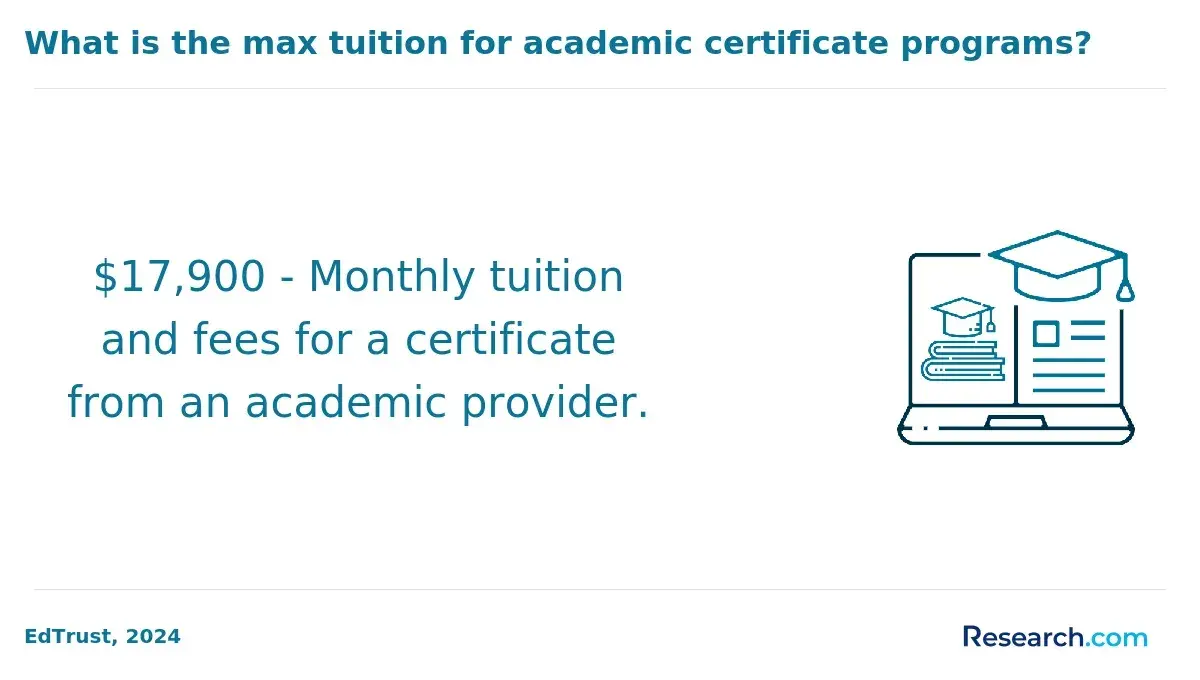
The advertised per-credit rate is only one part of cost. Tuition can differ by residency, undergraduate or graduate level, transfer status, course load, and whether online students pay technology, graduation, distance-learning, or course-material fees. Students should compare a written estimate for the entire credential, not one term.
National averages provide useful context but cannot predict an individual program's bill. For the 2024-25 academic year, average published tuition and fees at U.S. public four-year institutions were $11,610 for in-state students, compared with $43,350 at private nonprofit four-year institutions. These are broad campus-based averages, not online public relations program prices; financial aid, residency rules, and online pricing can substantially change the final amount.
This cost framework shows the line items that belong in a realistic comparison:
| Cost item | How to evaluate it | Potential decision impact |
| Tuition per credit | Multiply the rate by the remaining required credits after the transfer evaluation | A lower rate may not save money if fewer prior credits are accepted |
| Mandatory fees | Request technology, distance learning, student service, and graduation fee schedules | Fees can make similarly priced programs materially different |
| Books and course materials | Ask whether digital materials, software, or access codes are included | Communication, production, and analytics courses may require additional tools |
| Experiential learning costs | Check internship travel, background checks, professional memberships, or residency requirements | Online study can still involve local or in-person expenses |
| Opportunity cost | Consider reduced work hours, time to completion, and employer tuition benefits | The fastest or cheapest tuition option is not always the lowest total financial burden |
Public nonprofit universities may be the strongest value for residents who qualify for in-state rates. Private nonprofit universities may charge more initially but sometimes offer flat online tuition, larger transfer allowances, or institutional scholarships. Ask each school for a net-price estimate based on your residency, transfer credits, and expected course load.
Do not choose public relations solely because it appears less expensive than another business-oriented option. Students also comparing communication with online finance degrees should compare daily job tasks, required quantitative skills, graduation timelines, and likely borrowing—not only tuition. A better investment is the program that supports a realistic career fit and manageable debt.
Eligible online students at accredited nonprofit universities may use many of the same funding sources available to campus students. Federal aid depends on enrollment, program eligibility, satisfactory academic progress, citizenship or eligible noncitizen status, and information reported through the Free Application for Federal Student Aid.
Start with aid that does not need to be repaid, then consider earnings and borrowing. The most useful funding sources typically include the following options:
- Federal Pell Grants for eligible undergraduate students with demonstrated financial need.
- Federal Direct Subsidized and Unsubsidized Loans, subject to annual and aggregate borrowing limits.
- Federal Work-Study, when available through the institution and compatible with the student's location and schedule.
- Institutional scholarships based on merit, need, transfer status, military affiliation, or program enrollment.
- State grants and private scholarships, which may have residency, deadline, or enrollment requirements.
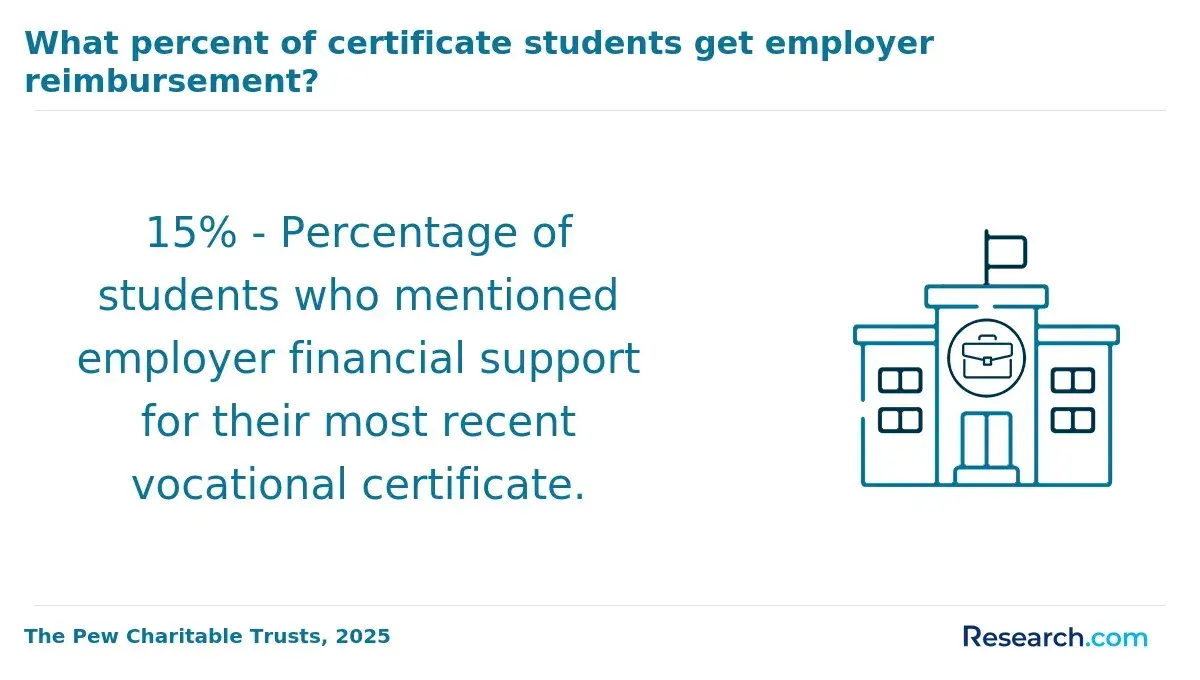
- Employer tuition assistance or reimbursement, particularly for students already working in marketing, communications, government, healthcare, or nonprofit organizations.
Submit the FAFSA early, but do not assume an aid offer is final until the university confirms enrollment and document requirements. Compare grants and scholarships first, then examine loan types, interest, origination fees, repayment terms, and the amount you would need to borrow across the full degree. Private loans generally deserve extra caution because terms and borrower protections can differ from federal loans.
Students changing careers should also evaluate whether the academic path matches the work they want to do. For example, public relations and social work both rely on communication but lead to substantially different training and professional expectations; applicants exploring clinical or social-service routes may need to compare MSW programs with high acceptance rate alongside their intended professional requirements.
A frequent mistake is accepting the maximum offered loan without calculating the remaining balance after grants, employer support, and transfer credits. Request a multi-year borrowing projection and ask whether scholarship renewal depends on minimum enrollment or grade-point-average requirements.
Online public relations programs vary widely in flexibility. Some are asynchronous, allowing students to complete weekly work by deadlines without scheduled class meetings. Others are synchronous or hybrid, requiring live video sessions, group presentations, exams, internships, or short campus residencies. "Online" should never be treated as synonymous with fully self-paced.
Asynchronous study usually works well for students with unpredictable work schedules, provided they can manage reading, drafting, peer feedback, and project deadlines independently. Synchronous classes can offer immediate discussion and networking but may be difficult for students in other time zones or with caregiving responsibilities. Cohort programs may build stronger peer relationships but can offer fewer choices when a required course is unavailable.
Before committing, ask the admissions team and program coordinator these practical questions. The answers reveal whether the format fits your actual week, not just your preferred learning style.
- Are any courses held live, and if so, what days, times, and time zone are used?
- Can students attend part-time, stop out temporarily, or change their course load without losing progress?
- How often are required courses offered, and what happens if a student must repeat or postpone one?
- Does the program require internships, client work, proctored exams, group presentations, or campus visits?
- How long do students typically have access to lectures, software, library resources, and instructor feedback?
- Are summer terms optional, and does accelerated scheduling increase weekly workload?
Online study is especially attractive for working adults, but it is not always the best format for every discipline or career goal. Students interested in helping professions should recognize that training models differ: accelerated mental health counseling programs online may include supervised clinical requirements that public relations degrees generally do not. Compare the required hands-on experience in each field rather than assuming all online degrees follow the same schedule.
Students who need structure may benefit from a cohort, weekly live sessions, and frequent deadlines. Students who need maximum scheduling control should prioritize asynchronous courses, transparent assignment calendars, and local internship options. In either case, plan for regular writing and collaboration time; successful PR coursework cannot usually be completed in occasional short bursts.
Student support can affect whether an online degree is manageable and professionally useful. A nonprofit university may provide the same library, tutoring, accessibility, advising, and career resources to online students as to campus students, but access models differ. Confirm what is included rather than assuming remote learners receive identical services.
For public relations students, the most valuable services are those that support both academic progress and portfolio development. Academic advising should help students sequence prerequisites and understand transfer credits. Writing support should address professional style, revision, grammar, and citation practices. Career support should go beyond a generic job board by helping students translate class projects into résumés, portfolios, networking conversations, and internship applications.
The following services deserve particular attention when comparing otherwise similar programs:
| Service | What to confirm | Why it matters for PR students |
| Dedicated advising | Advisor availability, response times, and expertise with online students | Helps prevent delayed graduation caused by missed prerequisites |
| Writing and research support | Online appointments, feedback scope, and library database access | Supports the polished writing expected in PR portfolios |
| Career services | Virtual coaching, employer events, internship support, and alumni access | Can improve students' ability to identify relevant early-career opportunities |
| Technology support | Evening and weekend help, required software, and device requirements | Reduces disruptions in media production and live presentations |
| Accessibility and wellness services | Accommodation process, telehealth availability, and crisis resources | Supports equitable participation and sustained enrollment |
Ask to speak with a current online communication student or attend a virtual information session. Specific questions about response times, internship help, and access to faculty often provide more useful insight than broad statements about "student-centered" education.
Red flags include unclear ownership of advising, limited online library access, no explanation of how internships are supported outside the university's home region, or career services that do not serve online students. Support quality is especially important for first-generation students, career changers, and students transferring from community colleges.
Yes, an online public relations degree can prepare graduates for communications careers when it provides rigorous writing practice, digital strategy, analytics, ethics, and applied experience. The credential alone is not a job guarantee. Employers commonly evaluate candidates through portfolios, internships, communication samples, relevant technology skills, professional judgment, and the ability to collaborate with diverse stakeholders.
The U.S. Bureau of Labor Statistics projects 5% employment growth for public relations specialists from 2024 to 2034. That is a moderate growth rate, so students should prepare for competition by pairing the degree with a portfolio and targeted experience rather than expecting the major by itself to create opportunities.
Potential roles extend beyond the job title "public relations specialist." This table connects common roles with the competencies students should seek in a program:
| Potential role | Typical responsibilities | Relevant preparation |
| Public relations specialist | Write materials, communicate with media, support campaigns, and monitor public response | Media writing, campaign planning, ethics, and research |
| Communications coordinator | Coordinate internal and external messaging, events, newsletters, and content calendars | Project management, editing, digital communication, and collaboration |
| Social media or content specialist | Plan content, engage audiences, track performance, and maintain brand voice | Platform strategy, analytics, visual communication, and audience research |
| Community relations coordinator | Build relationships with community partners, stakeholders, and local organizations | Interpersonal communication, event planning, cultural awareness, and public affairs |
| Corporate communications associate | Support employee communication, executive messages, reputation initiatives, and issue response | Strategic communication, crisis planning, business writing, and research |
Current PR work increasingly combines earned media with social platforms, search visibility, audience data, influencer relationships, and rapid response to misinformation. Students should look for training in media monitoring, analytics interpretation, content accessibility, search-aware writing, and responsible AI use. They should also learn when automated text is inappropriate: sensitive crisis messages, factual claims, and stakeholder communication require human review and verification.
Students motivated mainly by earnings should compare duties and labor-market fit across several fields. Guides to online programs that pay well can help identify alternatives, but salary should be considered alongside interests, debt, geographic opportunities, and the experience required to advance. Public relations is often a strong fit for people who enjoy writing, relationship building, research, and strategic problem solving.
Build employability while enrolled by completing an internship or supervised client project, joining professional communication organizations, saving revised work samples, and seeking feedback from practitioners. A portfolio with a news release, social campaign, crisis response, audience analysis, and measurement report can demonstrate readiness more clearly than a course list alone.
An institutionally accredited online bachelor's degree from a nonprofit university can prepare students for graduate school if it includes sufficient academic rigor, strong grades, faculty relationships, and applicable coursework. Graduate admissions committees generally focus on the legitimacy of the institution, academic record, prerequisites, writing ability, recommendations, and fit with the proposed program rather than the online format alone.
Public relations graduates may pursue master's programs in strategic communication, communication, integrated marketing communication, public affairs, digital media, business administration, nonprofit management, or related disciplines. The best next degree depends on the intended role. A strategic communication master's can deepen campaign leadership and research skills, while an MBA may be more appropriate for students moving toward management or business operations.
Students considering graduate school should preserve options during their bachelor's program. Take research methods and statistics when available, complete substantial writing projects, maintain relationships with instructors who can write detailed recommendations, and retain copies of major projects. If a target graduate program has prerequisites, verify them before selecting electives.
A master's degree is not necessary for many entry-level PR jobs. It may be a better investment after students gain experience and can identify a specific gap—such as leadership, public affairs, data analysis, or advanced strategy—that graduate study would address. Doctoral programs are usually appropriate for people aiming at academic research or postsecondary teaching, not for routine advancement in agency or corporate PR.
Before applying, review whether the prospective graduate school accepts online coursework, requires standardized tests, expects a writing sample, or has minimum grade-point-average requirements. These requirements vary by institution and can change, so confirmation directly with the admissions office is essential.
How Should Students Compare the Best Online Public Relations Degree Programs at Nonprofit Universities?
The best online public relations degree is the one that meets your academic, financial, scheduling, and career needs with the fewest unresolved risks. A low tuition rate may be less valuable if the school accepts few transfer credits, lacks PR-specific coursework, or offers little career support. A higher-priced option may be justified only when its curriculum, mentorship, flexibility, and outcomes clearly match your goals and borrowing remains manageable.
Start by creating a shortlist of three to five institutionally accredited nonprofit universities. Then compare the same information for every option, using written answers rather than promotional summaries.
- Define your target outcome: entry-level PR, social media, corporate communication, public affairs, a career change, or preparation for graduate school.
- Confirm institutional accreditation and determine whether the degree is a dedicated PR major, a communication major with a PR concentration, or a broader marketing program.
- Request a transfer-credit evaluation and calculate the number of credits remaining, including general education and major prerequisites.
- Obtain a written total-cost estimate that includes tuition, fees, required materials, and likely experiential-learning expenses.
- Review the course sequence for media writing, digital strategy, research, ethics, crisis communication, analytics, and a portfolio-building experience.
- Verify the online format by checking live-session requirements, term length, internship expectations, course frequency, and part-time availability.
- Ask about online-specific advising, tutoring, career coaching, alumni access, internship support, and faculty credentials.
- Compare published retention, graduation, and career-outcome information carefully, recognizing that outcomes can reflect student backgrounds and local labor markets as well as program quality.
- Choose the option that offers the clearest path to completion, manageable borrowing, and experience relevant to your intended role.
Use the comparison matrix below to distinguish a strong overall match from a program that is merely convenient or heavily advertised:
| Comparison factor | Strong-fit indicator | Question to ask |
| Accreditation | Current institutional accreditation from a recognized accreditor | Which accreditor recognizes the university, and what is the current status? |
| Curriculum | PR-specific writing, research, digital strategy, ethics, and capstone work | Can I review the full course sequence and syllabi for required PR courses? |
| Cost and transfer | Clear net-cost estimate and documented transfer decision | How many of my credits apply directly to degree requirements? |
| Flexibility | Scheduling model matches work, family, and time-zone needs | Which courses require live attendance, proctoring, or in-person activity? |
| Career preparation | Portfolio support, experiential learning, and accessible career services | How are online students connected to internships and employers? |
| Graduate-school readiness | Research, writing, faculty access, and transferable academic credits | Will this curriculum meet prerequisites for the graduate programs I may pursue? |
Common mistakes include assuming that nonprofit status guarantees quality, comparing only published tuition, overlooking required live sessions, and enrolling before receiving a transfer evaluation. Students should also avoid treating rankings or salary claims as decisive evidence. The most useful indicators are transparent accreditation, a relevant curriculum, reasonable total borrowing, reliable support, and a documented opportunity to develop professional work samples.
For many prospective students, a nonprofit online bachelor's in public relations is worth considering when it is accredited, transfer-friendly, affordable after aid, and built around applied communication practice. It may be a weaker fit for students who dislike intensive writing, want a fully self-paced experience without collaboration, or need a career path requiring a different credential or state-regulated training.
Other Things You Should Know About Public Relations
Certification is generally not required to begin a public relations career. Early-career students usually benefit more from strong writing samples, internships, digital communication skills, and professional networking. Certifications may become more useful later when they align with a specific employer, specialty, or professional development goal.
A useful student portfolio can include a news release, media pitch, social media campaign, audience profile, crisis-response statement, event communication plan, and campaign measurement report. Each sample should briefly explain the audience, objective, strategy, and results or evaluation method.
No. Public relations focuses on reputation, relationships, earned media, stakeholder communication, and trust. Advertising typically involves paid media placement, while marketing is broader and includes product positioning, customer research, pricing, distribution, and promotion. The fields overlap, especially in digital campaigns.
Many online programs are designed for working adults, particularly those with asynchronous courses or part-time enrollment. Students should still review weekly workload expectations and leave time for writing-intensive assignments, team projects, and internships or portfolio work.
- Data Sources for Post-Graduation Outcomes https://www.airweb.org/article/2021/09/30/data-sources-for-post-graduation-outcomes
- Online Public Relations Degree Programs: Bachelors, Masters, MBA https://www.onlineeducation.com/communication/faqs/online-public-relations-degree-programs
- 2025 Most Affordable Online Public Relations Degrees https://www.onlineu.com/most-affordable-colleges/public-relations-degrees
- Best PR and Communications Schools in 2026 https://everything-pr.com/best-pr-communications-schools-2026-complete-guide
- The Best Online Master's in Communications Programs https://www.onlinecolleges.net/rankings/best-online-masters-communications/
- Program Certification & Accreditation https://www.commissionpred.org/the-professional-bond/program-certification-accreditation/