2027 Online Public Health Degree Programs With No Letters of Recommendation Required

Co-Founder and Chief Data Scientist
Applicants returning to school often have the grades and experience for public health study but lack recent professors or supervisors who can write recommendations. Online programs with no letter requirement can reduce that barrier without eliminating academic review.
National Center for Education Statistics data released in 2024 show that millions of U.S. students take distance education courses, underscoring how mainstream online study has become. This guide helps prospective bachelor's and MPH students identify genuinely no-recommendation options, understand the documents schools may request instead, and compare quality, cost, flexibility, and career alignment before applying.
Key Things You Should Know
- "No letters of recommendation required" means every applicant may apply without submitting references; it does not mean letters are merely optional, waived for selected applicants, or that admission is automatic.
- Online bachelor's programs are more likely than MPH programs to use streamlined admissions. Expect official transcripts, minimum GPA review, identity and residency information, and sometimes a short statement, resume, prerequisite courses, or placement requirements.
- Compare institutional accreditation, CEPH public health accreditation where applicable, total tuition and fees, practicum support, and transfer policy - not just simplified admissions. Federal Pell Grant eligibility for the 2025-26 award year can reach $7,395 for qualifying undergraduate students.
Which Online Public Health Degree Programs Require No Letters of Recommendation?
The clearest no-recommendation options are usually online undergraduate public health degrees and public-health-related bachelor's completion programs. Admissions rules change by term and can differ between a university's general admission office and its public health department, so applicants should treat any program list as a starting point rather than a guarantee.
Examples of schools that have used streamlined undergraduate admissions processes without recommendation letters for relevant online study include Southern New Hampshire University's online public health bachelor's pathway, Purdue Global's public health bachelor's program, and University of Maryland Global Campus programs in health-related fields. These schools may still request official transcripts and may set separate rules for transfer students, international applicants, or applicants seeking financial aid.
The comparison below distinguishes the program types most likely to fit applicants who do not have academic or professional references available.
| Program type | Likelihood of no letters being required | Typical applicant profile | Important verification point |
| Online bachelor's in public health | Often available | First-time college student, adult learner, or transfer student | Confirm whether the school admits directly to the major or after general admission |
| Bachelor's completion program | Often available | Student with prior college credit or an associate degree | Check lower-division prerequisite and transfer-credit rules |
| Online MPH | Less common | Bachelor's graduate seeking advanced practice or leadership preparation | Check the department-level application checklist; many MPH programs still request references |
| Graduate certificate in public health | Varies | Working professional testing graduate study | Determine whether certificate credits apply to a later MPH |
For applicants considering adjacent health careers, a healthcare administration degree cost comparison can also be useful. Healthcare administration emphasizes operations and management, while public health typically centers on prevention, population health, health equity, epidemiology, and community interventions.
To confirm a school's current policy, open the application checklist for the exact online degree and term, not a general university FAQ. If the page says "recommendations optional," "recommended," or "may be requested," ask admissions whether you can submit a complete application with none.
What Are the Admission Requirements for Online Public Health Degree Programs With No Recommendation Letters?
Removing recommendation letters usually streamlines one part of the application; it does not remove the school's responsibility to assess academic readiness. Bachelor's programs commonly use a transcript-based review, while graduate programs often evaluate prior coursework, GPA, and professional preparation more closely.
Applicants should assemble the following materials before starting applications. Requirements vary by school and degree level, but this checklist reflects the documents most commonly substituted for references.
- Official high school transcript, GED credential, or college transcripts, depending on entry level
- Completed online application and any required application fee or fee-waiver request
- Minimum cumulative GPA evidence, if the program has a stated threshold
- Personal statement or short response explaining public health interests and goals, when required
- Resume detailing employment, volunteer work, military service, health experience, or leadership, especially for graduate study
- Proof of prerequisite coursework such as statistics, biology, algebra, or social science when listed
- English-language proficiency documentation for applicants required to provide it
GRE requirements have become less common in many public health admissions processes, but applicants should never assume a test is waived. A program may be test-optional, may waive testing above a specified GPA, or may reserve the right to request scores for an applicant whose academic record needs additional context.
Public health is also a broad field. A generalist bachelor's can prepare students for community outreach, health education support, program coordination, and data-entry or research-support roles; an MPH is more appropriate when a role prefers graduate-level epidemiology, biostatistics, policy, or management preparation. Students seeking a clinical medication-focused route should compare the substantially different training and licensure expectations of a pharmacy degree online.
Are Online Public Health Programs With No Letters of Recommendation Easier to Get Into?
Not necessarily. A no-recommendation policy means the school has chosen other evidence to evaluate applicants; it does not establish a lower academic standard or predict an applicant's admission decision. Programs may still deny applicants based on GPA, missing prerequisites, incomplete transcripts, capacity limits, or an application that does not demonstrate readiness for the curriculum.
Streamlined admission is most helpful for adults who have been out of school, applicants whose former instructors are difficult to contact, military-connected students, and professionals changing fields. It may be less suitable for applicants whose strongest evidence is a supervisor's endorsement, particularly when applying to a competitive MPH, epidemiology concentration, research-intensive program, or scholarship.
Applicants should avoid three common mistakes: treating "no letters" as "open admission," comparing only acceptance convenience instead of curriculum quality, and overlooking the distinction between institutional admission and admission to a limited-enrollment major. Ask whether the school admits students directly into public health, whether progression standards apply after enrollment, and what academic support is available for statistics and quantitative coursework.
Employers generally focus more on the institution, accredited education where relevant, applied skills, internships or practica, and demonstrated results than on whether letters were part of admission. A simpler application is not a signal that an online degree is less credible; the program's academic standards and outcomes matter more.
Admissions teams use materials that show whether an applicant can complete college-level work and has a credible reason for pursuing public health. The strongest application is accurate, complete, and specific about the applicant's preparation; it should not try to replace missing letters with broad claims about motivation.
This table shows how common alternative materials can help a school evaluate readiness without recommendations.
| Application material | What it can demonstrate | How to make it useful |
| Official transcript | Academic performance, course rigor, and prerequisite completion | Review it early for missing institutions or unresolved holds |
| Personal statement | Career direction, public health interest, and communication ability | Connect a specific population-health issue to realistic educational goals |
| Resume | Work history, service, leadership, and practical responsibilities | Use concrete duties and outcomes rather than a generic job list |
| Prerequisite grades | Preparation for science, math, or statistics content | Address planned or in-progress prerequisites honestly |
| Interview or short-answer responses | Professionalism, fit, and ability to explain goals | Prepare examples from work, volunteering, or community experience |
Public health increasingly relies on data literacy, digital communication, program evaluation, and cross-sector collaboration. Applicants without formal health employment can still demonstrate relevant preparation through community service, advocacy, education, emergency response, social services, research assistance, or work involving privacy and data handling.
Students drawn to healthcare data, records, privacy, and systems may also want to explore an HIM degree. Health information management has a different curriculum and credential pathway, but it can be a stronger match for learners who want to work primarily with health information rather than population-level prevention programs.
Start with institutional accreditation. A legitimate U.S. college should be accredited by an accreditor recognized by the U.S. Department of Education or the Council for Higher Education Accreditation. Institutional accreditation supports transferability and federal aid eligibility, although receiving institutions always make their own credit-transfer decisions.
For public health, programmatic accreditation can add another meaningful layer. The Council on Education for Public Health accredits eligible schools and programs of public health, including some online or distance formats. CEPH accreditation may matter especially for students pursuing an MPH, public health agency roles, fellowships, or employers that specify a CEPH-accredited degree. Not every credible undergraduate public health program is CEPH-accredited, so readers should assess the credential in context rather than treating its absence as automatic disqualification.
Use these steps to verify both the program and its delivery format before paying an application or enrollment fee.
- Confirm the university's institutional accreditation in a recognized accreditor directory.
- Check whether the exact public health school or program holds CEPH accreditation and whether the online pathway is included.
- Match the program name, degree level, concentration, and location to the school's official catalog.
- Review faculty credentials, curriculum, practicum expectations, student services, refund policy, and total-cost disclosure.
- Ask whether online students have the same degree title, academic requirements, career support, and practicum access as campus students.
- Verify any state authorization requirements if you will study from a state different from the institution's home state.
Red flags include pressure to enroll immediately, unclear tuition and fee disclosures, promises of guaranteed jobs, a school that will not identify its accreditor, or a program that cannot explain where students complete field experiences. For roles that require clinical licensure, public health education alone may not meet state board requirements; check the relevant board before enrolling.
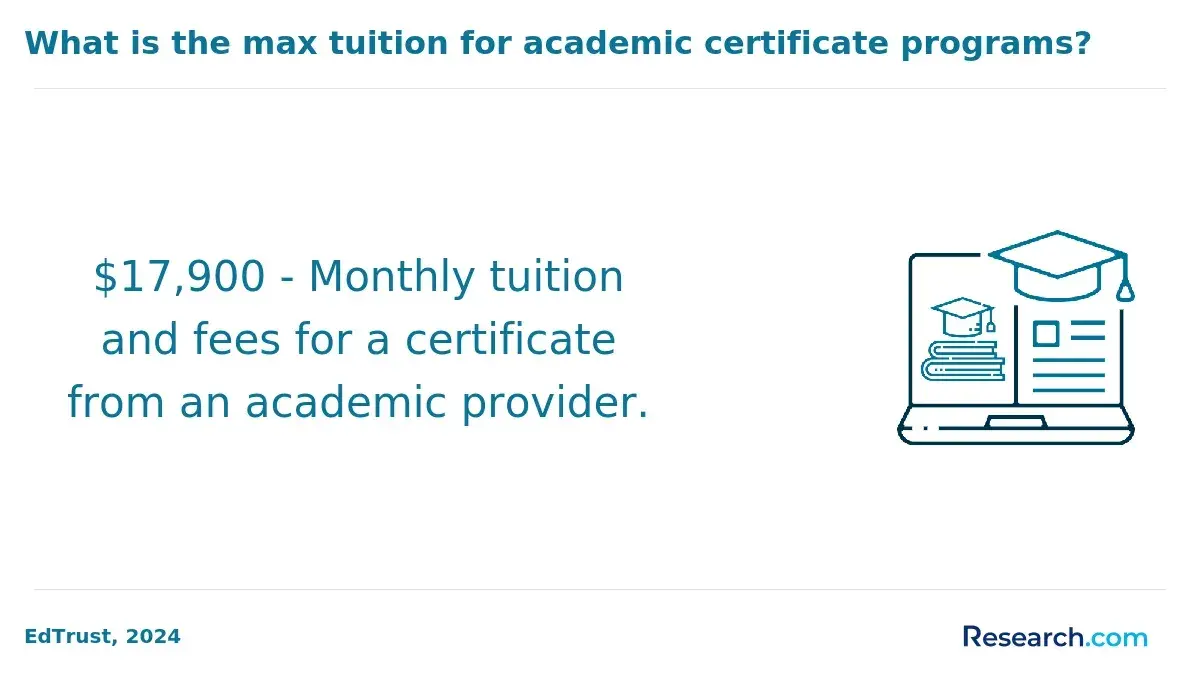
No-recommendation admission does not determine price. Tuition varies more by institution type, residency policy, degree level, transferred credits, pace of enrollment, required technology, and practicum arrangements than by the application materials a school requests.
Students should request a written estimate for their expected number of credits rather than relying on a "starting at" tuition figure. The cost categories below help reveal the total financial commitment.
| Cost category | Why it varies | Question to ask |
| Tuition per credit or term | Public, private, in-state, and flat-rate models differ | What will I pay for all remaining required credits? |
| Mandatory fees | Technology, student services, graduation, and course fees may apply | Which fees are charged to fully online students? |
| Books and course materials | Digital access and publisher platforms can add recurring costs | Are open educational resources used in core courses? |
| Practicum expenses | Background checks, travel, immunizations, and placement needs can create costs | What out-of-pocket costs have recent online students faced? |
| Transfer credit | Accepted credit can reduce time and tuition | How many credits are likely to apply after an official evaluation? |
Compare net price after grants and scholarships, not sticker tuition alone. Public health applicants who are also considering nutrition-related prevention work can compare accelerated online degrees in nutrition, but should examine whether the intended career requires dietetics coursework, supervised practice, or separate credentialing.
A lower-priced program can be a better value only if it provides the courses, practical experience, accreditation profile, and student support needed for the student's target role. Conversely, a higher-cost MPH should have a clear advantage in concentration depth, employer connections, practicum support, or career outcomes that the student can verify.
Yes. Recommendation-letter requirements generally do not affect eligibility for federal student aid. Eligibility depends on factors such as enrollment in an eligible program at an eligible institution, satisfactory academic progress, citizenship or eligible noncitizen status, and the information submitted through the Free Application for Federal Student Aid.
For qualifying undergraduates, the maximum Federal Pell Grant for the 2025-26 award year is $7,395. That maximum is not an amount every student receives; the actual award depends on financial circumstances, cost of attendance, enrollment intensity, and other federal rules. Graduate public health students are generally not eligible for Pell Grants but may be eligible for federal Direct Unsubsidized Loans and, when applicable, Graduate PLUS Loans.
Before accepting aid, compare the offer with the program's full cost of attendance and ask whether institutional scholarships require full-time enrollment or a separate application. Veterans, service members, and eligible family members should also ask the school's military or veterans office about education benefits and whether online attendance affects benefit calculations.
Borrow only after considering your likely completion timeline and target occupation. A public health degree can support work in government agencies, nonprofits, hospitals, insurers, community organizations, research settings, and health departments, but salaries vary widely by role, geographic area, experience, and degree level.
Program duration depends on degree level, transferred credit, course load, prerequisite completion, and whether a practicum can be completed on schedule. A no-recommendation policy changes the application process, not the number of academic credits required for graduation.
A bachelor's degree commonly requires about 120 semester credits. A full-time student beginning with no transferable credit may take roughly four academic years, while a degree-completion student can finish sooner if the school accepts substantial prior coursework. MPH programs commonly require approximately 42 to 48 credits, and many part-time online formats are designed for working adults over roughly two to three years.
Accelerated terms can shorten calendar time but increase weekly workload. Before choosing a faster format, ask how many hours per week each course typically requires, whether summer attendance is expected, whether courses follow fixed meeting times, and how practicum placement works for distance learners.
For students interested in advanced clinical or academic pathways, an online PhD in nursing is a separate doctoral research route, not a replacement for an MPH. It normally requires nursing preparation and serves different professional goals.
Many online public health bachelor's programs accept transfer credits, but no-recommendation admission does not guarantee that prior coursework will transfer. Schools typically evaluate official transcripts after application or admission and may limit the age, grade, source, or applicability of credits.
General education courses often transfer more readily than specialized public health requirements. Statistics, biology, psychology, sociology, nutrition, health education, and introductory health courses may be relevant, but equivalencies are determined course by course. Students with credit from community college, military training, professional learning assessments, or prior online study should request an official transfer evaluation before committing.
Use a careful transfer process to avoid paying twice for the same learning.
- Send transcripts from every previously attended institution, including schools where no degree was earned.
- Request a written evaluation showing accepted credits, remaining requirements, and the anticipated graduation plan.
- Save course descriptions and syllabi for specialized courses that may need departmental review.
- Confirm the school's minimum grade requirement and residency-credit rule.
- Ask whether transferred courses satisfy public health prerequisites, major requirements, or only elective credit.
- Compare the evaluation with the financial-aid implications of your revised enrollment length.
Students considering graduate study should note that transfer-credit limits are often narrower for MPH programs. Prior graduate coursework may need to be recent, comparable in content, and completed with a minimum grade.
How Should You Compare Online Public Health Degree Programs That Do Not Require Letters of Recommendation?
Choose based on career fit and educational quality first, then use admissions convenience as a tie-breaker. The best choice for a working adult seeking community health coordination may differ from the best choice for a future epidemiologist, health policy analyst, environmental health professional, or graduate-school applicant.
Compare each finalist across the factors below so that a convenient application does not obscure a weak match.
| Comparison factor | What a strong answer looks like | Why it matters |
| Recommendation policy | The exact program page states that zero letters are required for your applicant type | Prevents incomplete applications and last-minute surprises |
| Accreditation | Recognized institutional accreditation and, where relevant, CEPH status are clearly documented | Supports credibility, aid eligibility, and future education planning |
| Curriculum | Core courses cover epidemiology, biostatistics, health policy, environmental health, and social determinants as appropriate to the degree | Builds skills employers and graduate programs may expect |
| Applied learning | Practicum, internship, capstone, or community project support is available to online students | Helps translate coursework into demonstrable experience |
| Cost and transferability | A written total-cost and transfer-credit estimate is available | Improves budget and completion planning |
| Online design | Course schedules, live-session expectations, exam proctoring, and student support are transparent | Determines whether the format fits work and family obligations |
When speaking with admissions staff, ask for answers in writing: Are recommendation letters required for my exact program and start term? What is the complete admissions checklist? Is the degree available to residents of my state? What support is offered to secure practicum experiences? What will my estimated total cost be after transfer credit? These questions also reveal whether the school communicates clearly and consistently.
A no-recommendation online public health degree is likely a good fit if you have a solid transcript or relevant experience, need a more accessible application process, and have verified that the curriculum supports your goals. Consider a program that does require references if your recommenders can provide meaningful evidence of research ability, leadership, or public health potential that strengthens a competitive graduate application.
Other Things You Should Know About Public Health
Some may waive them for particular applicant groups or use a different review process, but many MPH programs still require references. Read the department's current application checklist and ask whether the waiver applies to your concentration, start term, and applicant category.
Yes. Most 2027 online public health admissions still require a personal statement or goal essay, usually about 500 to 1,000 words. Applicants often must also submit an official transcript and a résumé or CV, even when no letters of recommendation are requested.
There is no universal GPA requirement. Undergraduate programs may use flexible or holistic admission standards, while MPH programs commonly set a minimum GPA or review applicants individually. Confirm the stated threshold and whether it applies to overall GPA, last-60-credit GPA, or prerequisite GPA.
Verify them immediately before applying and again if you defer to a later term. Requirements can change by academic year, degree level, concentration, residency status, and whether you are applying as a first-year, transfer, or graduate student.
- Master of Public Health Online https://www.unthealth.edu/tcom/public-health/master-of-public-health-online.html
- 2025 Most Affordable Online MPH Programs https://www.onlineu.com/most-affordable-colleges/public-health-masters-degrees
- High School Graduation https://odphp.health.gov/healthypeople/priority-areas/social-determinants-health/literature-summaries/high-school-graduation
- MPH Programs With No GRE Requirement (2026) https://www.publichealthonline.org/mph-no-gre/
- Credential Evaluation for US Universities, Choosing the Right Academic Report | IEE https://iee.com/blog/credential-evaluation-for-us-universities/
- Careers https://www.publichealthdegrees.org/careers/
- 20 Best Online Bachelor's in Public Health - MPH Online https://www.mphonline.org/best-online-bachelors-in-public-health/
- BioMedCAS Program Materials https://help.liaisonedu.com/BioMedCAS_Applicant_Help_Center/Filling_Out_Your_BioMedCAS_Application/BioMedCAS_Program_Materials/BioMedCAS_Program_Materials
- Explore Online MPH Degree Programs to Find the Best for You https://teach.com/online-ed/healthcare-degrees/online-masters-public-health/
- SOPHAS https://aspph.org/student-journey/sophas/