2027 Online Post-Master's FNP Certificates for Nurses in South Dakota: Coursework and Clinical Requirements
Audited and Verified:
Our Editorial and Data Verification Process
Research.com uses government datasets, official education statistics and primary institutional information to support its career and degree guides. Our review process checks factual accuracy, occupational definitions, source dates and the requirements associated with the credentials discussed.
How This Article Was Fact-Checked
Our editorial team verifies salary estimates, employment projections, education requirements and program information against original data providers and official organizations. Salary figures are checked against the relevant occupational definitions and reporting periods. Information about licensure, accreditation and required in-person training is reviewed separately.
Fact-checked and verified on:

Co-Founder and Chief Data Scientist
An online family nurse practitioner certificate can help a South Dakota nurse add a new advanced practice population focus without earning another full nursing degree. But "online" describes the classroom more than the clinical experience: supervised patient care, approved preceptors, and sometimes campus visits still shape the schedule.
This guide is for MSN- or DNP-prepared nurses comparing certificate options. It explains what coursework and clinical preparation may be required, how prior APRN education changes the plan, and what to verify before paying a deposit or arranging a placement.
Key Things You Should Know
- A post-master's FNP certificate prepares an eligible graduate nurse for family practice across the lifespan; a school-issued certificate alone does not grant national certification or South Dakota APRN licensure.
- ANCC and AANPCB FNP certification pathways require qualifying graduate preparation and supervised clinical education; their published minimum is 500 faculty-supervised clinical hours, but a program's required hours may be higher.
- Compare programs by the school's written gap analysis, South Dakota enrollment eligibility, FNP clinical-placement support, required in-person attendance, and total cost - not by advertised completion time alone.
What Is an Online Post-Master's FNP Certificate in South Dakota?
A post-master's family nurse practitioner certificate is a graduate-level specialty pathway for an RN who already holds an MSN or nursing doctorate. It supplies the FNP coursework and supervised clinical preparation the receiving school determines the nurse still needs. FNP preparation addresses primary care for patients across the lifespan; it is not interchangeable with preparation in a different NP population focus.
The starting point matters. An already-certified adult-gerontology NP may need a different set of courses and patient encounters than an MSN-prepared nurse educator who has never completed an APRN track. Neither prior practice experience nor a graduate degree automatically satisfies FNP requirements. The school must review transcripts, syllabi, clinical-hour records, and competencies before setting an individual plan.
These certificates are postlicensure programs, not routes into nursing for someone without an RN license. A non-nurse exploring shorter direct-entry MSN programs for non-nurses is considering a different starting pathway, not an FNP certificate.
What Are South Dakota's FNP Certification and APRN Licensing Requirements?
There are three separate milestones: finish an eligible FNP educational program, qualify for and pass a national FNP certification examination, and obtain the applicable South Dakota advanced practice authorization before practicing in that role.
The South Dakota Board of Nursing, not the school or certifying organization, decides state licensure. Nurses should check the board's current certified nurse practitioner application and practice rules for their circumstances, including RN license status and documentation requirements.
The two principal FNP certifying organizations are the American Nurses Credentialing Center, which awards the FNP-BC, and the American Academy of Nurse Practitioners Certification Board, which awards the FNP-C. Each publishes its own eligibility, clinical-hour, examination, and renewal rules. Ask a prospective school to identify which examination pathways its specific post-master's FNP track is designed to support and how it documents graduates' supervised hours and population-focus preparation.
An RN's existing license does not authorize FNP practice. Likewise, preparing for a practical nursing license is a distinct regulatory route: planning an accelerated practical nursing pathway does not substitute for graduate APRN education or South Dakota authorization.
Which Accredited Schools Offer Online Post-Master's FNP Certificates?
South Dakota residents need not assume the school must be located in South Dakota. Institutions that have published online or distance-delivered post-master's FNP options include the University of Cincinnati, Georgetown University, and the University of South Alabama. This is a starting list, not a finding that every option currently enrolls South Dakota residents or guarantees a local placement. Offerings, authorization, campus requirements, and accreditation scope can change by entry term.
The comparison below separates what each prospective student must confirm from the fact that an institution advertises an FNP option.
| Institution to investigate | Decision-critical confirmation |
| University of Cincinnati | Current post-master's FNP track, South Dakota enrollment eligibility, clinical-site process, and any required visits |
| Georgetown University | Current certificate format, residency or campus attendance, South Dakota authorization, and placement responsibilities |
| University of South Alabama | Current FNP certificate availability, admission and clinical requirements, and approval of South Dakota sites |
For each option, verify the institution's accreditation, the nursing program's applicable CCNE or ACEN accreditation scope, and the school's written determination about enrollment and clinical education in South Dakota. Accreditation of a university alone does not establish that its FNP certificate meets a certifier's or state board's requirements.
Specialty is as important as school reputation. An APRN whose target role is psychiatric-mental health care should compare time-efficient PMHNP certificate pathways instead of choosing an FNP track merely because its schedule is convenient.
An FNP plan commonly combines advanced clinical foundations with population-focused courses in health promotion, assessment, diagnosis, and management of acute and chronic conditions across the lifespan. Depending on prior graduate work, the school may require advanced physiology or pathophysiology, advanced pharmacology, and advanced health assessment. It may also require courses focused on children, adults, older adults, and reproductive or family care.
The crucial distinction is between credit for prior coursework and proof of the clinical competencies needed for a new population focus. A recent advanced pharmacology course may be accepted after a syllabus review, while an adult-only clinical rotation may not address pediatric FNP competencies. Conversely, an experienced APRN should ask why a proposed plan repeats a course rather than assume repetition is unavoidable.
Course titles alone can also mislead. A nurse comparing earlier degree work with understanding clinical expectations in BSN completion should not treat RN-to-BSN experiential activities as equivalent to supervised graduate FNP patient-care hours.
Students typically complete faculty-supervised, direct patient-care experiences at school-approved sites while taking online coursework. A qualified preceptor supervises care at the site; faculty retain responsibility for educational oversight and evaluation. The program determines acceptable sites, preceptor credentials, patient populations, documentation, and how hours are counted.
Certification eligibility depends on the completed program meeting the relevant certifier's rules - not simply on logging a minimum number of hours.
Clinical fit is especially important in a state where a student's preferred town may have a limited pool of available preceptors. A family practice site may provide broad primary-care exposure, but the school must decide whether the student's combined placements cover required lifespan competencies. An existing job, volunteer work, simulation, or hours from another NP track should not be counted toward the certificate without written program approval.
Before enrolling, obtain answers to these placement questions:
- Who identifies and secures South Dakota sites and preceptors, and what happens if an arrangement falls through?
- Which patient populations, visit types, preceptor credentials, and faculty evaluations must the placement support?
- What are the weekly clinical schedule, documentation system, compliance costs, and any campus or skills-assessment visits?
A compressed calendar does not compress patient-care requirements. Use that test when considering comparing shorter family NP training pathways: ask how the proposed schedule accommodates every approved clinical experience.
Schools generally seek an MSN or nursing doctorate, an active RN license, graduate transcripts, and evidence of preparation relevant to the proposed FNP track. They may also request a résumé, recommendations, a statement of purpose, an APRN license if the applicant already practices in an advanced role, and syllabi or clinical logs for a gap analysis. Minimum GPA, work-experience, and prerequisite-course policies are school-specific.
For an experienced APRN, the most valuable admissions document may be a written individualized plan showing which prior courses and supervised hours the faculty accepted, which FNP competencies remain, and the resulting sequence. An MSN in education, leadership, or informatics can meet a degree-level entry requirement without providing prior NP clinical preparation; the applicant should expect that distinction to affect the plan.
A nurse whose highest nursing qualification is an ADN is not ordinarily ready to enter a post-master's certificate. Master's nursing study after an ADN addresses an earlier educational step, and a subsequent FNP certificate would still require its own eligibility review.
Completion time depends on the faculty-approved gap analysis, course rotation, enrollment intensity, and access to approved clinical sites. A school's advertised shortest timeline may assume that all foundational courses transfer, the student can take the prescribed sequence without interruption, and placements are ready when clinical courses begin. None of those assumptions is safe to make for an individual applicant.
Compare a personalized term-by-term plan rather than program-length labels. Ask when each clinical course starts, whether it can be taken alongside employment, whether courses run every term, and what delay occurs if a placement is unavailable. For a working nurse, a slower schedule with dependable local clinical access may lead to a more realistic finish date than an accelerated schedule dependent on uncertain preceptors.
Lists of shorter online post-master's FNP certificates can help identify questions to ask, but only the receiving school can estimate the timeline after evaluating a nurse's prior preparation.
There is no dependable single price for a South Dakota applicant: schools may charge by credit or term, and the number of required credits can change after the gap analysis. Request a written estimate for the individualized course plan rather than multiplying an advertised minimum credit count by a tuition rate.
A useful estimate separates the following charges so that two offers can be compared on the same basis:
- Tuition for required credits, mandatory university and program fees, and any continuing-enrollment charges.
- Books, technology, clinical-compliance checks, immunizations, insurance requirements, and certification and licensing application fees.
- Travel or lodging for required visits and placements, plus any reduction in paid work needed to complete supervised clinical hours.
Ask financial aid staff whether the specific certificate and enrollment pattern qualify for federal aid, and ask an employer whether reimbursement covers certificates, requires continued employment, or excludes fees. Nurses weighing a broader graduate route can use budget planning for BSN-to-MSN study as a separate comparison; its tuition figures should not be substituted for a post-master's FNP quote.
After meeting certification, South Dakota licensure, and employer requirements, FNP graduates may seek primary-care roles in family practices, community health centers, outpatient clinics, and other settings serving patients across the lifespan. The work includes assessment, diagnosis and management within the authorized scope, prevention, patient education, referrals, and coordination of care. Employers may still require setting-specific experience, credentialing, and onboarding.
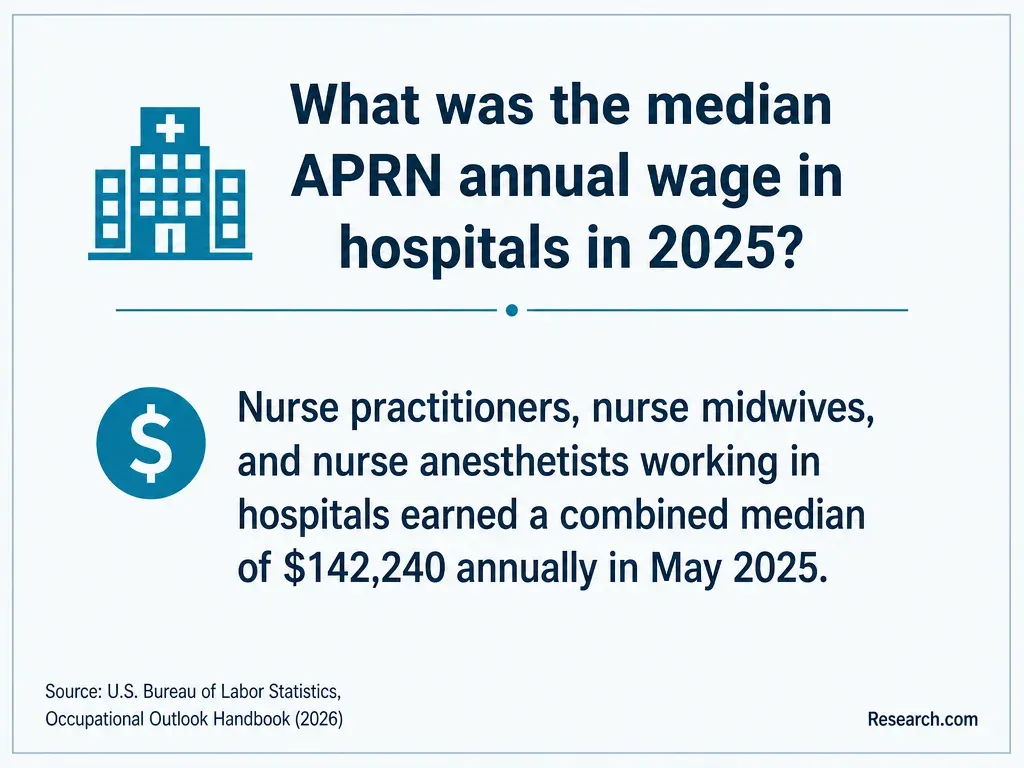
The U.S. Bureau of Labor Statistics reports wages and employment projections for the nurse practitioner occupation, not separately for South Dakota post-master's FNP certificate graduates. Its national median is not a local starting offer or a return-on-tuition estimate. For a useful comparison, review South Dakota FNP job postings for the required experience and schedule, then compare actual compensation offers with the certificate's full cost and any income lost during clinical study.
A certificate makes sense when the target job requires FNP preparation and licensure. If the desired advancement is instead a leadership or systems role, investigate its actual hiring requirements before assuming another NP credential is needed; DNP programs with flexible admission criteria address a different educational decision and do not inherently prepare a graduate for FNP certification.
How Should Nurses Choose a Reputable Online FNP Certificate Program?
The strongest choice is the program that can document a feasible route from your existing credentials to FNP certification and South Dakota practice - not necessarily the one with the lowest advertised price or shortest published schedule. Request the current catalog and confirm details with both the program and the responsible credentialing or licensing authority before committing.
Use this sequence to narrow a shortlist:
- Confirm the exact award and FNP population focus, applicable nursing accreditation, and the school's eligibility determination for South Dakota enrollment and clinical education.
- Submit prior syllabi and clinical records for a written gap analysis showing required courses, supervised hours, and a term-by-term plan.
- Get the clinical-placement agreement in writing, including site approval, preceptor responsibilities, faculty oversight, travel, and contingency arrangements.
- Compare personalized total costs and ask how the track supports eligibility for an FNP examination and subsequent South Dakota APRN application.
Keep certificate and doctorate comparisons tied to the role you want. Planning an accelerated DNP pathway may be relevant to a separate doctoral goal, but a short DNP without FNP population-focus preparation is not a substitute for an eligible FNP track.
Other Things You Should Know About Nursing
Not solely because the FNP holds a South Dakota license. Patient-location rules matter; check the other jurisdiction's licensing and telehealth requirements before providing care.
Plan to maintain the credential under the certifying organization's renewal rules and check South Dakota's continuing licensure requirements. Certification and state licensure have separate renewal processes.
Potentially, if the nurse meets each organization's current eligibility rules. Compare examination and renewal requirements before applying; one qualifying credential may be sufficient for a particular licensing or employment goal.
Employers typically evaluate the completed program, national certification, APRN licensure, and role-specific experience rather than the online label alone. Ask a prospective employer about any additional credentialing or experience requirements.
- Administrative Rule 20:48:03 | South Dakota Legislature https://sdlegislature.gov/Rules/Administrative/20:48:03
- Family Nurse Practitioner Certificate (Post-MSN) | King University https://www.king.edu/programs/online-degree-programs/post-masters-fnp-certificate/
- Clinical Collaborations | Nell Hodgson Woodruff School of Nursing https://www.nursing.emory.edu/degrees-programs/simulation-and-clinical-experience/clinical-collaborations
- Post-Master's Family Nurse Practitioner Certificate | Spring Arbor University https://online.springarbor.edu/programs/post-masters-certificate-fnp
- Post Master's FNP - Online Certificate Program | Herzing University https://www.herzing.edu/nursing/post-masters-certificate-fnp
- Online Post-Master's Family Nurse Practitioner Certificate | Sacred Heart University https://onlineprograms.sacredheart.edu/programs/fnp-family-nurse-practitioner-certificate/
- Post-Master's to DNP Family Nurse Practitioner | South Dakota State University https://www.sdstate.edu/nursing/graduate-nursing/post-masters-dnp-family-nurse-practitioner
- Nursing (D.N.P.) - Family Nurse Practitioner Specialization https://catalog.sdstate.edu/preview_program.php