
2027 Online Patient Safety & Quality Degree Programs With University Scholarships: Awards, Eligibility, and Net Cost

Co-Founder and Chief Data Scientist
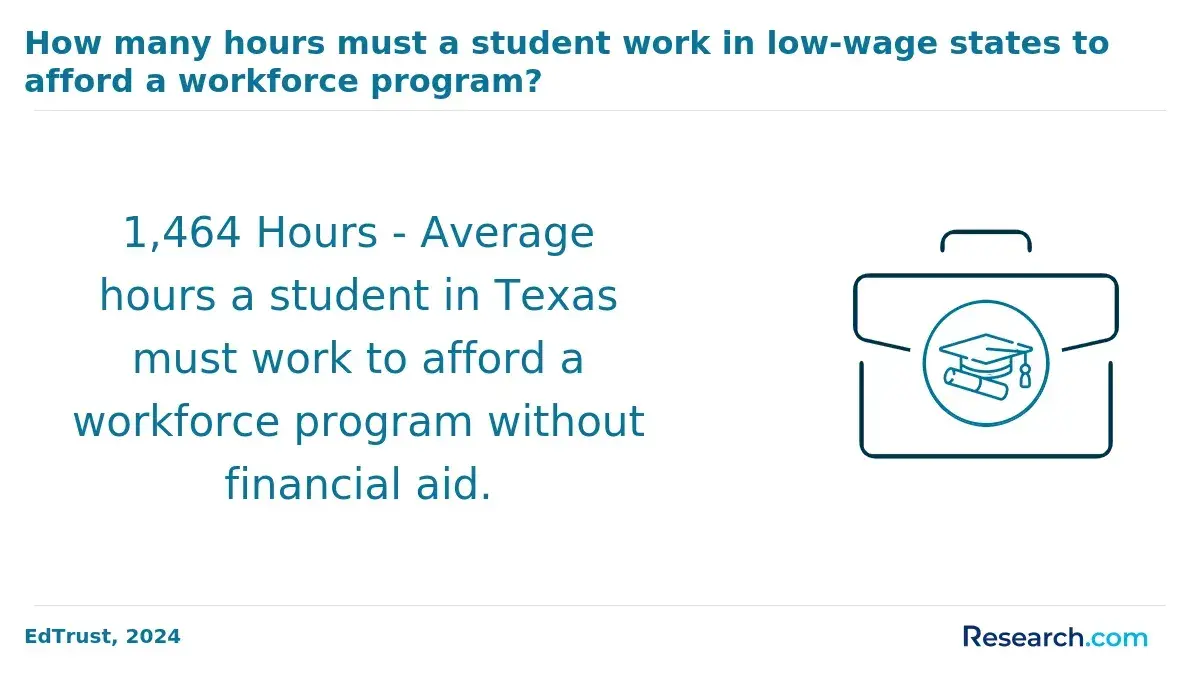
An online patient safety and quality degree can look affordable until technology fees, enrollment rules, and limited online-only scholarship eligibility change the final bill. College Board reported average published 2024-25 tuition and fees of $11,610 at public four-year in-state institutions and $43,350 at private nonprofit four-year institutions.
This guide helps prospective nurses, healthcare administrators, and working clinicians compare institutional awards, renewal conditions, FAFSA options, and true out-of-pocket cost rather than choosing a program on tuition or a headline scholarship alone.
Key Things You Should Know
- University-funded aid for online patient safety and quality students can range from no award to partial or full tuition coverage, but many awards exclude part-time, certificate-only, or fully online enrollment.
- Published tuition is not net cost: the 2024-25 average published tuition and fees at public four-year in-state colleges was $11,610, while private nonprofit four-year colleges averaged $43,350 before grants, scholarships, and required fees.
- The best offer is usually the one with the lowest confirmed multi-year net cost after institutional scholarships, federal grants, employer benefits, books, fees, and renewal requirements - not necessarily the largest advertised award.
Which Online Patient Safety & Quality Degree Programs Offer University Scholarships?
Few institutions label an online program specifically as a "patient safety and quality degree." More commonly, the subject appears as a concentration or curriculum focus within online nursing, healthcare administration, health informatics, public health, or quality-improvement programs. Institutional scholarships may be available through the university rather than through the academic department, so students should verify that their exact online program and enrollment status are eligible.
The comparison below shows where scholarship opportunities are most likely to appear and what to confirm before treating an award as part of a financial plan.
| Online academic route | Common patient safety and quality focus | Institutional aid pattern to investigate | Important eligibility question |
| RN-to-BSN or BSN completion | Quality improvement, evidence-based practice, patient outcomes | Transfer, adult learner, nursing, and general university scholarships | Are online RN-to-BSN students included, and is full-time study required? |
| MSN or nursing leadership | Clinical quality, safety systems, care coordination | Graduate scholarships, alumni awards, departmental funds | Can part-time graduate students receive the award? |
| Healthcare administration | Risk management, quality metrics, compliance, operations | Merit awards and employer-partnership discounts | Does the scholarship apply to the online format and all terms? |
| Health informatics | Data quality, clinical decision support, safety reporting | STEM, adult learner, or academic-performance awards | Is the award available to degree-seeking students only? |
| Graduate certificate | Quality improvement or patient safety specialization | Limited institutional aid; employer funding may be more common | Are certificate students excluded from scholarships? |
Students building a clinical foundation before moving into safety leadership may also compare ASN program online options. An associate pathway and a later bachelor's completion pathway can have different transfer-credit rules and scholarship pools, so request separate written estimates rather than assuming aid will carry forward.
A program is a stronger scholarship prospect when the admissions office confirms, in writing, that online students can receive institutional aid, identifies the award's annual amount, and explains whether it is automatically considered or requires a separate application.
How Much Scholarship Money Can Online Patient Safety & Quality Degree Students Receive?
Scholarship money is not standardized across online patient safety and quality programs. Universities may offer a fixed annual award, a one-time award, a tuition discount, a scholarship that covers a stated share of tuition, or a full-tuition award that still leaves fees, course materials, and living costs to the student.
When an institution advertises an amount, identify what the number actually covers. The following distinctions prevent a headline figure from being mistaken for cash available for all educational expenses.
| Award description | What it may cover | What may remain payable | Decision implication |
| Annual scholarship | A stated amount applied each academic year | Tuition above the award, fees, books, supplies | Confirm whether it is renewable and whether summer is included. |
| Per-credit tuition discount | A reduction in tuition for eligible credits | Mandatory fees, repeated courses, noneligible credits | Useful for part-time learners if the discount applies to every term. |
| Full-tuition scholarship | Published tuition up to stated limits | Fees, technology charges, books, travel, living costs | Read the definition of tuition and maximum credit coverage. |
| One-time scholarship | A single disbursement, often in the first year | Most costs in later terms | Calculate the entire program, not only the first-year bill. |
For context, the federal Pell Grant maximum for the 2024-25 award year was $7,395 for eligible undergraduate students. That is need-based federal grant aid, not an institutional scholarship, but it illustrates why an undergraduate student's combined aid package can differ substantially from a graduate student's package. Graduate students generally are not Pell eligible.
Ask the school for the scholarship amount shown per term and for the program total. A $5,000 award can be more valuable at a lower-priced program than a larger award that applies only to one term at a high-tuition institution.
What Are the Eligibility Requirements for Online Patient Safety & Quality Degree Scholarships?
Eligibility requirements determine whether an advertised scholarship is realistic for a particular applicant. "Online students eligible" is not enough; institutions can apply separate rules for degree level, residency, transfer status, financial need, academic record, or enrollment intensity.
Before applying, check these common conditions against your own situation:
- Degree-seeking status: many institutional funds exclude nondegree, prerequisite, and standalone certificate students.
- Enrollment level: awards may require full-time enrollment, while working clinicians often attend part time.
- Academic record: merit awards can use incoming GPA, transfer GPA, prerequisite grades, or a completed degree.
- FAFSA or financial-need documentation: need-based awards commonly require a current FAFSA and a demonstrated financial need calculation.
- Residency and campus affiliation: some awards are limited to state residents, local service areas, or students in a particular college within the university.
- Program format: a scholarship open to campus students may specifically exclude online, accelerated, or self-paced programs.
- Professional affiliation: nursing, hospital-system, military, union, or employer scholarships may require proof of employment or membership.
Patient safety and quality coursework is especially relevant to nurses and healthcare workers who want to improve care processes, reduce preventable harm, analyze outcomes, or lead quality initiatives. However, a scholarship is not a substitute for checking whether the program's curriculum, accreditation, and clinical requirements align with an employer's expectations or a state licensing board's rules.
Applicants interested in a nursing route should compare program fit as closely as aid terms. Some online nursing programs for working adults may be structured for employed professionals, but scheduling flexibility does not automatically make a student eligible for every institutional scholarship.
How Do You Apply for University Scholarships for an Online Patient Safety & Quality Degree?
Applying early matters because university scholarship deadlines may fall before an online program's final admission deadline. Automatic merit consideration is convenient, but students should not assume it is the only aid available; separate departmental and foundation applications can have different requirements.
Use this sequence to build a complete application file and document the terms of every offer:
- Confirm that the online patient safety, quality, nursing, administration, or informatics program is degree-seeking and scholarship eligible.
- Submit the admissions application early enough to meet institutional scholarship priority deadlines.
- File the FAFSA when pursuing federal, state, or need-based university aid, even if you expect to receive merit aid.
- Search the university financial-aid, college, nursing, alumni, foundation, and military-benefits pages for separate applications.
- Prepare transcripts, résumé, recommendation letters, proof of employment or service, and any required personal statement.
- Request a written award notice showing the amount, disbursement schedule, enrollment requirement, renewal standard, and whether the award can be combined with other aid.
- Compare final aid offers only after subtracting grants and scholarships from the same cost categories at each school.
Students considering a research, faculty, or advanced nursing leadership trajectory can also explore PhD programs for nurses. Doctoral funding often follows different rules from undergraduate and master's scholarship programs, including assistantships, employer sponsorship, and limited cohort-based awards.
A common mistake is submitting a general admissions application and waiting for the financial-aid office to identify every scholarship. Avoid it by asking one direct question: "Which institutional awards require a separate application for an online student in my exact program?"
Are Scholarships for Online Patient Safety & Quality Degree Programs Renewable Every Year?
Some scholarships renew annually, but renewal is never safe to assume. Renewable aid means a student may receive the award in a later academic year if stated conditions continue to be met. It does not necessarily mean the amount is protected if tuition changes, institutional policies change, or the student changes programs.
Review the renewal provisions below before treating an initial award as a multi-year commitment.
| Renewal condition | How it can affect online students | What to verify |
| Minimum cumulative GPA | A demanding work schedule or clinical course can affect grades. | The required GPA, review period, probation policy, and appeal process |
| Minimum credits or enrollment status | Part-time learners may lose eligibility or receive a reduced award. | Required credits per term and whether summer credits count |
| Maximum number of terms | Transfer credits, course repeats, or slower pacing can extend completion time. | The maximum funded terms and treatment of leaves of absence |
| Continuous enrollment | Work, caregiving, or military obligations may require a break. | Whether a stop-out, withdrawal, or reduced load ends renewal |
| Financial need or FAFSA filing | Need can change from year to year. | Whether FAFSA renewal and continuing demonstrated need are required |
Get the terms in the scholarship agreement, not solely in a recruitment email. The most useful question is whether the award is guaranteed for a stated number of terms provided you meet published conditions, or merely reconsidered each year based on funding availability.
Another red flag is an award described as renewable without a stated amount for later years. Ask whether the scholarship can decrease, whether it is prorated for part-time enrollment, and whether changing from a nursing major to a quality-focused administration or informatics program affects eligibility.
Can You Combine an Online Patient Safety & Quality Scholarship With FAFSA and Other Financial Aid?
In many cases, yes. An institutional scholarship can be combined with FAFSA-based aid, but the final package is subject to federal, state, and university rules. Filing the FAFSA can establish eligibility for federal grants, work-study, and federal loans, while the university scholarship may be merit-based, need-based, or both.
Schools generally build an aid package within a student's cost of attendance and financial-need limits. If outside scholarships or employer payments arrive later, the financial-aid office may need to revise another part of the package. This does not always reduce institutional scholarship money, but students should ask how the school applies "overawards."
Use these questions to determine whether aid can be stacked effectively:
- Does the university scholarship require FAFSA completion, and is a specific FAFSA filing date required?
- Can the institutional scholarship be combined with federal Pell Grants, state grants, veterans' education benefits, and employer tuition assistance?
- Which aid source is reduced first if the combined package exceeds the school's cost of attendance?
- Does an outside scholarship replace loans first, work-study first, need-based grants first, or institutional aid first?
- Are direct costs such as tuition and mandatory fees fully covered before funds can be used for books, transportation, or living expenses?
A practical approach is to report all outside resources promptly and ask for a revised written aid estimate. Students should borrow federal loans only after grants, scholarships, employer benefits, and personal savings have been considered; loans must be repaid and are not a discount on degree cost.
How Much Does an Online Patient Safety & Quality Degree Cost After Scholarships and Financial Aid?
Net cost is the amount you are likely to pay after gift aid, not the tuition figure on a program webpage. For an online patient safety and quality pathway, include tuition, mandatory university and technology fees, books, required software, clinical or residency travel when applicable, and the cost of credits that do not transfer.
This example shows why the largest scholarship does not automatically create the least expensive degree. The figures are illustrative calculations, not quotes or guaranteed awards.
| Cost component | Program A example | Program B example | How to interpret it |
| Published tuition and mandatory fees | $30,000 | $24,000 | Start with the full cost for the credits you personally need. |
| Institutional scholarship | -$8,000 | -$5,000 | Confirm whether the award is one-time or renewable. |
| Federal or state grants | -$3,000 | -$3,000 | Eligibility can vary by student and award year. |
| Estimated net direct cost | $19,000 | $16,000 | Program B costs less despite the smaller scholarship. |
Calculate each offer using this formula: published tuition and required fees, minus confirmed grants and scholarships, plus costs that the school does not bill directly. Do not subtract loans as though they lower net cost; loans change how the bill is financed, not how much education costs.
Career changers who are comparing shorter entry-level routes alongside a degree can review medical assistant certification options. The education, scope-of-practice, credentialing, and career outcomes differ from patient safety and quality programs, but comparing total cost and time to completion can clarify which route matches your objective.
Ask each university for a program-specific estimate based on your transfer evaluation, planned enrollment level, and scholarship eligibility. Generic net-price calculators are useful starting points, but they may not reflect online fees, graduate tuition, or a specialized quality-and-safety curriculum.
Are There Scholarships for Transfer, Adult, Military, and Other Online Patient Safety & Quality Students?
Transfer, adult, military, veteran, and employer-sponsored students may have access to scholarships that traditional first-time students do not, but they can also encounter exclusions. A transfer scholarship may require a minimum number of accepted credits; an adult learner award may require a gap in enrollment; and military benefits may interact with institutional aid under school-specific policies.
The following student groups should ask targeted questions before enrolling:
- Transfer students should request an official or preliminary credit evaluation and verify whether scholarship eligibility uses earned credits, accepted credits, or transfer GPA.
- Adult learners should confirm whether part-time enrollment, prior degrees, and online-only attendance qualify for institutional adult-completion awards.
- Active-duty service members and veterans should ask whether military tuition rates, Yellow Ribbon participation, institutional scholarships, and education benefits can be combined.
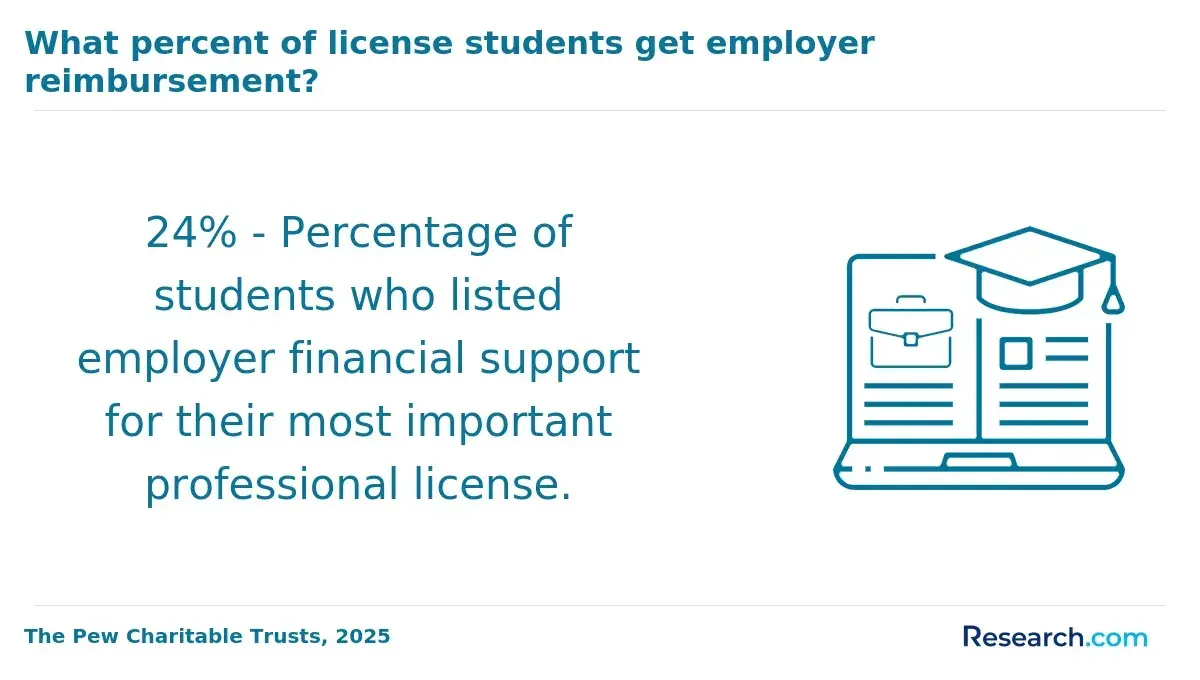
- Employer-sponsored students should determine whether tuition assistance is paid upfront or reimbursed after grades are posted and whether it reduces need-based aid.
- International and nonresident students should verify residency restrictions, FAFSA eligibility limits, and separate institutional scholarship requirements.
Students whose interests combine patient safety with food systems, clinical nutrition, or population health may find that online registered dietitian programs have distinct supervised-practice, accreditation, and aid considerations. Do not assume scholarship or transfer rules from one health discipline apply to another.
For nontraditional students, transfer efficiency can be as valuable as a scholarship. A lower award at a program that accepts more applicable credits may produce a lower total net cost and shorter completion timeline than a higher award at a school requiring many repeated courses.
What Is the Difference Between Merit-Based and Need-Based Scholarships for Online Patient Safety & Quality Degrees?
Merit-based scholarships are awarded primarily for achievement or attributes the university values, such as GPA, academic record, leadership, professional experience, service, or a competitive application. Need-based scholarships are tied to a student's financial circumstances, usually assessed through the FAFSA and the institution's financial-aid methodology.
Neither type is automatically better. The right fit depends on whether your academic profile, financial need, enrollment pattern, and likelihood of renewal match the award's terms.
| Feature | Merit-based scholarship | Need-based scholarship |
| Primary basis | Academic or professional achievement, leadership, or talent | Demonstrated financial need |
| FAFSA requirement | May not be required, but some institutions still request it | Commonly required each year |
| Typical renewal focus | GPA, credit completion, good academic standing | Continued need plus academic and enrollment requirements |
| Best question to ask | Is the award guaranteed if I meet stated standards? | How can changes in income or outside aid alter the award? |
Students with a strong prior GPA, clinical leadership record, or employer-recognized quality-improvement experience may be competitive for merit awards. Students with financial need should still apply for merit scholarships when permitted, because some awards can be combined and merit criteria may not require a perfect academic record.
A frequent mistake is skipping the FAFSA because a student expects a merit award. Filing may open access to need-based institutional funds and federal aid, though eligibility and deadlines vary. Check the school's financial-aid calendar and submit required documents promptly.
How Should You Compare Scholarship Offers From Online Patient Safety & Quality Degree Programs?
Compare scholarship offers as multi-year financial packages tied to the same academic plan. Start by ensuring each school is pricing the same number of credits after transfer evaluation, then compare confirmed aid rather than promotional maximums.
Create a side-by-side record using the factors below. It will show whether a seemingly generous award has restrictions that raise the actual cost.
| Comparison factor | What to record | Why it matters |
| Program fit and recognition | Degree title, curriculum, accreditation, and applicable professional requirements | An inexpensive program is not good value if it does not support the intended role. |
| Total required credits | Credits remaining after official transfer review | More required credits can outweigh a larger scholarship. |
| Annual and total scholarship | Amount, duration, and disbursement timing | Award letters may describe only the first year. |
| Renewal terms | GPA, credits, continuous enrollment, and maximum terms | Strict conditions can make later-year costs uncertain. |
| Net direct cost | Tuition and mandatory fees minus grants and scholarships | This is the clearest initial comparison of what you owe the school. |
| Indirect and opportunity costs | Books, technology, travel, lost work time, and clinical requirements | These expenses can differ substantially across online programs. |
After comparing the numbers, contact each financial-aid office with the same questions and retain the answers. Ask whether the scholarship applies to all required terms, whether it is reduced for part-time study, whether outside aid changes it, and what happens if a course must be repeated.
For students comparing patient-safety work with advanced clinical scholarship or research leadership, an online nursing doctorate may be a separate pathway with different funding structures. Review program costs and aid options before deciding whether a master's-level quality role or further study is the better financial and professional match.
The strongest offer is the one that combines credible program fit, transparent written scholarship terms, manageable renewal conditions, accepted transfer credits, and the lowest realistic amount you will need to pay or borrow.
Other Things You Should Know About Patient Safety & Quality
No. Patient safety and quality content may be part of nursing, healthcare administration, public health, or health informatics programs. Nursing licensure pathways have separate clinical, accreditation, and state requirements. Review the curriculum and intended credential before applying.
Often, yes, if the employer approves the program and course plan. Confirm whether reimbursement is paid after successful course completion, whether there is an annual cap, and whether accepting employer funds changes need-based university aid.
It can support roles in quality improvement, patient safety, compliance, care coordination, clinical informatics, and healthcare operations, depending on the degree level and your prior experience. Employers may also value clinical experience, data skills, quality-improvement training, and relevant certifications.
Commonly missed expenses include online learning fees, proctoring, books, software, background checks, immunizations, clinical travel, residency travel, and graduation fees. Ask for a written list of required charges for your exact program and planned course sequence.
References
- Online Master's in Patient Safety and Healthcare Quality Programs https://www.mhaonline.com/programs/masters-in-patient-safety-healthcare-quality
- ASSP Foundation https://foundation.assp.org/academic-scholarships/
- Online Master's in Patient Safety and Healthcare Quality (PSHQ) Programs https://www.onlineeducation.com/healthcare/masters-in-patient-safety-healthcare-quality-programs
- Financing Your Degree https://aspph.org/student-journey/financing-your-degree/
- 50 Top Scholarships for Students of Medical & Health Programs https://www.edumed.org/financial-aid/scholarships/
- What Financial Aid Offers Don't Tell You About the Cost of College | U.S. GAO https://www.gao.gov/blog/what-financial-aid-offers-dont-tell-you-about-cost-college
- 25 Public Health Scholarships - MPH Online https://www.mphonline.org/top-25-public-health-scholarships/
- Healthcare Administration Scholarships https://www.healthadministrationdegrees.com/healthcare-administration-scholarships/
- Apply for a Scholarship - Patient Advocate Foundation https://www.patientadvocate.org/connect-with-services/apply-for-a-scholarship/
- Patient Safety and Healthcare Quality https://www.fastweb.com/directory/scholarships-for-patient-safety-and-healthcare-quality-majors





