2027 Online Nursing Informatics Degree Programs With Monthly Tuition Payment Plans

Co-Founder and Chief Data Scientist
Paying several thousand dollars at the start of each term can keep working nurses from pursuing an online nursing informatics degree. Monthly tuition plans divide an eligible term balance into scheduled installments, usually after financial aid is applied. This matters as health information technologist and medical registrar employment is projected to grow 16% from 2023 to 2033, according to the U.S. Bureau of Labor Statistics. This guide helps RNs compare payment-plan availability, total costs, fees, aid rules, and practical fit before choosing a program.
Key Things to Know About Nursing Informatics Programs with Monthly Tuition Payments
- Online nursing informatics programs may offer monthly installments through a school-wide payment plan, but availability, enrollment deadlines, and number of payments can differ by term and student account.
- A plan changes when tuition is paid, not usually the published tuition rate; plan enrollment, returned-payment, and late fees can increase the amount paid.
- Published tuition can range widely by school and format: competency-based options may charge by term, while traditional MSN programs commonly charge by credit; compare the full program estimate, not only the monthly installment.
Which online Nursing Informatics degree programs have monthly tuition payment plans?
Monthly payment availability is usually administered by the university bursar or student accounts office rather than by the nursing department. That means an online nursing informatics student may be eligible for the same installment plan available to other enrolled students, provided the student enrolls by the school's deadline and has an unpaid qualifying balance.
The programs below are examples of online nursing informatics pathways offered by institutions that publicly describe student tuition payment-plan options. Confirm current program availability, state authorization, tuition, and payment-plan eligibility directly with the school before applying, because these details can change.
| Institution and online program | Typical billing approach | Monthly-payment approach to verify | Important comparison point |
| Western Governors University, MSN Nursing Informatics | Flat tuition by six-month term | Institutional payment arrangements may divide a term balance into scheduled payments | Ask whether the plan applies to the entire term and whether any financial-aid credit must post first |
| University of Cincinnati Online, MSN Nursing Informatics | Per-credit tuition and term billing | University student-account payment plan may be available for eligible balances | Compare the installment due dates with clinical, technology, and course-material charges |
| Drexel University Online, MSN in Nursing Informatics | Per-credit tuition and quarter-based billing | Student payment-plan options may be administered through the university billing system | Check whether accelerated-quarter schedules shorten the installment window |
| University of South Alabama, MSN Nursing Informatics | Per-credit tuition and semester billing | University installment-plan availability may depend on the academic term and account status | Verify deposit, enrollment-fee, and late-payment policies in writing |
Do not treat this list as a guarantee that every applicant will receive a plan. A school can restrict plans for past-due accounts, students with certain sponsorship arrangements, short sessions, or balances below a minimum amount.
If you are weighing related health programs, tuition structures can differ substantially from nursing. For example, prospective students comparing clinical education routes can also review online pharmacy school programs before assuming that one payment strategy fits every healthcare degree.
How much do online Nursing Informatics degree programs typically cost?
Online nursing informatics degrees are commonly MSN programs for licensed RNs, although some schools offer post-master's certificates. Total cost depends on the required credits, tuition rate, transfer-credit policies, residency rules where applicable, and mandatory university charges. A competency-based program may bill one flat rate per term instead of per credit, which makes a monthly amount less useful unless you also estimate how many terms you are likely to need.
For a concrete published-price benchmark, Western Governors University lists tuition of $4,805 per six-month term for its MSN Nursing Informatics program. That figure illustrates why a term-based installment plan can still require meaningful monthly cash flow: dividing a $4,805 tuition balance across four equal payments would be about $1,201 before any plan fee or non-tuition charges. It is an example, not an estimate of what every student will pay.
Use the school's current tuition schedule and degree plan to build a comparable full-cost estimate. The following comparison shows the billing models that most affect monthly affordability.
| Billing model | How tuition is calculated | What the monthly payment may depend on | Best use case |
| Per-credit MSN | Credit rate multiplied by enrolled credits | Term balance divided across the school's allowed installments | Students taking a predictable part-time course load |
| Flat-rate term program | One tuition charge for a defined term | Balance after aid divided over a relatively short term | Self-directed students able to sustain a steady pace |
| Post-master's certificate | Usually per credit for fewer total credits | Smaller term balance, but potentially fewer aid options depending on enrollment and program eligibility | Nurses who already hold an MSN and need informatics-focused coursework |
Request a written estimate that separates tuition from fees. A lower advertised credit price does not necessarily produce the lower total cost if the program requires more credits, charges technology fees, or extends across additional terms.
How common are monthly tuition payment plans among Nursing Informatics programs?
Monthly installment plans are common as a university billing feature, but schools do not always market them on individual nursing informatics program pages. As a result, the useful question is not simply whether a program "offers monthly payments." Ask whether the university's current plan covers online graduate students, your academic session, and the charges on your account.
Plans are more likely to be available at institutions that bill by semester, quarter, or six-month term and use a centralized student-account system. They are less likely to solve the entire problem for programs with very short sessions, externally billed course materials, employer contracts, or a balance due after the enrollment deadline.
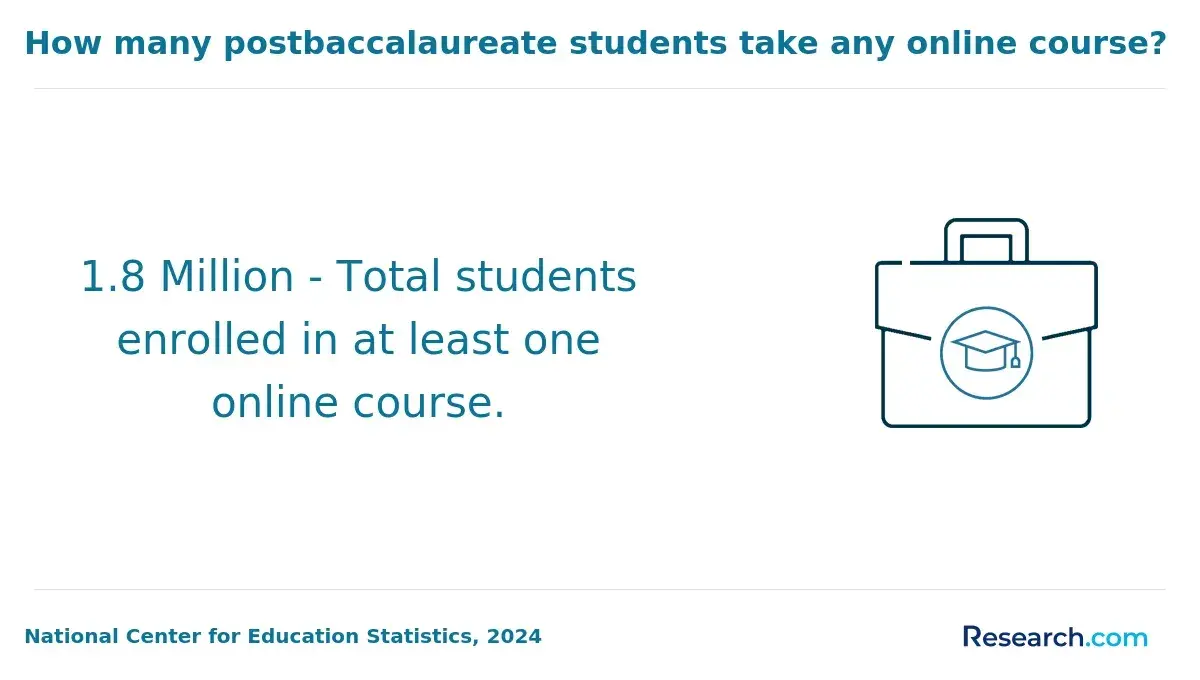
Current enrollment practices also matter. The National Center for Education Statistics reported that distance education remained a major part of postsecondary enrollment in its 2024 reporting, which helps explain why centralized online billing and electronic payment options are widely used. It does not mean every online degree offers the same installment terms.
When comparing nursing with adjacent administrative pathways, review the underlying curriculum and billing calendar separately. Students considering healthcare administration majors may find accelerated course schedules that create different payment timing from a traditional MSN.
Can monthly tuition plans make paying for Nursing Informatics degrees more attainable?
Yes, for a student who can pay the full term balance over several months without borrowing. An installment plan can align education expenses with regular RN paychecks and reduce the need to withdraw a large lump sum from savings. It is a cash-flow tool, not a tuition discount or a substitute for a realistic degree budget.
A monthly plan tends to fit best when you have stable income, a modest remaining balance after grants or employer benefits, and enough room in your budget for the largest scheduled installment. It may be a poor fit if your income varies significantly, you expect reimbursement only after course completion, or the payment dates fall before your employer pays benefits.
Compare these options based on the timing and cost of the money, not on the lowest first payment.
| Option | Potential advantage | Main trade-off | Often makes sense when |
| Monthly tuition plan | Usually avoids interest when paid on schedule | Balance is generally due within the same academic term | You can cover installments from current income or savings |
| Federal student loan | Can cover eligible costs beyond a short billing window | Interest and long-term repayment obligations may apply | A verified aid package leaves a gap you cannot pay during the term |
| Employer tuition assistance | May reduce out-of-pocket tuition | May require grades, continued employment, or delayed reimbursement | Your employer benefit matches the program and payment schedule |
| Paying tuition upfront | Eliminates plan administration and missed-payment risk | Requires substantial available cash at once | You can pay without draining emergency savings or high-interest borrowing |
Before enrolling, calculate the monthly payment using the amount due after confirmed aid and employer support, then add a buffer for excluded costs. If that total would require credit-card borrowing, consider a less intensive course load, a lower-cost program, a loan comparison, or postponing enrollment until savings are stronger.
Students exploring other health education financing routes can find relevant aid questions in this guide to financial aid for medical billing and coding, while recognizing that graduate nursing aid rules and program costs differ.
Does monthly payment plans have an effect on the overall cost of Nursing Informatics degrees?
A monthly payment plan generally does not change the school's tuition rate. However, it can raise your out-of-pocket total if the school charges a plan enrollment fee, late fee, returned-payment fee, or finance charge. Some plans are interest-free, while others may involve charges or are paired with third-party financing; read the agreement rather than relying on the word "monthly."
The cost difference is easiest to see by separating tuition from payment-plan charges and borrowing costs.
| Cost component | Usually changed by a payment plan? | What to confirm |
| Published tuition | No | Whether your tuition rate is locked for the program or can change between terms |
| Mandatory university fees | Usually no | Whether the plan includes them in the financed balance |
| Plan enrollment fee | Yes, if charged | One-time or per-term amount and whether it is refundable |
| Late or returned-payment fees | Yes, if a payment fails or is late | Grace period, fee amount, and consequences for registration |
| Interest on a loan used instead | Not part of a standard school installment plan | Loan rate, origination fee, repayment start date, and total repayment |
Longer payment timing is not automatically cheaper. A short, no-interest institutional plan may cost less than borrowing, but a missed installment can lead to a hold on registration, transcript access, or future enrollment. Keep confirmation of every payment and ask whether an unpaid balance will be sent to collections.
Do monthly payment plans affect your financial aid eligibility for Nursing Informatics programs?
Enrolling in a payment plan does not normally reduce eligibility for federal financial aid. Eligibility is determined through the FAFSA, program eligibility, cost of attendance, enrollment status, satisfactory academic progress, and other federal and institutional requirements. The plan usually applies only to the remaining amount due after aid is calculated or disbursed.
Timing is the critical issue. Federal aid often disburses near the beginning of an eligible payment period, while payment-plan enrollment may be required before that date. Schools may use estimated aid to reduce the amount you must initially pay, but policies vary, so do not assume pending aid eliminates the first installment.
Take these steps before selecting a plan:
- Submit the FAFSA early and complete any verification or document requests before the tuition deadline.
- Ask the financial aid office for your estimated and confirmed aid amounts, including the expected disbursement date.
- Ask student accounts whether estimated aid reduces the payment-plan balance or whether you must pay until funds post.
- Confirm how dropped courses, withdrawals, or reduced enrollment could change aid and create a new balance due.
A payment plan can be useful while aid is processing, but it should not be used to assume aid approval. Graduate nursing students should also check whether a scholarship, employer benefit, or loan has restrictions on online enrollment or minimum credits.
Is there a deposit required before starting Nursing Informatics monthly payment plans?
Often, yes. Schools may require an initial payment at enrollment, a separate payment-plan enrollment fee, or both. The first installment is frequently larger than later payments because it is due immediately when you join the plan. A tuition deposit for admission, if required, is separate from the payment-plan down payment and may or may not be credited toward tuition.
There is no universal deposit amount for online nursing informatics programs. The required upfront amount can depend on the term balance, how late you enroll, whether financial aid is pending, and the school's billing rules. Get the exact amount in writing before accepting admission.
Ask the bursar these questions before you commit:
- What amount is due on the day I enroll in the plan?
- Is the initial amount a tuition payment, a nonrefundable plan fee, an admission deposit, or more than one of these?
- Will pending financial aid reduce the required upfront payment?
- If I withdraw before classes begin, which payments or deposits are refundable?
Do not confuse a low first payment with low total cost. Review the full schedule, including the final installment, because a large final payment can collide with the start of the next academic term.
Are there fees not covered by monthly tuition payment plans for Nursing Informatics programs?
Yes. A plan may cover tuition and selected institutional charges while excluding application fees, graduation fees, books, subscriptions, proctoring, clinical requirements, background checks, and professional expenses. Nursing informatics programs are often fully online, but they can still require technology, software, practicum, or compliance-related expenses.
Review the student account statement and program cost sheet together. The categories below are common items to verify because they can alter your cash budget even when tuition is divided into installments.
| Potential charge | Often included in the plan? | Why it matters |
| Tuition and standard institutional fees | Often, but not always | These make up the balance most plans are designed to spread out |
| Application and admission deposit | Often excluded | May be due before registration or plan enrollment |
| Books, software, and devices | Often excluded or purchased separately | May require payment before coursework begins |
| Background checks, drug screening, or compliance items | Often excluded | Can be required for practicum or clinical-affiliated activities |
| Graduation, transcript, and certification-related expenses | Usually excluded | May arise near program completion rather than during tuition billing |
For a broader view of nutrition-related healthcare education costs, readers considering alternatives can compare best dietetics programs. The comparison is useful for budgeting context, but each discipline has different academic and professional requirements.
What should you look for in payment plan terms for Nursing Informatics programs?
The best plan is transparent about the total amount financed, all fees, every due date, and what happens if a payment is late. Request the agreement or an official billing-page screenshot before enrolling; verbal descriptions from admissions staff are helpful but are not a substitute for the written terms.
Use this checklist to compare plans at more than one school:
- Number of installments, first-payment date, final-payment date, and whether dates align with your pay schedule.
- Required upfront payment, enrollment fee, late fee, returned-payment fee, and any interest or finance charge.
- Charges included in the plan and charges that must be paid separately before classes start.
- Rules for pending financial aid, employer reimbursement, scholarships, dropped courses, and withdrawals.
- Consequences of a missed payment, including registration holds, course removal, transcript holds, or collection activity.
- Whether the plan must be renewed each term and whether terms can change at renewal.
Common mistakes include enrolling after the deadline, overlooking a nonrefundable fee, counting on unapproved employer reimbursement, and comparing only the first monthly payment. Avoid them by putting each school's complete term cost and due dates into the same personal budget. A plan with fewer payments may be less manageable than one with a small administrative fee but a schedule that fits your income.
How do you know if online Nursing Informatics degrees with monthly payments are right for you?
A monthly plan is right for you when it makes an already affordable program easier to budget for, not when it is the only way to bridge a large recurring shortfall. First evaluate the program itself: confirm institutional accreditation, nursing-program accreditation where applicable, curriculum fit, practicum expectations, state authorization, RN licensure requirements, total credits, and likely completion timeline. Then assess the payment schedule.
A plan may be a strong choice if you are an RN with predictable earnings, have reviewed the full program cost, can make the largest installment without using high-interest credit, and have a backup for an unexpected work interruption. It may be better to use savings, employer support, federal aid, a slower enrollment pace, or another program if each term would leave you unable to meet basic living costs.
For readers looking at a different nutrition-focused career path, an online dietician program can provide a useful example of why accreditation, supervised-practice requirements, and total cost should be evaluated alongside monthly payment options.
Make a final decision using a simple cash-flow test: subtract confirmed grants, employer aid, and available savings from each term's total charges; divide the remaining eligible balance by the actual number of installments; then add excluded fees and a contingency buffer. If that monthly figure is sustainable throughout the program, the payment plan may be practical. If it is not, do not rely on optimism about overtime, bonuses, or future reimbursement.
Other Things You Should Know About Nursing Informatics
Often, yes, if part-time online graduate students are eligible under the university's billing policy and have a qualifying balance. A lower course load may reduce each term's balance, but it can also lengthen the program and affect financial-aid eligibility or employer-benefit requirements.
Usually, but reimbursement commonly occurs after you pay tuition or complete the course. Ask whether your employer pays the school directly, whether grades are required, and whether the reimbursement date will arrive before the final installment is due.
An eligible degree program at a school participating in federal student aid may allow qualifying students to use federal loans. You must submit the FAFSA and meet federal, school, and program requirements. Confirm eligibility with the financial aid office rather than assuming every online format qualifies.
Most MSN nursing informatics programs are designed for licensed RNs and require an active, unencumbered RN license for admission or enrollment. Requirements vary by school, and applicants should verify licensure, state authorization, and any practicum expectations before applying.
References
- Online Nursing Prerequisites: Complete Guide & Cost Savings | StraighterLine https://www.straighterline.com/blog/which-online-nursing-prerequisites-should-you-take-online
- Online RN to MSN in Nursing Informatics | South University https://www.southuniversity.edu/online/degrees-programs/nursing/nursing-informatics-rn-to-msn
- Why Tuition Payment Plans Help Students Stay Enrolled - Campus Commerce https://campuscommerce.com/blog-why-tuition-payment-plans-help-students-stay-enrolled/
- How to Take Advantage of College Tuition Payment Plans Today https://www.edumed.org/financial-aid/tuition-payment-plans/
- 2025 Most Affordable Online Healthcare Informatics Degrees https://www.onlineu.com/most-affordable-colleges/healthcare-informatics-degrees
- What Is a Tuition Payment Plan and How Can You Benefit from One? | NC Assist Loans https://www.ncassist.org/paying-for-college-101/blog/tuition-payment-plan/
- Tuition Reimbursement Programs [A Guide for HR and Employers] https://compt.io/blog/employee-tuition-reimbursement/
- Employer Tuition Assistance Plans May Help Pay for College https://campus.edu/blog/financial-aid/employer-tuition-assistance-programs-can-help-pay-for-college
- Do Colleges have Payment Plans? | Ascent Funding https://www.ascentfunding.com/blog/how-to-secure-and-use-a-college-tuition-payment-plan/
- Types of Financial Aid https://www.hhloans.com/types-of-financial-aid/