2027 Online MS in Psychology - Forensic Psychology for Work in Research Organizations Studying Courts: Compare Degree Fit and Hiring Requirements
Audited and Verified:
Our Editorial and Data Verification Process
Research.com uses government datasets, official education statistics and primary institutional information to support its career and degree guides. Our review process checks factual accuracy, occupational definitions, source dates and the requirements associated with the credentials discussed.
How This Article Was Fact-Checked
Our editorial team verifies salary estimates, employment projections, education requirements and program information against original data providers and official organizations. Salary figures are checked against the relevant occupational definitions and reporting periods. Information about licensure, accreditation and required in-person training is reviewed separately.
Fact-checked and verified on:

Co-Founder and Chief Data Scientist
Research organizations studying courts hire for methods, data access, and the ability to explain findings - not simply for a forensic psychology degree. If you are considering an online MS, the important decision is whether its research training will help you qualify for the jobs you actually want. This guide compares the degree with more direct routes, identifies the skills employers may request, and shows how to check program fit, cost, and professional boundaries before enrolling.
Key Things You Should Know
- A forensic psychology MS can fit court research when it includes substantial statistics, research design, supervised work, and a relevant thesis or applied project; the concentration name alone is weak evidence of readiness.
- Research assistant and coordinator jobs may accept a bachelor's degree plus relevant experience, while advanced investigator roles may require a doctorate or substantial research leadership.
- Compare actual job postings with the curriculum and total cost before enrolling. A nonclinical forensic psychology MS does not confer psychologist licensure, court authority, or access to restricted court records.
What is an online MS in forensic psychology for court research careers?
An online MS in forensic psychology is graduate study of psychological science in legal contexts. For a court research career, its value lies in learning to study questions such as how people understand court notices, how jurors evaluate evidence, or whether a court program is reaching its intended population. The relevant employers might include university research centers, nonprofit policy institutes, court administrative research units, and organizations evaluating justice programs.
That work is different from conducting competency evaluations, investigating crimes, practicing law, or providing expert clinical opinions. An online program may deliver lectures remotely while still requiring live research meetings, scheduled group work, a supervised project, or access to an approved dataset. Compare those obligations with your work schedule and the research opportunities you can realistically use.
A faster general psychology degree may teach stronger methods than a forensic-labeled program with little research practice. If speed matters, examine faster pathways through graduate psychology coursework against the time available to complete meaningful research work.
What jobs can you get with a forensic psychology master's degree?
Start with your existing skills and the duties in a target posting. Experience in court administration, criminal justice, psychology, statistics, public policy, or program operations can be relevant, but an MS does not replace a required technical skill or years of project experience. Titles vary across organizations, so compare responsibilities rather than assuming that a job with "forensic" in its name is a research position.
The distinctions below show where the degree may help and where another qualification usually matters more.
| Target role | Typical work | Qualification to check in postings |
| Research assistant or project coordinator | Recruitment, literature reviews, data cleaning, scheduling, and documentation | Often bachelor's-level preparation plus relevant methods or project experience; an MS may be preferred |
| Research analyst or evaluation specialist | Study design support, statistical or qualitative analysis, and reports for court stakeholders | Methods proficiency, writing samples, and experience with comparable data; degree expectations vary |
| Principal investigator or senior research scientist | Research leadership, funding, supervision, and publication | Often a doctorate or extensive demonstrated research leadership |
| Licensed forensic psychologist | Psychological assessment or other regulated clinical practice in legal settings | Applicable professional education, licensure, and jurisdiction-specific qualifications - not a nonclinical MS alone |
If your intended work is substance-use treatment within the justice system rather than research about courts, examine degree pathways for substance use counseling work and the target state's credential rules instead. Similar client populations do not make research and counseling qualifications interchangeable.
Is an online forensic psychology master's degree worth it for court research?
It may be worth the cost if you need graduate-level methods training, can work with a qualified research supervisor, and will leave with evidence of work that matches your target postings. A court-relevant thesis, reproducible analysis, or carefully documented evaluation can be more persuasive than a concentration label. The degree is a weaker investment when an employer primarily wants database experience, court operations knowledge, or a credential the program does not provide.
Compare the shortest credible route to the missing qualification, not just degree names. These options solve different hiring problems.
| Route | Best fit | Main limitation |
| Forensic psychology MS | You need psychological theory alongside rigorous court-relevant research training | Forensic coursework may crowd out advanced methods |
| General or experimental psychology MS | You need stronger research design and measurement training | You may need to build legal-context expertise separately |
| Public policy, criminology, or applied statistics study | Your target jobs emphasize justice systems, evaluation, or quantitative analysis | May offer less psychological-science depth |
| Targeted courses plus research employment | You already meet degree requirements but lack a specific method or portfolio sample | Some employers still require a graduate credential |
To test the financial case, compare the full price and research opportunities across costs across forensic psychology degree routes. Include forgone earnings and unpaid project time; do not assume the MS will produce a salary increase.
Confirm that the university holds recognized institutional accreditation and that it applies to the institution awarding the degree. Check the accreditor's record, the school's current catalog, and the exact program name. Institutional accreditation supports a basic quality and aid-eligibility check; it does not establish that a particular MS offers strong research supervision or qualifies graduates for licensure.
Do not reject a nonclinical forensic psychology MS because it lacks American Psychological Association program accreditation. APA accreditation covers specified professional psychology training programs, not every psychology master's program. Likewise, counseling accreditation applies to relevant counseling programs, not automatically to a forensic psychology MS. If your actual goal is licensed counseling, review the credential pathway and accredited counseling program affordability comparisons rather than treating different accreditations as interchangeable.
Curricula differ. For court research, prioritize research design, quantitative and qualitative methods, statistics, psychological measurement, research ethics, and scientific writing. Forensic or legal-psychology courses add context, but a course on eyewitness memory or risk assessment is not a substitute for learning to evaluate evidence or analyze data.
Look for an opportunity to apply those skills to a feasible research question. A useful project might examine whether publicly available court communications are understandable to different audiences. Work involving people, nonpublic records, or agency data requires the appropriate permissions and a determination of applicable review, privacy, and consent requirements before it begins. A course project does not create access rights.
Undergraduate coursework can also help fill a specific gap before an MS. For example, online colleges for addiction-focused psychology study may be relevant to someone studying treatment-court populations, but that subject focus should not displace statistics and research methods needed for court research.
Requirements depend on the school. Programs commonly review a completed bachelor's degree, transcripts, a statement of purpose, and evidence that an applicant can handle graduate work; some request recommendations or specify GPA, psychology, statistics, or research-methods preparation. A bachelor's degree in criminal justice, sociology, public policy, or another field does not automatically rule you out. Ask whether missing courses are required before admission, can be completed conditionally, or are only recommended.
For a court research application, show what you have done: a methods paper, data project, program report, or research employment can make your preparation clearer than a broad statement of interest in crime. If you still need undergraduate study, compare the cost of individual prerequisites with a second degree. Resources on funding an online bachelor's in substance abuse counseling concern a different educational route; use them only if that bachelor's itself serves your goal, not as a default prerequisite for court research.
Completion time and price depend on required credits, enrollment pace, tuition rules, fees, and the project or thesis schedule. A short advertised course sequence may not account for finding a supervisor, obtaining data permission, or finishing revisions. Request the degree plan for your intended entry term and ask when required courses are offered.
Build a personal cost estimate from the school's published charges: required credits multiplied by the applicable per-credit tuition, plus mandatory fees, books or software, any travel, and additional terms if a project runs long. Confirm aid eligibility and any employer reimbursement in writing. Compare that estimate with affordable online psychology master's programs, while checking whether a lower-priced option still provides the methods training and supervision you need.
Licensure is generally not the qualification for nonclinical research assistant, coordinator, or analyst work. Employers may instead require demonstrated methods skills, human-participant research training, background screening, or authorization to handle particular data. Those requirements depend on the role and organization; completing an MS does not waive them.
Independent psychological assessment, psychotherapy, and protected professional titles are different matters. Their education, supervision, examination, and licensing rules vary by jurisdiction, and a nonclinical forensic psychology MS alone does not qualify someone to practice as a licensed forensic psychologist. If your goal is counseling justice-involved clients, investigate a qualifying professional program; short counseling master's formats and career planning address a different credential decision than court research.
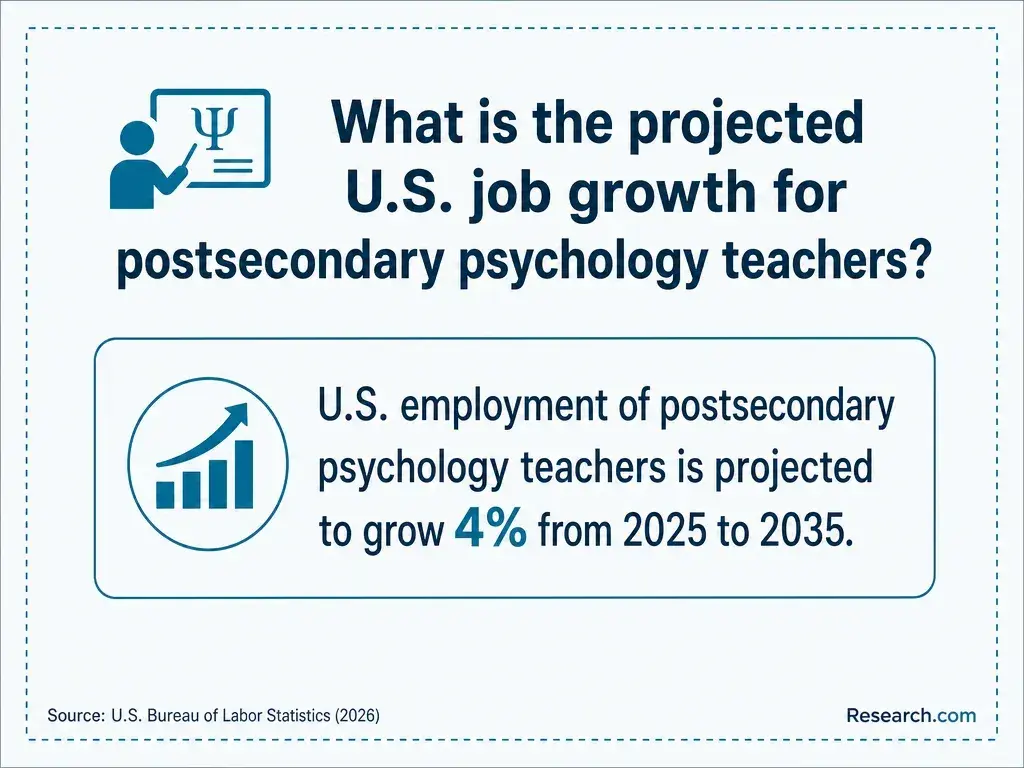
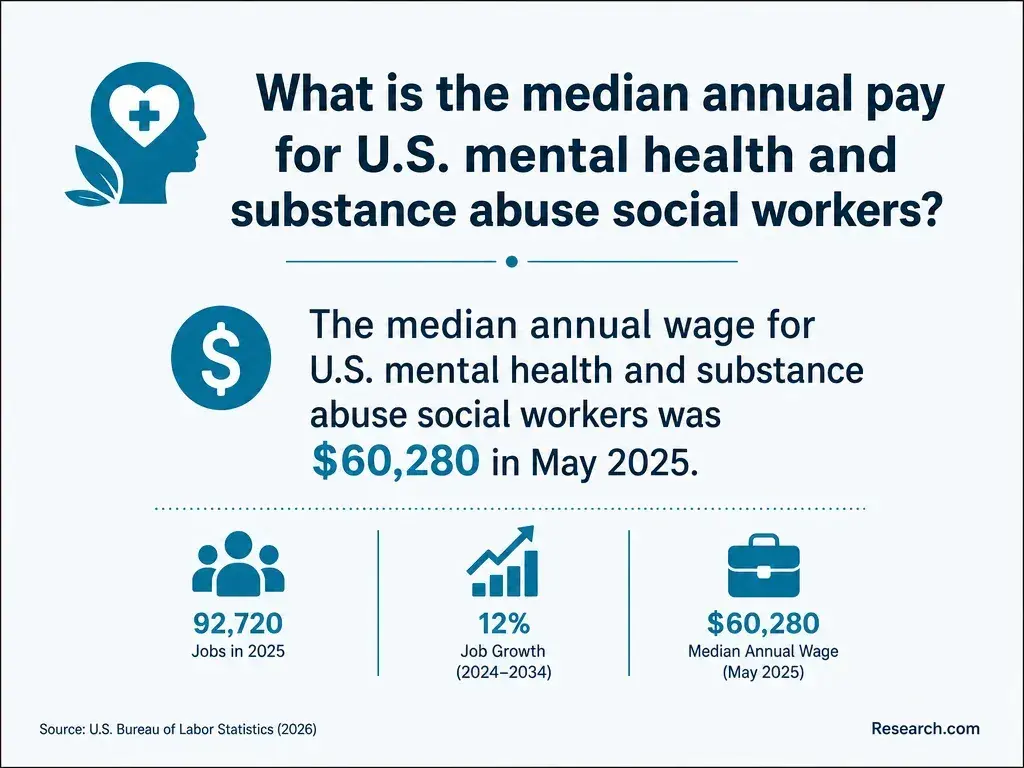
There is no single US occupation called "forensic psychology court researcher" with a degree-specific median salary or growth projection. Pay depends on whether the employer hires a research assistant, analyst, program evaluator, or senior scientist; the duties, location, funding source, and required experience matter more than the MS title.
For a defensible comparison, identify the occupation that matches the posting's duties, then consult the corresponding US Bureau of Labor Statistics wage data and outlook if one is published. Social science research assistant wage data can inform an assistant-role comparison, but it should not be presented as an MS graduate's expected salary or as the outlook for every court research job. Public agencies and grant-funded organizations may also use fixed pay bands or limited-term appointments.
If prospective pay will determine whether you enroll, compare actual job postings and pay bands with the full degree cost. Psychology degree options with lower tuition may reduce financial risk, but only if they satisfy the education and research-skill requirements of your target roles.
How should you choose an online forensic psychology program for court research?
Choose backward from the employer's hiring requirements. Collect several postings for the research roles you want, mark their required degrees, methods, software, writing, and justice-system experience, and compare those requirements with each program's catalog - not its marketing summary.
Before applying, ask each program for evidence on the points most likely to change your decision:
- Which required courses teach research design, statistics, measurement, data ethics, and analysis at the depth shown in target postings?
- Can online students complete a supervised thesis or substantial research project, and how are supervisors assigned?
- What data, research teams, or approved external partnerships can students realistically access without assuming access to restricted court records?
- Which classes, meetings, campus visits, or project milestones have fixed times, and what happens if a working student needs to slow down?
- What is the written estimate for all required credits and fees, and what evidence does the program have about graduates entering relevant research roles?
Ask to see project expectations and distinguish a guaranteed opportunity from one that depends on faculty availability or site approval. If considering an accelerated format, compare one-year forensic psychology master's workload and outcomes with the time needed to produce a credible research sample. Enroll when the program closes a documented hiring gap at a cost and schedule you can sustain; otherwise, pursue the narrower skill or experience first.
Other Things You Should Know About Psychology
Yes. Court research draws on psychology, law, public policy, criminology, and related fields. The appropriate background depends on the question and the employer's methods requirements.
Possibly, but public availability does not remove terms of access, privacy concerns, or school review requirements. Confirm permitted use before collecting or publishing information.
Not universally. A well-documented analysis, evaluation report, or substantial supervised project may demonstrate relevant skills. Follow the evidence requested in target postings.
It can help. Ask about common entry-level duties and valued skills, without assuming the organization will offer an internship, data access, or a future job.
- Chapter 5 - Advanced Degree or Exceptional Ability https://www.uscis.gov/policy-manual/volume-6-part-f-chapter-5
- Demystifying Accreditation A Framework for Accreditation of Forensic Units | NIST https://www.nist.gov/publications/demystifying-accreditation-framework-accreditation-forensic-units
- Security Clearance Process | intelligencecareers.gov https://www.intelligencecareers.gov/security-clearance-process
- A Systematic Review on Professional Regulation and... - PMC https://pmc.ncbi.nlm.nih.gov/articles/PMC10002239/
- 7 Essential Data Analyst Skills to Advance Your Career | jhu.edu https://ep.jhu.edu/news/7-essential-data-analyst-skills-to-advance-your-career/
- Explore 7 exciting careers in data analytics - Penn LPS Online https://lpsonline.sas.upenn.edu/features/interested-data-analytics-explore-7-exciting-careers-field
- A Career in Forensic and Public Service Psychology | apa.org https://www.apa.org/education-career/guide/subfields/forensic/education-training
- How Judges Can Use Research to Improve Court Outcomes | Judicature https://judicature.duke.edu/articles/empirical-evidence-what-judges-can-learn-from-recent-social-science-research/
- MA in Forensic Psychology | John Jay College of Criminal Justice https://www.jjay.cuny.edu/academics/graduate-programs/ma-forensic-psychology
- An Introduction to Qualitative Research | sciencedirect.com https://www.sciencedirect.com/science/article/pii/S0022202X20324064